Sign Hill Stewards
November-December Newsletter
|
|
Seasons Greetings Sign Hill Stewards,
The early rains have awakened the cold-season grasses, and Sign Hill is once again laced with vibrant green. Although the recent precipitation has certainly kicked off the growing season on Sign Hill, we continue to hope for much more in the winter months to come. According to NOAA, 2022 to date has been the 2nd driest of the last 128 years on record, and San Mateo County continues to be in a severe drought.
The lack of consistent winter rains puts added pressure on California native grassland species that are already threatened by the spread of invasive weeds. While we cannot make the rain fall, we are committed to making every effort to reduce the competitive pressure on native species by controlling the spread of invasive plants, and encouraging visitors to be responsible stewards of the park.
With the seasons changing, it is a time to look back on the progress we have made on our restoration project during fall. Since many plants are dormant in fall, we take advantage of this time to focus on aspects of our restoration project other than weed management, which demands our attention for most of the year.
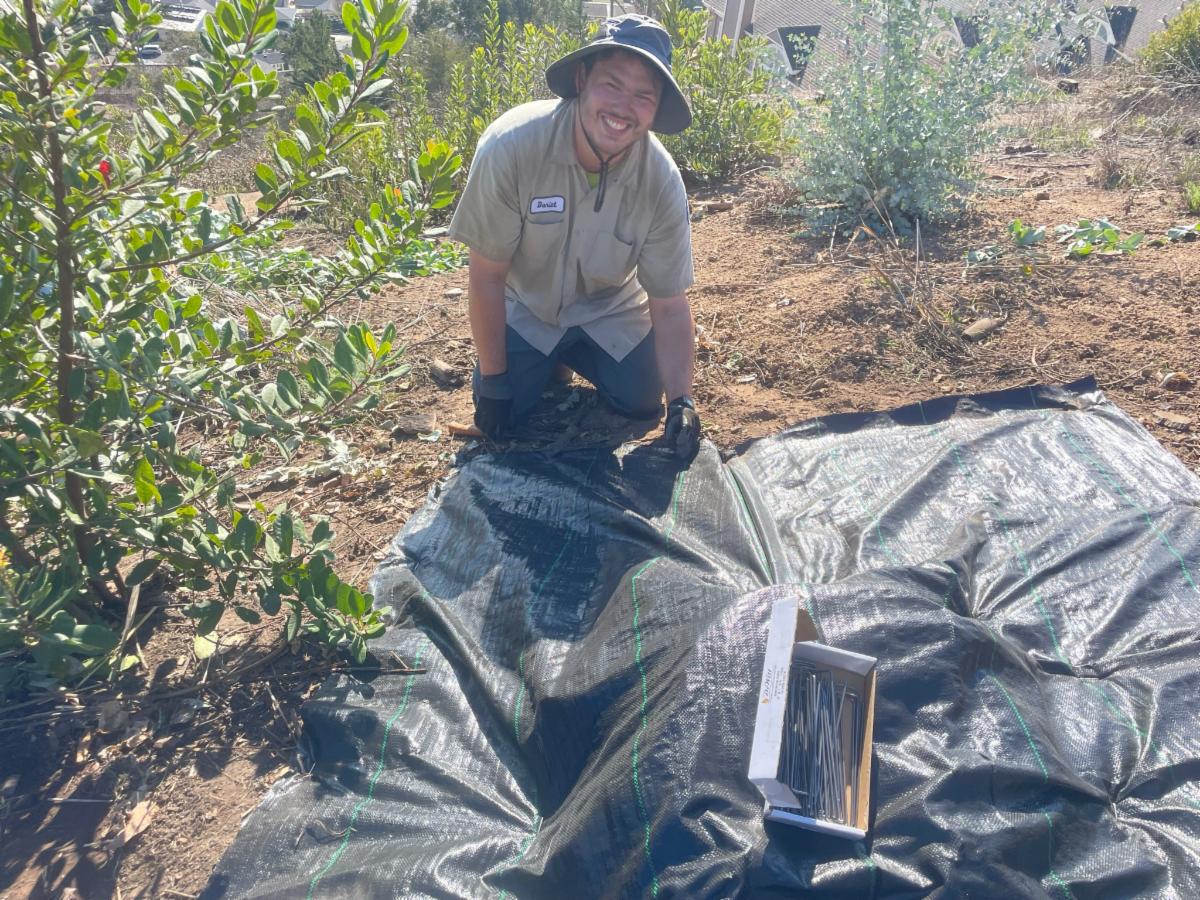
With the help of volunteers, we have made strides in controlling the regrowth of non-native trees that have been removed to restore grassland habitat and reduce the threat of wildfire. We have begun integrating a new approach to repress regrowth on some of the larger and more vigorous tree stumps. By covering the stumps with landscaping fabric, we deprive them of sunlight needed to photosynthesize and grow. We hope this will be an effective way to prevent trees from reestablishing in our grassland restoration areas, while reducing the use of herbicide.
Another area of focus this fall has been to address erosion in the park. Park visitors may notice a hillside stabilization effort that has taken place on the southwest part of the Hillside Sign. We have also designed some informational signage that will be installed in the park to encourage visitors to protect sensitive habitat by staying on designated trails.
Our Saturday work events in November and December have been some of our best attended and most productive of the year! It has been amazing to observe the impact that can be made in just a few hours when the community joins together. The success of the Sign Hill Restoration Project relies directly on the involvement of volunteers. I hope as we gear up to combat the annual invasive weeds, just beginning to emerge, that many hands will make light work!
Hope to see you soon on Sign Hill!
Candace LaCroix
Natural Resource Specialist
Leading the Sign Hill Restoration Project
San Bruno Mountain Watch Board Member
|
|
SSF Parks Welcomes New Natural Resource Aide, Lauryn Mendez! |
|
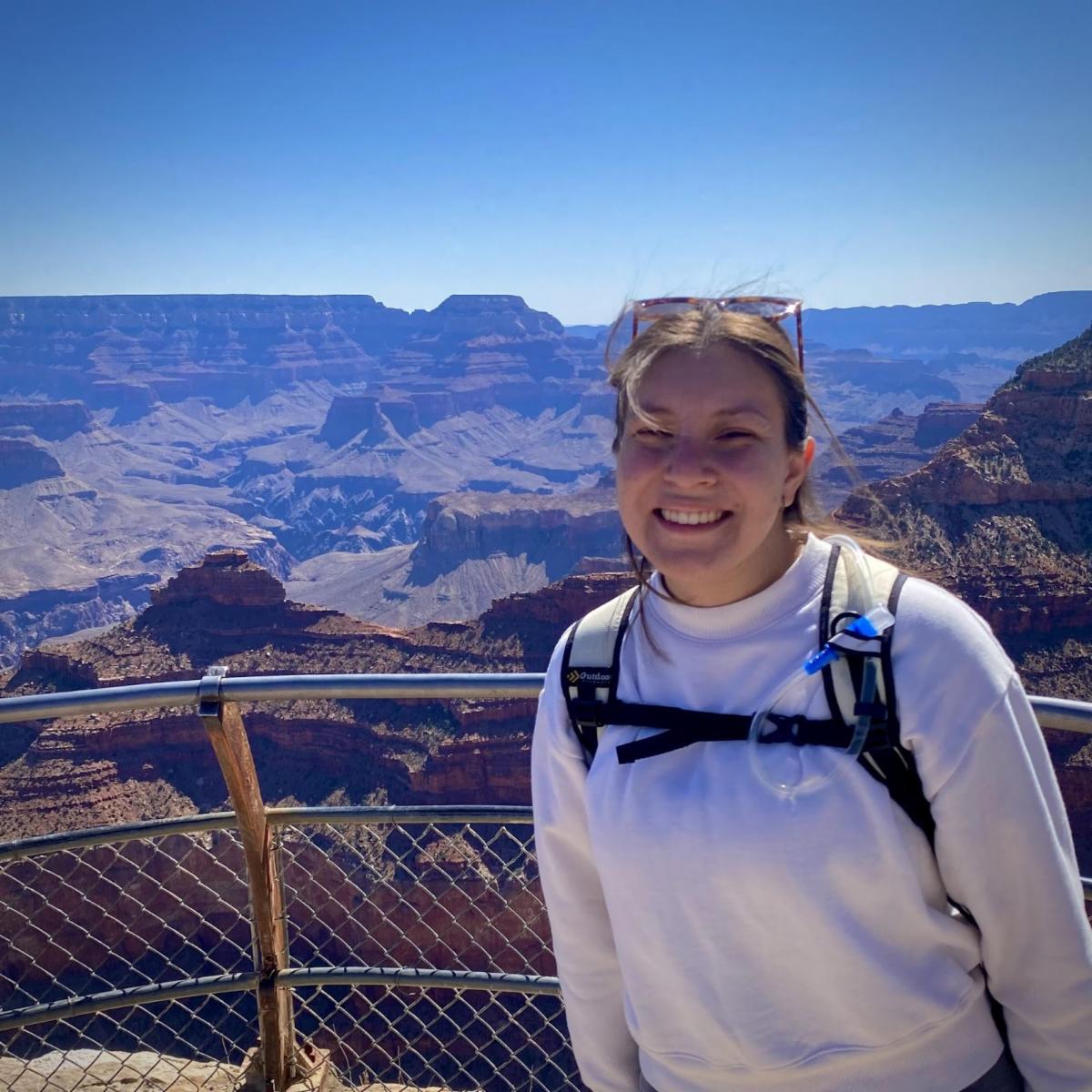
Hi all! My name is Lauryn Mendez and I will be assisting Candace on the hill as the newest Natural Resource Aide. I have recently graduated from San Francisco State University with a degree in Environmental Studies, concentrating in Natural Resource Management and Conservation.
I was an intern for the SF State’s environmental resource center as their zero waste and sustainability intern, which focused on eliminating food waste around the campus. I was also a part of a program, Peer Assistants for Learning Science (PALS), where I helped bring inclusivity to science classrooms, making it easier to learn and understand what was being taught. Along with that, I took courses in restoration ecology, plant identification and natural resource management. All of these experiences have played a big part in who I am, as well as what I have to offer to this position and Sign Hill.
With all of that said, I am excited to be a part of the greatness Sign Hill has to offer. I am thankful for this opportunity and I can’t wait to be able to meet you all!
|
|
Volunteers Prevent Tree Regrowth in Grassland Restoration Areas |
|
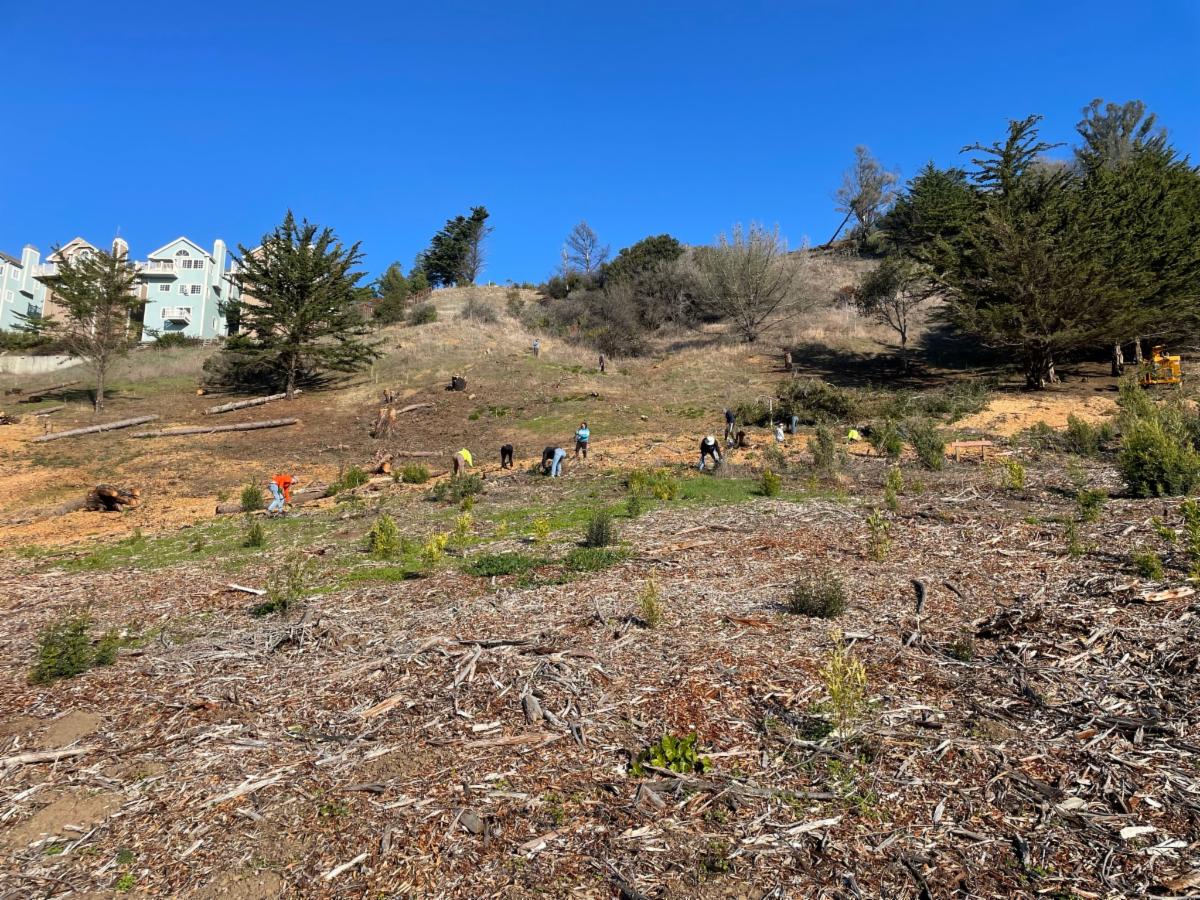
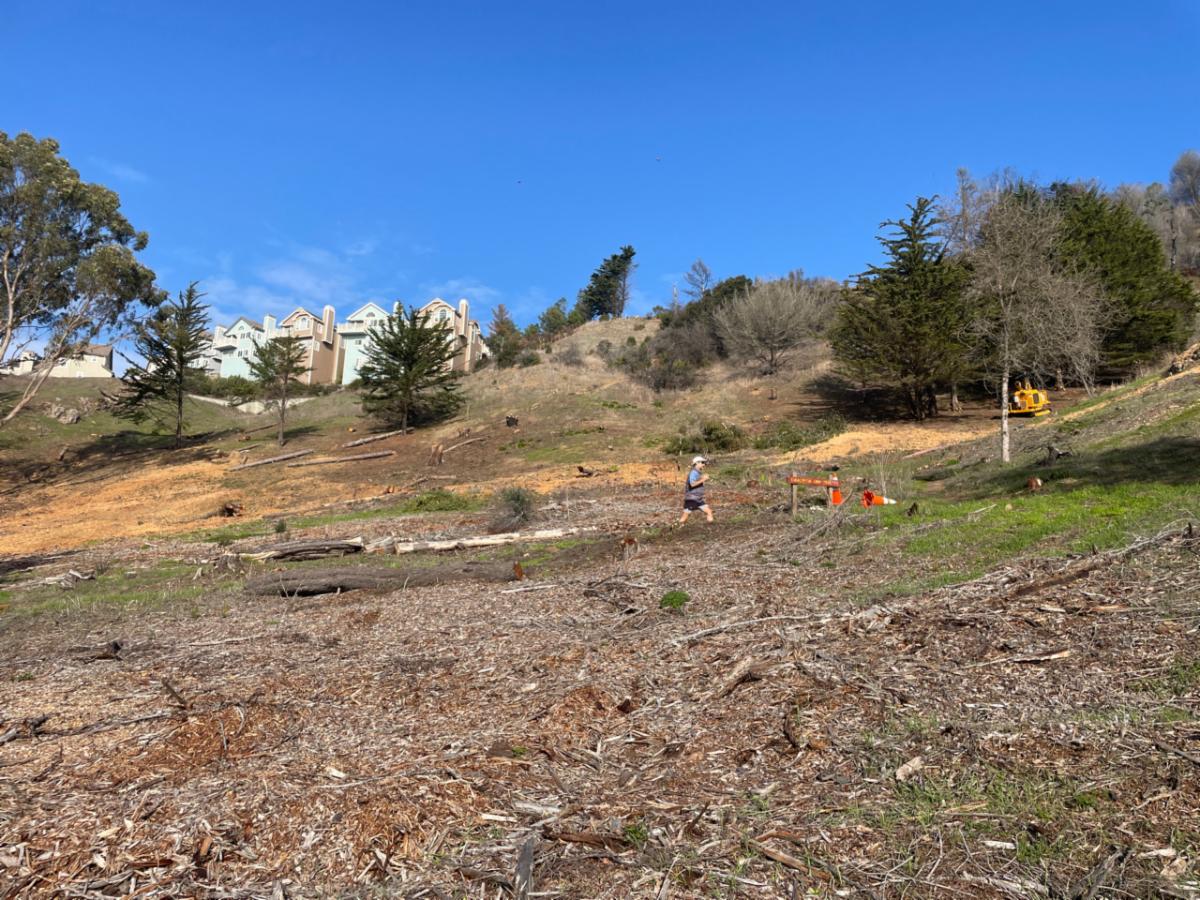
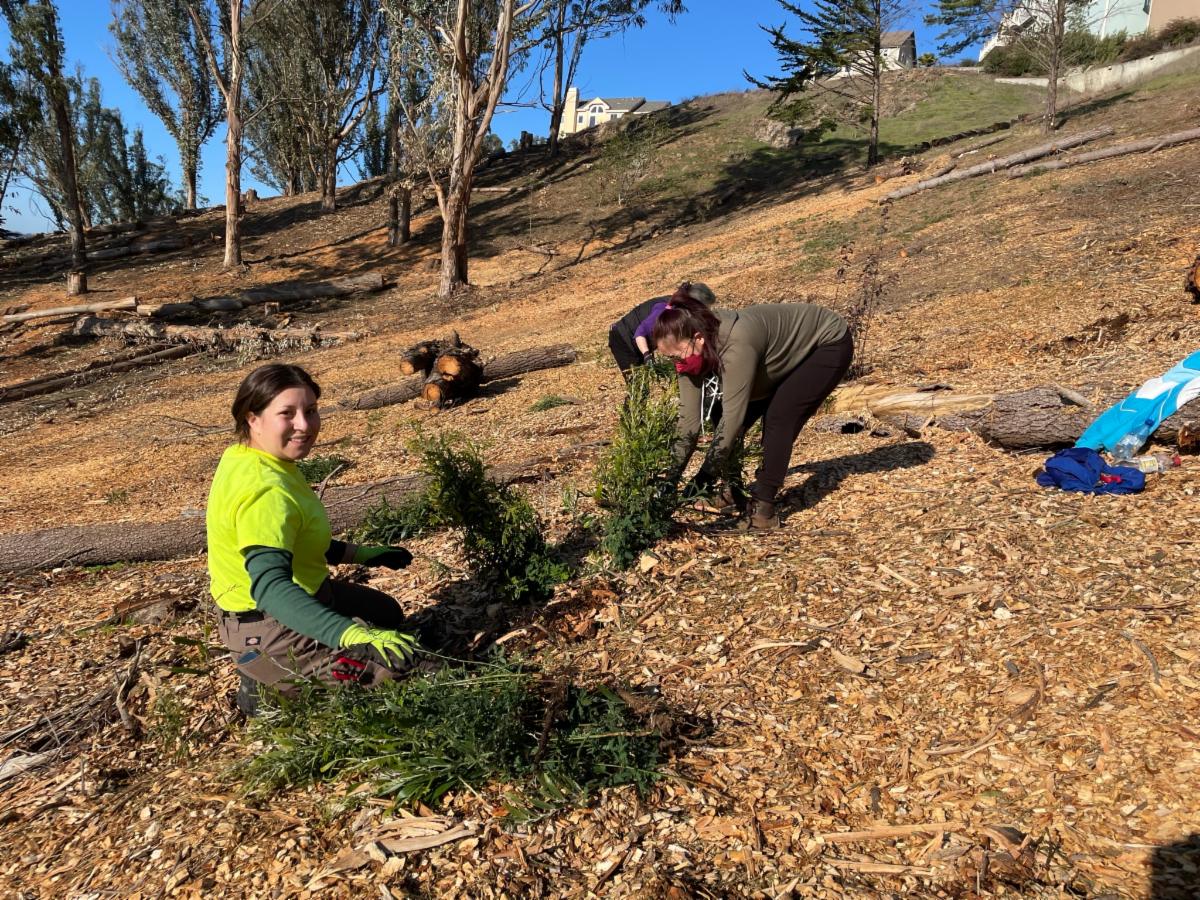
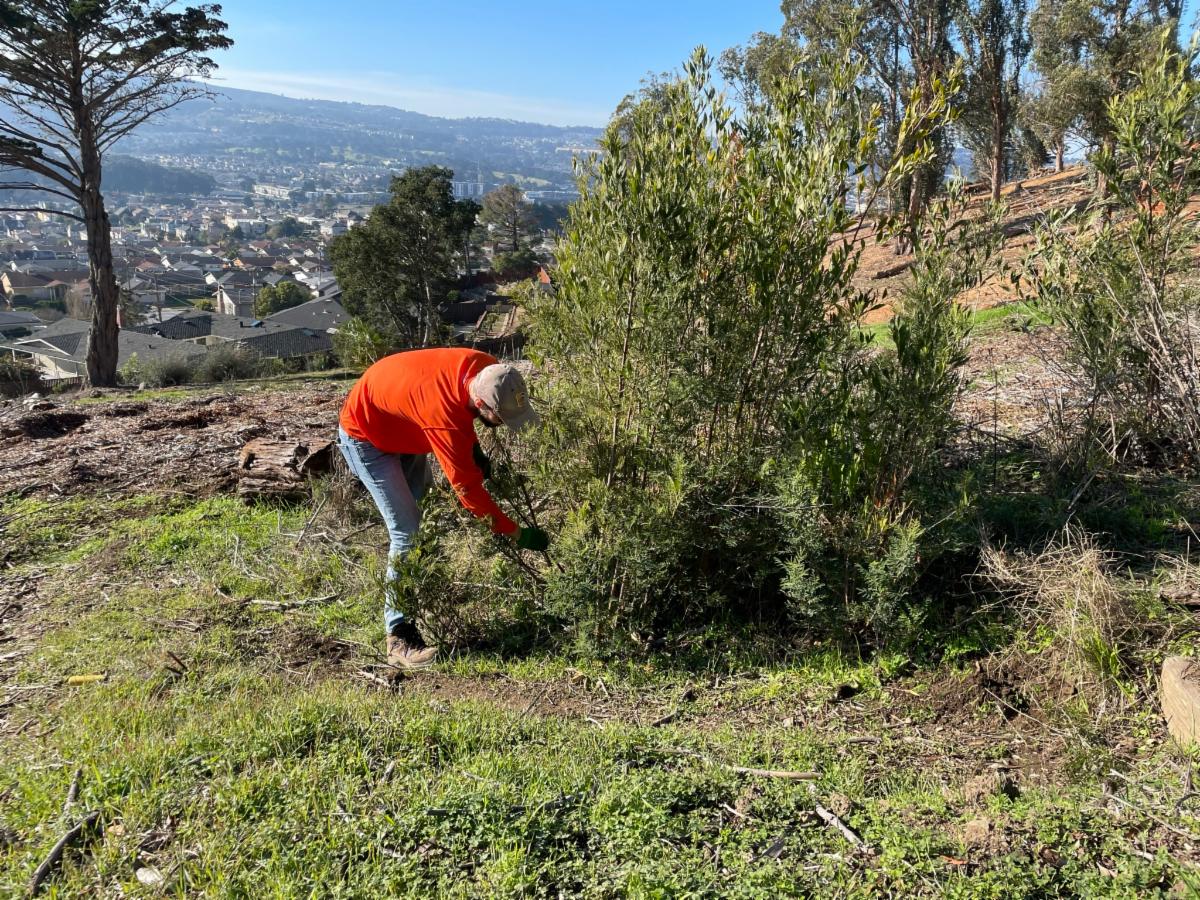
Following the 2020 Diamond Fire, Sign Hill has undergone some big changes, especially the removal of many of the non-native trees from the south-facing slope of the hill. This tree work has been part of The City of So. San Francisco Park Department’s plan to reduce the risk of fire and restore native grassland habitat for the endangered species and rare plants of Sign Hill. Since many of the removed trees such as black acacia and blue gum eucalyptus are vigorous resprouters and seed producers, preventing the reforestation of these areas will be an ongoing effort in the years to come.
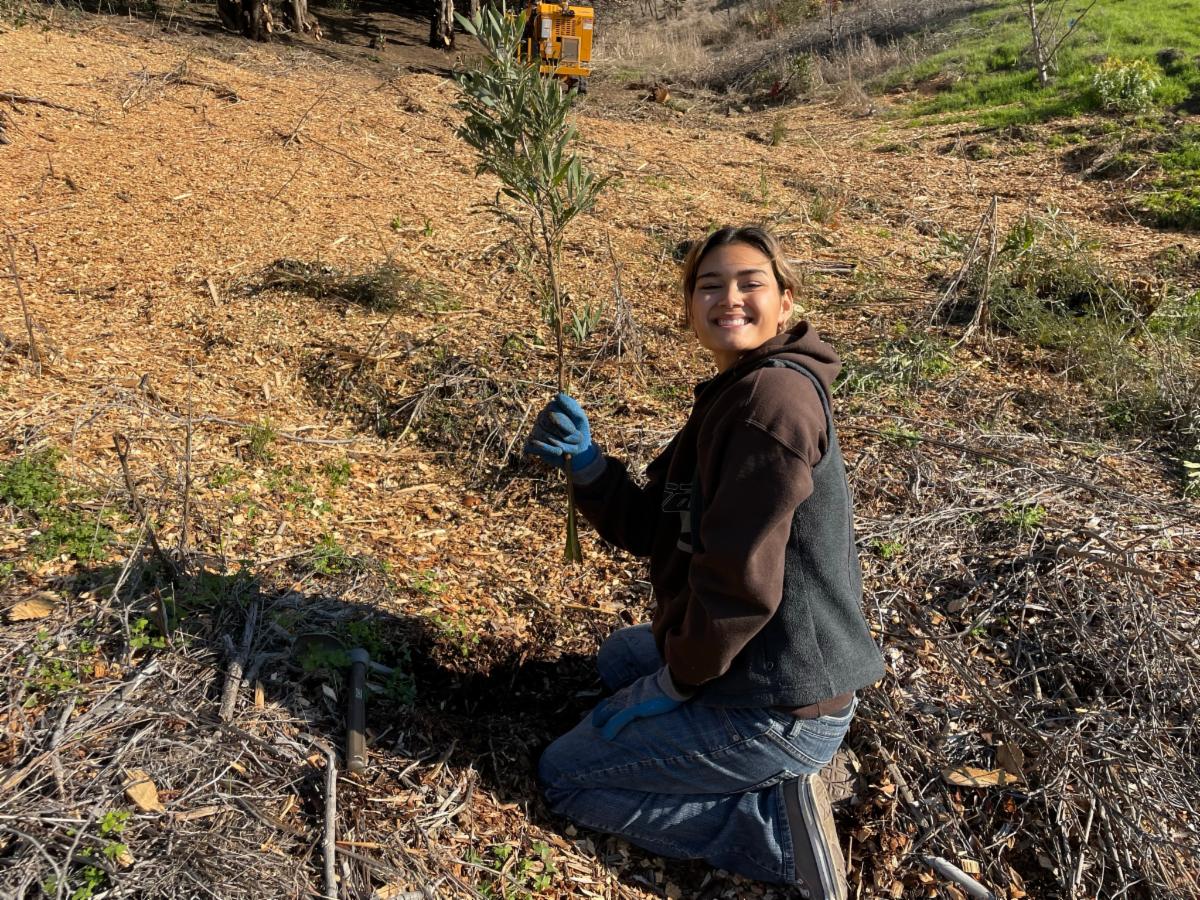
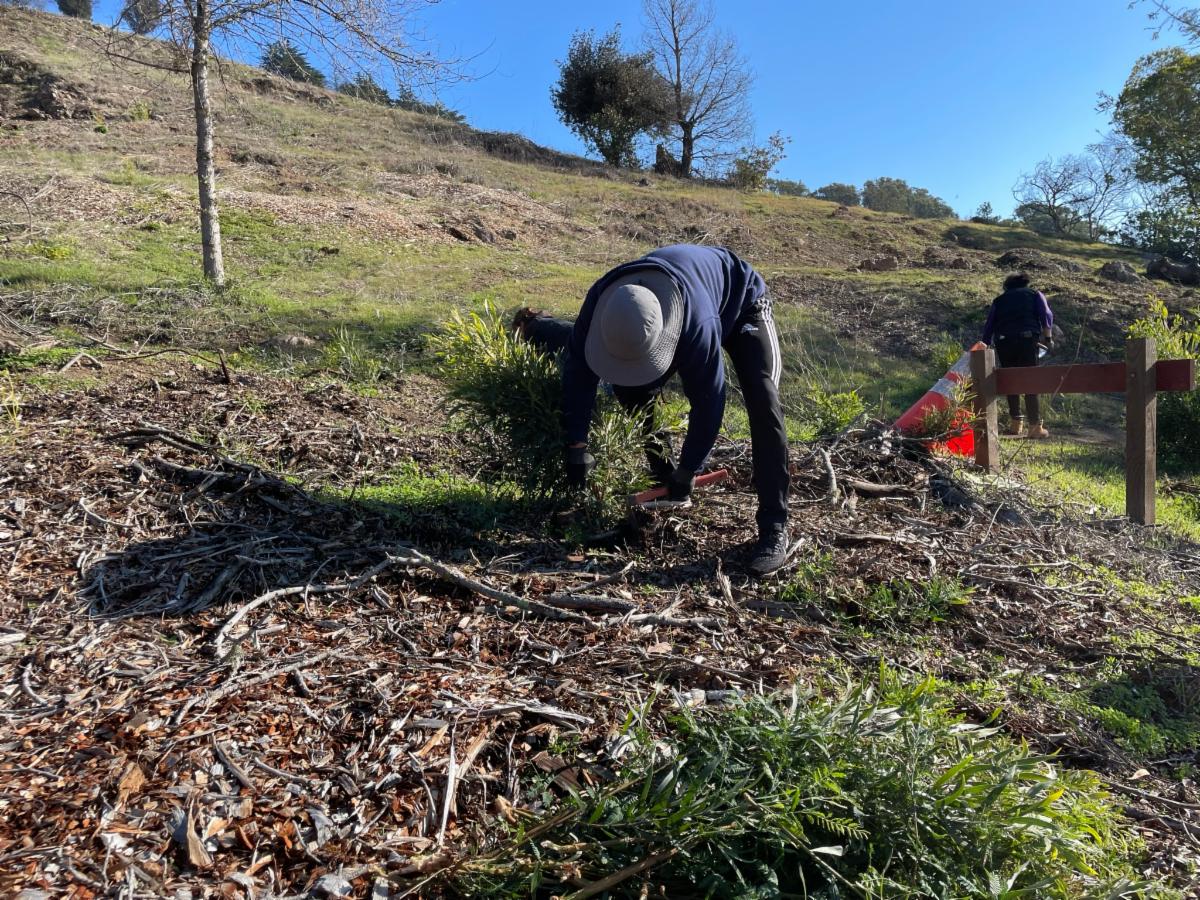
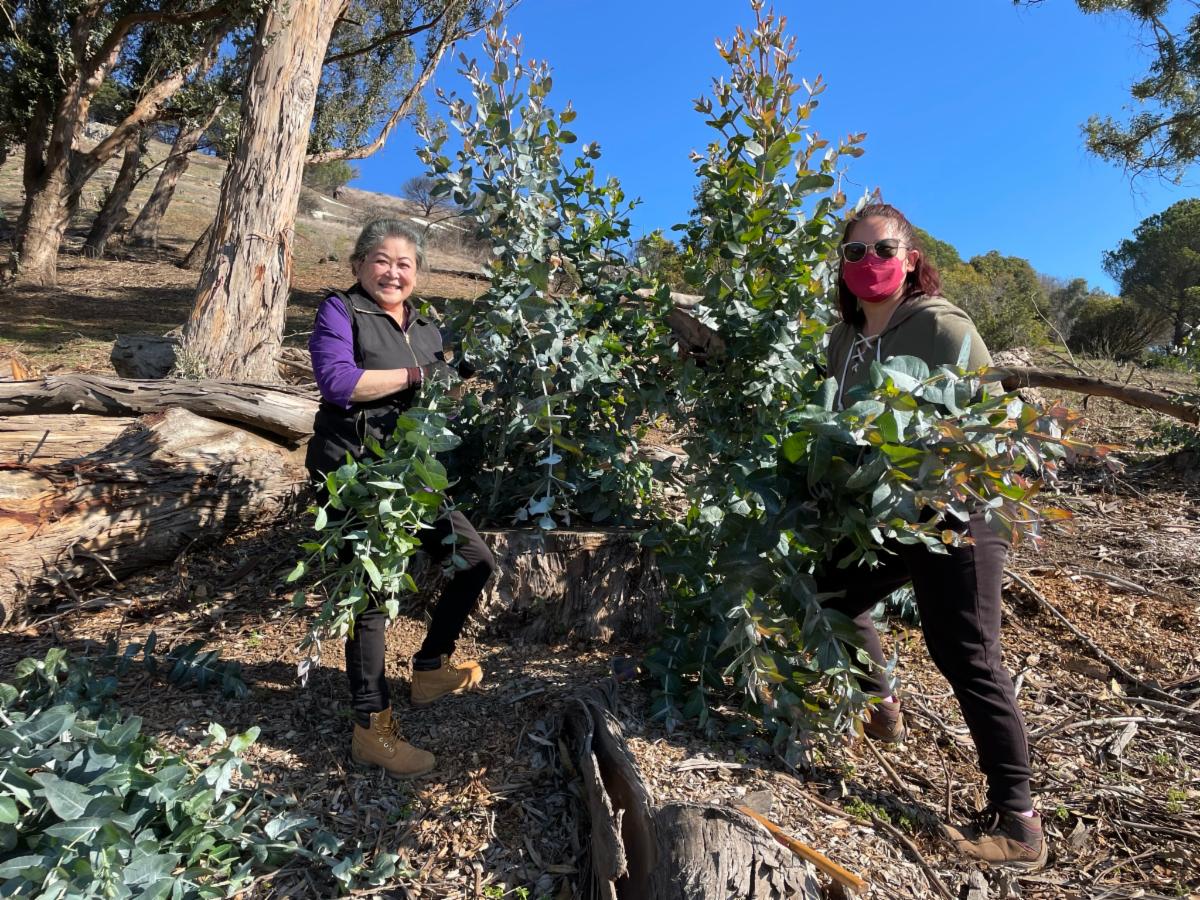
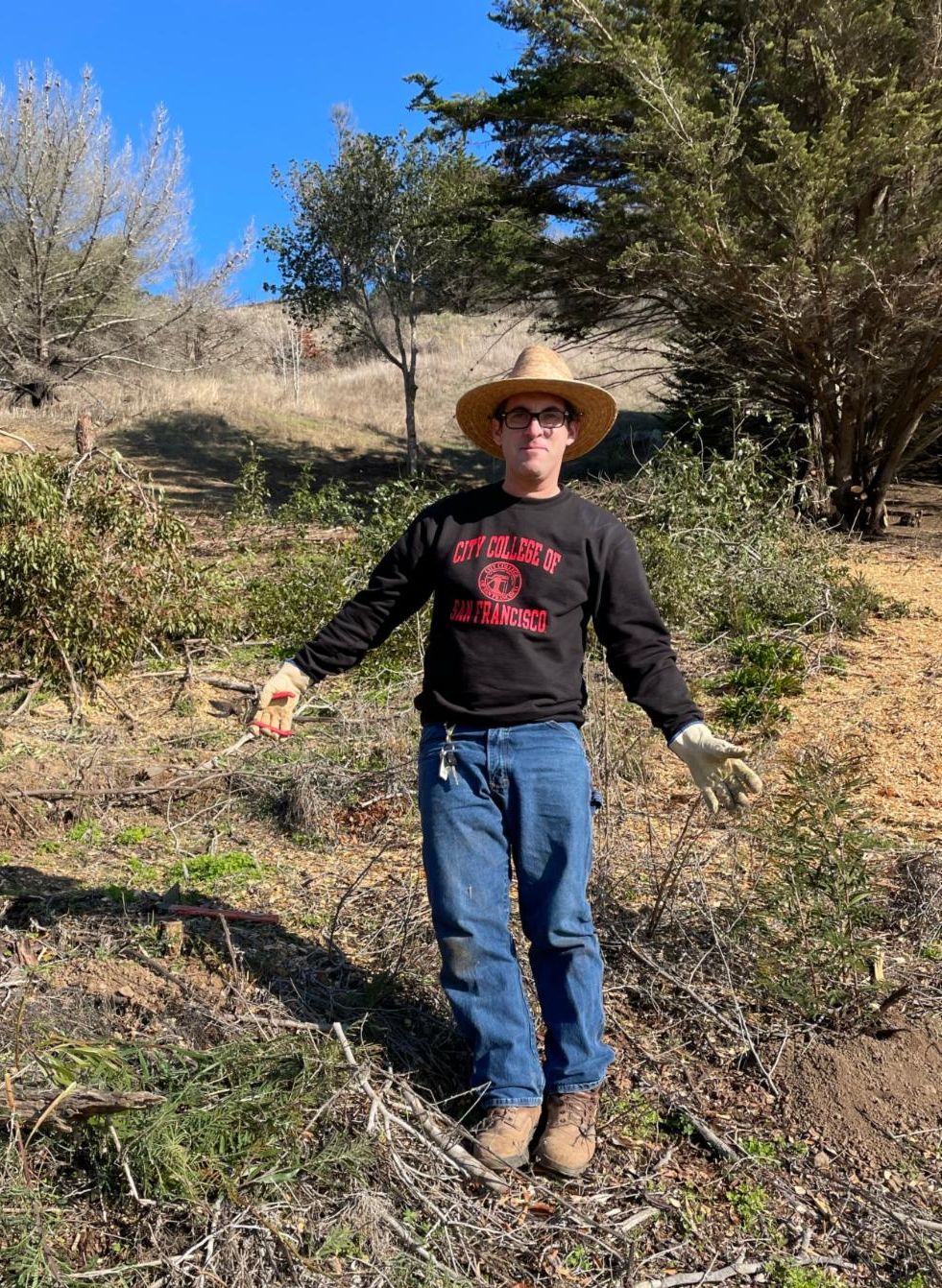
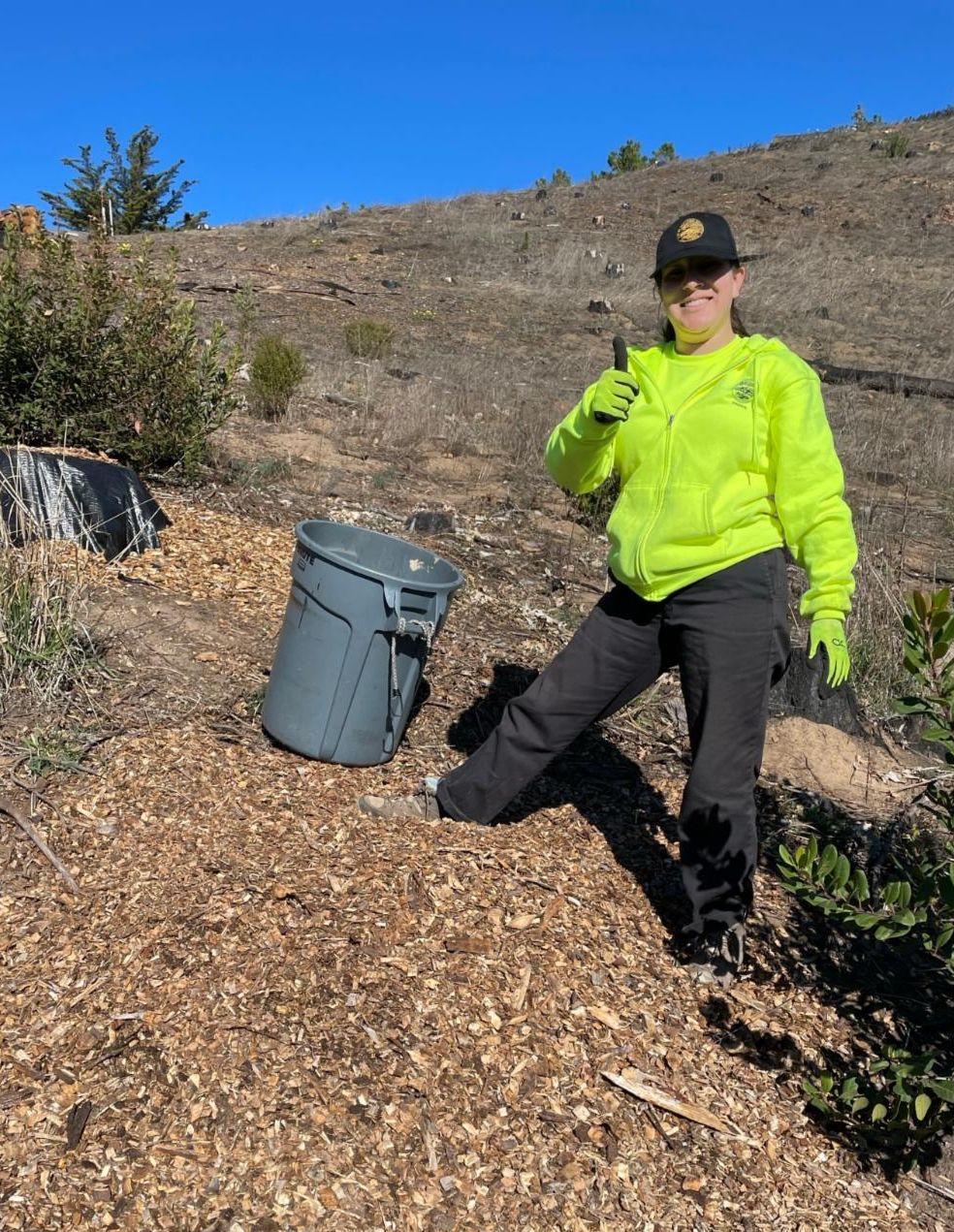
The regrowth of tree stumps absorbs moisture and nutrients from the soil and shades out native grassland species. To give native grassland plants a chance to reestablish, volunteers have supported our efforts to clear non-native tree regrowth. This has involved chopping down tree stump regrowth and pulling up tree saplings. Additionally, we have begun applying landscaping fabric over some of the tree stumps to deprive them of sunlight and keep them from growing back. We add a layer of mulch on top to help it blend into the landscape and prevent tampering.
|
|
If you would like to join us on a volunteer workday, check out our eventbrite page to register!
|
|
Erosion Control on Hillside Sign |
|
|
|
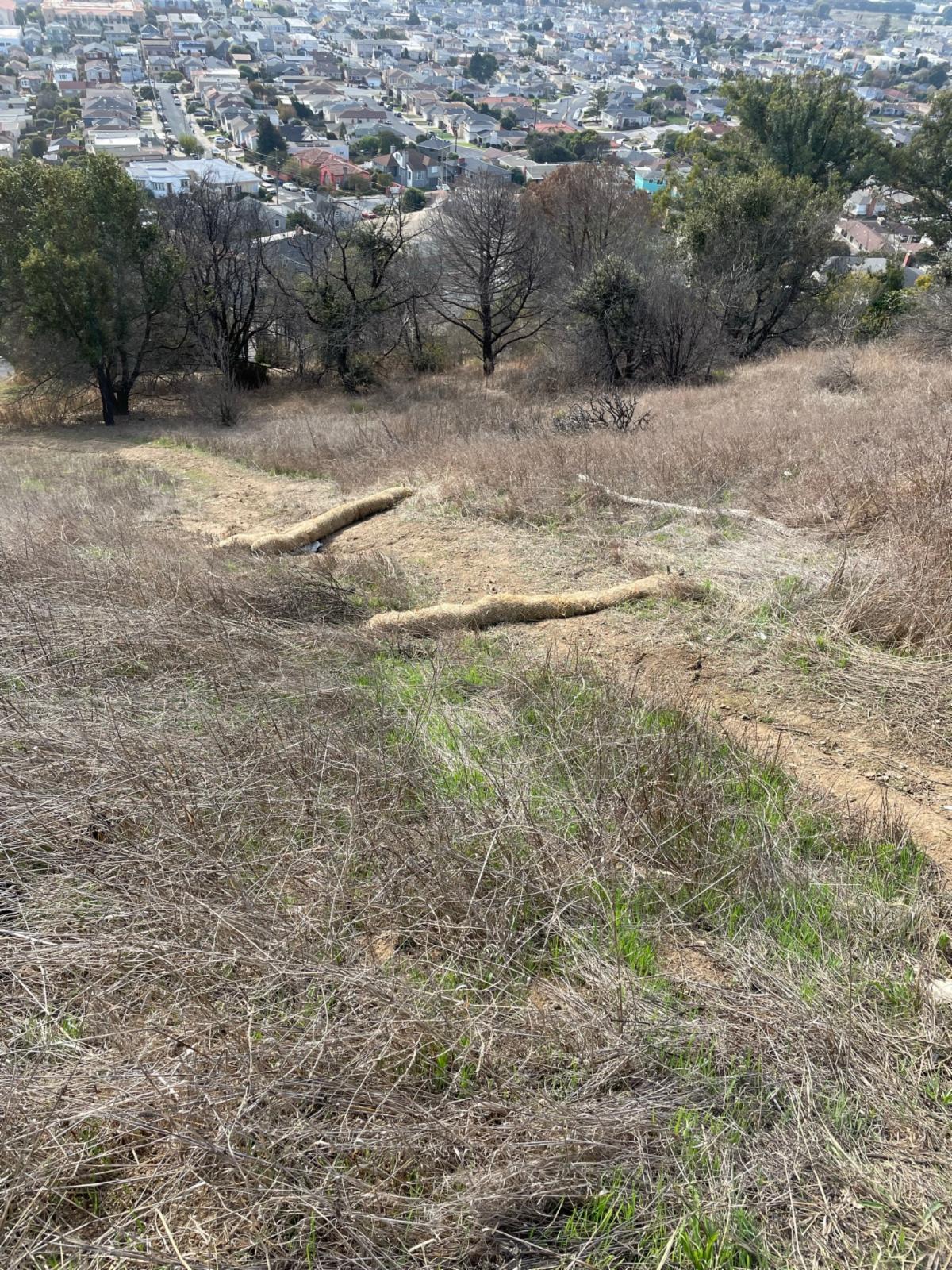
In order to prepare for the wet season, we have made efforts to control erosion on the southwest part of the Hillside Sign. Over the years, park visitors have been walking off trail for a closer look at the letters. Foot traffic in this area has inhibited the growth of vegetation, and led to a washout that has carried away topsoil and caused one of the letters to be undercut.
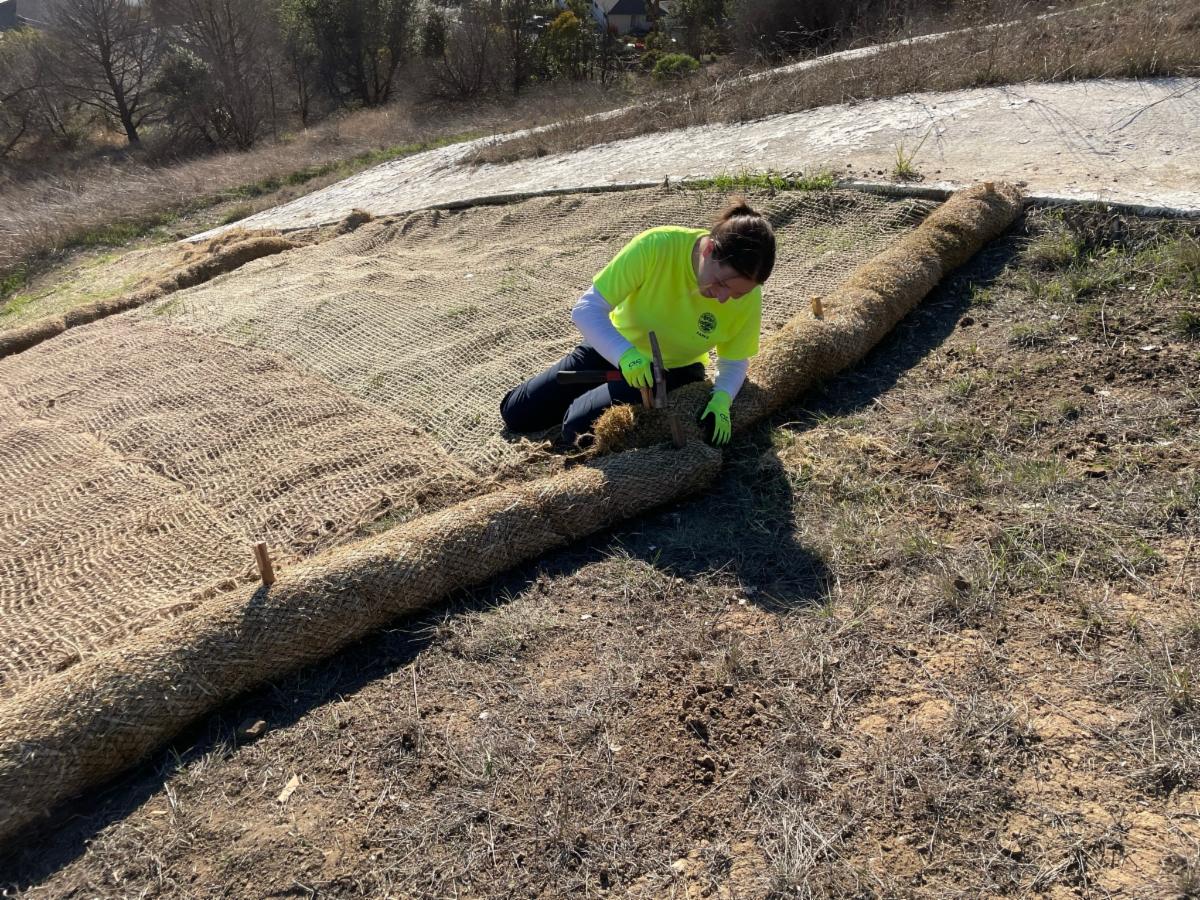
To prevent any further erosion or damage to the letters, parks staff have installed jute netting and straw waddles to the eroded areas. Gravel bags have also been placed strategically to prevent further undercutting of the letters, and slow water flows. We hope that these efforts, along with discouraging the use of social trails by arranging tree limbs along the trail edge, will help stabilize the soils and allow this area to re-vegetate.
|
|
Sign Hill Resident Spotlight:
Coyotes
|
|
Some furry friends might not be so friendly. Coyotes (Canis latrans) can be found on and around Sign Hill. Coyotes, with their resemblance to domestic dogs, may look friendly from afar, but please take caution if encountered.
Coyotes typically run alone or in small family groups, they do not run in packs like wolves. Occasionally, these animals will join together with other coyotes to take down prey but will typically hunt alone. These animals communicate through distinctive calls. Howls and yips tend to be the primary source of communication between coyotes. The same sounds can also be used to establish territory.
|
|
Coyotes are omnivores, making them highly adaptive and able to feed on just about anything (but please refrain from feeding the coyotes!). Their diets range from small insects and fruits, like grasshoppers and berries, to large animals and birds. They also prey often on small animals, like mice and gophers. With wide-ranging diets, coyotes can survive just about anywhere. Coyote habitats can range from the open deserts to the forest and mountains. They have managed to adapt and survive in human disturbed areas which ties back to their wide-ranging diets.
|
|
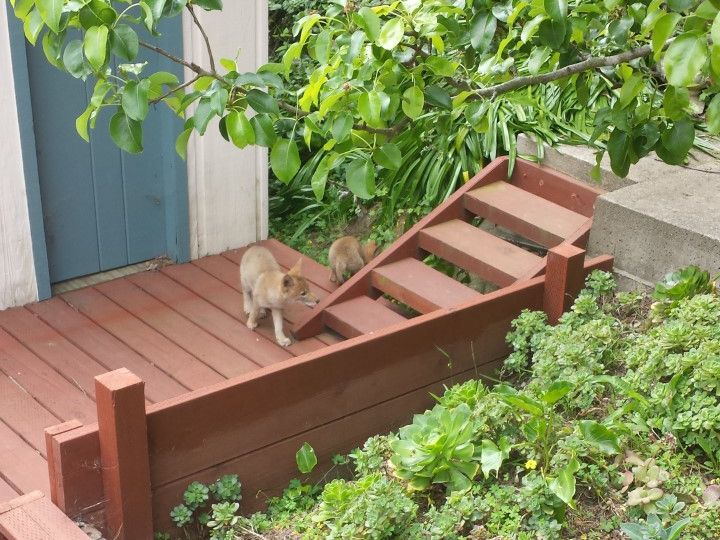
A nearby resident submitted this photo of some cute and curious coyote pups exploring their back yard. |
|
Although coyote attacks are rare, they aren’t impossible. Please stay safe while hiking. If you should encounter a coyote, remember to make loud noises to scare them away. Maintaining the natural fear coyotes have towards humans is important. Also, keep small children close and dogs on leashes.
|
|
Lauryn Mendez
Natural Resource Aide
|
|
Camera Trapping on Sign Hill |
|
Over the last several months, the SSF Parks Department has begun a camera trapping project. Three trail cameras with motion-sensors have been strategically placed around the park in order to observe animals passing through and draw conclusions about population sizes and species interactions. We have been able to observe a number of species including coyotes, rabbits, owls, raccoons, and even house cats!
It is a bit worrisome to see so many cats are sharing trails frequented by coyotes. Domestic house cats are not only potential prey for coyotes, but they are also veracious hunters themselves that have a significant negative impact on local wildlife species, especially birds. I hope that the videos we have captured will serve as a friendly reminder that cats and wildlife are safest when cats live indoors.
Click the link below to enjoy a fun little compilation of the animals that have been captured by trail cameras on Sign Hill!
|
|
When: Every other Friday and the 2nd Saturday of each month from 9am-12pm. Only cancelled for heavy rains.
Registration: Registration is required. Volunteers under the age of 18 must have a youth waiver signed by a parent/guardian. Youth under the age of 15 are welcome and must be accompanied by an adult. Click the link below to RSVP on Eventbrite.
What to bring: To prepare for working outdoors, please bring work gloves, plenty of water, sturdy shoes, long pants and long sleeves, a hat/sunscreen, and a completed waiver for each volunteer. Volunteers should expect some hiking on steep terrain.
|
|
|
|
|
|
|