Rail & Labor News from RWU
| |
Weekly Digest Number 8 - February 20, 2024 | |
Welcome to the RWU Rail & Labor News! This news bulletin is produced and emailed out each Tuesday morning. We hope you find each week's news and information useful. If so, please share with co-workers, friends, and colleagues. If you like, you can sign them up to get all the news from RWU HERE. Or forward them the link. GOT A HOT TIP? Please forward the article and a link to raillabornews@gmail.com. Note: If you read over this news bulletin each week, you will be sure to never miss the important news of what is going on in the railroad world from a worker's perspective! | |
Editor's Note: Well we are not off to a very good start in 2024. To date, three rail workers have been killed on the job, all of them in the past 4 weeks (a signalman, an engineer, and a track worker). Another was severely injured and is in the hospital in critical condition. Meantime, a whole string of high profile derailments have taken place. | |
BMWED / February 15
"Our Brotherhood is incredibly saddened to learn of a recent fatality on CSX. Brother Randall M. Howell, 41, of Allied Federation Lodge 563, died following a road crossing incident in Roanoke Rapids, N.C. Brother Howell was a foreman on the T6 system production gang when he was struck by the ballast regulator. It is impossible to fully describe the grief we all feel at the passing of Brother Howell and it is with our most sincere compassion to his family and friends, including his fellow members on the T6 gang, that we offer our deepest condolences."
| |
Progressive Railroading / Feb 14
The Federal Railroad Administration (FRA) yesterday issued a safety bulletin calling on railroads and their employees to ensure that rolling equipment is property secured. The bulletin stems from the FRA's ongoing investigation of an accident in which a locomotive engineer was fatally injured during switching-yard operations.
According to the bulletin, the accident occurred when the locomotive engineer, who had 30 years of experience, was operating a locomotive on the east side of a rail yard and working with a conductor and brakeman to switch cars. Another crew was switching cars on the west side of the yard and had set out 35 cars. At some point, those 35 cars from the west side of the yard track rolled uncontrolled toward the east, colliding with the locomotive occupied by the engineer, which was located on the east yard track switching lead.
| |
IAM / Feb 13
Members of the International Association of Machinists (IAM) Rail Division and Allies will gather for an informational picket Thursday, February 22nd at 11AM outside Union Station, 800 N. Alameda St., Los Angeles, CA. The members will gather to advocate for the passage of the Rail Safety Act to help keep the Los Angeles community safe. The proposed legislation aims to enhance safety measures for railway employees and communities while transporting goods and passengers.
|
|
Editor's Note: From our friends at Solutiuonary Rail. | |
Solutionary Rail / Feb 12
Solutionary Rail works in solidarity with labor and other stakeholders. This is an important week in our Washington State Legislature and we'll be sending a few updates on ways you can make a difference to get these bills through this week. Thanks for joining our fight for rail in the public interest, in solidarity with railroad workers! Train length has become an urgent problem in terms of rail safety, labor conditions, and impacting passenger rail's on-time performance. This has cascading impacts. Please support this legislation that limits train length to a reasonable size. [See All Actions]
| |
Reuters / Feb 12
Iron ore train drivers at BHP Group's Pilbara operations in Western Australia have voted to strike on Friday in a bid to secure an improved employment agreement, the country's Mining and Energy Union said on Monday. Employees rejected an offer made in December. The train drivers have been campaigning for improved conditions in areas like rostering and accommodation for more than two years. The agreement covers about 580 people including drivers, shunters and trainees.
| |
Daily Kos / Feb 15
The Railway Safety Act, introduced in response to inadequate railway safety measures, mandates the Secretary of Transportation implement stringent safety standards for trains carrying hazardous materials, addressing a critical need in our current safety protocols. It also advocates for the expedited phase-out of outdated railroad cars, aligning them with modern safety standards, and invests in the future of rail travel by allocating funds for research and development. Unsurprisingly, railroad barons are spending big to challenge critical provisions of the legislation, prioritizing profit over our safety. These reforms are long overdue. We need safer, more efficient, and forward-looking railway systems.
| |
BLET / Feb 16
Representatives of the BLET, Norfolk Southern, the Federal Railroad Administration, and SMART-TD signed a landmark agreement for a Confidential Close Call Reporting System (C3RS) pilot program at the offices of the U.S. Department of Transportation in Atlanta, Ga., on February 15. C3RS allows operating employees to confidentially report close calls or other safety issues without fear of disciplinary action imposed by railroad management.
| |
Julie Sneider / February
When railroaders and industry stakeholders return to Capitol Hill on May 8 for the annual Railroad Day on the Hill, most expect lawmakers will want to talk about East Palestine. Congressional members declared the need for more regulations aimed at preventing another rail disaster, or "bomb train" — as some in the media have hyperbolized hazmat trains — from happening again.
| |
Editor's Note: There is a bit of a battle going on over approaches to zero emissions locomotives. Namely between electric power from batteries and/or overhead catenary, and/or hydrogen. These locomotives appear to have batteries optimized for cars and trucks - locomotives need weight for traction - but let’s see how Palmetto’s experience goes. And good for the adjacent communities that will avoid the pollution from 80K gallons per year of diesel! | |
Progressive Railroading / Feb 14
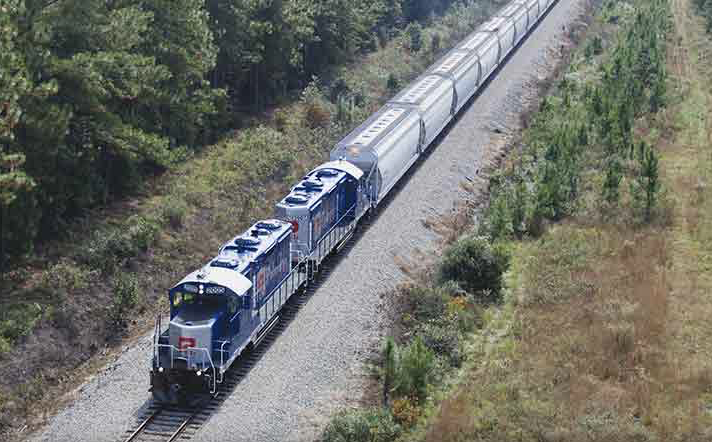
Palmetto Railways yesterday announced it's partnering with Innovative Rail Technologies (IRT) to convert two diesel switchers to lithium-ion battery-powered locomotives. The locomotives are expected to be delivered and enter service within two years. A provider of proprietary propulsion technology, IRT will retrofit the locomotives, which will be less expensive to operate, provide superior performance and significantly reduce carbon emissions, Palmetto Railways officials said in a news release. The switch to battery-powered locomotives is expected to reduce the amount of diesel consumed at the railroad's facilities by an estimated 40,000 gallons annually per locomotive, they said.
| |
Editor's Note: From our friends at the Rail Users Network. | |
|
Rail News & Interests by the Rail Users’ Network, Inc. – https://www.railusers.net/ Short Runs, is a periodic digital newsletter by the Rail Users’ Network, Inc. (RUN), offering headlines of interest to the rail & transit advocate community. Assembled from Internet Sources by and for Our Members and Associated Rail Advocates.
| |
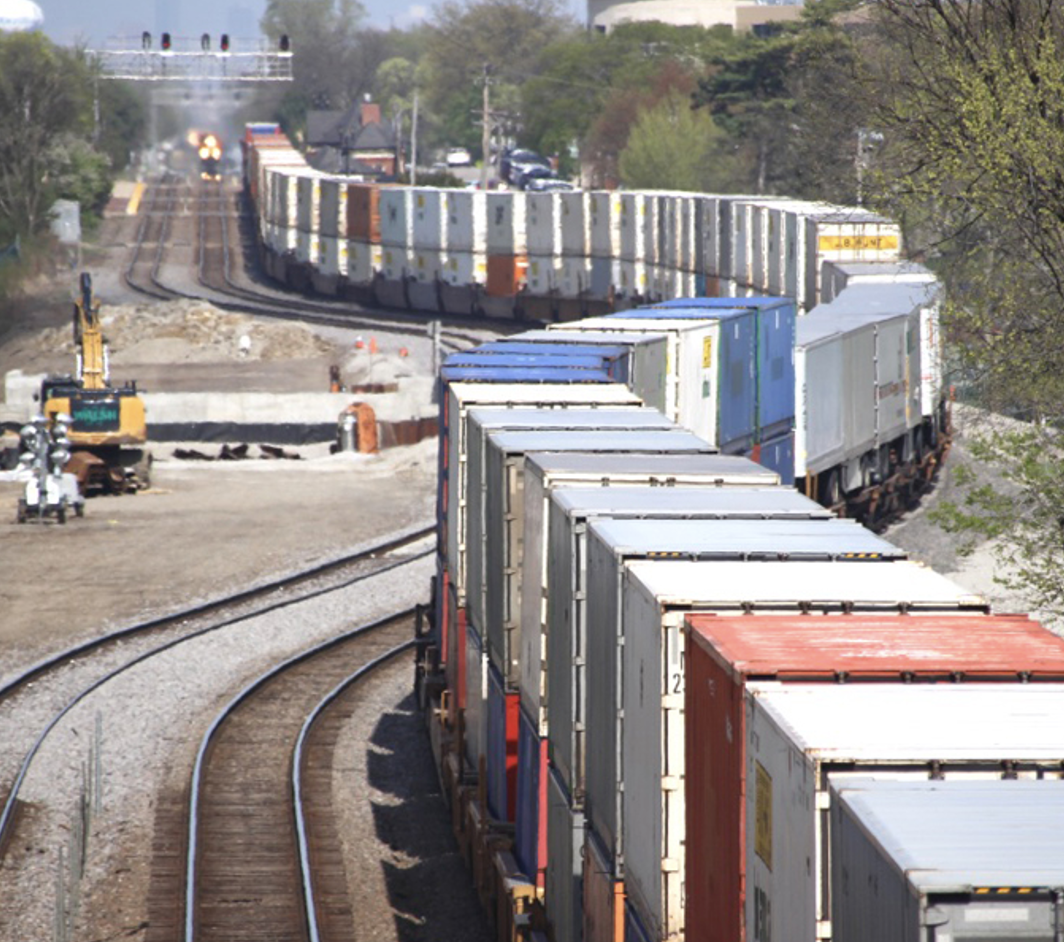
Editor's Note: “Even when railroads are operating well, intermodal trains may arrive 5 to 10 hours ahead of schedule or up to a day late.” Proper exploitation of the rail network would have a variety of service levels from express (in some lanes) to “whenever we get to it”, bit they would all run on time. Some shippers can live with a day or two early or late but if you manage a factory shift counting on the raw material in a railcar that doesn’t show up, you have to send people home. And wasn’t there some chatter about ‘precision scheduling’? What happened with that? | |
|
Intermodal has long been the rail industry’s growth engine. But it hasn’t been firing on all cylinders in recent years. Intermodal hasn’t been keeping pace with economic growth and has lost market share to the highway. By far the biggest reason why intermodal growth has slowed is unreliable service.
| |
Editor's Note: Another well-meaning state level attempt at reasonable regulation destined to be shot down at the federal level if it makes it out of committee. | |
Trains Staff / Feb 16
Less than two weeks after the Nebraska legislature killed a bill to require two-person train crews, a legislative committee has heard testimony on another rail regulation bill, this one including limits on train length. LB1212, introduced by Sen. Lynne Walz (D-Fremont, Neb.) It which would limit trains carrying hazardous materials to 8,500; require mainline wayside detectors every 20 miles; and require trains to stop and conduct inspections after receiving a defect message from such detectors.
| |
Editor's Note: The U.S. Department of Energy recently put out a Request for Information from the rail and electric transmission industries asking about locomotive propulsion options and their real-world implementation in the United States. Our friends at Effective Transit Alliance NY put together a detailed, well-reasoned set of answers. Once again, signs point toward a majority of coverage with overhead catenary for propulsion, built to work with the local electric grid. | |
|
Effective Transit Alliance NY / Feb 17
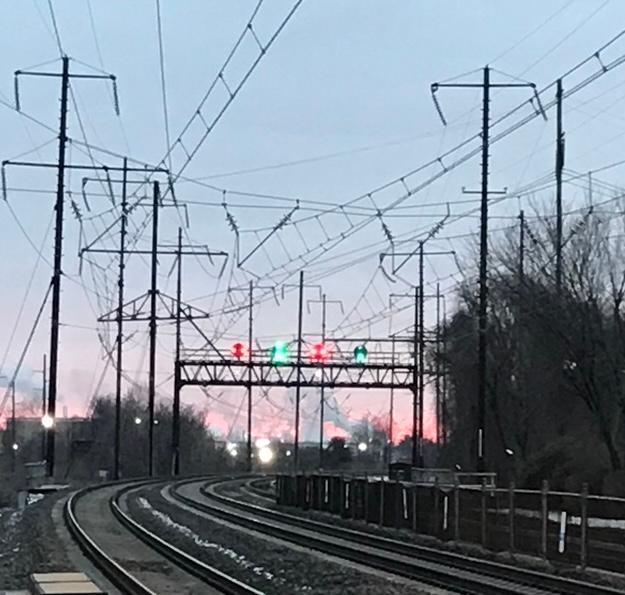
The transition to net-zero propulsion presents an excellent opportunity to modernize both passenger and freight rail transportation in the United States. The most common and cost-effective decarbonization technology is also the most common propulsion technology for trains: overhead traction power. Electric trains are over 35% cheaper to operate than diesel trains [and have half the lifecycle cost of diesel trains in passenger service. Perhaps even more importantly, electrification also offers strong operational and environmental benefits, as we explain in this document.
| |
NEWS FROM AROUND THE LABOR MOVEMENT | |
Southern Workers Assembly / Feb 14
Operation Dixie was launched by the Congress of Industrial Organizations (CIO) in early 1946 and ended in 1953. It was an ambitious attempt by the CIO to organize industry, particularly textiles, across the South. However overdue and necessary this initiative was, it is largely regarded as a failure. As the UAW opens up new organizing drives across the South, and workers in many sectors in the region are stepping forward to organize and fight back, what lessons can be learned from this period and applied to our work today?
Join us for this discussion over Zoom on February 29 at 7pm eastern / 6pm central that will take up these and other questions. We'll begin with a few presentations on the objectives and outcomes of Operation Dixie, and open for discussion from there.
| |
Weekly Derailment Department | | | | |