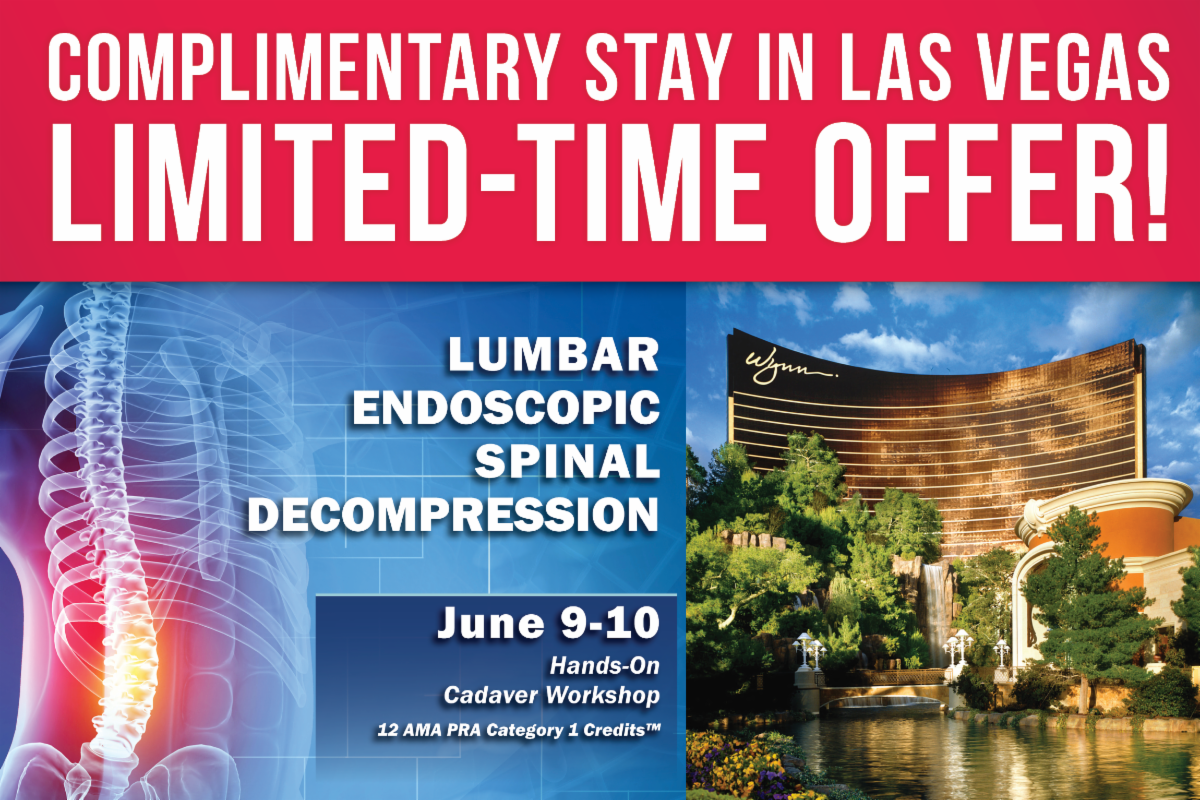
to provide travel details for the hotel accommodations.
|
|
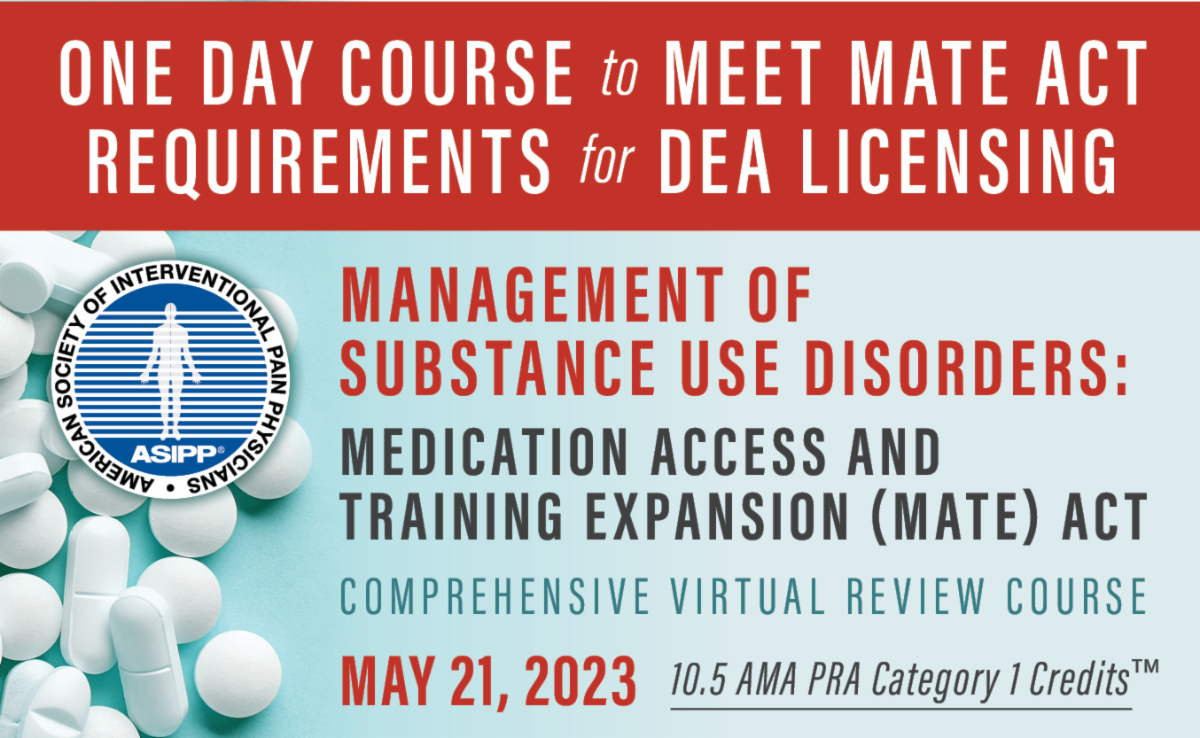
On December 29, 2022, the Consolidated Appropriations Act of 2023 enacted a new one-time, eight-hour training requirement for all Drug Enforcement Administration (DEA)-registered practitioners on the treatment and management of patients with opioid or other substance use disorders (Medication Access and Training Expansion (MATE) Act).
Beginning on June 27, 2023, practitioners will be required to check a box on their online DEA registration form—regardless of whether a registrant is completing their initial registration application or renewing their registration—affirming that they have completed the new training requirement.
The deadline for satisfying this new training requirement is the date of a practitioner’s next scheduled DEA registration submission—regardless of whether it is an initial registration or a renewal registration—on or after June 27, 2023.
This one-time training requirement affirmation will not be a part of future registration renewals.
In response to this need, ASIPP has developed the virtual review course Management of Substance Use Disorders: Medication Access and Training Expansion (MATE) Act.
This virtual review course will be held Sunday, May 21, 2023.
In addition to covering the required Curriculum to Meet MATE Act Requirements for DEA Licensing, it will also provide 10.5 AMA PRA Category 1 Credits™.
|
|
Now Available:
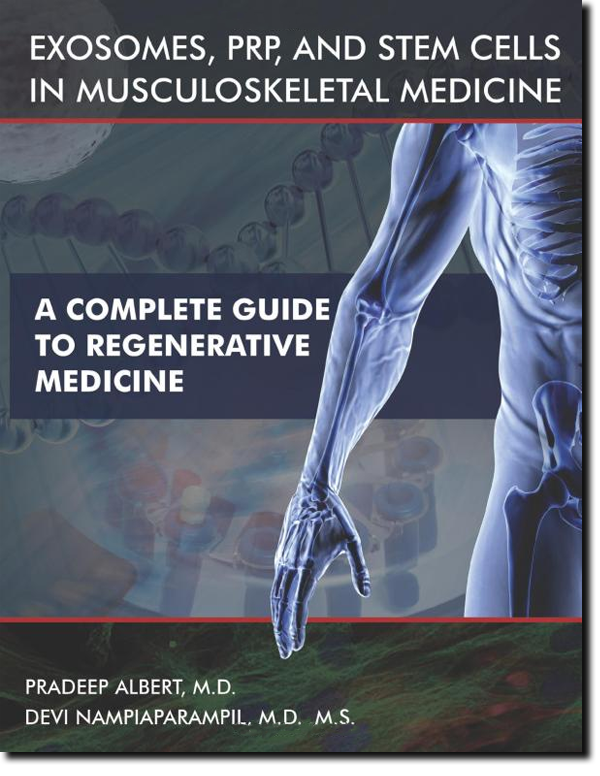
Exosomes, PRP, and Stem Cells In Musculoskeletal Medicine: A Complete Guide To Regenerative Medicine
Exosomes, PRP, and Stem Cells in Musculoskeletal Medicine is a comprehensive and up-to-date guide to regenerative medicine. It covers essential topics related to regenerative medicine including basic science, needle technique, anatomy, and advanced applications of stem cells. The book is structured in a clear and concise manner, with each chapter building upon the previous one, offering a step-by-step practical manual for how to perform these procedures based on the latest regulatory changes through early 2023.
The book includes a comprehensive discussion of mesenchymal (or medicinal) stem cells and a history of stem cells, along with detailed chapters covering the shoulder, elbow, hand and wrist, hip, knee, and foot and ankle. Although this book is geared toward physicians and scientists, it also is an invaluable resource for students, patients, and all that are interested in regenerative medicine. This book is a departure from many medical textbooks as it is crafted with the reader in mind. It is written in a clear and easily comprehensible style that is both informative and engaging. With numerous helpful illustrations, it is a must-have for any medical library.
Overall, Exosomes, PRP, and Stem Cells in Musculoskeletal Medicine provides a complete guide to regenerative medicine, presenting the latest developments and practical guidelines in the field, and is an essential resource for anyone involved in the study or practice of regenerative medicine.
|
|
Room block reservation deadline is TOMORROW!
|
|
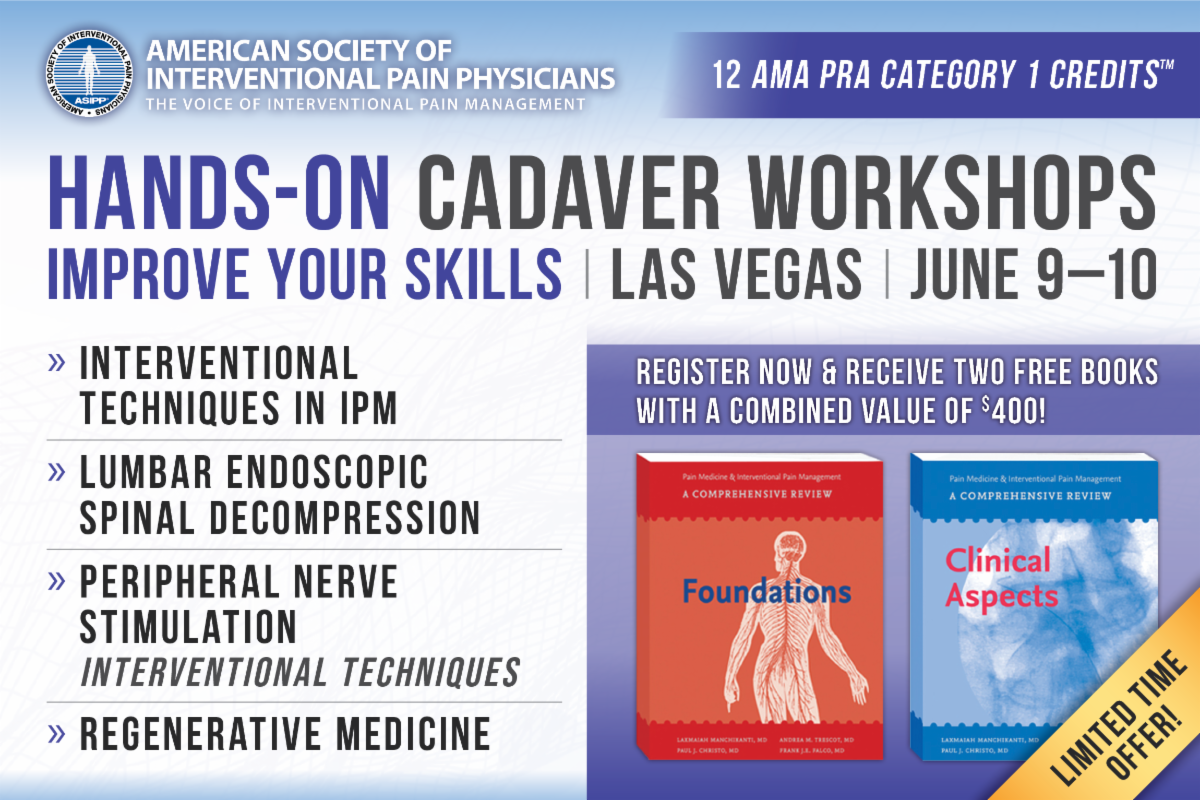
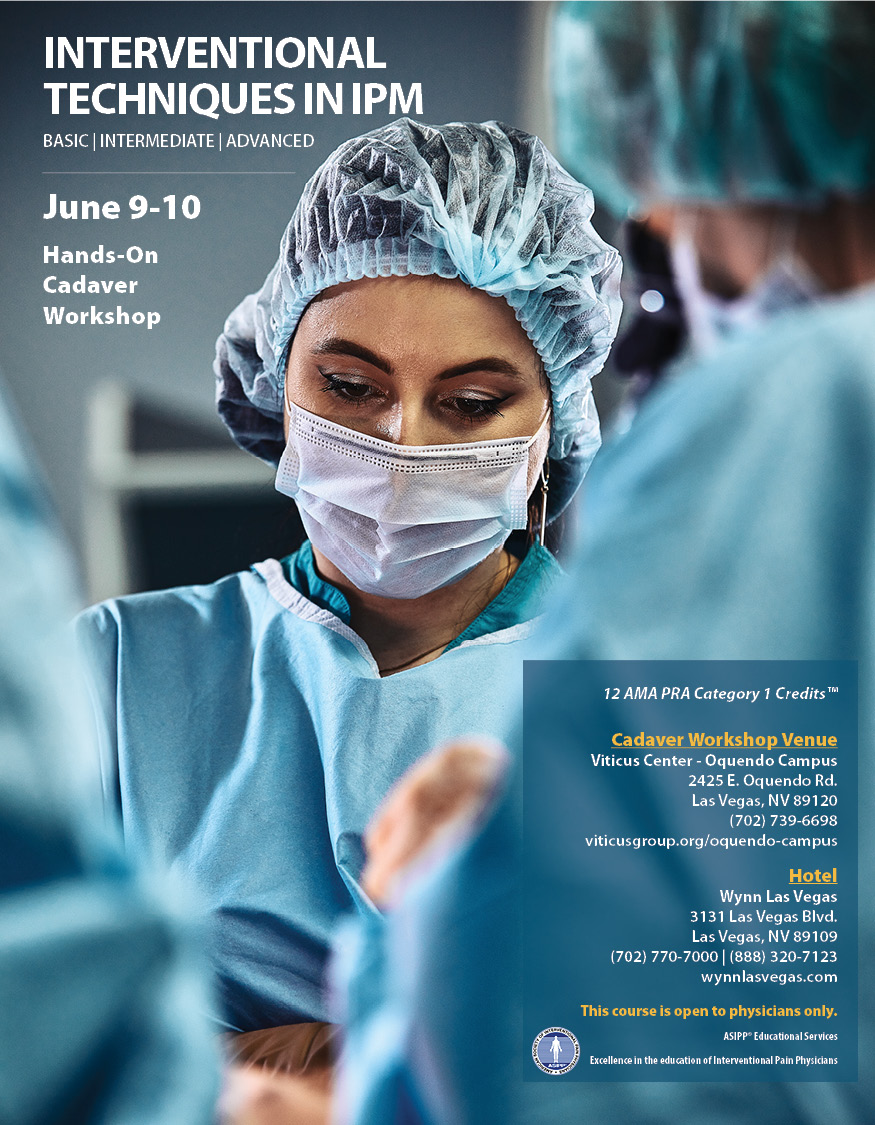
Have you registered for these
HANDS-ON CADAVER WORKSHOPS?
You won't want to miss these opportunities!
|
|
Room block reservation deadline is TOMORROW!
|
|
Recently, Dhruva, et al published an article on Long-Term Outcomes in Use of Opioids, Nonpharmacologic Pain Interventions, and Total Costs of Spinal Cord Stimulators Compared with Conventional Medical Therapy for Chronic Pain, showing no difference (click here to read the full article).
In response Drs. Manchikanti, Sanapati, and Hirsch sent a Letter to the Editor pointing out various issues related to this study and potential reasons (click here to read the letter).
|
|
The US Food and Drug Administration (FDA) has expanded the indication for Abbott Laboratories' spinal cord stimulation (SCS) devices to include treatment of chronic back pain in patients who have not had, or are not eligible for, back surgery, the company has announced.
The new indication spans all of Abbott's SCS devices in the US, which include the recharge-free Proclaim SCS family and the rechargeable Eterna SCS platform.
The devices feature the company's proprietary, low-energy BurstDR stimulation waveform, a form of stimulation therapy that uses bursts of mild electrical energy without causing an abnormal tingling sensation to help disrupt pain signals before they can reach the brain, the company explains.
|
|
Virtual
ABIPP Part I; ABIPP Path - Combined DCCPM/CSM virtual exam; ABIPP Competency Exam in IPM; ABIPP Competency Exam in Regenerative Medicine
Memphis, TN
ABIPP Part II - Practical Portion; ABIPP Competency Exam - Practical Portion; ABIPP Regenerative Medicine Competency Exam - Practical Portion
|
|
New language emphasizes potential for misuse, abuse, addiction, and overdose
The FDA is updating warnings for stimulants prescribed for attention-deficit/hyperactivity disorder (ADHD) and other conditions, citing concerns about nonmedical use of the drugs.
In a drug safety communication on Thursday, the agency said the boxed warning for the entire class of central nervous system stimulants would get standardized language to more clearly state the dangers -- including the risk for misuse, abuse, addiction, overdose, and death -- given that most of the current warnings are out of date. This class of drugs includes amphetamines such as Adderall and methylphenidate such as Ritalin and Concerta.
For example, the current warning of a "Potential for abuse and dependence" will be revised to "Warning: Abuse, misuse, and addiction," and the new labeling will warn of overdose and death in the event of misuse, especially with higher doses, snorting, or injection.
|
|
"A great need to reduce medication treatment in this vulnerable population," says researcher
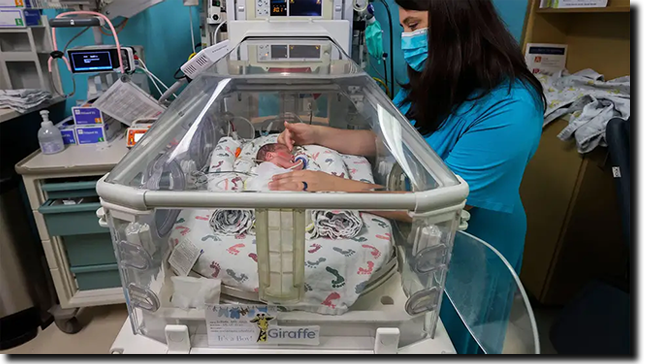
A crib mattress designed to vibrate gently for tactile sensory stimulation eased neonatal opioid withdrawal syndrome, reducing need for pharmacologic treatment, a randomized clinical trial showed.
This low-level random, or stochastic, vibrotactile stimulation (SVS) didn't reduce the number of newborns receiving morphine treatment (30.9% vs 35.6% with usual care, P=0.60).
However, the average of 6 hours per day of use did cut administration of morphine treatment by a relative 50%, researchers led by Elisabeth Bloch-Salisbury, PhD, of the University of Pittsburgh School of Medicine, reported in JAMA Pediatrics.
|
|
The deadline for Abstract submission is June 2.
|
|
|
Scott William Smith, MD, was treating thousands of patients
A prolific telehealth prescriber of sublingual ketamine, Scott William Smith, MD, has shut down his practice as of Wednesday after losing his ability to prescribe controlled substances. The closure drew an outpouring of frustration from abruptly cut-off patients, as well as questions about the long-term feasibility of online access to controlled substances.
According to an email to Smith's patients that was posted to Reddit and verified by the Washington Post, the Drug Enforcement Administration (DEA) has suspended Smith's controlled substance license and instructed him to close his practice.
"My privileges to prescribe controlled substances have been suspended until further notice," Smith wrote in the email. "I am in quite a bit of a shock about this."
|
|
But Democrats argue it won't be enough to fix the healthcare system
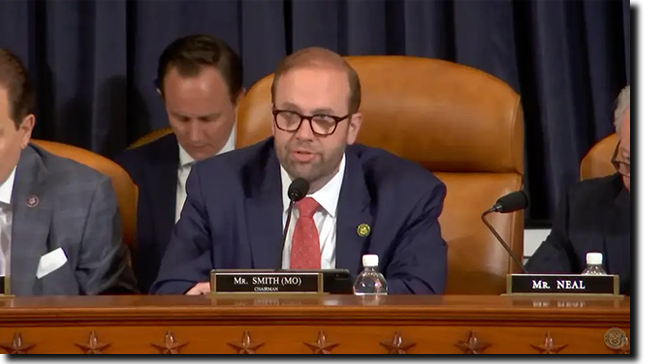
How much difference would more price transparency make in healthcare? House members heard -- and gave -- a variety of opinions on the topic at a Ways & Means Committee hearing Tuesday.
"Price transparency works," said Committee Chair Jason Smith (R-Mo.). "In the past 20 years, the prices of medical services increased by 130%. Meanwhile, other shoppable commodities -- like TVs, for example -- decreased by nearly 100% ... We have seen prices of shoppable healthcare services, like Lasik eye surgery, decrease by 15% over the last 15 years, while innovation and quality increased. Instead of keeping patients in the waiting room for real reform, we should pursue further price transparency tools to lower costs."
He criticized the Biden administration for not doing more to implement the price transparency provisions of the No Surprises Act, noting that only four hospitals have been fined for failure to make public their pricing, even though less than 25% of hospitals are said to be compliant with the law. "There are 6,000 hospitals in the United States," he said. "Do we really think that nearly every American hospital is in compliance? ... Cash-strapped patients need to be able to compare prices and decide where to get care."
|
|
- ASIPP Members Only Site Information - |
|
-
To log in for the first time you will need to click “forgot password” at the bottom of the login window.
- Check your email and then log in as directed.
-
If you have problems logging into your account, click here.
|
|
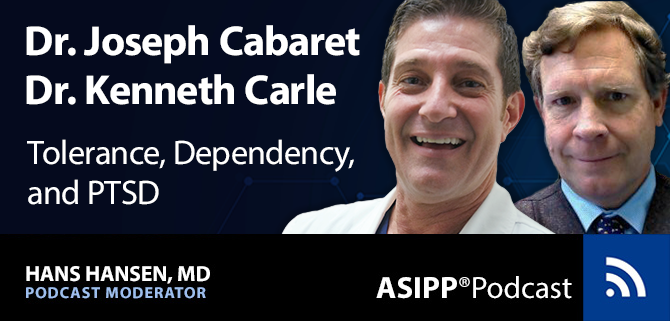
It is a pleasure to have Dr. Joe Cabaret return to the podcast because it’s not every day you get to hear from someone who is triple-boarded in anesthesia, pain, and addiction. The practice of pain medicine always has its difficulties—sometimes those difficulties involve simultaneously balancing pain, tolerance, and dependency. When you’re really trained and qualified to make the distinction between these three things, you’re better at balancing all of them. Dr. Cabaret not only understands pain, but he really understands addiction, so his approach to dealing with complex pain problems is especially effective. We also discuss central pain and its processing because, like it or not, most pain is processed through the central nervous system. That’s why we use so many different classes of medication—the Buprenorphines, Gabapentinoids, Pregabalins, and the like—we want to work in the central nervous system to help reduce the opioid load. Finally, we share some thoughts on the 2023 ASIPP (American Society of Interventional Pain Physicians) Annual Meeting.
We’re also welcoming a new guest to the podcast, Dr. Kenneth Carle, from Baltimore, Maryland. Dr. Carle is a practitioner of Interventional Pain Medicine who brings up several interesting talking points about the strategies we can use to help patients with PTSD.
|
|
Pain Medicine Case Reports (PMCR) and Editor-in-Chief Alaa Abd-Elsayed, MD, PhD would like to invite you to submit case reports and case series to the PMCR journal. Your article will be published free of charge.
Open access journals are freely available online for immediate worldwide open access to the full text of published articles. There is no subscription fee for open access journals. Open access journals are no different from traditional subscription-based journals: they undergo the same peer-review and quality control as any other scholarly journal.
Interested in becoming a member of the PMCR Editorial Board?
Editorial board members are asked to review 2-6 manuscripts per year. Please submit your most up-to-date CV to sgold@asipp.org for consideration.
For more information or to submit your articles, click here.
|
|
| CASE REPORT |
Omar I. Alnatour, MD, Mengjie Mellisa Wu, MD, Saba Javed, MD, and Billy K. Huh, MD
Abstract
BACKGROUND: With the recent COVID-19 pandemic, chronic pain physicians undoubtedly face the challenge of treating long-COVID within the already complex chronic pain patient population. Sympathetic blockade of the stellate ganglion has historically been utilized as a diagnostic and therapeutic tool in confirming and targeting the sympathetically mediated component of many chronic pain conditions, but its role in treating long-COVID symptoms has yet to be thoroughly studied or elucidated.
CASE SERIES: We present a unique case series where the utilization of stellate ganglion blockade in one case and use of stellate ganglion blockade followed by rhizotomy in another were successful in sustained and near-complete relief of all initial long-COVID symptoms during a 3-month follow-up period.
CONCLUSIONS: Our case series presents promising results on the role of stellate ganglion blockade in the sustained and near-complete relief of multiple long-COVID symptoms during the longest known follow-up period to date.
KEY WORDS: COVID-19, dysautonomia, long-COVID, rhizotomy, stellate ganglion block
|
|
| SYSTEMATIC REVIEW |
Zangong Zhou, MD, Xin Zheng, MD, Jianfang Song, MD, Xiangfeng Jin, MD, PhD, Lipeng Zhao, MD, and Shanling Liu, MD, PhD
Abstract
BACKGROUND: Thoracotomy is associated with severe postoperative pain. Effective management of acute pain after thoracotomy may reduce complications and chronic pain. Epidural analgesia (EPI) is considered the gold standard for postthoracotomy analgesia; however, it is associated with complications and limitations. Emerging evidence suggests that an intercostal nerve block (ICB) has a low risk of severe complications. Anesthetists will benefit from a review that assesses the advantages and disadvantages associated with ICB and EPI in thoracotomy.
OBJECTIVES: This meta-analysis aimed to evaluate the analgesic efficacy and adverse effects of ICB and EPI for pain treatment after thoracotomy.
STUDY DESIGN: Systematic review.
METHODS: This study was registered in the International Prospective Register of Systematic Reviews (CRD42021255127). Relevant studies were searched for in PubMed, Embase, Cochrane, and Ovid databases. Primary (postoperative pain at rest and during cough) and secondary (nausea and vomiting, morphine consumption, and length of hospital stay) outcomes were analyzed. The standard mean difference for continuous variables and the risk ratio for dichotomous variables were calculated.
RESULTS: Nine randomized controlled studies with a total of 498 patients who underwent thoracotomy were included. The results of the meta-analysis demonstrated no statistically significant differences between the 2 methods in terms of the Visual Analog Scale scores for pain at 6-8, 12-15, 24-25, and 48-50 hours at rest and at 24 hours during coughing after surgery. There were no significant differences in nausea and vomiting, morphine consumption, or length of hospital stay between the ICB and EPI groups.
LIMITATIONS: The number of included studies was small, and the quality of evidence was low.
CONCLUSIONS: ICB may be as effective as EPI for pain relief after thoracotomy.
KEY WORDS: Thoracic surgery, intercostal nerve block, epidural analgesia, postthoracotomy pain, postoperative pain, randomized controlled trial, meta-analysis, systematic review
|
|
| SYSTEMATIC REVIEW |
Donghua Liu, Master, Jiao Xu, Master, Qiang Wang, Master, Longyu Zhang, Master, Shi Yin, Master, Bo Qian, Master, Xingxuan Li, Master, Tianlin Wen, MD, PhD, and Zhiwei Jia, MD, PhD
Abstract
BACKGROUND: Percutaneous balloon kyphoplasty (PKP) is widely used to treat osteoporotic vertebral compression fractures (OVCFs). In addition to rapid and effective pain relief, the ability to recover the lost height of fractured vertebral bodies and reduce the risk for complications are believed to be the main advantages of this procedure. However, there is no consensus on the appropriate surgical timing for PKP.
OBJECTIVES: This study systematically evaluated the relationship between the surgical timing of PKP and clinical outcomes to provide more evidence for clinicians to choose the intervention timing.
STUDY DESIGN: Systematic review and meta-analysis.
METHODS: The PubMed, Embase, Cochrane Library, and Web of Science databases were systematically searched for relevant randomized controlled trials and prospective, and retrospective cohort trials published up to November 13, 2022. All included studies explored the influence of PKP intervention timing for OVCFs. Data regarding clinical and radiographic outcomes and complications were extracted and analyzed.
RESULTS: Thirteen studies involving 930 patients with symptomatic OVCFs were included. Most patients with symptomatic OVCFs achieved rapid and effective pain relief after PKP. In comparison to delayed PKP intervention, early PKP intervention was associated with similar or better outcomes in terms of pain relief, improvement of function, restoration of vertebral height, and correction of kyphosis deformity. The meta-analysis results showed there was no significant difference in cement leakage rate between early PKP and late PKP (odds ratio [OR] = 1.60, 95% CI, 0.97–2.64, P = 0.07), whereas delayed PKP had a higher risk for adjacent vertebral fractures (AVFs) than early PKP (OR = 0.31, 95% CI: 0.13–0.76, P = 0.01).
LIMITATIONS: The number of included studies was small, and the overall quality of the evidence was very low.
CONCLUSIONS: PKP is an effective treatment for symptomatic OVCFs. Early PKP may achieve similar or better clinical and radiographic outcomes for treating OVCFs than delayed PKP. Furthermore, early PKP intervention had a lower incidence of AVFs and a similar rate of cement leakage compared with delayed PKP. Based on current evidence, early PKP intervention might be more beneficial to patients.
KEY WORDS: Percutaneous balloon kyphoplasty, osteoporotic vertebral compression fractures, osteoporosis, surgery, operative timing
|
|
ASIPP is now in collaboration with Curi Medical Liability Program
Since this malpractice insurance program officially launched in November 2018, ASIPP has signed up hundreds of providers with an average savings of 30%. This is professional liability insurance tailored to our specialty and will stand up for us and defend our practices.
Curi is a full-service advisory firm that serves physicians and their practices. Their valued advice is grounded in your priorities and elevated in your outcomes. They are driven by a deep understanding of your specific circumstances in medicine, business, and life. To read a few important points to keep in mind about the program, including discounts, administrative defense, cyber coverage, aggressive claims handling, and complimentary risk management CME activities, visit our website.
|
|
ASIPP® has formed a partnership with Henry Schein and PedsPal, a national GPO that has a successful history of negotiating better prices on medical supplies and creating value-added services for independent physicians. Working with MedAssets, PedsPal provides excellent pricing on products like contrast media that alleviate some of the financial pressures you experience today.
|
|
ASIPP® is now offering our members the benefit of a unique revenue cycle management/ billing service.
We have received a tremendous amount of interest in the ASIPP® billing and coding program.
Click here to learn more about the negotiated rate for practices and more!
|
|
|
up-to-date news related to you, your practice, and your patients!
|
|
|
|
|
|
|