SoCo Correspondent delivers the latest news from the County of Sonoma, twice a month, to your email inbox. Subscribe in English or Spanish and share with your friends and neighbors. | | Sonoma County takes next steps in planning for the future | | |
Where should new homes and businesses go? How can Sonoma County accommodate growth while protecting farmland and natural resources? How should communities prepare for wildfires, floods and a changing climate? And what infrastructure and services will communities need in the decades ahead?
Those are some of the questions Sonoma County residents will help explore as the County undertakes its first comprehensive update of the General Plan in nearly two decades.
General Plan Sonoma is the County’s long-term roadmap for the unincorporated areas outside its nine cities. It guides decisions about land use, housing, transportation, infrastructure, agriculture, natural resources and public safety.
Permit Sonoma began updating the plan in 2024 to reflect how Sonoma County has changed since the last comprehensive update in 2008 and plan for the decades ahead. The effort has already involved more than 4,000 participants and generated more than 5,000 comments. On Sept. 15, the Board of Supervisors reviewed the work completed so far as the General Plan update moves into policy development.
This fall, the County expects to seek community input on issues, opportunities and priorities in a series of workshops, focus groups, and online surveys. Feedback will help inform choices about how communities grow, what lands and resources are protected, and what policies guide development in the years ahead.
“People know their communities better than anyone – what they value, what they need and what they want our county to be like for the next generations,” said Supervisor Rebecca Hermosillo, chair of the Board of Supervisors. “We want the community to be a part of the process: share what is working, what needs to change and what they want their communities to look like in the future. This General Plan update will help guide that process.”
| | Sonoma County agriculture declines for second straight year | | |
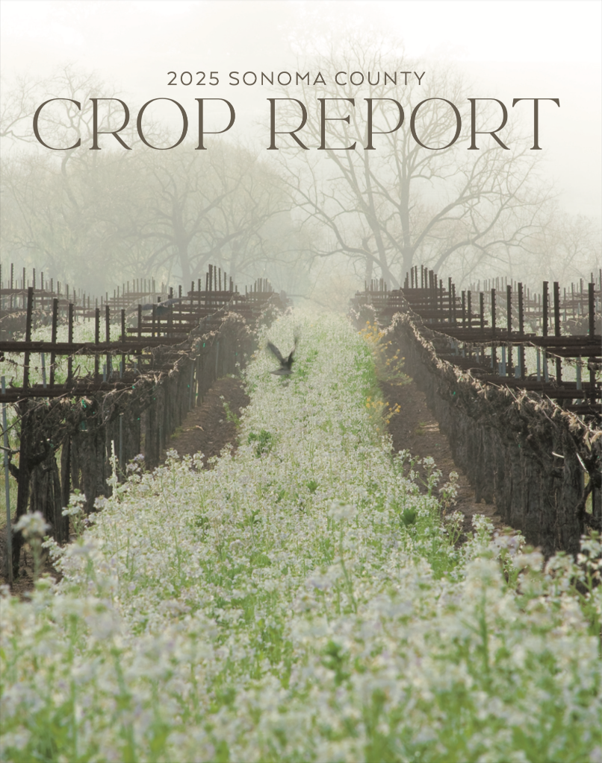
Sonoma County’s farm sector saw sales decline for the second consecutive year in 2025, falling to their lowest level since 2020, according to a new report.
The value of local agricultural products dropped to $758.5 million last year, a decline of 9.5%, according to the 2025 Sonoma County Crop Report. Much of the drop was concentrated in the county’s world-renowned wine industry, where the value of the 2025 grape harvest fell 17.3% to nearly $518 million. Some growers left grapes unharvested on the vine, unable to secure contracts for their fruit amid declining demand.
Still, the downturn was not felt evenly across agriculture, according to the report, which was presented to the Board of Supervisors last week. The county’s apple orchards yielded their largest crop since 2016, while livestock and poultry products and nursery products also increased in value.
The findings come as the County works to strengthen local agriculture. In June, the Board declared agriculture and working lands critical infrastructure and approved an action plan to support farmers, preserve working lands and strengthen the long-term viability of agriculture.
| | |
The plan includes updating land-use policies, expanding opportunities for agritourism and giving farmers more flexibility to adapt their operations. One piece moved forward Sept. 15, when the Board gave final approval to new rules that make it easier for growers to change crops as conditions change.
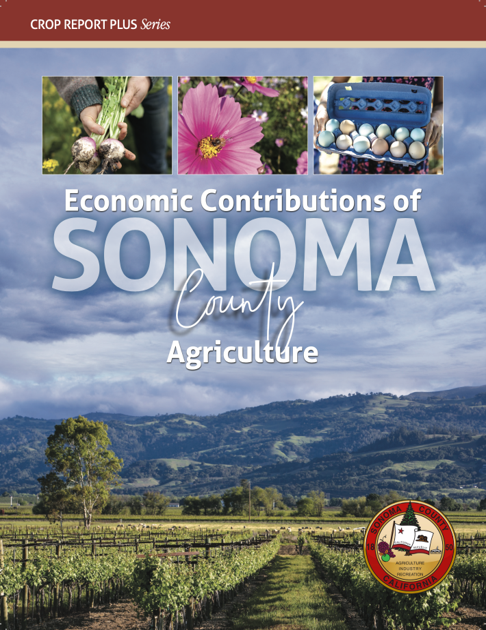
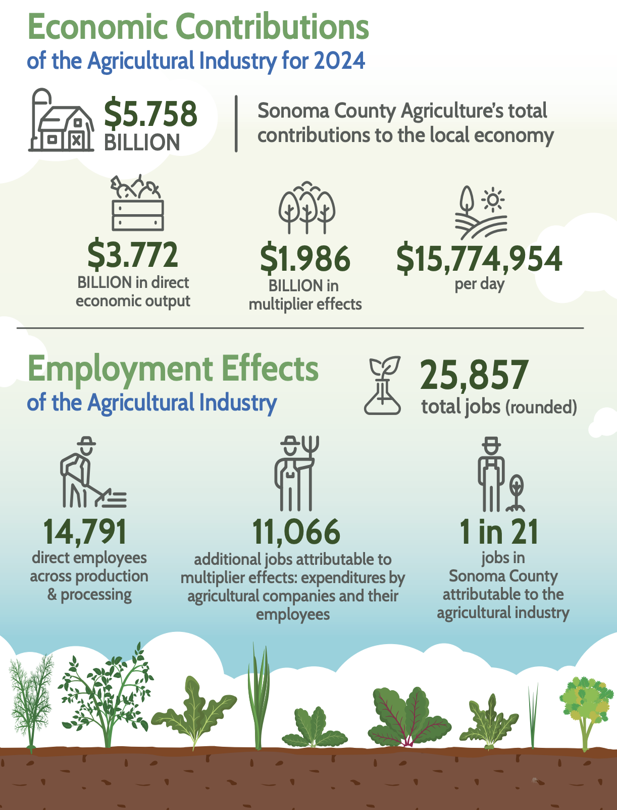
The County has published the Crop Report annually since 1928 to track changes in agricultural production. This year, a new companion study widens the lens, examining how agriculture moves through the rest of the local economy. Using 2024 data, it estimates that agricultural production, local processing and the spending they generate contributed $5.8 billion to Sonoma County’s economy and supported nearly 26,000 jobs.
| | “Agriculture is facing significant pressures, and those challenges are felt most deeply by the thousands of workers and families who help sustain this vital industry,” said Supervisor Rebecca Hermosillo, chair of the Board of Supervisors. “Our responsibility is not just to preserve agriculture as part of Sonoma County’s heritage, but to ensure the industry remains resilient and that the people who power it can afford to live, raise their families, and build a future here.” | | Freedom Trax opens more of Doran Beach to wheelchair users | | |
Most beachgoers don’t give much thought to crossing the sand to reach the water. But for people who use wheelchairs, that stretch of deep, soft sand can be a formidable barrier.
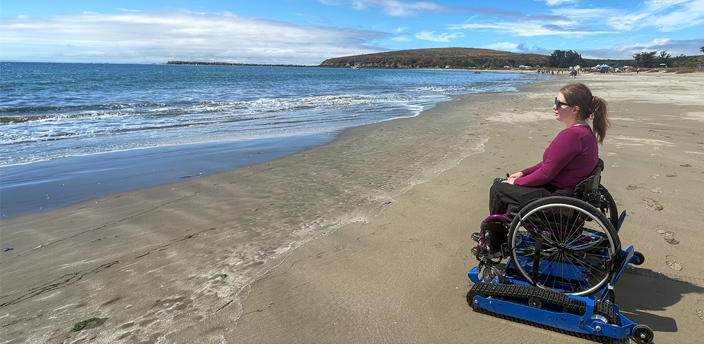
Freedom Trax is changing that at Doran Regional Park, where a new program makes it easier than ever for visitors in manual wheelchairs to enjoy a day at the beach.
People who use manual wheelchairs may now borrow one of the park’s three Freedom Trax units at no cost. The motorized device, which uses wide, tank-like treads to crawl across sand and other uneven surfaces, is steered by a joystick that can be operated by the wheelchair user or positioned at the back for a companion to control. The user remains in their own wheelchair, which is secured atop the unit.
Nearly 50 people have borrowed the equipment since a pilot program began this summer. One visitor, a double amputee who has used a wheelchair for 35 years, traveled to the end of Doran’s 2-mile beach without relying on her sister to push her through the sand. Another man celebrated his 47th birthday by using Freedom Trax to explore the shoreline, the first time he had ever been on a beach.
“The response shows us how meaningful it is to remove barriers and give more people the freedom to experience the ocean,” said Nubia Padilla, Regional Parks’ accessibility and equity manager.
Freedom Trax is available Fridays, Saturdays and Sundays through Nov. 15. The program will resume next spring after the winter storm season. Reservations are strongly recommended. Email Parks@SonomaCounty.gov or call 707-565-2041 Mondays through Fridays between 8 a.m. and 4:30 p.m.
Regional Parks and the nonprofit Sonoma County Parks Foundation obtained a grant from the California State Coastal Conservancy to purchase the Freedom Trax units, which cost $7,500 each. The purchase was also supported in part by Parks for All — Measure M, the local sales tax that supports Sonoma County’s regional and city parks.
Doran Regional Park also offers free non-motorized, all-terrain beach wheelchairs and walkers on a first-come, first-served basis. Beach wheelchairs have oversized balloon tires designed for sand and uneven surfaces and are available in standard, reclining and children’s models. All-terrain walkers have four wheels, hand brakes and built-in seats for resting.
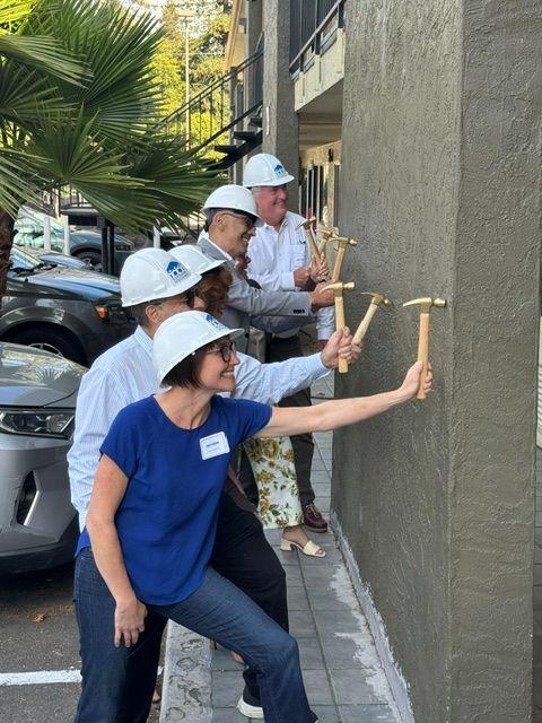
| | County investment helps turn Rohnert Park motel into housing for seniors | | Supervisor David Rabbitt, top, joins local leaders at a groundbreaking ceremony for The Terraces at Copeland Creek. | | |
With a boost from the County, a Rohnert Park motel is being transformed into 70 affordable apartments where seniors experiencing homelessness can find a stable home and services to help them keep a roof over their heads.
County leaders joined Burbank Housing and other partners Sept. 16 to celebrate the start of construction at the Terraces at Copeland Creek, located at the former Best Western Inn on Redwood Drive.
The development will provide permanent supportive housing, a strategy that pairs affordable apartments with services that help residents remain safely and stably housed. Through a partnership with COTS, Committee on the Shelterless, residents will receive individualized help accessing health and wellness resources, benefits and other services that support independent living.
| | |
The Sonoma County Housing Authority committed 70 project-based vouchers to the development, an investment valued at $1.68 million annually for up to 40 years. The vouchers will help eligible residents pay their rent while providing reliable, long-term funding for the project.
The investment grew out of a December 2024 action by the Board of Supervisors to commit 150 future housing vouchers to expand the supply of housing with supportive services in Sonoma County. Following a competitive process, Burbank Housing received 70 vouchers from the County to support its successful application for $28.7 million in funding from the state’s Homekey+ program.
“Homelessness is a complex challenge, and addressing it requires investments that are both practical and built to last,” said District 2 Supervisor David Rabbitt, who represents west Rohnert Park. “The County made this long-term commitment because a stable home, combined with supportive services, can help people move beyond homelessness and thrive. This collaborative effort will strengthen our entire community for years to come.”
The project received additional support from Providence and the City of Rohnert Park, which partnered with Burbank Housing to advance the development. Construction is expected to take about 12 months.
| | Sept. 29 webinar explains new funding for homeless services in Sonoma County | | |
Sonoma County is changing how it addresses homelessness by more closely connecting housing assistance with services that help people struggling with mental health issues, drug use and alcoholism.
The shift, driven by changes in state law, will change how millions of dollars in behavioral health funding are spent in Sonoma County. The goal is to help some of the community’s most vulnerable residents find or keep a safe place to live while getting the care they need.
Residents can learn what is changing – and what it could mean for Sonoma County – on Sept. 29 during an online public forum. Melissa Ladrech, the County’s Behavioral Health Services Act coordinator, and Hunter Scott, manager of the Housing Supports and Services Section, will explain the plan, including new investments in housing for people with serious behavioral health conditions. The presentation will be followed by an open question-and-answer session.
The hour-long forum, which begins at 5:30 p.m., is the eighth in a series of webinars offered by the Sonoma County Department of Health Services to expand public understanding of homelessness.
| | Sept. 30 webinar offers update on our water supply | | |
It rained less than usual this year. So what does that mean for our water supply?
Sonoma County residents can hear directly from local and federal water experts Sept. 30 during a free webinar that will explore how much rain we received, how much water is stored in our reservoirs and what experts are forecasting for the coming winter as El Niño conditions strengthen.
The webinar takes place on the final day of the 2025-26 water year, which began Oct. 1. Through Sept. 20, Ukiah received 30.7 inches of rain, or 84% of its historical average. Santa Rosa received 26.6 inches, or 87% of average.
Supervisor Rebecca Hermosillo, chair of the Sonoma Water Board of Directors, will introduce the one-hour webinar, which begins at noon. Nick Malasavage of the U.S. Army Corps of Engineers will provide an update on reservoir storage and local use of Forecast-Informed Reservoir Operations, or FIRO, a strategy that utilizes improved weather forecasts to safely hold more water in reservoirs for dry periods. Sonoma Water consultant Jeanine Jones and Don Seymour, deputy director of engineering at Sonoma Water, will discuss forecasts for the upcoming winter and water supply planning. There will also be time for questions from the community.
| | Faces of Sonoma County: Meet Stephanie Johnson | | This is part of an ongoing series of profiles highlighting public servants across a variety of departments at the County of Sonoma. | | |
Name: Stephanie Johnson
Title: Senior Office Assistant, Sonoma County Transit
Years with County: 26
Personal side: I am originally from Phoenix, Arizona. I moved to Sonoma County when I was 10 with my parents and two sisters. I’ve been happily married to my husband since 2005. We have two kids, a son who is 26 and getting married next year and a 17-year-old daughter.
Education and/or certifications: I was just a year out of high school when the opportunity to work at Sonoma County Transit landed in my lap. I was only 19, and I feel so fortunate to still be here 26 years later.
What do you do? I work at Sonoma County Transit, which serves more than 2,700 passengers a day on 19 bus routes that carry people across the county. In my role, I answer the phone calls and help our riders navigate the County’s transit system. I assist them with trip planning and coordinating with our routes or connections to the other transit systems in Sonoma County. I help them with pass sales and Clipper Cards, which make it easy for riders to pay fares on more than 20 different public transit systems across the Bay Area. They even come with discounts for youth, seniors, riders with disabilities or low incomes. I also help people who need assistance with our paratransit service, which provides door-to-door vans for riders with disabilities who cannot use fixed-route buses.
What gives you fulfillment? I love being able to help people. Not just at work, but in life itself. I care about people. I enjoy being able to tend to our riders and help them navigate our public transit. I love being able to put a caller at ease after helping them plan their trips. I enjoy connecting with people and have loved building connections with our regular riders through the years.
What is one of the biggest misconceptions about Sonoma County Transit? One of the biggest misconceptions is that Sonoma County Transit is not safe. That is not true at all. Safety is a major priority for our team. Our drivers receive monthly safety training and our management team meets weekly so that everyone is always on the same page. All of our buses are equipped with cameras that management can review when necessary. We take riders’ calls, concerns and questions to heart and are always working to provide a safe and reliable system.
Many people don’t understand how inexpensive it is to ride Sonoma County Transit. All nine of our local bus routes are free for everyone to ride. Youth 18 and under, college students with valid identification, and veterans also ride free on our 10 intercity routes. For everyone else, riding between cities can cost from $1.50 to $4.80, depending on how far you travel, although seniors and people with disabilities get a 50% discount on intercity services.
Passions outside of work? When I am not working, I enjoy spending time with my family. I love attending concerts, music festivals and plays, going to the movies and visiting local artisan markets. I love cooking with my daughter and watching my husband and son play softball with their teams. I’m also happy just curling up on the couch with a good horror movie.
| | Sonoma County helps secure $3.15 million settlement with Terminix | | |
The Sonoma County District Attorney’s Office has helped secure a $3.15 million settlement over the improper disposal of pesticides, hazardous waste and confidential customer records by Terminix, the world’s largest pest control company.
The County’s Environmental and Consumer Law Division worked with prosecutors in 28 counties across California after investigators found hundreds of pesticide and hazardous waste items improperly thrown into company trash bins. The waste was headed to transfer stations and landfills that were not permitted to accept it. Investigators also found instances where confidential customer records were discarded without first making the personal information unreadable.
Terminix cooperated after being notified and strengthened its procedures for handling waste and customer information. The company has two facilities in Sonoma County. As part of the settlement, Sonoma County will receive $347,350 in civil penalties and cost recovery.
The Environmental and Consumer Law Division investigates and prosecutes cases involving pollution, wage theft and unlawful business practices. It also helps residents resolve disputes with local businesses and alerts the community about scams and other consumer issues.
“Our Environmental and Consumer Law Division is working with other district attorney offices throughout California to ensure that businesses comply with environmental protection laws to preserve our natural resources and to ensure confidentiality of protected consumer information,” District Attorney Carla Rodriguez said.
| | Permit Sonoma to close customer service counter on Fridays for six-month test | | |
With more customers using online services and fewer visiting its offices, Permit Sonoma is adjusting the hours of its in-person customer service counter as part of a six-month pilot.
The department’s Permit Center will close every Friday starting Oct. 2. The change is designed to reduce permit wait times by giving staff more dedicated time to process applications and address outstanding work.
Permit Sonoma has expanded digital access to its services since 2020, allowing customers to complete most tasks without traveling to the office. As a result, average weekly visits to the Permit Center have declined 63% over the last seven years.
Staff will continue working Fridays, giving them a dedicated day to focus on permit processing rather than dividing their time between applications and counter coverage. Building inspections and project meetings will also continue Fridays during regular business hours.
The in-person counter and phone services will remain open Monday through Thursday at (707) 565-1900. Most services are also available through the Permits Online system, and customers can find answers to frequently asked questions through Permit Answers.
| | Join the conversation at SoCo Chat | | |
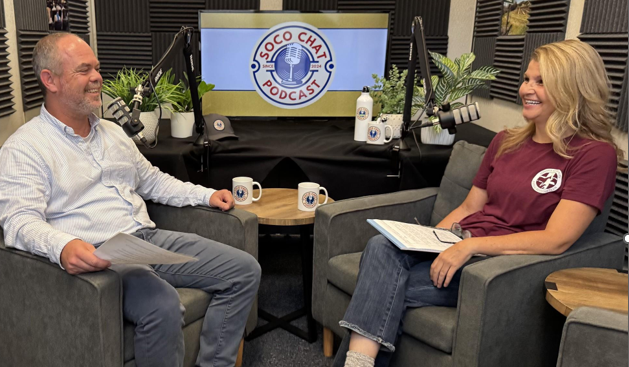
Matt Brown, left, supervising communications specialist in the County Executive’s Office, interviews Angie Martin, community outreach manager for the Sonoma County Animal Response Team, during a new episode of SoCo Chat.
When disaster strikes, Sonoma CART jumps into action to protect animals in Sonoma County. The volunteer-run nonprofit works alongside Sonoma County Animal Services and other local agencies to help evacuate, shelter and reunite animals with their owners during emergencies. Angie Martin, community outreach manager with the Sonoma Community Animal Response Team, joins SoCo Chat to explain the group’s role during a disaster, what you can do to prepare your animals for an emergency, and how you can support their work.
Subscribe to SoCo Chat on Spotify, Apple Podcasts, Amazon Music and YouTube, and check out our growing library of episodes. Recent guests and topics of discussion have included:
- Sonoma County urgently needs more foster families to provide safe, stable homes for children who cannot remain with their parents. Meg Easter Dawson, program development manager at Valley of the Moon Children’s Center, discusses the realities of foster parenting, the support available to foster families, and the profound difference a caring adult can make in a child’s life. Learn who can become a foster parent, what to expect from the process, and how you can help create a brighter future for a local child in need.
- Have you ever wondered how Sonoma County preserved its rural charm and sweeping landscapes? It didn’t happen by accident. As much of the Bay Area was urbanizing, visionary Sonoma County conservationists sought to protect the open spaces and farmlands that are vital to our character. Misti Arias, general manager of Sonoma County Ag + Open Space, explains the agency’s role in conserving land for the future and increasing the quality of life in Sonoma County.
- Charles M. Schulz – Sonoma County Airport is soaring to new heights. Airport Manager Jon Stout details its evolution into a regional hub with direct flights to 15 destinations across the western United States. Get the inside story of the airport’s 15-year campaign to attract Southwest Airlines to Sonoma County. Plus, Stout addresses community concerns about aircraft noise and lays out his vision for the airport’s future.
| | Find room to grow with a County job | | |
The County currently has more than 30 job openings posted on its website. How can you improve your chances of landing one?
Sign up for the next Start Here! class, which provides an overview of the County of Sonoma’s job application, examination and selection processes. The next two-hour class will be held Oct. 15 at 10 a.m. on Zoom.
The free class is intended for the public, whether you are looking for a new position now or planning for a future employment opportunity. Participants will learn how to submit a thorough application, best practices for the interview and examination, and much more.
Contact us at careers@sonomacounty.gov to register for the Oct. 15 class or sign up for our mailing list to be notified of future classes.
| | Adopt the pet of the week | | |
My name is Milo. I’m a 13-month-old German shepherd/Siberian husky mix who was brought to the shelter in May. I may not be ready to go to college, but I’m already a pretty good student. Like any youngster, I have a few normal puppy antics and will need continued guidance as I grow. The good news: I’m off to a fantastic start! I enjoy being handled, take treats with a wonderfully gentle mouth, and have already learned “sit” and “down.” I’m eager to please and ready to find a family who will help me keep learning – and enjoy all the fun, cuddles, and tail wags that come with raising a great puppy.
Milo is one of dozens of cats, dogs, rabbits and other animals at Sonoma County Animal Services in need of adoption
Animal Services helps match pets and families through an adoption process designed to support your lifestyle and the animal’s needs. Shelter staff are ready to assist with applications, answer questions and share details about each animal’s health, temperament and care. All animals adopted through the shelter go home spayed or neutered, microchipped and up to date on vaccinations, giving your new companion the healthiest start possible in your home.
| | Get involved with County government | | |
Government is only as good as the people who step forward to serve. There are many opportunities available now to support the community by serving on County boards, commissions and committees. Here are just three examples:
-
Sonoma County Coast Municipal Advisory Council – Advises the Board of Supervisors on planning and management issues affecting the Sonoma Coast while providing a forum for community input and communication between residents, businesses and County leaders.
-
Local Task Force on Integrated Waste Management – Advises the Sonoma County Zero Waste Agency and the Board of Supervisors on waste reduction, recycling, composting and disposal issues.
-
Workforce Investment Board – Develops regional and local workforce plans and helps guide job training, employment and youth workforce programs under federal workforce law.
Check out the full list of vacancies and discover how you can help shape the future of Sonoma County.
| | Volunteer and employment opportunities | | |
(stories may require subscriptions)
| | Upcoming meetings and events | | Upcoming meetings and events | | Getting outside and enjoying the county | | Follow us online or contact us via email | | | | |