|
The USDA annual cattle report was released on January 31, 2025. A question on the minds of cattle producers is “when will record high cattle prices decline?”. Multiple factors are at play and how they develop over the next few months and coming year(s) will impact prices cow-calf producers receive. Cow-calf producers are in a special and unique position in the cattle industry, because they are generators of new revenue through calf production and all other entities in beef production supply chain depend on the steer and heifer calves they produce. Risks to high cattle price are related to supply of cattle for growing and finishing, which can be affected by 1) drought in cattle production regions of the country, 2) corn price increase, 3) heifer retention for herd rebuilding, and 4) increased competing protein supply from pork and poultry. Avian influenza will eventually be resolved and the supply of protein from poultry will increase, which will compete with beef for consumer spending.
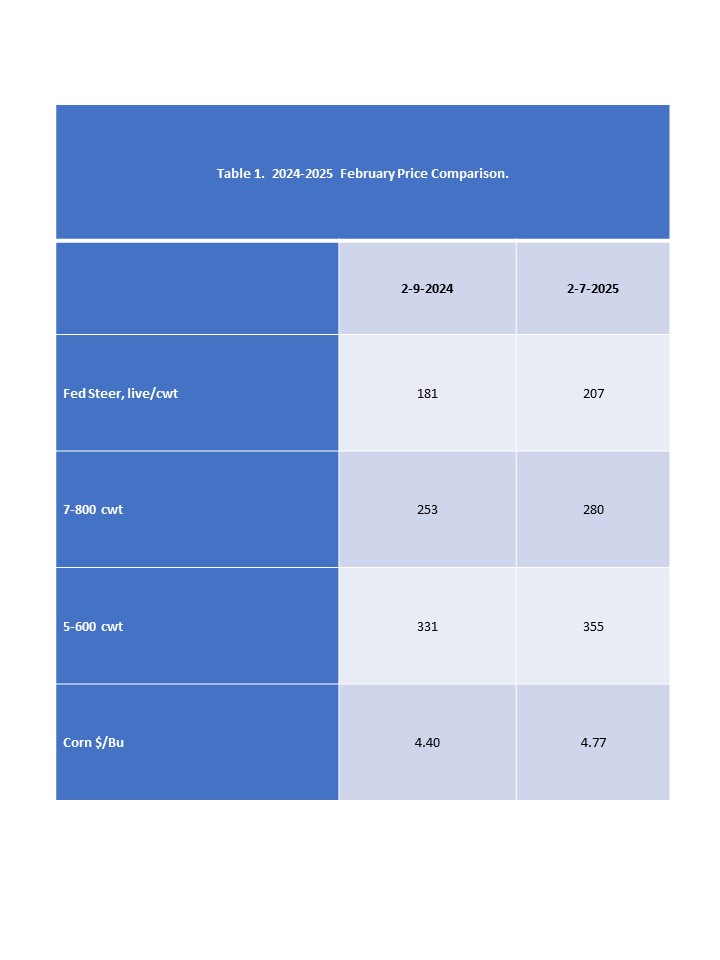
Comparing cattle prices between first week of February 2024 to the first week of February 2025 is remarkable (Table 1). Fluctuations in the live cattle futures contract will change. For example, the live cattle (LC) contract on 2-7-25 was $207/cwt, however, the LC contract today (2-11-2025) is $195.82/cwt. The futures market is not static and is commonly in a state of change due to investor trading that affects what cattle buyers are willing to pay for the cattle they purchase.
Given the various factors that can affect price increase or decline, there are price protection tools available for producers to include: Livestock Risk Protection, options contracts, and forward pricing. Weather is probably one of the major deterrents to herd expansion, because limited precipitation in cow-calf producing areas may persist and according to Kevin Good, CattleFax Vice President and Analyst, older producers that dispersed entire herds due to drought may not want to repopulate. And young producers, without substantial financial assistance from family or others, will find entering the cow-calf business virtually impossible due to the overwhelming financial risk; however, starting small combined with off farm income can provide an entry pathway for those willing to work long hours.
|