|
WORLD WAR II HERITAGE DESIGNATION IS DESERVED AND EXCITING
By Richard B. Lucas, Mississippi Home Columnist
Back in early December, just when the holidays were beginning to consume most of our thoughts, a very
important moment occurred for the City of Pascagoula. At that time, our fair home town was officially
designated as an American World War II Heritage City by the National Park Service.
Understand, this honor is a very big deal. The American World War II Heritage Cities Program honors the
contributions of local towns, cities, counties, and their citizens who stepped into the workforce to
support America’s war effort during World War II. Pascagoula is one of just 19 communities in the
entire country who have received the designation.
Those of us who grew up in Pascagoula and/or live here now have always been aware of the
contributions our city made to our country’s WW II effort, and how involved we remain in the national
defense system. Perhaps we’ve always also taken these things for granted. Now, with the recognition
brought from being a World War II Heritage City, we need to realize how special we are in this regard.
Nothing as prestigious as this award comes without a couple of central elements: the facts to back up
one’s worthiness (which we have in spades), and a concerted effort to present the case, for the
recognition to happen. The latter came in the form of a local group of citizens brought together by my
friend, author and proud Pascagoulan Martin Hegwood, who did the lion’s share of the work to get this
done.
In putting together this column, I asked Martin to refresh my memory on how this project began,
progressed, and eventually succeeded. His answer was, predictably, well informed and well written. I
would like to therefore share with you excerpts of what Martin related to me, kind of a column within a
column if you will.
“I was in a doctor’s waiting room on September 2, 2020, and happened to look up at a TV screen and
saw then-President Trump standing at a podium, outdoors, with lots of flags in the background. The
‘crawl’ at the bottom of the screen said that ‘the President is in Wilmington, North Carolina, for
ceremonies dedicating Wilmington as the nation’s first WWII Heritage City’ or words to that effect. I had
never heard of any WWII Heritage City, but it struck me that if any city in America has a heritage from
that war and its aftermath, it’s Pascagoula. So I looked it up and found that it was a brand new program
administered by the National Park Service under the provisions of a law called the Dingell Act.
“The Act lists a lot of categories that would be considered in the naming of these cities (war bond
activities, war materiel manufacturing, foodstuffs for the war effort, civil defense programs, lots of other
stuff), and Pascagoula checked every box. A requirement is that nominations for WWII designation must
come from the highest elected official of the city. So I spoke to Mayor Jay Willis, and he immediately
said he would nominate after our group pulled the application together. He also suggested that I
present the program to the City Council, which I did, and they also were very receptive. Then our
committee started meeting and getting mobilized in earnest. Richard, you were all in from the start, and
guided me on drumming up public support. We went to the Historical Preservation Commission, the
Maritime Center, the United Way, the Chamber of Commerce, and I don’t remember where else.
Everybody showed strong support and offered to help however they could.
“Since the program is limited to no more than one city per state, I thought it would be wise to be ready
to move fast once the process was put in place to get the jump on any competition. I began searching
newspaper files for editions between 1938 and 1945, and found a world of information. I researched for
over a year through these and other files plus word of mouth interviews, using the Dingell Act as my
point of reference. Finally, the official guidelines came down from the National Park Service, but they set
a very narrow window to submit applications, six months I believe. It was an attainable goal, because I
had already done the legwork, and Katarina Scott, the city’s Director of Communications, worked very
hard and very quickly in packaging my research and sending it to the NPS with the mayor’s approval. The
whole process took a little over a year once we really got started, and it was pretty intense work, lots of
time in archives.
“I am delighted that Pascagoula has been named a WWII Heritage City. It’s a distinction that can be a
permanent part of the city’s brand. There are a number of ways that we can capitalize on this, and the
first obvious step is through signage. We need to let the world know about this from now on. I hope that
a number of historic plaques at various points around the city can come from this. Ingalls Avenue is
getting a major facelift right now, and with some creativity it can be used as a WWII highlight roadway.
Certainly, local veterans groups would want to be involved. Thank goodness our Maritime Center is
coming along nicely, and it can serve as a natural home for future displays and seminars. We can reach
out to the WWII Museum in New Orleans about traveling exhibits and visiting speakers. Most
importantly, we need to establish some type of ongoing program of WWII education in our schools with
emphasis on this region. The ideas of how to promote our WWII Heritage Designation are pretty
limitless.”
Hey, you think my guy Martin got into this thing? Like many Pascagoulans, he has a fervent love for his
home town and its rich and colorful history. Combine that with the fact that Martin is a skilled
researcher, talented writer, and willing project organizer, and you can see a big reason why our WWII
mission was a success.
I’ll just add a couple of notes to Martin’s outstanding description of the situation. Two of the other 18
cities (think about that—only 19 in all of the USA) to receive WWII Heritage Designations are New
Orleans and Pensacola. We foresee a WWII history corridor forming along the Gulf Coast, which will be
unique and a strong tourist attraction. Also, to Martin’s point about reaching out to local schools, he and
I will be meeting with representatives of the Pascagoula-Gautier School District next week to discuss the
situation. More on that later.
I hope that many of you are as excited about Pascagoula becoming a World War II Heritage City as
Martin and I are. My father started working at Ingalls in 1940 as a welding inspector, and eventually
became Director of the Estimating Department, retiring in 1976. He was, obviously, right there during
the entirety of WWII, as many of your relatives or friends assuredly were.
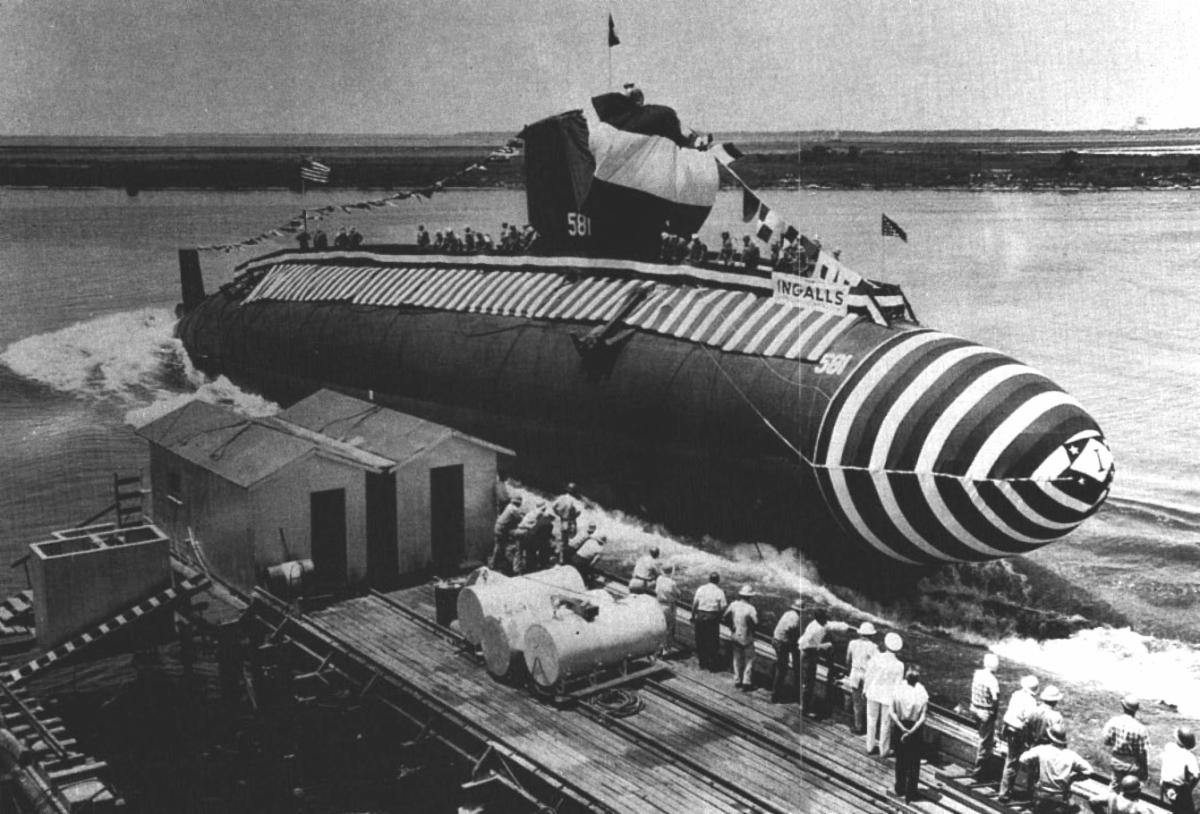
Growing up, principally because of my dad’s job, I always had a strong sense of what Ingalls meant to
our community and our country. Our famous shipyard is the center of our connection to WWII and
defense efforts ever since, and there are many other reasons that our city has a bond with that historic
conflict and our nation’s history beyond. So, say it with me: “Pascagoula, Mississippi, is a nationally
designated World War II Heritage City—we deserve it, we’re proud of it, and we shall continue to prove
why our home town has been and always will be important to the United States of America.”
Richard Lucas may be reached at rblucas17@gmail.com.
|