|
OPMCA Connection
Keeping You Informed!
OPMCA Connection keeps you informed and current on regulations from all state and national agencies as well as laws pertaining to the petroleum marketing/c-store industry.
| |  | |
OPMCA STAFF
Candace McGinnis
Executive Director
Candace@opmca4you.com
OPMCA
6420 N. Santa Fe, Suite B
Oklahoma City, OK 73116
Phone: (405) 842-6625
(800) 256-5013
www.opmca4you.com
|
| | Thursday, January 15, 2026 | |
- 2026 PACEshow - See You in Kansas City!
- Congress Reintroduces Credit Card Competition Act
- Trump Executive Order on Marijuana and What it Means
- 2026 Federal Motor Fuel Excise Tax Rates & Credits
- Treasury Guidance Published on Penny
- Alert Regarding IRS Mileage Increase for 2026
- Federated Insurance Risk Management Academy Sessions for 2026 Announced
| | |
Register to Attend or Exhibit TODAY!
www.paceshow.com
___________________________________________________________________________
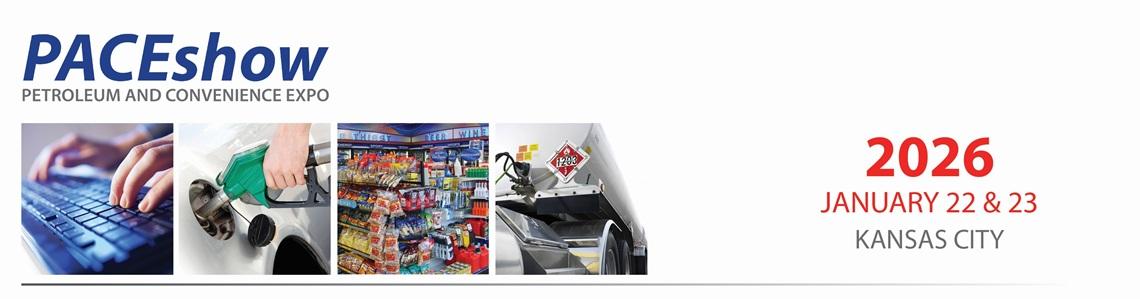
Missouri, Kansas, & Nebraska are proud and excited to announce that Oklahoma has joined the PACEshow starting with the 2026 PACEshow on 1/22/26 and 1/23/26 in Kansas City, MO.
The PACEshow is the preeminent Midwest petroleum and convenience tradeshow, and all 4 states are committed to making the PACEshow even bigger, better, and more valuable to our members!
We can’t wait to get started!
Missouri: Missouri Petroleum & Convenience Association (MPCA).
Kansas: Fuel True: Independent Energy and Convenience.
Nebraska: Nebraska Petroleum Marketers & Convenience Store Association (NPCA).
Oklahoma: Oklahoma Petroleum Marketers & Convenience Store Association (OPMCA).
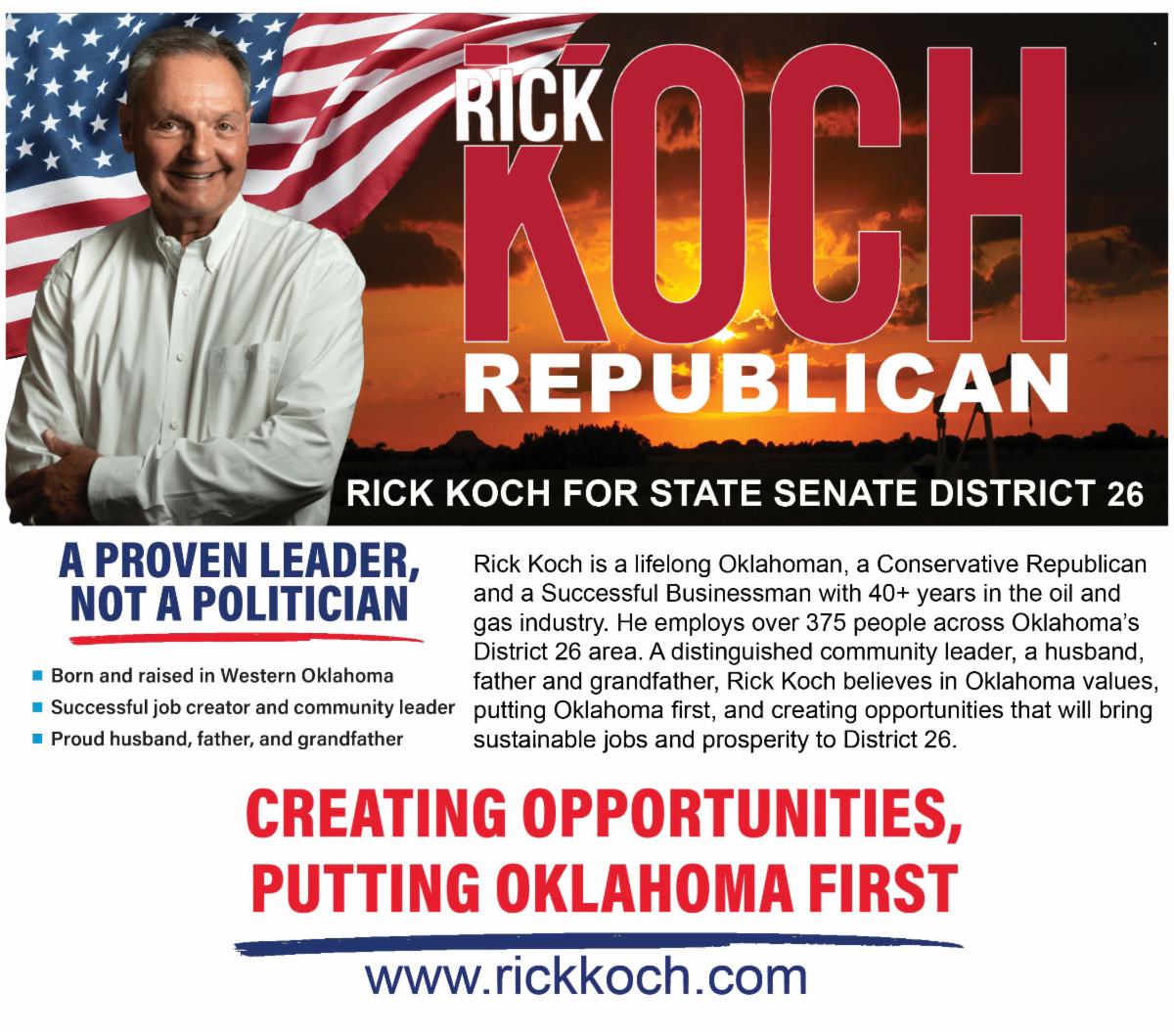
| | Help us support of our own - Rick Koch! | |
Congress Reintroduces Credit Card Competition Act
The Energy Marketers of America (EMA) welcomed the reintroduction of the Credit Card Competition Act (CCCA) by Senators Roger Marshall (R-KS) Dick Durbin (D-IL) and along with Reps. Lance Gooden (R-TX) and Zoe Lofgren (D-CA) a bipartisan measure aimed at curbing skyrocketing credit card swipe fees that disproportionately impact small business fuel marketers and convenience store operators across the nation. The bill introduction follows President Donald’s posted support for the bill today on the X social media platform. EMA thanks the President for his monumental move to endorse passage of the CCCA.
The legislation, which builds on previous efforts to promote competition in the credit card processing market, would require large banks to enable retailers to route transactions over at least two unaffiliated networks - beyond the dominant Visa and Mastercard duopoly. This reform mirrors successful debit card routing rules in place for over a decade and could significantly reduce interchange fees, providing much-needed relief to EMA members who operate on razor-thin margins in a volatile energy market.
"Credit card swipe fees have become one of the largest operating expenses for our members, often exceeding utility costs and cutting deeply into profits that could otherwise support jobs, infrastructure upgrades, and competitive fuel pricing for consumers," said Rob Underwood, President of EMA. "We commend Senators Marshall and Durbin for their leadership in reintroducing this critical bill, and we applaud President Trump's endorsement as a strong signal of support for America's small businesses. It's time to level the playing field and end the unchecked dominance of big banks and card networks that siphon billions from Main Street retailers every year."
EMA members, who represent thousands of independent energy marketers, distributors, and convenience store owners, paid an estimated $15 billion in swipe fees last year alone - fees that continue to rise unchecked. By fostering competition, the Credit Card Competition Act would empower retailers to choose lower-cost processing options without compromising transaction security or consumer rewards programs, ultimately benefiting drivers at the pump through potential savings.
EMA calls on Congress to prioritize and pass this legislation in the 119th session, ensuring that fuel retailers can thrive amid economic pressures like fluctuating energy prices and supply chain disruptions.
| | |
Trump Executive Order on Marijuana and What It Means
President Trump has signed an executive order, directing the Department of Justice (DOJ) and the Drug Enforcement Administration (DEA) to initiate a formal rulemaking to reclassify marijuana as a Schedule III drug (instead of Schedule I) under the federal “Controlled Substances Act.” Schedule III drugs are considered to have moderate to low potential for abuse and can have accepted medical uses, unlike Schedule I substances. Importantly, the President’s executive order does not legalize marijuana at the federal level, including for recreational use, and it does not affect state cannabis laws.
What does the President’s executive order mean today for energy marketers:
- Until the administrative rulemaking process is complete, which could take a year or more, nothing changes in practice for companies and drivers.
- In response to inquiries, the Department of Transportation (DOT) and its Federal Motor Carrier Safety Administration (FMCSA) have reiterated that safety-sensitive employees, including drivers with CDLs, are still prohibited from using marijuana under current federal rules. FMCSA’s drug and alcohol testing programs, and the drug testing requirements under 49 CFR Part 40, remain in effect.
If the DOJ and DEA finalize the schedule change for marijuana, it could undermine the current DOT/FMCSA testing regime, because drug panels and testing authority for safety-sensitive workers (e.g., truck drivers) are tied to Schedule I and II substances. So, if marijuana is moved to Schedule III, the statutory authority that authorizes DOT/FMCSA to require testing for THC would be affected, unless that authority is preserved in the final rule with a “safety carve-out.” Clearly, rescheduling marijuana without a specific safety carve-out for transportation workers would weaken energy marketers and others’ zero-tolerance use and testing programs.
Transportation-related groups already have called for such carve-out, and they add that, regardless of federal scheduling changes, they expect most trucking companies to maintain strict zero-tolerance marijuana policies as a condition of employment and insurance liability. EMA counsel suggests that energy marketers communicate with their employees that, while the president’s executive order signals a shift in federal drug policy, company drug policies and federal regulations for marijuana use and testing have not changed and remain in effect.
| | |
EMA Regulatory Reminder: 2026 Federal Motor Fuel Excise Tax Rates and Credits -- WHAT’S NEW?
Superfund Tax: The Superfund tax was reinstated on crude oil received at refineries and on imported petroleum products, beginning on January 1, 2023, by the Inflation Reduction Act. Until December 31, 2025, the Superfund tax rate is the sum of the Hazardous Substance Superfund rate and the Oil Spill Liability Trust Fund financing rate.
The Oil Spill Liability Trust Fund tax expires on December 31, 2025, and has not been renewed by Congress. Unless legislation is enacted in 2026, only the Hazardous Substance Superfund tax will be payable to the IRS.
For calendar years beginning in 2024, the Hazardous Substance Superfund financing rate is adjusted for inflation. For calendar year 2026, the Hazardous Substance Superfund tax rate is $0.18 cents per barrel.
The Superfund tax is paid by refiners and crude oil and finished product importers. While no party below the terminal rack is liable for the Superfund tax, refiners and importers pass the fee down as a cost folded into the wholesale rack price of petroleum products –– not as a tax. Marketers are not required to break this fee out as a “tax” on their invoices or contract bids. Note that the Superfund rate is not refundable to any party along the petroleum refining and distribution chain. Marketers with questions should consult with their suppliers.
Click here for the Full Regulatory Report
| | |
Treasury Guidance Published on Penny
January 2026:
The Federal Treasury is reopening its terminals to accept penny deposits. This could provide some relief with penny circulation at least in certain areas of the country. You can find the Fed’s announcement here - frbservices.org/news/press-releases/01082026-penny-deposits-update.
From December 2025:
The U.S. Department of the Treasury issued a frequently asked questions (FAQ) document to address the implications of halting production of the one-cent coin (penny). This guidance comes as businesses, particularly energy marketers, grapple with diminishing supplies of pennies in circulation.
The Treasury reiterated that the U.S. Mint ceased minting new pennies earlier in the year, primarily because production costs—now at approximately 3.69 cents per coin—significantly exceed the coin's face value. No additional pennies will be produced for general circulation, though limited numismatic versions may continue for collectors. Existing pennies remain legal tender indefinitely and can circulate via the Federal Reserve as long as inventories last. Consumers are encouraged to use pennies in transactions, and retailers may accept them as payment.
With penny supplies expected to dwindle over time, the FAQ notes that retailers might round total amounts in cash transactions to the nearest five cents when exact change cannot be provided. This rounding policy applies exclusively to cash payments; card, digital, and electronic transactions will remain calculated to the exact cent.
Additionally, the guidance highlights that most states currently mandate sales tax computation based on the pre-tax amount rounded to the nearest penny. The Treasury emphasized that any changes to these tax rules fall under state and local authority. The department is exploring further recommendations to assist businesses in regions with varying or intricate rounding requirements.
EMA and a coalition of energy and retail associations are urging congressional leaders to swiftly make improvements to the Common Cents Act which would allow businesses to round cash transactions to the nearest nickel. Without a national standard, retailers risk violating state laws requiring exact change.
| | |
Alert Regarding IRS Mileage Increase for 2026
Effective January 1, 2026, the Internal Revenue Service has announced an INCREASE in the mileage reimbursement rate from 70 cents to 72.5 cents per mile. (See IR-2025-128, Issued 12/29/2025). The new rate applies to mileage incurred on or after January 1, 2026.
| | |
Federated Insurance® Introduces 2½-Day
Risk Management Academy Sessions for 2026
Federated Insurance® is excited to formally invite business owners and leaders to attend one of our complimentary 2½-Day Risk Management Academy (RMA) offerings in 2026. These industry-specific sessions are held at the Federated® Home Office in Owatonna, Minnesota, and are led by risk management professionals.
The RMA sessions can help business owners and leaders learn how to prevent losses impacting their bottom line by developing risk management best practices, connecting with industry peers facing similar challenges, working with insurance professionals who are committed to helping owners, and applying what is learned to make meaningful differences. Keep an eye out for the following dates:
Petroleum – April 28–30, 2026
Contractors – May 12-14, 2026
All Industries – June 16-18, 2026
Petroleum – August 11-13, 2026
Dealers – September 22-24, 2026
All Industries – November 3-5, 2026
Learn more and sign up today to attend one of these valuable 2½-Day RMAs to help take risk management to the next level.
At Federated Insurance, It’s Our Business to Protect Yours®
| | | | |