November 13, 2020
The Out-of-Pocket Health News Digest:
Post-Election Special Edition
|
|
Below you will find briefs about recent health policy news stories. With this special edition, our hope is for students to understand some of the ways that our recent elections will affect public health and health policy in the United States.
This compilation is produced by the HPSA Education Committee: Matthew Dunn, Magdalena Mihaylova Atticus Raasch, and Brynna Thigpen,
|
|
Despite a Biden victory, progressive agenda in jeopardy with GOP senate
by Atticus Raasch
|
|
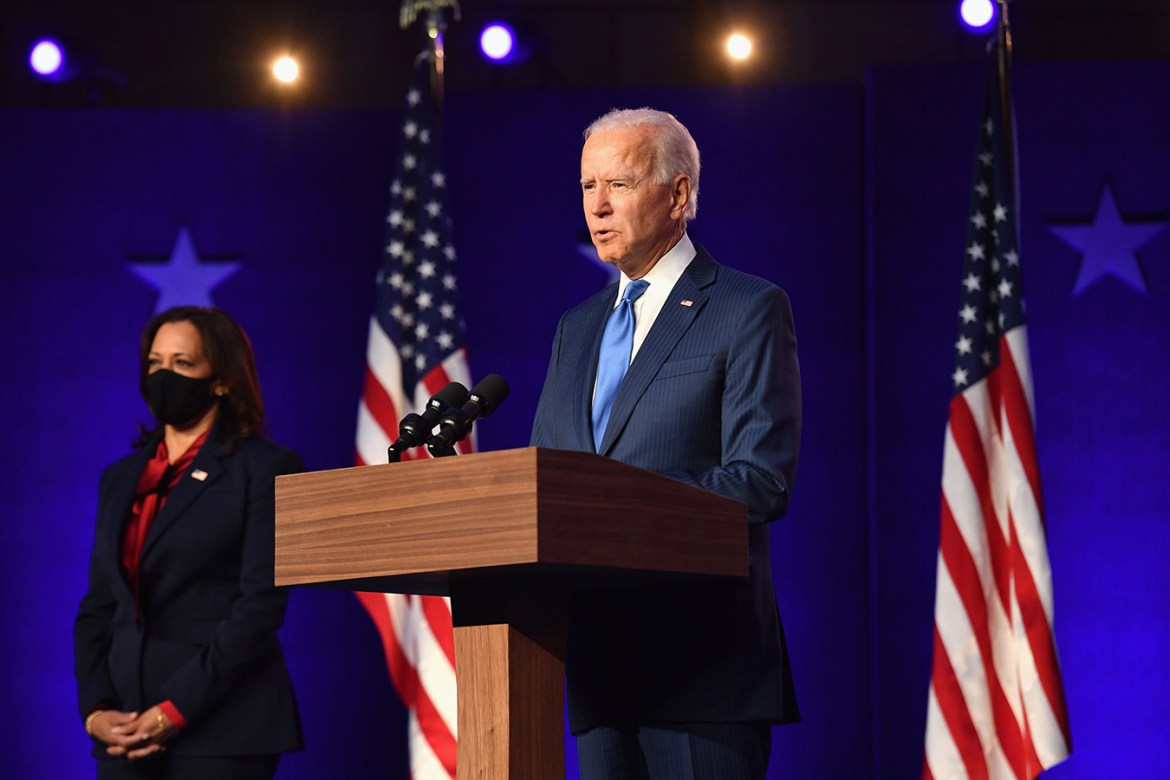
This past week, former Vice President Joe Biden was projected to secure the 270 electoral votes needed to win the Presidency. Though recounts are underway and will continue to be conducted in a variety of states, Biden is projected to be President elect after claiming critical victories in Michigan, Wisconsin, Pennsylvania Arizona, and Georgia. Despite the victory in the ballot box for President-elect Biden, concern looms over divisive senate run-off races in Georgia that are projected to give the GOP a majority in the Senate.
A GOP Senate would prove a challenging hurdle for one of the most progressive presidential candidates the country has ever seen. President-elect Biden can expect severe pushback on bills pertaining to lowering the age of Medicare eligibility, expanding the ACA and offering a “public option” healthcare plan to citizens, among other progressive policies. While a gray area looms surrounding the support a GOP Senate would give to President-elect Biden, only time will tell of the cooperation seen between the legislature and executive branches in a split-government.
|
|
Health on the November ballot:
State healthcare initiatives that passed (and some that didn’t)
by Brynna Thigpen
|
|
Though most of the nation’s focus was trained on the presidential contest, last week Americans across the country also weighed in on healthcare initiatives on topics as wide-ranging as disability support, family leave, and marijuana legalization.
Controlled substances:
-
Weed: A majority of states had already legalized medical marijuana (although it’s still illegal on the federal level), and on 11/3 Mississippi, South Dakota, and Montana, joined their ranks. Arizona and New Jersey legalized marijuana for recreational use, with the generated revenues going toward community colleges, municipal services, highways, and a new Justice Reinvestment Fund.
-
Tobacco and e-cigarettes: Tobacco taxes were passed in Colorado and Oregon to fund healthcare and education programs.
-
Mushrooms and other drugs: Oregon also garnered a great deal of press for passing legalization for psilocybin mushrooms (which are hallucinogenic), changing the punishment for possessing a non-commercial amount of a controlled substance no more than a $100 fine, and using its marijuana tax revenue and prison savings to establish a drug addiction treatment and recovery program.
Disabilities:
-
In Utah, voters decided to use their income taxes and intangible property taxes to support children and individuals with disabilities.
Family Planning:
-
Coloradans voted down a proposal to ban abortions in the state after 22 weeks.
-
A new constitutional amendment will be added to the Louisiana state constitution: “To protect human life, nothing in this constitution shall be construed to secure or protect a right to abortion or require the funding of abortion,” likely setting up a protracted fight that may lead to the Supreme Court and a review of Roe v. Wade.
-
All of Washington’s public school children will now receive comprehensive sex education unless requested to opt-out by their parents (it had previously been left up to the discretion of the school district whether or not to offer it).
Health Insurance:
-
Oklahomans recently approved expanding access to Medicaid (health insurance for low-income Americans), but declined to re-distribute revenue from tobacco settlements to fund it this fall.
Family Leave:
-
In Colorado, a new payroll tax will go toward funding 12 weeks of paid family and medical leave.
|
|
A new president, a new approach: Biden’s planned pandemic response
by Magdalena Mihaylova
|
|
President-elect Joe Biden will assume office on January 20th not only to a country still sore from political and social strife, but to a raging pandemic. On Wednesday, the number of new infections in the United States reached a record high of about 140,500, and the rise of these cases is expected to increase as the weather turns colder and pushes people inside. According to New York Times estimates, Americans are dying from COVID-19 at a rate of 1,000 people per day.
The Trump Administration’s response to the COVID-19 pandemic has been harshly criticized by those on the right and left alike, with reference to his elimination of the U.S. pandemic response team even before COVID-19 struck, President Trump’s downplaying of the pandemic, and his pushing of states to reopen well before they were ready.
Polling shows that Americans trust President-elect Biden to handle the COVID-19 pandemic response better than President Trump, but there will be obstacles for the new administration. Despite a double-runoff deciding if Democrats or Republicans rule the Senate, it seems as though Senator Mitch McConnell will remain the majority leader, meaning Biden will face resistance in his nominations of health officials and in passing of certain health legislation. Biden will also likely be responsible for pushing out a new COVID-19 vaccine, which can prove challenging among a skeptical public — just 58% of Americans say they would seek a vaccine immediately. Indeed, among mounting cases, a tepid public, and a now deeply-seeded distrust of science, Biden will need to enter office with a strong, set pandemic response.
|
|
Control of the U.S. Senate will be decided in Georgia runoff election
by Matthew Dunn
|
|
More than a week after election day, the Alaska Senate race was called Wednesday for Republican incumbent Dan Sullivan. This was the last Senate race to be decided for the moment, leaving the upper chamber with 50 Republicans and 48 Democrats. The remaining two seats will be decided in a runoff election on January 5, 2021.
The reason for this additional election is that Georgia is one of few states that requires the winning candidate to receive a true majority of votes - greater than 50%. In the event that no candidate receives a majority, the top 2 candidates advance to a deciding election called a runoff. This year’s election was also unique because Georgia had both Senate seats on the ballot, and no candidate received a majority in either race. Therefore, in less than 2months Georgians will decide 2 Senate runoff races: one between Democrat Raphael Warnock and Republican Sen. Kelly Loeffler, and one between Republican Sen. David Perdue and Democrat Jon Ossoff.
Both parties are preparing for massive investments in these runoffs, with tens of millions of dollars expected to be spent in the upcoming weeks. Runoffs and other off-year elections are often seen as an opportunity for the winning party to set a positive tone for the next election cycle, but this upcoming runoff will be among the most consequential in the history of the U.S. The Republicans currently hold a slim 50-48 advantage in the Senate, and if it holds Senator Mitch McConnel will serve at least another 2 years as Majority Leader. However, if Democrats were to win both runoffs, there would be a 50-50 split in the Senate. This would allow Vice-President elect Kamala Harris to cast a deciding vote in the Senate when there are ties.
With a Democratic President and House, the party controls 2 of the 3 levers needed to pass federal legislation in 2021. Thus, the Georgia runoff will result in either a unified or divided government, and greatly impact the policy agenda of the Biden Administration.
|
|
Advocacy Corner
by Amina Khan
Premenopausal Women Inclusion in Breast Cancer Clinical Trials
Take the opportunity to comment on FDA-2020-D-1553 at this link. The comment notice states, "The draft guidance recommends that menopausal status not be the basis for exclusion from any breast cancer clinical trial. The draft guidance includes recommendations regarding eligibility criteria and study planning and design intended to facilitate the inclusion of premenopausal women in breast cancer clinical trials."
Protect DSH from Losing 340B Drug Pricing Status
Use the advocacy toolkit in this link to protect Disproportionate Share Hospitals (DSH) from losing their 340B status which allows them to access drugs at lower prices. According to the toolkit, "Some hospitals responding to COVID-19 are increasing inpatient bed capacity, reserving inpatient space for critically ill patients, and shifting more care to the outpatient and telemedicine settings. Such changes could reduce a hospital’s DSH adjustment percentage, unfairly penalizing them and affecting their ability to access 340B pricing."
|
|
|
|
|
|
|