Rail Workers Weekly News Digest
Number 32 - August 11th, 2020
|
|
Below is a series of articles compiled over the previous week.
They are of interest to railroad workers and activists.
|
|
ARTICLE #1 - RAIL LABOR BARGAINING NEWS
United Rail Unions Sue to Block Carriers from Modifying Healthcare Benefits Without Bargaining
|
|
On August 5, 2020, 12 rail unions whose members and their families are covered by the NRC/UTU Plan and the Railroad Employees National Health and Welfare Plan, filed suit against the nation’s Class I railroad carriers in the United States District Court for the District of Columbia.
The suit asks the court to force the carriers to bargain in good faith with the unions over mandatory subjects of bargaining. The involved issues have been the subject of collective bargaining for decades and are in fact part of the carriers’ bargaining notices served on November 1, 2019 pursuant to Section 6 of the Railway Labor Act (RLA). At issue are carrier attempts to restrict access to certain medications and to forcibly reconfigure health care networks.
The unions are: the American Train Dispatchers Association; the Brotherhood of Locomotive Engineers and Trainmen; the Brotherhood of Maintenance of Way Employes; the Brotherhood of Railroad Signalmen; the International Association of Machinists and Aerospace Workers; the International Association of Sheet Metal, Air, Rail and Transportation Workers, Mechanical Division; the International Association of Sheet Metal, Air, Rail and Transportation Workers, Transportation Division; the International Brotherhood of Boilermakers; the International Brotherhood of Electrical Workers; the National Conference of Fireman & Oilers District, Local 32BJ, SEIU; the Transportation Communications Union/IAM; and the Transport Workers Union.
The rail carriers are: BNSF Railway Company; Kansas City Southern Railway Company; CSX Transportation; Grand Trunk Western Railroad Company; Norfolk Southern Railway Company; Soo Line Railway Company; and Union Pacific Railway Company. Also named in the suit is the National Railway Labor Conference (NRLC), whose National Carriers’ Conference Committee (NCCC) is the designated bargaining agent of the railroads.
The chief executives of the 12 unions issued the following statement concerning the lawsuit:
The railroads’ attempt to evade their legal obligation to bargain on these issues of great importance to our members has left us with no choice but to enforce these legal rights in court. If implemented without successfully negotiated application, the carriers’ proposals could be extremely harmful to our members and their families. Even more outrageous, the process they are attempting to impose would allow rail carriers to reduce employees’ access to medicines and doctors in the middle of a pandemic. When they should be rewarding the contributions of their essential employees with hazard pay, the rail carriers instead attempt to reduce medical benefits when they are needed most. Events like these are why railroad managers were labeled as “Robber Barons” over a century ago; their actions today are proof positive that the label still applies. Unfortunately for working class Americans, this is the way of many corporations across the country in Donald Trump’s America; essential employees are treated as expendable employees. We will not stand idly by while management attacks the core legal rights our members enjoy.
|
|
ARTICLE #2 - TRANSIT WORKER NEWS
This is a Do-or-Die Moment for Public Transit. Make Your Voice Heard and Save It
|
|
Revenues at public transit systems are collapsing as ridership falls. On New York’s subway system, ridership is at just 20 percent of pre-pandemic levels. It’s even lower in most cities. Budget shortfalls will mean fare hikes and shutdowns on a massive scale—unless Congress comes through with relief.
The House and Senate are negotiating a stimulus package this week. It’s the last chance for Congress to keep transit agencies from being hollowed out. If we let that happen, millions of people will be left without a way to get to work and school. Many of them are workers designated as “essential” during the pandemic.
It makes no moral or economic sense to leave them stranded.
To give you sense of the stakes: When transit ridership in Chicago fell during the 2008 financial crisis, the city’s transit agency proposed eliminating more than half of all bus routes; laying off more than 2,400 employees; and increasing fares by at least 25 cents.
That crisis pales by comparison to this pandemic. Without action, the cuts will be deeper and more devastating. For the sake of families, workers, and our future, we cannot let that happen.
|
|
ARTICLE #3 - ESSENTIAL WORKER NEWS NEWS
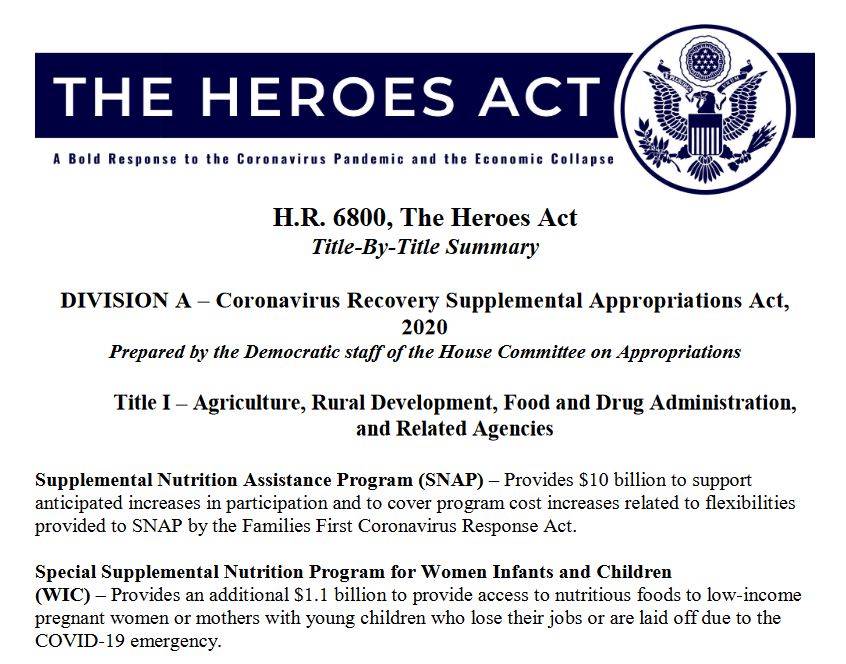
Tell Your Senator: Support H.R. 6800, the HEROES Act
|
|
America faces a crisis on three critical fronts: a public health pandemic, an economic free fall and long-standing structural racism. Working people need safe jobs, economic security and freedom from systemic racism. Delivering on economic essentials included in the HEROES Act is an absolute minimum requirement for stopping the free fall into even deeper and deadly racial inequality.
H.R. 6800, the Health and Economic Recovery Omnibus Emergency Solutions Act, includes an emergency workplace infectious disease standard; gives aid for state and local governments, public schools, the U.S. Postal Service, and pension funding relief; keeps workers on payrolls to avoid mass layoffs; extends unemployment insurance; provides more direct payments to working people; extends health care coverage; provides housing and food benefits; and much more.
Of course, as is the case with any legislation, the HEROES Act is not perfect. We would urge Congress to protect mine workers by requiring not only the Occupational Safety and Health Administration (OSHA) but also the Mine Safety and Health Administration (MSHA) to issue an emergency temporary standard on infectious disease.
Working people are desperate for our leaders to put partisanship aside and do what is right for our health, our economy and our country. The HEROES Act is a major step forward.
|
|
ARTICLE #4 - TRANSIT NEWS
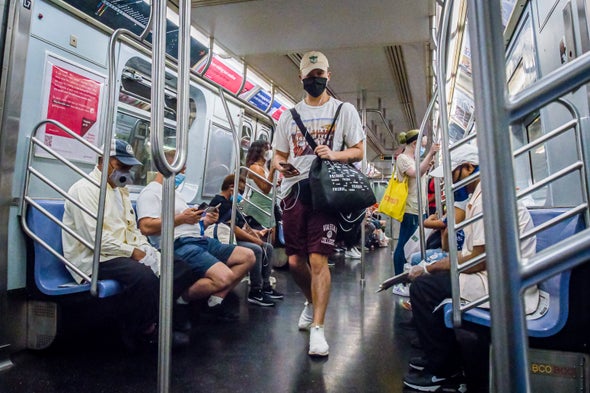
There Is Little Evidence That Mass Transit Poses a Risk of Coronavirus Outbreaks
|
|
In the early months of the COVID-19 pandemic, Ben Fried made a difficult decision: He stopped riding New York City’s subway system.
He was not alone. Ridership on the city’s notoriously packed commuter trains dropped 92% in mid-April, when New York emerged as an epicenter of the global health crisis.
For Fried, the decision was especially tough because he serves as communications director for TransitCenter, an advocacy group that touts the environmental benefits of mass transit.
ut as the virus spread, those benefits were overshadowed by the risk of contagion in the enclosed spaces of subway cars.
“I think the prevailing attitude then was, ‘If you don’t need to ride, don’t ride,’” Fried recalled in a recent phone interview.
Since those first fateful months, however, Fried has ventured back onto the subway with his wife. And he’s become part of a vocal group of advocates saying the initial fears of mass transit were overblown.
Those advocates say there is scant evidence tying major coronavirus outbreaks to buses and trains. On the contrary, they say, transit can play a crucial role in the pandemic era by reducing air pollution that makes people more susceptible to COVID-19.
Two prominent proponents of this argument are Janette Sadik-Khan, the former commissioner of the New York City Department of Transportation, and Seth Solomonow, the co-author of “Streetfight: Handbook for an Urban Revolution.”
|
|
ARTICLE #5 - RAIL FREIGHT TRAFFIC NEWS
AAR: 'Long Way to Go' Before Rail Traffic Returns to Normal
|
|
U.S. freight-rail combined carload and intermodal volume declined 9.3 precent to 2,337,977 units in July compared with the same month last year, according to Association of American Railroads (AAR) data.
U.S. railroads hauled 1,042,017 carloads last month, down 17.6 percent, and 1,295,960 containers and trailers, down 1.4 percent.
Three of the 20 carload commodity categories tracked by the association each month logged carload gains in July compared with year-ago levels. They were food products, up 1.7 percent; farm products (excluding grain), up 8.3 percent; and lumber and wood products, up 1.6 percent.
Commodities that posted declines last month included coal, down 28.7 percent; crushed stone, sand and gravel, down 24.8 percent; and metallic ores, down 63.7 percent.
"Rail traffic, like the overall economy, is generally trending in the right direction," said AAR Senior Vice President John Gray. "But, progress is slow. There's a long way to go before it's back to normal, and both week-to-week improvements and setbacks in individual commodities are to be expected."
Coal and other energy-related commodities continue to struggle more than most, Gray said.
"Intermodal is closer than any other rail traffic category to pre-pandemic levels," he added.
|
|
ARTICLE #6 - CROSS-BORDER RAIL NEWS
Arbitrator Approves Replacing American Crews with Mexican Crews in Laredo
|
|
(Editor's Note: Unfortunately, this fight has concluded in yet another defeat for rail labor. The more we arbitrate, the more we seem to lose. Perhaps a better strategy going forward might be to mobilize our members, engage in high profile actions, build international solidarity among rail workers in all three North American countries, and put direct pressure on the rail carrier to bend to our will.)
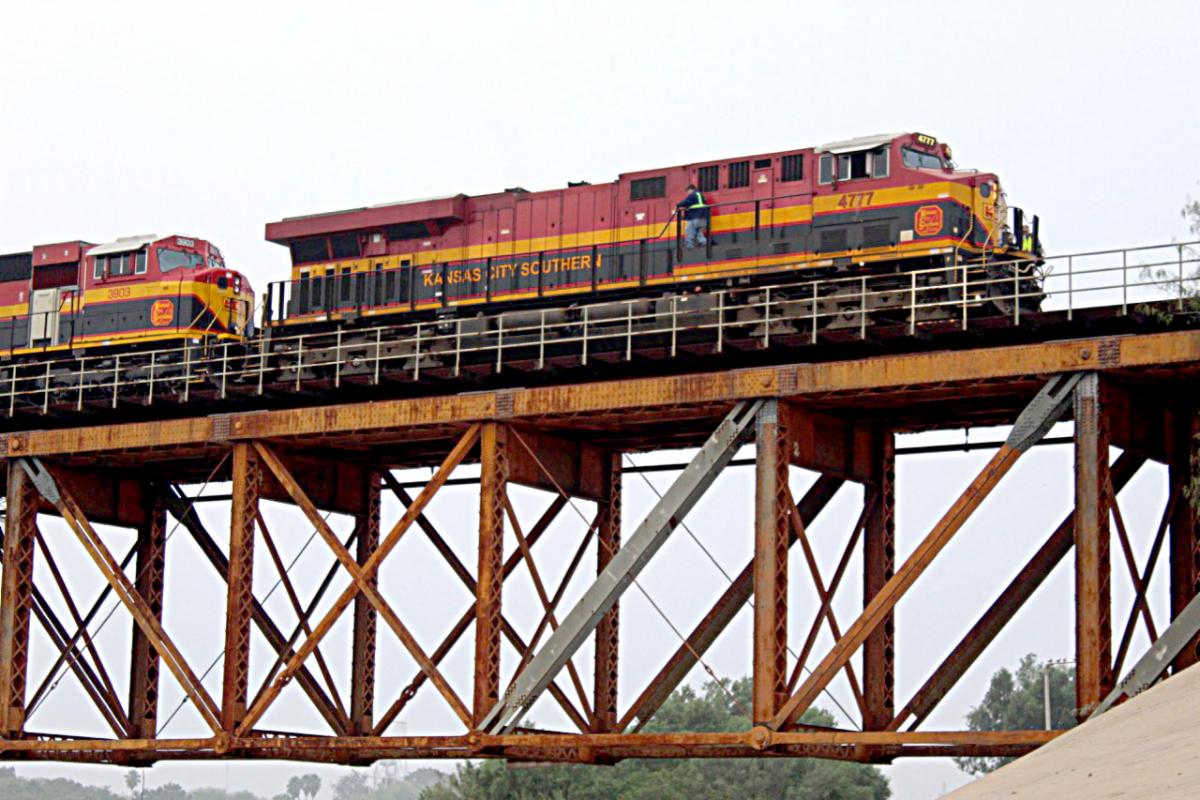
In July 2017, the BLET learned of the carriers' plan to replace the Tex Mex shuttle crews with crews supplied by Kansas City Southern de Mexico over the 9-mile route between the Laredo International Bridge and Laredo Rail Yard.
The BLET objected to the crew replacement plan. After the parties were unable to resolve the dispute through discussions, the crew replacement plan was implemented July 10, 2018.
The arbitration hearing was held exactly two years after the Tex Mex crews had been replaced, BLET officials said in a press release.
|
|
ARTICLE #7 - RAIL PASSENGERS NEWS
Restoring Daily Service to Amtrak's Sunset Limited Route
|
|
In this briefing, we will:
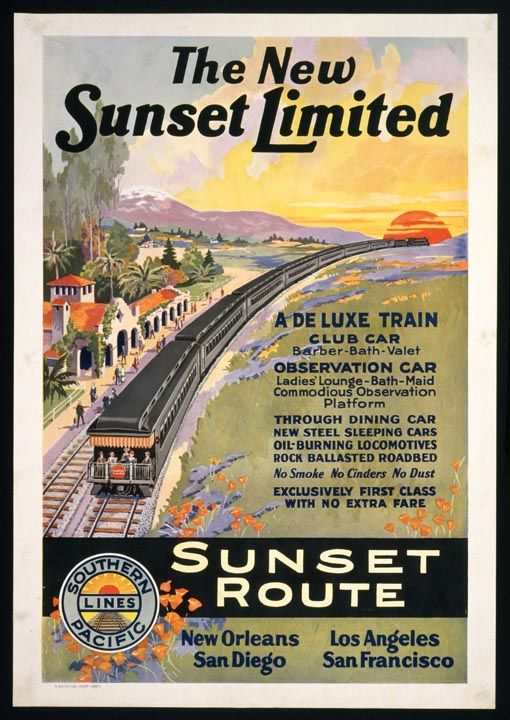
- Discuss the ongoing efforts to return daily service to the Sunset Limited from New Orleans to Los Angeles featuring presentations by Steve Roberts, President of the Rail Passengers Association of California & Nevada and George Chilson, Chairman Emeritus of Rail Passengers Association - followed by Q&A with them and other team members.
- Explain the IMPLAN economic modeling tool and how it can be used in the advocacy world.
Join us for a fast paced webinar about this initiative. Learn about the market and the economics that make running the Sunset Limited daily along on the I-10 Corridor an important but long neglected public priority. Understand the challenges we face and the strategies we’ve developed to overcome them. Explore how the Daily Sunset campaign could be a template for increasing frequencies on other long distance routes and for adding new routes to the national Interstate system to make train travel a more widely available and attractive travel choice for more Americans.
Submit your questions at mbutler@narprail.org with the subject line "DAILY SUNSET QUESTIONS" . Deadline for submission is August 12th.
Joe Aiello
Field Coordinator
jaiello@narprail.org
|
|
ARTICLE #8 - AMTRAK NEWS
Senate Confirmation Hearing Spotlights National Network
|
|
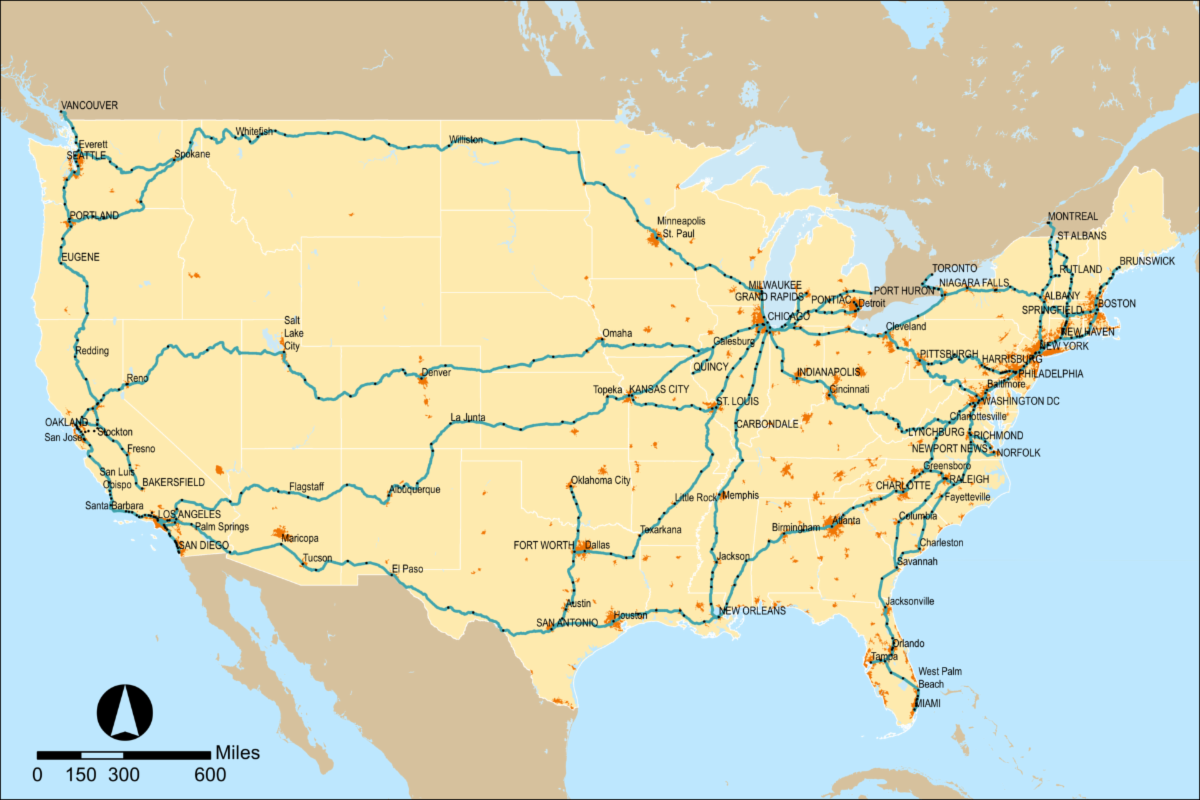
The fate of the National Network was front and center at yesterday's Senate nomination hearing for two candidates to the Amtrak Board of Directors. From written testimony to the opening line of questioning to closing statements, the long-term fate of Amtrak as a truly national service was spotlighted by both Senators and witnesses.
The Senate Committee on Commerce, Science, and Transportation held a hearing for Amtrak Board of Director nominees Sarah Feinberg and Chris Koos. Both are experienced candidates with a background in government and passenger rail. And both nominees were clear that they support increased investment in Amtrak infrastructure, an increased footprint for the National Network, and certainty for Amtrak communities on the long-distance network.
Ms. Feinberg led the way, talking about her current role as interim President of New York City Transit, the largest public transit agency in North America. She has previously served as head of the Federal Railroad Administration in the Obama Administration, duties which included a seat on the Amtrak Board in 2015 and 2016.
“During that stint on the Amtrak Board, I had the opportunity to help shape the company’s approach to safety, its continued implementation of Positive Train Control, and its approach to making its system more accessible to all,” Feinberg told senators via video link. “I also worked closely with the company and with my fellow board members as we implemented service improvements across the country, including on state supported routes and on the company’s long distance service, including the contemplation of the return of Gulf Coast service.”
Mr. Koos currently serves as Mayor of Normal, Illinois, and has played a leading role in demonstrating how small towns can leverage passenger rail service to generate economic activity and retain and attract young residents. Mayor Koos emphasized the importance of passenger rail to these kinds of communities.
|
|
|
|
|
|
|