In This Issue
Research Spotlight: CPCE Pilot Grant to Explore Communication Around Kidney Pre-Transplant Evaluation
Call for Applications: CPCE is Offering Two T32-Funded Postdoctoral Training Programs
CPCE In the News:
‘More Anxiety Than Relief’: Baby Monitors That Track Vital Signs Are Raising Questions
Upcoming Events
Recent Publications
|
|
CPCE Pilot Grant to Explore Communication Around Kidney Pre-Transplant Evaluation
|
CPCE recently awarded a Pilot Grant to Eloise Salmon, MD, Fellow in Pediatric Nephrology, for her project titled “Parent Experience of Pre-Transplant Evaluation, and Factors Contributing to Time to Completion of Evaluation.” Dr. Salmon is mentored by CPCE Core Faculty member
Sandra Amaral, MD, MHS and Judy A. Shea, PhD, professor in the Division of General Internal Medicine in the Department of Medicine at Penn.
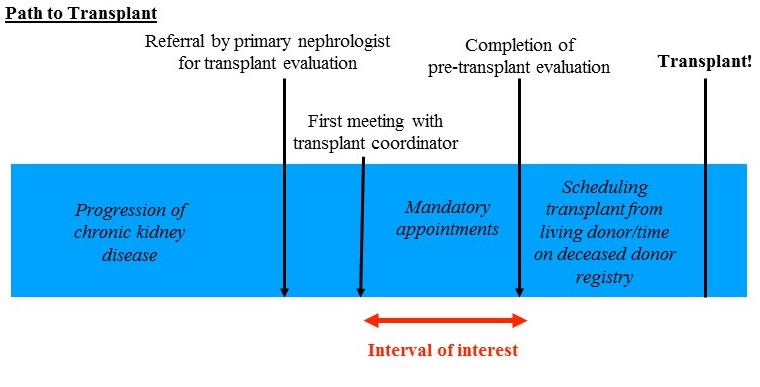
Evaluation of candidates for kidney transplant is extensive, and transplant centers frequently observe significant variation in the time it takes for patients and/or families to complete the evaluation. Adult studies have found multiple reasons for these differences, but little is understood about drivers of variation for pediatric transplant candidates.
|
Dr. Salmon’s project will start to bridge that gap, by collecting demographic and qualitative information via surveys and semi-structured interviews with parents or caregivers of children who begin the pre-transplant evaluation at CHOP.
Aim 1 is to identify differences between families completing the pre-transplant evaluation in three months or less vs. those taking longer than three months, with the hypothesis that competing priorities (e.g. other children, commitments outside of the home) and limited resources (lower household income, less reliable transportation) will cause delays in completing the transplant evaluation.
Aim 2 is to gain understanding of parent/caregiver experience with tools for supporting the transplant evaluation process, specifically an evaluation roadmap provided to families at their first meeting with the transplant coordinator and the patient portal of the electronic medical record.
Finally, Aim 3 will generate hypotheses for future work aimed at increasing the effectiveness of communication during the transplant evaluation process.
|
|
Call for Applications: CPCE is Offering Two T32-Funded Postdoctoral Training Programs
CPCE is currently accepting applications for two T32-funded postdoctoral training programs for the academic year beginning July 1, 2020. Our training programs value inclusion and diversity, and we encourage applications from pediatricians whose insight and experiences will broaden and hence strengthen the scope and impact of child health research. We believe that pediatric researchers should reflect the diversity of the children in our communities.
- The Pediatric Hospital Epidemiology and Outcomes Research Training (PHEOT) program trains the next generation of clinical scientists who will understand how to best measure and improve outcomes, assure patient safety, and manage costs for hospitalized children. PHEOT is open to fellows in all clinical specialties, as long as their primary research is in hospital epidemiology and outcomes.
- The Academic General Pediatrics (AGP) Fellowship offers research training to address key clinical, health services, and policy issues in primary care pediatrics. The goal of the fellowship is to prepare trainees to improve health and health care for underserved children through primary care research and leadership. Fellows are assigned clinical experiences for up to 10 percent of their time to enhance clinical skills, including skills necessary to work effectively across languages and culture.
Both fellowships typically fund trainees for two years, and include a stipend, tuition support, health insurance benefits, and some support for training related expenses such as books, software, or conference travel. Physicians who are United States citizens or permanent residents and have at least two years of postgraduate training are eligible to apply.
More information about the programs, including how to apply, is available
here.
|
|
'More Anxiety Than Relief': Baby Monitors That Track Vital Signs Are Raising Questions
The Owlet Smart Sock, a wearable device which monitors a baby's sleep patterns, oxygen levels, and heart rate, normally communicates data via Wi-Fi to a smartphone app. Last week, an update to the app caused Owlet's servers to crash, disrupting communication between the wearable device and the app, and prompting numerous complaints from parents via the company's social media outlets. Events like this underscore previous work by CPCE Core Faculty member
Chris Bonafide, MD, MSCE and colleagues, which has questioned the
accuracy of at-home pulse oximetry-based baby monitors and called for
better oversight of these devices by the FDA and policymakers.
|
|
Upcoming Events
Making Health Interventions Smarter through Behavioral Science
Date: September 19, 2019
Time: 5:00 - 7:00 pm
Location: 3675 Market Street, Philadelphia
How can people make better decisions about their health? How do we improve health-based interventions and create sustainable behavioral change? An expert panel will discuss challenges and opportunities in developing and evaluating health-based interventions. Discussants include: Rinad S. Beidas, PhD, Assoc. Professor of Psychiatry and Medical Ethics and Health Policy; Director of the Penn Implementation Science Center at the Leonard Davis Institute (PISCE@LDI); Alison Buttenheim, PhD, MBA, Assoc. Professor of Nursing at Penn; Marilyn Schapira, MD, MPH, Professor of Medicine @ VA Medical Center; Jana Smith, MPH, Managing Director, ideas42; Moderator: Chris Nave, PhD, Associate Director, Master of Behavioral & Decision Sciences at Penn. Learn more and register
here.
Innovative and Efficient Trials Recruitment
Date: September 24, 2019
Time: 12:00 - 1:00 PM
Location: Colket Translational Research Building, Room 1200A
Panelists from: Clinical Research Information Services (UPenn), Recruitment Enhancement Core (CHOP), Clinical Reporting Unit (DBHi), and the Pediatric Research Consortium (PeRC), will share their expertise and experience with innovative and efficient trial recruitment. For more information and to RSVP, e-mai
l
ClinicalTrialsRAG@email.chop.edu.
Youth Mental and Behavioral Summit
Date: September 24, 2019
Time: 9:00 AM - 4:00 PM
Location: Community Behavioral Health, 801 Market Street, 11th Floor
The summit is intended to to help equip providers and caretakers of youth to engage in a trauma-informed, community-based system of care by identifying and addressing youth mental and behavioral health needs. All physical and behavioral providers and caretakers of youth across multiple sectors are welcome to attend. This event is supported by a CHOP Cares Community Fund grant, the Department of Behavioral Health and Intellectual disAbility Services, and Philadelphia University + Thomas Jefferson University. Register
here.
Third Annual Integrative Health Symposium-From Pathogenesis to Salutogenesis: A Wellness Perspective for Patients and Their Healthcare Team
Date: September 27, 2019
Time: 8:00 AM - 4:00 PM
Location: Colket Translational Research Building
Salutogenesis is an approach that seeks to build on strengths and to support health in all the domains of a person’s life. In this one-day symposium, attendees will learn about salutogenesis and the relationship between stress, coping and health. Lectures will focus on how to manage provider stress and burnout and how to support a patient’s well-being through nutrition, mind-body techniques, positive psychology, trauma-informed care and other integrative modalities. Learn more and register
here.
Global Health in Our Own Backyard: Controversies, Initiatives, and Innovations for Our Local Underserved Populations
Date: October 4-5, 2019.
Location: Colket Translational Research Building
Registration is now open for the 11th Annual CHOP Global Health Conference "Global Health in Our Own Backyard." This Philadelphia-based Conference will explore the intersections between domestic, local and international global pediatric health to better reach the underserved here in the United States. We will take inspiration from innovative programs in the U.S. and from around the world, and think critically about how to apply both South-North and national lessons to provide better, more equitable care in the United States. For more information, click
here.
Fighting Asthma Disparities Summit
Date: October 18, 2019
Time: 8:00 AM - 4:30 PM
Location: Roberts Center for Pediatric Research
The 11th Annual Asthma Disparities Summit will explore the benefits and logistics of engaging community-based resources to support families in managing their child’s asthma. Please register by October 10. Learn more
here.
American Public Health Association Annual Meeting & Expo
Dates: November 2-6, 2019
Location: Pennsylvania Convention Center, 1101 Arch St. Philadelphia
APHA's Annual Meeting and Expo is the largest and most influential annual gathering of public health professionals. Learn more
here.
|
Recent Publications
Severe pneumonia, shock from diarrheal dehydration, and sepsis are responsible for 25% of child deaths worldwide each year. An audit of child mortality in Botswana found that 26% of all in-hospital pediatric deaths were considered avoidable, and over 50% of the factors contributing to these deaths were attributed to provider performance. Saving Children’s Lives (SCL) is a collaborative program between several agencies in Botswana and the Children’s Hospital of Philadelphia, to improve the quality of care for children with a high-intensity training focused on the skills necessary to recognize and initiate stabilizing treatment in a variety of settings. This program was studied by a team of researchers, including
Andrew Steenhoff, MBBCh, DCH. The team found that the program significantly increased provider knowledge, but loss of knowledge happened over time.
Approximately 16,000 pediatric cardiac arrests occur annually in the United States. In contrast to survival rates for in-hospital cardiac arrest (IHCA), which have improved, out-of-hospital cardiac arrest survival rates remain unchanged. Minimizing pauses in chest compressions has been identified as one of the most important components of high-quality CPR. An in-depth understanding of pause data will help guide CPR quality improvement and educational interventions. This study sought to provide a detailed analysis of pediatric CPR quality and the activities that occurred during pauses in chest compressions in the emergency department setting.
Sage Myers, MD, MSCE and colleagues found that prolonged pauses in chest compressions occurred frequently and were associated with pulse checks and multiple simultaneous tasks. Checking a single pulse site with fingers ready on the pulse site pre-pause could decrease pause duration and improve CPR quality.
Among infants ≤60 days of age, urinary tract infection is one of the most common bacterial infections, and 8-10% of those infected infants have concomitant bacteremia. There is a lack of information about the safety of short-course parenteral antibiotic therapy in young infants with bacteremic UTI.
Fran Balamuth, MD, PhD, and others studied the associations between parenteral antibiotic duration and clinical outcomes in infants
≤60 days old with bacteremic UTI. They found that infants in this population who received
≤7 days of parenteral antibiotics did not have more frequent recurrent UTIs or hospital reutilization compared with infants who received long-course therapy. Short-course parenteral therapy with early conversion to oral antibiotics may be considered for this population.
Seeking to understand the correlation between the FDA-cleared C6 enzyme immunoassay (EIA) C6 index values and a diagnosis of Lyme disease,
Fran Balamuth, MD, PhD, and others pooled data from 5 studies of adults and children with Lyme disease and control subjects who were tested with the C6 EIA. They found that C6 EIA values can provide valuable, actionable information to guide initial clinician decision-making for children or adults with possible Lyme disease. Clinical laboratories should consider reporting C6 EIA values, along with annotations to aid interpretation and suggest a course of action to the treating clinician.
|
|
About CPCE
We are a pediatric research center dedicated to discovering and sharing knowledge about best practices in pediatric care by facilitating, organizing and centralizing the performance of clinical effectiveness research -- research aimed at understanding the best ways to prevent, diagnose and treat diseases in children. CPCE’s multidisciplinary team conducts research on a diverse range of clinical effectiveness topics.
CPCE E-News is edited by
Holly Burnside. Please feel free to contact us with questions or feedback.
|
|
|
|
|
|
|