|
|
Follow us on social media! |
|
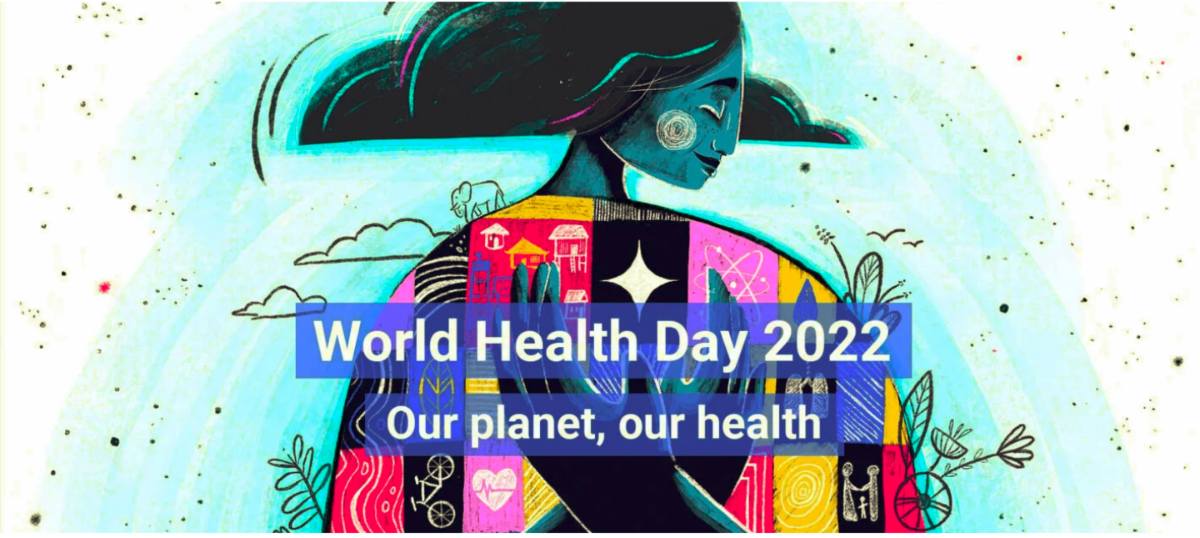
Happy World Health Day 2022!
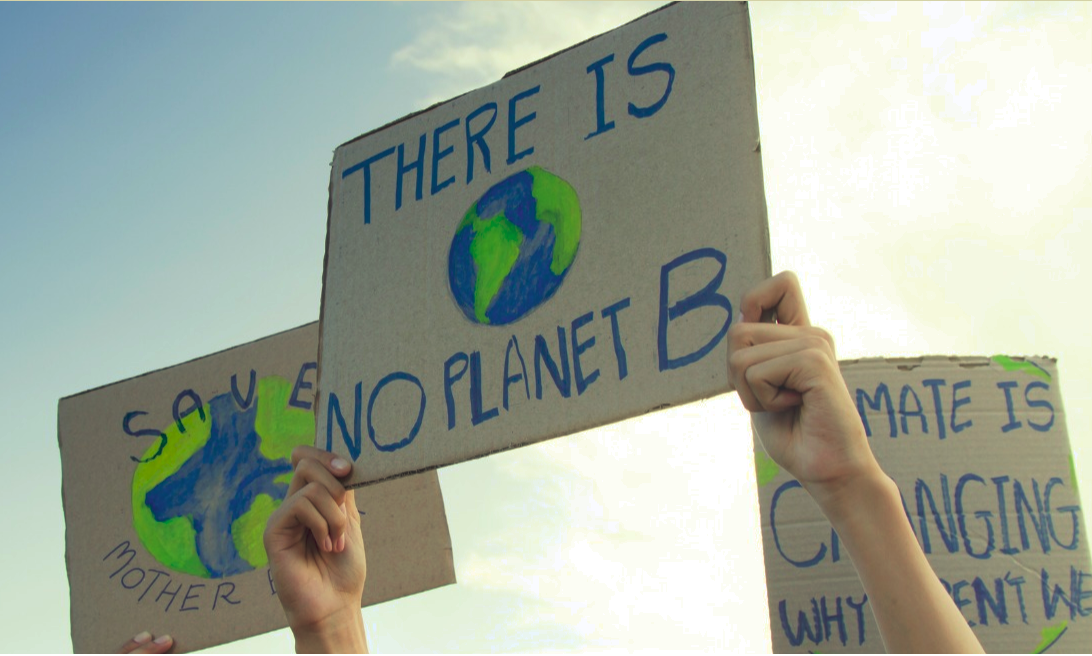
Celebrated annually on April 7th under the sponsorship of the World Health Organization (WHO), World Health Day is a day for global health awareness, which each year brings attention to a specific health topic of concern to people all around the world. For World Health Day 2022, the WHO calls for global attention on “urgent actions needed to keep humans and the planet healthy and foster a movement to create societies focused on well-being.”
The Coalition's Green Digest aims to bring attention to, and provide up-to-date and relevant information on, the climate crisis, the work that is being done in the health care (clean energy, sustainable food and facilities, etc.) to increase human and planetary well-being, voices of thought leaders in the green health care community, and share opportunities for engagement.
In this special edition of the Green Digest, we bring you articles and resources dedicated to World Health Day. The Coalition will be sending out our next Newsletter on Thursday April 14th, 2022 so our green health care community doesn't miss out on exciting opportunities and events coming up in the next few weeks.
|
|
 |
The Planetary Health Pledge
This April 7th the Canadian Coalition for Green Health Care (CCGHC), the Canadian Association of Physicians for the Environment (CAPE), Doctors for Planetary Health – West Coast, the Canadian Association of Nurses for the Environment (CANE), and the Réseau d’action pour la santé durable du Québec (RASDQ) are celebrating World Health Day by amplifying voices from all across Canada and by taking the Planetary Health Pledge.
The WHO acknowledges the climate crisis as the single biggest health threat facing humanity, making it a priority concern for health systems and health professionals. Climate resilient health systems are dependent on health professionals who advocate for low carbon and sustainable solutions. This is why these Canadian health organisations have taken the Planetary Health Pledge and are encouraging other health professionals and organisations to do the same.
If you are a health professional, join us TODAY by sharing a short video of you taking the pledge or simply share THIS IMAGE of the pledge followed by your name and profession.
|
|
|
|
Joint Letter to First Ministers
CAPE and their allies have created a joint letter to Prime Minister Trudeau and provincial and territorial premiers in honour of World Health Day 2022.
This letter calls on Canada’s first ministers to transition to a society explicitly focused on well-being. They recommend, the governments of Canada and its provinces and territories undertake three overarching shifts in approach:
- Coordinate a healthy approach to society-centred on well-being and interconnection within nature,
- Transition towards a well-being focus for Canada's economy,
- Build a sustainable health system that helps both people and the planet flourish.
If this message resonates with you or your organisation, CAPE invites you to sign onto the letter.
|
|
|
|
|
|
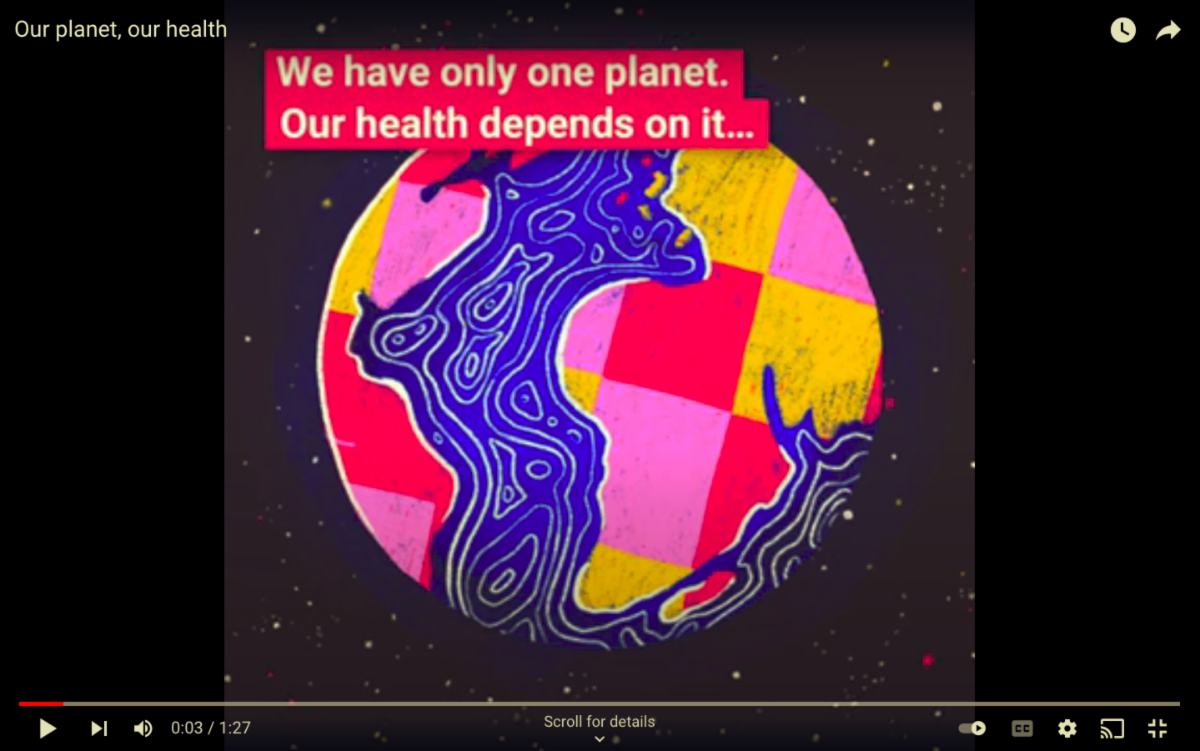
A video released by the WHO shows the interconnectedness between human health and that of the planet. This video calls us to reimagine our health, society, and economy. To reimagine our world!
|
|
'Our planet, our health' - Making peace with nature
Healthy Debate
The theme for World Health Day on April 7 reflects a growing global concern with the health impacts of massive and rapid human-driven ecological changes. While climate change is front of mind, having been recognized as “the single biggest health threat facing humanity” by the WHO as far back as 2008, the changes and challenges we face are far greater than that.
In 2015, the Canadian Public Health Association released a discussion paper and accompanying background paper on what it called the “ecological determinants of health.” Put simply, these are the basic ecosystem “goods and services” we and other species need to survive – air, water and food. For humans, we also depend on nature for all our materials and fuels, for UV protection, decomposition and recycling of wastes, and a relatively stable and benign climate.
But, now we have entered the Anthropocene, a new geological epoch in which the extent of our social and economic development, the growth of our population and the power of our technology has made us a force of nature – one that threatens to undermine the Earth’s natural systems that are the very roots of our well-being.
|
|
Planetary health for the ages
The Lancet
This year’s World Health Day, on April 7, has the theme “Our Planet, Our Health”. It draws attention to the inextricable link between human health and environmental change, and to the limits of an ecology that cannot sustain unfettered consumption and blatant disregard for natural resources.
The WHO estimates that more than 13 million deaths annually are now due to avoidable environmental causes, including those related to climate change, which they call the greatest health threat to humanity.
Simultaneously, an existential emergency is unfolding as the brutal Russian invasion of Ukraine becomes everyone’s war—more than 2500 civilian deaths, 10 million people displaced, escalating nuclear tensions, and a devastating cascade of disruption to global food, fuel, and financial systems that will have consequences for decades.
War, like climate change and pandemics, is a symptom of unhealthy societies. This triplicate of crises shows a failure to see the fundamental interconnectedness of social, economic, environmental, and health systems. And to recognise that all species are dependent on one another for survival, prosperity, health, and sustainability.
|
|
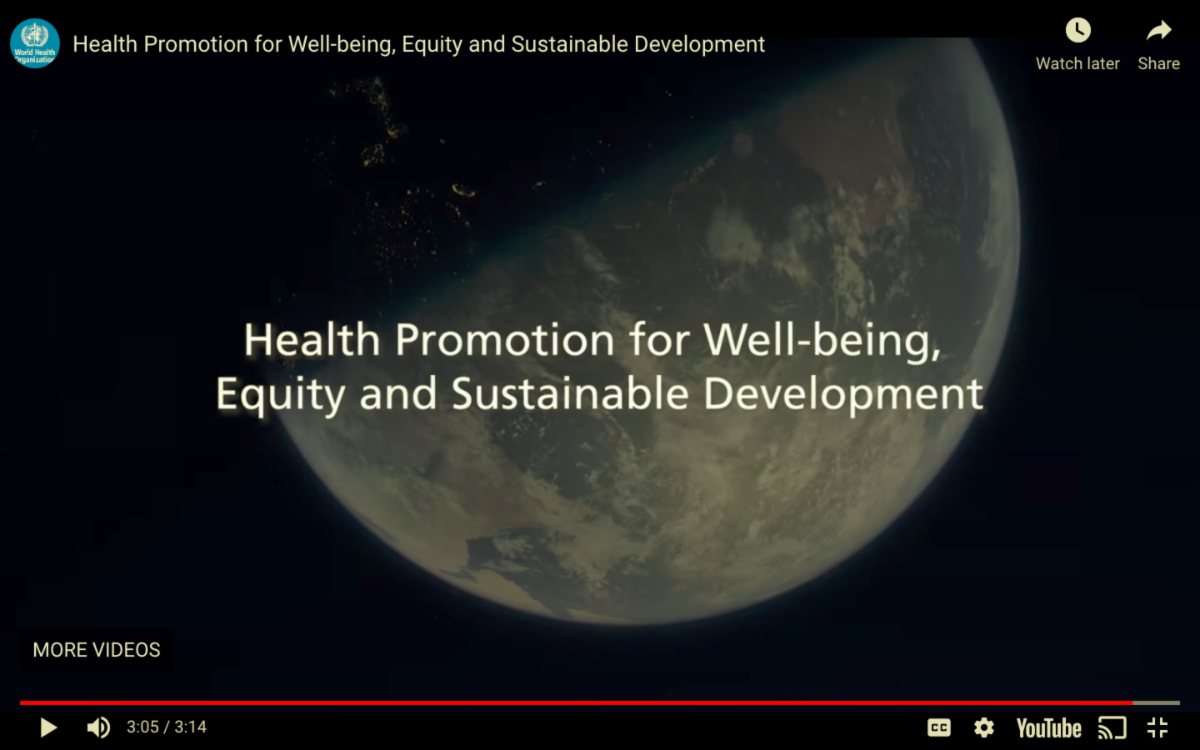
Health promotion for well-being, equity and sustainable development |
COVID has cost the world dearly, but it has also given us a chance to change the path that we’re on and create the future we want. Health and well-being should be factored into everything, because we all need healthy environments in which to live, learn, work and play. |
|
|
Taking Action
Healthy Debate
On World Health Day, let’s acknowledge that our hospitals – and the health care system as a whole – are very energy intensive, use large amounts of materials – including toxic substances – and produce large volumes of solid waste and toxic waste. But this is, in fact, counter to our ethical duty to do no harm, which must include not harming the environment and the health of people and communities.
But, there is a lot of good news here, as well as lots of opportunity for further action. Nationally, the Canadian Coalition for Green Health Care (CCGHC) has been working for more than 20 years on these issues and has a wide range of helpful programs and resources.
Many practitioners do not work in hospitals and health authorities but in private offices and clinics. But you too can help reduce your environmental impacts, using guides such as the Green Office Toolkit from the CCGHC. And wherever you work, you could start a Planetary Health Committee and bring forward a green agenda when you meet with your clinical, academic and administrative colleagues.
|
|
Health professionals have a role to play in ‘Our Planet, Our Health’
Healthy Debate
The theme for today’s World Health Day is "Our Planet, Our Health". So, what can Canadian health professionals do to protect and restore the health of the planet, which is after all the ultimate determinant of the health of the population?
A World Health Organization campaign urges people, communities, governments and organizations around the world to share their stories about the steps they are taking to protect their health and that of the planet. As a group of physicians and other health professionals in British Columbia actively engaged in planetary health, we encourage health professionals to examine their role in planetary health.
The starting point is that health professionals are never only health practitioners; they are also part of the health-care system, and they are citizens in their own communities and in the province, Canada and globally. So, we have ideas, examples and suggestions in all those areas.
|
|
|
|
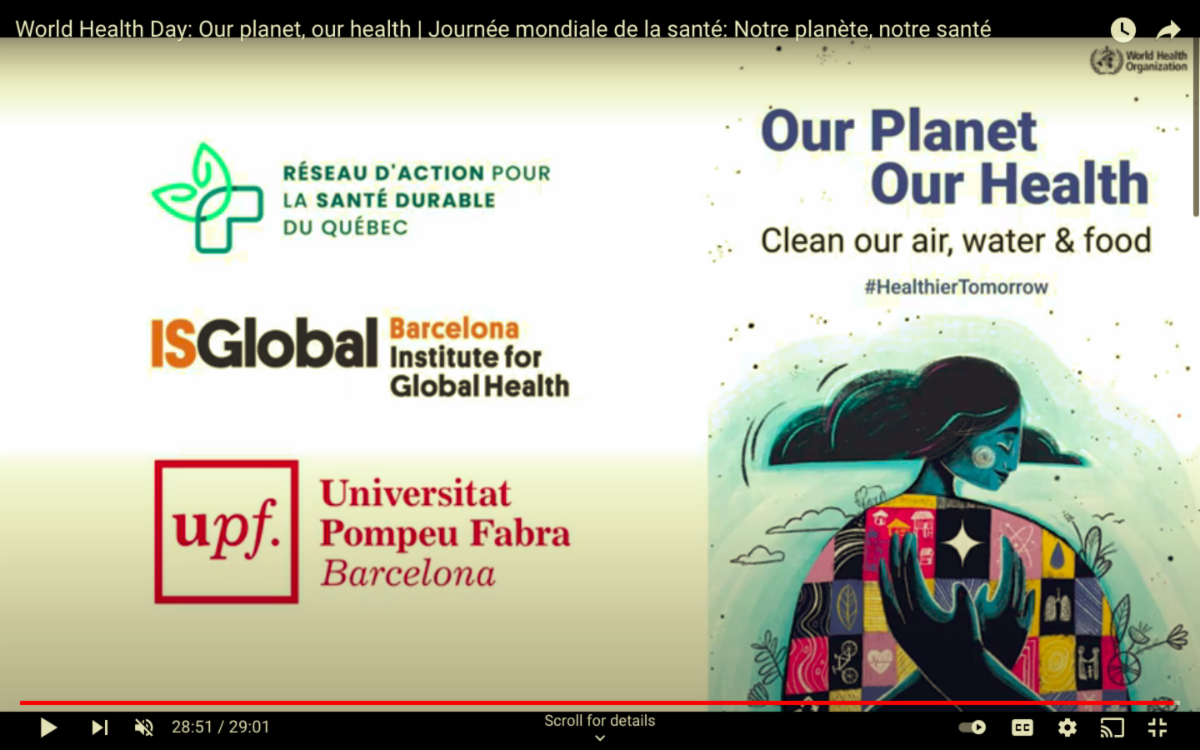
World Health Day: Our planet, our health |
To ensure a Healthier Tomorrow, the World Health Organization (WHO) recommends ambitious actions for governments, corporations, healthcare professionals and citizens. Join Dr. Olena Zotova, Dr. Cristina O’Callaghan-Gordo and Dr. Lela Mélon for a discussion about what it would take to implement the WHO recommendations.
|
|
Dr. Trevor Hancock: WHO's focus on planetary health is timely
Times Colonist
For World Health Day, the theme this year is "our planet, our health".
This theme is very timely, reflecting a growing global concern about what we are doing to the Earth, and what that means for humanity — not to mention what it means for all the other species with whom we share the Earth.
The UN Secretary General, Antonio Guterres, said it succinctly and bluntly in December 2020: “Humanity is waging war on nature. This is suicidal.” He has talked since of the “triple crisis” of climate change, biodiversity loss and pollution.
The WHO “estimates that more than 13 million deaths around the world each year are due to avoidable environmental causes. This includes the climate crisis, which is the single biggest health threat facing humanity. The climate crisis is also a health crisis.”
The real threat is not just climate change. It is the combination of massive and rapid global ecological changes rooted in a way of life, driven by high-income countries, that is unsustainable. Which is why the WHO wants to focus our attention on the urgent actions needed to create societies focused on well-being
|
|
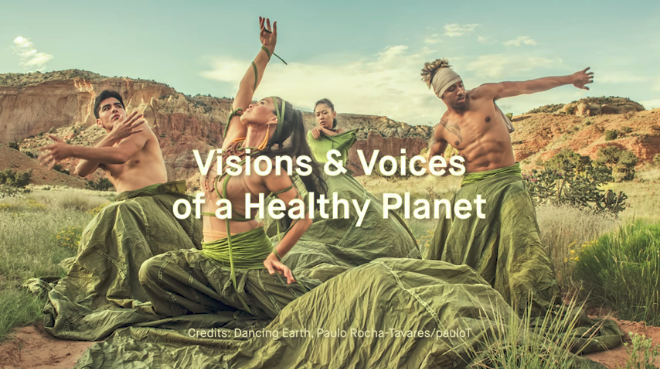
Visions and voices of a healthy planet: A healing arts event for World Health Day 2022
In every crisis, it often seems that the first to arrive to help are health care workers and artists. This was most recently true during the pandemic, and it is increasingly true as the consequences of climate change become more apparent. Human caused climate change has created an existential threat to life on this planet and has dramatically altered our health and wellbeing as well as our conception of ourselves and our place in the world.
It is in this spirit that we have called together care providers and artists across genres and geographies who recognize the relationship between planetary and human health. Health care providers are prescribing nature visits to increase vitality and reduce stress and anxiety. Artists and arts therapists are using the transformative power of the arts to confront despair, promote dialogue, and bring us into a fuller, sensory immersion of the reciprocal relationship between care for our planet and ourselves.
This conversation for Our Planet, Our Health was co-hosted by Christopher Bailey, Arts and Health Lead for the WHO and Dr. Nisha Sajnani, Founding Co-Director for the Arts + Health @ NYU. Panelists included Renée Fleming, Dr. Melissa Lem, Modisana Mabale, Chantal Bilodeau, Jave Yoshimoto, and Cecil Scheib.
|
|
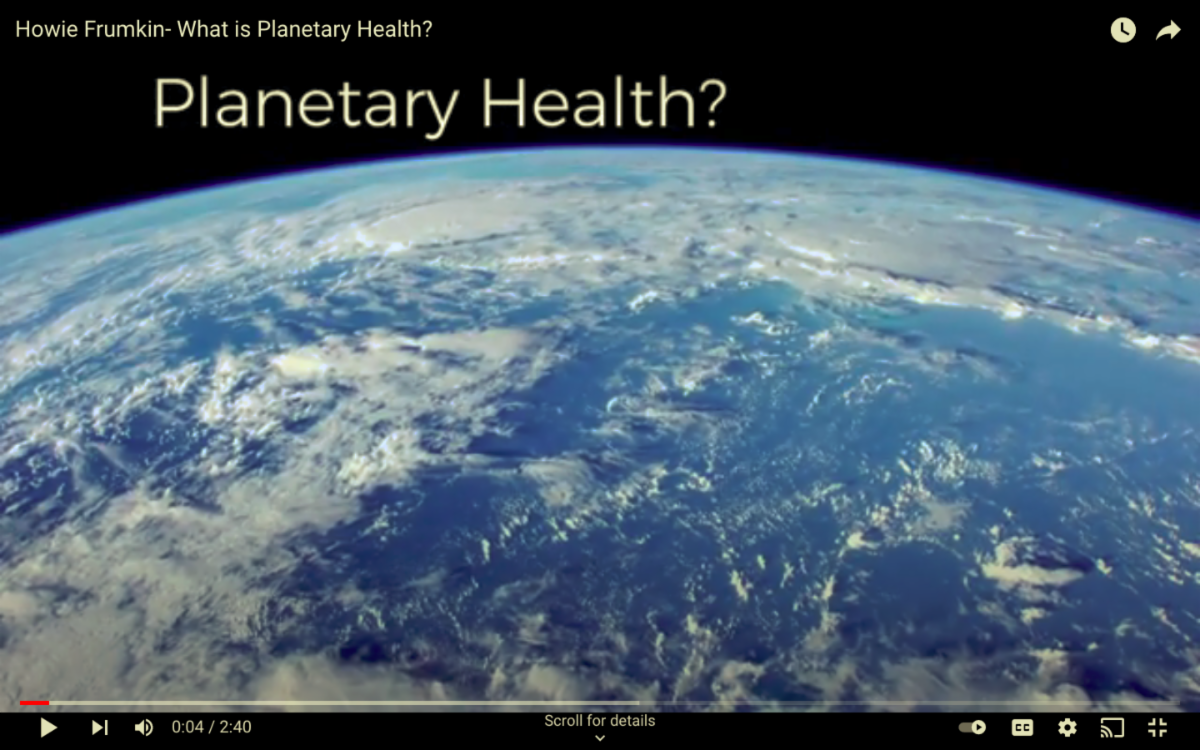
What is Planetary Health? |
Howard Frumkin, M.D., Dr.P.H., Professor of Environmental and Occupational Health Sciences, at the University of Washington School of Public Health, discusses the topic of Planetary Health as a breakthrough field that embeds humans health and well-being in the natural systems we depend on. |
|
|
Climate Change is a Health Crisis
Climate and Health Alliance
The Climate and Health Alliance (CAHA) has created a briefing document summarizing the Health Messages from the Intergovernmental Panel on Climate Change Sixth Assessment Report (IPCC AR6) on Climate Impacts, Adaptation and Vulnerability to help readers better understand how climate change is a health emergency.
The IPCC AR6 report runs over a thousand pages. This briefing aims to summarize the findings relevant to health and wellbeing, and provide a resource for health professionals and policy-makers working at the intersection of climate change and health
|
|
World Health Day; Creating a better planet for a #HealthierTomorrow
NEWS Medical & Life Sciences
In recognition of World Health Day 2022, Emily Henderson speaks with Dr. Maria Neira, Director of the Department of Environment, Climate Change and Health at the WHO, about this year's campaign 'Our Planet. Our Health' and how our personal health is linked to the health of our planet.
Henderson questions Neira about the relationship between our own personal health and that of the planet, the importance of raising awareness about global health, the spread of misinformation and much more.
|
|
HEALHY DEBATE SPECIAL SECTION:
Here's how we heal our planet
|
|
|
|
An agenda for action on planetary health |
As physicians, nurses, and other health professionals, we are already seeing the devastating impacts of climate and ecological crises. Here's what the B.C. government must do to transition to a sustainable, just, and healthy society at peace with nature.
|
|
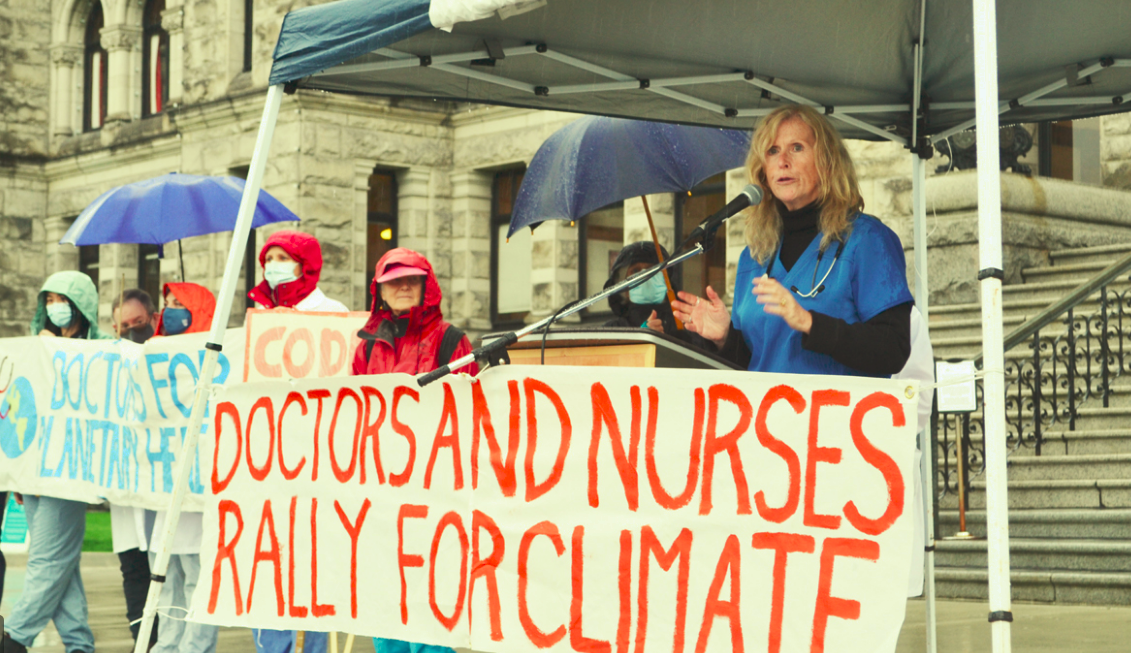
Doctors and nurses declare a climate and ecological 'Code Red' for B.C |
A coalition of health professionals recently rallied in Victoria, B.C., to declare a state of
climate emergency in the province, and lay out a plan for the transformative change that will improve the health of the people of B.C. – and the world beyond.
|
|
|
|
|
Practising health care as if the planet matters |
Canada has committed to developing climate-resilient, low-carbon health systems. But regrettably, Canada did not commit to creating a net-zero emissions health care system. It's now up to provincial governments.
|
|
"Climate activists are sometimes depicted as dangerous radicals. But the truly dangerous radicals are the countries that are increasing the production of fossil fuels. Investing in new fossil fuels infrastructure is moral and economic madness."
~ UN Secretary-General Antonio Guterres
|
|
RETScreen® is a Clean Energy Management Software system for energy efficiency, renewable energy and cogeneration project feasibility analysis as well as ongoing energy performance analysis.
|
|
Have you registered as an organ donor?
Contact your local organ donation agency and speak to your family about your wishes. You have the power to save and transform lives.
|
|
The Canadian Coalition for Green Health Care is Canada’s premier green health care resource network, leading the evolution of green in Canada’s health sector as a national voice and catalyst for environmental change. www.greenhealthcare.ca
|
|
Some articles referred to in the Digest make reference to services and/or product offerings from specific suppliers. The CCGHC recommends that readers research the service and product offerings available through a wider range of suppliers for comparison purposes and in keeping with public sector purchasing guidelines. These articles should not be interpreted as an endorsement of any product or service. |
|
|
|
|
|
|