The People’s History They Don't Want Our Students to Know |
|
As you know, the right-wing attacks on racial justice teaching have become more shrill, more frightening.
But despite claims of “political indoctrination” — or worse — specific descriptions of problematic teaching are scarce.
In fact, the white supremacist backlash does not take aim at bad teaching, but at good teaching.
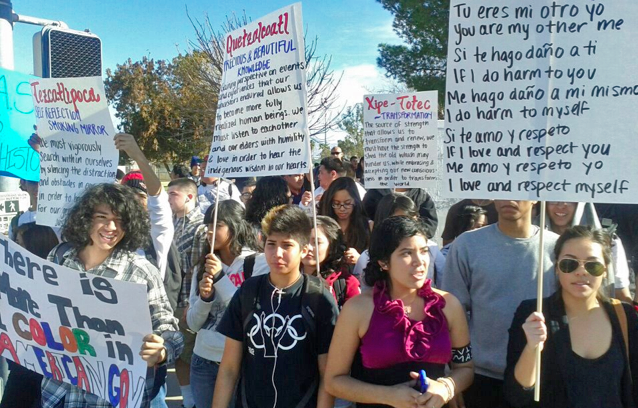
We saw this more than 10 years ago, with the banning of Tucson’s Mexican American Studies program.
|
|
Every single metric — from high school graduation rates to college attendance — testified to the program’s overwhelming success.
But the outcome that most upset the program’s opponents was that the curriculum focused on issues of racial inequality, and the history of activism. Students took their lessons to heart, and were becoming more active in working to make a difference.
|
|
Beginning now, once a month, the Zinn Education Project will shine a light on the kind of people’s history teaching that the right wing seeks to suppress — and that we hope to spread.
Judge for yourself: “indoctrination” or an exploration of key moments of U.S. history, which can help students think more clearly about their society?
|
|
Our first example is from Jordan Jones, a middle school social studies teacher in Pittsburgh, Pennsylvania.
|
|
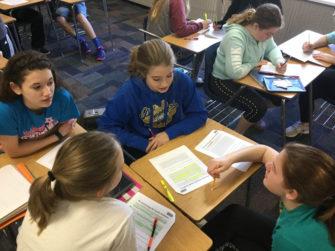
My 8th graders have embarked on a significant journey this school year. We are attempting to understand how systems of racism in the United States have changed over time.
This past week we jumped from understanding the origins of race and racism through the system of slavery to the opportunity of Reconstruction following the Civil War. We used “Reconstructing the South: A Role Play.”
Students worked together in small groups and independently to answer each of the six questions within the activity. . . the real magic took place when we had a whole class discussion/debate about the best solutions. Continue reading. |
|
|
|
What Students Learn from Reconstruction |
|
After engaging in several lessons on Reconstruction, Philadelphia high school teacher Adam Sanchez asked his students what they had learned and whether they thought it was important for students to learn about this history and why. Here are a few of their responses. (It was hard to choose which to share — there are so many more brilliant responses.) |
|
I: “I didn’t learn much about Reconstruction before. I didn’t know how much power Black people had gained in this short period of time and had always just assumed it went immediately from slavery to Jim Crow. It is important for students to learn about this era because it represents a period of mass change that reveals that Black people don’t need saving, but have seized and defined freedom on their own.”
|
|
|
|
T: “I didn’t know that African Americans made significant progress during Reconstruction. . . It helps us understand why America is currently in the state it is in and the causes of the backlash, both to Reconstruction and Black progress today. But learning about Reconstruction also teaches us that if people come together, they can bring forth major political reforms, even changes to the Constitution.” |
|
|
|
M: “I didn’t know that Black people were actually very powerful in the pre-Jim Crow period after the Civil War. This is probably a facet of U.S. history that’s frequently glossed over, and for a reason: People want to make it seem like Black people just went from struggle to struggle, when in fact, we were perfectly OK until the big political parties backstabbed us.” |
|
|
|
S: “I learned there was an era of Black power that I didn’t even know existed, the school curriculum usually skips from Civil War to Jim Crow but there are so many things that happened in between. It’s a shame schools skip over it typically.” |
|
|
|
W: “It is important to learn about Reconstruction because it can teach us about what the country could have been like if Jim Crow laws hadn’t come to pass.” |
|
|
|
J: “I was not aware of the fact that during Reconstruction, African Americans actually were able to obtain significant power, serving as mayors, police officers, governors, judges, etc.” |
|
|
|
Get a Free Book for Your
Reconstruction Teaching Story
|
|
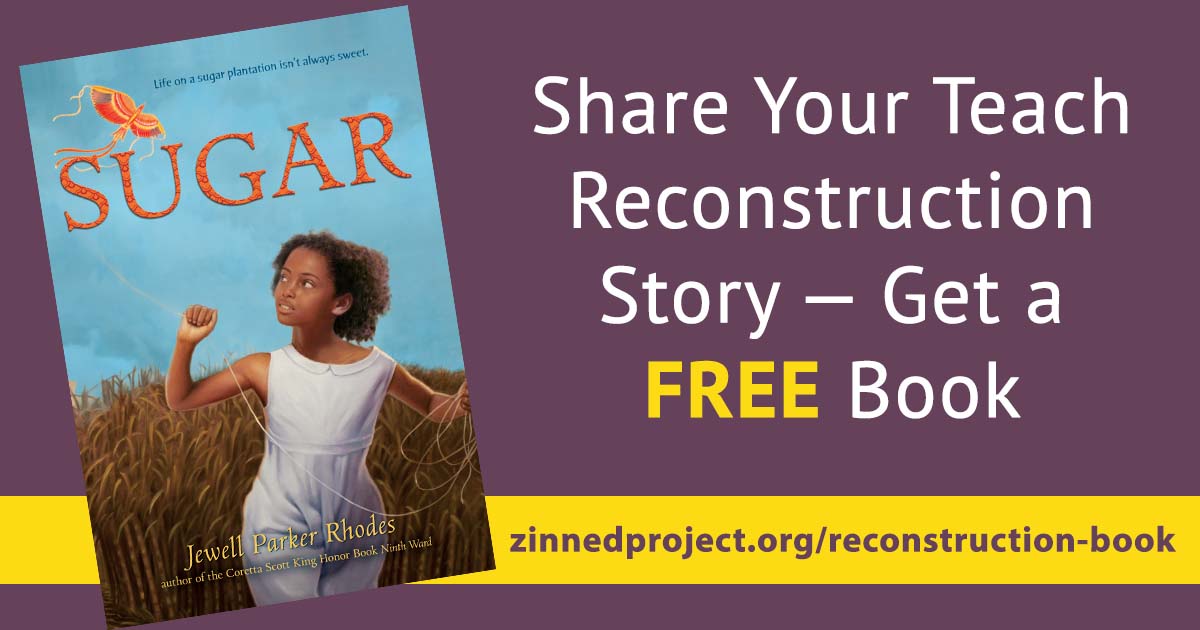
Thanks to a generous donation of books by author Jewell Parker Rhodes, we can offer you a copy of Sugar for your story on teaching Reconstruction or how you introduce the report on Reconstruction to your students. Written for middle school, it is set in Louisiana during Reconstruction. |
|
As Battle Wages Over Critical Race Theory, Schools Fail at
Teaching Reconstruction
|
|
By Nedra Rhone, The Atlanta Journal-Constitution
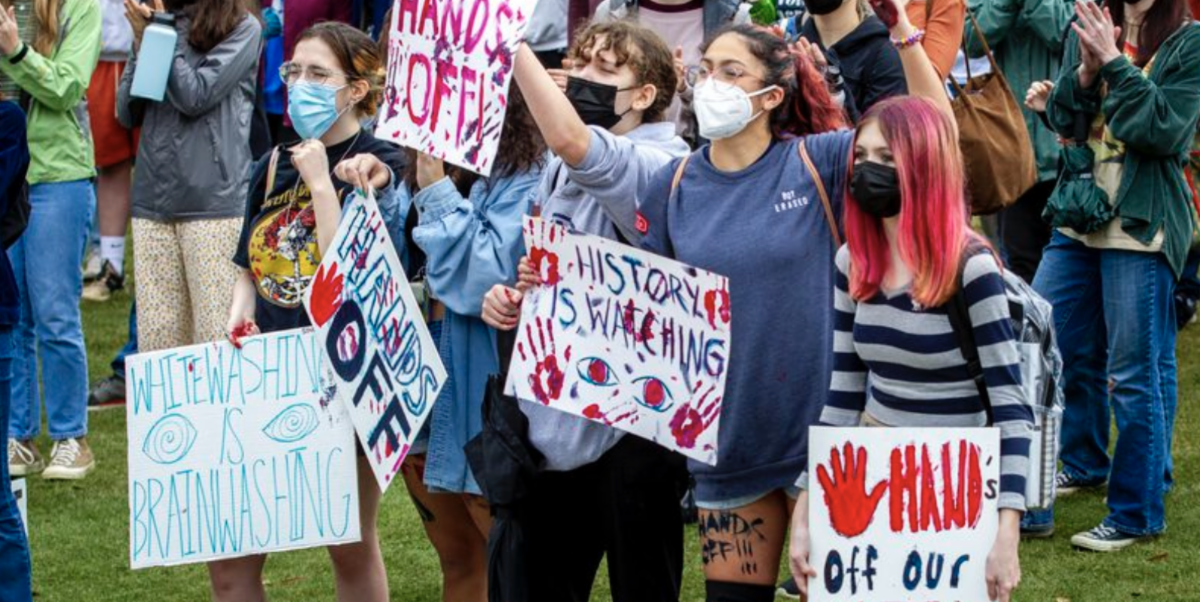
As Georgia students gathered at the Capitol last Friday to protest legislation that would govern the way race is taught in schools, an interesting email hit my inbox.
The writer, whose identity I will conceal, was responding to one of my past columns on wealth gaps. I won’t repeat his vitriol, but in summary, he suggested Black Americans were alone in their quest for civil rights.
Asian Americans, Native people and Jewish people are not “protesting that they are owed reparations” or “saying they’ve been oppressed or offended by statues,” he wrote.
None of that is true.
. . .The misinformed individual who wrote that email is an example of what can happen if state legislators pass a bill that, among other things, would prohibit teachers from teaching “divisive concepts.”
|
|
|
|
PO BOX 73038, WASHINGTON, D.C. 20056
|
|
|
|
|
|
|