Faulkner County Agriculture Update
July 24, 2026
| | |
Faulkner County 4-H Foundation Fish Fry
Our Faulkner County 4-H Foundation Fish Fry is coming August 22. This year we will be at Friendship Church just south of 8 Mile Store.
| | |
Weather
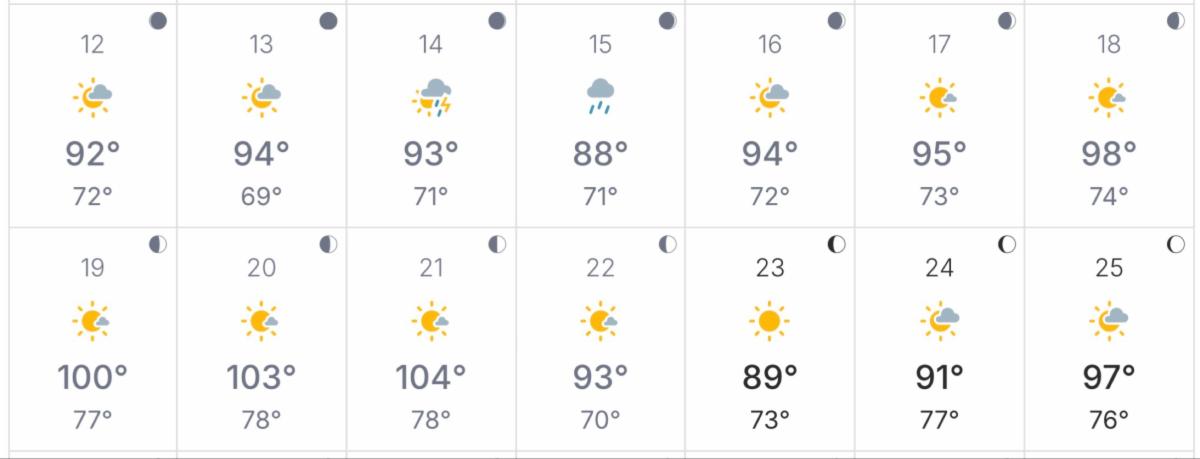
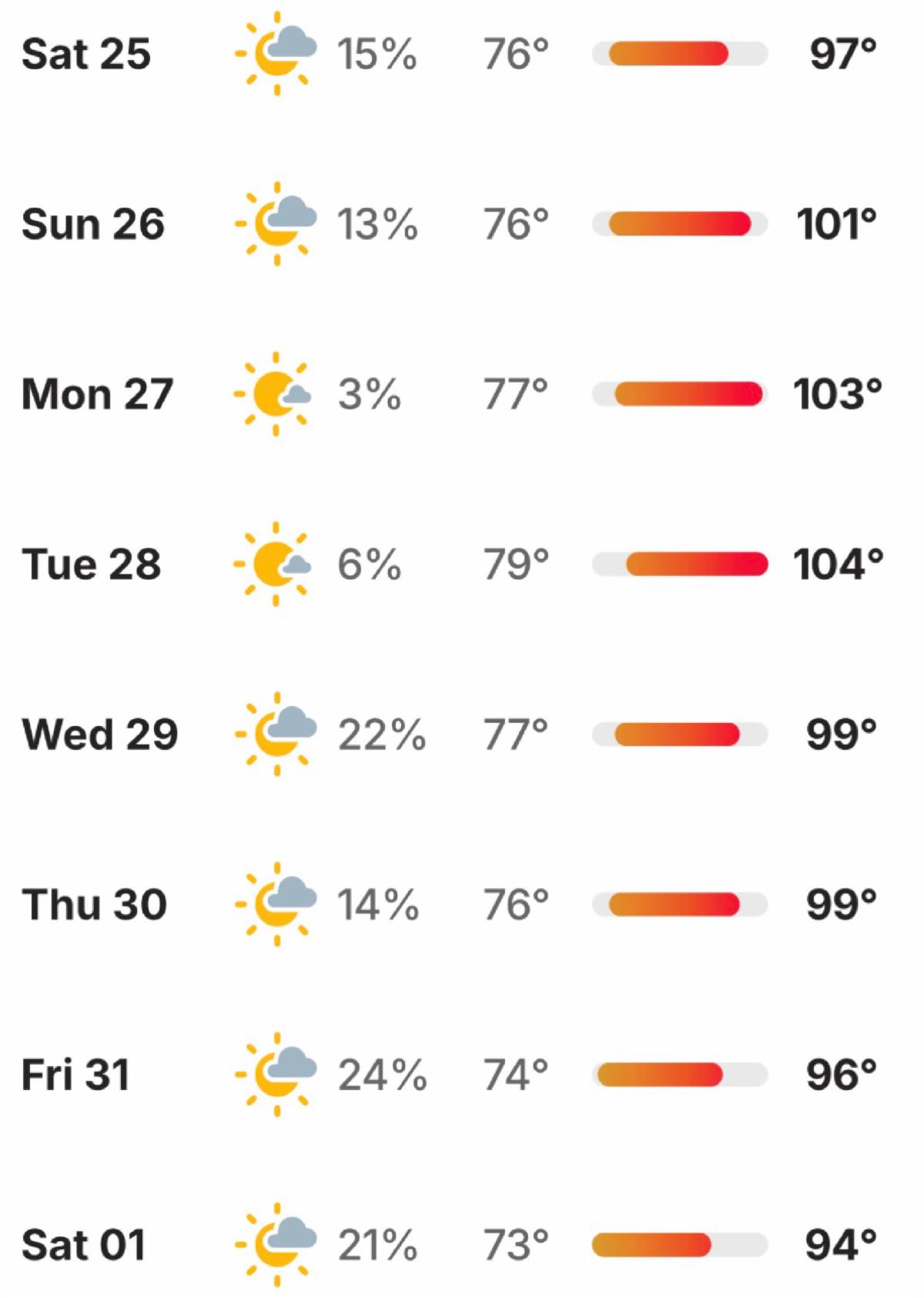
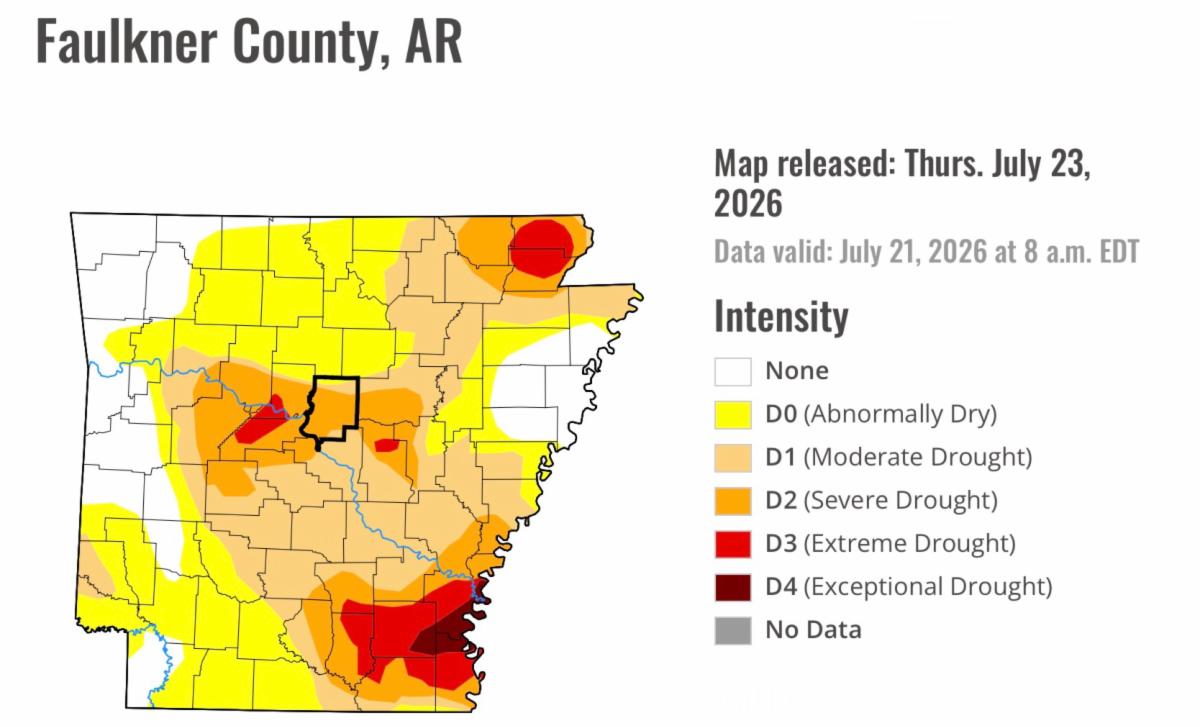
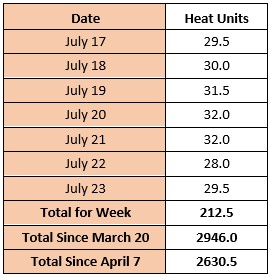
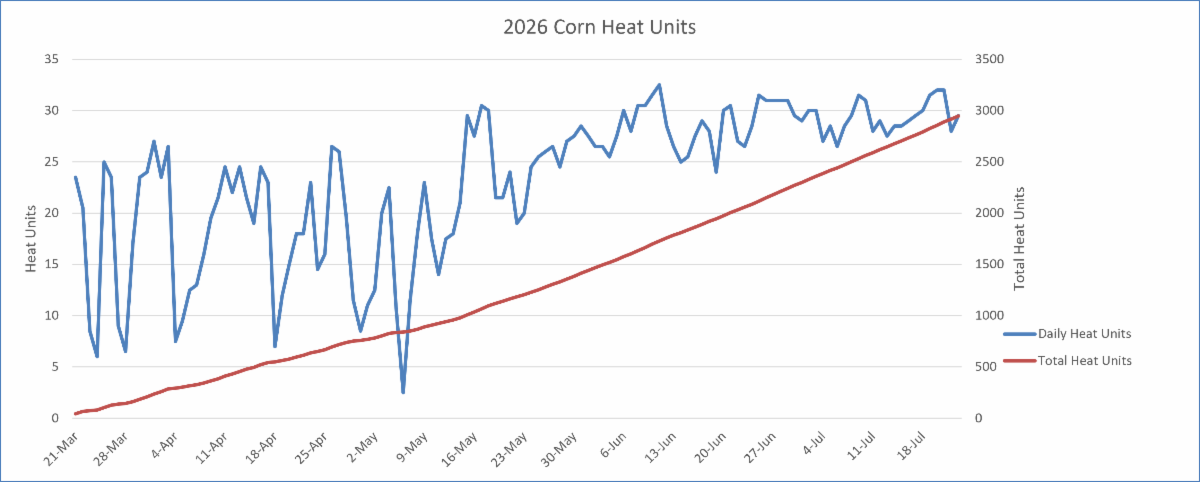
This was one hot week! Tuesday was the hottest day of the year, and according to the news Conway was the hottest spot in Arkansas. We started out the week with good rain chance predicted for Saturday, but those chances shrank as the week went on and now we are down to a 15% chance. The heat returns next week with some more rain chances at the end of the week.
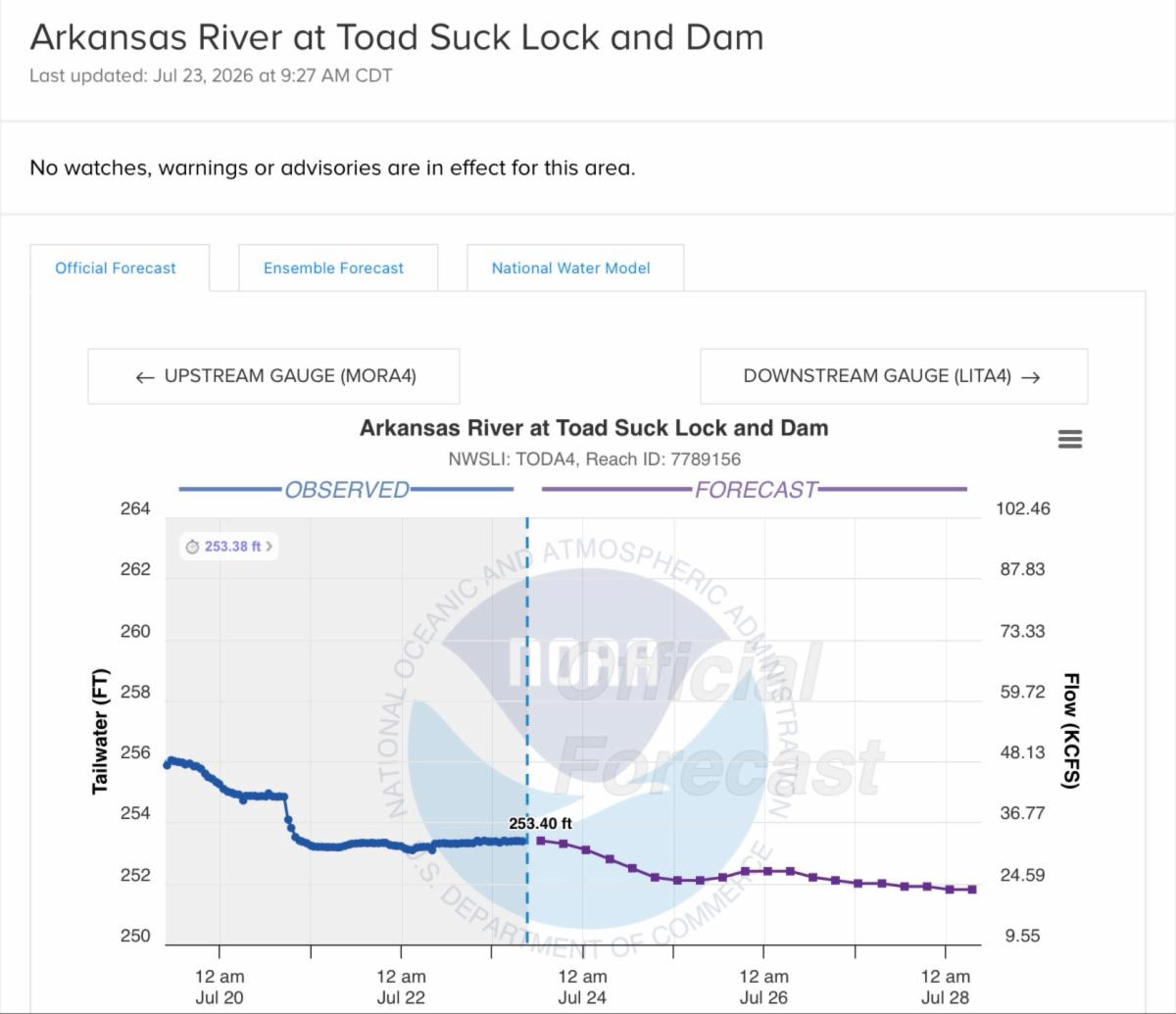
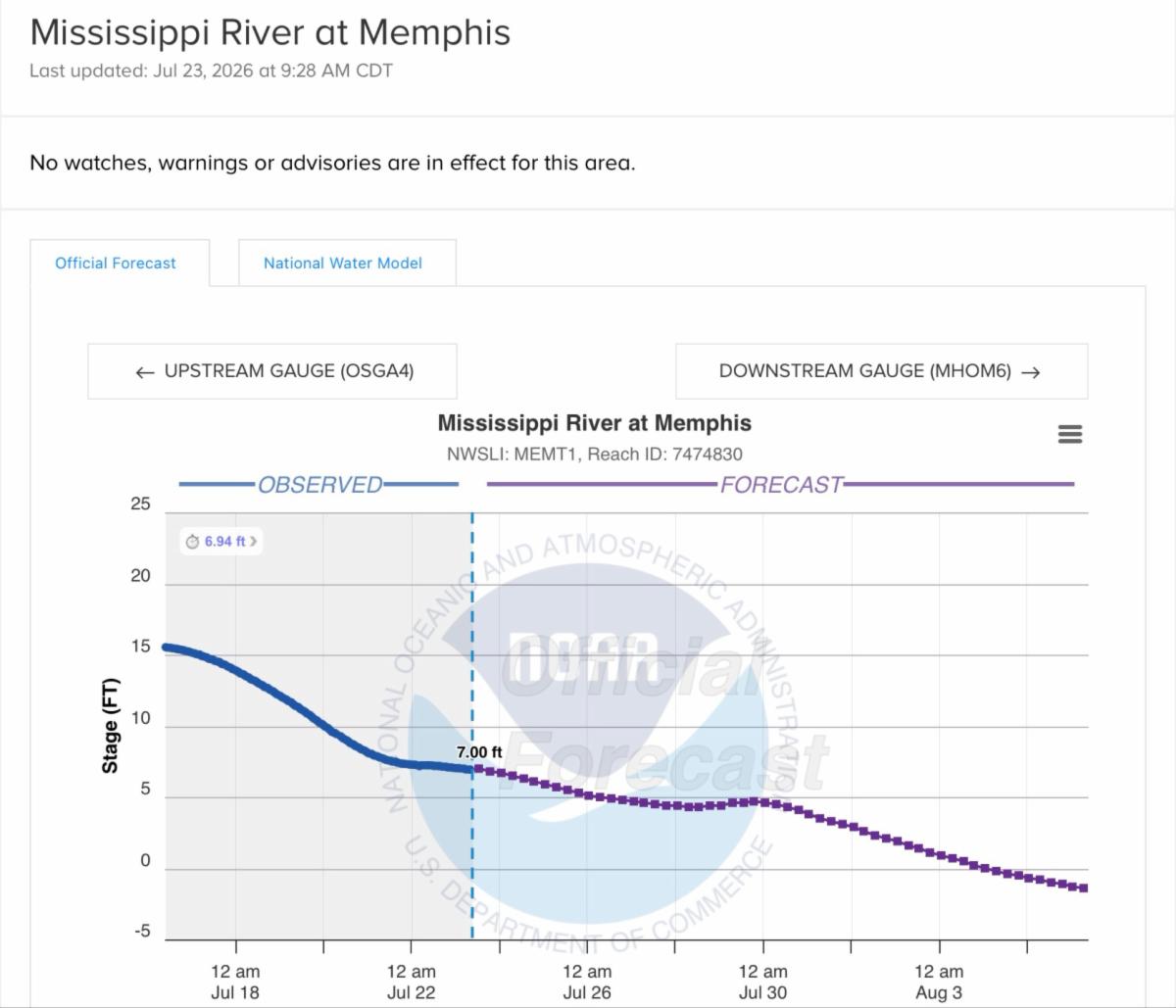
| | Arkansas and Mississippi River | |
Corn
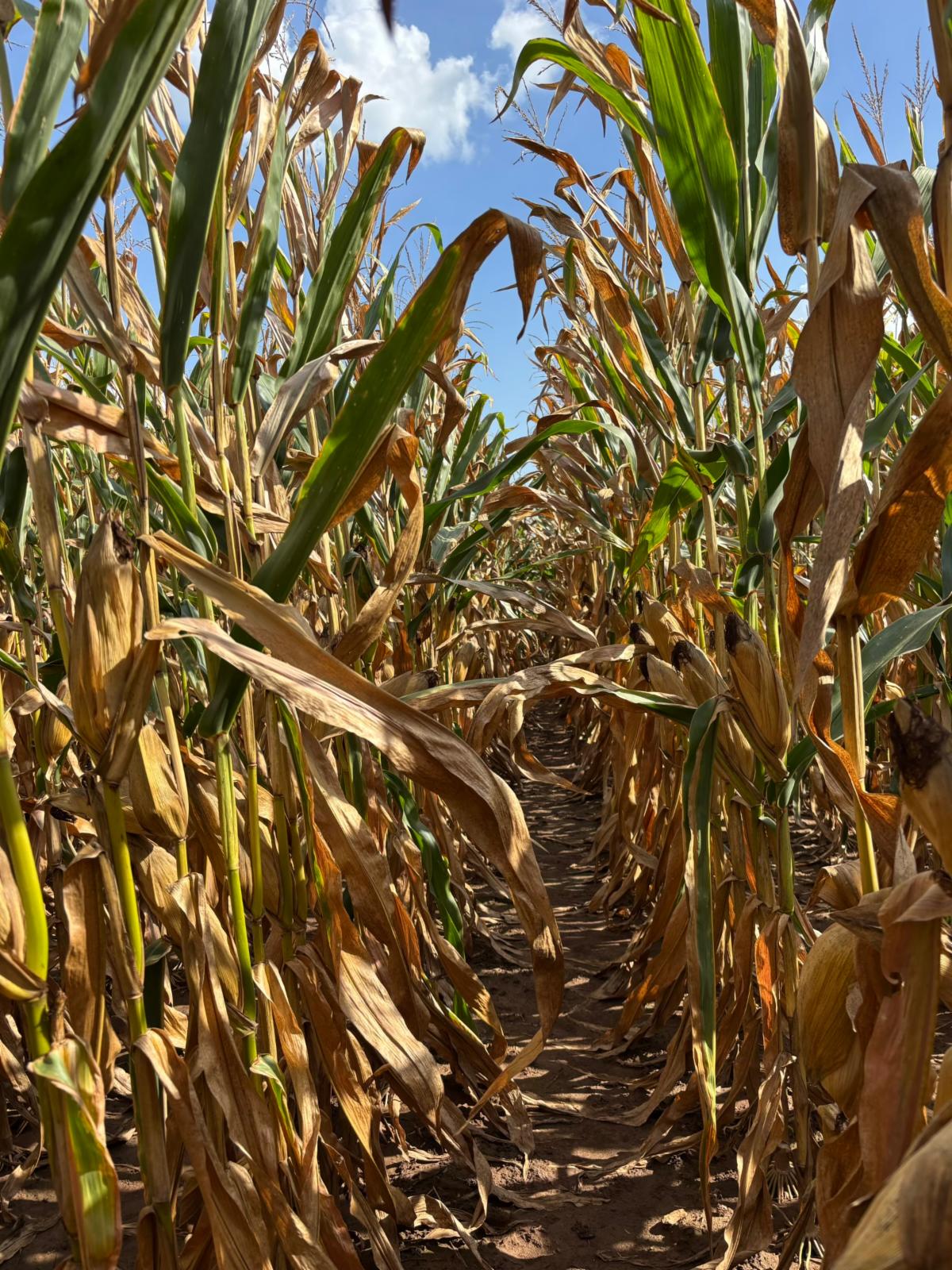
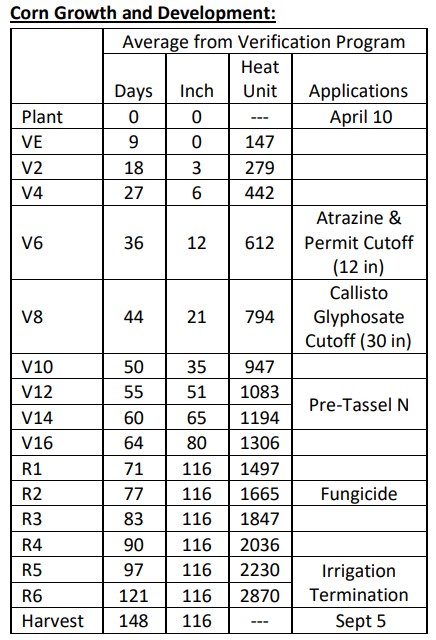
Here is some good information of corn drydown from Dr. Jason Kelley.
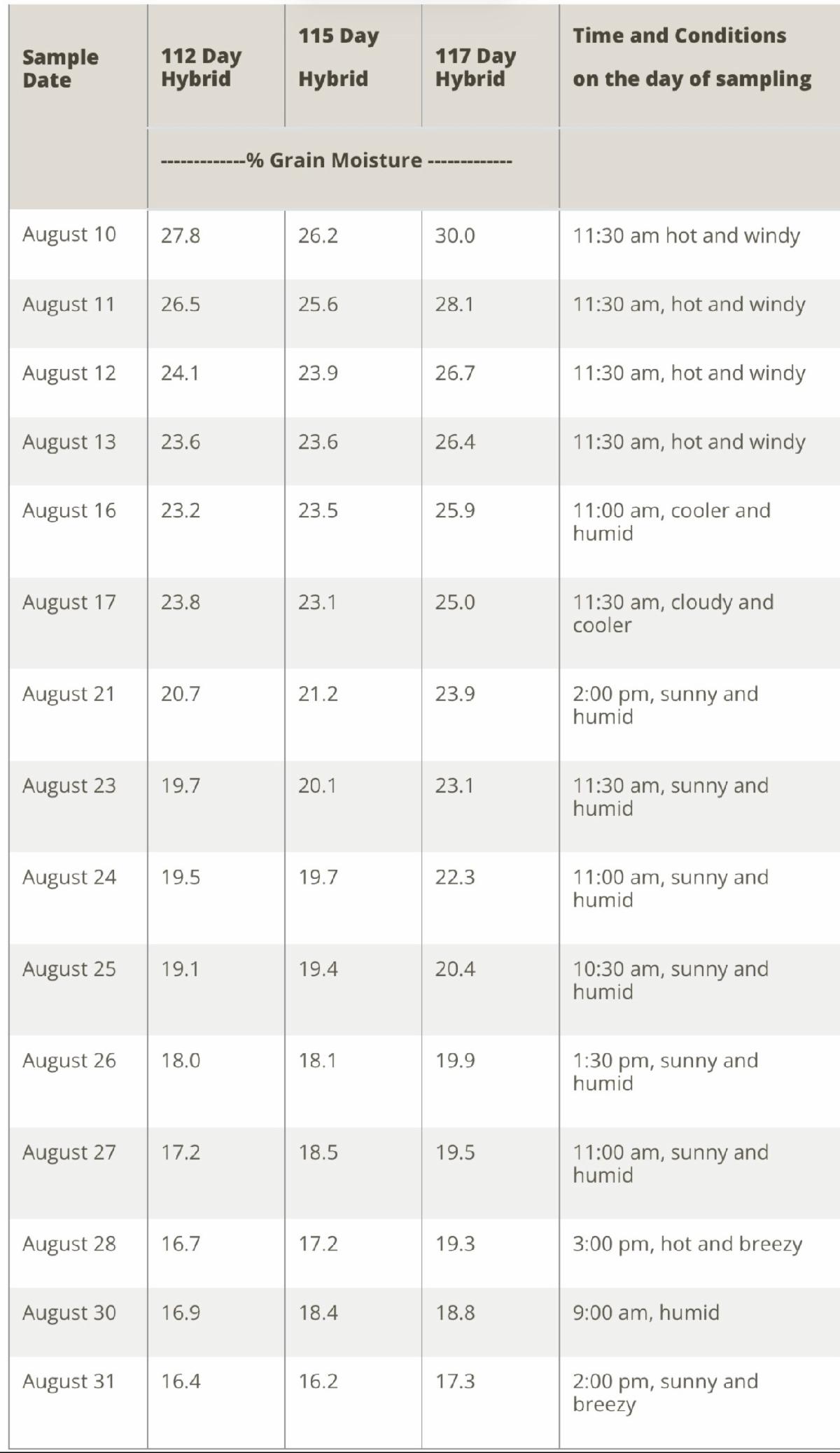
Once maturity is reached, the grain dries relatively slowly. In general, after initial black layer formation (30% moisture), grain takes an estimated 18-25 days to reach 18% moisture, and the rate depends heavily on weather and, to a lesser extent, on hybrid. Drydown from black layer to 18% moisture generally averages about 0.5% moisture reduction per day.
The table below shows grain drydown for 3 hybrids from Lonoke, Arkansas, in 2021 under ideal drying conditions. The data are from hand-shelled samples.
| | |
Rice
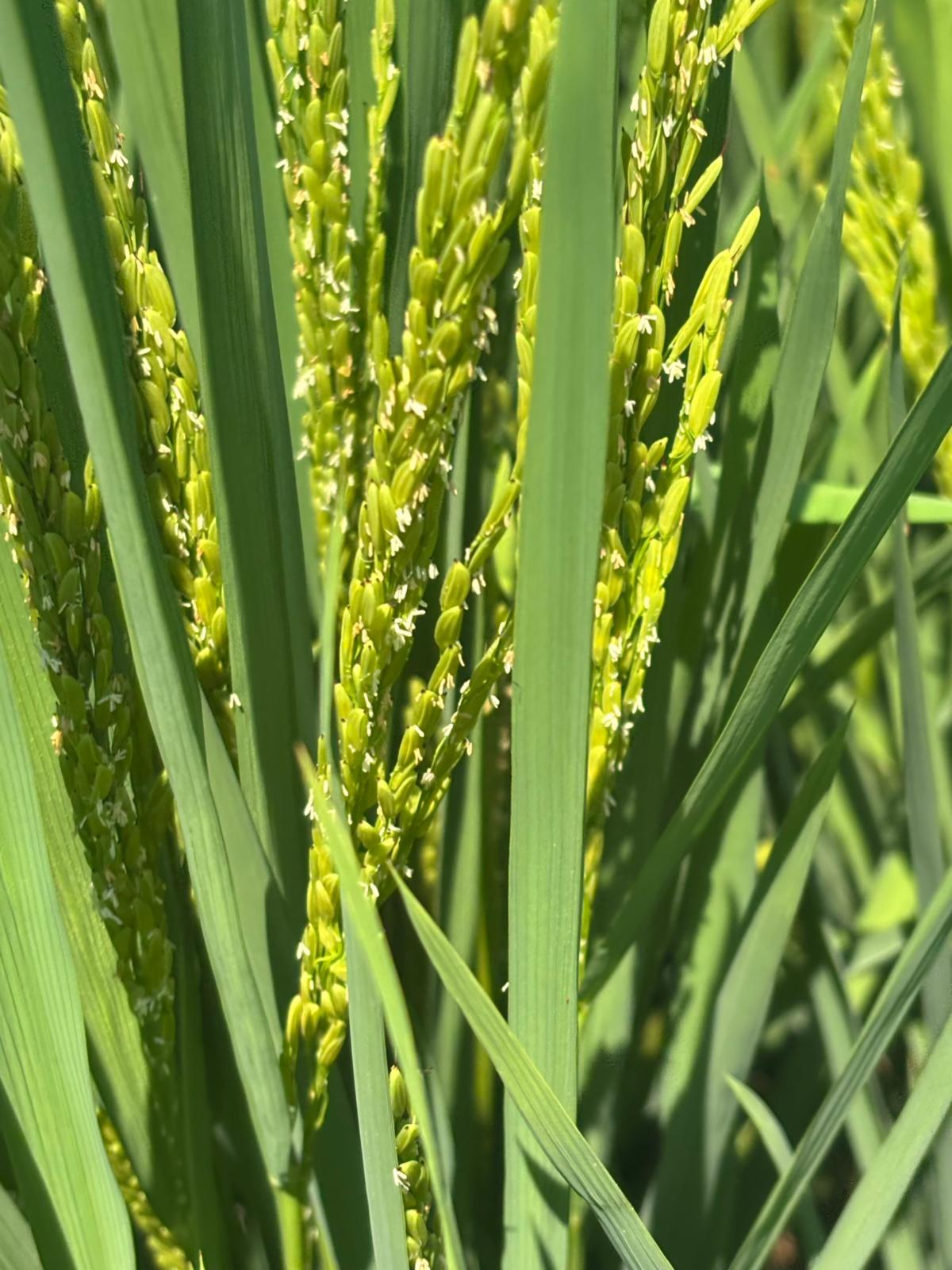
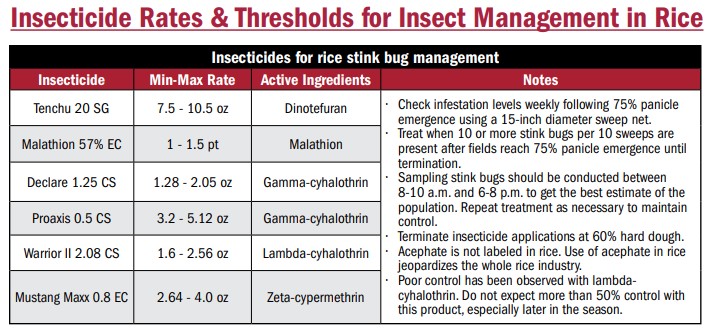
Rice continues to head and flower this week. As more and more fields head, rice stink bug numbers continue to go down as they spread out into other fields. I scouted a field last week that had just headed along the edge of the road, and I was catching 15 stink bugs, but this week as the whole field has headed I barely caught 2.
Continue to scout for stink bugs and keep a good flood as we have reached that critical time of pollination and grain fill. We are almost there but don't stop yet.
| | Latest rice update from Dr. Jarrod Hardke and our 2026 Rice Management Guide. | | |
Soybeans
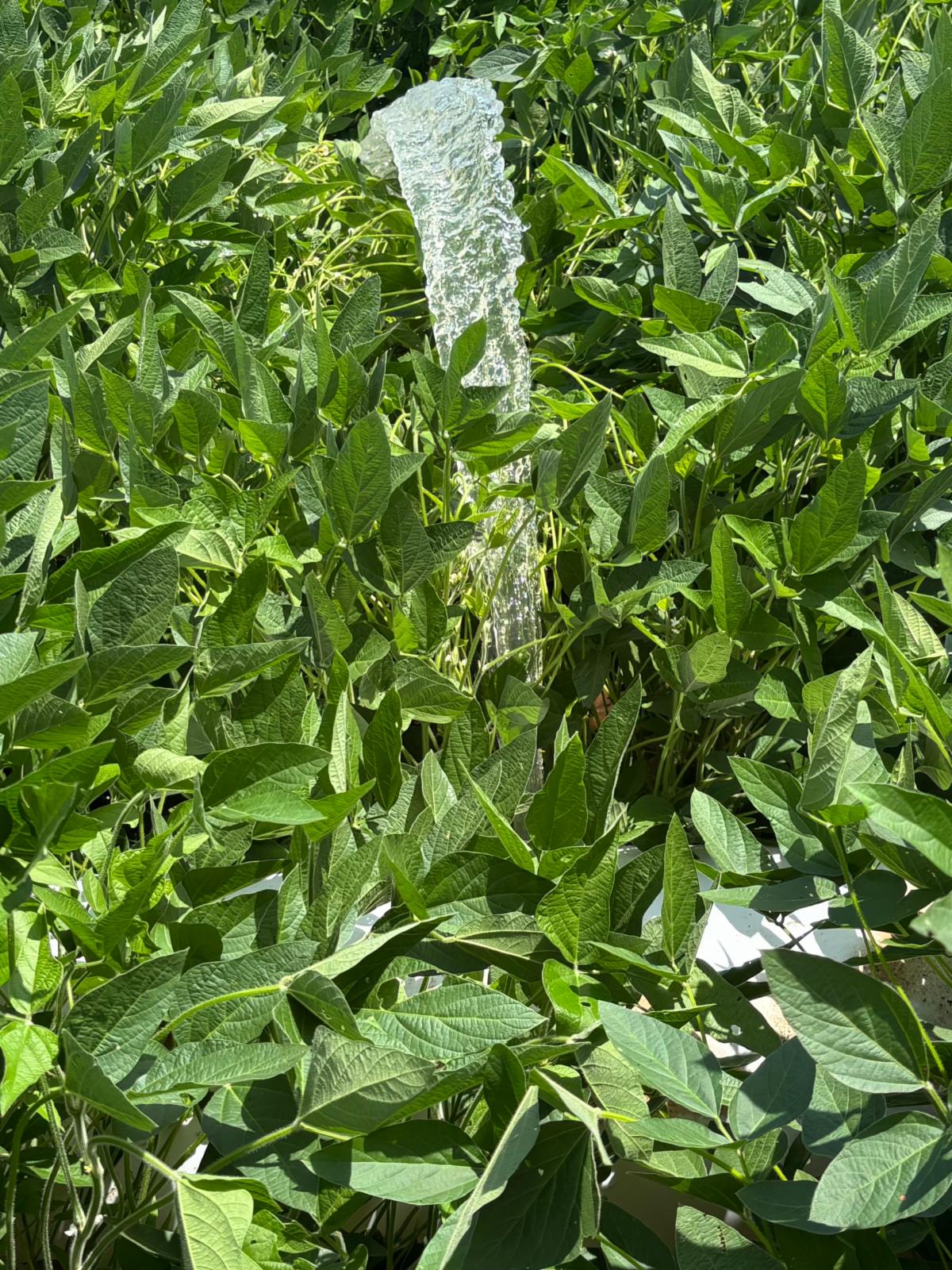
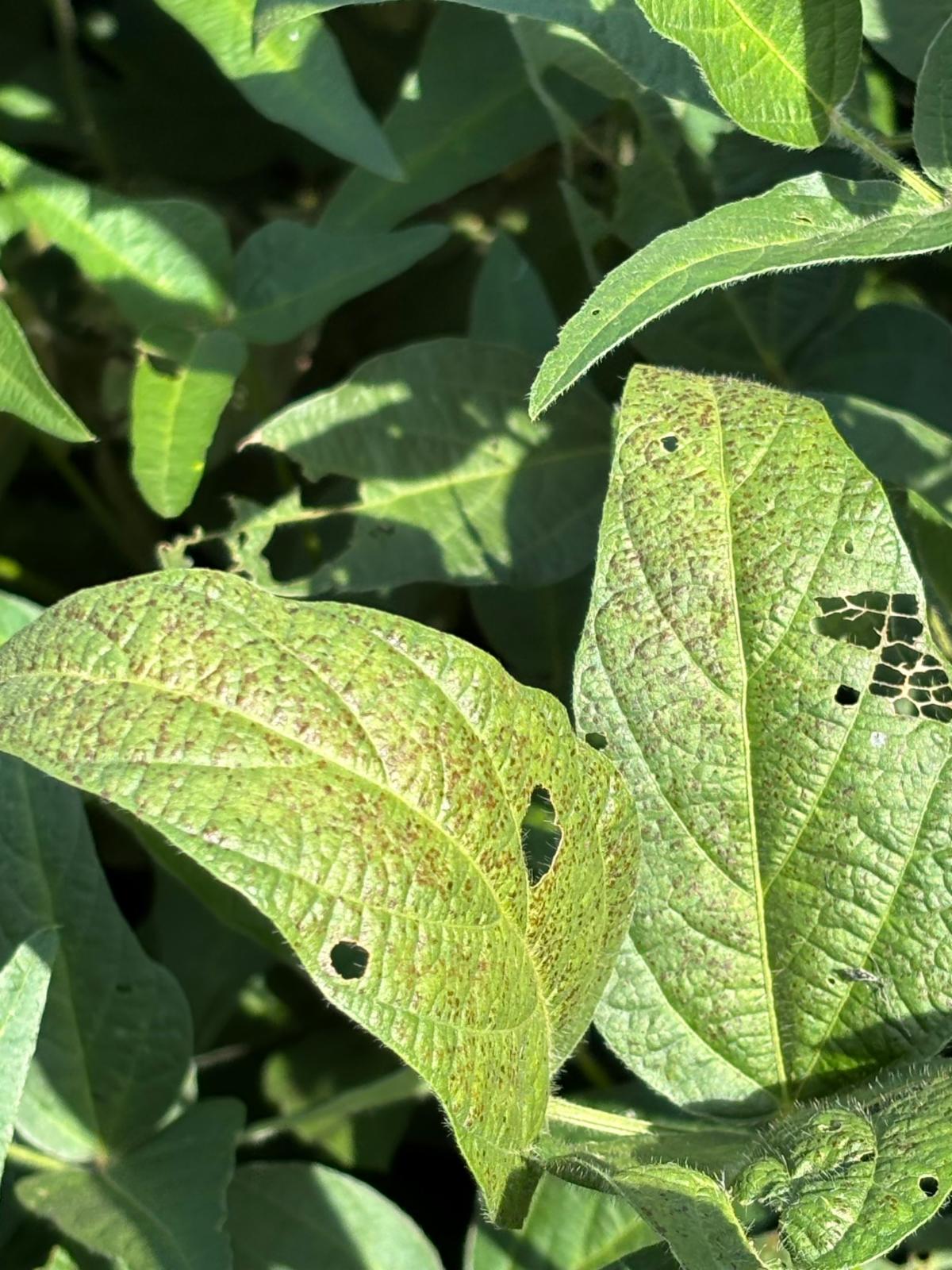
Things are starting to pick up in soybeans. I saw the first of some cercospora showing up on some early planted soybeans. Not much we can do with that and hopefully it doesn't get to bad.
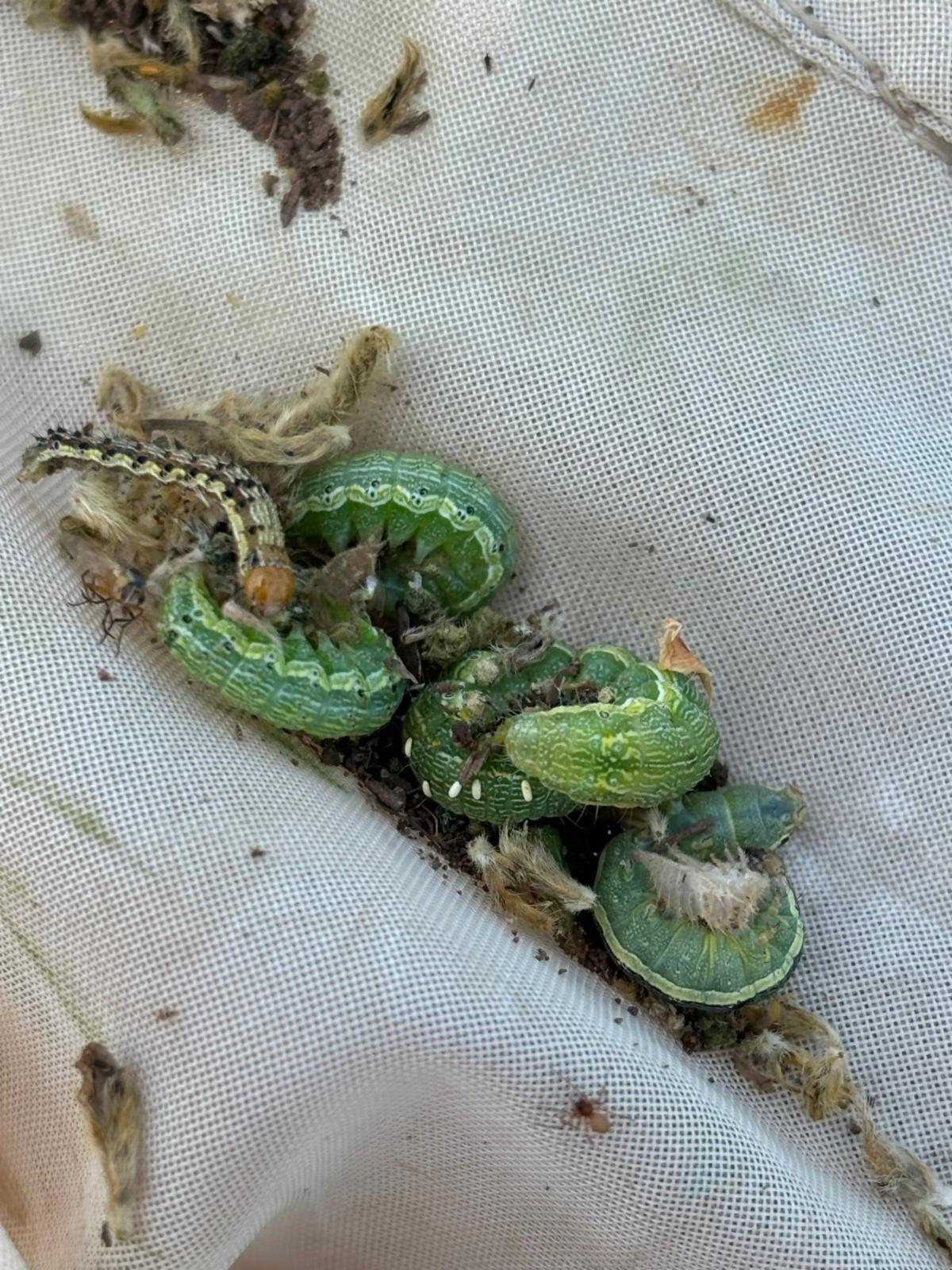
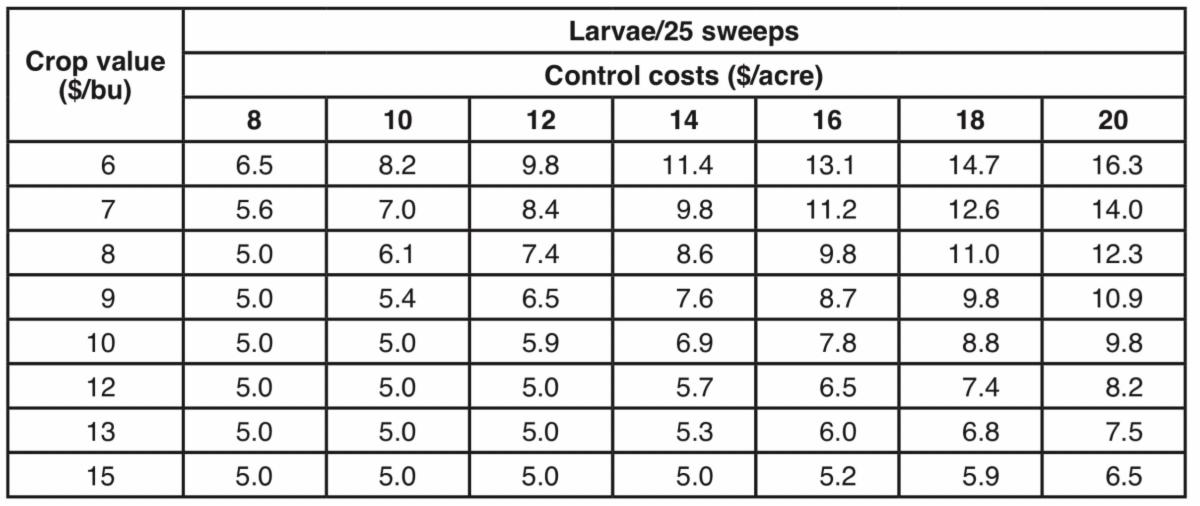
I started catching corn earworms in sweeps this week. The most I found in 25 sweeps was 5. Most of the time I would catch 1 or 2. I was finding the most where soybean middles were still open and the beans were just starting to flower. Being vegetative, I need to see some pretty significant defoliation. When the beans have pods on them, refer to the chart below on what threshold you need to catch to justify a treatment. We should be around 6 per 25 sweeps to apply an insecticide.
I did catch one soybean looper. Soybean loopers made a run at the end of the year last year and one field needed treatment, so keep an eye on them also.
| | |
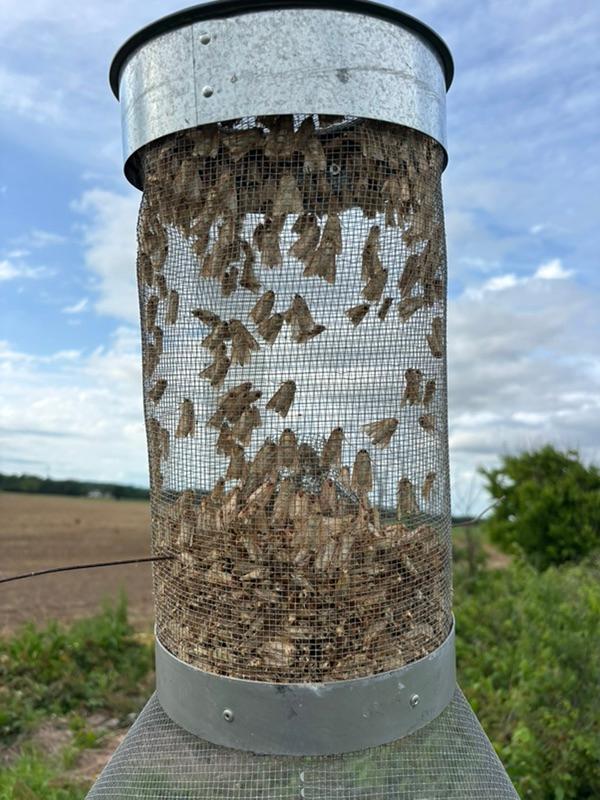
Corn Earworm Moth Traps
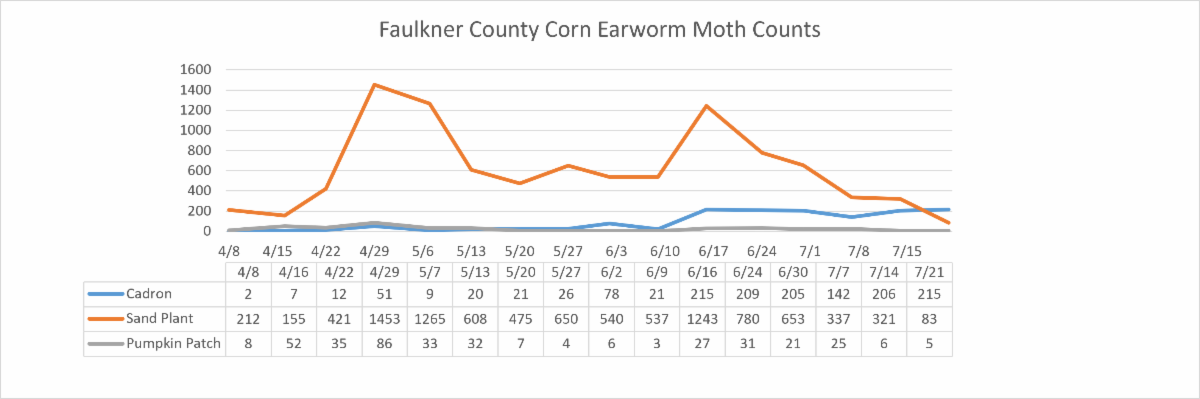
Corn Earworm Moth Counts for July 14, 2026
Cadron - 215
Sand Plant - 83
Pumpkin Patch - 5
| | |
July WASDE Friendly to Grain Markets
Scott Stiles, Program Associate, University of Arkansas
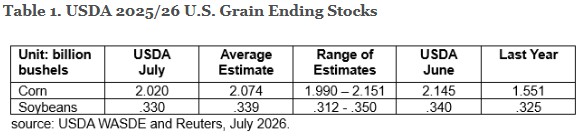
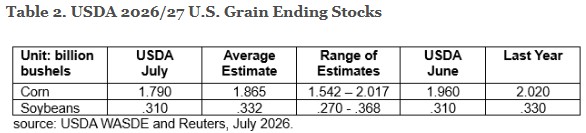
USDA’s adjustments to the old and new crop balance sheets were price-friendly to the grains with ending stocks coming in slightly below pre-report ideas. Estimates of corn and soybean ending stocks from the July WASDE are shown in Tables 1 and 2 below. Market reaction following the July 10th report was positive, with December corn and November soybean futures both closing 9 cents higher on the day.
Beginning with old crop adjustments (Table 1), USDA increased corn feed and residual use by 150 million bushels. This was partly offset by a 25-million-bushel reduction in corn used for ethanol. Net changes this month reduced 2025/26 corn ending stocks by 125 million to 2.02 billion bushels.
| | |
Old-crop (2025/26) soybean exports were increased by 10 million bushels and ending stocks reduced by the same amount, falling to 330 million bushels.
Turning to new crop (Table 2), corn beginning stocks were lowered 125 million bushels to 2.02 billion. Production was increased 5 million bushels to 16.0 billion, on updated acres from the June 30 Acreage report. The U.S. average yield was unchanged at 183.0 bushels per acre. Total usage was raised by 50 million bushels on higher exports. With total supply falling by a net 120 million bushels and exports increasing by 50 million, ending stocks were reduced by 170 million bushels to 1.790 billion. The projected season-average farm price for the 2026 crop was unchanged at $4.40 per bushel; up from $4.15 in 2025/26.
| | |
There were a few adjustments to the 2026/27 soybean balance sheet. Beginning stocks were 10 million bushels lower this month. Production was increased by 40 million bushels to a record 4.475 billion. Harvested acres were increased by roughly 700,000 from last month. The yield forecast of 53 bushels was unchanged. Total soybean supply for 2026/27 increased by 30 million bushels. Regarding demand, soybean crush was unchanged at a record 2.75 billion bushels. Exports were increased by 30 million bushels to 1.66 billion on the larger crop size and stronger global demand. Overall, higher supplies were offset by an increase in exports, leaving ending stocks unchanged at 310 million bushels. The forecast 2026/27 season-average farm price was also unchanged at $11.40 per bushel; up from $10.40 last year and the highest average farm price since reaching $12.40 in the 2023/24 marketing year.
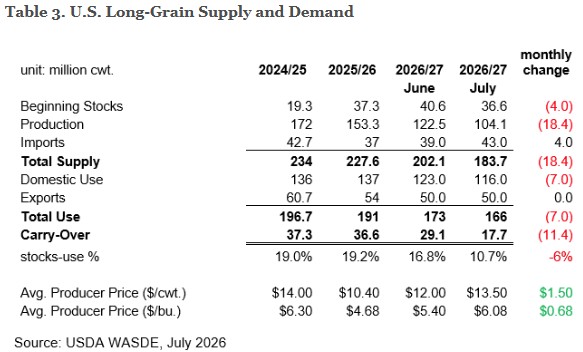
As expected, production was significantly reduced this month for long-grain rice. In the June Acreage survey, long-grain acres were reduced by 253,000 from the March intentions. Adjustments to the U.S. long-grain balance sheet are shown in Table 3 below.
| | |
Changes to new crop supply this month included a 4 million cwt. reduction in Beginning Stocks. In a surprise move, USDA increased old crop (2025/26) exports by 4 million cwt. However, the most notable change to new crop supply was the 18.4 million cwt. reduction in crop size. Production was lowered this month from 122.5 million to 104.1 million cwt. This would be the smallest U.S. long-grain production since 1993 (103.1 mcwt.). On lower production, USDA increased 2026/27 imports by 4 million to a record 43 million cwt.
The 18.4 million cwt. decrease in total supply was only partially offset by a 7 million cwt. reduction in domestic use, now projected at 116 million cwt. Exports were left unchanged at 50 million cwt. In summary, 2026/27 ending stocks were lowered in the July report by 11.4 million to 17.7 million cwt. New-crop carryout is below last year by 18.9 million cwt. and at the lowest level since the 2019/20 marketing year. Long-grain prices were forecast higher for 2026/27 as supplies and ending stocks tighten. The season average farm price was increased by $1.50 per cwt this month to $13.50/cwt or $6.08 per bushel.
USDA increased U.S. cotton production this month by 400,000 bales to 13.7 million. Planted and harvested acreage was increased 2 percent from June. The national average yield was raised 6 pounds to 872 pounds per harvested acre, reflecting the increased area in the Southeast (Georgia) and Delta (Mississippi) and lower area in the Southwest in the June Acreage report. With higher production and no changes to mill use or exports, ending stocks were raised 400,000 bales to 4.1 million. The projected season-average price was unchanged at 73 cents per pound. There were no changes to supply and demand in the 2025/26 U.S. balance sheet this month. The 2025/26 season-average farm price was lowered half a cent to 62.5 cents per pound.
The next USDA World Agricultural Supply and Demand Estimates (WASDE) will be released on August 12th and can be found here: WASDE Report | USDA
| | Beef, Small Ruminants, & Forages | | |
Forages
Limited rain and excessive heat is changing up our forage situation. I have seen a few fields struggling that haven't got the rains that others may have gotten and even the ones that did get rain, the combination of plant use and heat uses that up really quick.
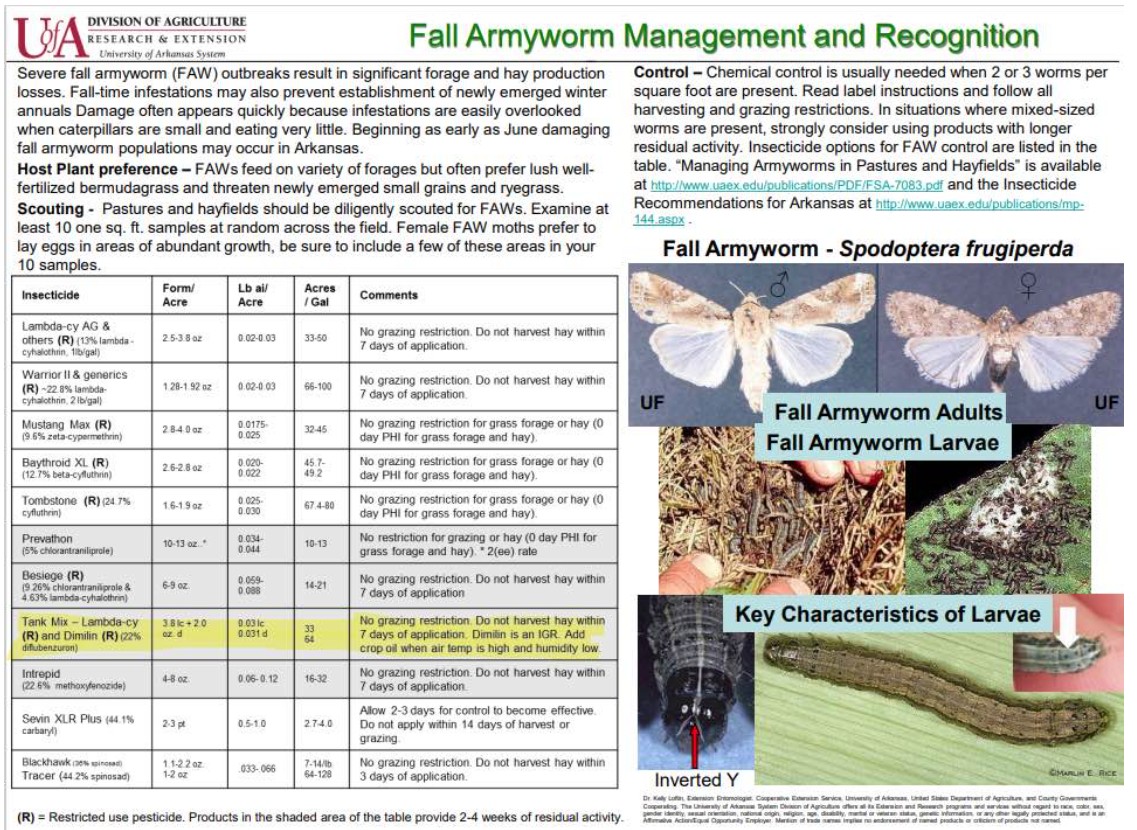
Reports of armyworms in other counties continues to come in. Please let me know if anyone finds any in Faulkner County. I continue to scout but haven't found any yet, but I know they are out there.
If we continue in this pattern of no rain and heat, watch johnsongrass that may start to wilt. This could lead to issues with prussic acid and nitrates.
| | |
Critical Control Points in a Cow-Calf Operation
Mark Z. Johnson, Oklahoma State University Extension Beef Cattle Breeding Specialist
One of the attributes of a commercial cow-calf operation is that the cows don’t require day to day monitoring and management to do their job. Cows are very self-sufficient with regard to their ability to convert forage into pounds of weaned calves, even during the intense Oklahoma summer heat. That being said, there are some specific management practices that offer great return on investment. Depending on your calving season and schedule, each of the following (if not done yet) will pay off in the future.
- Fly, tick and internal parasite control
- Administering the first (or second) round of vaccinations. Two rounds of vaccinations prior to weaning reduces stress at weaning and will set up calves for long-term health, growth and productivity. A documented vaccination protocol will pay dividends when marketing calves.
- Monitoring the availability of shade and water quality.
- Management to avoid heat stress. If working calves or moving cattle, do it at dawn and be done as early in the morning as possible.
- Balance the quality and quantity of hay harvested from native grass meadows. May was a fairly dry month across most of Oklahoma, June provided moisture but not much intense heat, as a result many native grass meadows are lagging behind in forage quantity at the time of this writing. Baling native grass meadows by early July is typically the sweet spot to optimize quality and quantity of hay produced. If you plan to bale native grass meadows, do it now. Waiting later into summer not only decreases quality but also potentially damages long-term health and productivity of native grass plants.
| | Mississippi State has a new Extension factsheet available, called Grazing in Harmony: Benefits of Mixed Species Grazing or Co-Grazing. | | |
Arkansas Shepherds Association Field Day
ASA Field Day — Saturday, September 19, 2026
8:30am - 2:30pm
Heifer Ranch, 55 Heifer Road Perryville, AR
Join us for a full day of hands‑on learning, great speakers, door prizes, and silent auction items benefiting the Arkansas Shepherds Association.
Members attend FREE.
Non‑members: $5 per person, paid at the door.
Must be 13 and older to attend.
Everyone must register on Eventbrite to attend.
Topics include:
Nutrition
Hoof care and trimming
How to draw blood
How to give shots
Parasites
Signs/Symptoms
Identifying
Treatment
We’re excited to see producers from across Arkansas and surrounding states come together for education, community, and a great day at Heifer Ranch.
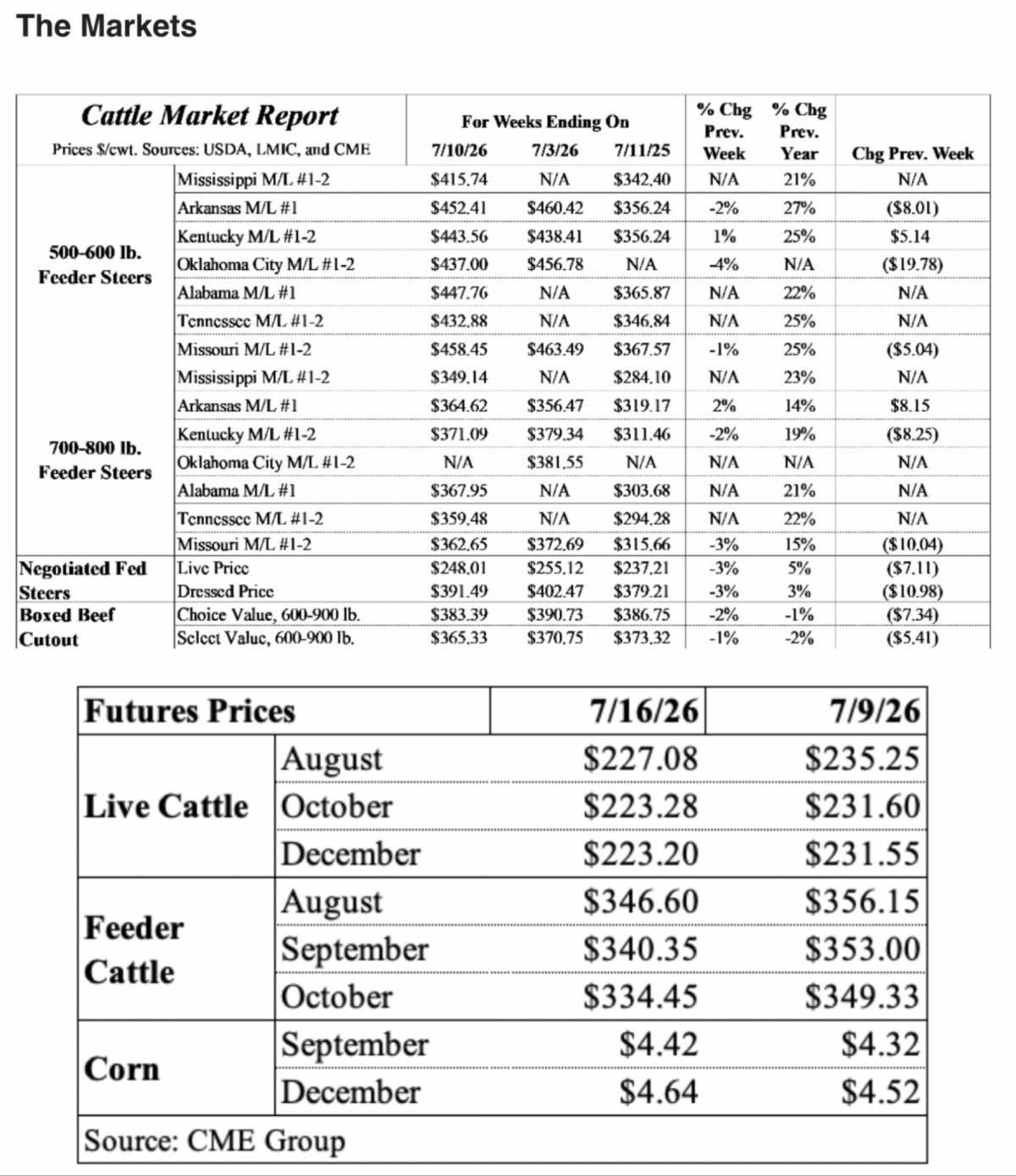
| | Here is this weeks Cattle Market Notes Weekly | | |
Pesticide Applicator Trainings
There will be no more in person Pesticide Applicator Trainings until this winter. If you need a license you can still do the training online. There is a link below for the online training and a link to check your license status.
| | |
Livestock Market Report
The following links are for the weekly livestock market report from the Arkansas Department of Agriculture website and the Livestock Auction Dashboard from USDA. Both sites have marketing data for all livestock sold at Arkansas Sale Barns.
| | |
2025 Faulkner County Agriculture Demonstration Summary
The 2025 Faulkner County Agriculture Demonstration Summary is now available at the link below.
The 2025 Faulkner County Demonstration Summary is a collection of on-site demonstration results conducted in Faulkner County by local County Agents. Demonstrations are the cornerstone of the University of Arkansas System Division of Agriculture Cooperative Extension Service’s mission which is:
“We strengthen agriculture, communities, and families by connecting trusted research to the adoption of best practices.”
On-site demonstrations allow producers and homeowners to see firsthand how Extension recommended varieties and best management practices work in their counties and surrounding area.
| | |
Sign up for Text Alerts
You can now sign up for text alerts from me throughout the year. I have two areas you can sign up for which includes Faulkner Livestock or Faulkner Ag (Row Crop Updates). To sign up you can follow one of these links or use the QR Codes below.
| | Pursuant to 7 CFR § 15.3, the University of Arkansas System Division of Agriculture offers all its Extension and Research programs and services (including employment) without regard to race, color, sex, national origin, religion, age, disability, marital or veteran status, genetic information, sexual preference, pregnancy or any other legally protected status, and is an equal opportunity institution. | | | | |