| |
STARR News & Updates
November 2026
| | |
November is a good time to pause and say thank you. In mental health advocacy and clinical research, progress often comes in small steps. Gratitude helps us notice them, and see how far our shared work has come.
At The STARR Coalition, we’re grateful for each of you: the researchers, advocates, site teams, and partners who make research something communities can trust. Your work shows up in real lives, every day.
Wishing you a warm and happy November! ❤
| | |
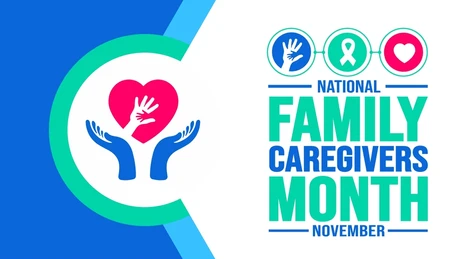
National Family Caregiver Appreciation Month: The Partners Behind the Protocol
November is National Family Caregiver Appreciation Month and for mental health researchers, it’s a good moment to recognize something many sites see every day. In many studies, caregivers are a big part of why participation works.
They may help a loved one decide whether to join. They drive to visits, help keep track of medications, and notice when something feels off. In conditions like schizophrenia, bipolar disorder, and dementia, they’re often the first to spot a change in sleep, mood, or daily function. When participants welcome their support, caregivers become true partners in the research.
The field is starting to recognize that. Sponsors are bringing patient and caregiver voices into protocol design earlier, and caregiver observations could play a bigger role in how studies capture real-world change. When caregivers help shape a study, it fits better into the lives of the people in it.
Sites can start with the question caregivers ask most: “Is this safe for my loved one?” A clear, honest answer goes a long way. Talk about the oversight built into every trial, the right to leave at any time, and how closely participants are monitored. Then, with the participant’s permission, invite caregivers into the conversation, not just the waiting room.
This month, we thank the caregivers who help make research possible. Their insight makes our work better, and their trust makes it matter.
| | |
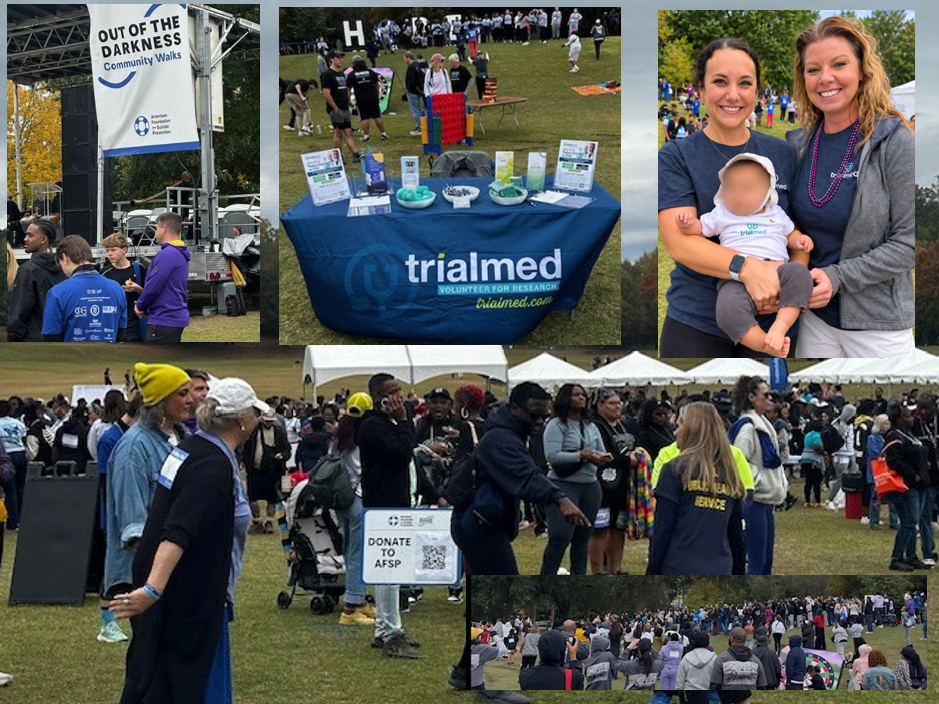
Trialmed Atlanta’s Jennifer Fleming, Emily Yaniv, and newest Trialmed family member, Lilah, showed up for the Out of the Darkness Walk for suicide prevention at Piedmont Park. They walked alongside communities nationwide supporting AFSP’s mission to save lives and bring hope to those affected by suicide. For Trialmed, showing up matters. The team stays present in the community, supports people living with mental illness, and helps neighbors understand how research can be part of their care.
| |
The Trialmed Atlanta team joined Clubhouse Atlanta’s annual Driving for a Purpose fundraiser, an event full of great food and community. Cofounders Susie Kyle and Bill McClung spoke, and Clubhouse members shared moving stories of personal growth. A WealthWave speaker also shared her own family’s experience and introduced the new book How Money Works for Special Needs Families. The Trialmed team connected with Executive Director Charles Sharper, Program Director Natosha Huggins-Cupid, members, and several of their mothers. Events like this show what a Clubhouse makes possible: connection, purpose, and a place to belong. Trialmed is proud to be part of it.
| |
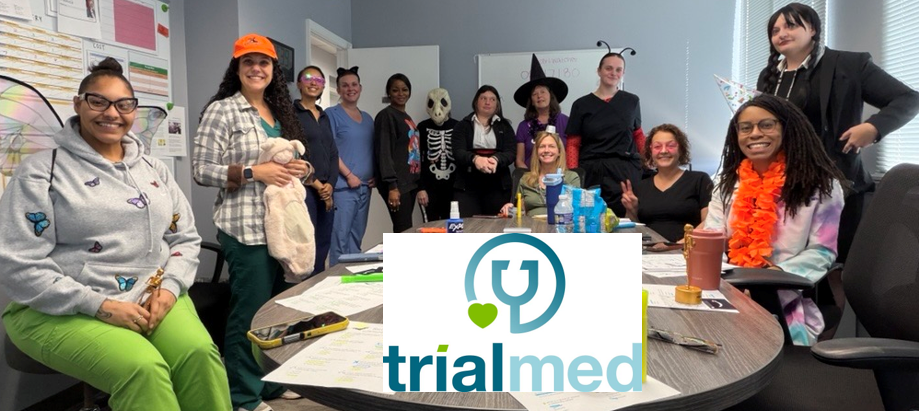
Finally, Trialmed Atlanta brought some Halloween spirit to its October team meeting. Camille led costume-themed games and trivia that had everyone laughing and competing for bragging rights. The team crowned its costume winners and wrapped up with a group photo. What started as a routine check-in became a reminder of the culture behind the work. A team that enjoys each other shows up stronger for participants. Happy Halloween from Trialmed Atlanta, and congratulations to this year’s winners!
| | | |
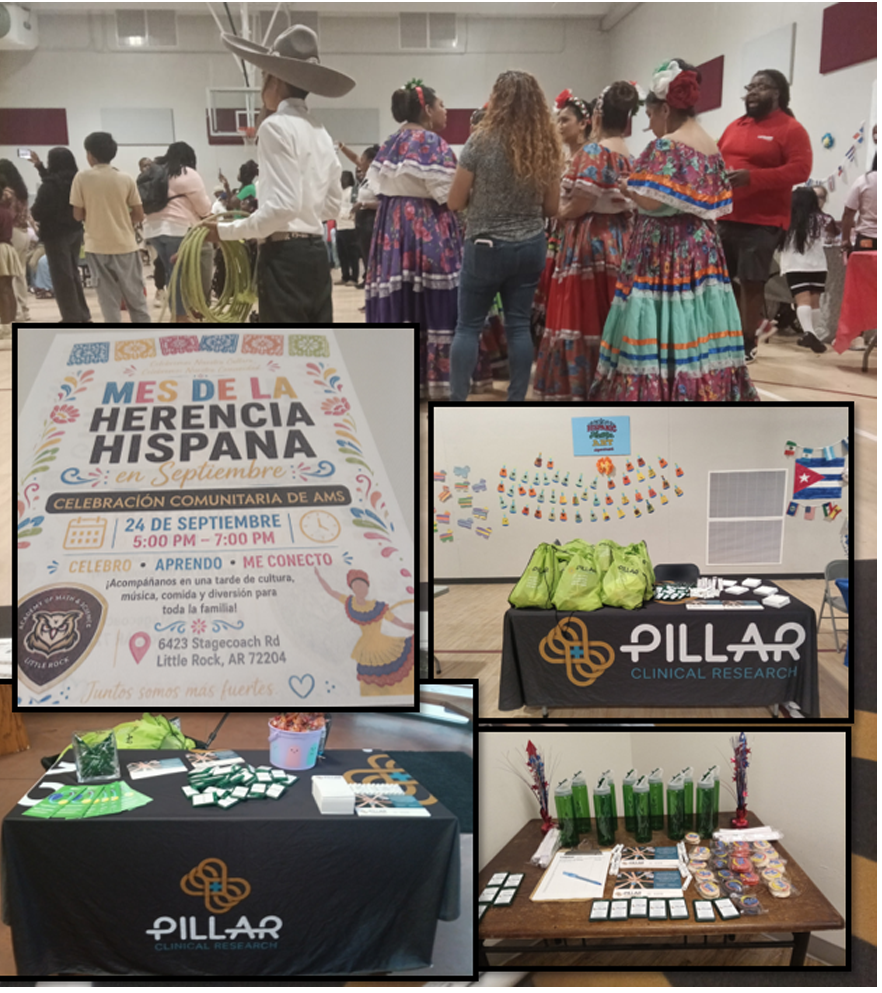
Pillar Clinical Research Little Rock showed up for their neighbors at two fall community events. The team joined the James H. Penick Boys & Girls Club’s Hispanic Fall Festival, celebrating Mes de la Herencia Hispana with families from across the community.
Pillar also sponsored fall crafts and outreach at Jesse Powell Towers, sharing time, creativity, and conversation with residents. Each visit built a little more trust, one table and one craft at a time.
Moments like these matter. Research works best when people know the faces behind it. That’s what community-centered research looks like.
| |
The Pillar team also sponsored and attended the Jericho Way Resource Center’s 4th Annual Evening of Jazz on October 10 in Little Rock. The fundraiser for this Depaul USA project supports programs working to end homelessness across Little Rock and Pine Bluff. For Pillar, trust starts by showing up for the community long before any study begins. Congratulations to everyone who made the night a success.
Pictured, left to right: Coco Mitchell, Recruitment Coordinator, and Adrianne Funmaker, MSN, APRN, CPNP-AC, PMHNP-BC, Sub-investigator, both of the Little Rock site; and Mallory Witham, Vice President of Business Development, Pillar Clinical Research.
| |
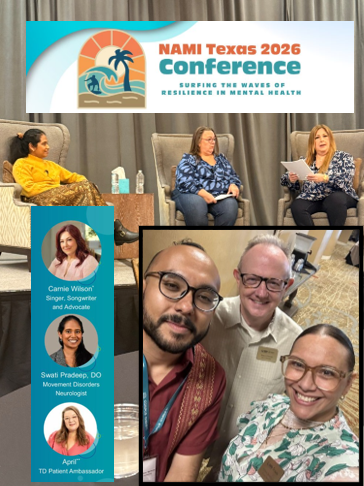
Pillar Richardson showed up for the 2026 NAMI Texas Annual Conference, held October 22–24 in Corpus Christi. Chief Experience Officer Bruce Trimble, who also serves on the NAMI Texas board, represented the site. Nearly 500 people attended, from families and advocates to mental health professionals. “When attendees learned that I work for Pillar Clinical Research, many immediately asked what new treatments were in the pipeline,” said Trimble. Those questions opened the door to real talk about clinical trials and the hope they bring. When research shows up where the community already gathers, curiosity turns into trust.
| |
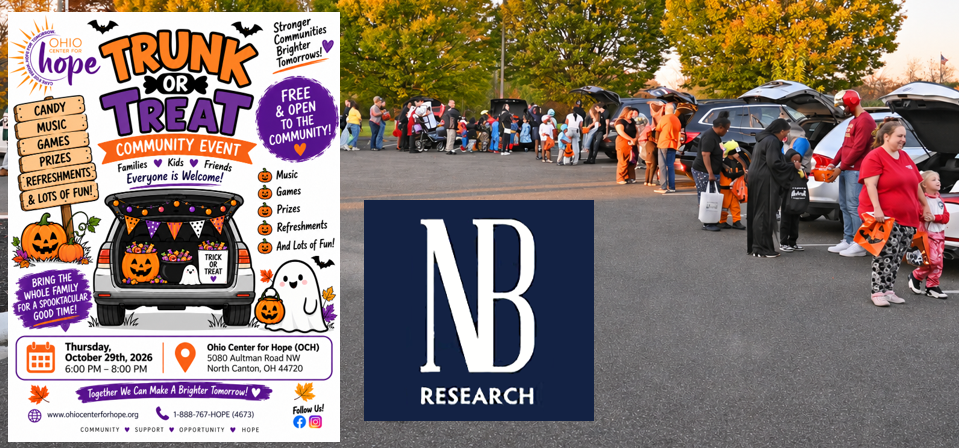
Neuro-Behavioral Clinical Research (NBCR) teamed up with Ohio Center for Hope (OCH) on October 29 to host a free Trunk or Treat in North Canton, Ohio. About 150 kids, plus their parents and families, stopped by for the fun. Outside, there was music, games, prizes, and face painting. Inside, guests enjoyed lemonade, cookies, and more games. A couple of other organizations joined in and brought trunks of their own. Nights like this are how trust gets built: one friendly face, one shared laugh at a time. Congratulations to both teams on a spooktacular evening!
| | | |
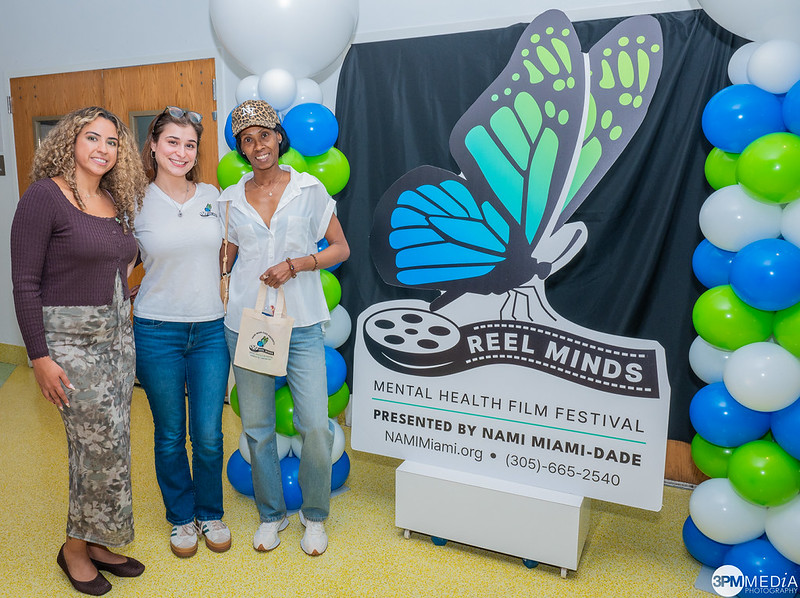
Segal Trials sponsored NAMI Miami-Dade’s 2026 Reel Minds Mental Health Film Festival, held October 10 in honor of World Mental Health Day. Short films and conversations shared stories of resilience, recovery, and life with mental health conditions. For Segal Trials, the event was a chance to show up for its community, reduce stigma, and lift up voices that deserve to be heard. Congratulations to NAMI Miami-Dade, the filmmakers, and volunteers on an event that supports free mental health services year-round.
| |
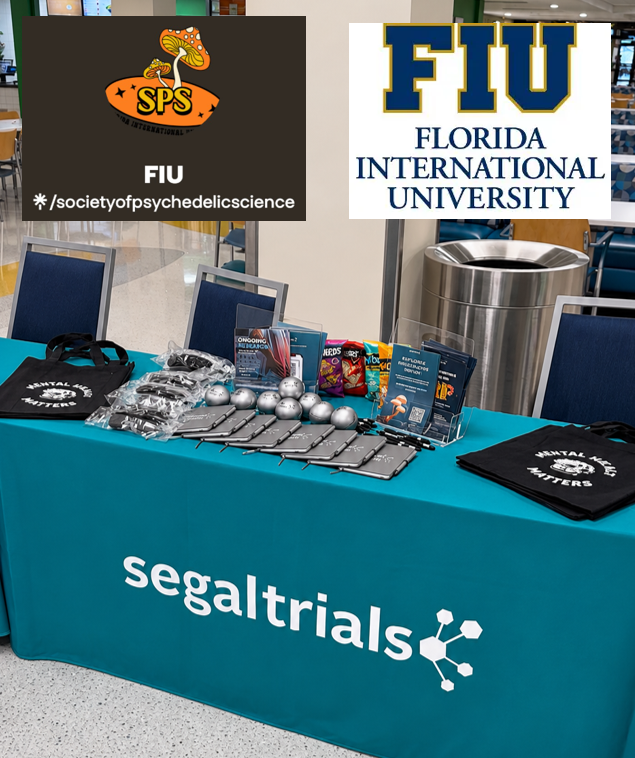
Segal Trials also had the opportunity to partner with the Society of Psychedelic Science at Florida International University (FIU) for a day of campus outreach. The team connected with students, shared information about ongoing psychedelic research, and fielded questions about mental health and new treatment approaches. Students brought real curiosity to every conversation. For Segal Trials, it was a chance to meet the next generation where they are and keep mental health education going strong on campus.
| |
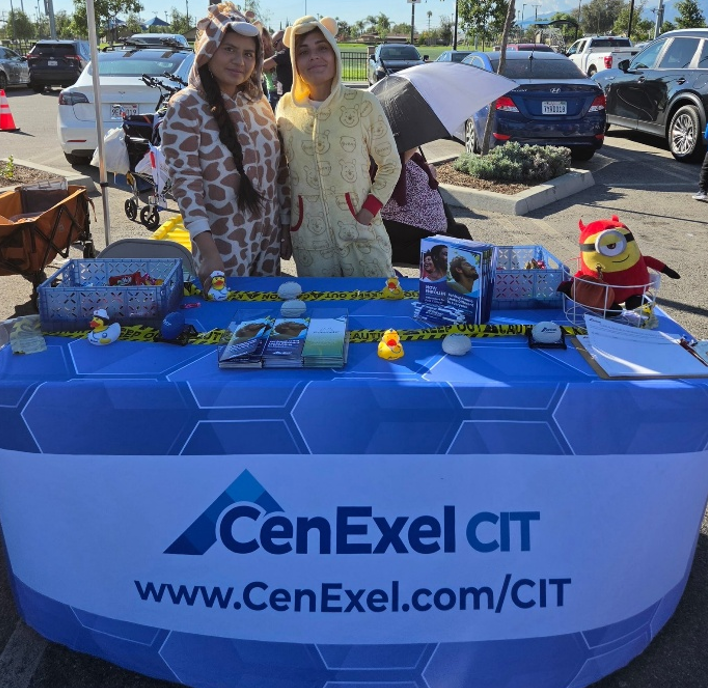
CenExel California joined Pumpkins in the Park, a community event bringing local resources together for families in the Fontana area. The team connected neighbors with mental health resources and shared more about CenExel’s services and opportunities. Watching families leave with new support, and new faces they can turn to, is always rewarding.
For CenExel CIT, showing up in the community is how lasting connections begin. Congratulations to the team on a great day in the park!
| | | |
|
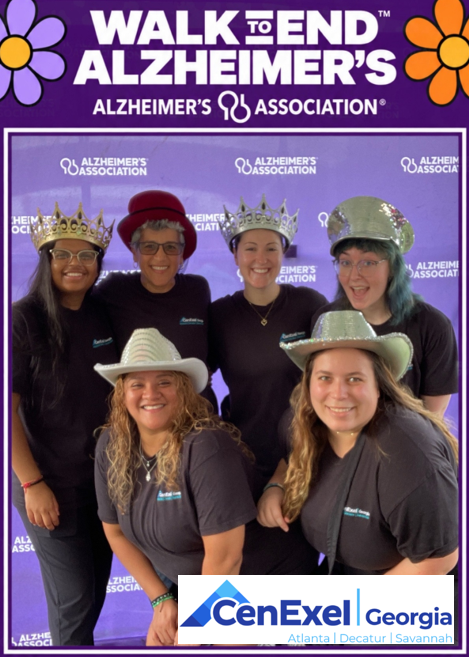
CenExel Savannah GA joined hundreds of Coastal Georgia residents on October 3 for the annual Walk to End Alzheimer’s at Forsyth Park. The team connected with families, caregivers, and advocates, many of whom know firsthand what dementia asks of a household. Along the way, they shared how local research volunteers help move new treatments forward. Congratulations to the CenExel Savannah team for showing up for their neighbors and keeping hope in step with progress.
Pictured: Back row, left to right: Priyanka Patel, Michelle Lagares, Emily Schmidt, and Morgan Walsh. Front row, left to right: Vanessa Acevedo and Victoire Litre.
|
| | |
Start Planning Now for Your Holiday Giving & Outreach
Community engagement is a cornerstone of the STARR Site Certification for good reason: it fosters happier, healthier workplaces and serves as a force for good locally, while connecting research to the community and building trust.
The holidays are the perfect time to super-charge your engagement and spread joy. Here are 10 community-building holiday giving campaigns that uplifts staff, volunteers, and the community:
🎁 1. Host a “Giving Tree” for Local Mental Health Organizations
Set up a small tree in your waiting area with ornaments representing donation items (e.g., warm socks, hygiene kits, gift cards). Staff and participants can choose an ornament to fulfill. Partner with a local shelter or mental health nonprofit to distribute items.
🍪 2. Support a Social Enterprise
Partner with local Clubhouse, YMCA, or community mental health center to purchase treats, crafts, or gifts made by their members or clients. Give them to patient volunteers, another community organization, or even your referral partners.
🧣 3. “Warm Wishes” Drive
Collect winter essentials (blankets, hats, gloves) for individuals in your programs or local community centers. Include handwritten encouragement notes from staff and volunteers.
💌 4. Holiday Card Exchange
Invite volunteers and staff to create holiday cards with positive messages or artwork. Cards can be shared anonymously with others in treatment or with local inpatient facilities to brighten spirits.
☕ 5. Community Coffee & Conversation
Host a low-key open house or hot cocoa event for participants, families, and community partners. Use it to build connection and reduce stigma—no recruitment, just goodwill and warmth.
🕯️ 6. “Light the Path” Tribute Wall
Set up a wall or area where people can post names or messages honoring someone who inspires hope in mental health recovery. Share anonymized notes on social media or in your newsletter.
🥫 7. Holiday Food or Hygiene Kit Assembly
Organize a volunteer day for staff and participants to assemble care kits for local shelters or outreach programs. Simple, tangible, and deeply appreciated.
📚 8. Gift a Good Read
Partner with a local bookstore or library to collect gently used books—especially ones related to wellness, mindfulness, or recovery—and create a small lending library at your site.
🌟 9. “Pay It Forward” Staff Challenge
Encourage site staff to perform small acts of kindness—buy a coffee, donate a toy, volunteer an hour—and share their stories on a staff board or internal email chain. Build camaraderie and meaning.
🕊️ 10. Holiday Gratitude Campaign
Invite volunteers and staff to share what they’re grateful for this season. Feature anonymous quotes or artwork on social media or in your lobby to celebrate resilience and community.
| | |
Teva received FDA approval for Weltruza (olanzapine), the first once-monthly subcutaneous olanzapine long-acting injectable for adults with schizophrenia. In the Phase 3 SOLARIS trial, patients saw improved symptoms and daily functioning. Unlike the existing intramuscular option, Weltruza needs no loading dose, oral supplementation, or post-injection monitoring. No PDSS cases occurred across 3,971 injections. US availability is expected in the coming weeks, and European review has been underway since May 2026.
Rapport Therapeutics reported positive topline Phase 2 results for RAP-219, a once-daily drug with a new mechanism targeting AMPA receptors, in adults with acute bipolar mania. Across 253 participants, RAP-219 reduced mania symptoms more than placebo at three weeks, meeting its primary endpoint. Side effects were mild to moderate, with no serious adverse events. Phase 3 trials are expected to begin in the second half of 2027.
Neurosterix, a spin-out of Addex Therapeutics, has completed Phase 1 testing of NTX-253, an oral M4 positive allosteric modulator for schizophrenia. The trial enrolled both healthy volunteers and people with stable schizophrenia across single and multiple ascending doses. The company says the safety and pharmacokinetic data support moving ahead. NTX-253 may ease psychosis without the movement and metabolic side effects tied to dopamine antagonists. Phase 2 studies in schizophrenia are next, with timing still to be announced.
Newleos Therapeutics has received up to $15.5 million from the National Institute on Drug Abuse (NIDA) to develop NTX-2001 in cocaine use disorder, a condition with no FDA-approved medications. The five-year, milestone-based grant funds a Phase 1 drug-drug interaction study and a Phase 2 efficacy study. The FDA also granted Fast Track designation to NTX-2001, a TAAR1 partial agonist, for alcohol use disorder. Topline data from an ongoing Phase 1b alcohol use disorder study are expected in the first half of 2027.
Seaport Therapeutics has dosed the first patient in a Phase 2a trial of GlyphAgo (SPT-320), an oral prodrug of agomelatine, for generalized anxiety disorder with sleep disturbance. The six-week, randomized, double-blind study in Australia compares two doses and tracks sleep, anxiety, and safety outcomes. GlyphAgo is designed to bypass first-pass liver metabolism. Topline data are expected in early 2028. Seaport also plans a global Phase 2/3 study in the first half of 2027, with topline results by late 2028.
Alkermes has started a Phase 2 study of ALKS 7290, an oral orexin 2 receptor agonist, as an add-on treatment for adults with major depressive disorder. About 180 participants, with and without excessive daytime sleepiness, will receive ALKS 7290 or placebo alongside their antidepressant for six weeks. The study will focus on safety, with depression symptoms as a secondary measure. ALKS 7290 is also in a Phase 2 ADHD study. Topline timing has not been announced.
Two psilocybin applications, one close race: Usona Institute has reportedly completed its FDA application for psilocybin in major depressive disorder. Compass Pathways plans to file its own for treatment-resistant depression this quarter. Usona’s is the second psychedelic application now under FDA review, after Resilient Pharmaceuticals (formerly Lykos Therapeutics) refiled its MDMA for PTSD application this summer. With priority vouchers aimed at two-month decisions, an answer could come in late 2026 or early 2027.
Compass Pathways shared new durability data for COMP360, its psilocybin treatment for treatment-resistant depression. In two Phase 3 trials, people who responded well by week 6 generally kept that benefit through at least week 26 after just one or two doses. Some who improved without full remission reached remission after retreatment. No new safety concerns emerged. Compass expects to complete its FDA filing this month and is targeting launch in the first half of 2027, pending approval.
Psychedelic therapies are closer to U.S. approval than ever, with a first FDA decision possible in 1H 2027. Now experts tell Fierce Pharma the bigger question is delivery. Approved drugs will still need DEA rescheduling. Sessions can run five to eight hours, so staffing and training rules will shape cost and access. Eli Lilly’s DMT candidates, designed for two-hour clinic visits, await Phase 3 and Phase 2b results. Scaling up may take years. The groundwork starts now.
Newron Pharmaceuticals reported that the FDA flagged a potential safety signal for evenamide, an investigational add-on treatment for treatment-resistant schizophrenia. Four deaths occurred among evenamide-treated trial participants, compared with one on placebo. Investigators judged three unrelated and one possibly related. The US enrollment hold on the Phase 3 ENIGMA-TRS 2 trial remains, while enrollment continues abroad. Newron is preparing its FDA response. ENIGMA-TRS 1 results are expected in early 2027.
Click Therapeutics received FDA clearance for Motivista, a smartphone-based prescription digital therapeutic for adults with schizophrenia. It is the first FDA-authorized treatment specifically for negative symptoms. Used alongside antipsychotics, Motivista improved negative symptoms more than a control app in the Phase 3 CONVOKE study, with no serious treatment-related side effects. Patients used it about an hour a week. Click is working with payers and Medicaid programs to cover it.
A new network meta-analysis compared five FDA-approved antipsychotics used alongside antidepressants for major depressive disorder. Pooling 22 trials and nearly 11,000 participants, researchers found lumateperone had the strongest six-week response but the highest dropout due to side effects. Aripiprazole was the best tolerated and second most effective. Quetiapine XR did not clearly beat placebo on response. The results reinforce that these medicines are not interchangeable. The authors call for longer-term studies.
The American Professional Society of ADHD and Related Disorders (APSARD) is finalizing the first US guidelines for diagnosing and treating ADHD in adults. About 30 experts helped develop them, with final review including people with lived experience. APSARD President Brooke Molina, PhD, says clear standards can reduce both over- and underdiagnosis. Publication is expected this fall, followed by online resources, webinars, and a tiered clinician certification starting with “Adult ADHD 101.”
The Menopause Society highlighted a scoping review, presented at its October 2026 Annual Meeting, on two ADHD medications for brain fog in perimenopause. In studies reviewed, women taking lisdexamfetamine or atomoxetine reported better focus and organization than those on placebo. Objective memory and attention tests showed little change. No drug is currently FDA approved for menopausal brain fog. Researchers call the findings preliminary and say larger studies are needed before any recommendation.
Adjustment disorder affects up to 11.5% of outpatient psychiatry patients and as many as 35% of people with cancer, yet it often goes undiagnosed, according to a new Psychiatric Times commentary by Reunion Neuroscience CMO Mark Pollack, MD. There are no treatment guidelines and no therapies proven for it. Reunion’s Phase 2 REKINDLE trial is testing RE104, a psilocybin analogue, in patients with adjustment disorder related to cancer and other medical illnesses. Topline results are expected in Q1 2027.
The FDA’s new Expedited IND Pilot, part of HHS’s Operation TrialBlazer, aims to bring early-stage drug research back to the US. The pilot pairs drug sponsors with qualified research institutions, such as academic centers, CROs, and health networks, to move novel products into first-in-human trials faster. The FDA will review IND components on a rolling basis with real-time feedback. Applications closed October 30, with 8 to 10 teams expected to be selected by December.
The FDA has launched a nationwide effort to recruit scientists, clinicians, and consumer representatives for its advisory committees. Consumer representatives need ties to community or consumer organizations, making this a real opening for mental health advocates to help shape drug and device decisions. Self-nominations are welcome through the FDA’s online portal. Nominations are due November 15 for consumer representatives and November 30 for scientific members. Terms last up to four years.
| | |
Beyond Crisis Management: A Conversation on Schizophrenia
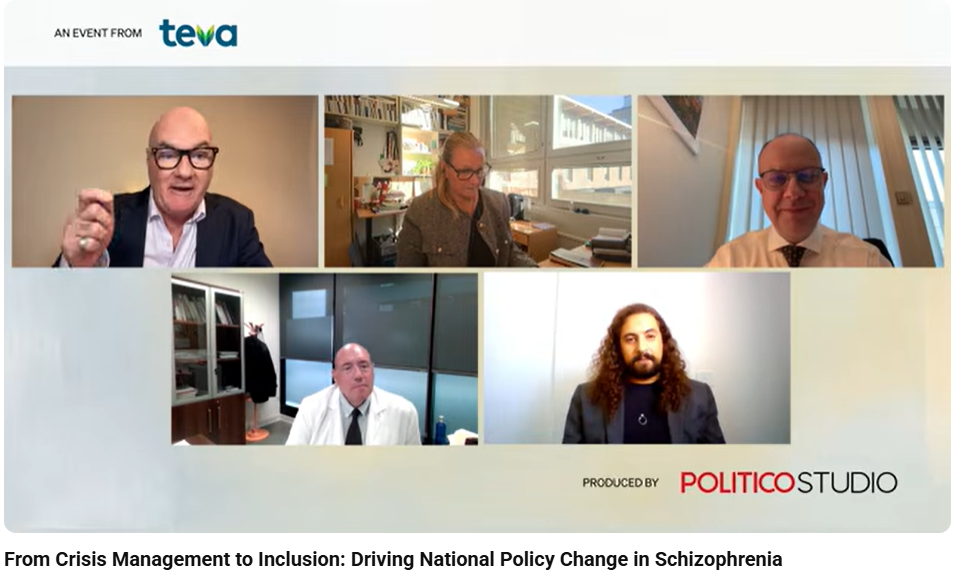
What happens after the diagnosis? That question drove a World Mental Health Day event hosted by Teva on October 7, From Crisis Management to Inclusion: Driving National Policy Change in Schizophrenia.
The numbers framed the discussion. In Teva’s recent survey, nearly 70 percent of people diagnosed with schizophrenia first felt terrified, afraid they’d never live a normal life. Sixty-seven percent of carers felt let down by the health care system. And 96 percent of patients reported a relapse in the past year.
Journalist Seamus Kearney moderated the virtual event, which brought together policymakers, people with lived experience, carers, and health care leaders. Speakers included MEP Aurelijus Veryga, EUFAMI President Åsa Konradsson-Geuken, GAMIAN-Europe Vice President Matthew Paris, and José Manuel Olivares Diez of Spain’s Vigo Health Area. Together they explored stigma reduction strategies with measurable targets, support at the moment of diagnosis, integrated care pathways, and real help for carers.
| |
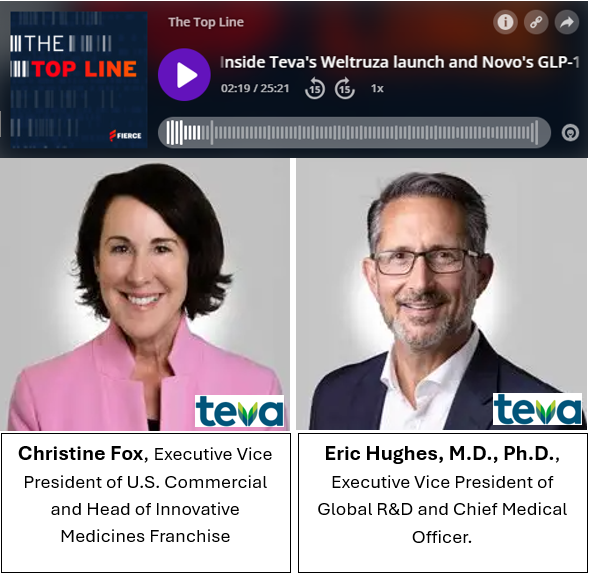
Inside Teva’s Weltruza Launch: Teva leaders Christine Fox and Dr. Eric Hughes join Fierce Pharma’s “The Top Line” to talk about the FDA’s recent approval of Weltruza, a once-monthly injectable for schizophrenia. They share lessons from the Uzedy rollout and explain how Weltruza’s formulation could help close real gaps in care. The conversation also shows how Teva’s growing lineup of innovative medicines fits its next phase of growth. Worth a listen for anyone following what’s next in schizophrenia treatment.
Check out the podcast at Fierce Pharma.
| |
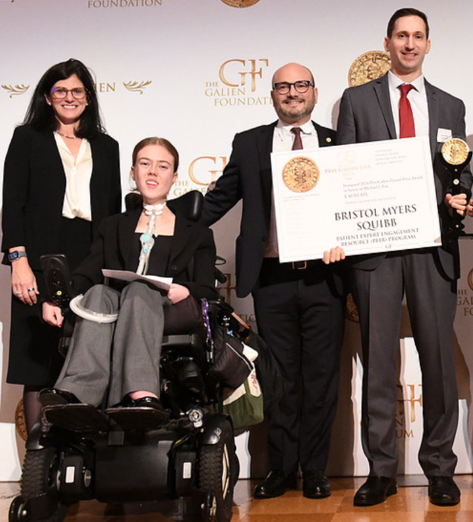
BMS Wins Inaugural Prix Galien Patient First Award
Bristol Myers Squibb has won the inaugural Prix Galien USA Patient First Award for its Patient Expert Engagement Resource (PEER) program. The award honors work that puts “no decision for me without me” into practice across clinical research and patient care. Since 2020, PEER has made patient and advocate input a required step in drug development. Every pivotal Phase III protocol is reviewed through PEER before recruitment begins. That adds up to more than 250 engagements with over 120 advocacy organizations across 30-plus disease areas. The input matters. In 2025, 72% of protocol reviews led to changes in trial design or execution.
The Prix Galien Awards were created in 1970 by Roland Mehl in honor of Galien, the father of medical science and modern pharmacology, to recognize outstanding innovation and scientific advancement. With chapters in 16 countries and Africa, Prix Galien is regarded worldwide as the equivalent of the Nobel Prize for the life science industry.
Congratulations to the BMS team and the advocates who helped shape trials around the people they serve!
| | |
EASE Study Wants to Hear From Adults Taking Cobenfy
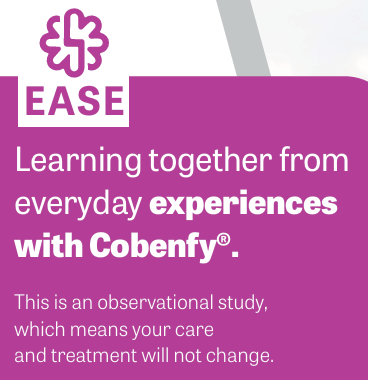
BMS is inviting adults to share real-world experiences with Cobenfy (KarXT) in EASE (CN012-0134), an observational study. Care and treatment stay exactly as they are. Eligible participants are 18 or older and taking, or about to begin, Cobenfy. They share their daily treatment routine and their experience on the medication, at their own pace.
For sites and community partners: Share the Patient Flyer with your network today.
| | |
Call for Nominations for 2026 STARR Awards!
The STARR Coalition is excited to announce the call for nominations for the prestigious 2026 STARR Awards! The STARR Awards shine a spotlight on the tireless advocates, researchers, and organizations that work passionately to create positive change in the mental health space. As part of the STARR Coalition’s mission to support mental health clinical research, these awards serve as a symbol of gratitude and recognition for those who are helping lead the way toward a future of greater mental health understanding, acceptance, and treatment.
We are proud to honor individuals and groups who have gone above and beyond in the following categories:
-
STARR Advocate of the Year: This recognition is given to the advocacy organization that has demonstrated exceptional dedication to advocating on behalf of those living with mental illnesses, their efforts to fight the stigma of mental illness, and their support of the STARR Coalition’s collective efforts to support mental health clinical research.
-
STARR Site of the Year: A recognition that celebrates one site's outstanding commitment to patient care and community engagement.
-
STARR Sponsor of the Year: Recognizing a pharmaceutical or drug development company for their work supporting mental health research and advocacy, and for their continued support of individuals living with mental illnesses and their patient advocacy organizations.
-
STARR Lew Yagodnik Award: The ‘Lewie’ is the only STARR award given to an individual within the STARR community that exemplifies leadership, compassion, and commitment to the mental health community and who has distinguished themselves in their exceptional dedication to those living with mental illness.
As we look toward the 2026 Awards, we want to once more congratulate the winners of last year's STARR Awards, who have inspired so many with their achievements:
-
Boehringer Ingelheim: STARR Sponsor of the Year
-
Students with Psychosis: STARR Advocate of the Year
-
Trialmed Atlanta: STARR Site of the Year
-
Dr. Shishuka Malhotra: STARR Lew Yagodnik Award
We invite the STARR community to nominate those who continue to fight for a better world for those living with mental health conditions. Nominations for the 2026 STARR Awards are now open, and we look forward to receiving your submissions!
| | |
Certify a Site. Strengthen the Trial.
Your timeline lives or dies at the site. A slow start, avoidable screen failures, participants who drift away at week six: most of it traces back to one thing, how well a site knows and is trusted by the community it recruits from. That is the exact gap STARR Site Certification is built to close.
| | |
When you invest in a site's Certification, you are not paying for a badge. You are investing in performance.
STARR spends the year building real relationships on that site's behalf. We identify community organizations within 30 miles, open the doors, and track where the community already gathers so the site knows exactly where to show up.
That kind of groundwork usually takes years. It is the difference between a site that posts a flyer and a site the community already trusts.
Trust shows up in the numbers you care about. Sites rooted in their community tend to start faster, enroll participants who better reflect the population your study needs, and keep them engaged longer. Certification also gives you a consistent signal across your network. Instead of guessing which sites are community-ready, you can see it at a glance.
At $2,500 per site each year, certification is one of the smallest lines in a study marketing budget... and it's tax-deductible. Set that against the price of a single delayed study or one under-enrolled site, and the decision makes itself.
Want to support certification for your priority sites? Reach out to the STARR Coalition team at action@thestarr.org and we will build a plan that fits your portfolio.
| | |
The NEI Fall Congress, held November 5-8, 2026 in Colorado Springs, is for mental healthcare professionals dedicated to advancing their knowledge and skills. Designed for all members of the mental healthcare team to help clinicians make informed decisions by breaking down complex concepts through animation and a unique visual language exclusive to the NEI.
| |
Neuroscience 2026 will be held November 14-18, 2026 in Washington DC. Each year, scientists from around the world congregate to discover new ideas, share their research, and experience the best the field has to offer. Attend so you can: present research, network with scientists, attend session and events, and browse the exhibit hall at the premier global neuroscience event.
| |
Congressional Neuroscience Caucus Briefing: Tuesday, November 17, 2026 from 1:00 -2:30 p.m. at the Rayburn House Office Building, Room 2168, Washington D.C. As a part of Neuroscience 2026, the Society for Neuroscience and American Brain Coalition, in cooperation with the Congressional Neuroscience Caucus, invite you to a congressional briefing: The Era of Neuroscience Innovation: How Federal Investment Seeds Innovation Leading to Cures and Treatments.
| | |
Rural Health Day: Bringing Research to Rural Communities
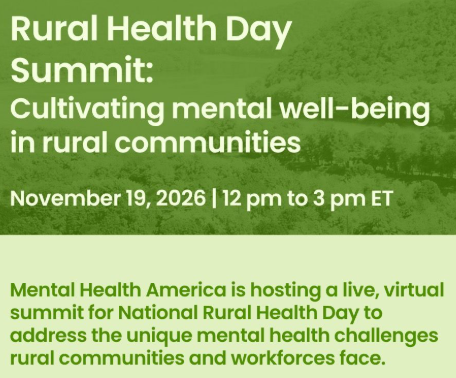
National Rural Health Day is November 19, and it’s a timely reminder for the research community. Rural Americans face real barriers to mental health care, from long drives to limited providers, and those same barriers shape who can take part in clinical research. Mental Health America (MHA) is hosting a free virtual summit, Cultivating Mental Well-Being in Rural Communities, with practical strategies from experts and community leaders. Speakers include Jeff Winton, founder and chairman of STARR partner Rural Minds. For sites and researchers, it’s a chance to learn how rural communities define well-being and where trust begins. Research works best when it reaches everyone. That includes the farm towns and small communities too often left off the map.
For more information and to register, visit MHA's Rural Health Day Summit webpage!
| | |
The International Conference on ADHD, taking place December 3-5, 2026 in Baltimore, MD, is the largest and longest-running multidisciplinary ADHD gathering in North America. From keynotes and research presentations to exhibitors, support groups, and networking events, this is where the ADHD community comes to connect with colleagues, learn about the latest research and treatments, and thrive alongside people who truly get it.
| |
The International OCD Foundation (IOCDF) invites researchers, clinicians, and mental health professionals to submit proposals for the 32nd Annual OCD Conference, taking place July 8–11, 2027, in New York City and virtually. They welcome proposals highlighting emerging research, clinical advancements, and best practices that advance our understanding and treatment of OCD and related disorders. Proposal submissions open November 12, 2026, and close January 11, 2027, at 9:00 AM ET. We encourage professionals across disciplines to share their expertise and contribute to this important exchange of knowledge.
| | |
Thank you for reading!
If you have questions, comments, or would like to submit an item to be included in an upcoming newsletter, please email erica@thestarr.org.
| | |
The STARR Coalition | www.thestarr.org
LEAD WITH HEART.
| |
| How did you like this email? | | | | | | |