|
Palm Beach County State Legislative Update
Week of February 23rd
| | UPDATES FROM THE EXECUTIVE BRANCH | | |
Governor Ron DeSantis Comments on House Property Tax Bill Passage
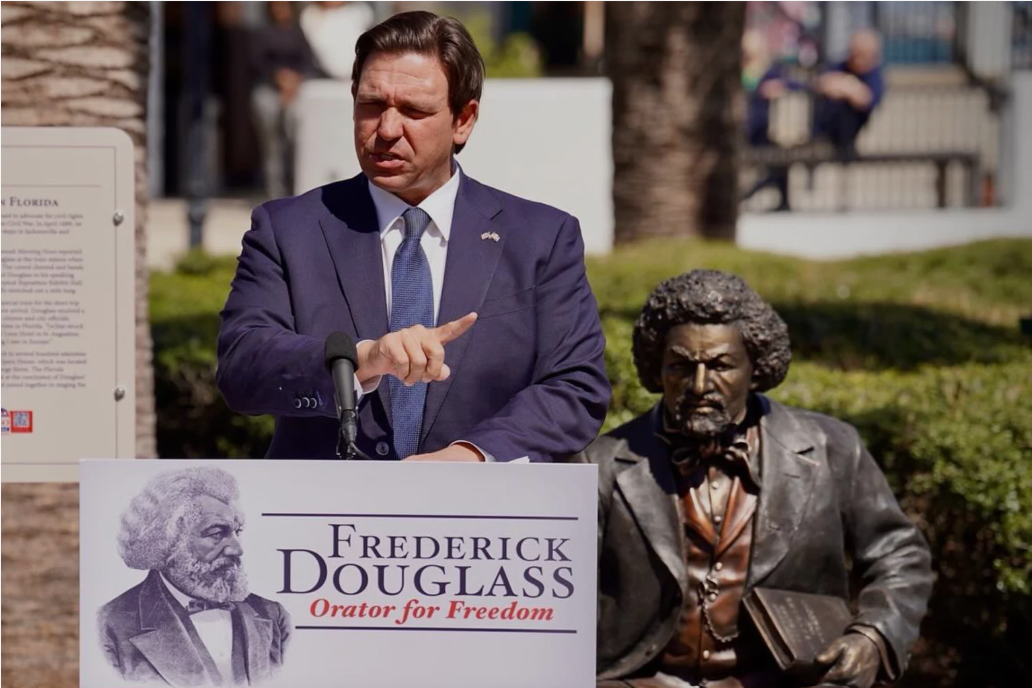
On Wednesday, February 25th, Governor DeSantis held a press conference in St. Augustine to unveil a new statute of Frederick Douglass. During this press conference, the governor answered questions and acknowledged the recent passage of HJR 203 in the House which would exempt homestead property from all ad valorem taxes other than School District levies beginning January 2027 over the course of 10 years. It would also prohibit local governments from reducing total funding for law enforcement, firefighters and other first responders below their 2025-26 or 2026-27 funding level — whichever amount is higher.
He praised the House's efforts but stated that there was never an intention from his Office to get a ballot initiative approved during the Regular Session. He urged the audience to stay tuned as he said the measure needs more time and effort in the writing, necessitating a Special Session. The Governor has been working on property tax relief with the Senate, which has been more aligned with him in the last two Legislative Sessions.
| | UPDATES FROM THE LEGISLATURE | | |
The Senate and House released their proposed tax packages on Tuesday, February 24th. The following are some highlights from both packages:
House Proposed Tax Package (HB 7031):
Revises multiple tax provisions, expands exemptions, and creates new tax credits across property, corporate, insurance, and sales tax laws.
- Exempts certain special districts from redevelopment trust fund contributions.
- Removes references to the 'immediate' prior homestead to clarify property tax portability.
- Creates a new assessment limitation for qualifying mobile home parks.
- Requires property appraisers to issue disapproval notices for homestead and exemption claims before sending proposed tax notices.
- Expands the definition of 'governmental purpose' to include certain defense or aerospace uses.
- Allows certain diplomatic, intelligence, consular, or foreign service officers to rent their homestead without losing the exemption.
- Continues an affordable housing tax exemption when property is sold but remains in qualifying use.
- Clarifies maximum millage rate rules for newly levying dependent special districts or MSTUs.
- Requires advertising platforms to collect and remit taxes for vacation rental transactions.
- Expands existing sales tax exemptions to include certain portable propane tanks, and modifies the back-to-school sales tax holiday.
- Creates a refund for home hardening product sales tax for eligible homeowners.
- Alters corporate tax references to conform to changes in federal code and adds a new 'Homebuyer Workforce Tax Credit.'
- Revises child care, strong families, and railroad tax credits, and establishes tax credits for employer contributions toward employees’ home purchases.
- Reduces certain slot machine and cardroom tax rates and exempts some permitholders from license fees.
- Distinguishes domestic and foreign import malt beverages for excise taxation and modifies tax rates accordingly.
- Adds a new insurance premium tax credit, excludes specific flood coverage from surplus lines tax, and requires online real estate listings to show estimated ad valorem taxes.
- Exempts certain defense or aerospace lease payments from sales tax, temporarily exempts firearm accessories from sales tax, and creates a hunting, fishing, and camping sales tax holiday.
Senate Proposed Tax Package (SB 7046):
Modifies state taxation laws by revising homestead and mobile home park assessments, expanding tax exemptions, clarifying special district requirements, and creating new credits for housing and other purposes.
- Exempts certain special districts from redevelopment trust fund appropriation requirements in s. 163.387.
- Revises homestead assessment portability by removing references to an “immediate” prior homestead in s. 193.155.
- Creates s. 193.626 to establish a special assessment method for mobile home park properties with qualifying rental agreements.
- Requires notices of exemption disapproval to be served before proposed tax notices are mailed, if new information arises, in ss. 196.011, 196.151, and 196.193.
- Expands “governmental purpose” under s. 196.012 to include certain defense or aerospace uses on public property.
- Allows certain federal assignments to avoid triggering homestead abandonment in s. 196.061.
- Permits affordable housing on land formerly owned by the state to retain a property tax exemption under s. 196.19781.
- Clarifies the adoption of millage rates for new dependent special districts in s. 200.065.
- Requires advertising platforms for vacation rentals to collect and remit applicable taxes under ss. 212.02 and 212.03.
- Updates portable gas can exemptions, extends the back-to-school sales tax holiday, and creates a refund-based exemption for home hardening products under s. 212.08.
- Changes the definition of “motor vehicle” for corporate tax credit purposes under s. 212.1832.
- Updates definitions referencing the Internal Revenue Code in ss. 220.02, 220.03, and 220.13, and creates a homebuyer workforce corporate income tax credit in s. 220.1856.
- Reduces the slot machine revenue tax rate and exempts certain permitholders from license fees in s. 551.106.
- Distinguishes American-brewed and foreign import malt beverages with different excise tax rates in ss. 563.01 and 563.05.
- Revises the order of insurance premium tax credits in s. 624.509 and creates a parallel homebuyer workforce insurance premium tax credit in s. 624.51065.
- Exempts flood coverage from the surplus lines tax in s. 626.932.
- Requires real property listing platforms to display estimated ad valorem taxes and disclaimers under s. 689.261.
- Lowers the tax rate on cardroom receipts from 8 percent to 5 percent in s. 849.086.
- Provides a tax exemption for certain defense or aerospace property leased by Space Florida and creates a sales tax exemption for select firearm accessories.
- Authorizes a hunting, fishing, and camping sales tax holiday for specified equipment.
| | TUESDAY COMMITTEE MEETINGS | |
|
Senate Appropriations
SB 1220: Transportation - This amended bill by Senator Massullo is a wide-ranging transportation bill that expands the authority and responsibilities of the Florida Department of Transportation (FDOT) while updating state policy on trails, ports, airports, emerging technologies, and funding. The bill strengthens planning and prioritization for the Shared-Use Nonmotorized (SUN) Trail program by requiring updated trail rankings after FDOT’s triennial report and allowing additional surface materials and sponsorship agreements.
The legislation addresses emerging transportation technologies and local regulation. It authorizes personal delivery devices on certain road facilities and prevents local governments from imposing operating fees or advertising restrictions on them. It limits local authority over drone delivery services located on commercial properties and ensures such services do not count against minimum parking requirements. The bill increases the share of turnpike toll revenues reinvested in specified South Florida counties, clarifies contracting rules for paratransit providers serving persons with disabilities, and enhances criminal penalties for shooting into or damaging autonomous vehicles.
Members questioned the scope of local-permitting preemptions, safety and liability for personal delivery devices, and new felony provisions for autonomous vehicles, while supporters saw the measure as forward-thinking and designed to streamline processes and adapt to evolving technology. The sponsor assured members that the bill increases efficiency, promotes new modes of transportation, and preserves local input where necessary. The bill passed
| |
Senate Fiscal Policy
SB 1072: Antisemitism Task Force - This bill by Senator Calatayud has passed its final committee. It creates the Antisemitism Task Force (Task Force) for the express purpose of combating antisemitism in Florida. To this end, the Task Force has a range of responsibilities, including providing assistance, conducting studies and assessments, and engaging with local Jewish communities. The Task Force must annually “submit a report and policy recommendations” to the Governor and legislative leaders. The Task Force is composed of 18 members serving two-year terms and is adjunct to the Office of Civil Rights in the Department of Legal Affairs. The Department of Legal Affairs will provide administrative and staff support to the Task Force. The Task Force is automatically repealed on October 2, 2029, unless reviewed and saved by the Legislature
| |
Senate Rules
SB 208: Land Use and Development Regulations - This amended bill by Senator McClain has passed its final committee. It revises state law governing local land use and development regulations, with a focus on application fees, zoning compatibility, and housing flexibility. The bill requires local governments to ensure that development permit and development order fees are reasonably tied to the actual costs of reviewing and processing applications. It also mandates that interlocal agreements between local governments and school districts address access to public easements and rights-of-way needed for public school facilities.
In addition, local comprehensive plans and land development regulations must establish clear factors for evaluating compatibility of residential uses within the same zoning district or future land use category and incorporate objective design standards or other measures to mitigate potential incompatibilities. Members questioned why a state-level study should address local boundaries and expressed concern about potential Everglades encroachment, with some insisting that local governments handle these decisions. Others argued the state has a duty to clarify property rights and address potential constitutional takings stemming from restrictive land-use boundaries.
SB 218: Land Use Regulations - This amended bill by Senator Gaetz has passed its final committee. It limits the applicability of SB 180, enacted during the 2025 Regular Session to restrict local government authority to regulate land use following specified hurricanes that affected the state in 2024. The bill narrows the geographic areas to which those land use regulation restrictions apply. Section 28 of SB 180 generally prohibited counties and municipalities within the federal disaster declarations for Hurricane Debby, Hurricane Helene, and Hurricane Milton from proposing or adopting moratoriums or more restrictive or burdensome amendments or procedures in their land use regulations for 3 years. The bill narrows the geographic area subject to SB 180’s restrictions by defining what “impacted local governments” are and applying the restrictions only to them. Under the bill, “impacted local governments” are counties and municipalities listed in the federal disaster declarations and designated in them as eligible for individual and public assistance. As a result, 13 counties, and the municipalities within them, will no longer be subject to the restrictions.
SB 332: Public Records and Public Meetings/Private Property Rights - This amended bill by Senator Bradley has passed its final committee. It creates a public meetings exemption allowing a government agency to meet privately with its attorney to discuss and evaluate claims filed under the Bert J. Harris, Jr., Property Rights Protection Act. It also exempts from public records requirements any transcripts, recordings, minutes, or other materials generated during the closed portion of the meeting. Once the claim is resolved or expires, those records become public. Currently, meetings to discuss Bert Harris claims must be open to the public, even though similar meetings to discuss litigation strategy in active lawsuits may be closed until the case concludes. This bill aligns the treatment of Bert Harris claims with existing exemptions for pending litigation.
SB 686: Agricultural Enclaves - This amended bill by Senator McClain has passed its final committee. It revises state law governing development within agricultural enclaves by replacing the existing public hearing process with a new certification-based framework. Under the bill, a property owner may apply for local government certification that land qualifies as an agricultural enclave. Once certified, the owner may submit development plans for single-family residential housing consistent with the land use and density of adjacent properties.
The bill also prohibits local governments from imposing regulations on certified agricultural enclaves that are more burdensome than those applied to comparable uses or densities. It also updates the definition of “agricultural enclave” to clarify that it may consist of one or more parcels, adds criteria for qualification, and limits eligibility to counties with populations of 1.75 million or less. These provisions are temporary and will expire on January 1, 2028, at which point the law will revert to its prior form as it existed on June 30, 2026.
SB 698: Onsite Sewage Treatment and Disposal System Permits - This amended bill by Senator Martin has passed its final committee. It prohibits a municipality or political subdivision from requiring a separate septic system construction permit as a condition of issuing a building or plumbing permit for a single-family home that will use an onsite sewage treatment and disposal system.
If construction of the septic system begins before the septic permit is issued, the property owner or applicant assumes all legal, financial, and safety liability. The bill also provides that new Florida Department of Environmental Protection rules on septic system use or installation do not apply to permit applications submitted within 90 days after the rules are adopted. Senator Berman asked if a property owner fails to obtain the septic permit after receiving a building permit; Senator Martin clarified that the homeowner cannot receive a certificate of occupancy without it. The Florida Home Builders Association supported the measure, and there was no voiced opposition from committee members.
SB 830: Public Records/County Administrators and City Managers - This bill by Senator Leek creates a public records exemption for certain personal identifying and location information of current county administrators, deputy county administrators, assistant county administrators, city managers, deputy city managers, and assistant city managers. Specifically, the bill exempts from public records inspection and copying requirements the home addresses, telephone numbers, and dates of birth of these personnel. No members asked any questions and the bill sponsor described it as an extension of existing privacy protections to county and city managers for fairness, and the committee received only supportive testimony with no opposition.
SB 1030: Recovery Residences - This amended bill by Senator Gruters has pssed its final committee. it revises licensure requirements for substance abuse service providers regulated by the Department of Children and Families (DCF) by narrowing the definition of “transfer.” Under the bill, a transfer is limited to a majority ownership change or the contractual transfer of license responsibilities to another entity. For ownership changes involving five percent or more of a controlling interest, DCF must require Level 2 background screening for key individuals associated with the new owner. The bill also prohibits DCF from requiring certain compliant providers to admit clients during a probationary licensing period when expanding services or locations. No members posed questions, and in brief debate, Senator Rouson highlighted the bill’s tightened definition for transferring licensed entities and streamlined background checks
SB 1138: Qualified Contractors - This amended bill by Senator Massullo has passed its final committee. It requires most cities, counties, and districts that issue building permits or plat approvals to establish a program by January 1, 2027, allowing qualified private contractors to conduct preapplication reviews of building plans, permits, and proposed plats. Smaller jurisdictions are exempt. Applicants may choose to use a qualified contractor, who must certify that the application meets approval requirements. The local government must then approve or deny the application without conducting duplicative reviews.The bill also revises the expedited building permit process created in 2024, expanding it to planned unit developments and establishing procedures to follow if a local government fails to implement or comply with the required process. Senator Davis asked about municipal support, and Senator Osgood raised concerns over local officials’ ability to verify compliance, which the sponsor clarified is preserved since the bill only addresses preapplication reviews. No one voiced opposition, so the amended measure advanced favorably.
SB 1234: Building Permits and Inspections - This amended bill by Senator DiCeglie makes extensive changes to laws governing the Florida Building Code, local permitting, and private provider services. The bill revises permit timelines by providing that building permits for single-family homes expire one year after issuance or the next Building Code update, whichever is later, with extensions allowed. It limits inspection fees to actual costs, prohibits basing permit fees on total project cost, and requires the Florida Building Commission to develop a uniform, software-compatible building permit application with project-specific checklists.
The bill significantly revises rules for private providers who perform plan review and inspection services. It repeals mandatory local registration systems (allowing voluntary ones), prohibits administrative registration fees, and requires the Department of Business and Professional Regulation to maintain a statewide registry to verify licensure and insurance. It limits local government oversight, audits, and fees when private providers are used, and establishes new procedures for notifications and corrective actions. The bill takes effect July 1, 2026. Members asked whether the proposed $7,500 permit exemption might undermine quality or insurance coverage, and questioned how on-site documentation and virtual inspections would work. The sponsor pledged to refine the language in collaboration with local governments, builders, and other stakeholders.
SB 1294: Biosolids Managements - This amended bill by Senator Bradley has passed its final committee. It limits the land application of bulk Class AA biosolids to agronomic rates and prohibits application that cannot reasonably be expected to be absorbed by crops or vegetation during the growing season. Site owners or operators must maintain detailed application records for five years. The bill directs the University of Florida’s Institute of Food and Agricultural Sciences to publish recommended agronomic rates beginning November 1, 2027, and requires the Department of Environmental Protection to begin rulemaking by September 1, 2026, for bulk distribution and marketing.
The bill also tightens marketing and product standards. No committee members posed questions, and the sponsor emphasized the need to prohibit the disposal-based application of bulk Class AA biosolids beyond agronomic rates to protect Florida’s waters. No member opposed the measure, and the amended bill advanced without dissent.
SB 1434: Infill Redevelopment - This amended bill by Senator Calatayud has passed its final committee. It creates the “Infill Redevelopment Act,” which preempts certain local land development regulations to encourage redevelopment of environmentally impacted properties in urban areas. The bill applies to “qualifying parcels,” defined as at least five acres, located adjacent to residentially zoned land in certain counties, and either contaminated above specified thresholds or designated as brownfields.
For qualifying parcels, local governments must allow residential development through an administrative approval process at a density up to the jurisdiction’s average residential zoning density or 25 units per acre, whichever is lower. The bill also establishes special provisions for parcels with recreational facilities, including a process allowing adjacent property owners the opportunity to purchase and preserve those uses. It applies to development applications submitted on or after the effective date and limits conflicting local regulations.
SB 1474: Biosolids Management - This amended bill by Senator Gaetz has passed its final committee. It prohibits the Department of Environmental Protection from issuing or renewing a permit for a land application site that allows the disposal or application of septage as Class B biosolids if a suitable wastewater treatment facility is available nearby. Specifically, the restriction applies when there is a permitted wastewater treatment facility within 30 miles of the proposed site that accepts septage for higher levels of treatment, is publicly owned or operated (by the federal government, a federal agency, a state agency, or a political subdivision of the state), and is active and has sufficient capacity. In such cases, septage must be directed to the qualifying treatment facility rather than applied to land as Class B biosolids.
SB 1612: Electronic Payments Made to Units of Local Governments - This amended bill by Senator DiCeglie has passed its final committee. It amends current statute to require each unit of local government1 to accept payments by use of credit cards, charge cards, bank debit cards, and electronic fund transfers for financial obligations owed to the local government. Currently, local governments and certain subdivisions thereof are authorized, but not required, to accept payments by use of credit cards, charge cards, bank debit cards, and electronic fund transfers for financial obligations that are owing to such unit of local government. The bill additionally requires the local governments to have an online method to accept payments.
| |
House Judiciary
HB 1283: Complaints Against Law Enforcement and Correctional Officers - This amended bill by Representatives Fabricio and Blanco has passed its final committee. Itrevises procedures for handling complaints against law enforcement officers (LEOs) and correctional officers (COs) and strengthens their procedural rights during internal investigations. It requires complaints to be made in writing and signed under oath unless accompanied by corroborating evidence. Officers under investigation must receive a copy of the signed complaint and the names of all complainants before any interrogation, and agencies may not take punitive action unless the officer has received the complaint, unless corroborating evidence exists.
The bill also makes filing a false sworn complaint against a LEO or CO punishable as third-degree felony perjury. Additionally, it prohibits investigations that do not result in disciplinary action from negatively affecting an officer’s eligibility for promotion, raises, or commendations.
HB 45: Sexual Offenders and Sexual Predators - This amended bill by Representative Plakon has passed its final committee. It strengthens restrictions on individuals convicted of specified sexual offenses, particularly where the victim was a minor. The bill also prohibits certain offenders from knowingly contacting or attempting to contact a minor at a park, playground, or public swimming pool and authorizes warrantless arrests for violations. It allows warrantless arrests for offenders unlawfully present at schools or child care facilities, increases related supervision and notification requirements, and requires government entities to conduct background checks before employing or appointing someone to work at a public swimming pool to determine whether the person is a registered sexual predator or offender.
Members questioned whether prohibiting sex offenders from living in apartment complexes with pools is too broad, especially for lower-level or “Romeo and Juliet” cases, while supporters argued it is necessary to protect children from potential predators. Opponents raised concerns that such strict residency restrictions might push offenders into homelessness or more rural areas without improving child safety.
| | |
House State Affairs
HB 269: Victims of Domestic Violence and Dating Violence - This amended bill by Representative Gossett-Seidman has passed its final committee.It requires the Division of Telecommunications within the Department of Management Services to study the feasibility of creating a web-based 911 alert system for victims of domestic and dating violence. The proposed system would allow victims to call a nondescript number and use a code word or phrase to discreetly request immediate law enforcement assistance and transmit certain information to responders. The Division must submit its findings to the President of the Senate and the Speaker of the House by January 31, 2027.
The bill also expands eligibility for the Attorney General’s Address Confidentiality Program to include victims of dating violence, allowing them to use a substitute address with state and local agencies and to keep their personal information confidential from publicly accessible voter registration lists.
HB 399: Land Use and Development Regulations - This amended bill by Representative Borrero has passed its final committee. It revises several provisions related to land use and development regulations. It requires development permit and order application fees to be reasonably tied to the actual cost of review and prohibits fees based on a percentage of project costs. It also establishes that amendments to a comprehensive plan’s future land use element may be transmitted and adopted by a majority vote of the governing body members present, regardless of conflicting county charter provisions. In addition, local governments must include specific compatibility factors for residential uses in their comprehensive plans and land development regulations and apply those factors when reviewing development applications.
The bill also directs the Office of Program Policy Analysis and Government Accountability (OPPAGA) to study the impacts of removing Urban Development Boundaries or similar limits in Miami-Dade County and other counties, and to report its findings by December 1, 2026. Members questioned the bill’s effect on local government authority, potential nullification of voter-approved boundaries, and its limits on historic preservation measures, while the sponsor emphasized cutting application fees and streamlining approvals to address housing shortages. Opponents contended that the proposal undermines local decision-making and could override public choices on land use.
HB 927: Local Land Planning and Development - This amended bill by Representative Sapp. It The bill requires certain counties and municipalities to create a registry of qualified contractors to conduct preapplication reviews of plans, permits, or plats submitted as part of compliance with a local government’s land development regulations. After completing a pre-application review on work in their respective field, a qualified contractor completes an affidavit that the work is in compliance with the local government’s requirements, which is then reviewed by the local government. The bill also revises the process for the expedited approval of residential building permits prior to plat approval by expanding its applicability to one or more phases of a community or subdivision and establishing procedures for when a local government has failed to establish an expedited permitting process.
HB 979: Infill Redevelopment - This amended bill Representative Borrero has passed it final committee. It creates the “Infill Redevelopment Act,” which preempts certain local land development regulations and requires administrative approval of qualifying infill residential developments on environmentally impacted land in specified counties. Eligible parcels may be developed up to the average residential density of adjacent residential zoning districts, and projects next to single-family homes or townhouses must include an open space buffer.
Local governments may not impose more restrictive or burdensome requirements on qualifying projects, though generally applicable architectural design standards may still apply. Developers must also satisfy concurrency requirements before receiving a building permit.
HB 1103: Local Administration of Vessel Restrictions - This amended bill by Representative Andrade has passed its final committee. The bill revises vessel restriction laws by authorizing counties and municipalities, subject to specified requirements, to enforce provisions related to vessels at risk of becoming derelict and long-term anchoring permits, and to issue uniform boating citations for related noncriminal violations. It also modifies an exemption in Monroe County concerning the relocation of vessels used as domiciles from anchoring limitation areas.
In addition, the bill allows local governments to adopt ordinances regulating vessel speed and operation within 300 feet of waterway confluences that create blind corners, and to extend that regulated area up to 1,000 feet when necessary to ensure safe navigation and visibility. No members offered questions. Representative Andrade explained how the bill would expedite removal of derelict vessels by authorizing local governments to handle noncriminal paperwork, and no one spoke in opposition.
HB 1245: Biosolids Management - This amended bill by Representative Shoaf has passed its final committee. The bill establishes new regulations for Class AA biosolids, limiting the land application of bulk Class AA biosolids fertilizer and compost products to specified agronomic rates and requiring that applications at or below those rates be managed primarily for beneficial reuse rather than disposal. It also prohibits bulk land application of biosolids, including Class AA biosolids, when it constitutes disposal, and requires certain site operators to maintain application records for five years.
The bill further restricts the distribution and marketing of Class AA biosolids for agricultural use unless specified conditions are met, directs UF/IFAS to publish recommended agronomic rates every two years, and requires the Department of Environmental Protection to begin rulemaking by November 1, 2026, to implement the new provisions.
HB 433: Department of Agriculture and Consumer Services - This amended bill by Representative Alvarez has passed its final committee. The bill addresses numerous matters related to agriculture and the Florida Department of Agriculture and Consumer Services. Among other provisions, the bill revises provisions related to fairs, preempts local governments from restricting gas-powered farm and landscape equipment, revises provisions that relate to biosolids, amends provisions relating to signal jamming devices, revises provisions related to state owned lands, repeals the Babcock Ranch Advisory Group, creates a Food Animal and Equine Veterinary Medicine Loan Program, and makes permanent the Farmers Feeding Florida Program. It also amends provisions relating to health studios and commercial solicitation.
Members primarily asked about the surplus lands process and its impacts on conservation, along with concerns about the PCS’s ban on door-to-door commercial solicitation; supporters emphasized preserving rural areas while opponents warned it could chill local businesses and violate free speech.
HB 1007: Data Centers - This amended bill by Representative Griffitts has passed its first committee. It requires the Public Service Commission to establish minimum tariff and service requirements for large-load customers to ensure they pay the full cost of service and to prevent public utilities from serving certain foreign entities that qualify as large-load customers. It also prohibits agencies from entering into nondisclosure agreements that limit disclosure of information about potential data center developments and bars economic development agencies from extending public records exemptions for such projects beyond 12 months.
Additionally, the bill creates a consumptive use permitting framework for large-scale data centers and prohibits construction permits for certain data centers located within five miles of a residential property or school unless approved by a unanimous vote of the governing body. Members asked how water usage would be regulated, whether local governments could charge higher fees, and whether incentives or NDAs would be restricted; the debate centered on balancing economic growth with consumer protections, with some noting the five-mile setback and NDA prohibition might deter investment while others praised its community safeguards.
| |
House Budget
HB 813: Firefighter Cancer Benefits and Prevention - This amended bill by Representative Busatta has passed its final committee. It provides that the $75,000 death benefit for firefighters who die as a result of cancer or circumstances arising out of the treatment of cancer must be made available by the former employer for one year after the firefighter terminates employment, provided the firefighter was not subsequently employed as a firefighter. Members asked if a cancer diagnosis must occur before the end of the one-year post-employment period and discussed the possibility of extending benefits beyond that timeframe. Representative Blanco, despite reservations, indicated support, and Representative Gantt suggested future updates to expand the benefit.
| |
House Commerce
HB 311: Tax Credits for Contributions to Assist Homebuyers - This amended bill by Representative Edmonds has passed its final committee. It creates a new Homebuyer Workforce Tax Credit which can be applied against Corporate Income Tax or Insurance Premium Tax liability for contributions made by taxpayers to their own employees with income below specified limits to assist with the purchase of a homestead property. The tax credit program is capped at $5 million per year for three years. The bill provides additional administrative guidance, provides permanent and emergency rulemaking authority to the Department of Revenue, and makes conforming changes.
HB 1075 Utilities - This amended bill by Representative Sirois has passed its final committee. equires municipalities to extend utility service outside their boundaries if capacity allows and sets a process for challenging capacity determinations.
It also updates rules for rural electric cooperatives, allowing meeting notices by email with longer notice for trustee elections, increasing quorum requirements, mandating certain bylaw provisions, requiring election inspectors, and permitting internet-based voting that can count toward quorum in some cases. Members questioned the sponsor about why the bill proposed raising co-op meeting quorum requirements and whether cooperatives asked for it, with the sponsor confirming it was her own initiative. Supporters focused on expanding municipal utility service outside city boundaries and boosting quorum thresholds to increase member participation, while opponents raised concerns about possible overreach and burdens on small communities.
HB 1093: Vertiports - This amended bill by Representatives Spencer and Alvarez has passed its final committee stop. The bill amends Florida law to specifically include vertiports and charging systems as qualifying projects for funding under public-private partnerships between state and private entities. The bill authorizes the Florida Department of Transportation (FDOT) to fund all of the project costs of a public vertiport if federal funds are not available. If federal funds are available, FDOT may fund up to 80 percent of the nonfederal share of the project costs. Members asked questions, and there was no debate on the bill. The sponsor briefly reiterated that it expands vertiport infrastructure funding and requested favorable support.
HB 1217: Prohibited Governmental Policies Regulating Greenhouse Gas - This amended bill by Representatives Snyder and Jacques has passed its final committee. provides a legislative finding that net zero policies, carbon taxes and assessments, and emission trading programs are detrimental to the energy security and economic interest of the state and inconsistent with the energy and environmental policies of the state; establishes certain prohibitions on a governmental entity adopting, implementing, using public funds to support, or imposing any charge to advance net zero policies; and defines terms related to such prohibitions.
HB 1233: Transportation - This amended bill by Representatives Griffitts and Conerly has passed its final committee. The bill updates Florida’s transportation policy across multiple areas, including duties of the Florida Greenways and Trails Council, seaport planning and maritime industry expansion, and expansion of areas where personal delivery devices can operate. It addresses drone delivery impacts on commercial parking requirements, clarifies paratransit use, and includes airport planning, investment, and security provisions. It also expands the Department of Transportation’s role in advanced air mobility, federal funding review, research facility management, and LiDAR procurement, while limiting consideration of nonpecuniary factors in taxpayer-funded projects and environmental studies.
Additionally, the bill establishes criminal penalties for autonomous vehicle offenses, making it a second-degree felony to shoot or throw a dangerous projectile at such vehicles and a third-degree felony to willfully deface, damage, or injure them under certain circumstances.
HB 1389: Affordable Housing - This amended bill by Representative Redondo has passed its final committee. It amends the Live Local Act to allow multifamily and mixed-use residential developments on property owned by counties, municipalities, school districts, and religious institutions, and prohibits local governments from using setbacks or step backs to limit building height. It clarifies that farms are not considered commercial or industrial uses, exempts certain areas from the Act, and removes local governments’ ability to opt out of ad valorem tax exemptions for affordable housing.
The bill also waives sovereign immunity for the state and local governments in cases of prohibited discrimination in land use or permitting decisions, including discrimination based on affordable housing financing. It requires local governments to allow accessory dwelling units by right in specified areas and permits density bonus incentives for qualifying landowners. Members questioned whether local governments should be allowed to opt out of new affordable housing requirements, and pushed for more clarity on how accessory dwelling units should be regulated to ensure they genuinely address housing needs.
HB 1451: Utility Services - This amended bill by Representative Busatta has passed its final committee. The bill sets rules for municipal utilities serving customers outside their boundaries. It requires public meetings and reporting for such services, caps rates for outside customers at 25% above in-city rates, limits charges when serving customers within another municipality using facilities located there, and preempts to the state the creation of certain regional utility authorities established after January 1, 2023.
HB 1521: Domestic Animals - This amended bill by Representative Weinberger has passed its final committee. The bill requires the Florida Department of Law Enforcement (FDLE) to post information online by January 1, 2027, about individuals convicted of animal cruelty. It directs the Department of Business and Professional Regulation (DBPR) to publish voluntary best practices for dog breeders and maintain online resources on animal cruelty reporting. The bill also revises laws on the sale of cats and dogs by adding requirements for pet dealers, extending notice periods for sick or unfit animals, and clarifying jurisdiction and remedies in sales disputes.
HB 943: Citizens Property Insurance Corporation - This amended bill by Representative Redondo has passed its final committee. The bill requires Citizens Property Insurance Corporation (Citizens) to create a commercial lines clearinghouse for new and existing policyholders and to determine surplus lines insurer eligibility, subject to verification by the Office of Insurance Regulation. Citizens may fund the program’s implementation. Policyholders may remain with Citizens if a surplus lines offer is within 120% of Citizens’ premium, but must pay the higher premium if they choose Citizens.
The bill also updates agent rights and commissions and expands confidentiality protections for proprietary underwriting information. Representative Salzman asked the sponsor to clarify the bill’s purpose, while Representative Rayner raised concerns about the Office of Insurance Regulation’s capacity to oversee the surplus lines market. Supporters stressed Citizens should remain a last-resort insurer, whereas opponents worried OIR might not effectively supervise the new commercial clearinghouse.
| |
House Health & Human Services
HB 503: Drowning Prevention Education -This amended bill by Representative Eskamani has passed its final committee. The bill requires the Department of Health to develop educational materials on drowning prevention safety measures and safe bathing practices. The bill requires hospitals, birth centers, home birth providers, and childbirth educators to provide the educational materials to parents and caregivers of newborns as part of their postpartum education and care. Members posed no questions for the sponsor; however, debate highlighted the importance of providing new parents with drowning prevention materials and resources like free instructional videos. Supporters emphasized the lifesaving potential of early education and ensuring families statewide are aware of existing programs.
HB 693: Health and Human Services - This amended bill by Representative Redondo has passed its final committee. It codifies federal requirements for Medicaid, CHIP, and SNAP under the “One Big Beautiful Bill Act” and adopts wide-ranging health care reforms.
The bill joins interstate licensure compacts for physician assistants, social workers, and EMS providers; authorizes autonomous practice for all APRN specialties; removes physician assistant supervision caps; expands duties for dental hygienists; and increases patient protections by requiring notice of out-of-network referrals and, in certain cases, crediting out-of-network costs toward insurers’ cost-sharing and deductible requirements. Members debated expanded nursing scopes, SNAP work requirements for older adults, and a permanent ban on certain Medicaid funding, while supporters emphasized the bill’s alignment with federal guidelines. The sponsor underscored Florida’s need for competitive healthcare access.
| | WEDNESDAY COMMITTEE MEETINGS | | |
Senate Session
SB 382: Micromobility Device - This amended bill by Senator Truenow has officially passed in the Senate. It provides that a person operating an electric bicycle on certain shared pathways must adhere to certain protocols. It also provides that a person operating an electric bicycle on a sidewalk or other area designated for pedestrians may not operate the electric bicycle at a speed greater than 10 miles per hour if a pedestrian is within 50 feet of the electric bicycle. The bill creates the Electric Bicycle Safety Task Force, adjunct to the Department of Highway Safety and Motor Vehicles (Department), and provides certain requirements for membership and administrative requirements related to data collection and reporting.
SB 1028: Citizens Property Insurance Corporation - This amended bill by Senator Gruters has officially passed in the Senate. The bill requires Citizens Property Insurance Corporation (Citizens) to establish a commercial lines clearinghouse to which every commercial residential and commercial nonresidential risk insured by Citizens or that has applied for Citizens coverage must be submitted so that approved surplus lines clearinghouse insurers may offer coverage to such risk. The commercial clearinghouse for surplus lines must be established by January 1, 2027. Members inquired about cost, competitive safeguards, and how the clearinghouse would affect Citizens’ role as the insurer of last resort. Supporters emphasized providing a final opportunity for private coverage to reduce Citizens’ overall exposure and minimize the risk of future assessments.
SB 482: Artificial Intelligence Bill of Rights - This amended bill by Senator Leek was temporarily postponed. It creates the “Artificial Intelligence Bill of Rights” to provide that Floridians are entitled to certain rights with respect to the use of artificial intelligence. The bill provides definitions and defines “artificial intelligence” to mean a machine-based system that can, for a given set of human-defined objectives, make predictions, recommendations, or decisions influencing real or virtual environments. Members questioned how the amended bill’s AI disclosure rules would affect small businesses, raised feasibility concerns over age verification measures, and urged ongoing legislative review given AI’s rapid evolution. Supporters praised the bill’s guardrails to protect children but called for stronger parental oversight and potential age limits in classrooms.
SB 484: Data Centers - This amended bill by Senator Avila was temporarily postponed. It updates Florida law governing large-scale data centers and other large electricity users. It prohibits government agencies from entering into nondisclosure agreements that prevent public disclosure of information about proposed data center developments and preserves local governments’ authority over comprehensive planning and land development regulation for large load customers. The bill also clarifies that large load customers are not considered electric substations under state law and provides definitions for key terms, including “large load customer,” “data center,” “large-scale data center,” and “foreign country of concern.”
SB 1014: Provision of Municipal Utility Service to Owners Outside of the Municipal Limits - This amended bill by Senator Mayfield has officially passed in the Senate. The bill prohibits municipal water and wastewater utilities from declining to extend water or wastewater service to a property outside of the corresponding municipality’s corporate limits solely based on the owner of such property’s refusal to allow the property to be annexed by the municipality. In addition, the bill creates a procedure and requirements to determine when such utilities must extend service to a customer outside the municipality’s corporate limits.
| |
House Session
HB 655: Pub. Meetings/Attorney Meetings to Discuss Private Property - This amended bill by Representatives Duggan and Daley has officially passed in the House. Itcreates a public meeting exemption authorizing a state or local agency, or the chief administrative or executive officer thereof, to meet in private with the agency’s attorney during the 90-day notice period specified in the Bert Harris Act to discuss Bert Harris claims submitted in accordance with the Act. In order for such a private meeting to occur, certain conditions must be met to advise the public of the meeting’s occurrence and to create and preserve a record thereof for eventual disclosure. However, any transcripts, recordings, minutes, and records generated during an exempt portion of such a meeting are exempt from public record requirements until the claim is settled or until the statute of limitations has expired.
HB 105: Local Government Enforcement Actions - This amended bill by Representative Brackett has officially passed in the House. It creates an exclusive process for challenging certain county and municipal “enforcement actions.” The bill prohibits arbitrary or unreasonable actions not authorized by ordinance, establishes procedures and timelines for administrative review, and allows court challenges in specified circumstances. It also extends Whistle-blower’s Act protections to certain participants, makes the bill the sole authority for such challenges, and voids conflicting local laws or policies.
HB 4071: Palm Beach County - This county local bill being carried by Representative Snyder has officially passed in the House. The bill revises the impacts of annexation within Palm Beach County to avoid adverse health and safety impacts to the citizens and visitors of the county. It provides a method to allow the Palm Beach County Fire/Rescue Municipal Service Taxing Units ("PBFire MSTU") to avoid adverse financial impacts associated with annexations within its boundaries, while at the same time not restricting municipalities' ability to annex. Members primarily questioned how projected annexations would affect fire and emergency services and whether municipalities were actively engaged in resolving their concerns.
HB 253: Veterans Dental Care Grant Program - This amended bill by Representative Edmonds has officially passed in the House. The bill expands eligibility for the Veterans Dental Care Grant Program within the Florida Department of Veterans’ Affairs (FDVA) by providing expressed statutory authorization for the program to provide services to veterans with incomes of up to 400 percent of the federal poverty level. Current law does not establish an explicit income limitation for the program; however, FDVA has limited eligibility to veterans with incomes of up to 300 percent of the federal poverty level by rule.
HB 803: Building Permits and Inspections - This amended bill by Representative Trabulsy has officially passed in the House. It updates Florida’s building permit and inspection framework, revising the roles and authority of local building officials and private providers, including fee structures and responsibilities. It also mandates the adoption of a uniform permitting system across jurisdictions. Additionally, the bill establishes specific requirements for issuing permits and installing residential distributed energy generation systems and backup power systems, ensuring consistency and oversight in these installations. Members had no substantive questions, and debate focused on support for streamlining permit processes while maintaining inspection standards.
HB 405: Commercial Construction Projects - This amended bill by Representative Griffitts has officially passed in the House. It makes provisions in public construction contracts which waive, release, or extinguish certain rights of the contractor void if the delay is due to the acts or omissions of the awarding body; directs the Florida Building Commission, by December 31, 2027, to adopt a uniform commercial building permit application to be used throughout the state; directs local enforcement agencies to reduce permit fees for plans review or building inspection services when an owner or contractor retains a private provider for those purposes; specifies how permit fees must be limited to actual and reasonable costs; and limits local government requirements for glazing on new or restoration commercial projects.
HB 991: Elections Integrity - This amended bill by Representative Persons-Mulicka has officially passed in the House. The bill strengthens voter registration, ballot verification, and election oversight by requiring standardized paper ballots, expanded audits, and stricter voter ID rules. It mandates proof of U.S. citizenship for registration and updates the voter oath, and creates processes to review and address potential ineligible voters. The bill also restricts foreign political contributions, tightens candidate qualification requirements, requires driver licenses and ID cards to reflect U.S. citizenship status, and establishes a five-year statute of limitations for felony election fraud.
HB 1219: Waterbody Designations - This amended bill by Representative Snyder has passed in the House.It designates SI3, a mangrove island adjacent to the Intercoastal Waterway within Jupiter Sound, as the “Andrew ‘Red’ Harris Spoil Island.” The bill directs the Department of Environmental Protection to erect suitable markers with such designation.
HB 589: Onsite Sewage Treatment and Disposal System Permits - This amended bill by Representative Nix has officially passed in the House. It prohibits a municipality or political subdivision from requiring an owner or builder of a single-family residence that requires the use of an onsite sewage treatment and disposal system (OSTDS) to receive a construction permit for the OSTDS before issuing a building or plumbing permit, as long as proof is provided that the OSTDS construction permit has been applied for. No members asked questions about the legislation. The sponsor explained that the bill shortens waiting periods for septic tank permits, and the amendment to reduce the timeline from 120 days to 90 days passed with no opposition.
| | |
Senate Appropriations on Agriculture, Environment, & General Government
SB 1260: Building Code Inspections - This amended bill by Senator DiCeglie has passed its second committee. The bill requires the Department of Management Services to maintain contracts with private providers for alternative building plans review and inspection services. The bill also allows qualified out-of-state professionals to assist local building officials with inspections for up to one year following a gubernatorial declaration of emergency.
SB 1452: Department of Financial Services - This amended bill by Senator Truenow has passed its second committee. The bill revises numerous laws relating to the Department of Financial Services, including financial management systems, unclaimed property, insurance and bail bond licensing, funeral and cemetery regulation, and the My Safe Florida Home Program. It renames and updates state financial system functions, streamlines hurricane mitigation grant processes, clarifies abandoned property definitions and reporting requirements, strengthens claimant and representative rules, updates licensing standards and disqualifications across regulated professions, and revises the structure and authority of the state’s financial management oversight council.
SB 1510: Department of Environmental Protection - This amened bill by Senator Massullo has passed its second committee. The bill streamlines environmental governance by eliminating the Environmental Regulation Commission, transferring Florida Communities Trust oversight to the Acquisition and Restoration Council, and updating the Department of Environmental Protection’s rulemaking authority. It revises onsite sewage system requirements in sensitive basins, imposes enhanced stormwater standards for solar facilities, expands the Acquisition and Restoration Council, and changes major air pollution fee deadlines and penalties.
The bill also updates cross-references, permitting procedures, and maintenance reporting for environmental programs. Members questioned removing septic tank disclosure requirements during property sales and the bill’s 60-day delay for implementing new BMAP restrictions, with concerns about who enforces compliance and allowing more conventional septic systems to be installed before stricter rules take effect. The sponsor stated that new owners remain responsible for contacting the department and argued that the delay provides sufficient time for necessary changes.
SB 1566: Local Government Spending - This amended bill by Senator DiCeglie has passed its second committee. The bill provides that the act may be cited as the “Local Government Financial Transparency and Accountability Act.” The bill requires county and municipal tentative, adopted tentative, and final budgets, as well as budget amendments, be posted on their official websites to allow the public to search, review, filter, download, and compare data and view graphs. The bill revises timeframes for posting budget information and noticing public budget hearings. Members questioned whether the new online posting requirements were duplicative of existing state systems, how costly they would be, and what real benefit taxpayers would see. The sponsor argued for increased transparency.
| |
Senate Finance & Tax
SB 7046: Taxation - The proposed Senate Tax package passed its first committee stop and will next be voted on in Senate Appropriations.
| | THURSDAY COMMITTEE MEETINGS | | |
Senate Session
SB 50/HB 199: Veterans Affairs - The House version of this bill has passed on the Senate Floor. The bill revises veterans treatment court admissions by transferring final approval authority from the state attorney to the court, which must consider the state attorney’s recommendation. It authorizes sentencing courts to place eligible servicemembers or veterans charged with certain nonviolent felonies into post adjudicatory veterans treatment court programs and makes successful completion of program requirements a condition of probation or community control, with violations handled by the veterans treatment court judge.
SB 1030: Recovery Residences - This amended bill by Senator Gruters has officially passed in the Senate. The bill narrows the definition of “transfer,” limits level 2 background screening to owners or operators when at least 5 percent of a controlling ownership interest is transferred, and clarifies probationary licensing rules by allowing certain existing providers adding services or locations to forgo admitting new clients during the probationary period if specified conditions are met.
SB 686: Agricultural Enclaves - This amended bill by Senator McClain has officially passed 34-2 in the Senate. The bill streamlines approval of agricultural enclave developments by expanding eligibility criteria and establishing expedited local review timelines, including compliance reports, hearings, and automatic approval if deadlines are missed. It broadens the definition of agricultural enclaves, limits regulatory burdens, allows certain developments consistent with adjacent uses, and restricts local review to a set timeframe. The bill applies to counties with populations of 1.75 million or less and preserves protections for environmentally sensitive areas.
SB 984: Firefighter Cancer Benefits and Prevention - This amended bill by Senator DiCeglie has officially passed in the Senate. It amends eligibility requirements for disability and death benefits available to current and former firefighters after a cancer diagnosis. Current law provides, as a disability benefit resulting from a cancer diagnosis, a $25,000 one-time payout. The bill expands the eligibility for this payout to include a former firefighter for up to 10 years after terminating employment, regardless of whether the firefighter elects to continue coverage in an employer-sponsored health plan or group health insurance trust fund. Additionally, the payout will no longer expressly be limited to a current or former firefighter’s “initial” diagnosis.
SB 774: 911 Public Safety Telecommunicator Employment-related Mental or Nervous Injuries - This amended bill by Senator Pizzo has officially passed in the Senate. The bill extends enhanced workers’ compensation benefits to 911 public safety telecommunicators for employment-related accidents and injuries. For a mental or nervous injury arising out of employment but unaccompanied by a physical injury, only medical benefits will be payable to a 911 public safety telecommunicator pursuant to workers’ compensation. These benefits for a 911 public safety telecommunicator are not subject to the limitation on temporary benefits. The bill includes a legislative declaration that the bill fulfills an important state interest.
SB 546/HB 441: Conservation Lands - The House version of this bill has passed 31-6 on the Senate Floor. The bill increases transparency and updates procedures for proposed sales or exchanges of conservation lands by requiring the Division of State Lands and water management districts to publish specified information online at least 30 days before review. It revises appraisal standards for land exchanges, clarifies the role of the Acquisition and Restoration Council, removes outdated submission requirements, and updates related statutory cross-references.
SB 212: Sexual Offenders and Sexual Predators - This amended bill by Senator McClain has passed in the Senate. The bill expands residency and contact restrictions for certain sexual offenders and predators by prohibiting residence within 1,000 feet of public swimming pools, increasing loitering restrictions near places where children congregate, and barring specified contact with minors in parks, playgrounds, and pools, with limited exceptions. It requires notice before offenders enter schools or child care facilities, authorizes warrantless arrests for violations, mandates registry checks for child-facing public positions, and adds supervision conditions limiting proximity to public swimming pools.
SB 848: Stormwater Treatment - This amended bill by Senator Truenow has officially passed in the Senate. The bill revises stormwater management and water quality credit programs by prohibiting certain regional systems from serving specified seaports, establishing a framework for enhancement credits and pollutant reduction allocations, and allowing their use to meet permitting and water quality standards. It requires financial assurances for regional stormwater system permits, sets geographic limits on enhancement service areas, authorizes provisional permits pending rulemaking, and directs the Department of Environmental Protection to adopt implementing rules.
SB 856: Disclosure of Estimated Ad Valorem Taxes - This amended bill by Senator DiCeglie has officially passed in the Senate . It requires online residential real estate listing platforms to display estimated property taxes for listed properties. The estimate may not rely on the current owner’s tax information and must be calculated using one of two methods: the property’s listing price and current millage rates under a Department of Revenue (DOR) formula, or the listing price and countywide average millage rates developed by the DOR. The bill provides that no liability or cause of action arises from an inaccurate tax estimate displayed on a platform.
The bill directs the DOR to develop the required calculation formula and countywide average millage rates. County property appraisers must supply the DOR with the data necessary to create and maintain these estimates. Members questioned potential inaccuracies and were assured by Senator DiCeglie that the Florida Deceptive and Unfair Trade Practices Act provides consumer protection, then expressed overall support for increased transparency in tax disclosures, with no opposition voiced.
| |
House State Affairs
HB 299: Blue Ribbon Projects - This amended bill by Representative Melo has passed its final committee. The bill creates a framework for large-scale “blue ribbon projects” on at least 15,000 contiguous acres, requiring at least 60% of the land to be preserved as reserve area and allowing up to 40% for development with capped residential density and required affordable or missing middle housing. It vests development rights for up to 50 years, with a possible extension, and requires a comprehensive master plan addressing infrastructure and phasing.
The bill also establishes a structured local approval process with limited grounds for denial and defined appeal rights. Members focused on whether the 15,000-acre threshold and the 60% conservation requirement balance property rights with environmental preservation, raising questions about local government input and sprawl. Supporters touted the compromise structure and long-term smart growth plan; opponents were concerned about bypassing local planning processes, overdevelopment, and adverse environmental impacts.
HB 543: Transportation - This amended bill by Representative McFarland has passed its final committee.The bill revises transportation laws by increasing yellow-light timing at intersections with traffic cameras, updating seaport reporting requirements and restricting conversion of cargo facilities without legislative approval, and clarifying procedures for school bus and school zone speed detection systems. It authorizes certain local speed limit reductions, expands golf cart operation rules, repeals motor vehicle noise statutes while requiring proper exhaust systems, and permits direct DOT payments to subcontractors in limited cases.
The bill also establishes regulations for digital driver licenses, restricts misuse of license plate recognition data, and allows certain converted golf carts to be titled and registered without inspection. Members primarily asked for clarity on expanding stop-arm cameras to private or charter school buses and ensuring data and privacy protections for license plate readers. Debate centered on balancing public safety, ensuring accessible parking for wheelchair users, and allowing local governments more flexibility in enforcing violations without imposing undue burdens on drivers.
HB 995: Public Employees Relations Commission - This amended bill by Representative Persons-Mulicka has passed its final committee. It revises public union regulations by requiring membership forms to include disclaimers and allow immediate revocation, eliminating payroll dues deductions except for public safety units, and mandating recertification if fewer than 60% of employees pay dues. It also updates statutory definitions and modifies timelines for final orders and impasse resolution in labor disputes. Members questioned whether requiring a majority vote of the entire bargaining unit for union certification was fair, raising concerns about constitutionality and unequal treatment of non–public safety unions. Supporters called it pro-employee and focused on expedited salary negotiations, while opponents noted it undermines collective bargaining rights.
HB 1085: Local Government Cyber Security - This amended bill by Representative Miller has passed its final committee. The bill creates the Local Government Cybersecurity Protection Program within the University of South Florida’s Florida Center for Cybersecurity to provide grants and IT resources to help local governments address cybersecurity threats, with preference for fiscally constrained counties. It requires data-sharing agreements, annual reporting, and limits grants to two consecutive years and administrative costs to four percent of appropriations. The program is scheduled for repeal on July 1, 2031, unless reenacted.
HB 1285: Biosolids Management - This amended bill by Representative Boyles has passed its final committee. The bill prohibits the Department of Environmental Protection from permitting land application of septage as Class B biosolids if a permitted wastewater facility within 30 miles—owned or operated by federal, state, or local government—is available for higher-level treatment and is operational with capacity. Members questioned how this bill differs from another biosolids measure, with the sponsor clarifying that it specifically addresses septage from septic tanks. Supporters cited a recent incident near schools to demonstrate the importance of stronger biosolids management.
HB 1329: Local Government Spending - This amended bill by Representative Benarroch has passed its final committee. The bill creates the Local Government Financial Transparency and Accountability Act, enhancing budget transparency by extending online posting periods for tentative and final budgets and requiring interactive access to revenue, expenses, salaries, and travel data. It mandates a 10% budget reduction exercise focused on non-essential services before final adoption and provides exemptions or hardship waivers for smaller governments that cannot meet the new posting or reporting requirements. Members raised questions about the potential costs to local governments, the scope of travel expense reporting, and duplication with existing data, while supporters emphasized the need for greater transparency and accessibility of budget information. Opponents voiced concerns about unfunded mandates, especially for smaller communities, and warned that the bill may be duplicative of current processes.
HB 1417: Department of Environmental Protection - This amended bill by Representative LaMarca has passed its final committee. The bill eliminates the Environmental Regulation Commission, updates solar facility permitting with enhanced stormwater and erosion controls, and expands public-private partnerships to include coastal resiliency projects with expedited permitting and an online dashboard. It extends sewage system upgrade deadlines to 2035 with owner notifications and adjusts major air pollution license fee deadlines from April 1 to June 30, including associated penalties. Members posed questions about removing the Environmental Regulation Commission, extending septic upgrade deadlines in the Indian River Lagoon, and potential changes to inspection requirements, while also debating Florida’s leadership on environmental standards. The discussion centered on balancing realistic timelines and affordability with strong water quality protections, and several members voiced gratitude for the bill’s removal of certain BMAP revisions.
HB 1457: Stormwater Treatment - This amended bill by Representatives Gonzalez Pittman and Overdorf has passed its final committee. The bill restricts non-local governmental entities from providing stormwater treatment or net improvement for certain seaports, establishes new definitions for compensating stormwater treatment, enhancement credits, and pollutant reduction allocations, and creates a framework for regional stormwater systems with financial assurance and designated drainage areas. It allows enhancement credits to meet performance standards, permits provisional approvals, and clarifies that compensating stormwater treatment can serve as a mitigation measure for achieving net water quality improvements.
Members asked about the operational impacts of restricting stormwater treatment options for prospective new ports, focusing on how this policy would affect projects like a potential new port in Tampa Bay. Sponsors emphasized that the measure is prospective, clarifying two off-site treatment tracks—regional stormwater systems or water quality enhancement areas—and underscoring accountability and environmental protection.
HB 273: Special District Funding - This amended bill by Representative Johnson has passed its final committee. The bill promotes downtown revitalization and expands rural community eligibility for certain special districts by defining downtown development districts for large municipalities, requiring voter-approved boundary changes, and allowing ad valorem levies with detailed annual budgets capped at 10% for administrative costs. It also permits agencies to pay invoices directly to financially struggling rural districts and broadens the definition of “rural community” to include special districts providing essential services like water and wastewater. Members asked about changes to the definition of rural special districts and how these districts could receive direct pay funding in non-fiscally constrained counties. The bill passed with broad support.
HB 813: Firefighter Cancer Benefits and Prevention - This amended bill by Representative Busatta has passed its final committee. The bill requires former employers to provide cancer-related death benefits to eligible firefighters for up to one year after termination, provided they met eligibility criteria at the time of separation and were not reemployed as firefighters, emphasizing that extending these benefits serves an important state interest. Members asked if a cancer diagnosis must occur before the end of the one-year post-employment period and discussed the possibility of extending benefits beyond that timeframe. Representative Blanco, despite reservations, indicated support, and Representative Gantt suggested future updates to expand the benefit.
HB 1169: Enforcement of Florida Building Code - This amened bill by Representative Tramont has passed its final committee. The bill restricts how local governments may use excess Florida Building Code enforcement funds, limiting them to fee rebates, technology upgrades, and code enforcement training, and removes authorization for building construction. It allows owners or builders to sue to enforce these requirements and includes minor clarifications regarding permit holders and associations statewide. Members questioned the sponsor about the motivation for restricting local governments from using excess building code funds for new construction. The sponsor said the bill addresses misuse of funds and ensures accountability, and no opposition was voiced during debate.
| | |
House Judiciary
HB 269: Victims of Domestic Violence and Dating Violence - This amended bill by Representatives Gossett-Seidman and Plakon has passed its final committee. The bill directs the Division of Telecommunications to study the feasibility of a web-based 911 alert system for domestic and dating violence victims, enabling discreet contact with 911 via a nondescript number and user-generated code, with data shared with law enforcement, and requires the study results by January 31, 2027. It also expands the Attorney General’s Address Confidentiality Program to include dating violence victims, allowing them to use substitute addresses with state and local agencies and keeping their voter registration information private. Members asked no questions and spoke in strong support, emphasizing the critical need for discreet 911 contact and citing firsthand examples of the dangers victims face. They stressed that providing safe, immediate help in situations where speaking out loud might escalate violence would save lives, and no one voiced opposition.
HB 1009: Governmental Agency Publication of Advertisements - This amended bill by Representative Griffitts has passed its final committee. It updates legal notice publication rules by expanding the definition of “governmental agency” to include clerks of the circuit court, tax collectors, and water management districts, and clarifies that “publicly accessible websites” can include official or designated private sites at the entity or county level. The bill sets timeframes for posting notices, clarifies requirements for smaller counties, exempts multi-county special districts from certain rules, and mandates that some public bid advertisements be freely accessible online.
HB 277: Domestic Violence and Protective Injunctions - This amended bill by Representative Tendrich has passed its final committee. The bill strengthens domestic violence protections by defining “military protective orders,” enhancing penalties for repeat offenses, and creating a Pinellas County electronic monitoring pilot program. It updates injunction procedures to include threats to pets, expands factors for assessing imminent danger, integrates injunctions into the statewide verification system, requires law enforcement notification of violations, and increases relocation assistance for victims. Members asked clarifying questions about the pilot program’s roadmap for statewide electronic monitoring and voiced strong support for the sponsor’s personal commitment to protecting domestic violence survivors. No one opposed the measure, and members applauded the bill’s potential to deter repeat offenses and enhance victim safety.
| |
House Ways & Means
WMC1: Taxation - The House Tax proposal passed its committee stop in Ways & Means. The committee bill was filed as HB 7031.
| |
House Commerce
HB 185: Sales Tax Exemption for Home Hardening Products - This amended bill by Representative Dunkley has passed its final committee. The bill establishes a two-year sales and use tax exemption for the purchase of qualifying home hardening products. The exemption is administered through a refund of taxes paid. Qualifying products are defined as impactresistant doors, garage doors, and windows installed on eligible residential properties. To qualify, purchases must be made between July 1, 2026, and June 30, 2028, and a refund application must be submitted no later than September 30, 2028.
HB 657: Community Associations - This amended bill by Representative Porras has passed its final committee. The bill requires new HOAs and COAs to include “Kaufman” language in their governing documents, making them subject to current and future community association laws, and directs existing associations to vote on adopting it. It allows HOAs to be dissolved under specified termination plans, establishes a duty of loyalty and conflict-of-interest rules for directors and officers, eliminates pre-suit mediation, authorizes circuit courts to create community association court programs funded by the Department of Business and Professional Regulation, and defines “financial statements” under the HOA Act. Members focused on structural integrity reserve requirements and the new community association court program, with Representative LaMarca asking about building thresholds and Representative Gannin asking how the specialty court would be structured. The sponsor and supporters emphasized eliminating pre-suit mediation, clarifying conflict-of-interest rules, and piloting specialty courts in select circuits, with no opposition expressed.
HB 1001: Official Actions of Local Governments - This amended bill by Representative Black has passed its final committee. The bill prohibits local governments from adopting, funding, or promoting diversity, equity, and inclusion (DEI) initiatives, voids existing DEI policies, and bans DEI offices or positions. Limited support for certain DEI events is allowed until mid-2027, after which actions are restricted except as legally required. Willful violations by officials may constitute misfeasance or malfeasance, residents may seek legal relief, and contractors must certify they do not use public funds for DEI purposes. Members extensively questioned how the broad language would affect cultural events, contracting practices, and local government authority. Fierce debate centered on proponents wanting to end what they see as divisive DEI programs and opponents criticizing the bill’s vague carve-outs and potential harm to local autonomy and inclusivity.
HB 1007: Data Centers - This amended bill by Representative Griffitts has passed its final committee. The bill requires the Public Service Commission to set minimum tariffs and service rules ensuring large load customers pay full costs and bars certain foreign entities from receiving service. It prohibits nondisclosure agreements and exemptions from public records for potential data center projects, establishes a consumptive use permitting framework for large-scale data centers, and restricts construction permits for data centers within five miles of residences or schools unless unanimously approved by the governing body. Members questioned the bill’s five-mile siting restriction, prohibition on nondisclosure agreements, and overall economic impact. Supporters highlighted the need to protect consumers, water resources, and local communities, while opponents argued these restrictions could discourage investment and hinder property rights.
HB 1221: Department of Financial Services - This amended bill by Representative LaMarca has passed its final committee. The bill enacts broad reforms across Department of Financial Services programs, updating statutes to align with the Florida Planning and Ledger Management system. It revises eligibility and procedures for the My Florida Safe Home Program, allows DFS to procure insurance contracts and enter multiyear software agreements, and restructures coordinating councils. The bill extends deadlines for health care payment challenges, requires timely responses from public adjusters, updates licensee disqualifications and background checks, and creates a transition framework for incoming licensees. It also modernizes the Florida Disposition of Unclaimed Property Act—renamed the Abandoned Personal Property Act—by revising definitions, reporting, notice, claim procedures, and transparency requirements.
| |
House Health & Human Services
HB 697: Drug Prices and Coverage - This amended bill by Representative Kincart Johnsson has passed its final committee. The bill strengthens pharmacy benefit manager (PBM) standards by revising definitions, allowing consolidated administrative appeals for multiple claims on the same drug in a month, and prohibiting reimbursement practices that underpay or discriminate against independent pharmacies. It also excludes plans serving PACE organizations from the definition of a pharmacy benefits plan or program. In discussion, no member asked questions, but multiple members commended the sponsor’s collaborative efforts and focus on PBM fairness, a primary focus of the strike-all amendment. No one voiced opposition, and the amended bill received unanimous support.
HB 913: Inmate Services - This amended bill by Representative Johnson has passed its final committee. The bill directs maintenance and repair deduction fees from contractor-operated correctional facilities into the Contractor-Operated Institutions Inmate Welfare Trust Fund and requires these funds to support inmate reintegration programs and environmental health improvements. It also updates and renumbers existing provisions to reflect the new funding source and reenacts current statute, to align with these changes. Members questioned using inmate trust funds for facility repairs and urged more robust inmate healthcare and family contact provisions. The bill passed unanimously, with members noting future efforts may address additional medical treatment measures.
| | | | |