REMINDER: YOUR SUBMISSIONS ARE ENCOURAGED | |
|
1. Last week, I missed the Hindu Festival Navratri in the October Religious Holidays Calendar. So, I'm starting off with Navratri and its culminating festival Dusshera that will be observed next weekend.
2. Yom Kippur, the first and holiest holiday of the Jewish calendar year, falls on Friday and Saturday of this coming week. I'm leading off with some of the history behind this day of atonement.
3. I have an update on the mission to return the two astronauts who were stranded on the International Space Station in June. Their return capsule has docked with the ISS, and they are scheduled to return to Earth in February.
4. In The Heavens, there is a lot to see in October's night sky. We will have meteor showers, a comet visible with the naked eye, a fourth supermoon, and the Earth has picked up a second moon, a mini-moon.
5. In Nature, I have information on how to tell a monarch from its mimic, the viceroy butterfly.
6. Due to popular demand, I'm reposting Dino DeConcini’s original story, A Wedding in Portugal from the Flock Archives.
7. In the Kid's Corner I have a fun STEM project, instructions on how to make a working barometer out of common household items.
8. The younger generation is teaching us the art of saying thank you again. I have a heartwarming note from the Martin brothers, Carter and Caysen, who were featured in the September 13 issue of the Flock.
9. This week in the Pet's Corner, I have the Hall of Fame, Part two: Cats.
| |
Now, to this week's Flock. | |
1. Religious Festivals: Navratri, October 3 - 12, 2024 | |
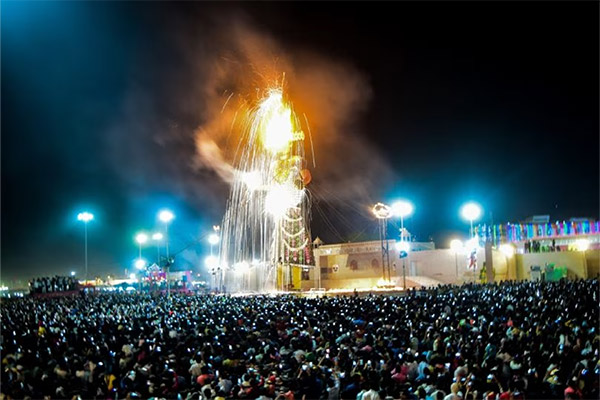
Garba dancing during the Navratri festival, Ahmadabad, Gujarat, India. | |
One of the Flock's long-time readers graciously reminded me that I missed a religious holiday last week, the ten-day, nine-night Hindu festival of Navratri, also spelled Navaratri, that began on this past Thursday, October 3rd. The 10th day of Navaratri is its own holiday, Dussehra (also known as Vijaya Dashami). The celebration of Dussehra is coming up next Saturday, October 12th. I always welcome and encourage, corrections, shares, and suggestions from Flock readers. | |
Navaratri Celebrations, 9 nights of Devi | |
|
Like the other festivals of India, Navaratri is rich in meaning. At one level, Navaratri signifies the progress of a spiritual aspirant. During this spiritual journey, the aspirant has to pass three stages personified by Durga, Lakshmi and Saraswati. Then, he or she enters into the realm of the infinite, wherein one realises one’s Self. Navaratri, which literally means ‘nine nights,’ dedicates three days each to worshipping the Divine in the forms of Durga, Lakshmi and Saraswati. The tenth day, though, is the most important; it is known as Vijayadashami, the ‘tenth day of victory.’
The reason behind the worshipping of Durga, Lakshmi and Saraswati lies rooted in the philosophy that the attributeless absolute can only be known through the world of attributes—the journey is from the known to the unknown. Hence it is said that Shiva, who symbolises pure consciousness, can only be known through Shakti, who represents divine energy. That is why people worship Shakti, also known as Devi, in Her various manifestations.
| |
Dusshera or Vijaya Dashami | |
Dussehra (also known as Vijaya Dashami) is a prominent Hindu festival observed on the tenth day of Navaratri. It commemorates the triumph of Lord Rama over the demon king Ravana, symbolizing the victory of good over evil. The festivities commonly include the ritualistic burning of effigies representing Ravana, reminding people of the need to conquer their internal enemies, such as lust and other vices, and embrace virtues in their lives. Dussehra holds a profound spiritual significance, inspiring devotees to seek righteousness and dispel negativity from their hearts, thus fostering a path of virtue and inner transformation. | |
2. Yom Kippur, October 11-12, 2024 | |
Yom Kippur – The Day of Atonement – is the first and holiest holiday in the Jewish calendar year. This year, Yom Kippur will begin before sunset next Friday, October 11 and end after nightfall on Shabbat, October 12. The holiday is marked by 25 hours of fasting and prayers of atonement and repentance that concludes with festivities and an after-fast meal. Tzom kal. | |
|
History of Yom Kippur
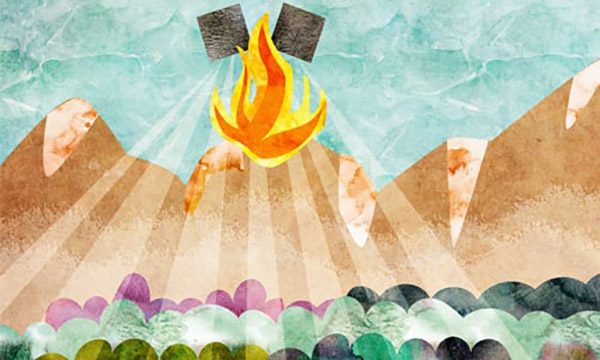
Just months after the people of Israel left Egypt in the year 2448 from creation (1313 BCE), they sinned by worshipping a golden calf. Moses ascended Mount Sinai and prayed to G‑d to forgive them. After two 40-day stints on the mountain, full Divine favor was obtained. The day Moses came down the mountain (the 10th of Tishrei) was to be known forevermore as the Day of Atonement –Yom Kippur.
That year, the people built the Tabernacle, a portable home for G‑d. The Tabernacle was a center for prayers and sacrificial offerings. The service in the Tabernacle climaxed on Yom Kippur, when the High Priest would perform a specially prescribed service. Highlights of this service included offering incense in the Holy of Holies (where the ark was housed) and the lottery with two goats—one of which was brought as a sacrifice, the other being sent out to the wilderness (Azazel).
While the High Priest generally wore ornate golden clothing, on Yom Kippur, he would immerse in a mikvah and don plain white garments to perform this service.
This practice continued for hundreds of years, throughout the time of the first Temple in Jerusalem, which was built by Solomon, and the second Temple, which was built by Ezra. Jews from all over would gather in the Temple to experience the sacred sight of the High Priest performing his service, obtaining forgiveness for all of Israel.
When the second Temple was destroyed in the year 3830 from creation (70 CE), the Yom Kippur service continued. Instead of a High Priest bringing the sacrifices in Jerusalem, every single Jew performs the Yom Kippur service in the temple of his or her heart.
| |
3. International Space Station: Update | |
There was good news this week for the two astronauts, Butch Willmore and Sue Williams, who have been stuck on the International Space Station since June. The Dragon capsule that will be returning them to Earth in February successfully docked with the ISS as it delivered two more crew members. | |
SpaceX docks at ISS to collect stranded astronauts | |
From: BBC, By: Christy Cooney, September 29, 2024 | |
|
A SpaceX capsule sent to bring back two astronauts stranded on the International Space Station (ISS) has docked.
The Dragon capsule, which has two empty seats for Butch Wilmore and Suni Williams, docked at 17:30 eastern time (22:30 BST).
The pair arrived at the station on Boeing's new Starliner capsule for an eight-day mission in June, but were forced to remain there because of a fault discovered during the flight.
They are now expected to return to Earth in February.
| |
4. The Heavens: Meteor showers, Comet A3, Supermoon & more | |
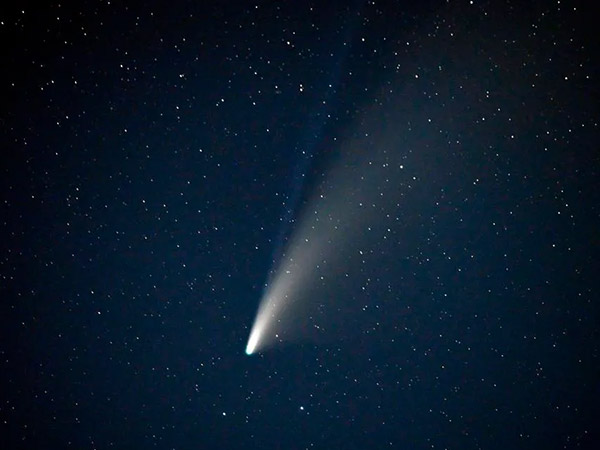
There is a lot going on in October's night sky. We'll be treated to the Draconid meteor shower on the evenings of October 7th and 8th. Between the 12th and the end of the month, Comet A3 should be visible to the naked eye. On The 17th we will be treated to the 4th supermoon of the year, the Hunter's Moon. On top of all of that, the Earth currently has a second moon, an asteroid, or mini-moon, that will orbit the earth until it breaks free of our gravitational pull and continues its path around the sun. | |
Draconid meteor shower 2024: All you need to know | |
From: EarthSky, By: Bruce McClure, Deborah Byrd, and Don Machholz, October 3, 2024 | |
|
Predicted peak: The peak is predicted** for 3 UTC on October 8, 2024.
When to watch: The best time to watch the Draconids in 2024 is the evening of October 7 through the wee hours of the morning on October 8. The waxing crescent moon (27% illuminated) will set before 9 p.m. your local time. So you can watch for meteors in a moonless sky.
Overall duration of shower: October 6 through 10.
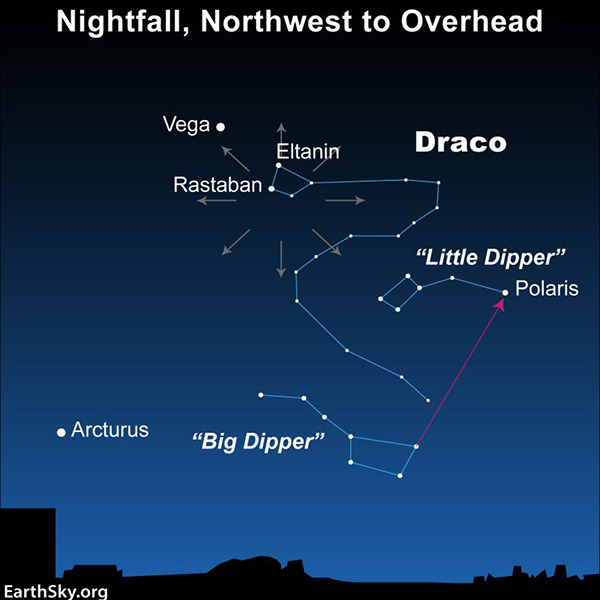
Radiant: Highest in the sky in the evening hours. See chart below.
Nearest moon phase: First quarter moon is 18:55 UTC on October 10.
Expected meteors at peak, under ideal conditions: Under a dark sky with no moon, you might catch 10 Draconid meteors per hour.
Note: The Draconid shower is a real oddity, in that the radiant point stands highest in the sky as darkness falls. That means that, unlike many meteor showers, more Draconids are likely to fly in the evening hours than in the morning hours after midnight. This shower is usually a sleeper, producing only a handful of languid meteors per hour in most years. But watch out if the Dragon awakes! In rare instances, fiery Draco has been known to spew forth many hundreds of meteors in a single hour. That possibility keeps many skywatchers outside – even in moonlight – during this shower.
| |
Tips for Watching Meteor Showers | |
Comet A3 Will Now Slingshot To Sunset — When To See It With Naked Eyes | |
From: Forbes, By: Jamie Carter, October 3, 2024 | |
|
When is comet A3 coming back? Also called C/2023 A3 (Tsuchinshan-ATLAS), the “comet of the year” may have been getting a lot of headlines, but it’s been a rather tricky object to see thus far — not least because it’s been visible only before sunrise.
Comet A3 will now dip from dawn into the sun’s glare, getting closer to our sun until it passes through to the other side — sunset. It will re-emerge in twilight around Oct. 12 for those in the northern hemisphere and should be easily visible — and possibly super-bright — for around two weeks.
This is way more convenient that was the case in late-September. All you need do is look to the west immediately after sunset to glimpse it and its tail.
Best Time To See Comet A3
Comet A3 will get closest to Earth on Oct. 12, when it will pass about 44 million miles (71 million km) from Earth. That’s arguably the best time to see it, but the observing window will be short — the comet will set only about 15 minutes after sunset.
Luckily, the comet will set about 20 minutes later each night for the first week, making it far easier to see on Oct. 13-18. At the end of that period it will be in the night sky for about two hours after sunset.
| |
Hunter’s Moon: Full Supermoon in October 17, 2024 | |
|
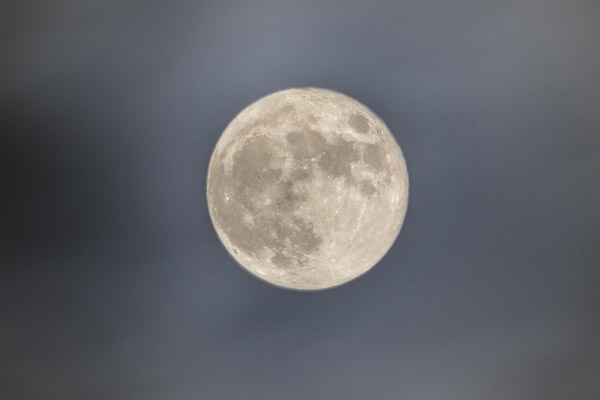
The full Hunter’s Moon peaks on Thursday, October 17, 2024 … and it’s a Supermoon! As with last month’s full Moon, the Hunter’s Moon rises around the same time for several nights, so start looking for it on Wednesday, October 16!
Why Is It Called the Hunter’s Moon?
This particular full Moon is commonly referred to as the full Hunter’s Moon. It is believed that this name originates from the fact that it was a signal for hunters to prepare for the upcoming cold winter by going hunting. This is because animals were beginning to fatten up in preparation for the winter season. Moreover, since fields had recently been cleared out under the Harvest Moon, hunters could easily spot deer and other animals that had come out to search for remaining scraps. Additionally, foxes and wolves would also come out to prey on these animals.
| |
It's official: Earth now has two moons | |
From: Earth.com, By: Eric Ralls, October 3, 2024 | |
|
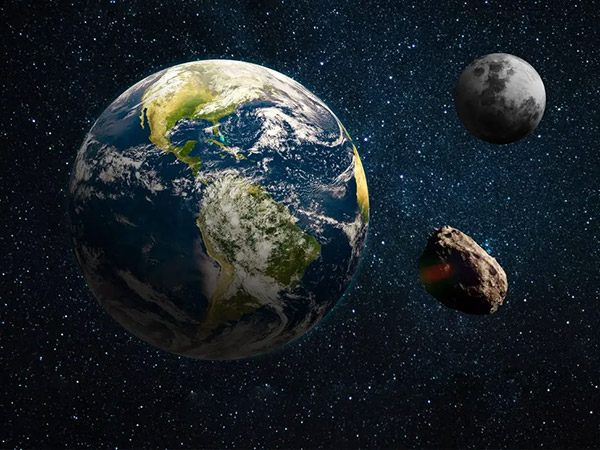
Over the past few weeks, you’ve probably heard somewhere that Earth was going to get a second moon. Well, we can now confirm that Earth now officially has two moons after capturing asteroid 2024 PT5.
On Sunday, September 29, our planet captured the tiny asteroid named 2024 PT5, turning it into a temporary mini-moon.
What are mini-moons?
What exactly are mini-moons, and how often do they visit us?
Mini-moons like 2024 PT5 are small asteroids that Earth’s gravity grabs for a bit, letting them orbit our planet before they move on.
These little guys usually travel around the sun like other asteroids, but when they get close enough to Earth, our gravitational pull can pull them into a temporary orbit.
They don’t stick around for long — they might hang out for a few weeks or months before breaking free and continuing their journey around the sun.
| |
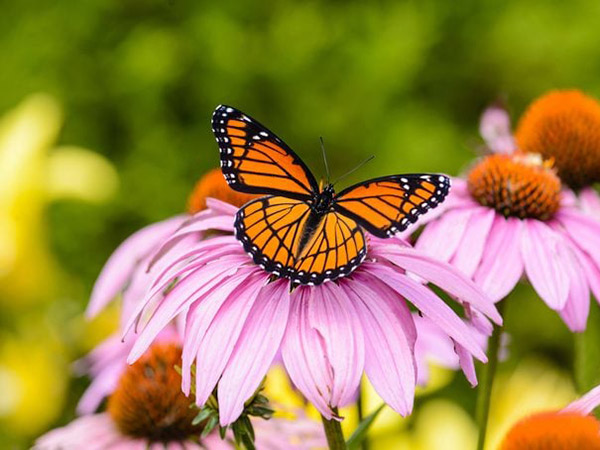
5. Nature: Monarch or Viceroy Butterfly
| |
Viceroy Butterfly vs Monarch: How to Tell the Difference | |
Once you know the difference, it's easy to identify a viceroy butterfly vs a monarch. See what their wings and caterpillars look like. | |
|
Viceroy Butterfly vs Monarch
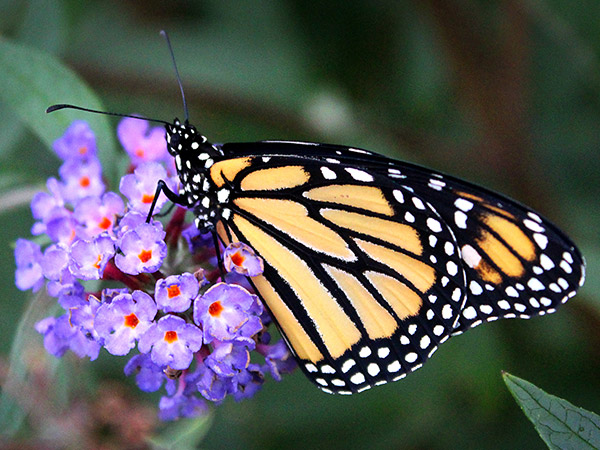
It happens to every nature enthusiast at least once. You spot an orange butterfly with black markings hovering around a pretty flower and say, “Oh, look, it’s a monarch!” Except, on closer inspection, you realize it’s not. That bold beauty is actually one of the monarch mimics—a viceroy. Once you know what to look for, it’s easy to tell the difference between a viceroy butterfly vs a monarch.
| Notice the black line that runs horizontally across the hindwings of the viceroy butterfly. | |
Generally, viceroys are a bit smaller than monarchs. But the simplest way to differentiate between them is to check for the extra black line that extends all the way across the lower wing. You can see this giveaway whether the wings are open or closed.
The monarch and viceroy butterflies have similar color patterns, but the monarch sails along with its wings held up in a shallow V, while the viceroy makes several quick flaps and then goes into a flat-winged glide.
| |
6. From the Archives: A Wedding in Portugal
| |
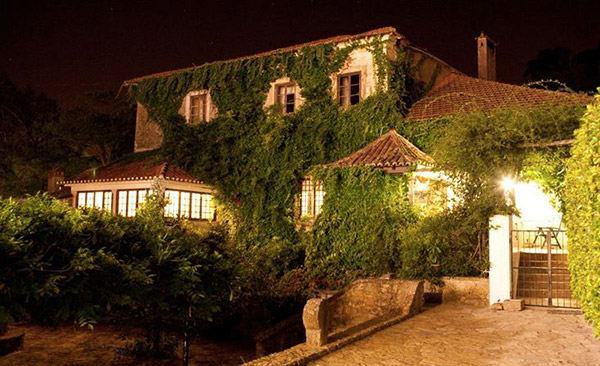
Just like his story, Una Corrida Especial: A Special Round -up, that we reposted from the Flock Archives last week, I've had several requests to re-post Dino DeConcini's original story, A Wedding in Portugal, that I first ran in the October 21, 2022, issue of the Flock. If you didn't get a chance to read it the first time, take this opportunity to enjoy it now. | |
|
I know no better way to start a trip than with a wedding, especially one like that of Antoinette Carline and Nicolas de Wolff of Los Angeles. Nicholas is the son of Harold and Julie de Wolff, very good, very old friends, in Harold's case for 50 years, starting with being roommates at Georgetown for three years.
It was a story-book event (the wedding, not living with Harold), spread over three days at delightful places in and around Cascais, on the Atlantic coast west of Lisbon. The logistics were formidable, with dozens of guests arriving on three different days from six different continents, to grace three main events: a welcoming dinner, the ceremony itself followed by a reception, luncheon and party, and then a farewell brunch. But the de Wolffs are master planners, and whatever the reality, all seemed smooth, serene and seamless to the guests.
The ceremony was held in Lisbon's Chapel of St. Sebastian, an intimate, tile roofed architectural gem. Its porch was strewn with rosemary, lavender and hydrangea blossoms for the occasion, its interior walls were adorned with blue and white antique Portuguese tiles depicting the death of the saint and other less grisly events, and from the choir loft, some of the Lisbon symphony's principal musicians held forth gloriously.
| |
7. Kid's Corner: make Your Own Barometer
| |
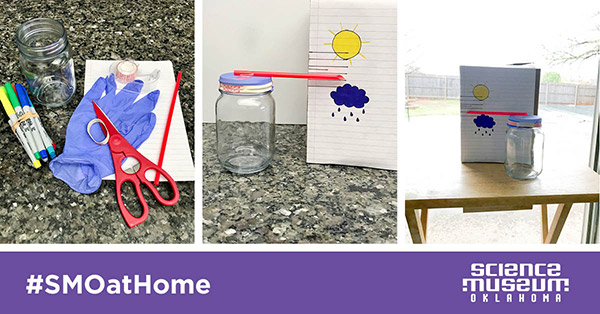
Try This: Make a Barometer | |
|
A barometer is a device that can measure air pressure. If air pressure, or atmospheric pressure was not cool enough — being able to build an instrument that can tell us about the atmospheric pressure around us, makes it that much cooler! The first barometer was invented in Florence, Italy in 1644 by Evangelista Torricelli. There are several ways to make a barometer, and most likely you have what is needed in your home already.
In Oklahoma we’re all too familiar with storms that come on quickly with seemingly little warning. When this happens, it corresponds with a drop in air pressure. Modern barometers monitor this air pressure and can provide essential weather monitoring, information for forecasting weather changes, and of course much needed warnings.
This atmospheric pressure is higher on sunny days and lower on stormy days. We can monitor the changes in air pressure that come with different weather patterns by making a barometer out of common household items.
| |
Try This: Make a Barometer! | |
8. The Art of Saying Thank You: Carter & Caysen
| |
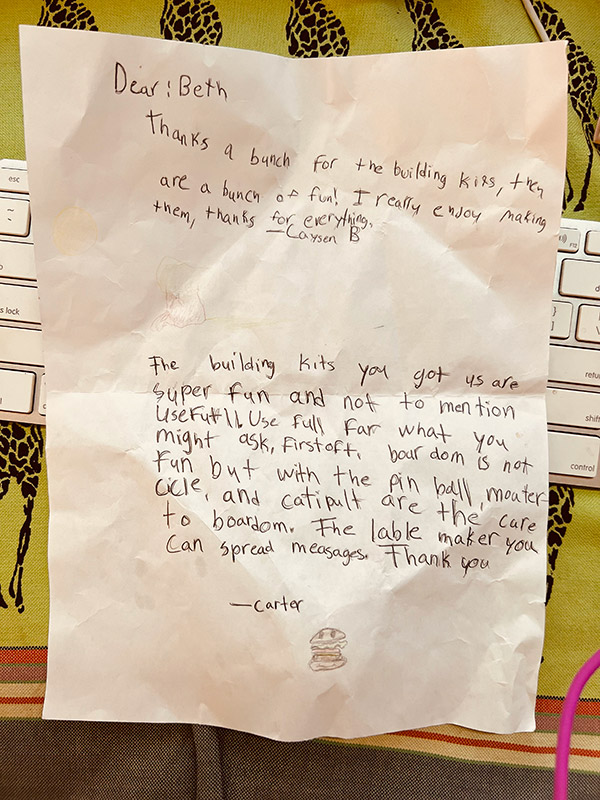
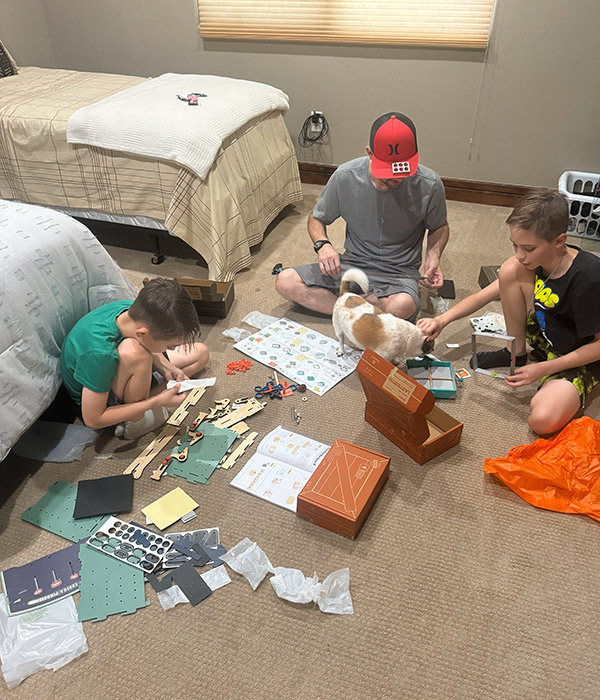
Last month I posted photos of brothers Carter and Caysen Martin working on some STEM Crate projects from KiwiCo that I had sent to them. These two are such young gentlemen that they sent me a note expressiing there appreciation and how much they enjoyed building and playing with their kits. As an educator, it warms my heart to see young minds finding joy in learning and exploring new concepts. Thank you, Carter and Caysen. | |
Carter and Caysen working with their dad, Josh, on their STEM Crate projects. | |
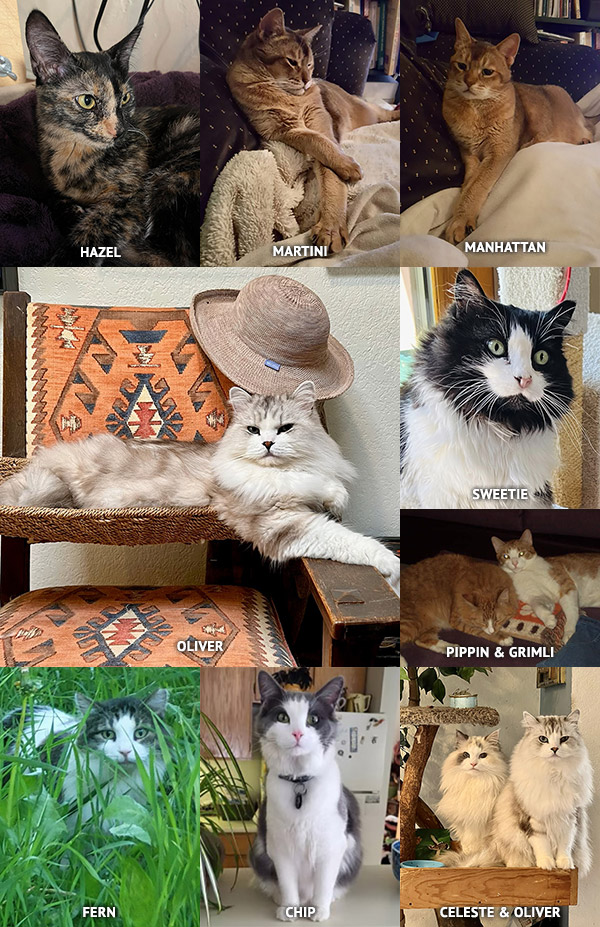
9. Pet's Corner : Hall of Fame, Part Two: Cats
| |
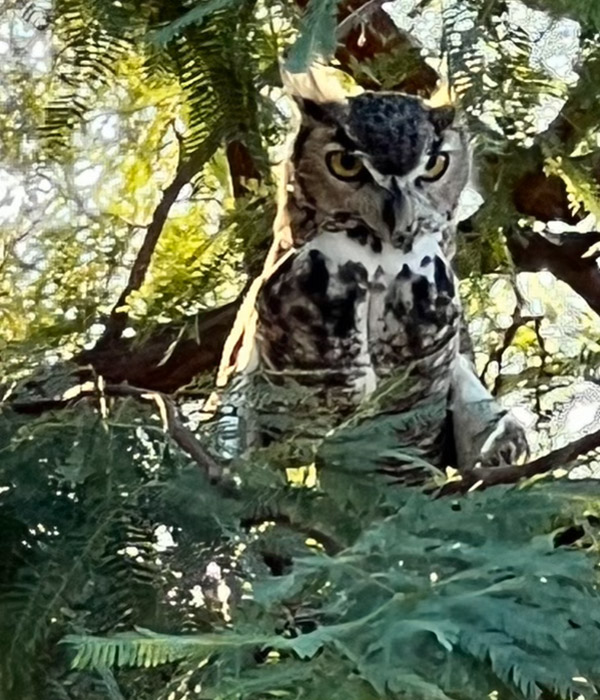
horned owl submitted by Flock reader Julie | |
These Flock regulars are always here for you: | |
In coming weeks: we'll be sharing more investigative articles from our roving reporter William George, original writing from Flock favorite Dino DeConcini. | |
Don't Be Shy: Share Your Stories! | |
I'm looking forward to sharing more of your personal stories - oral, written, or otherwise, as we enter our third year. I'd so love to present them to The Flock, hit a mailbox below to share your story. | |
Subscriptions & Idea Submissions
Reminder: Your submissions are always welcomed. | |
|
Feel free to forward this email to a friend. If this was forwarded to you and you would like to receive your very own Flock Newsletter, you can sign up here. If you have any questions or suggestions for future Flock resources, don't hesitate to contact me.
Your fan and friend,
Beth
| | |
The information and materials contained or referenced in this newsletter are for informational purposes only and not intended to be a substitute for professional medical advice, diagnosis, or treatment. Always consult a physician or other qualified medical professional with any questions you may have regarding a medical condition or treatment and before beginning a new health care regimen. Do not disregard professional medical advice or delay seeking medical advice or care based on anything contained in this newsletter. | | | | |