|
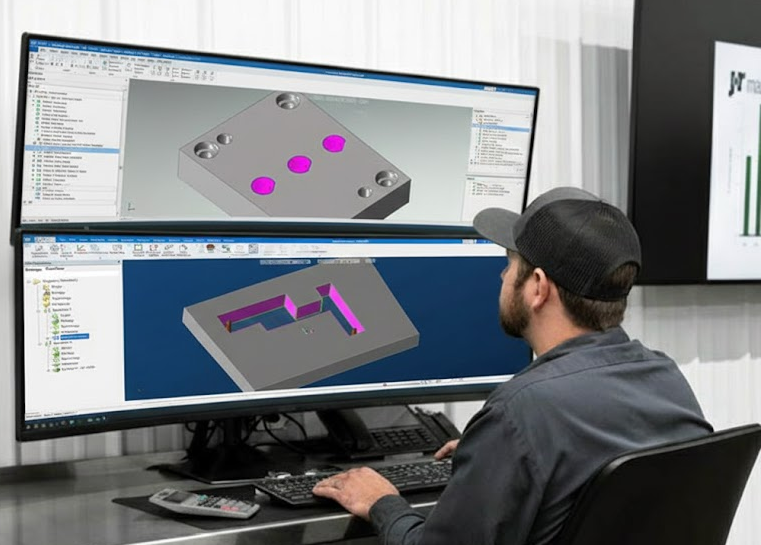
CAM software is evolving fast. The core principles haven’t changed; you still need good geometry, accurate tools, and clean code, but the technology around it is shifting in ways that make programming faster, smarter, and more connected than ever. If you want to stay ahead, it pays to keep an eye on where things are heading.
Automation is taking center stage.
More CAM systems are adding automation tools that handle routine programming tasks, like recognizing holes, pockets, or features and applying predefined machining strategies automatically. It’s not about replacing the programmer; it’s about cutting out the repetitive work so you can focus on the complex stuff that actually needs human judgment.
AI-assisted toolpathing is on the rise.
Artificial intelligence is starting to show up in toolpath optimization. Systems can now analyze stock engagement, tool wear, and cutting conditions, then suggest better strategies or feeds and speeds. It’s early days, but expect to see more predictive algorithms that adjust toolpaths on the fly to balance cycle time and tool life.
Digital twins and machine simulation are getting real.
Full machine simulation, complete with kinematics, limits, and collision detection, is becoming standard. As more shops adopt digital twin technology, programmers can test and prove out their programs virtually before a single chip flies. It’s safer, faster, and gives you more confidence at the machine.
Integration with ERP and MES systems is increasing.
Modern CAM software isn’t sitting in isolation anymore. You’re starting to see tighter integration with scheduling, tool management, and quality systems. That means less data re-entry and fewer opportunities for errors between programming and production.
Adaptive manufacturing feedback loops are coming.
In-process probing, sensor data, and machine monitoring are now feeding back into CAM systems. The software learns how the part actually cut and can automatically update offsets, feedrates, or toolpaths for the next run. That’s the start of true closed-loop manufacturing.
Bottom line:
CAM is moving toward intelligence, automation, and connectivity. The shops that learn to blend human skill with smart software will be the ones leading the next generation of manufacturing.
Have a programming question?
Send it in for the next edition of Ask a CAM Pro!
|