|
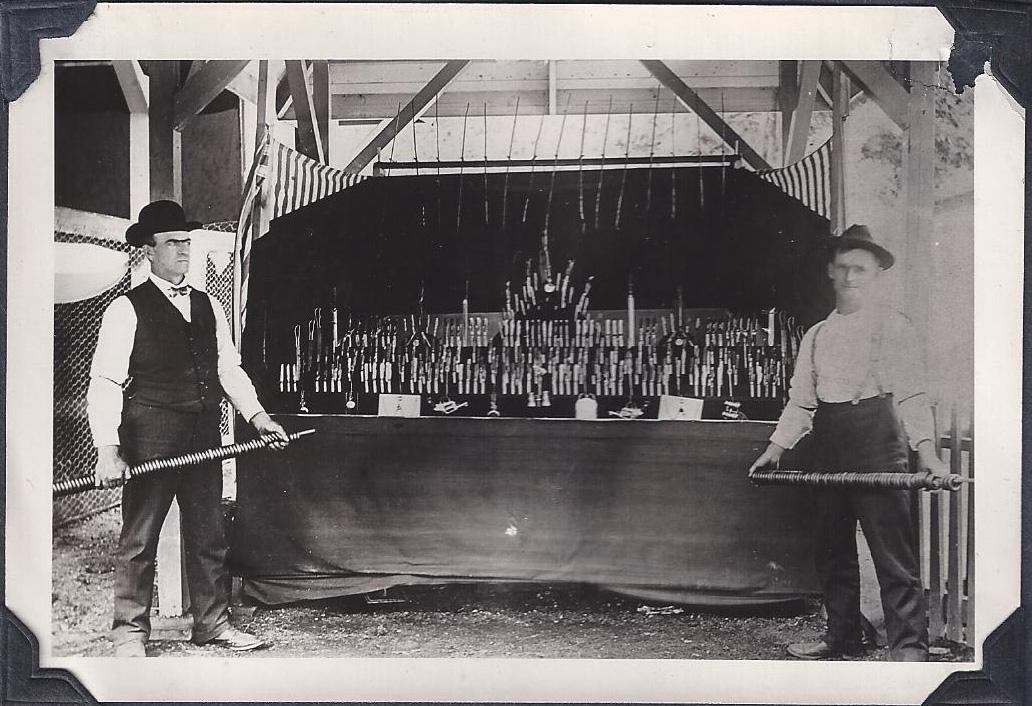
I am a staunch pacifist, but back in the day, look closely... You could win a revolver at the Ring Toss at the Ludlow Lagoon. We've been working to create a legacy celebrating positive community development in Ludlow based on destination, circus, and beer. The same exact recipe used at the Lagoon a century ago. On Saturday, some local teens will perform alongside seasoned professionals, and everything old is new again.
Here's an excerpt from: Circus in a Sundown Town Pie Fighting: Sweet & Dirty Community Development (on page 5-7 in the print version and 15-20 Kindle Epub fromat)
Now available on Audible, paperback, and Kindle.
In the late 1880s and not long after the bridge’s construction, a few entrepreneurs pooled their resources and invested in the Cincinnati, Newport, and Covington Streetcar Company. The investment led to an incredible advancement that included the installation of new-fangled electric streetcars and the purchase of rights-of-way. One could only imagine what the naysayers of those long-ago days would say, “No one’s going to ride your damn streetcar. This is a horse and buggy town!” But no matter how stodgy people remained toward the electric streetcar, resistance to change often proved futile regarding the common good.
Committed to bringing this project to fruition, the faction looked for additional investors. Enter Mr. J.J. Weaver. After reviewing the streetcar company’s financials and growth projections, Weaver recognized that success relied on seven-day-a-week ridership, but at the onset, no one rode on the weekends. For the streetcar company, things appeared dire. However, Weaver, a foresighted man attuned to current trends, envisioned opportunity.
The Industrial Revolution had given people time on their hands and funds to spend for leisure. Thus, the amusement industry took off, and Weaver could sense its value. Especially in 1893, the Columbian Exposition - Chicago World’s Fair’s 400-year celebration of Christopher Columbus discovering America was the big news across the country and the talk of many towns far and near. The mesmerizing spectacle of the World’s Fair provided many people with their first glimpse of a light bulb (outside some circuses) and, perhaps even more thrilling, the debut of the Ferris Wheel and carousel.
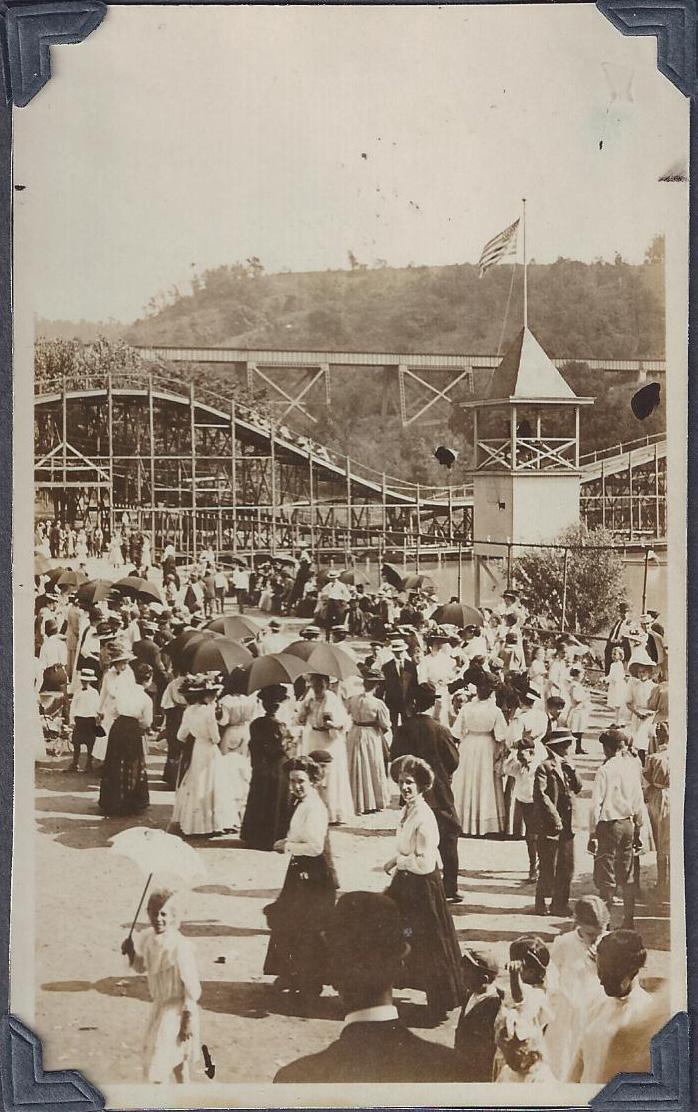
When the World’s Fair wrapped up, these giant toys, carnival rides, and all the amusement items had nowhere to go. J. J. Weaver seized this opportunity and used his means to purchase as many of these rides as possible. Weaver then had them all taken apart and shipped to Ludlow. Next, Weaver had a local creek dammed and created a man-made lake, on whose shore he reinstalled his World Fair acquisitions and fashioned one of the world’s first amusement parks: The Ludlow Lagoon.
To complete the project, Weaver tapped the streetcar investors for support, pitching that the Ludlow Lagoon would incentivize streetcar riders to travel for weekend ventures, but only if investors backed his destination. Weaver sweetened the deal by pushing the City of Ludlow to pay for the streetcar tracks from its eastern border to the Ludlow Lagoon.
In 1895, the Ludlow Lagoon opened with rides, a midway, and circus acts from around the world. The amusement park grew to include live music, dances, hot air balloons, and one of the first roller coasters. The Ludlow Lagoon survived many disasters, from floods to fires to tornadoes. Ultimately, the last nail in the park’s coffin was the halting of beer production when feeding the troops of World War I became vastly more important than amusement and libations. The lagoon would dry up, and with it, Ludlow’s halcyon days.
Circus Acts & Performers Ludlow Lagoon 1895-1918
Professor Loisette’s Trained Birds
La Van Brothers Flying Trapeze
Mohammet Dervish Troupe of Arabs
Alberti Queen of High Wire Dancers
Mendoza Sisters Trapeze Artists
Professor Keisel Dog Circus
Juan Caicedo High Wire
Ella, Zuela, and Lula Bicycling on a Wire*
Bunth and Rudd The Sensational Eccentriques
McCart’s Dog and Monkey Circus
Lockhardt’s Boxing Terriers & Trained Elephants
Otis Bower Dog Circus
Costello the Daredevil Diver
Sells Circus
Mlle Croizette’s Bareback Riders
Professor Devivo Trained Dogs
Hunt’s Comic Walruses*
Miss Birdie Lewis & Prof. H.C. McGee High Diving Skills
Minetta, Queen of the Aerialists
Prof. John R. Jewell Bicycle Act
Dugay, the King of the High Wire
H.B. Connelly Clown
Akimoto Royal Yedo Japanese Gymnastics Troupe*
The Oschlansky Acrobatic Act
Jessie, the Trained Baboon
Foy & Clark Comedians
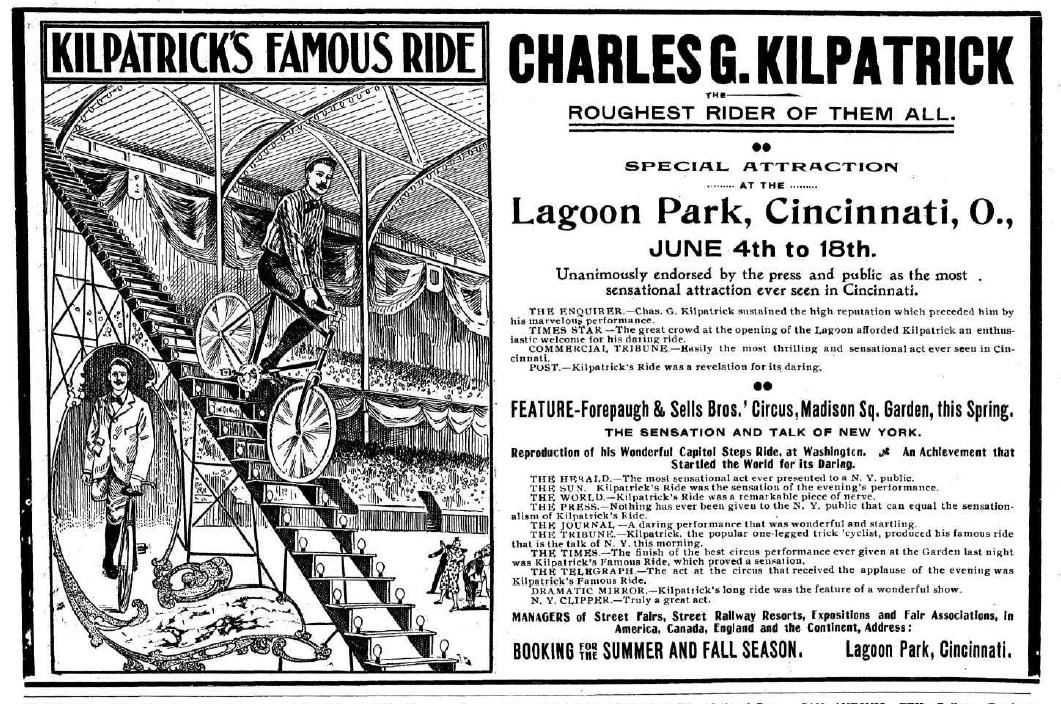
One-legged Cyclist Charles G. Kilpatrick*
Toozoonin Arab Acrobatic Troupe
Professor Walker’s Diving Horses and Elks*
* These acts inspired beers made by the Bircus Brewing Co. in Ludlow.
|