|
|
ISSUE IN FOCUS
NEW GOVERNOR TRANSITIONS IN THE STATES: Of the eleven gubernatorial offices on the ballot in the November 2024 elections, Montana, Utah, and Vermont governors sought re-election and held their seats. In the other eight states, Delaware, Indiana, Missouri, New Hampshire, North Carolina, North Dakota, Washington, and West Virginia, the new incoming governors are quickly preparing for a smooth transition. Many have already announced key appointments to their upcoming administration, as well as a glimpse into their upcoming priorities and key policy focus areas. READ FULL BIOS OF NEW 2025 GOVERNORS HERE.
|
| | |
BUDGET, ECONOMY, TAXES, & REVENUE | |
|
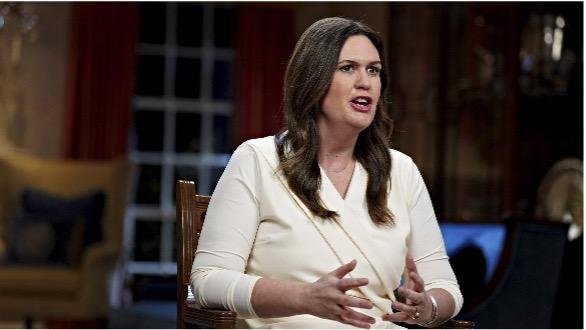
GOVERNORS BEGIN OUTLINING PROPOSED BUDGETS: Governors across states are beginning to outline budgets for the upcoming year, with many projecting deficits and planning cuts to the next budget cycle. Colorado Governor Jared Polis recently proposed a $638 million in cuts to the general fund, with 1 percent across the board cuts to state agencies in personal services and operations. Washington Governor Jay Inslee is also warning of a $10 billion budget deficit over the next four years, suggesting cuts, hiring freezes, and program pauses across its state agencies. On the other hand, Arkansas Governor Sarah Huckabee Sanders has proposed $90 million in additional funds, mostly going towards education, maternal health, public safety, and government efficiency.
| GOING INTO 2025, CITIES PLAN FOR LEANER BUDGETS: Recent surveys show that city finance officials are preparing for a tougher budget situation, despite indicators proving local governments are in good shape. Cities are using more conservative revenue estimates for the coming year, as inflation-adjusted revenue increases have started to level off after booming in the immediate aftermath of the COVID-induced recession. Still, property and sales taxes are increasing, bolstered by a robust housing market, while local income taxes are seeing a slight decline. Inflation has been heading down for nearly two years and the unemployment rate remains low. The divisive political climate and the potential of needing to pay off future debt for infrastructure improvements are at the forefront of city finance officials' minds. | |
|
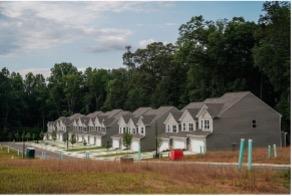
AMERICANS STAGED A PROPERTY TAX REVOLT ON ELECTION DAY: Voters in eight U.S. states passed measures to offer some form of relief on property tax, a sign of their mounting frustration with tax bills that have soared alongside big increases in home values. More specifically, New Mexico, Colorado and Virginia each voted to expand property tax exemptions for veterans or their families. In 2024, the most impactful measure was in Georgia, which caps tax assessment changes for current homeowners at an annual inflation rate, rather than at its real market value. Home prices have increased more than 60 percent in Georgia over the last five years.
| |
LOUISIANA SENATE BEGINS VETTING GOVERNOR LANDRY’S INCOME TAX CUTS AS REVENUE-RAISING PLANS REMAIN UNCERTAIN: After the Louisiana House spent the first half of a 20-day special session pushing forward critical components of Governor Jeff Landry’s ambitious tax package, the Senate Revenue and Fiscal Affairs Committee, which handles tax legislation, will be meeting to begin the process of considering the several bills. Louisiana Economic Development Secretary Susan Bourgeois said her agency is in the process of defining the nature of Louisiana’s competitive advantage and “the priority sectors where we can see the most success” in the near- and medium-term. | |
|
HEALTHCARE, EDUCATION, & WORKFORCE
STATES RUSH MEDICAID REQUESTS BEFORE TRUMP RETURN: States are racing to have their Medicaid requests approved before the Trump administration takes power. The new administration is expected to have a very different view of Medicaid than the Biden administration, and GOP lawmakers in Congress are eyeing major changes. Some states want waivers that will impact their states’ budgets, but others seek to allow Medicaid to pay for social services. Democratic-controlled states expect that whoever President-elect Donald Trump chooses to lead CMS will support less government spending.
CALIFORNIA BECOMES LATEST STATE TO TRY CAPPING HEALTH CARE SPENDING: California’s Office of Health Care Affordability faces a herculean task in its plan to slow runaway health care spending. The goal of the agency, established in 2022, is to make care more affordable and accessible while improving health outcomes, especially for the most disadvantaged state residents. California is the ninth state — after Connecticut, Delaware, Massachusetts, Nevada, New Jersey, Oregon, Rhode Island, and Washington — to set annual health spending targets.
| |
|
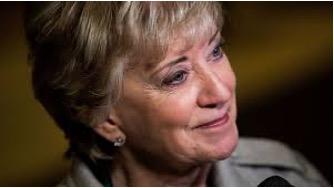
WILL TRUMP ELIMINATE THE DEPARTMENT OF EDUCATION? WHAT TO KNOW AS LINDA MCMAHON PICKED TO LEAD AGENCY: President-elect Donald Trump has tapped Linda McMahon, one of his top donors, a former cabinet member, and wife of billionaire former WWE chair Vince McMahon, to lead the federal Department of Education. Trump has worried a large crowd for repeatedly vowing to shut down the Department of Education in favor of relegating all educational responsibility to individual states in his second term. However, shutting down the agency would require congressional action and a 60-vote threshold in the Senate, requiring at least some Democrats to support the decision.
| |
TEXAS GOVERNOR ABBOTT WANTS TO FREEZE TUITION AT TEXAS COLLEGES AND UNIVERSITIES FOR ANOTHER TWO YEARS: Governor Greg Abbott said he will not support any tuition increases at Texas colleges and universities in the next two years, continuing the tuition freeze currently in place. In a letter to public colleges and universities, Abbott said he spoke to all of the university system Boards of Regents, whose members agree with his position. Last legislative session, lawmakers allocated an additional $700 million to the state budget for Texas’ public universities. The Governor insisted on his administration’s continued efforts to ensure that “higher education remains accessible and affordable for all Texans.” | |
|
ENERGY, ENVIRONMENT, & AGRICULTURE
PROGRESSIVE GOVERNORS FACE TOUGH ENERGY CHOICES: As Trump prepares for his second term, state governors who wish to continue facilitating the transition from fossil fuels to clean energy are increasingly going to need to reconsider many of their policies. To those who have gone heavy into renewable energy, they must make their own judgments and prioritizations as they are unlikely to receive the level of support that they have grown accustomed to receiving from the current Biden Administration. Although not all Republicans or Trump voters agree that climate change is a hoax, many do believe that elected representatives have simply gone too far in pushing for Green Energy policies that they fear will produce minimal results yet incur massive societal, political, and economic costs.
MASSACHUSETTS LEGISLATURE SENDS CLEAN ENERGY ACCORD TO THE GOVERNOR: After months of delay, the Massachusetts Legislature sent a major clean energy bill to Governor Maura Healey's desk amid shifting national energy policy dynamics. The Massachusetts House gave final approval to a legislative package meant to help the state lower greenhouse gas emissions by speeding permitting processes for clean energy products. The bill caps permitting for large clean energy projects at 15 months, and at 12 months for smaller projects. The legislature also passed a $4 billion economic development package that includes $200 million for an offshore wind investment fund and $200 million for a clean energy investment fund. Massachusetts has set a goal of net-zero greenhouse emissions by 2050.
JUDGE HALTS GOVERNOR’S EFFORT TO REMOVE VIRGINIA FROM GREENHOUSE GAS INITIATIVE: A recent ruling issued by Judge C. Randall Lowe in Floyd County states Virginia cannot withdraw from a multistate initiative designed to reduce greenhouse gas emissions unless the Legislature agrees to the decision, dealing a blow to Governor Youngkin’s efforts to exit the Regional Greenhouse Gas Initiative the state joined in 2020 under a Democratic state government. Youngkin has said Virginia's participation in the cap-and-trade program amounts to a hidden tax on Virginians' energy bills, and formally exited the compact at the end of 2023.
WHAT TRUMP’S WIN COULD MEAN FOR LOCAL CLIMATE ACTION: Donald Trump, the next U.S. president, has promised to boost fossil fuel production and rescind all unspent funds under the IRA, the nation’s largest-ever investment in clean energy and climate change. He has also cast doubt on the scientific consensus around climate change and threatened to roll back environmental rules. However, local leaders said they will not slow efforts to reduce planet-warming pollution and boost community resilience, even if a second Trump administration makes it more difficult for them to do so. Cleveland Mayor Justin Bibb, the chair of Climate Mayors, said mayors plan to “double down” on their commitment to address climate issues at the local level.
TEXAS STATE REPRESENTATIVE FILES BILL TO BAN FOREIGN LAND OWNERSHIP: State Representative David Spiller has filed legislation banning foreign land ownership in Texas, stating Texas needs to prohibit entities identified as a threat to U.S. soil from owning land in the U.S. He stated that the bill defines which companies are seen as threats and ensures it addresses more than just the surface, including minerals and others related to land ownership. Additionally, Spiller mentioned in a press release that House Bill 243 allows the Texas Attorney General to exercise the state’s power of eminent domain. This legislation aims to reduce vulnerabilities, minimize consequences, and identify and disrupt threats posed by foreign landowners who may use their property ownership in Texas in a threatening manner.
NEW YORK LAUNCHES BLUE-RIBBON PANEL TO ADVANCE AGRICULTURE EDUCATION: Governor Kathy Hochul announced the launch of the new Blue-Ribbon Panel to Advance Agriculture Education and additional investments to grow agricultural education and support youth leadership following the state’s first-ever Youth Agriculture Conference. The panel will bring together food and agriculture industry stakeholders, educational institutions, and educators to chart a course for strengthening agriculture education and supporting the multi-faceted needs of the workforce.
| |
TRANSPORTATION & INFRASTRUCTURE | |
|
WHAT WILL TRANSPORTATION POLICY LOOK LIKE UNDER TRUMP?: A former U.S. Senate staffer and USDOT executive who now leads the advocacy group Transportation for America, Beth Osborne, gave insights to what the future of transportation would look like under a second Trump administration. The highlight of her interviews assured that “Federal funding is locked in due to the surface transportation reauthorization [within the 2021 Bipartisan Infrastructure Law] and the rules of Highway Trust Fund.” Osborne noted that a few federal transit programs like New Starts, Small Starts, and Core Capacity will not be killed, but could potentially see cuts. The transportation policy professional also discussed what the future would look like for roads, transit systems, and urban mobility networks.
| |
|
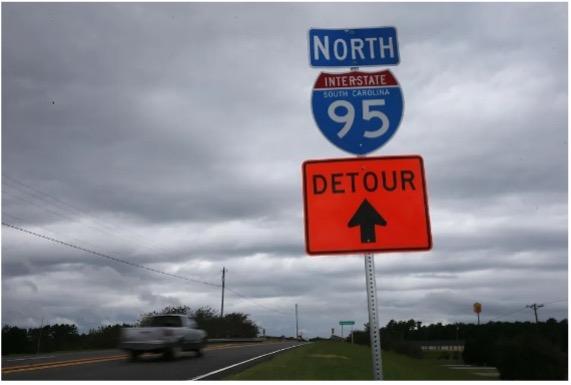
NEW YORK GOVERNOR HOCHUL TO RELAUNCH CONGESTION PRICING WITH $9 BASE TOLL: Governor Kathy Hochul plans to relaunch the MTA’s congestion pricing program with a $9 base toll for passenger cars — marking a 40 percent reduction from the price previously approved by the MTA — and will eventually increase the base toll. Hochul's office confirmed she will make an announcement regarding mass transit funding. The Governor’s move comes just over a week after the election, and more than five months after she abruptly paused congestion pricing weeks before it was set to launch.
PENNSYLVANIA GOVERNOR SHAPIRO SIGNS EXECUTIVE ORDER CREATING THE PA PERMIT FAST TRACK PROGRAM: Governor Josh Shapiro signed Executive Order 2024-04, creating the Pennsylvania (PA) Permit Fast Track Program to streamline the Commonwealth’s permitting process for key economic development and infrastructure projects, increase transparency, and accelerate timelines. Pennsylvania is the first state to create a project-based permitting fast track program for complex and impactful economic development and infrastructure projects. The Executive Order directs the Office of Transformation & Opportunity (OTO) to lead the PA Permit Fast Track Program (Fast Track). OTO will be responsible for developing, managing, and coordinating permitting for complex and impactful economic development and infrastructure projects across government agencies and private partners.
| |
SEE THE LATEST LIST OF STATE AND LOCAL ASSOCIATION EVENTS HERE. | | | |
|
|
CLIENT IN THE NEWS
American Beverage
AFRICAN AMERICAN MAYORS ASSOCIATION, AMERICAN BEVERAGE FOUNDATION FOR A HEALTHY AMERICA PARTNER TO AWARD GRANTS TO AFRICAN AMERICAN MAYORS IN CITIES THROUGHOUT THE U.S.: As part of an ongoing partnership between the African American Mayors Association (AAMA) and the American Beverage Foundation for a Healthy America (ABFHA), seven cities with African American mayors will receive significant grants to advance essential programs that improve community health and address health disparities. Mayors will be able to apply the funds towards vital resources such as community gardens, mobile veggie and fruit stands and food security programs, and attract additional investments for the nutrition issues their cities are facing.
|
| | |
|
TECHNOLOGY, PROCUREMENT & CONSUMER PROTECTION
THERE IS A WAVE OF STATE AI LEGISLATION COMING: In lieu of a federal law regulating artificial intelligence, state policymakers have introduced nearly 700 pieces of AI legislation in 2024, signaling an impending wave of legislation to come in 2025. A new report says this trajectory follows the pattern of consumer data privacy laws that were similarly introduced en masse over the last several years. The report points to two waves of privacy legislation as precedent – data breach consumer privacy laws, as well as comprehensive consumer privacy laws.
KENTUCKY LAWMAKERS WRAP UP THEIR FIRST EXAMINATION OF AI, SAY IT WILL NOT BE THE LAST: Lawmakers studying artificial intelligence are urging steps to protect the integrity of Kentuckians’ elections and the privacy of their data. The Artificial Intelligence Task Force recently adopted 11 recommendations ahead of the General Assembly’s 2025 session. The recommendations include considering legislation to encourage responsible use of AI in elections and a review by the attorney general’s office of laws related to using someone’s likeness without permission.
BIDEN LOCKS IN $6.6B FOR TSMC ENSURING TRUMP CANNOT RESCIND CHIPS ACT DEAL: The Biden administration has finalized a $6.6 billion award for the Taiwan semiconductor giant that is building massive factories in Phoenix, amid concerns President-elect Donald Trump will derail subsidies aimed at fostering the domestic chip industry. The Taiwan Semiconductor Manufacturing Company plans to invest $65 billion on three state-of-the-art fabrication plants, or fabs, that mean thousands of jobs in Arizona. Commerce Secretary Gina Raimondo referred to the investment has one of the most vital to advance U.S. economic interests and national security.
32 STATE ATTORNEYS GENERAL URGING CONGRESS TO PASS KIDS ONLINE SAFETY ACT: Tennessee Attorney General Jonathan Skrmetti led 31 state attorneys general in a letter to Congressional leadership urging them to pass the bipartisan Kids Online Safety Act (“KOSA”), crucial legislation protecting children from online harm, before the end of the year. The coalition letter emphasized the urgent need to address the growing crisis of youth mental health linked to social media use, with studies showing minors spend more than five hours daily online.
| |
|
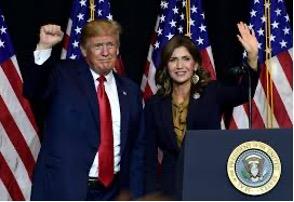
BOTH DAKOTA GOVERNORS TAPPED TO SERVE IN TRUMP’S SECOND ADMINISTRATION: The governors of South and North Dakota have been tapped to by President-elect Donald Trump to serve in his upcoming administration. South Dakota Governor Kristi Noem, an outspoken supporter of Trump during her tenure as governor, as been tapped as his Secretary of the Department of Homeland Security. Noem would take over the agency as two key immigration hardliners— Stephen Miller and Tom Homan—are slated to serve in senior roles, overseeing the U.S. Customs and Border Protection, ICE, FEMA, TSA, and the Secret Service. If Noem is confirmed, Lieutenant Governor Larry Rhoden will succeed her as South Dakota Governor.
| |
|
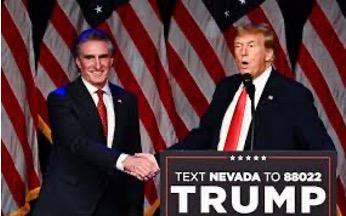
North Dakota Governor Doug Burgum was tapped to lead Trump’s new National Energy Council, which is centered around the president-elect’s domestic energy independence agenda. Burgum, a self-made multimillionaire, will lead the new council across all energy industries, including growing U.S. electricity supplies to cut consumer costs and meet the demands of the raft of new energy-hungry AI data centers. Burgum’s successor, governor-elect Kelly Armstrong, has announced changes to the cabinet. Read Noem’s bio HERE. Burgum’s HERE.
| |
BLUE STATES UNITE TO RESIST FEDERAL PRESSURE UNDER TRUMP: Illinois Governor JB Pritzker and Colorado Governor Jared Polis will lead the Governors Safeguarding Democracy initiative in response to Donald Trump’s reelection, two democratic governors who claim to push back “against increasing threats of autocracy.” They represent sanctuary states, which do not cooperate with federal immigration authorities. California Governor Gavin Newsom also called for a special session, urging the new legislature to approve funds for the Department of Justice and other state agencies to “immediately file affirmative litigation.” The new stance could create conflict with the new administration, as Trump has threatened to withhold federal law enforcement grants from jurisdictions that refuse to cooperate with immigration enforcement. Arizona’s Democratic Governor Katie Hobbs has also stated that her border state, which voted for Trump in the November elections, will not be aiding the incoming-administration with its “misguided” plan to launch a mass deportation operation. | |
|
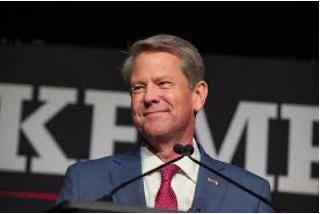
GEORGIA’S BRIAN KEMP TO LEAD REPUBLICAN GOVERNOR ASSOCIATION FOR 2025: Georgia Governor Brian Kemp was elected as the new chairman of the Republican Governors Association (RGA), replacing outgoing Chairman Governor Bill Lee of Tennessee. Kemp served as the vice-chair for the 2024 cycle, and helped elect eight Republicans to their states' highest offices this year. There are currently 27 Republican governors nationwide and 23 Democrats, but two gubernatorial elections will occur in 2025. Montana Governor Greg Gianforte, who just won reelection earlier this month, was elected vice-chair of the organization. Both Kemp and Gianforte will begin their new positions immediately. Other RGA leadership includes South Carolina Gov. Henry McMaster as policy chair.
| |
|
GEORGIA AND OHIO ATTORNEYS GENERAL LAUNCH GOP CAMPAIGN FOR GOVERNOR, KICKING OFF 2026 RACE: Georgia Attorney General Chris Carr, a Republican with deep ties to the mainstream wing of his party, announced that he will run for governor in 2026, setting up a potential showdown with other GOP rivals more closely aligned with Donald Trump. Carr is the first prominent candidate from either major party to enter the wide-open race for governor and is seen as one of the strongest Republican hopefuls to succeed Governor Brian Kemp, who cannot run for a third term. Ohio Attorney General Dave Yoste also hinted at his run for governor in a recent teaser trailer of him walking into the Ohio Statehouse. The current Ohio Governor Mike DeWine is also term limited.
COMMERCE SECRETARY RAIMONDO CONSIDERS ANOTHER RUN FOR GOVERNOR OF RHODE ISLAND: U.S. Commerce Secretary Gina Raimondo (D) is considering another run for governor. The state constitution does not bar third terms, if they are not served consecutively. Governor Dan McKee (D) has said he will seek another term in 2026.
| |
ATTORNEYS GENERAL, LEGISLATORS, & OTHER STATE OFFICIALS | |
|
MEET THE PILLARS OF THE NEXT TRUMP RESISTANCE: Democrats are deeply divided on how aggressively to resist President-elect Donald Trump and his allies. While some are taking a conciliatory approach to the incoming Republican trifecta, others are vowing to thwart their policies with every legal and legislative tool available. Attorneys General in blue states are preparing for the next four years of litigation. Watch California’s Bonta, Minnesota’s Ellison, New Jersey’s Matthew Platkin and New York’s Letitia James as likely leaders of the litigation movement. “I didn’t run for attorney general’s office twice so that I could sue Trump. That’s not what I’m here for,” Ellison said at a recent press conference. “But if he violates the rights of people, we’re gonna sue, it’s simple as that.” James said she is willing to “work with Trump if possible,” but reassured her office’s preparation for litigation against the incoming president. Also keep an eye on the new crop of attorneys general from states that played a big role in prior lawsuits against Trump, like Dan Rayfield in Oregon and Nick Brown in Washington.
NORTH CAROLINA GOP LAWMAKERS VOTE TO STRIP INCOMING DEMOCRATIC LEADERS' POWERS: North Carolina Republican lawmakers voted to strip the state’s incoming Democratic governor and attorney general of key powers, passing a sweeping bill before the GOP most likely loses its veto-proof supermajority in the Legislature next year. The legislation would grant the authority to appoint members to the state's election board, which oversees the voting process in North Carolina, to the state auditor, an office that will be held by Republican Dave Boliek after he defeated incumbent Democrat Jessica Holmes in the November election.
OUTSPENT 4-1, REPUBLICANS STILL MADE GAINS IN STATE LEGISLATIVE ELECTIONS: Republicans will continue to control more legislatures than Democrats – 27 to 17 – a trend that dates back to 2010 elections when Republicans made a concerted push to win statehouse races ahead of redistricting. Republicans are celebrating after they chipped away at Democratic majorities and fended off expensive challenges in states the GOP narrowly controls. Notably, the Michigan, Minnesota, Arizona, New Hampshire, and Wisconsin legislatures were won by the GOP.
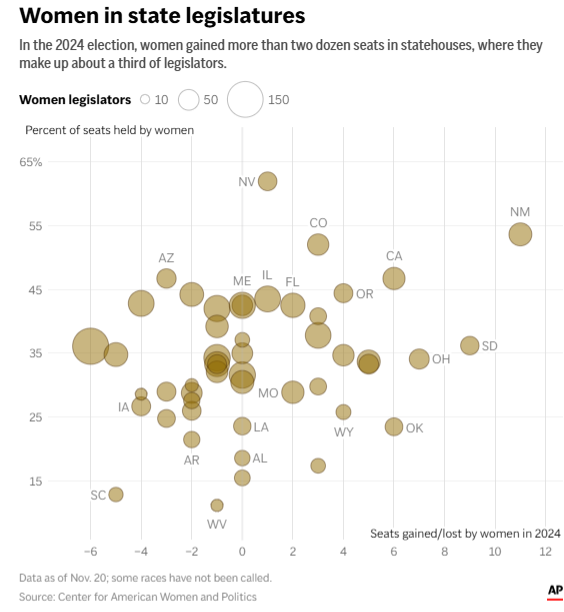
NUMBER OF WOMEN WHO ARE STATE LAWMAKERS INCHES UP TO A RECORD HIGH: Women will for the first time make up a majority of state legislators in Colorado and New Mexico next year, but at least 13 states saw losses in female representation after the November election, according to a count released by the Rutgers Center for American Women and Politics. While women will fill a record number of state legislative seats in 2025, the overall uptick will be slight, filling just over third of legislative seats. Though races in some states are still being called, the latest record showed that at least a record-breaking 2,450 women will serve in state legislatures, representing 33.2 percent of seats nationwide.
| |
|
AMERICA250 AND USCM LAUNCH TASK FORCE RECRUITING CITIES FOR 250TH ANNIVERSARY PLANNING: America250, the official nonpartisan entity charged by Congress with planning the 250th anniversary of the signing of the Declaration of Independence, the Semiquincentennial, announced the addition of the United States Conference of Mayors (USCM) to its cohort of America250 National Resource Partners. Charged with engaging mayors to participate in Semiquincentennial efforts, USCM has launched the America250 Task Force to recruit America250 Cities and expand 250th anniversary planning at the local level.
NATIONAL LEAGUE OF CITIES ANNOUNCES NEW PRESIDENT AND 2025 LEADERSHIP: The National League of Cities (NLC) has elected Mayor-President Sharon Weston Broome of Baton Rouge, Louisiana as the new president of NLC. Weston Broome stepped into her new role at NLC’s 2024 City Summit held this week in Tampa, Florida. She will serve a one-year term with a special focus on investing in underserved communities, helping to ensure communities are prepared to withstand the effects of extreme weather and can be more resilient in the face of natural disasters and bridging divides among residents. Mayor Steve Patterson of Athens, Ohio was elected to serve as NLC’s First Vice President, and Councilmember Kevin Kramer of Louisville, Kentucky was elected Second Vice President.
| |
|
CITIES PREPARE FOR AIR TAXIS AND DRONES WITH NLC’S NEW AVIATION FORUM: The National League of Cities (NLC) has launched a national Aviation Advisory Forum on Air Mobility and Drone Integration to bring together cities, towns and villages as drones and air taxis expand operations in the U.S. Mayor Buddy Dyer of Orlando, Florida, and Mayor Lily Wu of Wichita, Kansas, will serve as the co-chairs on Aviation Advisory Forum. This announcement comes as cities have recently found drones helpful for infrastructure inspections, mapping heat loss from buildings in winter and using drones for safety responses.
| |
MAYORAL RACE RESULTS ACROSS MAJOR U.S. CITIES: Pheonix Mayor Kate Gallego won re-election, winning the hearts of the city’s 1.6 million residents. Her re-election sets Phoenix up to continue growing the burgeoning technology and health care industries, building sustainable infrastructure to combat climate change and expanding public transportation options. In Mesa, Arizona, Council Mark Freeman was elected to be the next mayor in charge of overseeing the city’s recent CHIPS investments, as was Mayor Kirk Watson in Austin. Watson will also be focusing on homelessness and affordable housing, restoring police staffing, and improving public safety. Homelessness continues to be a hot topic for tech hub San Francisco, where Mayor London Breed lost her re-election race to Daniel Lurie. In Baton Rouge, the two mayoral candidates Sharon Wetson Broome and Emile Edwards are headed into a runoff election, with campaigns centering on pressing issues such as public safety, infrastructure and the city’s socioeconomic challenges. | |
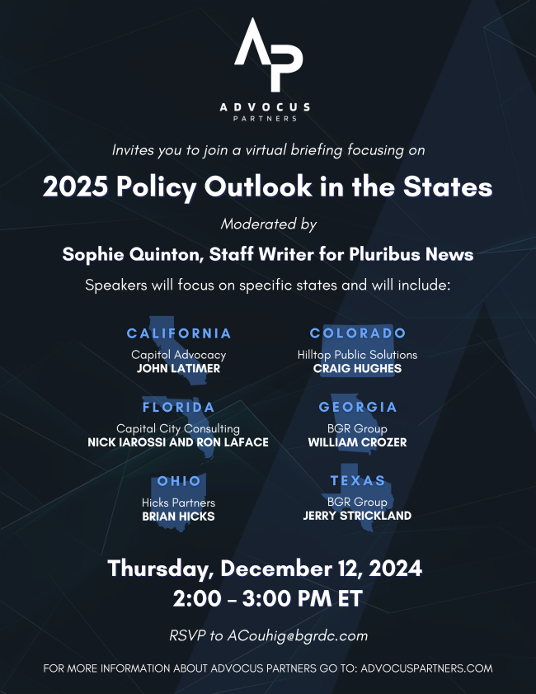
JOIN ADVOCUS PARTNERS FOR A VIRTUAL BRIEFING ON 2025 STATE POLICY OUTLOOK: | | | | |