February 2025 | Issue #161 | |
*make sure to click "View entire message" to get access to the full newsletter!* | | |
|
As an agricultural practice with Indigenous origins, maple sugaring has been a tradition throughout the Northeast for thousands of years. How is climate change impacting maple syrup production and what can we do to plan for a climate resilient future in the region? Explore these questions and more in GMRI’s Maple Sugaring in a Warming Climate curriculum.
With a focus specifically on Maine, students consider how changes in climate impact the start and end times of the maple season, the quality of sap in warmer conditions, and potential disruptions to long-standing seasonal patterns. Students also explore innovations in maple production and plan for resilience in the face of a changing climate while making connections with their own experiences and place.
This module is aligned to middle school science standards and is free and adaptable for educators to use. Here is a breakdown of the lesson plan:
Lesson 1: From Sap to Syrup
Lesson 2: Analyzing Freeze/Thaw Cycles
Lesson 3: Sap on the Run! Modeling Maple Sugar Production
Lesson 4: Analyzing Warming Trends
Lesson 5: Planning for Maple Sugaring in a Warmer Future
Don't stop there! GMRI offers many different lessons in their learning hub, including Potato Farming in Maine's Warming Climate and Bees, Blueberries, and Climate Change.
|
| |
|
Maine 4-H is launching a new session cohort for interested eligible youth for the Maine 4-H Agricultural Ambassadors program! The program is designed for youth ages 14-18 who are interested in any aspect of agriculture.
Youth spend time getting to know each other and learn both online and in-person in sessions facilitated by UMaine 4-H Staff and community partners. Sessions will focus on career exploration, exploring the Maine Food System with farm and production visits around the state, and building relationships with industry professionals.
In addition to the multi-week session, youth will serve in their ambassador role for at least 1 year. Youth will pick an agricultural area to focus on (ex. livestock, ag literacy/food systems, environmental stewardship, Ag and health) during their term and explore leadership opportunities locally, statewide, and even nationally.
For more information, email please contact Alisha Targonski at alisha.targonski@maine.edu or 207.622.7546. To register, click here.
| |
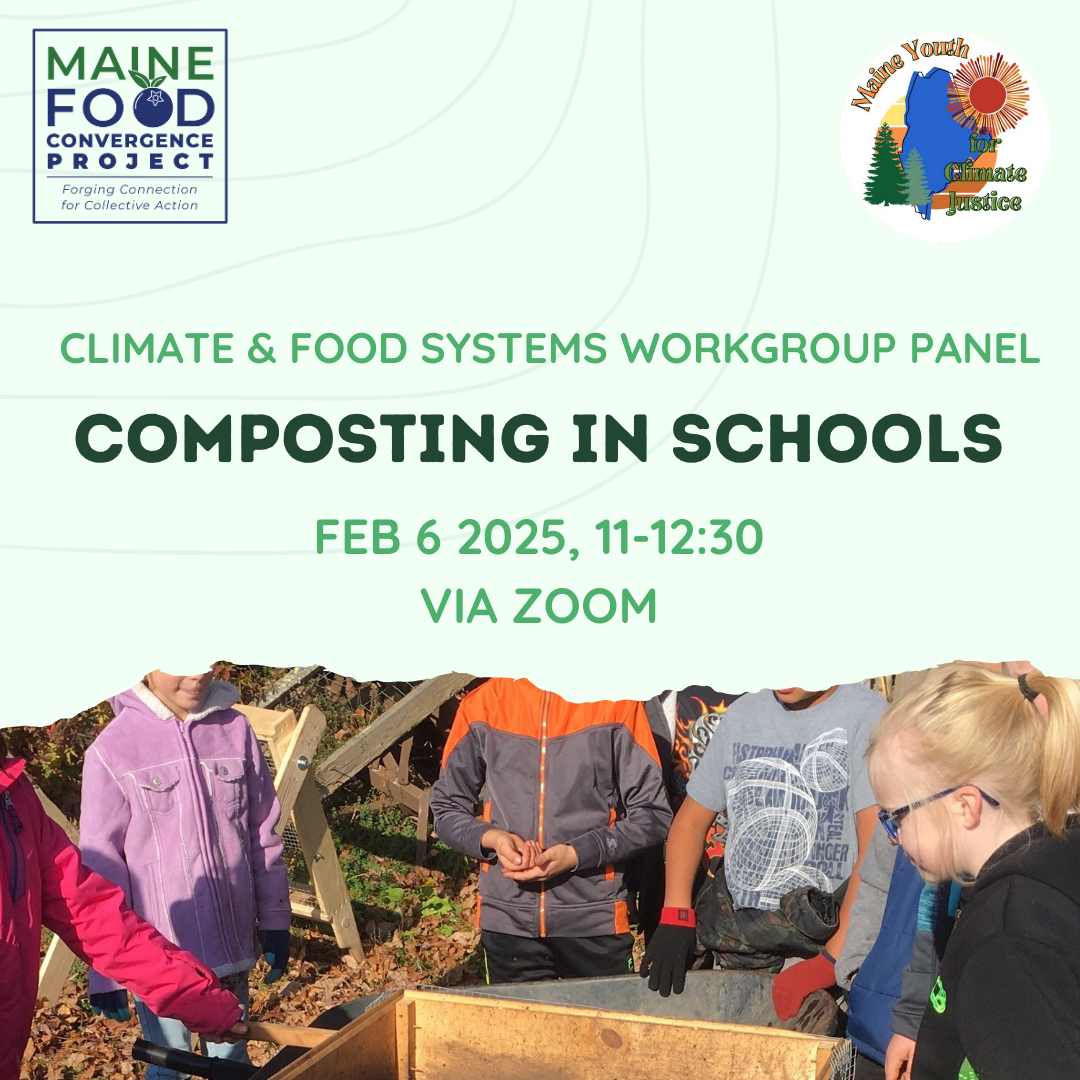
The Maine Food Convergence Project is holding a virtual panel on Composting in Schools on Thursday, February 6th from 11-12:30pm. Learn while finding community and support at this upcoming panel that will include a variety of voices from students and advocates who've worked on composting efforts in schools. Please register here to receive the zoom link! | |
|
Roses are red
Violets are blue
FoodCorps has a Valentine’s Day gift
Just for you!
Download and print FoodCorps veggie-inspired valentine cards here.
| |
| |
|
|
The Maine Farm & Sea to School Institute is a year-long professional program for school food system change. The Institute brings school teams together to build relationships, skills, and a collaborative action plan for Farm & Sea to School programming. Team members leave ready to support one another and implement an FSTS action plan across their school or district—building shared leadership for the long haul. With the support of a Coach, teams spend the Institute year connecting Classroom, Cafeteria, and Community. Applications close March 14.
Learn more and apply here.
| | | |
Black History Month - Influential Agriculturalists | | |
|
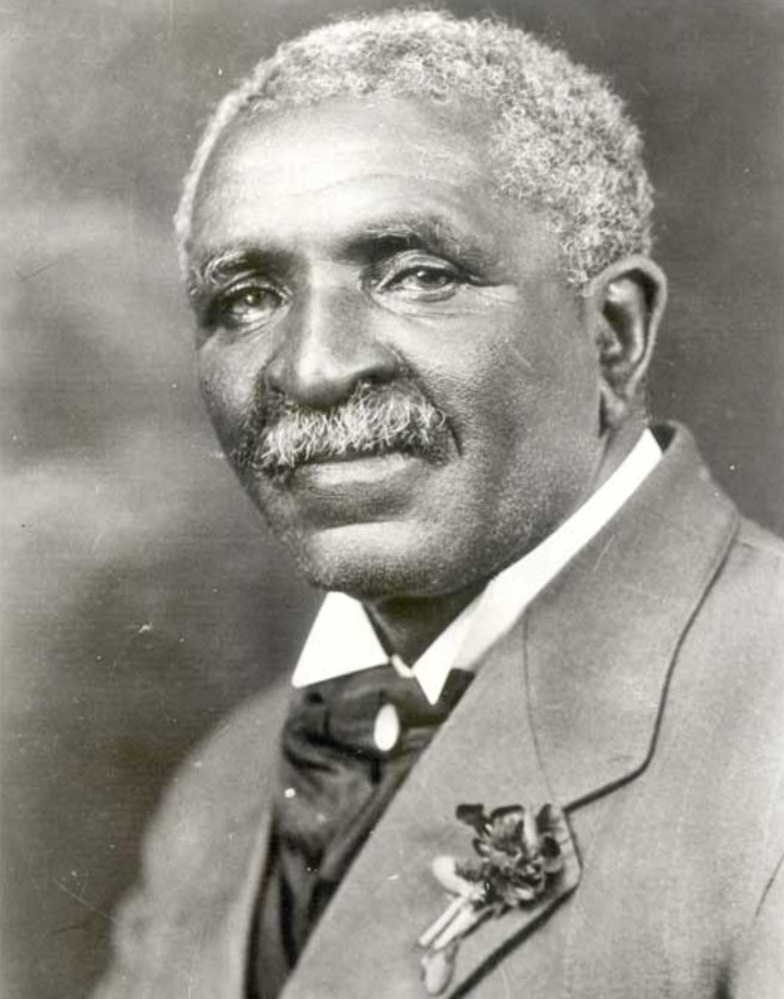
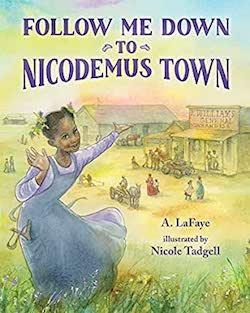
George Washington Carver
George Washington Carver was a scientist who was born to slave parents in Missouri during the Civil War. He worked as a farmhand in Kansas where he earned a high school education in his late 20s. Carver was the first black student to attend Iowa State Agricultural College where he earned a bachelor's and master's degree. He left Iowa and became a very influential scientist at the Tuskegee Institute in Alabama. By convincing farmers in the South to plant peanuts as an alternative to cotton, Carver helped revitalize the area's agriculture and became one of the most respected and influential scientists in the country. Carver is also known for his efforts in discovering that soybeans were a valuable source of protein and oil.
Books
Lessons
| |
| |
|
|
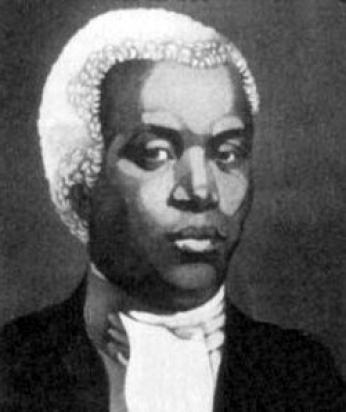
Benjamin Banneker
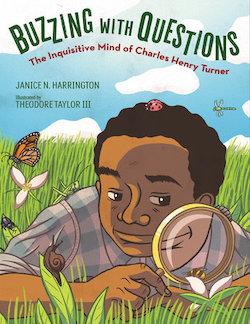
Born to a family of freed slaves, Banneker was a scientist, surveyor, almanac author, and farmer. Banneker was very interested in astronomy and he published six almanacs during his life, which farmers of the time used in order to know when to plant crops and when to expect good and bad weather.
Book
Lesson
| |
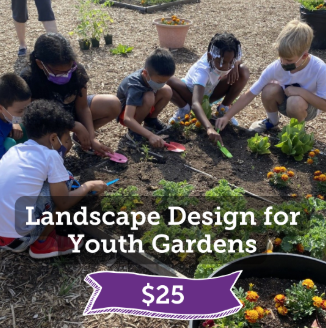
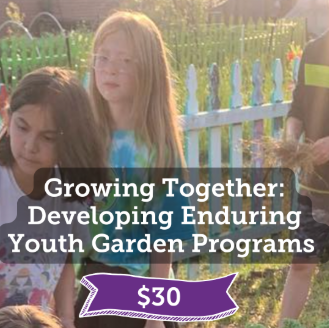
Kids Gardening online courses are the perfect way to kick-start your garden planning! Whether you have a new or existing garden, give one of their courses a try to build your youth garden knowledge base. | | | |
Harvest of the Month - February is Root Vegetables! | | |
|
Lessons
Feed Your Soul with Plants. Grades K-6. Lesson 5 from the Healthy Kids Happy Planet Curriculum. Cool Bean & Cultural Connection: Black-Eyed Pea & Africa and American Soul Food. Nutrition Focus: Fiber & Healthy Gut Bacteria, Healthy Soil Bacteria. Fun and engaging worksheets with recipes too!
Cracking Open the Story of Nuts. Grades 3-5. Students investigate a variety of nuts, discover how and where they are grown, and explore their nutritional benefits.
Clothes on the Grow. Grades 6-8. Students will gain a broad understanding of the types and sources of different fibers, examining their origins and observing their differences. Activities in this lesson include examining clothing and clothing labels and observing how different types of fabrics burn.
FoodMASTER Middle: Energy Balance. Grades 6-8. Students will identify the importance of a healthy diet, examine how to meet current Dietary Guidelines, and determine the potential energy (kilocalories) of a peanut through measurements obtained during teacher use of a bomb calorimeter. Students will make comparisons to the actual Nutrition Fact Label and identify possible sources of error.
Growing a Nation Era 1b: Cotton's American Journey. Grades 9-12. Students investigate the impact of cotton on the history and culture of the United States. Students discover the growth and processing requirements for cotton, recognize how the invention of the cotton gin affected slavery, explain how the plantation system was organized, and ultimately understand the role of cotton in the Civil War.
Looking for more? Explore the Agricultural Literacy Curriculum Matrix HERE
| |
|
Cotton in the Classroom
Take a walk through cotton's journey from dirt to shirt, and find out the many ways we use cotton everyday!
| |
Activities & Resources
Data Nuggets. Free classroom activities, co-designed by scientists and teachers, to bring contemporary research and authentic data into the classroom. Data Nuggets feature a scientist role model and the story of what inspired their research. In a Data Nugget activity, students are guided through the entire process of science, including identifying hypotheses and predictions, visualizing and interpreting data, supporting claims using data as evidence, and asking their own questions for future research. Because of their simplicity and flexibility, Data Nuggets can be used throughout the school year and across grades K-16, as students grow in their quantitative abilities and gain confidence. Data Nuggets have the potential to improve the understanding of science in society while engaging and motivating the next generation of scientists. You can check out data nuggets by theme: agriculture, plants, climate change, etc.
Fascinating Farms Around the World. Take an interactive journey around the world to visit 16 farms. These are not your ordinary farms with cattle, sheep, hay, or grain. These farms produce specialty crops such as salmon, tulips, alligators, wind, mussels, coffee, leeches, lavender, yaks, seaweed, ostriches, rice, sunflowers, salt, ostriches, solar power, and alpacas. This journey would be an excellent supplement for elementary geography and agriculture lessons to teach students about less common types of farms.
Sugar 101: Connecting Students to Where Their Food Comes From. Students are curious about where their food comes from and what’s in it. Yet, with all the information, and misinformation out there on social media, they may not be able to answer that question when it comes to sugar. Check out the videos, complimentary presentations, printable resources and more from The Sugar Association, a STEM.org Accredited Educational Program.
Nut Flowchart. This six-page informational sheet describes the process of how nuts are grown and harvested, how they get from the farm to the store, and nutrition facts. Words and graphics are used to portray this information for almonds, Brazil nuts, cashews, hazelnuts, macadamia nuts, peanuts, pecans, pine nuts, pistachios, and walnuts.
| | |
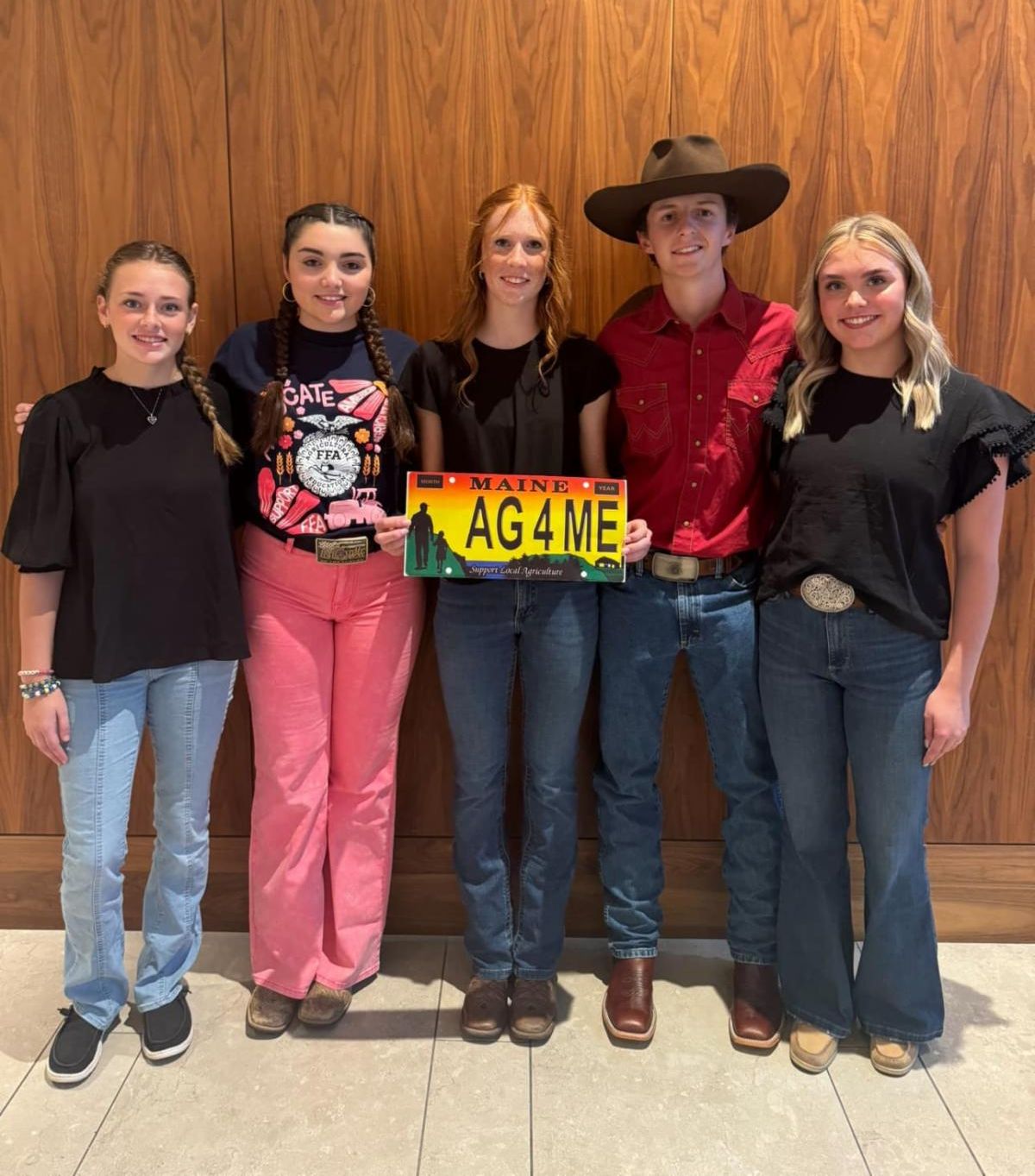
Funding from this plate has impacted up to 200,000 students annually with lessons, materials, volunteers and teacher training. Annually up to $60K is distributed in grants to schools, FFA, 4-H and other Non-profit programs for Ag education initiatives by the Maine Agriculture in the Classroom Council.
| |
|
Donate today to The Maine Agriculture in the Classroom Association. The nonprofit, completely volunteer, portion of MAITC. These funds are used directly to support teacher scholarships and recognition, and support volunteer participation for Ag education programs. Your donation is completely tax deductible and you can make a one-time donation or a recurring monthly donation which will support the mission, "to promote the understanding of agriculture and natural resources among students, educators, and the general public." If you have any other questions or would like to join this group please contact the chairman, Laurie Bowen. Donate Here.
| | |
|
The MAITC Association is organizing a fundraiser for materials and teacher scholarships this year. Hats and T-shirts with the MAITC logo and a picture of the agriculture specialty license plate are available to order for a small donation.
For more information contact Nancy Wright at dnwright191@gmail.com
| |
|
Our Mission Statement
"To promote the understanding of agriculture and natural resources among students, educators, and the general public"
| | |
|
28 State House Station
Augusta, ME 04333
(207)287-5522
| |
| | | |