|
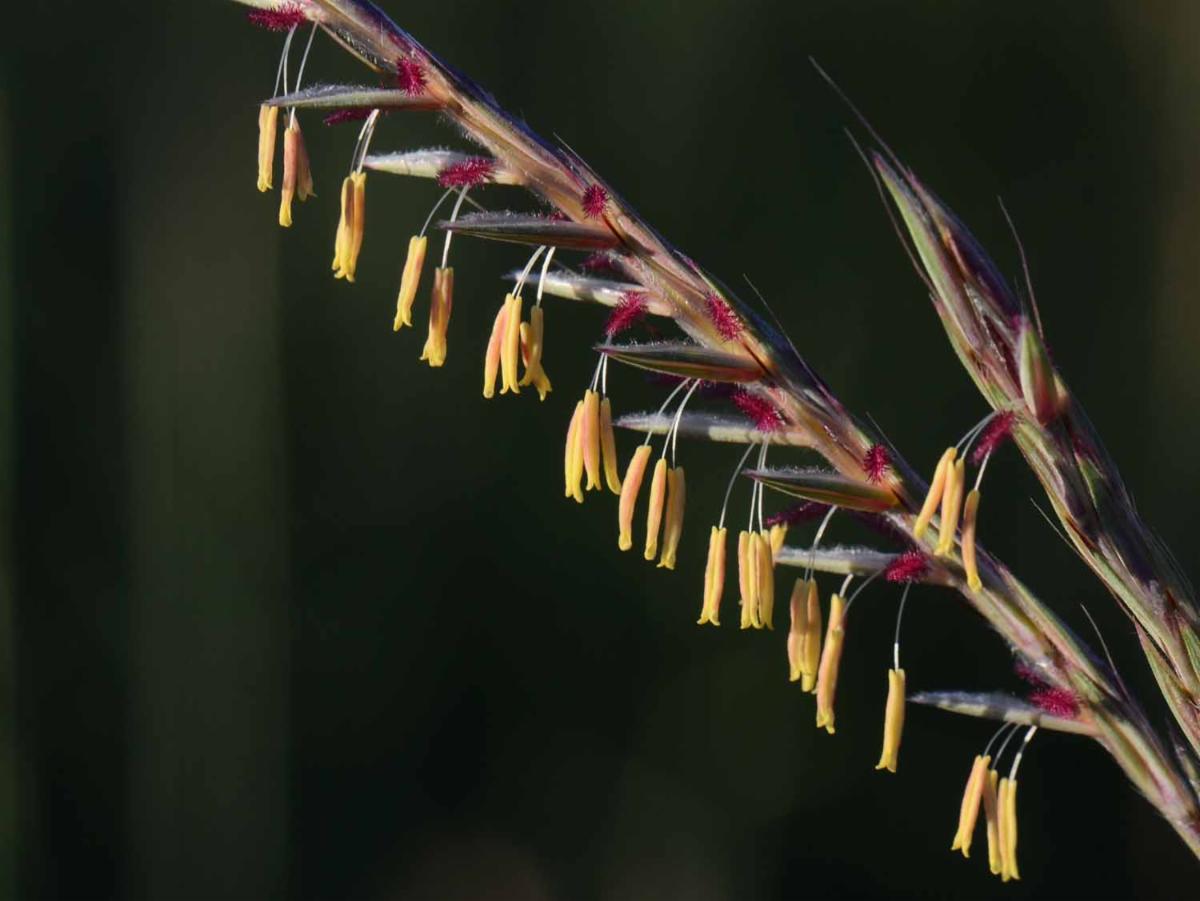
Leaders Stephen Jones, Greg Levandoski, and Janet McLaughlin along with 12 BCNA prairie enthusiasts spent the early morning of August 2 searching for blooming tallgrasses and breeding birds within the Colorado Tallgrass State Natural Area along South Boulder Creek. After Boulder's driest May-July on record, some of our best tallgrass prairies have given way to shortgrass and mixed-grass prairie this summer, but in a wet meadow close to the creek we did observe a few blooming Big Bluestem and Switchgrass plants, along with dense stands of Prairie Cordgrass.
We saw families of breeding birds all along the trail and got close-up views of Say's Phoebes, Lark Sparrows, and American Goldfinches feeding grasshoppers and caterpillars to their young. The 27 breeding bird species we observed included at least 7 species that most likely became established in this area after European conquest and settlement: Rock Pigeon, Blue Jay, Cedar Waxwing, European Starling, House Finch, Common Grackle, and Blue Grosbeak (Wickersham 2016). Noticeably absent from our list were several grassland species that were considered common in Boulder Valley grasslands during the early 1900s (Henderson 1908, Betts 1913): Swainson's Hawk, Grasshopper Sparrow, Vesper Sparrow, and Lark Bunting.
These observations helped all to understand the impacts of the deciduous tree invasion on our remaining prairies. Seeing urban-adapted Red-tailed Hawks, Great Horned Owls, and American Crows perching conspicuously in the area reminded us of the cost of the deciduous tree invasion to our native bird populations.
Literature Cited
Betts, Norman. 1913. Birds of Boulder County, Colorado. The University of Colorado Studies.
Henderson, Junius. 1908. Birds of Boulder County. University of Colorado Studies.
Wickersham, Lynn. 2016. Colorado Breeding Bird Atlas II. Colorado Breeding Bird Atlas Partnership.
|