e-Newsletter | December 23, 2021 |
|
REMINDER: Happy Holidays! The Museum of Old Newbury will be closed as of Friday, December 24 at noon (here for anyone to pick-up their online orders) until Tuesday, January 4, 2022 @ 10:00 a.m.
|
|
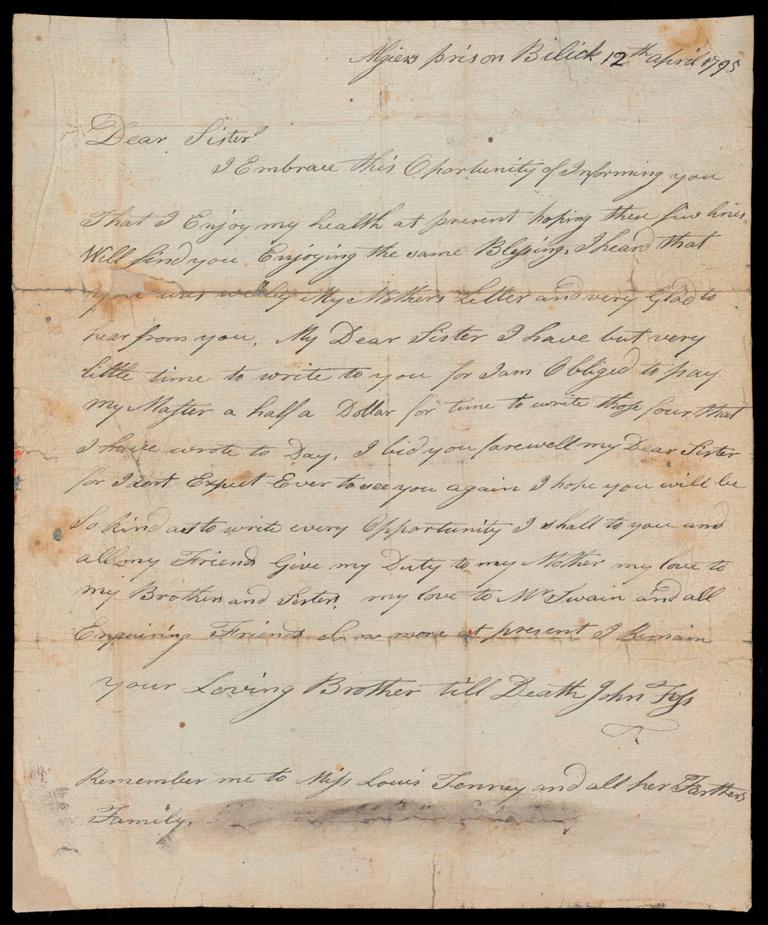
Algiers prison Billick [Baleck] 12th April 1795
Dear Sister
I Embrace this Opportunity of informing you that I Enjoy my health at present hoping these few lines Will find you Enjoying the same Blessing. I heard that you were well by My Mother's Letter and very glad to hear from you. My Dear Sister, I have but very little time to write to you for I am Obliged to pay my Master a half a Dollar for time to write those four that I have wrote to Day. I bid you farewell my Dear Sister for I don't expect ever to see you again. I hope you will be so kind as to write every Opportunity. I shall to you and all my Friends. Give my Duty to my Mother, my love to my Brothers and Sisters, my love to Mr. Swain and all Enquiring friends. I have no more at present. I Remain your loving Brother till Death. John Foss
Remember me to Miss Lois Tenney and all her Father's Family.
|
|
Letter from John Foss to Sally Foss, Algiers, 1795. From the collections of the Museum of Old Newbury. |
|
Sidebar
The two John Foss letters were recently conserved at the Northeast Document Conservation Center in Andover through a generous gift from museum members Alice & Thom Gould. The museum's archives are a rich and vast resource. Documents and manuscripts span the 17th century through the 20th century and give a rare insight into the 400-year history of our communities including settlement, maritime history, business and industrial development, authors and artists. Broadsides, maps and charts, journals, letters, ship logs, legal documents and genealogies are all represented in the collection.
In addition to holding these precious records and making them accessible for those who wish to study them, the museum is also responsible for their preservation and care. If you are interested in learning more or sponsoring a conservation project, please email us or call 978.462.2681.
|
|
So reads the first of two letters written by mariner John Foss as a prisoner in Algiers to his sister at home in Newburyport.
Two of these letters exist, the second even more heart rending as he tells of his release, subsequent quarantine and toils ahead before he can return to Philadelphia and then make his way to Newburyport. He believes his friends and family have either died or forgotten him. Foss was 22-years-old and had been in captivity for 19 months at the Bagnio Baleck in Algiers.
Little is known of Foss's early life other than the fact that he was born in 1771, the son of Oliver and Betty Jewett Foss. He lived in Byfield Parish before sailing from Newburyport aboard the brig Polly, captained by Samuel Bayley, on July 27, 1793.
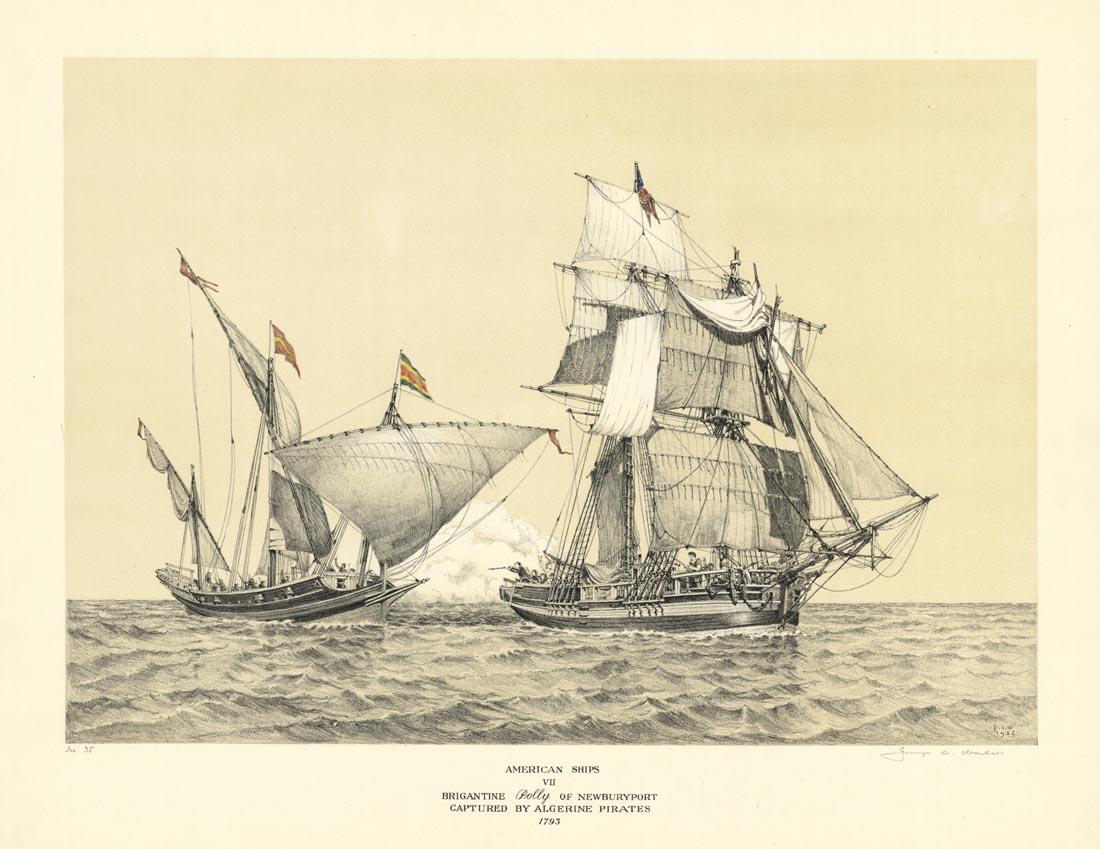
The Polly was destined for Baltimore to pick up a cargo for the island of Tobago but a delay in the brig's arrival resulted in Captain Bayley being ordered a different freight bound for Cadiz. It was an ill-fated trip almost from the beginning. By October 25, the brig was off the coast of Spain. Foss describes that morning:
We got our breakfast, and ate it in the greatest jollity, not apprehending any danger nigh, expecting to reach the port of destination within 48 hours; As we judged ourselves to be about 35 leagues westward of Cape St. Vincent. But what a fatal day was this! How visionary our hopes! Our sprightly looks, and cheerful congratulations, and anticipations of reaching the port of our destination was soon turned into the most gloomy despair. Little did we think in the morning when we arose with nothing before us but Liberty and content, that before the Sun should reach his meridian altitude, we should be slaves to merciless Barbarians.
Foss goes on to describe how the Algerines, or, as he called them, "the piratical sea-rovers" stormed the Polly and looted and pillaged her, taking the crew as their prisoners and attacking them with pikes, spears, lances and knives and stripping them of their clothes.
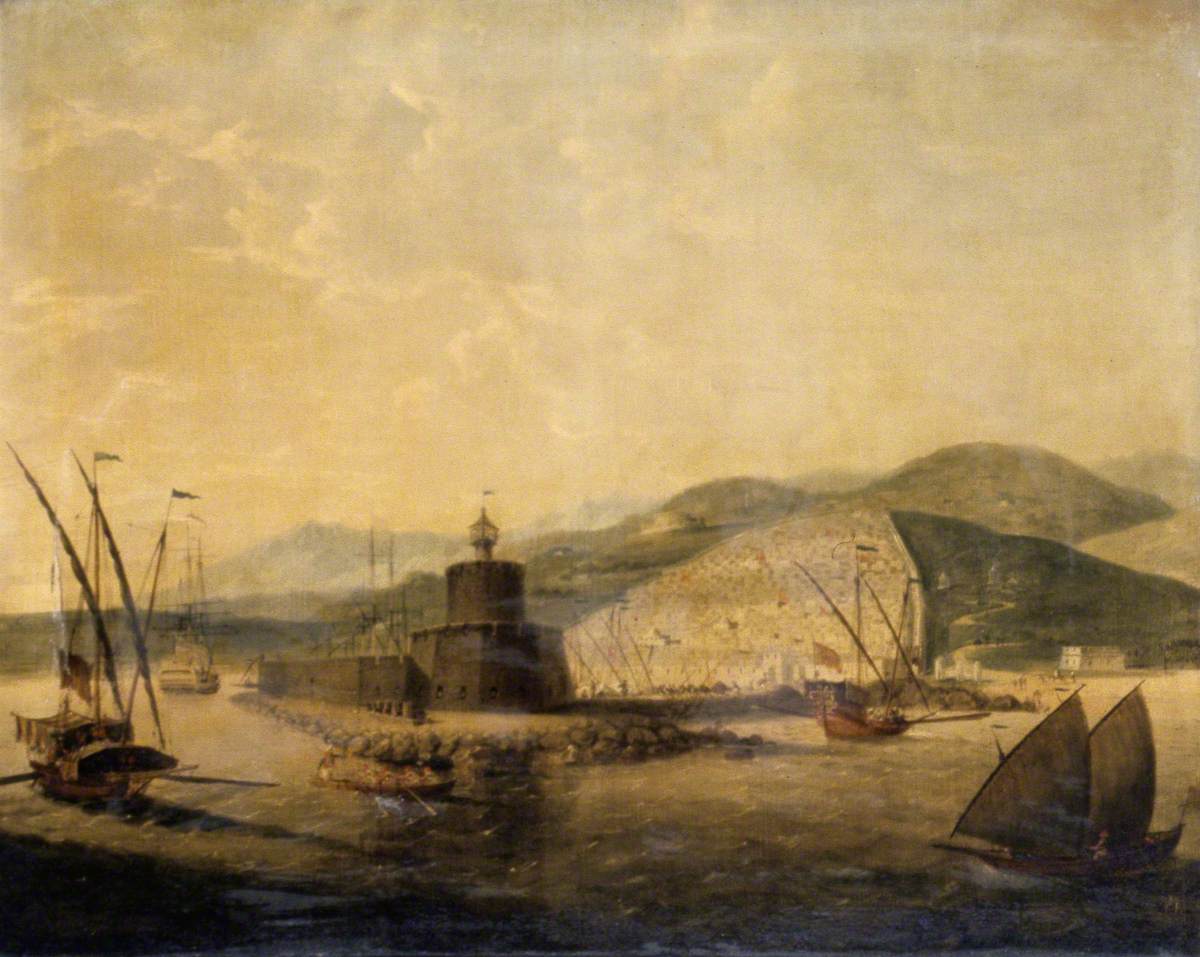
Once ordered on board the foreign vessel, they were taken to the commander's cabin and interrogated. Rais Hudga Mahomet Salamia, by name, informed them that the brig Babazera belonged to Algiers, that they were his prisoners and they would experience the most abject slavery. On land they were put in irons, given only bread and vinegar on which to sustain themselves and underwent hard labor and beatings. Many of the enslaved, including Foss, were sent into the countryside to blast massive rocks and then drag them back to the city for building fortifications.
This was not unusual during the 1790s when thousands of American and European mariners were captured, tortured and executed, pre-dating the Barbary Wars of 1801-1815. As of December 1793, there were 119 Americans barely surviving in Algerian prisons.
In 1796, the United States signed a peace treaty with Algiers and agreed to pay $642,500 and an annual tribute of naval supplies and presents to the Dey in exchange for the release of the 85 surviving American captives.
John Foss had spent nearly three years in Algiers when he and others were liberated on July 11, 1796. He wrote the details of his return to his sister, Sally, in a letter dated November 2, 1796, expecting to arrive in Newburyport in about five months. (Click here to read full letter.)
|
|
Brigantine Polly of Newburyport Captured by Algerine Pirates, 1793. American Ships VII. George Wales (1868-1940). Toned lithograph, 1926. (Courtesy photo.) |
|
Sarah Emery in her book Reminiscences of a Nonagenarian (read for free here) records the details of Foss's return journey home as one of five mariners from the brig Polly to return to Newburyport. Captain Bayley and several others died of plague along the route homeward bound. Emery recounts that Foss was "restored to his family in Byfield" on July 11, 1797 – one year after his liberation.
In both of Foss's letters, he mentions Miss Lois Tenney and in the second laments her silence,
Give my Best Respects to Miss Louisa Tenney, who I imagine has forgot me; as I have never heard from her since my departure ...
It appears that they were engaged to be married and their intentions were recorded in the Vital Records of Newburyport, John, and Lois Tenney of Rowley, int. Nov. 23, 1793.
As we know from Foss's own accounts, he was enslaved in Algiers, and no marriage took place then. However, they must have married when he finally returned in 1797 as the Tenney Family Genealogy records their marriage (with no date) and says that Foss died shortly thereafter.
|
|
The Mole at Algiers. A mole is a massive work formed of masonry and large stones laid in the sea as a pier or breakwater. These were constructed by the enslaved prisoners, such as John Foss. (Photo credit: Brighton and Hove Museums.) |
|
John Foss's major undertaking when he returned to Newburyport was writing a journal of his experiences in Algiers. Entitled A Journal of the Captivity and Sufferings of John Foss; Several Years a Prisoner in Algiers: Together with Some Account of the Treatment of Christian Slaves When Sick:— and Observations on the Manners and Customs of the Algerines (find it here), it is a rare and true insight into the horrors of life and escape on the Barbary Coast. The Journal was printed by Angier March of Middle Street, Newburyport in 1798.
Foss returned to his mariner's life and died at sea in 1800 off the mid-Atlantic coast near Philadelphia.
Editor's note: Inconsistencies in spelling of names, words, syntax and etc., are from the historical record and not a typographical error.
|
|
|
|
One-stop Shopping!
Find the perfect stocking stuffers and support the Museum of Old Newbury.
We have history books (many signed), cookbooks, a very limited supply of the 2022 "It Could be Worse" calendar and more.
Or better yet, give the gift of a membership.
Click here: shop now for products or here for gift memberships, then stop by and grab your goodies.
|
|
Annual Fund 2021 – Send your gift today!
William Pitt, the British Prime Minister whose statue graced the parapet of the Lord Timothy Dexter House at 201 High Street, Newburyport, Mass., was best known for efficiency and fiscal responsibility.
|
|
Running now through the end of the year, the team at the MOON will share their favorite family recipes, including a blog about its evolution and the significance of the item. Next week, Bethany shares the perfect adult beverages for ringing in the New Year.
|
|
Stollen Moments...a recipe and guest blog by Kristen Fehlhaber |
|
More Americans claim to be of German heritage than any other ethnic group. More than Irish, Italian, English and Mexican. Although the Newburyport area didn’t ever host a huge German population, perhaps you’ve still had the chance to try stollen, the traditional German holiday bread.
These days, you can find it at the grocery store or online, but growing up, our stollen always came from the Weiss family. Christel Weiss, a German immigrant to the US in the 1950s, would bake our family a stollen each year and deliver it to our home in Burlingame, California. My spouse also grew up with stollen, an annual present from German neighbors in Acton, Mass.
Making traditional stollen is time consuming and I’ve only done it once. In 1983, I spent my junior year of high school in Germany. My German host mother, Ilona, patiently taught me all about German cakes and cookies and though I don’t think she usually made it, she baked a stollen with me. Rum-soaked fruit is worked into a rich buttery dough with almonds. The whole thing is rolled in powdered sugar and set aside for six weeks.
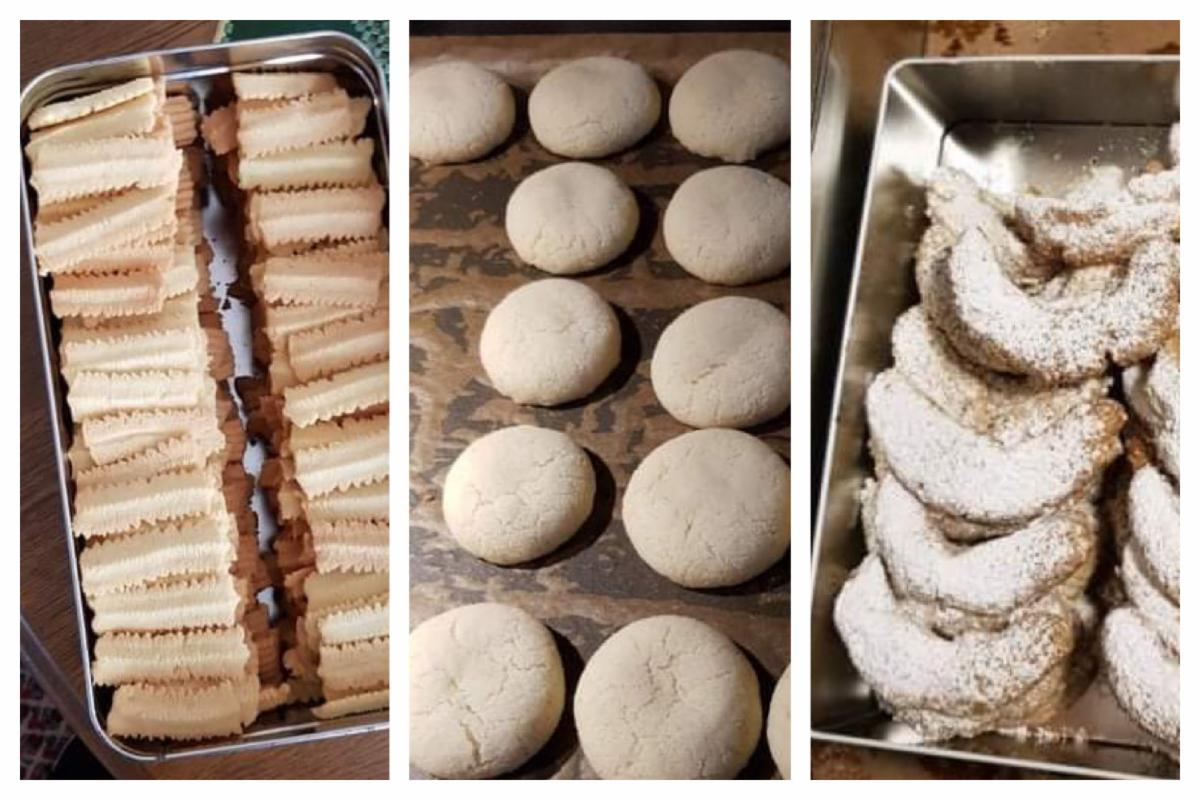
Six weeks! After all that, I thought it was pretty dry and I never tried making it again. I recently checked in with Ilona, who shared photos of the cookies she started baking last month. Nowadays, she makes a quark stollen leavened with baking powder (“moister than the traditional yeasted stollen,” she says).
|
|
Ilona’s Christmas cookies – left to right butter cookies, vanilla kipferl and schmalznuesse. |
|
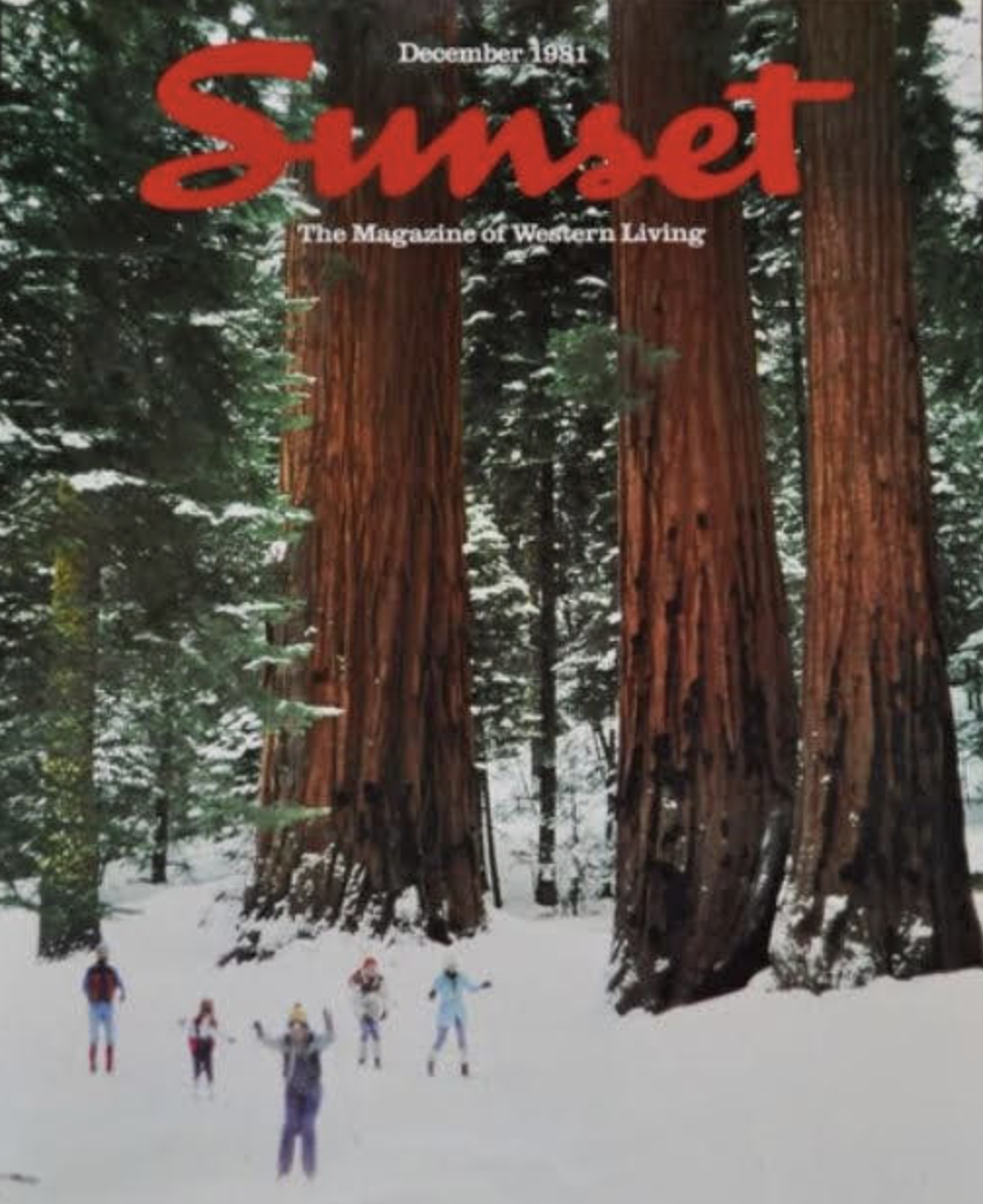
In 2001, I started my own faux-stollen tradition. “Gigi’s Hungarian Almond Roll” came to me from the pages of Sunset magazine. Sunset is kind of like a West Coast version of Yankee Magazine and for a few years, I subscribed, trying to stay connected to the West Coast.
I’m sure it was this description that got me to try it out, “In December, the doorbell rings often and a little refreshment to offer guests is in order. My friend Gigi showed me how to make this lovely, spiraled nut roll, from a recipe her mother brought from Hungary.”
This bread seems to be a variation of a traditional Hungarian bread called Kalács or Bejgli. Both are breads with sweet nut, poppy or fruit filings rolled into them. For more on Beigli, take a look at this King Arthur post.
|
|
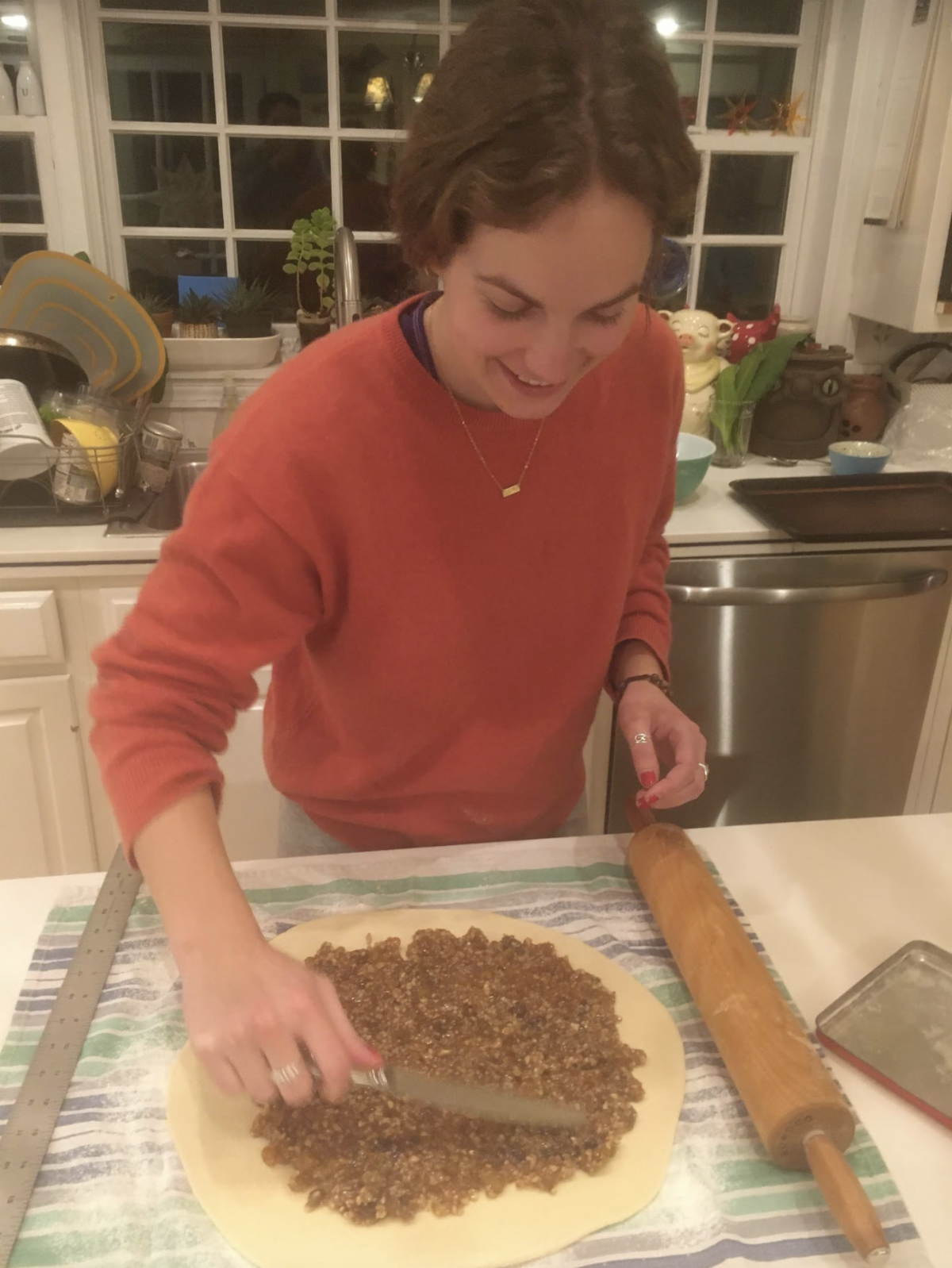
Lending a helping hand. Audrey spreading the almond raisin filling. |
|
I’ve made it every year since and even mailed it across the country. My mother-in-law, Vera, loved it so much that I’d make her two ‑ one just for her and one to share.
It has the almond flavor of a stollen but is moister; instead of the bright candied fruit that often appears in stollen, it uses raisins (I prefer golden raisins). Best of all, it can be made in an afternoon with common ingredients.
This year, my niece from California was here to bake with me and we easily adapted it to be vegan.
We substituted Earth Balance for butter, oat milk for milk, 1 tablespoons applesauce for the egg yolk in the dough and made an egg wash using 2 tablespoons oat milk and 1 teaspoon agave.
|
|
Gigi’s Hungarian Almond Roll
Ingredients
1 package active dry yeast
1/4 cup sugar
2 large egg yolks
About 6 tablespoons butter or margarine
About 1 1/2 cups all-purpose flour
Almond Filling (recipe follows)
1 tablespoon milk or water
In a bowl, sprinkle yeast over 6 tablespoons warm (about 110°F) water; let stand until soft, about 5 minutes. Add sugar, 1 egg yolk, 6 tablespoons butter (cut into small pieces) and 1 1/2 cups flour; stir until evenly moistened.
To knead with a dough hook, beat at medium speed until dough pulls cleanly from bowl, about 5 minutes. To knead by hand, scrape dough onto a lightly floured board and knead until smooth, about 10 minutes, adding flour (as little as possible) if necessary to prevent sticking; return to bowl.
Cover dough with plastic wrap and let rise in a warm place until it's puffy enough to hold an impression when pressed with a finger (dough won't double in volume), about 1 hour. In a small bowl, mix remaining egg yolk with milk to create egg wash.
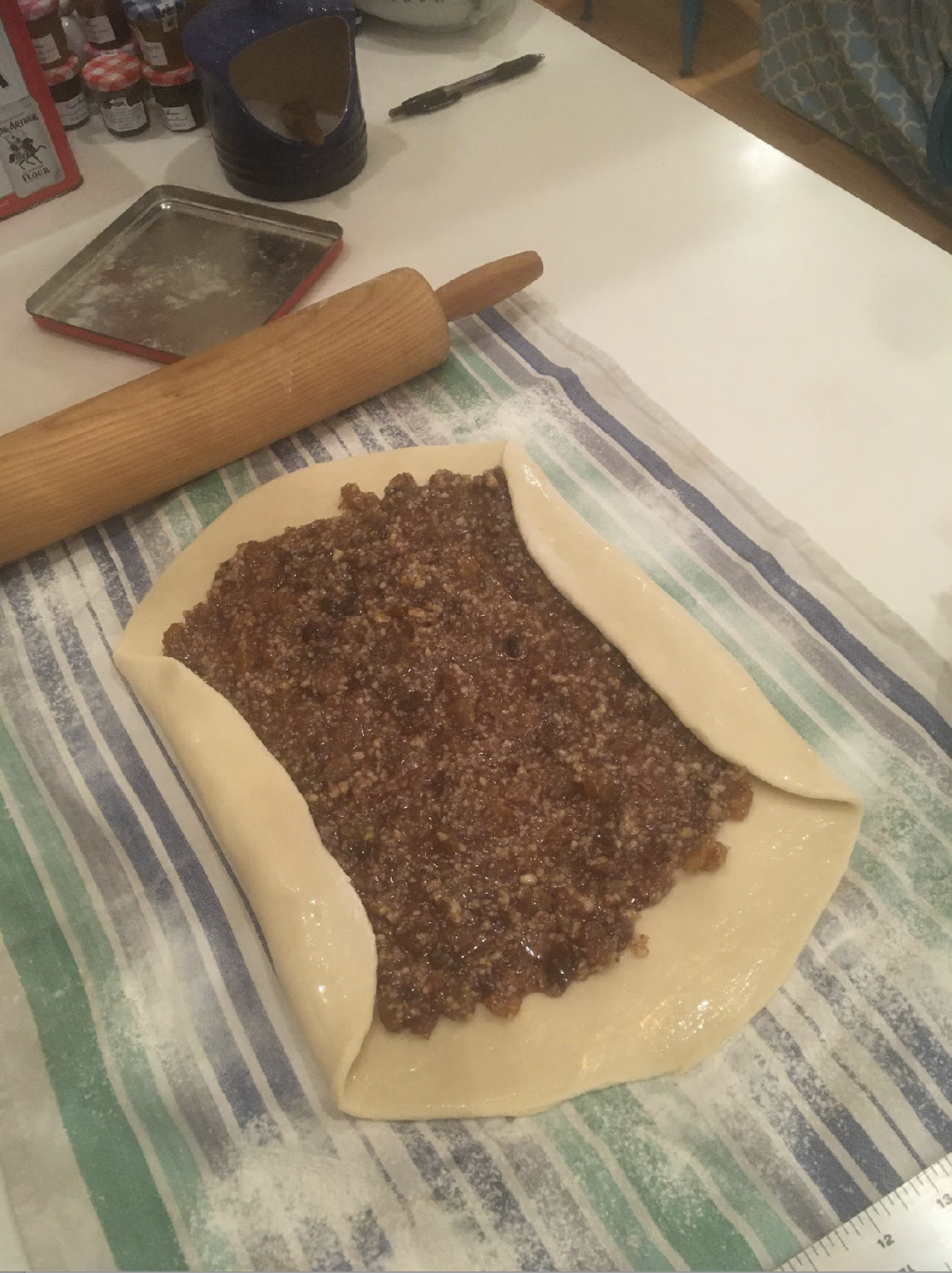
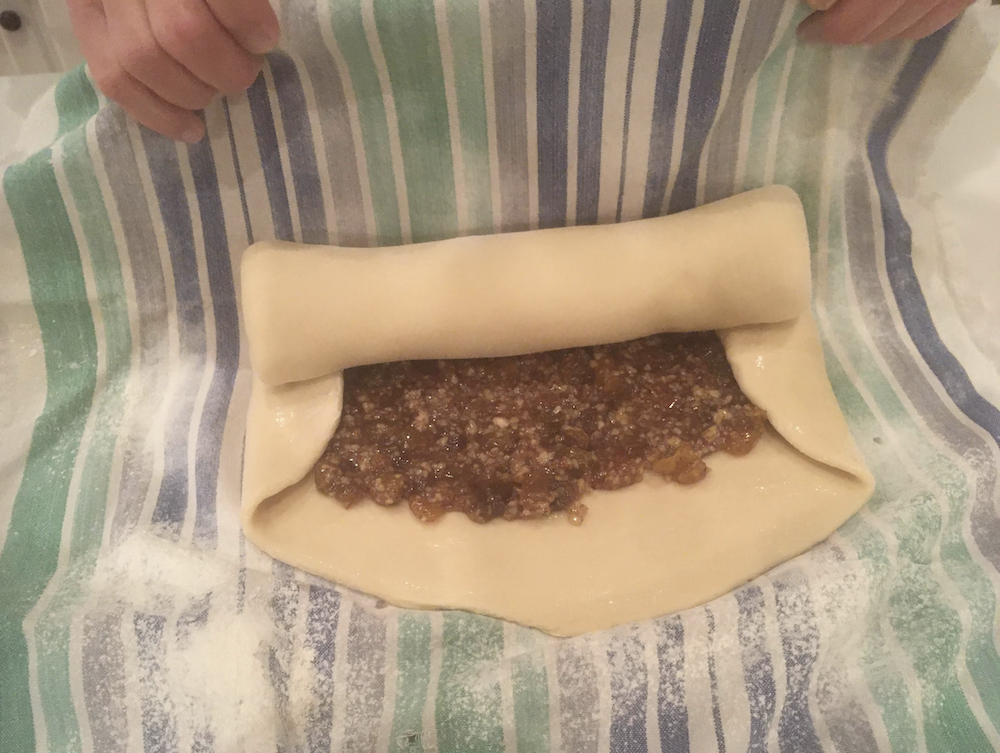
Lift dough from bowl and shape into a smooth ball. Set on the center of a floured pastry cloth or clean, smooth-textured dish towel. Pat dough flat. With a floured rolling pin, roll into a 14-15” square. Spread Almond Filling over dough to within 1 inch of edges. Fold over two opposite sides about 1 inch – to keep filling from leaking (these will be the ends). Paint the exposed edges with the egg wash. Lift cloth from one side to roll dough into a compact loaf. Gently lift loaf and lay seam down on a buttered 12”x17” baking sheet. Cover loosely with plastic wrap and let stand in a warm place until dough is slightly puffy, about 45 minutes.
|
|
|
|
How to fold in the sides and rolling it up with a smooth textured dish towel. |
|
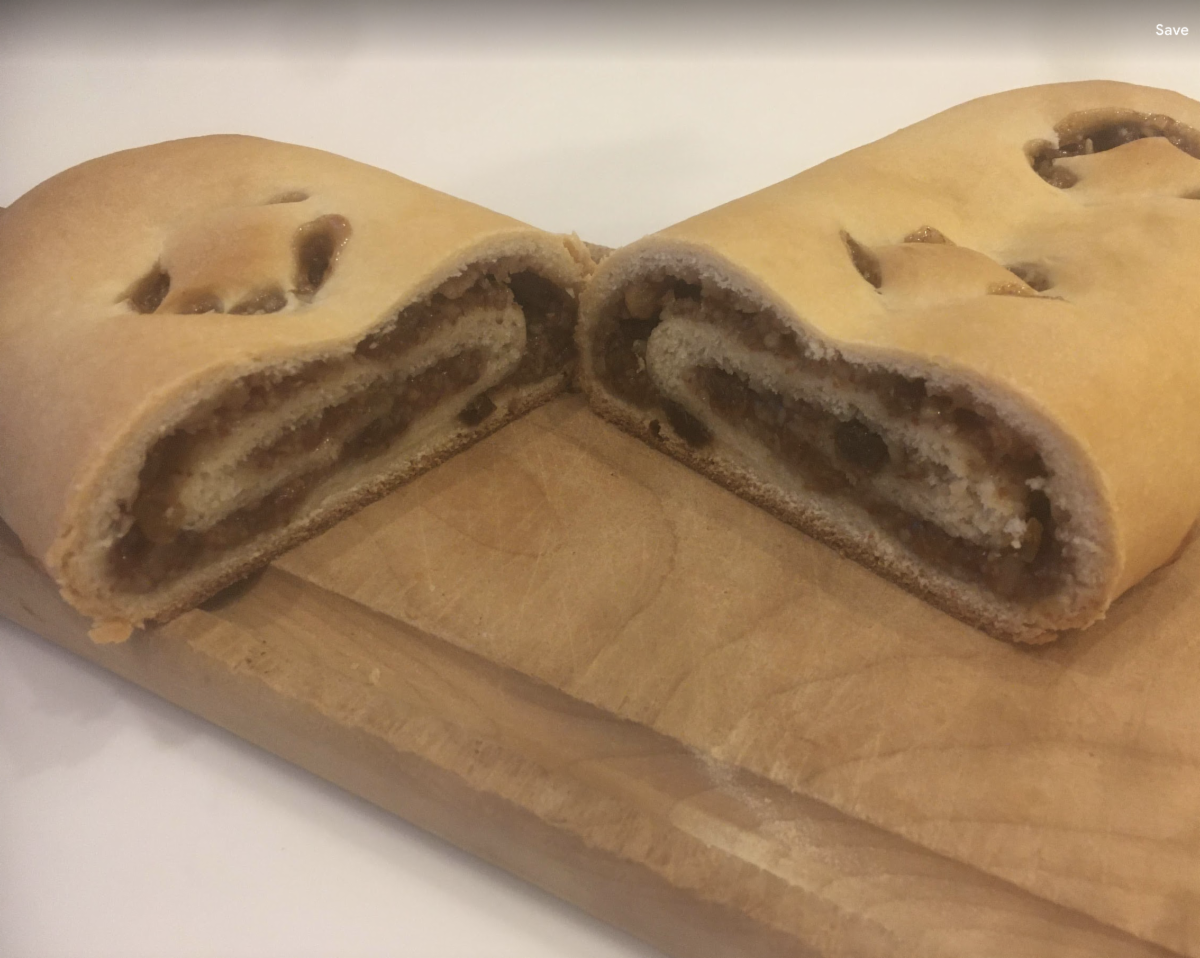
Brush loaf with yolk mixture. To help it keep its shape, you can cut air holes in the top layer to give steam a way to escape.
Bake loaf on the center rack in a 325°F until rich golden brown, about 45 minutes. Transfer to a rack and let cool at least 1 hour. Serve at room temperature. Cut crosswise into 1/4” thick slices.
Almond Filling
In a food processor, whirl 1 cup unblanched almonds to fine meal. In a 10-12” nonstick frying pan, combine almonds, 3/4 cup raisins, 3/4 cup sugar, 3/4 cup milk and 1 teaspoon grated lemon peel. Stir over high heat until mixture is thick enough to hold a clean trail for a few seconds when you draw a spoon across pan bottom. Stir in 1/2 teaspoon vanilla. Let cool at least 30 minutes. Recipe adapted from Sunset Magazine.
|
|
Hungarian Almond Roll - this golden brown, tasty treat will steal your heart. |
|
Learn about upcoming programs, register, find Zoom links and catch up on previous presentations here. All of our virtual programs are free, however donations are gratefully accepted to help defray speaker fees.
|
|
|
|
Walk with Me: A Biography of Fannie Lou Hamer
Online Zoom Event
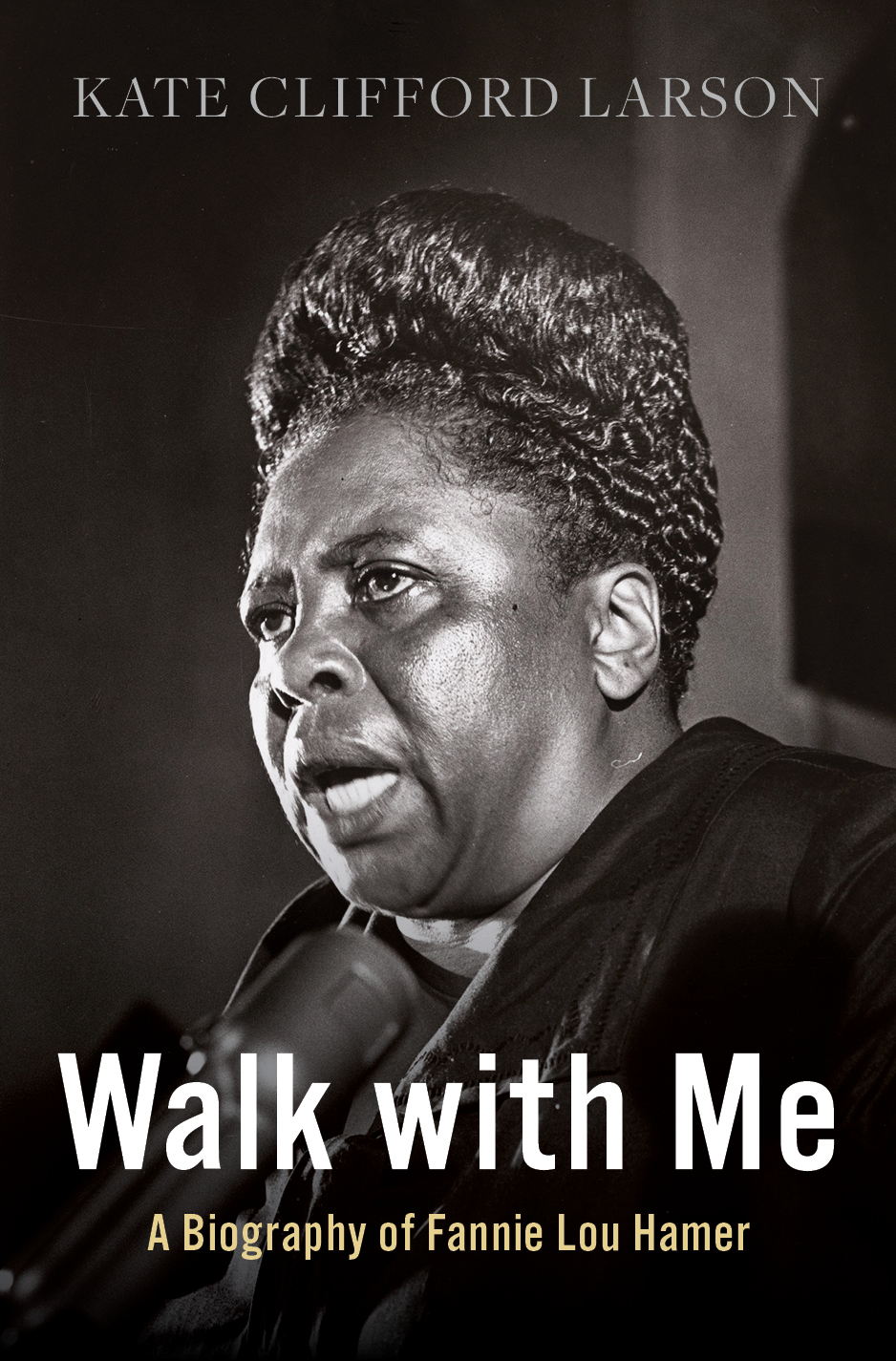
In this program, featuring Kate Clifford Larson’s Walk with Me: A Biography of Fannie Lou Hamer,she will delve deep into the issues with which civil rights activist Fannie Lou Hamer wrestled—discrimination, poverty and disenfranchisement. She will share how Fannie's mission and life's work lives on in voting rights and registration campaigns, anti- racism and Black Lives Matter marches, the #MeToo movement, anti-poverty activism and justice reform.
This is a virtual event. Zoom link will be sent the day before.
Please click here to register.
|
|
Secure the Shadow: Victorian Spirit & Post Mortem Photography
Tuesday, January 18, 2022 | 7:00 p.m.
Newburyport Public Library | 94 State Street | Newburyport, Mass.
|
|
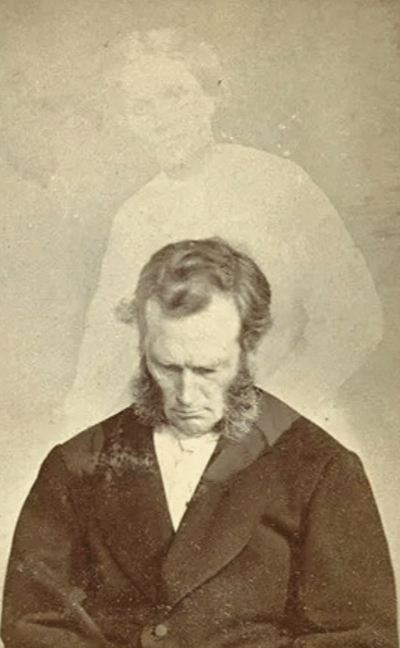
Early photography had a magical quality, even for those who understood the science behind it. For many in the 19th century, the relationship between science and the supernatural was unclear.
Sympathetic photographers and charlatans set up a brisk business “securing the shadow,” memorializing deceased loved ones, and, for the right price, revealing their ethereal presence still hovering around the living.
Local historian and Executive Director of the Museum of Old Newbury, Bethany Groff Dorau, takes attendees on an illustrated exploration of Victorian photography from beyond the grave.
Presented in partnership with the Newburyport Public Library, this is an in-person event and masks must be worn at all times in the library.
No registration required.
|
|
|
"Yeat Yeat, Don't Tell Me!" December Quiz Now Available
This month's "Yeat Yeat, Don't Tell Me!" quiz is now available. Skip right to the questions by typing joinmyquiz.com/pro into your browser, then enter the code 15316873 to join.
It was a two-way tie for "Bragging Rights" with Chrunch and Ellie Bailey both getting six out of eight correct answers. The random winner of a It Could Be Worse: A 2022 Calendar of Local Disasters from the Museum of Old Newbury is Jean Berger.
NOTE: this is a timed quiz, so read the questions and get your choice made as quickly as possible.
|
|
Puzzle Me This...
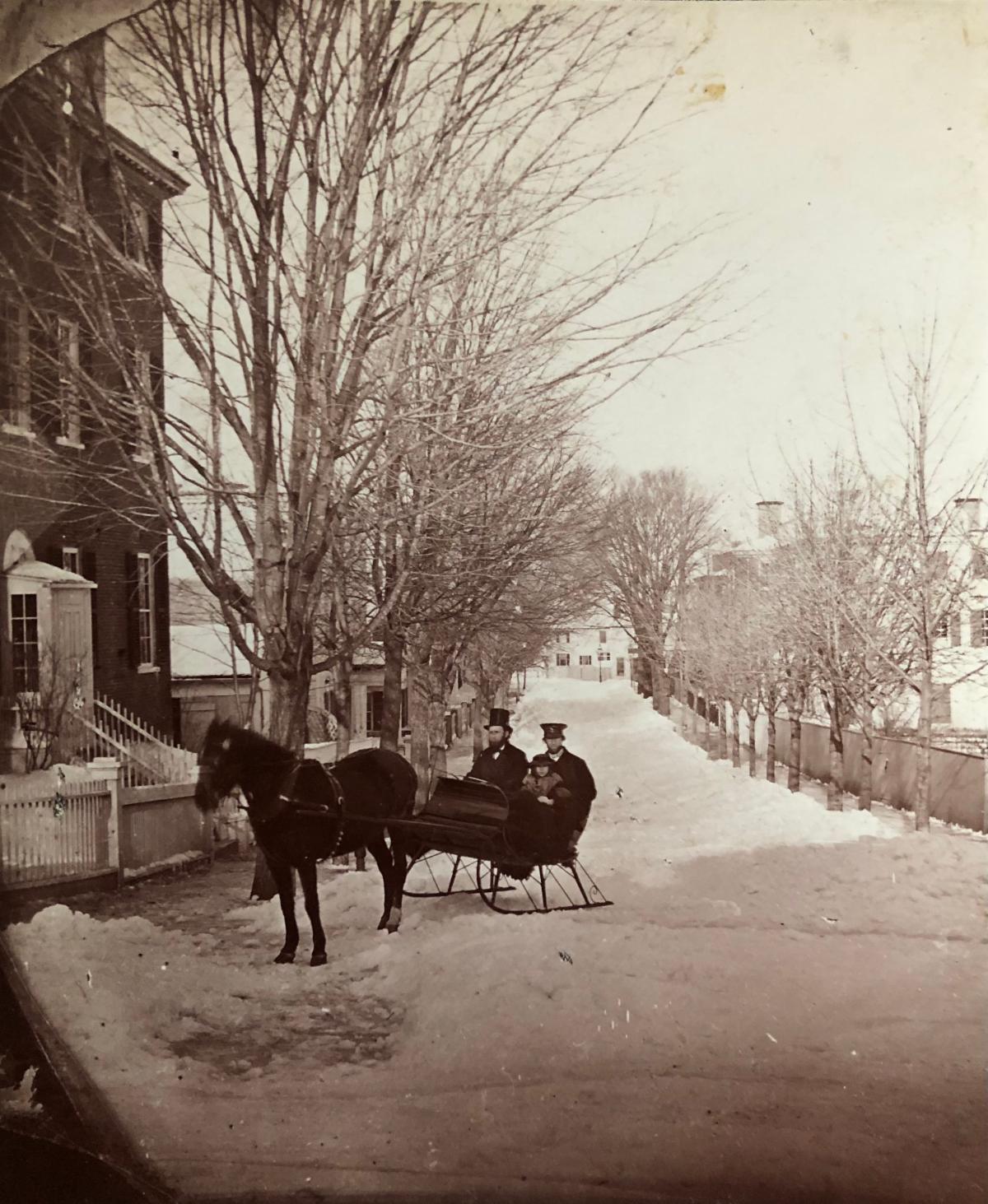
Fruit Street looking toward Fair Street with John N. Cushing (left) driving the family sleigh, circa 1850-1875. The little girl is either Elizabeth Johnson Cushing or Margaret Woodbridge Cushing.
From the collections of the Museum of Old Newbury.
Click on image to begin.
|
|
During this difficult period of COVID-19, we rely on your support more than ever. We continue to develop new, online programs for you to enjoy and keep us connected and look forward to in-person events as protocols for safety loosen. We hope, if you are able, that you will consider a donation to the museum. Thank you for your continued support.
|
|
Museum e-Newsletter made possible through the
generosity of our sponsors:
|
|
|
Museum of Old Newbury
98 High Street
Newburyport, MA 01950
978-462-2681
|
|
|
|
|
|
|
|