Your Monthly News & Updates | |
| |
Welcome to our latest newsletter! I’m thrilled to serve as your interim co-president and share a variety of exciting news in this issue.
Did you know April is National Volunteer Month? We’d love your help to keep our mission thriving. We can always use more hands—no hard commitments, just a willingness to pitch in. Whether you’re up for handling artifacts, moving furniture, organizing papers, writing articles, or entering assets into our database, there’s a spot for you. Contact us if you are interested in volunteering in a specific thing/way; every little bit makes a big difference!
A special treat to kick off the month: Join us on April 2 for a presentation on the Boston Massacre Trials. It’s a fascinating dive into a pivotal moment in history. See details below.
Be sure to mark your calendars for April 25-27, when we’ll host the Medfield History Weekend once again. Medfield’s historic places and organizations are teaming up, lending all hands on deck to support each other and make this a memorable weekend celebrating our town’s rich past with fun events and engaging stories. If you want to learn how you can help, see below for more details, or stop into the museum from 4:30-6 pm on Monday, April 7 or 10 am to 12 pm on Saturday, April 5 or 19.
Sincerely,
Yumi Jones, Interim Co-President
| | Dennis J. Curran Presents "The Boston Massacre Trials: Blood in the Snow" | | |
Wednesday, Apr 2, 2025
6:00 pm
Council on Aging
One Ice House Road, Medfield
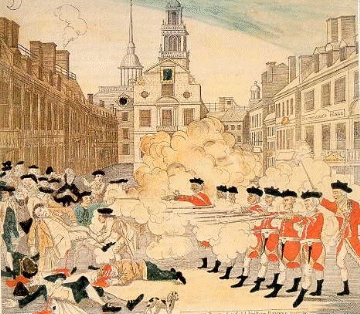
Denounced as an act of unprovoked violence and villainy, this event is one of the most familiar incidents in American history, yet one of the least understood.
We will revisit this dramatic episode and the resulting trials, the competing narratives that molded public perceptions, and the unheralded courage of one lawyer and a future President – John Adams – tasked with the defense of the captain of British troops charged with murder.
| | The Boston Massacre (engraving by Paul Revere)(the engraving is not an accurate depiction of the event) | | |
The Honorable Dennis J. Curran, Justice, Massachusetts Superior Court (Ret.) presents this talk from his lecture series “Great Trials That Changed History: A Judge’s Perspective.”
This program is co-sponsored with the Medfield Public Library and the Medfield Council on Aging.
The presentation is free and open to the public, but registration is required. We look forward to seeing you there!
| | |
When: Fri evening, Sat 10 am - 4 pm, Sun 1 pm - 4 pm (w/exceptions)
Where: Various Medfield establishments and historic sites
A special alert for readers of The Portal and Medfield Historical Society supporters before the big promotion begins…
Tickets are now available for Medfield History Weekend 2025! Get them here!
Highlights for the weekend include:
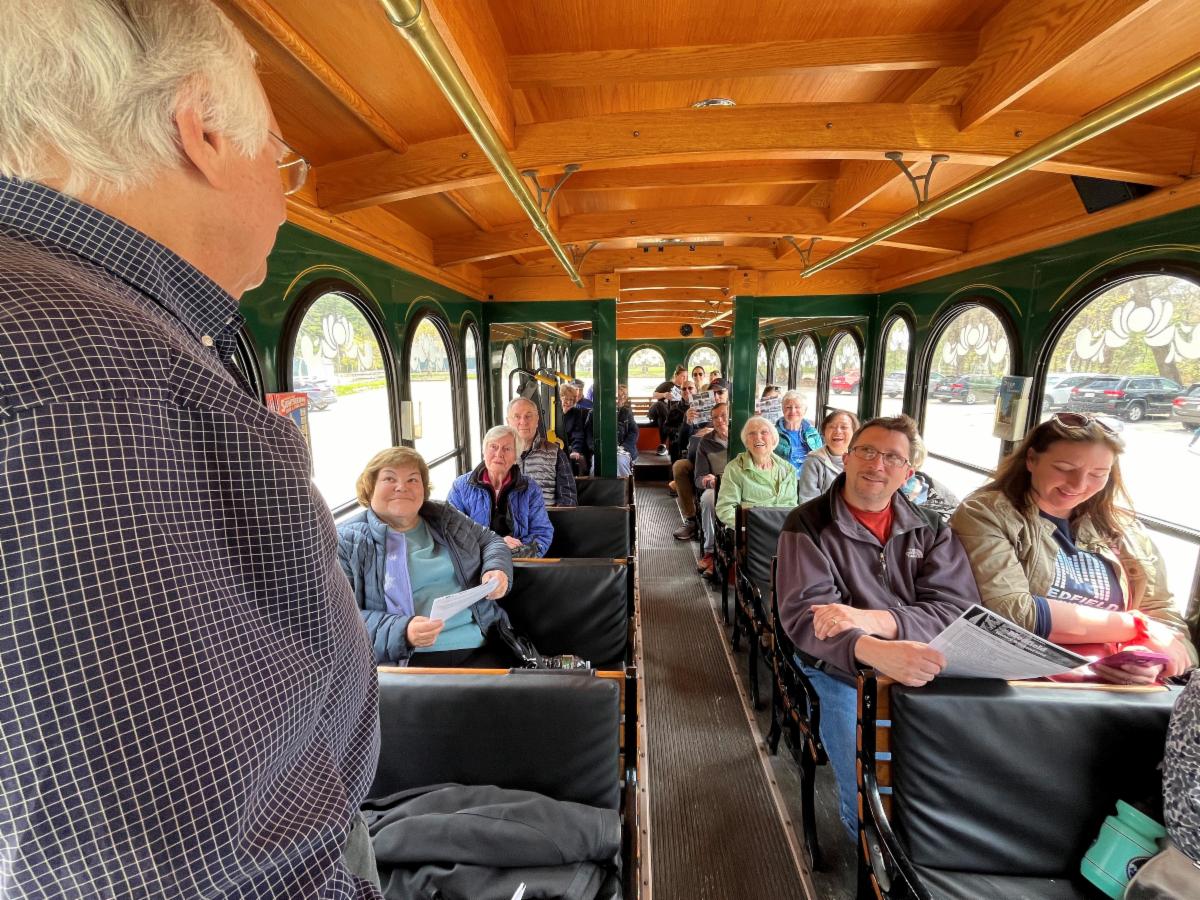
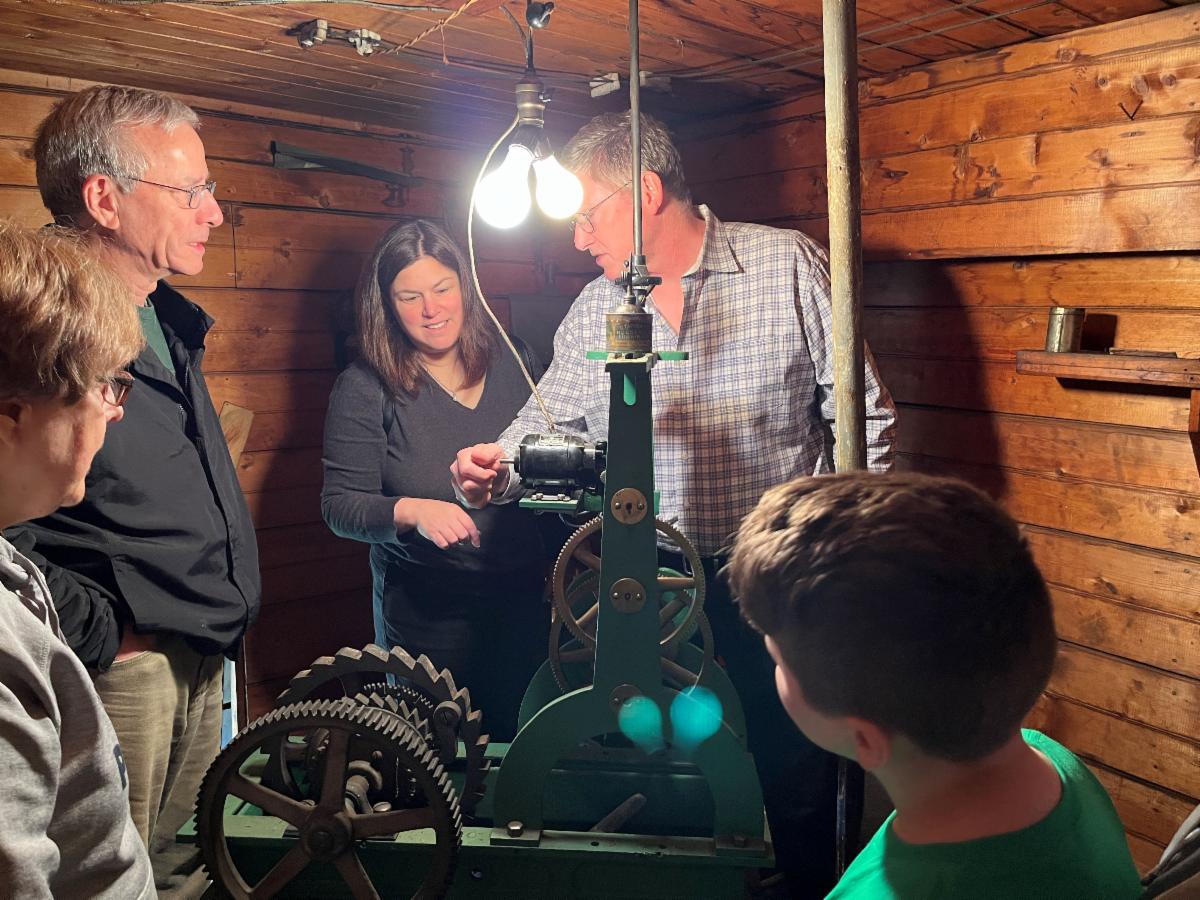
Narrated Old Town Trolley tours, Town Clock/Steeple tours, Walking tours of historic Vine Lake Cemetery and former Medfield State Hospital, and a children’s scavenger hunt.
The town’s other historic sites, including
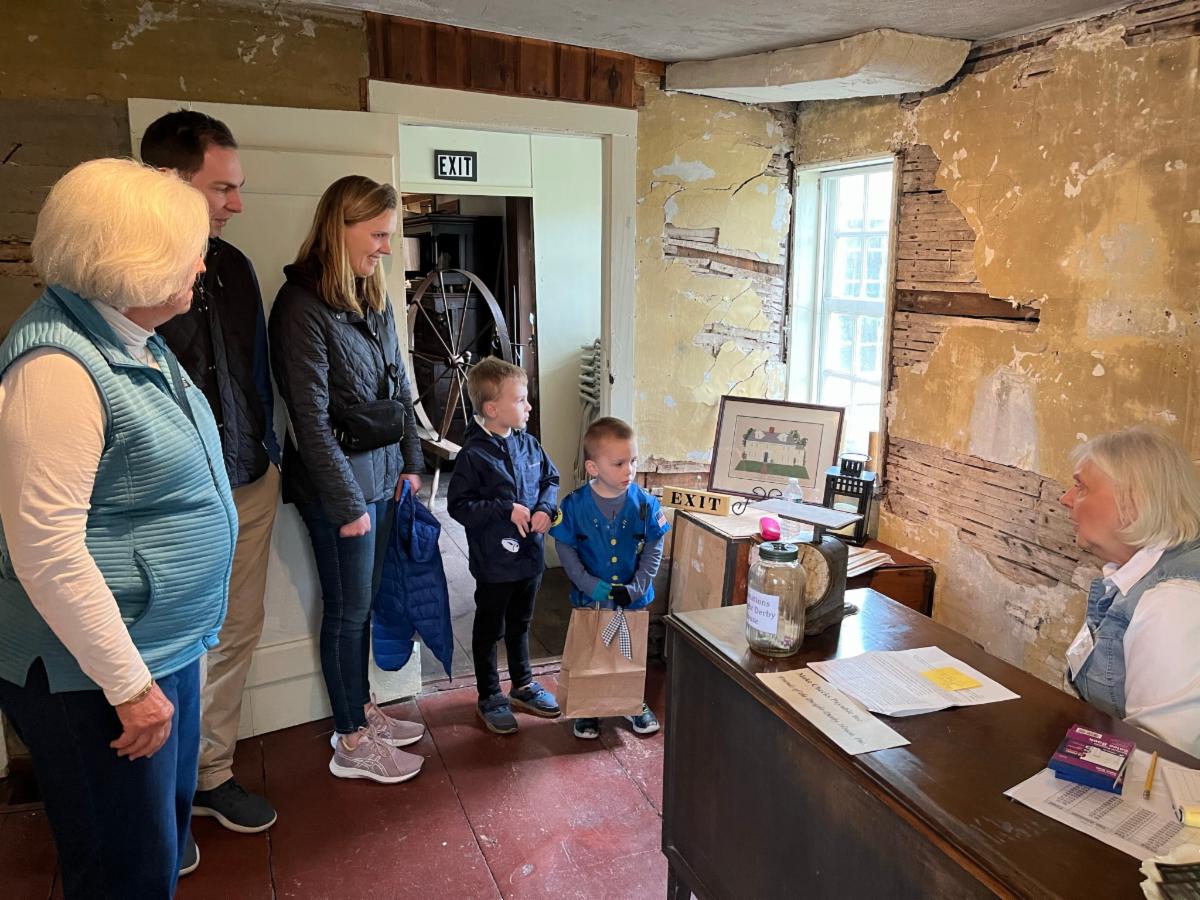
Dwight-Derby House, Kingsbury Grist Mill, Lowell Mason House, Medfield Historical Society and Museum, and the
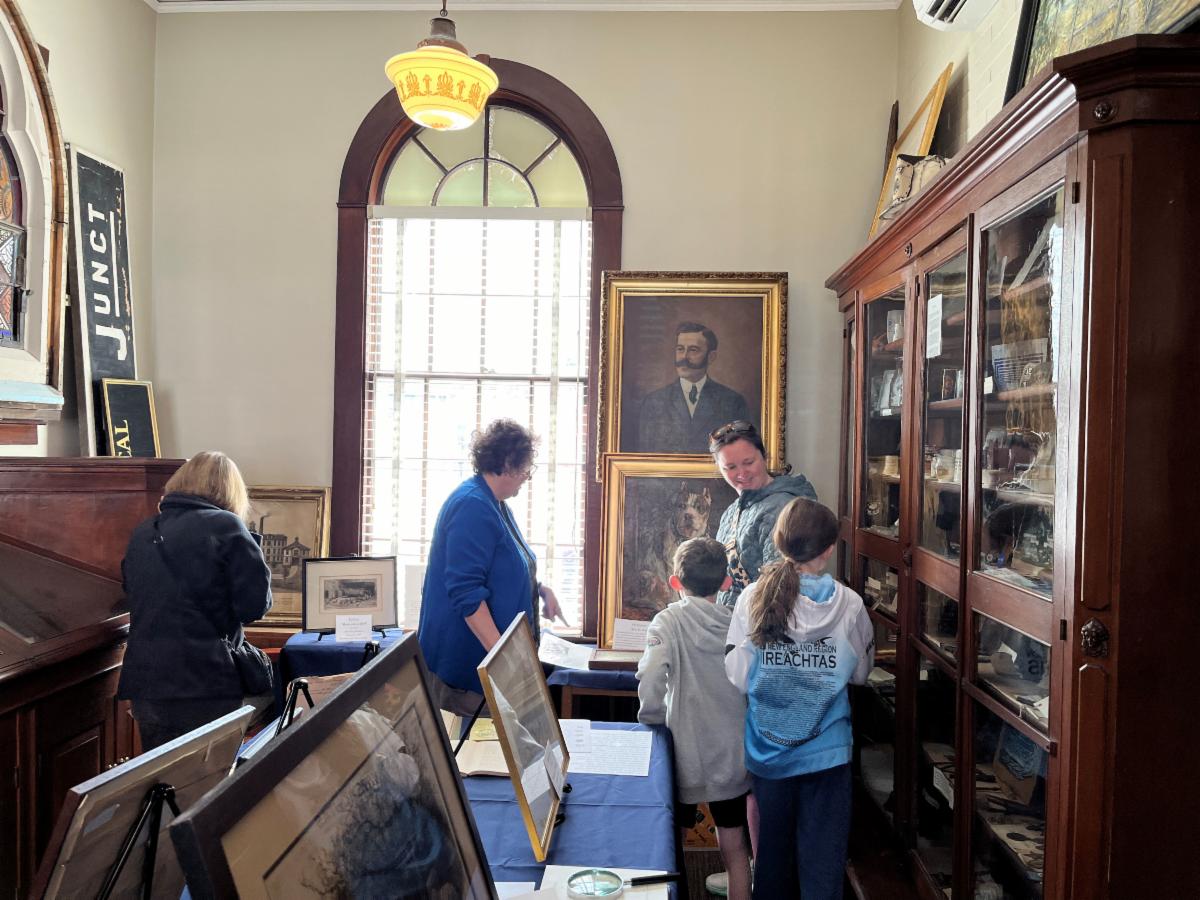
Peak House Heritage Center will offer featured attractions all weekend. Hannah Adams will also join us again, but she will be present at the Medfield Historical Society Museum instead of the library.
Launch the weekend with us…
An event to kick off Medfield History Weekend will be held from 6:30 to 8:30 pm, Friday, April 25 at the historic Dwight-Derby House, 7 Friary St.
Built in 1651 and situated across from Meetinghouse (Baker’s) Pond, it is one of the oldest wood frame houses in the country. The gathering will feature live fiddling by local music educator and musician Andy Costello, give attendees the chance to view the bonnet shop-inspired East Parlor exhibit, and provide a preview of weekend festivities. Pre-registration is requested here.
Medfield History Weekend is funded in part by a grant from Medfield Cultural Council, a local agency supported by Mass Cultural Council, a state agency.
| | | Eric B. Schultz Captivates Audience with Insightful Talk on King Philip's War | | |
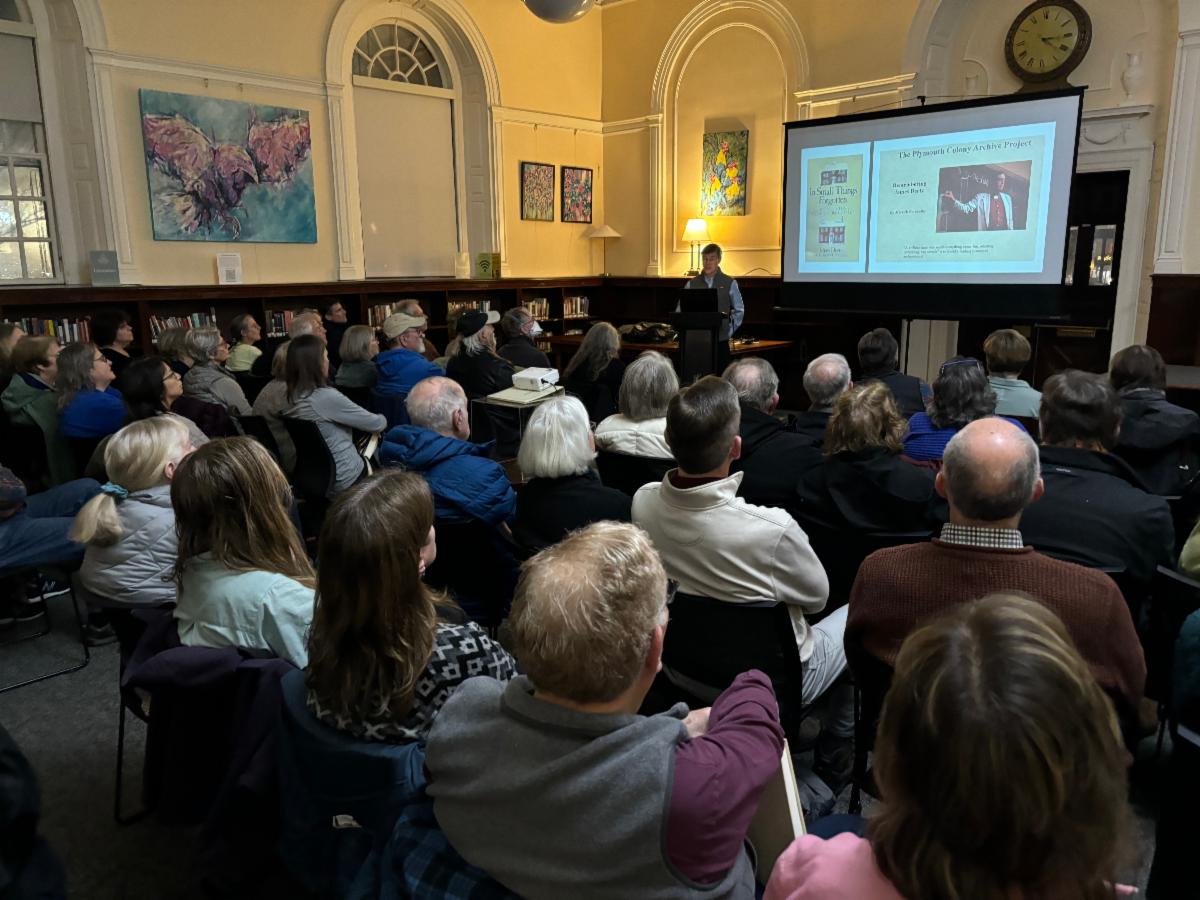
Eric B. Schultz captivated a packed audience at the Medfield Library’s Dailey Room for his discussion on King Philip’s War: The History and Legacy of America’s Forgotten Conflict. A lifelong history enthusiast, Schultz serves as a Director at the Old Colony History Museum and has held leadership roles at the Gettysburg Foundation and the New England Historic Genealogical Society. Growing up near many battle sites, he extensively researched and documented war monuments, creating what he calls a "travelogue" of the conflict in his book about King Philip’s War, published in 2017.
Schultz explained that King Philip, originally named Metacom, was the son of Massasoit, the Wampanoag leader who maintained peace with Plymouth Colony. After Massasoit’s death in 1661, his son Wamsutta (renamed Alexander by the English) took over but died soon after being kidnapped by colonists. Metacom assumed leadership but soon lost faith in English justice and peaceful coexistence with the colonists, leading to the outbreak of King Philip’s War in Swansea, Massachusetts.
| A large audience of 75 people eagerly packed the Dailey Room at the Medfield Public Library to hear Eric B. Schultz speak on King Philip's War. | |
The war was brutal, occurring amid a devastating epidemic that had already decimated indigenous populations. About 20,000 Native American warriors clashed with 50,000 English settlers, who were reinforced by ships from England. Battles spread across Massachusetts and Rhode Island, including Mendon, Sudbury, and the infamous Great Swamp Massacre, where 400 indigenous women and children were killed. Metacom himself was killed at Mt. Hope in Rhode Island signaling an end to the conflict. Throughout his talk, Schultz highlighted existing monuments that mark historic sites related to the people and places of the war.
Schultz’s overview of the specific causes and effects of King Philip’s War resonated with the audience as Medfield was the site of a major event in the war, an early morning siege of the town by an estimated 300 Native Americans on February 21, 1676. Fourteen residents were slain and half the town’s homes were burned to the ground. After his discussion, Schultz took questions and signed copies of his book.
| | |
by Norma Vogel
Patriots’ Day (Patriot’s Day in Maine) is a holiday commemorating the opening battles of the Revolutionary War, the battles of Lexington, Concord and Menotomy (now Arlington). In Massachusetts, the day is marked by battle reenactments, ceremonial events, and the beloved Boston Marathon.
In 2025, Patriot’s Day occurs on April 21st for Massachusetts and Maine, which were originally part of the same state, while the states of Florida, Wisconsin, Connecticut and North Dakota still observe the original date of April 19. In Massachusetts and Maine, since 1969, the holiday has been observed on the third Monday in April, creating a three-day weekend, which for most people is the extent of their interest in Patriots’ Day. And I felt the same. Tasked with writing about Medfield’s Revolutionary days, I had little inspiration until an extraordinary letter practically fell from our archives into my lap, and again I had that wonderful feeling of discovery that comes from touching a piece of history.
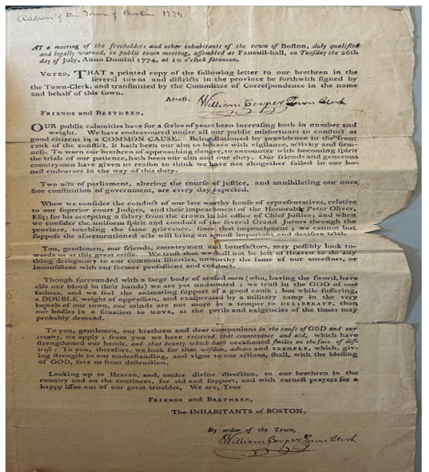
This is a letter from the “Inhabitants of Boston,” signed by Town Clerk William Cooper, addressed to the Town of Medfield through Town Clerk Enoch Adams, pleading for help against the British Navy, now embedded in Boston, "in the very bowels of our town." The Port Act had blocked all trade as punishment for the recent Boston Tea Party. Not only were the colonists deprived of food and goods through their own port, but they were also expected to repay the East India Tea Company for the tea they had dumped into the harbor.
| Letter from Boston’s Committee of Correspondence, July 26, 1774. From Medfield Historical Society archives. | |
To clarify this letter's place in time, the Tea Party had occurred on December 16, 1773, the letter was written on July 26, 1774, and the First Continental Congress would be held on October 14, 1774. This document was written on the very brink of the Revolution. Similar letters had been sent to the other “country towns” in Massachusetts. There should be, if there isn’t already, an entire book, or even a historical novel, about Medfield’s response to Boston in its time of need.
Read more >>
|
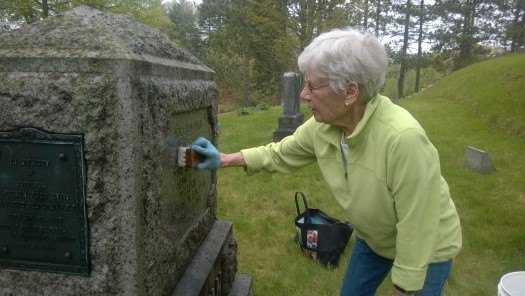
| No April Fools Here! Honoring Volunteers | | Celebrating Medfield's Volunteer Spirit: How Giving Back Enriches Our Community and Our Lives | | April is National Volunteer Month, not to be confused with National Volunteer Week, which is always the third week of April. Here in Medfield, the volunteer spirit is felt every day of the year. Our town is truly blessed that way, but we always need more of that spirit. From the Food Cupboard to Medfield Together to Friends of Seniors, to name just a few groups, volunteers are the hub of the wheel that is Medfield. I have friends who foster dogs and give time to the Animal Shelter; to a person, they say that their lives are richer for the rewards of a few hours with the animals. In my own family, I can think of so many ways that volunteer groups have enriched our lives: the Swap Area, for one, has provided so much pleasure (and cool stuff!) while helping us become mindful about the ways in which our actions impact our environment. We have enjoyed countless Discover Medfield Days, walks on the Rail Trail, and tours of our historic sites. | Volunteer June Gillette cleaning a grave marker at Vine Lake Cemetery. | | |
Looking at the bigger picture, we could say that America itself has always been a volunteer effort; surely the Revolutionary War was the first major volunteer project in our country. Patriots’ Day is this month, commemorating the people who said yes to freedom, putting their lives on the line. So much depends on volunteerism that it seems a bit silly to list examples. To name just a few, volunteerism is alive and well in religious institutions and secular causes: charity, hospital work, community organizations, school support, and much more. Benjamin Franklin established the first volunteer firehouse in 1736. Clara Barton started the Red Cross as a volunteer effort to provide free medical care during the Civil War. Many schools began requiring community service experiences. The League of Women Voters is a national organization founded in 1920, six months before the 19th amendment allowing women who were citizens to vote. Founders wanted to inform women of issues they could vote on (Mary Beth Harrington).
I absolutely love volunteering at the Medfield Historical Society. I have always been a collector and a lover of vintage items. When I was an English teacher, I emphasized the historical context of the literature we studied. For every piece of Medfield history in our archives, we try to find a story to tell, a story that will mean something to future generations. As a volunteer, I see the evidence that history matters. It is an especially great joy to spark that connection with young people. I can tell you that these children do have a sense of history; they care about what happened before they were born, and their intellectual curiosity is palpable. Whether you like to research, sort through materials, organize exhibits, transcribe journals, or give tours, please consider joining us on Volunteer Mondays from 4:30-7:00, and on the first and third Saturdays of each month. Or, feel free to just come and have a look around. We look forward to seeing you.
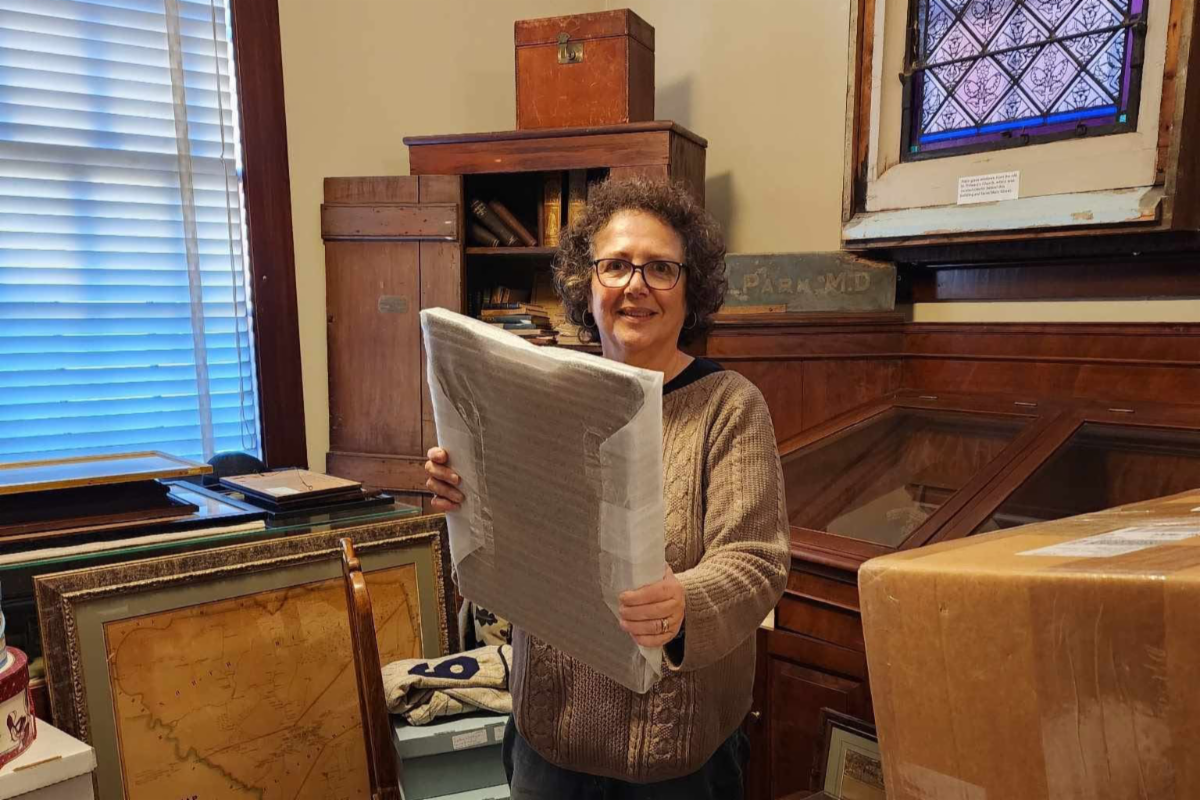
| | Volunteer Norma Vogel setting up the J.A.S. Monks exhibit at the society last spring. | | A Rare Glimpse into New England's Past: Touring Historic New England's Collection | | |
by Geoff Sauter
According to the 2022 census conducted by the American Association for State and Local History (AASLH), there are more than 21,000 history organizations in the United States. Not surprisingly, most of these organizations have at least one museum—often more. For those of us who enjoy experiencing local history firsthand, the opportunities to view rare artifacts up close and engage with expert docents are nearly limitless, especially in New England.
Many Portal subscribers may be familiar with Historic New England—perhaps as members or visitors to one of its 36 beautifully restored historic homes across five New England states. Founded in 1910 by Sumner Appleton as the Society for the Preservation of New England Antiquities, the organization adopted its current name in 2003.
In February, I had the opportunity to tour Historic New England’s collection at their headquarters in Haverhill, MA. Demand for these rare and exclusive tours is so high that tickets sell out within hours and are available only to Historic New England members. In fact, I was only able to attend due to a last-minute cancellation, having been on the waiting list for several weeks.
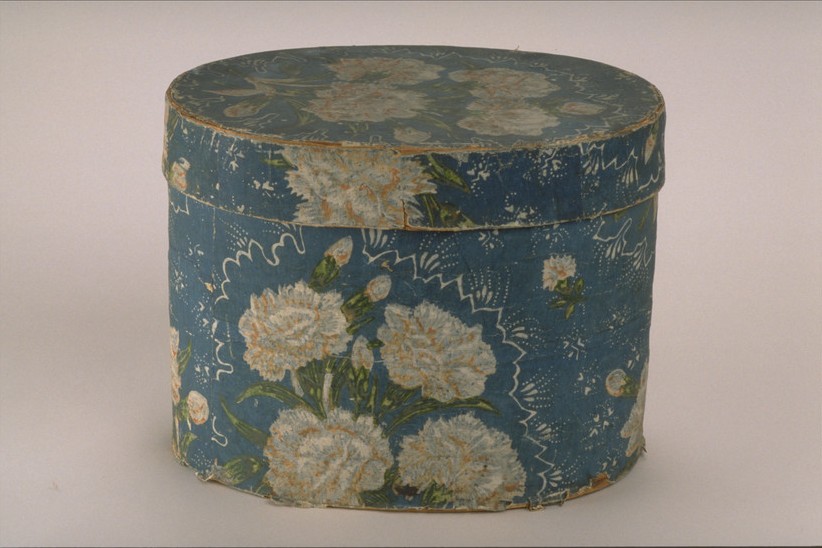
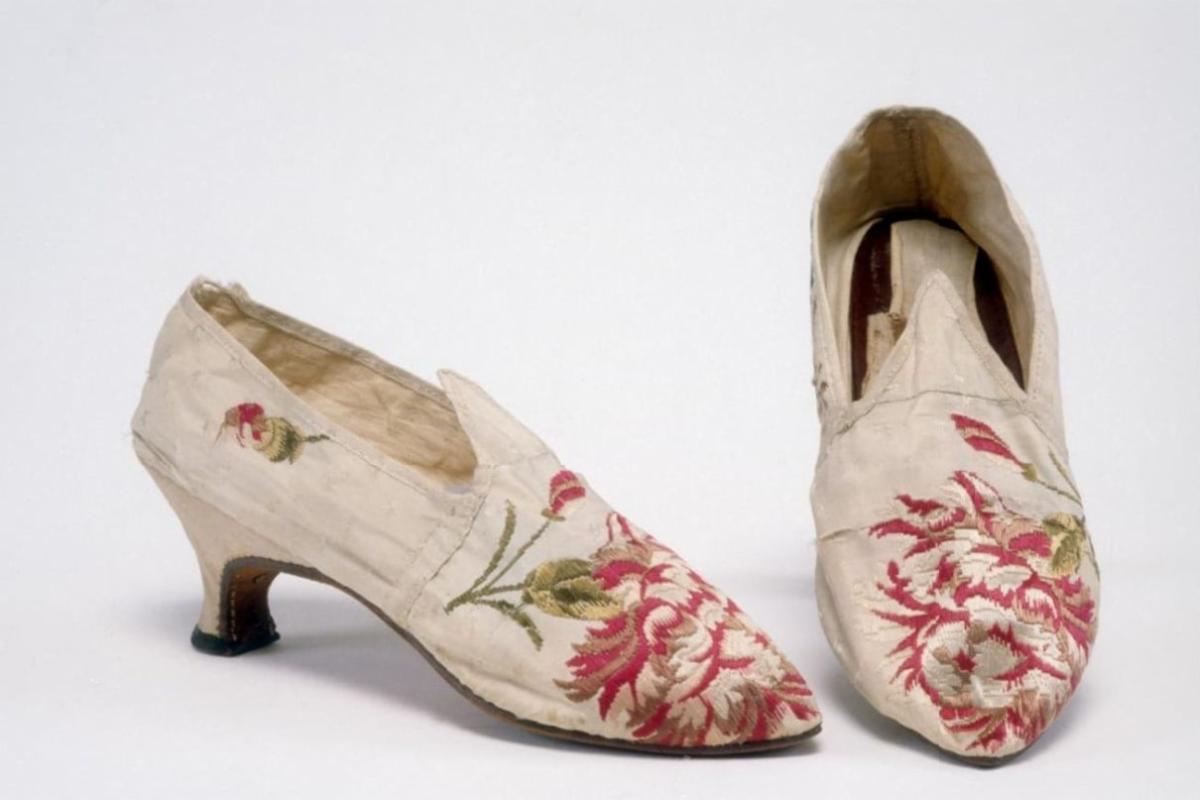
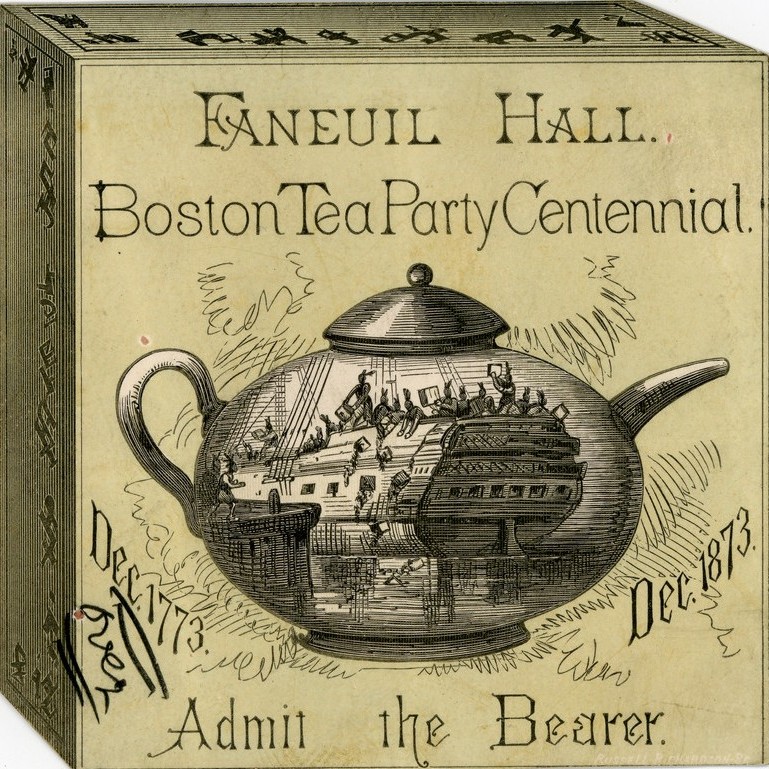
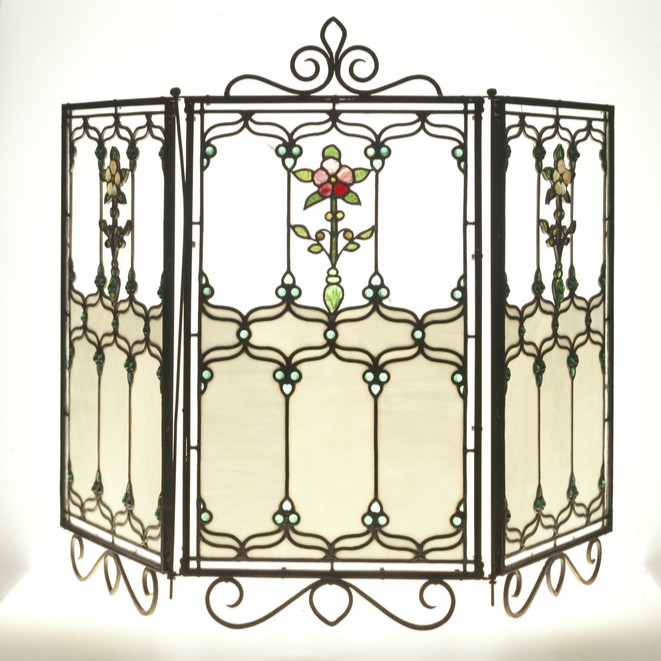
| | A wooden oval hat box covered with block printed floral wallpaper, white and pink carnations with green leaves on blue ground, lined with newspaper dated 1839. | | These floral brocade slippers, with pointed tongues and without straps or ties, were highly fashionable in 1785 when Mary Aspinwall of Brookline wore them to marry Joseph Goddard. | | Ticket for one admission to the Boston Tea Party Centennial at Faneuil Hall. The card is illustrated with a tea pot bearing a rendition of the Patriots dumping boxes of tea off a ship. | | Best known for her book cover designs, Sarah Wyman Whitman also experimented with stained glass.Whitman's glass designs were less pictorial and more architectural than previous stained glass windows and made use of clear glass to connect with the world outside. | | "With more than 125,000 objects and 1.5 million archival materials, Historic New England’s collection tells the most complete story of how New Englanders lived from the seventeenth century to today." Images courtesy of Historic New England. | | |
Over the course of two hours, the tour staff captivated me with fascinating stories and an incredibly extensive collection housed across five climate-controlled floors of a historic factory. The collection includes paintings, furniture, wallpaper, artwork, daguerreotype photos, clothing, dishes, and even bandboxes. I learned that many artifacts can be viewed on their website and that targeted research is possible under certain conditions. By just spending a few hours in the collection area of the website you can search virtually anything and establish the associated period of time.
For me, this tour alone justified the cost of an annual membership. The experts at Historic New England possess remarkable skill in identifying valuable artifacts, establishing provenance, and cataloging them with precision.
Every now and then, something unexpectedly impresses us and simply must be shared with like-minded friends. The Historic New England collection tour is one such experience.
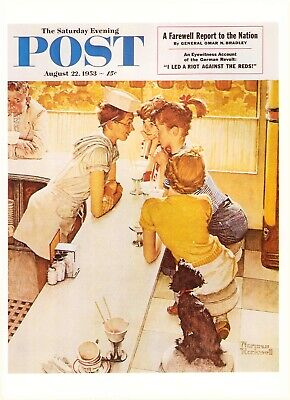
| | People and Places of the Past | | Midcentury Medfield Memories: Soda Fountains in Medfield | | |
by Tim Flaherty
What’s a soda fountain? If you were to ask a member of Generation X, Y, or Z, you’d probably get a blank stare. But if you asked someone born in, say, the 1920s, 30s, or 40s, you’d probably hear, “That’s where the teens hang out, aspiring to be hep cats.”
Medfield had some great soda fountains back in the days. Some might remember a small restaurant named Ann’s Kitchen, where the Noon Hill Grille is today. Ann’s soda fountain was where many young kids had their first hot fudge sundae in a beautiful, tall, elegant glass dish enjoying a dessert that’s “as hot as the summer and as cold as the winter.”
Right in Medfield center in 1958, there were two soda fountains that served up ice cream sundaes, considered to be a gastronomic delight. The soda fountain at the Clement Drug (now the site of Juice on Main) was well known for sundaes with the hot chocolate sauce, sprinkled with walnuts and whipped cream, with a maraschino cherry on top.
Read more >>
| | | | |