|
Hello Synapse Spotlight readers,
Welcome back! This is the second in a series of issues building toward the theme of our 82nd Annual Meeting in Chicago next spring: metabolic psychiatry--exploring how the brain and body work together to shape mental health. This issue, we're diving into one of the field's most compelling frontiers: how the immune system and the brain communicate, and what that means for psychiatric conditions ranging from depression to schizophrenia.
As always, our goal at the Society of Biological Psychiatry (SOBP) is to make cutting-edge neuroscience accessible to everyone. Share freely.
In this issue:
● 🎃 When the immune system attacks the brain — a spooky season case study
● 🌱 How childhood adversity leaves distinct biological marks — and what that means for mental health
● 🔬 The brain biology behind a distinct, inflammation-linked form of depression
● ⚡ A clue to the immune–brain connection in teen depression?
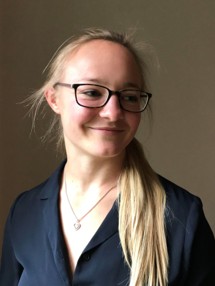
● 👤 Member Spotlight: Nathalie Rieser, PhD — 2026 Biological Psychiatry CNNI Best Paper Award
● ❓ Around the Brain in MCQs: Test your neuroscience knowledge
Coming up: More breakthroughs–and fresh content from the annual meeting in Chicago.
For more science, explore Biological Psychiatry, Biological Psychiatry: Cognitive Neuroscience and Neuroimaging, and Biological Psychiatry: Global Open Science–and follow us @SOBP.
Happy Reading,
The Synapse Spotlight Team
| | 🎃 Spooky Season Special: When the Immune System Attacks the Brain | | |
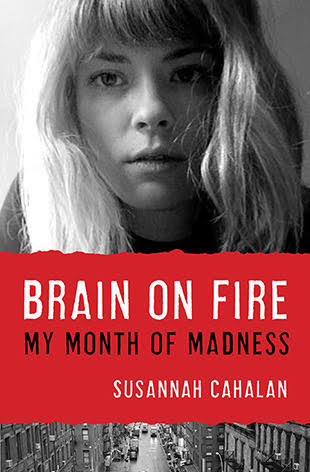
In 2009, a 24-year-old journalist named Susannah Cahalan went from healthy and high-functioning to psychotic, seizure-prone, and catatonic in a matter of weeks. She heard voices, became paranoid and erratic, and then almost entirely unresponsive. Doctors were baffled.
Initially evaluated for schizophrenia and bipolar disorder, she was days away from being transferred to a long-term psychiatric facility when a neurologist asked her to draw a clock. She drew all twelve numbers crowded onto the right side, which is a telling sign of brain dysfunction. He told her father that her brain is “on fire."
A brain biopsy revealed the culprit: her immune system was producing antibodies that attacked her own brain, targeting receptors involved in memory, behavior, and perception. The diagnosis was anti-NMDA receptor encephalitis, which is an autoimmune condition only formally described two years earlier. Treatment targeted the immune response, and Cahalan recovered fully. She went on to write the bestselling memoir Brain on Fire, later adapted into a film.
Her case remains one of the most compelling real-world illustrations of the brain-immune connection, and a reminder that some psychiatric symptoms have an immunological cause hiding just beneath the surface.
Image: This spooky season, check out the memoir Brain on Fire or its film adaptation—a vivid illustration of the power of the brain-immune connection.
| | Hot Topics in Biological Psychiatry | | |
Childhood adversity has a lasting impact across multiple biological systems
Stressful early life experiences are among the strongest predictors of mental illness — but scientists are still working to understand exactly how they affect the developing body and brain. A new study led by Chase Antonacci from Dr. Ian Gotlib’s lab at Stanford University examined two distinct types of childhood adversity: deprivation (such as neglect or poverty) and threat (such as abuse or violence). Researchers tracked how each type affected six biological markers of development, including metabolism, cells, puberty hormones, and brain structure.
The findings revealed that deprivation and threat affect the body in different ways. De privation influenced how cells and metabolism developed, while threat had a stronger impact on hormone development. Notably, only children who experienced threat — not deprivation — went on to show higher rates of mental illness later in life.
Image: Did you know? The Society of Biological Psychiatry has its own podcast! To learn more about this article, check out this episode of The Biological Psychiatry Podcast.
| |
Why It Matters: More than half of all children experience some form of adversity. This study shows that not all adversity is the same; deprivation and threat leave distinct biological marks and affect mental health differently. Understanding these differences could help researchers design better, more targeted strategies to protect the mental health of children who have faced difficult early experiences. | | | | |
Inflammation, Metabolism, and the Brain: A Closer Look at Depression
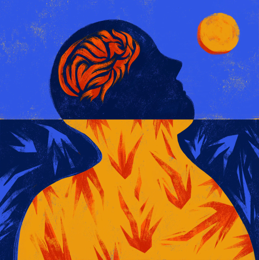
Depression doesn't look the same in everyone — and researchers are exploring whether it may actually have distinct biological forms. One proposed form, sometimes called immunometabolic depression, involves depression occurring alongside signs of increased inflammation and changes in how the body processes energy, similar to what is seen in conditions like obesity or diabetes.
A recent study by Dr. Zhaowen Nie and colleagues studied examined 145 people with major depressive disorder and 68 people without it, using two types of brain scans. One measured the size and structure of different brain regions; the other tracked brain activity while people were at rest. Using computer modeling to analyze the results, researchers found that patterns in these brain scans could reliably distinguish people who showed more signs of immunometabolic depression from those who showed fewer. The differences were concentrated in brain areas involved in emotion, memory, motivation, and reward. People with more signs of this biological pattern also reported greater difficulty experiencing pleasure — a hallmark symptom of depression.
Image: Researchers are investigating how inflammation and metabolic health may contribute to distinct biological forms of depression. Illustration by Chloe Cushman https://www.nytimes.com/2026/06/18/well/mind/inflammation-depression-treatment.html
| |
Why It Matters: This study adds to growing evidence that depression is not one-size-fits-all, even at a biological level. If certain forms of depression are driven in part by inflammation or metabolic changes, that could help explain why some people don't respond to standard treatments — and open the door to new approaches that target those underlying processes more directly. Larger studies will be needed to confirm these findings, but the results are a promising step toward more personalized care. | | | | |
A clue to the immune–brain connection in teen depression
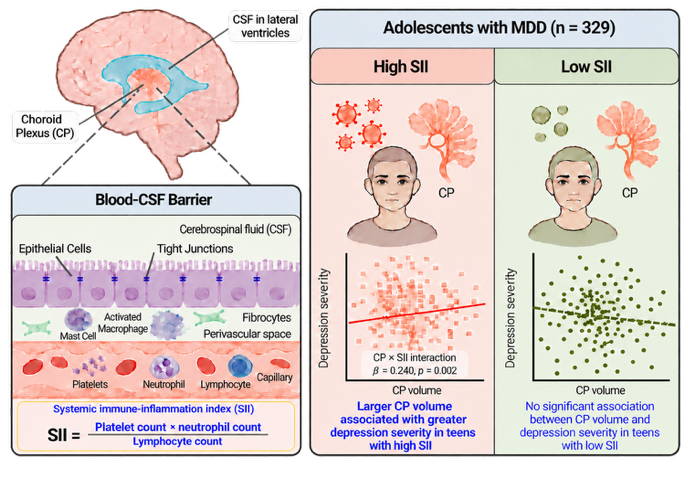
A new study from Dr. Liping Cao’s team in Guangzhou, China (co-first authors Xiaofang Cheng and Zhuozhi Dai) examined brain scans and blood-based indicators of inflammation in adolescents with and without major depression.
The finding: Among 329 teens with depression and complete data, a larger choroid plexus – a structure that produces cerebrospinal fluid and helps regulate immune communication between body and brain – was associated with more severe symptoms when an inflammation index (SII, systemic immune-inflammation index) was high, but not when it was low.
Image: SII, systemic immune-inflammation index, derived from peripheral blood cell counts. Depression severity by HAMD-17. Plots approximately adapted from Cheng et al., Figure S7A; points are not digitized study data. Original image created in BioRender. Weinstein, J. (2026) https://BioRender.com/ih6jbdq. The graphic was initially created in BioRender with AI assistance from ‘Leo’. The summary and graphic were further refined with AI assistance from OpenAI’s GPT-6 Astra model. The author worked interactively with each AI assistant and closely reviewed, edited, and approved the final text and illustration.
| |
Why It Matters: The findings suggest that understanding depression in adolescents may require looking at brain biology and the body’s immune activity together. Caveat: This observational study cannot establish cause and effect. The association was statistically significant in females, but the smaller male sample leaves any sex difference uncertain. | | | | SOBP member spotlight:
Nathalie Rieser, PhD | | |
This issue, we're proud to spotlight one of the lead authors of Biological Psychiatry CNNI’s Best Paper Award for 2026: Nathalie Rieser, PhD.
Dr. Rieser is a postdoctoral researcher at the University of Zurich with a research affiliation at Johns Hopkins University. Her award-winning article, "Comparing Neural Correlates of Consciousness: From Psychedelics to Hypnosis and Meditation," was published in 2024 (https://doi.org/10.1016/j.bpsc.2023.07.003).
During her PhD at the University of Zurich, Dr. Rieser studied how the brain changes during altered states of consciousness — exploring both drug-based approaches, such as psilocybin and LSD, and drug-free approaches like meditation and hypnosis. This research earned the 2026 CNNI Best Paper Award alongside co-author Dr. Flora Moujaes. She also led a clinical trial testing psilocybin-assisted therapy for alcohol use disorder, and went on to deepen her expertise in advanced brain imaging techniques at Johns Hopkins.
Dr. Rieser's current work focuses on why people respond differently to treatments for substance use disorders, and how brain imaging can help explain those differences. Her goal is to develop more personalized treatments that combine medication-based and non-medication-based approaches — bringing together insights from psychiatry, neuroscience, pharmacology, and brain imaging to move laboratory discoveries into real clinical care.
| | | Around the brain in MCQs! | | |
The adult human brain accounts for only about 2% of body weight—but how much of the body’s energy does it consume at rest?
A. 2% – about what you’d expect given its size
B. 5%
C. 10%
D. 20%
Scroll to the bottom of the newsletter to find the answer!
| | |
Antibodies — Proteins made by the immune system that normally target foreign invaders like viruses; in autoimmune conditions, they can mistakenly attack the body's own tissues.
Anti-NMDA receptor encephalitis — An autoimmune condition in which the immune system produces antibodies that attack NMDA receptors in the brain, causing psychiatric symptoms such as psychosis and behavioral changes, as well as seizures and loss of consciousness.
Autoimmune condition — A disorder in which the immune system mistakenly attacks the body's own healthy tissues. In autoimmune encephalitis, the target is the brain.
Biomarker — A measurable biological signal — such as a brain-imaging pattern or a molecule in the blood — that indicates disease or predicts treatment response.
Choroid plexus — A structure in the brain that produces cerebrospinal fluid and helps regulate immune communication between the body and brain.
Cerebrospinal fluid — The clear fluid that surrounds and cushions the brain and spinal cord, also involved in clearing waste and carrying immune signals.
Deprivation — A type of childhood adversity involving lack of resources or caregiving — such as neglect or poverty — linked to changes in cellular and metabolic development.
Immunometabolic depression — A proposed subtype of depression characterized by elevated inflammation and disrupted energy metabolism, similar to patterns seen in obesity or diabetes.
Inflammation — The immune system's response to injury, infection, or stress; when persistent, it has been linked to depression, bipolar disorder, and schizophrenia.
NMDA receptor — A type of receptor on brain cells involved in memory, learning, and perception; the target of the immune attack in anti-NMDA receptor encephalitis.
Neural correlates of consciousness — Brain activity patterns that correspond to specific states of awareness or experience, such as those seen during psychedelic states, hypnosis, or meditation.
Psilocybin — A naturally occurring psychedelic compound, found in certain mushrooms, that is being studied as a treatment for depression, addiction, and other psychiatric conditions.
SII (systemic immune-inflammation index) — A blood-based measure combining immune cell counts to estimate the overall level of inflammation in the body.
Threat — A type of childhood adversity involving direct harm or danger — such as abuse or violence — linked to changes in hormonal development and increased risk of mental illness.
| | |
To learn more about the Society of Biological Psychiatry (SOBP), or to become a professional member, visit https://sobp.org/
To subscribe to our newsletter, click here: Newsletter sign-up
To reach out to an expert, or for topic suggestions, email sobp@sobp.org
To learn more about SOBP journals, click here: https://sobp.org/publications/journals/
Press releases: https://sobp.org/publications/journal-press-releases/
To learn more about the brain and brain disorders, listen to the BrainSTEM podcast, hosted by SOBP members. Available on Spotify, Apple Podcasts, and more.
| |
How can I get involved?
SOBP is a proud Associate Member of the American Brain Coalition. Visit the website for the American Brain Coalition to learn more about their vision and how together we can advocate for increased support of research that will lead to better treatments for our patients as well as a national commitment towards finding cures for individuals with disabling neurological and psychiatric disorders.
| |
How can I get help?
We can all help prevent suicide. The 988 Lifeline provides 24/7, free and confidential support for people in distress, prevention and crisis resources for you or your loved ones, and best practices for professionals in the United States.
Call or text 988; Llama al 988 (para ayuda en español)
| | |
Find a therapist in your area with the Psychology Today’s Find a Therapist Tool: www.psychologytoday.com
Visit the National Alliance on Mental Illness (NAMI) website
Visit the National Institute of Mental Health (NIMH) website
| |
Brain teaser answer: D! - 20% ✅
Your brain is the most expensive organ you own. Even sitting still, it consumes roughly 20% of the body's energy budget, most of it spent pumping ions back across neuronal membranes after every signal. That enormous demand is why the brain is so sensitive to anything that disturbs energy production, and why mitochondria (the cell’s power plants) have become a serious focus in psychiatry.
| | | | |