In This Issue
Research Spotlight: March is National Kidney Month
CPCE In the News:
CHOP’s Third Annual ‘Spin In’ Event Raises Money For Children With Heart Disease
CPCE In the News:
Mumps outbreak at Temple adds to growing number of cases on college campus
Upcoming Events
Recent Publications
|
|
March is National Kidney Month
For
National Kidney Month, we’re putting the research spotlight on
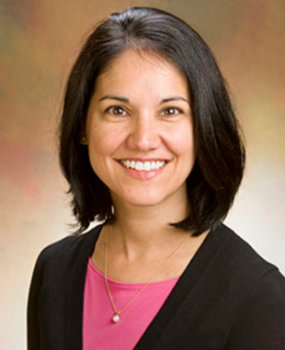
Sandra Amaral, MD, MHS, a core faculty member at CPCE and an attending physician in CHOP’s Division of Nephrology and Medical Director of the Kidney Transplant Program.
Dr. Amaral’s research is focused on kidney transplantation with particular interests in reducing racial disparities in access to transplant for children and adults and improving the transition of adolescents and young adults from the pediatric to adult health care setting.
One of her current projects is a NIDDK R01-funded randomized controlled trial designed to improve treatment adherence for adolescents and young adults with kidney transplants and those with spina bifida who self-catheterize. The project leverages the Way to Health platform to deliver tailored text messages and financial incentives to encourage adherence. The multi-center study includes CHOP, Boston Children’s, Children’s Mercy-Kansas City and Emory-Children’s Healthcare of Atlanta, and will soon add Lurie Children’s and Seattle Children’s.
Dr. Amaral is also a recipient of a
CPCE Pilot Grant which aims to use mobile gaming to improve healthcare self-management in adolescents with solid organ transplants.
|
|
CHOP's Third Annual 'Spin In' Event Raises Money For Children With Heart Disease
Around 1,500 cyclists participated in the 3rd annual Philly Spin-In to raise money for the CHOP Cardiac Center. CPCE Core Faculty member and Division Chief of Cardiology
Joseph Rossano, MD, MS described the range in severity of congenital heart disease seen in pediatric patients.
|
|
Mumps outbreak at Temple adds to growing number of cases on college campus
At least four cases of the mumps among Temple University students have been verified by the Philadelphia Department of Public Health. A resurgence in mumps cases over the past few years, particularly among college students, raises the concern that the MMR vaccine may become less effective over time. Despite this possibility, "the vaccine is still our best prevention tool," said
Kristen Feemster, MD, MPH, MSHP, member of the
Pediatric IDEAS research group, who currently serves as Medical Director of the Immunization Program and Acute Communicable Diseases at the Philadelphia Department of Public Health.
|
|
Upcoming Events
Save the Date: Career Pathways in Global Health
Date: April 6, 2019
Time: 10:00 am - 1:00 pm
Location: Perry World House, 3803 Locust Walk, Philadelphia, PA
Global health is less about geography and more of a lens through which one approaches health care delivery and outcomes in the larger global context. The career paths in this field are as vast as the topic itself. Come learn about the career trajectories and work lives of featured speakers regarding local and global public health research and practice. More details available
online.
|
Recent Publications
To better understand how families’ access to local food-insecurity resources may differ, CPCE faculty member
Alexander Fiks, along with fellow CPCE and PolicyLab affiliates
Heather Griffis and
Doug Strane, studied how health system and public data could be combined to identify the limitations of those FI resources. By analyzing electronic health record data (including demographic and clinical characteristics) alongside publically available data (local socioeconomic and food resource information), they were able to learn about the obstacles families face in receiving these resources. The distance from each household to the nearest food pantry was calculated, and the team determined the percentage of families that may have trouble accessing resources. The study demonstrates how health systems could merge these two data sources to map where food-insecure families live, describe their access to local resources, and identify gaps in services.
The prevalence of nephrolithiasis has increased rapidly over the last 20 years, with the greatest increase among females and adolescents, as well as African-Americans. Prior assumptions about pediatric kidney stone recurrence has been challenged by recent studies, demonstrating that the risk of recurrence is up to 50% within 5 years of initial stone presentation. The earlier age of onset and high prevalence of metabolic abnormalities suggests that kidney stone disease in childhood may represent a more severe phenotype. 24-hour urine collection is associated with reduction in risk of recurrence, although only 12% of pediatric patients are obtaining 24-hour urine analyses within 6 months of an emergency department visit. In this study, CPCE faculty member
Gregory Tasian, and his team, studied the characteristics of patients completing the 24-hour urine collection, in order to address potential obstacles to obtaining this analysis. They found that prior painful experiences with stones, as well as a family history of stones, were more likely to complete the 24-hour urine. Patients with public insurance/government assistance were less likely to complete the 24-hour collection.
Culturally sensitive care is of great importance in pediatric palliative care settings because the subspeciality is defined by a holistic approach to how the child is viewed. Culture necessarily impacts this work, as PPC clinicians must explore patient and family perspectives to allow for consistent decision-support about the goals of care. To try to address how PPC clinicians can provide more culturally sensitive care,
Chris Feudtner and others organized a workshop, which was attended by experts and stakeholders who discussed the future directions and priorities for PPC clinicians, and the subspeciality overall. The workshop aimed to generate potential best practices for how to integrate cultural humility into PPC, and how to minimize future conflict in those situations. The findings of the workshop suggest that clinicians need tools to help them with these encounters, including suggested language to bridge gaps in culture, educational programs targeting emotional intelligent, implicit bias, and conflict resolution, and other areas for further exploration.
There are limited reports of impacts on psychological and physical health from sleep disorders in long-term survivors of childhood cancer.
Lisa Schwartz and her team studied longitudinal associations with emotional distress and physical health outcomes by characterizing the prevalence and risk factors for behaviors consistent with sleep disorders in survivors. They found that survivors reported more sleep difficulties and efforts to manage sleep than their siblings. These sleep behaviors are related to emotional distress and may be linked to an increased risk for migraines, suggesting that behavioral interventions targeting sleep may be important for survivors of childhood cancer.
|
|
About CPCE
We are a pediatric research center dedicated to discovering and sharing knowledge about best practices in pediatric care by facilitating, organizing and centralizing the performance of clinical effectiveness research -- research aimed at understanding the best ways to prevent, diagnose and treat diseases in children. CPCE’s multidisciplinary team conducts research on a diverse range of clinical effectiveness topics.
CPCE E-News is edited by
Holly Burnside. Please feel free to contact us with questions or feedback.
|
|
|
|
|
|
|