|
Welcome to the inaugural edition of the BSLM Project Newsletter!
The Biodiversity and Sustainable Land Management Project is working to transform Sri Lanka's tea and rubber plantation landscapes into productive, climate-resilient ecosystems that benefit both people and nature. Focusing on Nuwara Eliya, Kegalle, Ratnapura, Galle, Matara, and Kalutara districts, the project is implemented by the Ministry of Environment and the Ministry of Plantation and Community Infrastructure, together with the United Nations Development Programme through funding from the Global Environment Facility (GEF-7).
The project works with multiple national partners, including coordinating support from Janathakshan GTE and Biodiversity Sri Lanka. The project promotes biodiversity conservation, sustainable land management, innovative financing, and green livelihoods across wet zone tea and rubber plantations.
In this issue, we share highlights and results from recent activities, partnerships, and field initiatives as the project works towards a more resilient and nature-positive future.
| |
125 Biodiversity Inventories Completed for Natural Forests in Plantations
| |
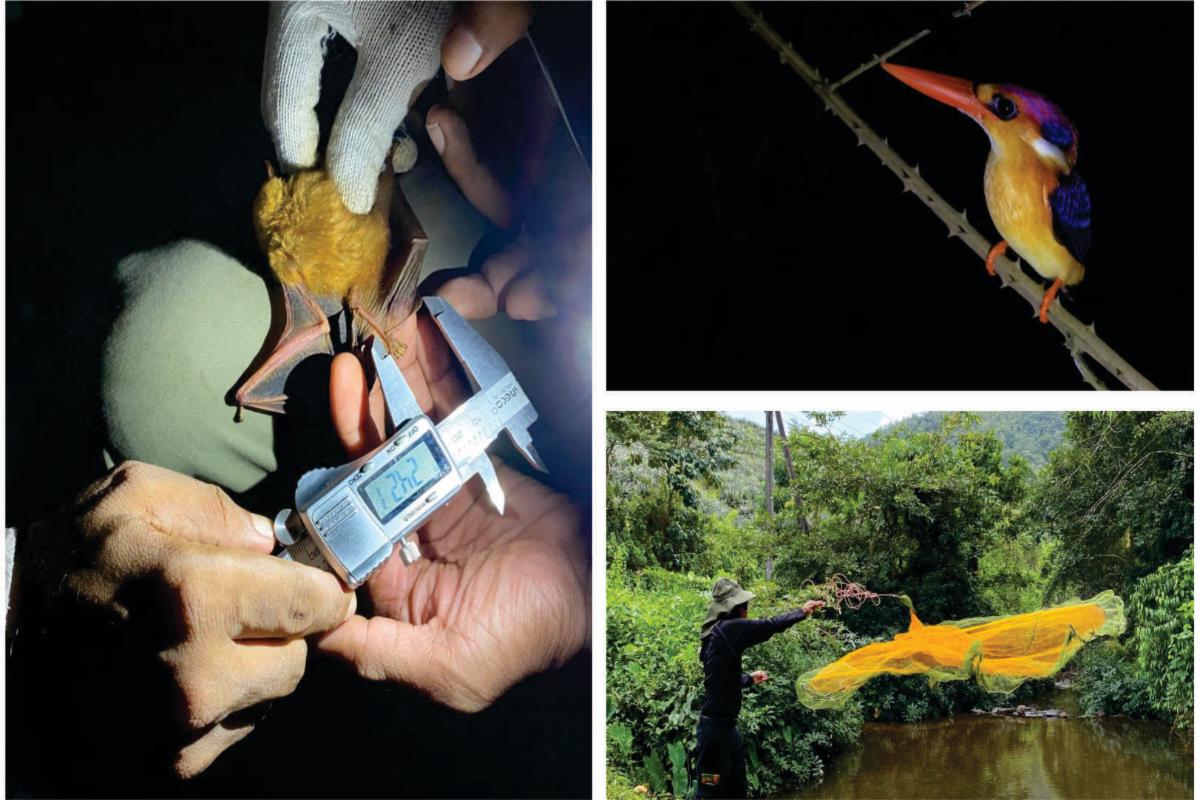
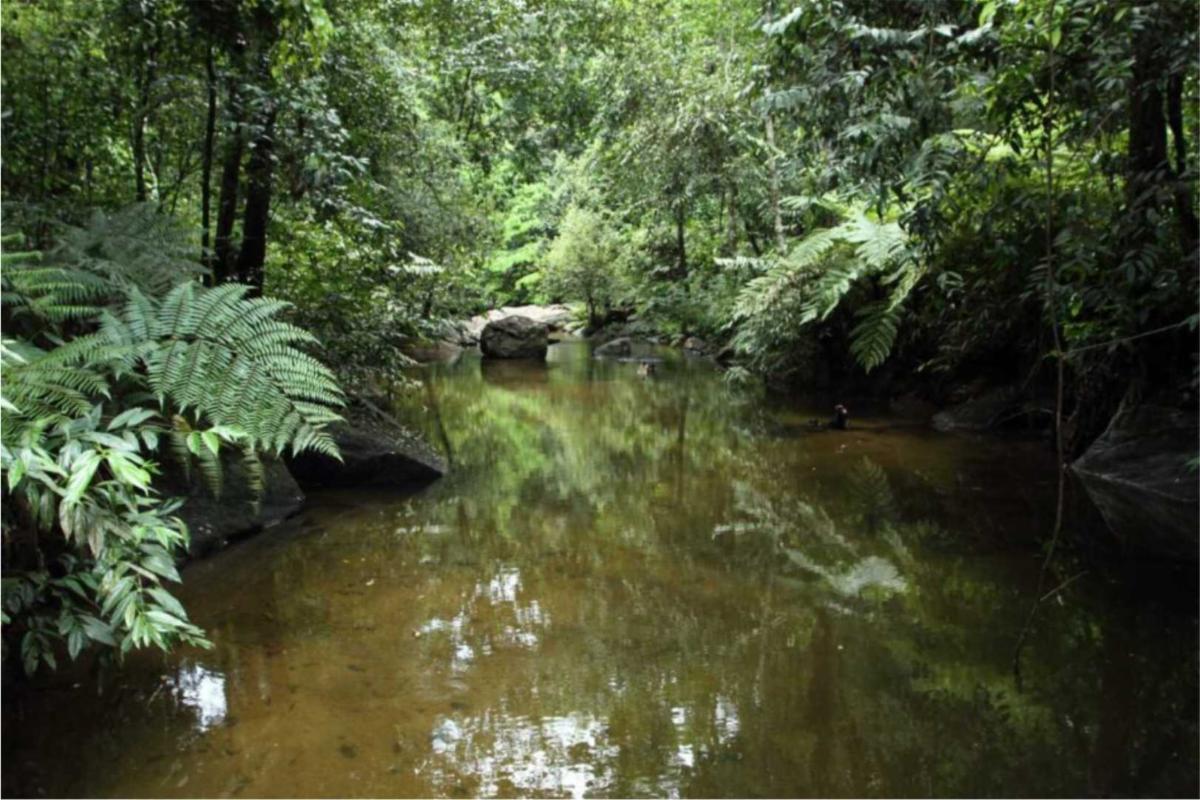
Biodiversity inventories across 123 estates have now been completed, providing vital information on the presence of plants and animals of high conservation priority. The project pairs detailed ground surveys and biological assessments with site-level monitoring, so that species composition, habitat health, and ecosystem service values can be recorded consistently across 277 estates in six districts.
It is evident that biodiversity-rich forest patches lie outside the formal protected-area network, within tea and rubber plantations, and survive as small, fragmented remnants that still harbour many endemic and threatened species. By building this baseline now, the project is creating the evidence needed to prioritise action, track change over time, and make biodiversity conservation a practical part of estate management.
| | Five Value Chains Identified for Development Through the Project | The value-chain workstream is where conservation meets enterprise in a very practical way. The project has identified pears, arecanut, kithul, jackfruit, and pepper as viable micro- and small-business opportunities through feasibility studies, market mapping, customer analysis, and cost-benefit assessments. Cardamom, Turmeric, and Ginger as short-term crops. These crops provide soil-conservation services, along with economic benefits that benefit rural communities.
The focus is especially on encouraging rural producers and women entrepreneurs. The project is also supporting the processing industry through renewable energy technologies. By supporting these value chains, the project could prove that biodiversity-compatible production can unlock real market opportunities . | | 87 Land Use Maps for Regional Plantation Companies Completed | |
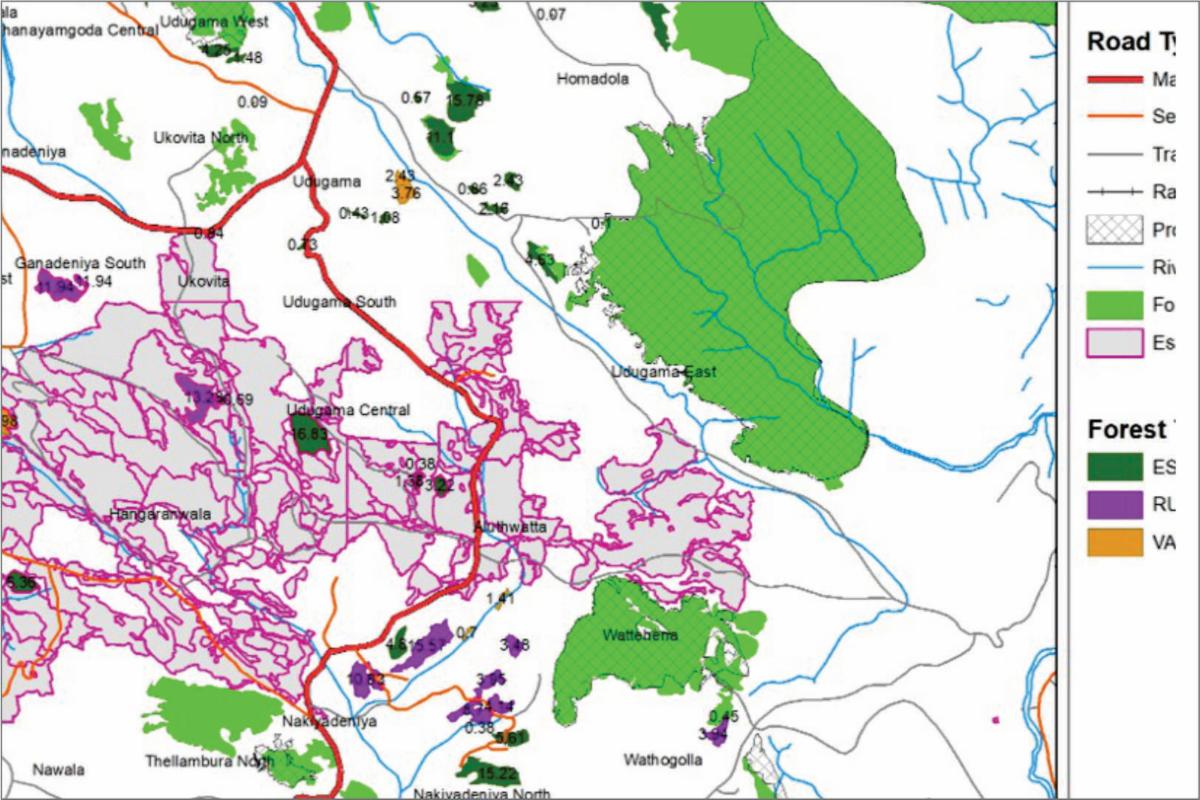
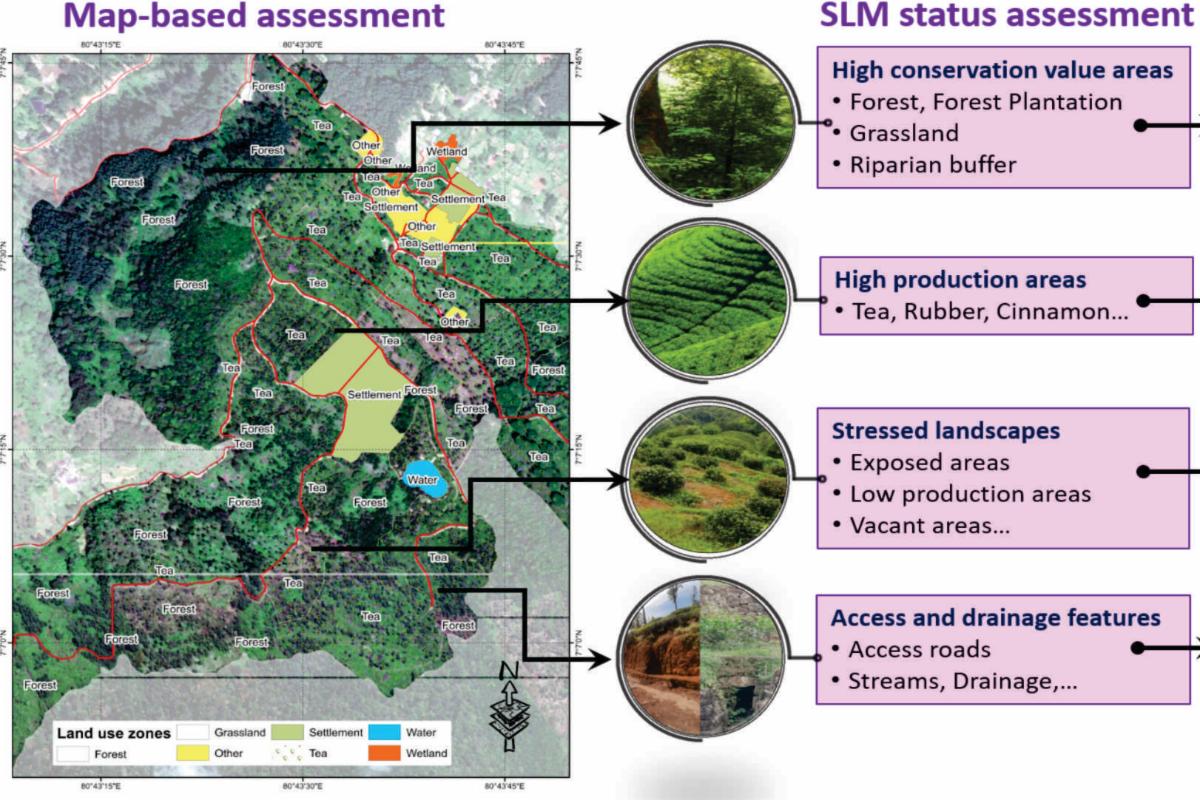
The Project is working through the Land Use Policy Planning Division to prepare maps in all project districts. As the estate maps are developed across RPC-managed landscapes in all 6 project districts - 415 estates - the project is building the GIS evidence base needed to identify remnant natural habitats, locate hotspots of land degradation, and guide future restoration and diversification decisions.
This directly responds to the project’s mandate to create a plantation GIS database and later translate the findings into land banks for restoration, agroforestry, commercial forestry, and stream conservation.
The project is developing better maps to drive smarter investments and faster on-the-ground action in the future.
| | Building JEDB Capacity and Boosting Land and Crop Productivity | |
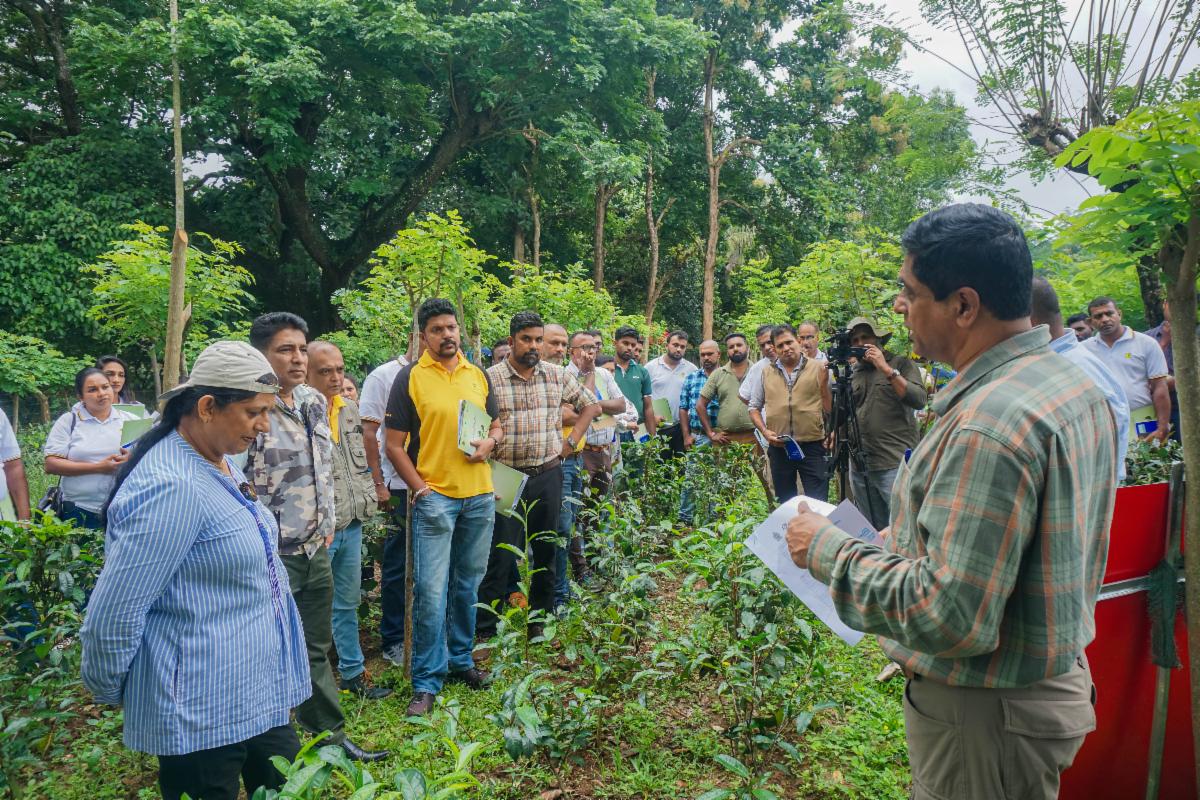
The Project recently brought together field and office executives of the Janatha Estate Development Board (JEDB) for an intensive two-day training on Sustainable Land Management using the Farmer Field School (FFS) approach. Held at the University of Peradeniya's Meewatura Experimental Station and the Department of Agriculture's 'A-Park' in Gannoruwa, the programme combined field demonstrations, agroforestry model visits and expert-led sessions on biodiversity conservation, soil management, climate-resilient tea cultivation and social inclusion.
This historic in-service training introduced plantation executives to practical, field-based learning rather than conventional classroom teaching, strengthening their capacity to promote sustainable practices, healthier ecosystems and more resilient tea estates.
| | Pear Society Formed in Ragala to Support Farmers | On 22 May 2026, more than 70 pear growers joined researchers, technical experts and local officials in Ragala to initiate the Ragala Pear Growers and Marketing Society. Although pear cultivation and marketing have existed in Sri Lanka for decades, this milestone aims to develop the subsector through professional planning and to create entrepreneurial opportunities for youth and women. Supported by the Project, the Society will transform fragmented cultivation into an organised, market-oriented sector through collective marketing, improved fruit quality, branding and value addition. This new society will also promote climate-resilient agroforestry, biodiversity conservation, rural livelihoods and sustainable economic growth in the uplands. | | Two Biodiversity Connectivity Corridors being Created | |
The restoration pilots for connectivity corridors, biodiversity refugia, and riverine corridors move the project from assessment to visible landscape repair and recovery.
The Project is establishing connectivity corridors between two protected areas – in Elbedda between Agarabopath & Kotagala Forest Reserves and in Rathnapura between Sinharaja & Walankanda Forest Reserves. Over 350 ha will be influenced by interventions undertaken in these two corridors, which are primarily located within plantations. While these pilots can show how fragmented habitats can begin functioning as connected ecological networks, they also demonstrate that biodiversity conservation is tangible, scalable, and relevant to estate management.
| | Mainstreaming Sustainable Land Management (SLM) Practices | |
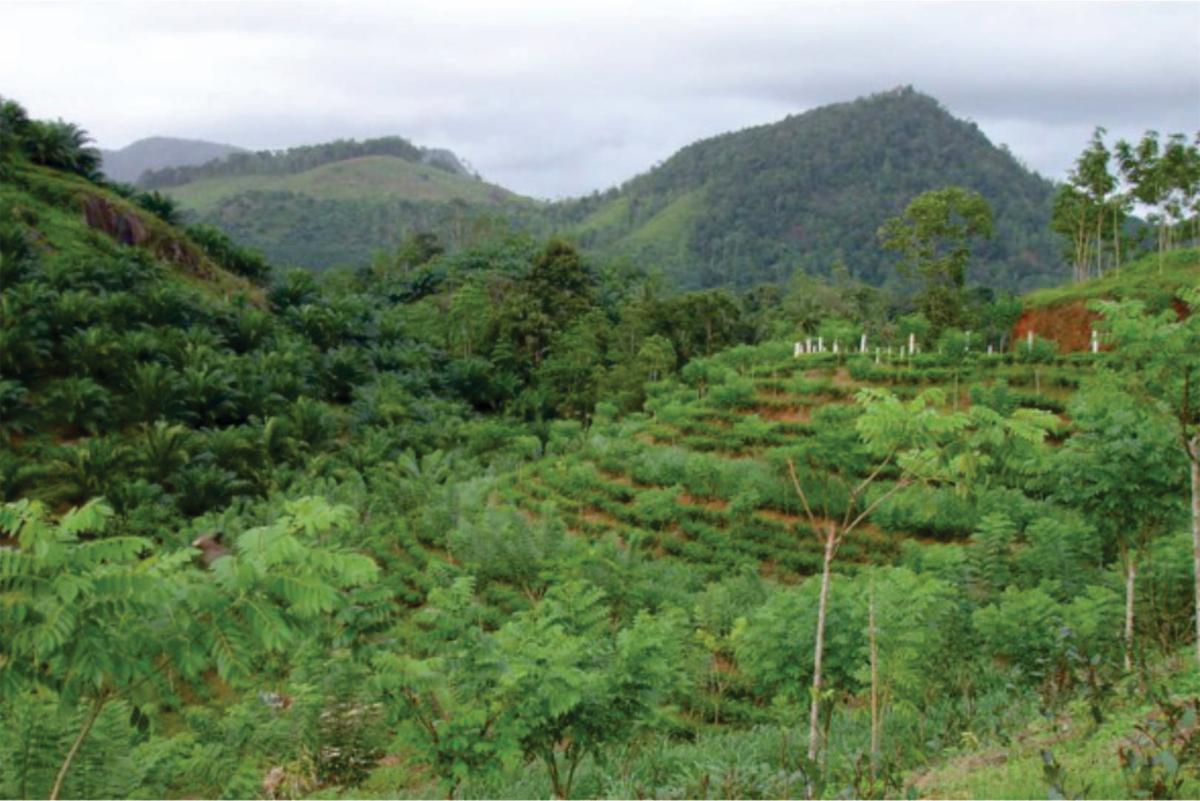
Mainstreaming sustainable land management among both RPCs and smallholders is one of the project’s strongest scaling opportunities as adoption rates of SLM practices in the tea and rubber sectors are very minimal. The design includes training field extension services and Tea Smallholder Societies to integrate SLM, Good Agricultural Practices, and conservation best practices, including through the Farmer Field School approach. It also aims to develop criteria for wider adoption of SLM and GAP through tea replanting and new planting support.
This matters because lasting change in plantation landscapes will not come from pilots alone; it will come from embedding better land management into everyday decision-making, advisory systems, and investment flows across the sector.
| | Setting the Stage for a Partnership Development Approach in Kelin Kanda | |
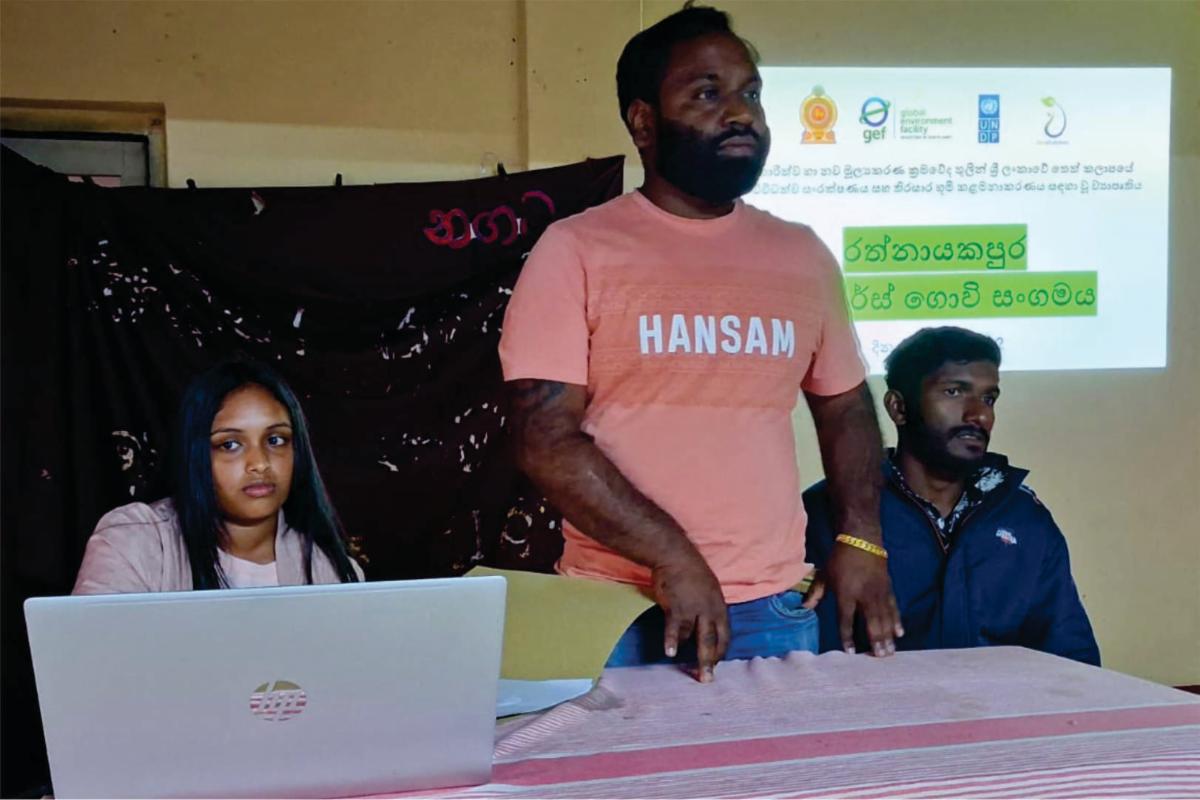
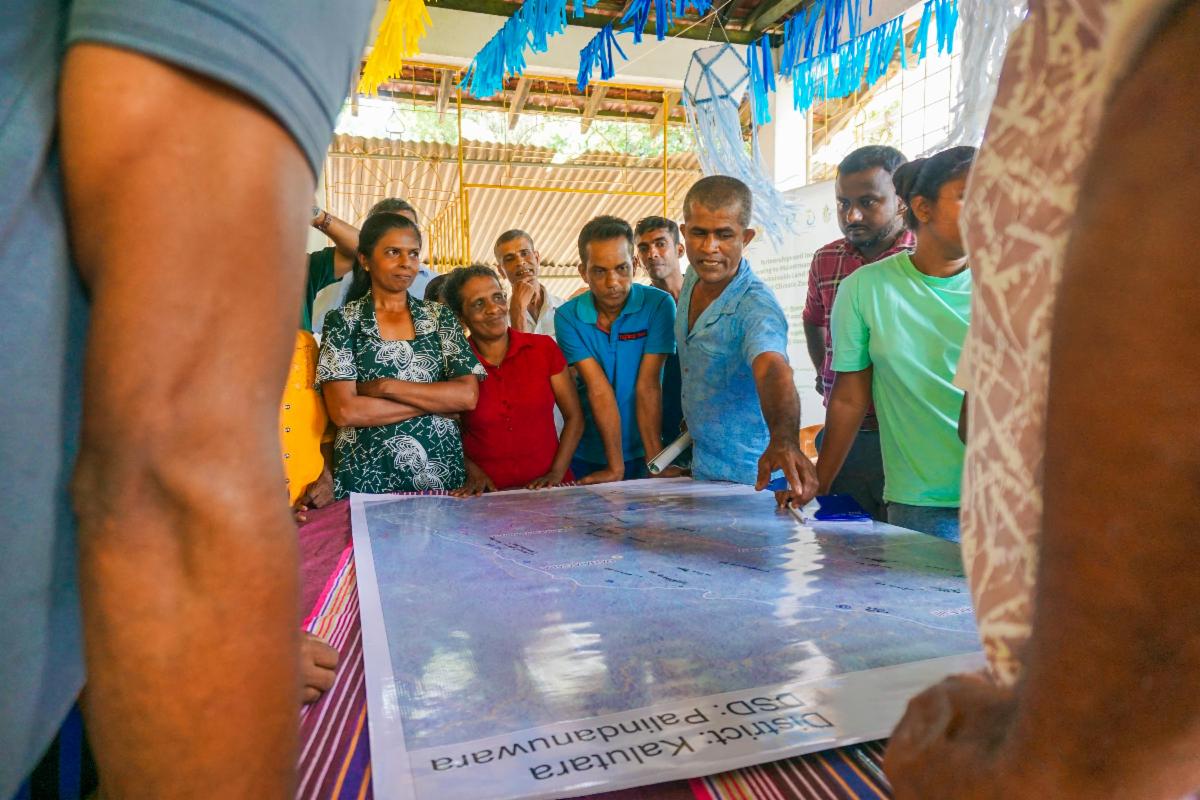
Over 60 tea smallholders from Kelin Kanda in Kalutara District joined hands with project partners to map their village, reflect on its past, analyse seasonal challenges, share the aspirations of women and youth, and identify priorities through a village walk-through.
The two-day Participatory Rural Appraisal (PRA), conducted under the Biodiversity and Sustainable Land Management Project, will help shape sustainable land management, ravine vegetation protection and livelihood interventions tailored to community needs.
As a means of listening and learning from the village community, the Project used four PRA tools to gather historic facts and seasonal data. One group mapped the village and identified where project interventions are required.
| | Developing Conservation Plans for HCVF sites | |
Conservation planning is where field evidence begins to translate into on-the-ground action. After pilot High Conservation Value Forest (HCVF) sites are validated through mapping and biological assessments, the project is now prioritising zones for protection, habitat improvement, and restoration, and then guides the work required to safeguard these sites through technical advice and best-practice support.
These plans are not intended to sit on a shelf: they are meant to help plantation companies, communities, and government agencies align around clear site priorities and management responses. In practical terms.
They will serve as operating manuals for protecting, restoring, and monitoring high-value habitats within plantations over time.
| | Organic Tea Village being Established in Lumbini Valley | |
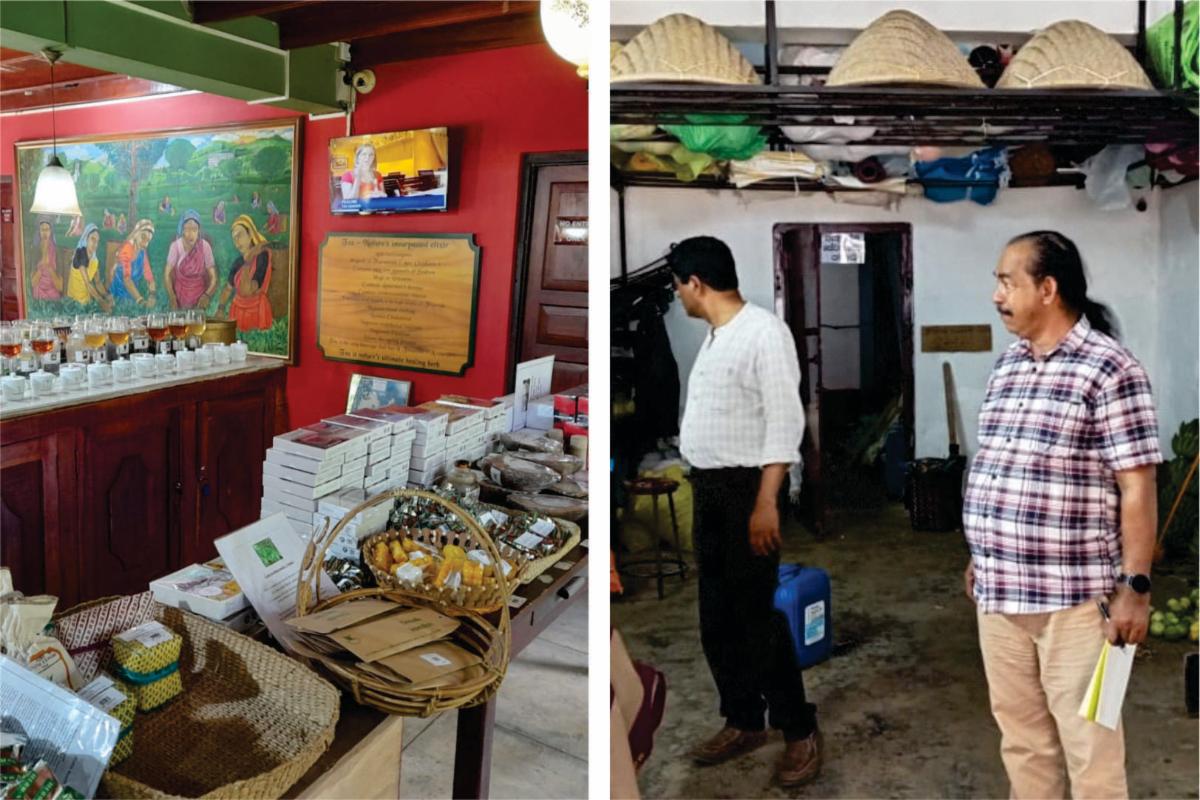
The Project has launched the establishment of an Organic Tea Village in Lumbini Valley in the SInharajah border through a partnership with Lumbini Tea Valley, a certified organic and specialty tea producer.
The project's initial activities have now been completed, with coordination mechanisms established, focal points appointed, beneficiary smallholders identified and profiled, and baseline assessments on productivity, biodiversity and socio-economic conditions carried out. These important first steps provide the foundation for supporting farmers in transitioning to organic tea production while strengthening biodiversity conservation, sustainable land management and climate resilience. The initiative will also help improve farmers' livelihoods by creating access to premium organic tea markets and developing an organic tea value chain.
| | Documenting Agroforestry Models for Mainstreaming | Documenting agroforestry models is more than a knowledge exercise; it is the bridge between promising pilots and sector-wide adoption. The project includes technical support and training for agroforestry, home gardens, multi-cropping systems, new intercrops, and women-managed nurseries, as well as an evaluation tool to monitor restoration, agroforestry, and crop diversification outcomes.
Capturing which models work best, where, and why will be essential for replication. It will also help estates and smallholders move beyond one-off demonstrations toward tested, investable practices that improve income, reduce pressure on forests, and strengthen climate resilience at the landscape scale. | | Promoting Sustainable Energy Use in Estates & Communities | |
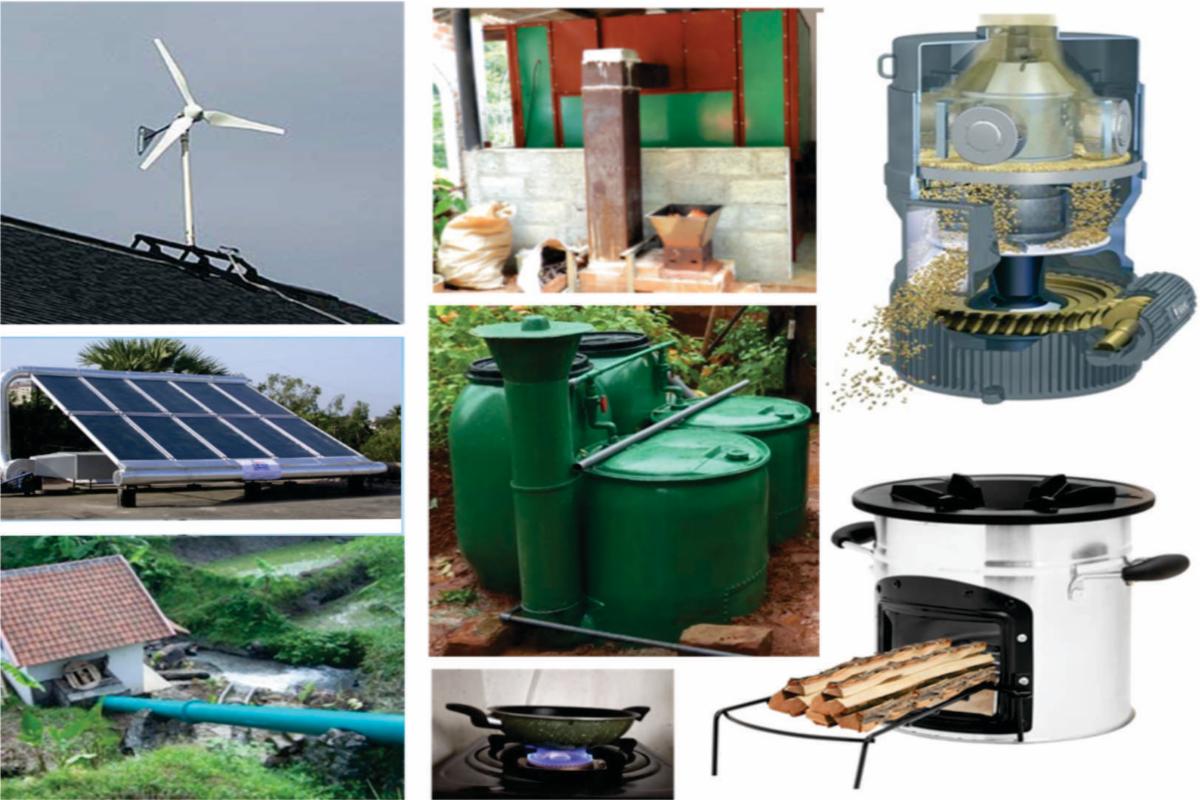
Promoting sustainable energy is a high-impact workstream because it tackles one of the plantation sector’s toughest underlying pressures: dependence on fuelwood.
Project activities call for a long-term programme on sustainable fuelwood energy, including analytics on current fuelwood use, financing plans to shift RPCs and private factories toward sustainable energy, and site-specific diagnostics on renewable options for smallholders, farmers, and SMEs. Capacity building is also planned for extension agents, renewable energy suppliers, technicians, and investors. If this work takes hold, it could reduce forest degradation while opening a cleaner and more resilient energy pathway for plantation production.
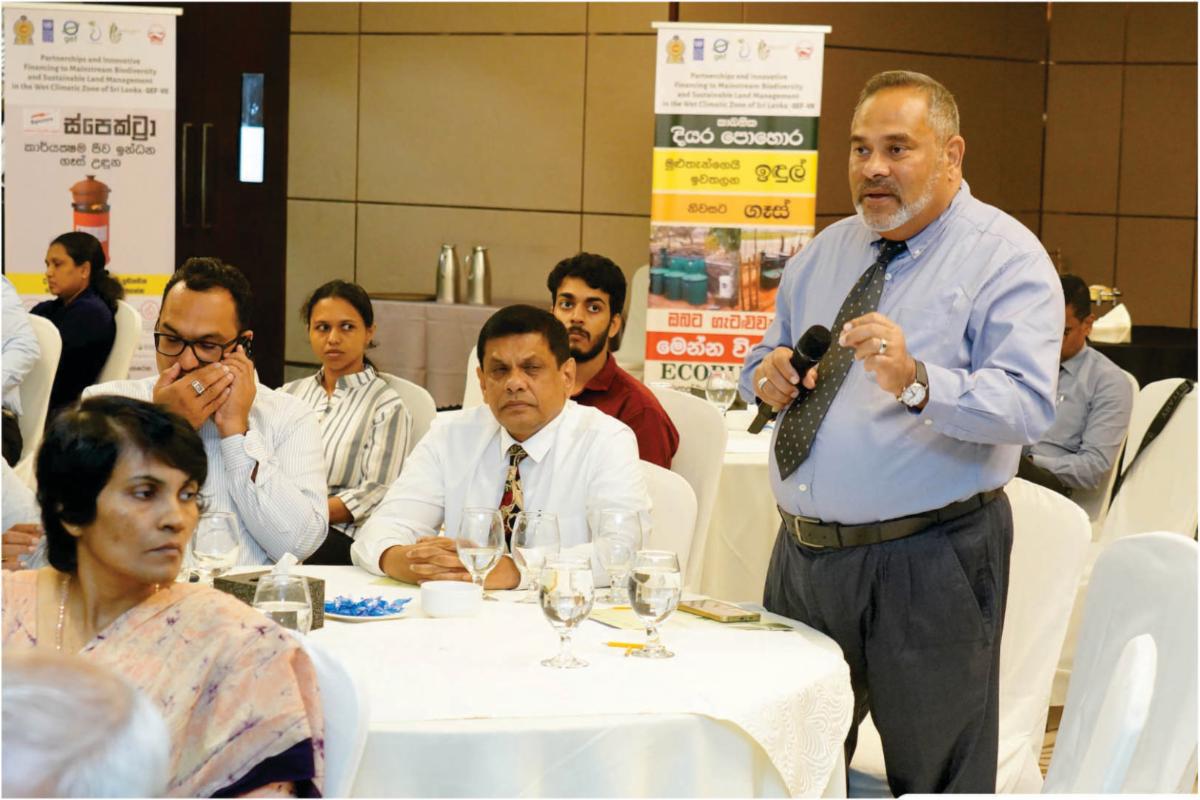
| | RECENT WORKSHOPS & EVENTS | | Collaborating with the Sri Lanka Energy Managers Association | As part of efforts to strengthen climate resilience in Sri Lanka’s wet zone plantations, the Project convened a high-level workshop on decentralised renewable energy for the plantation sector in collaboration with the Sri Lanka Energy Managers Association.
Bringing together policymakers, industry leaders, financiers and technical experts, the event explored practical pathways to reduce dependence on conventional biomass and fossil fuels while improving energy security and sustainability.
Discussions highlighted opportunities to scale up cleaner decentralised energy solutions that can support biodiversity conservation, lower operational costs and contribute to more resilient tea and rubber production systems. | | Where Climate Action Meets Ceylon Tea and Rubber | |
To mark World Environment Day 2026, the Project convened a national workshop highlighting how nature-based solutions can strengthen the resilience of Sri Lanka's tea and rubber landscapes to climate change. Bringing together government agencies, plantation companies, researchers, and development partners, the event showcased integrated approaches that combine biodiversity conservation, sustainable land management, agroforestry, climate-smart production, and renewable energy.
Experts shared how healthy forests, fertile soils, climate information, and ecosystem restoration can improve productivity while protecting livelihoods. The workshop reinforced that climate action in Sri Lanka's plantation sector is already taking shape through practical, landscape-based solutions that benefit both people and nature.
| | Plantation Leaders Rally Behind Nature-Positive Production | | |
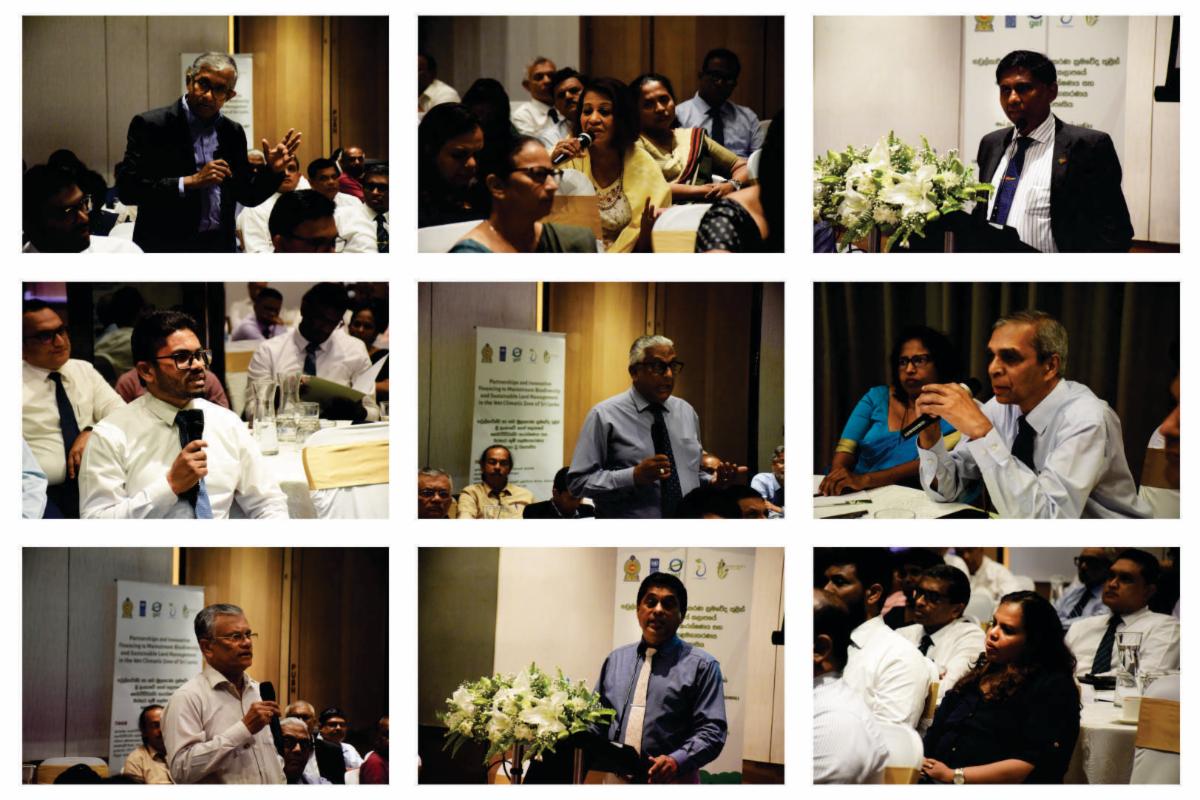
Recently, CEOs and senior executives of Regional Plantation Companies, government representatives and development partners gathered in Colombo for a Plantation Sector Forum convened by the Biodiversity and Sustainable Land Management Project. The forum highlighted the growing need to integrate biodiversity conservation and sustainable land management into tea and rubber plantation operations.
Discussions focused on climate resilience, innovative financing, ecosystem restoration, sustainable energy, certification systems and land-use planning. The event marked an important step towards building partnerships that can transform Sri Lanka’s plantation landscapes into productive, resilient and nature-positive ecosystems.
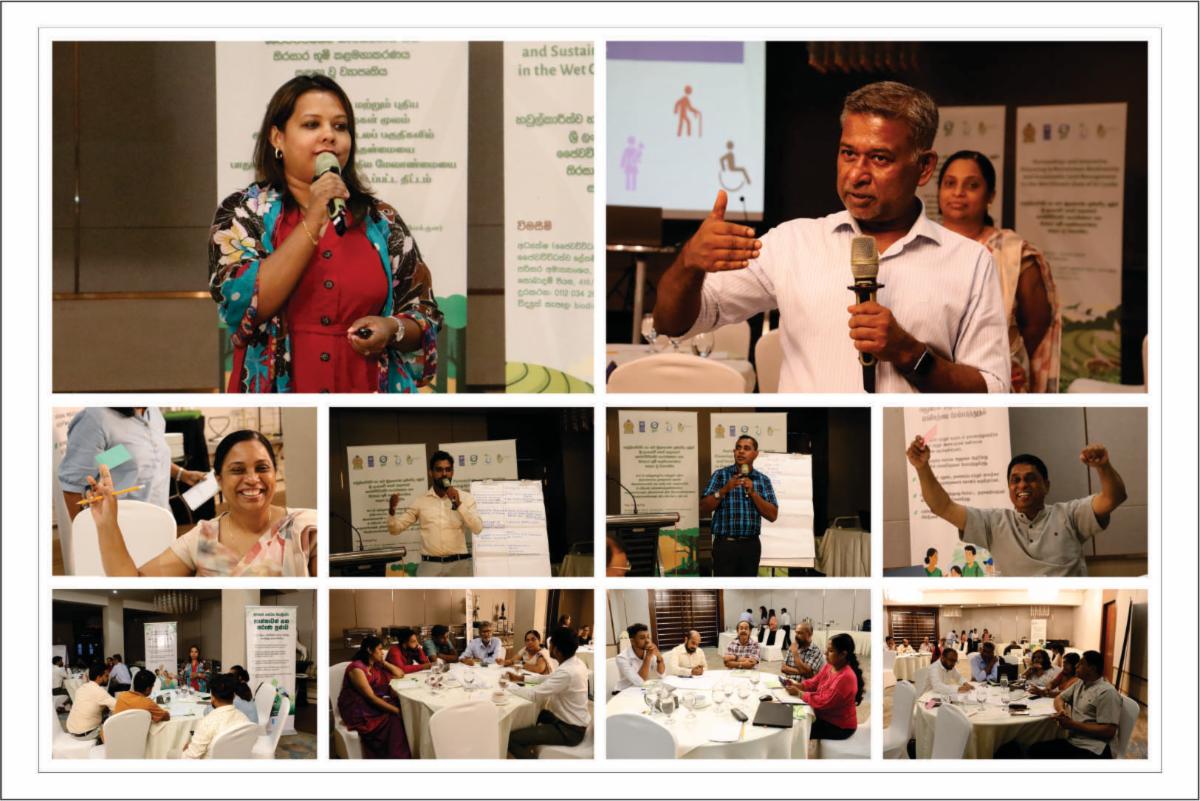
| | Gender Mainstreaming and Inclusivity | | The Project is strengthening its commitment to inclusive conservation by adopting gender-sensitive approaches throughout project planning and implementation, and ensuring that all project stakeholders adhere to a prepared guideline.
A recent gender mainstreaming training workshop brought together project staff and partner institutions to explore how women and men experience environmental change differently and how these perspectives can be better reflected in conservation initiatives.
The training highlighted the importance of equitable participation, inclusive decision-making, and recognising women as knowledge holders and leaders. The project is now integrating these principles to ensure that biodiversity conservation benefits all communities. | | | | |