|
Mangroves on the Move
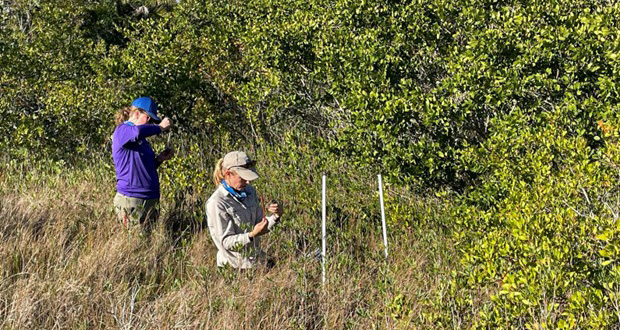
How is sea level rise and climate change affecting different habitats in Tampa Bay? The Florida Fish and Wildlife Conservation Commission, with support from TBEP, has just wrapped another phase of the Critical Coastal Habitat Assessment to answer that pressing question. Beginning in 2014, scientists have surveyed nine sites to map exactly where different salt-tolerant habitats occur and how they’ve moved over time.
In only seven years, mangrove habitats expanded in seven of the nine sites, often at the expense of salt marshes and salt barrens. Mangroves have become more dominant in recent years due to a lack of hard freezes and sea level rise. Mangroves are highly sensitive to freezing temperatures. With fewer cold snaps, they spread and outcompete more cold-tolerant salt marshes. Mangroves also build up sediment under their roots faster than salt marshes, which allows them to keep pace with sea level rise. While this all sounds great for mangroves, there is concern for the fish and wildlife that rely on different habitats at various life stages.
Although mangroves are currently thriving, all coastal habitats are losing space due to the dual pressures of urban development and increasing sea level. Loss of these habitats reduces the natural protections for coastal communities and wildlife that depend on them. The Economic Valuation of Tampa Bay report found that these habitats provide over $900 million in flood protection services in the bay. As we lose those habitats, we’re also losing this flood protection. TBEP will continue to invest in restoration projects to protect these important areas.
|