Yap Marine Island Ecology Course |
|
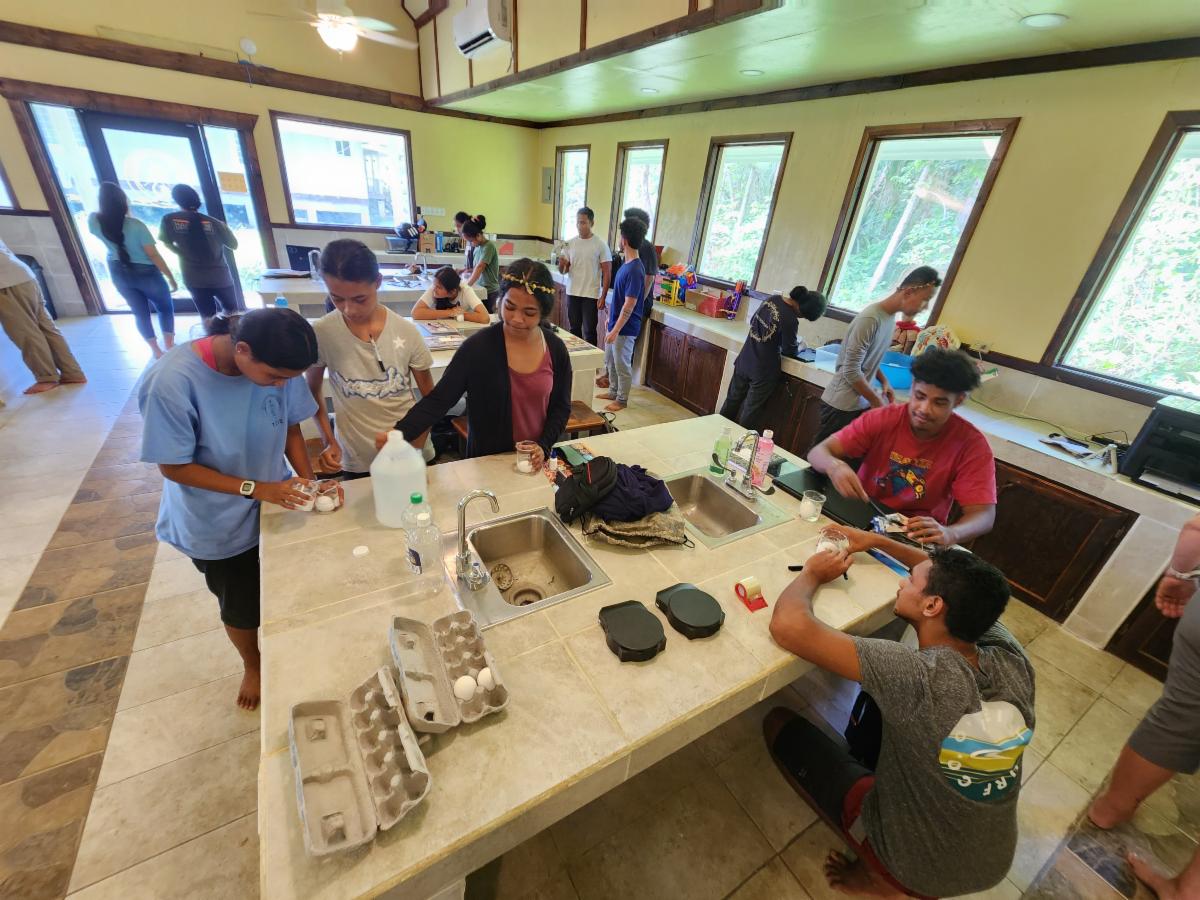
The Micronesian Conservation Coalition (MCC) held its annual Yap Marine Island Ecology Course (MIEC) in-person for the first time since covid 19 shut the borders three years ago. Over four weeks, senior students, alumni students, teachers from Yap Catholic High School, along with MCC staff and Yap Divers staff, participated in classroom lessons, labs, and field trips designed to highlight the marine and terrestrial sciences that affect their island and its surrounding waters. Students snorkeled through mangroves, visited clam and sea cucumber farms, conducted plankton tows, dissected fish, and helped deploy a weather balloon with the National Weather Service. Students were given GoPros to create group video projects expressing “What Does Marine Life Mean to You?” For the complete article written by the MCC and for links to the student videos, see the Latest News on PacIOOS.org. PacIOOS is proud to support the MCC in providing this Marine Island Ecology Course to the community! [Photo: MIEC Reverse Osmosis Laboratory Lesson. Credit: MCC]
|
|
Pacific Islands Indigenous Science Competition |
|
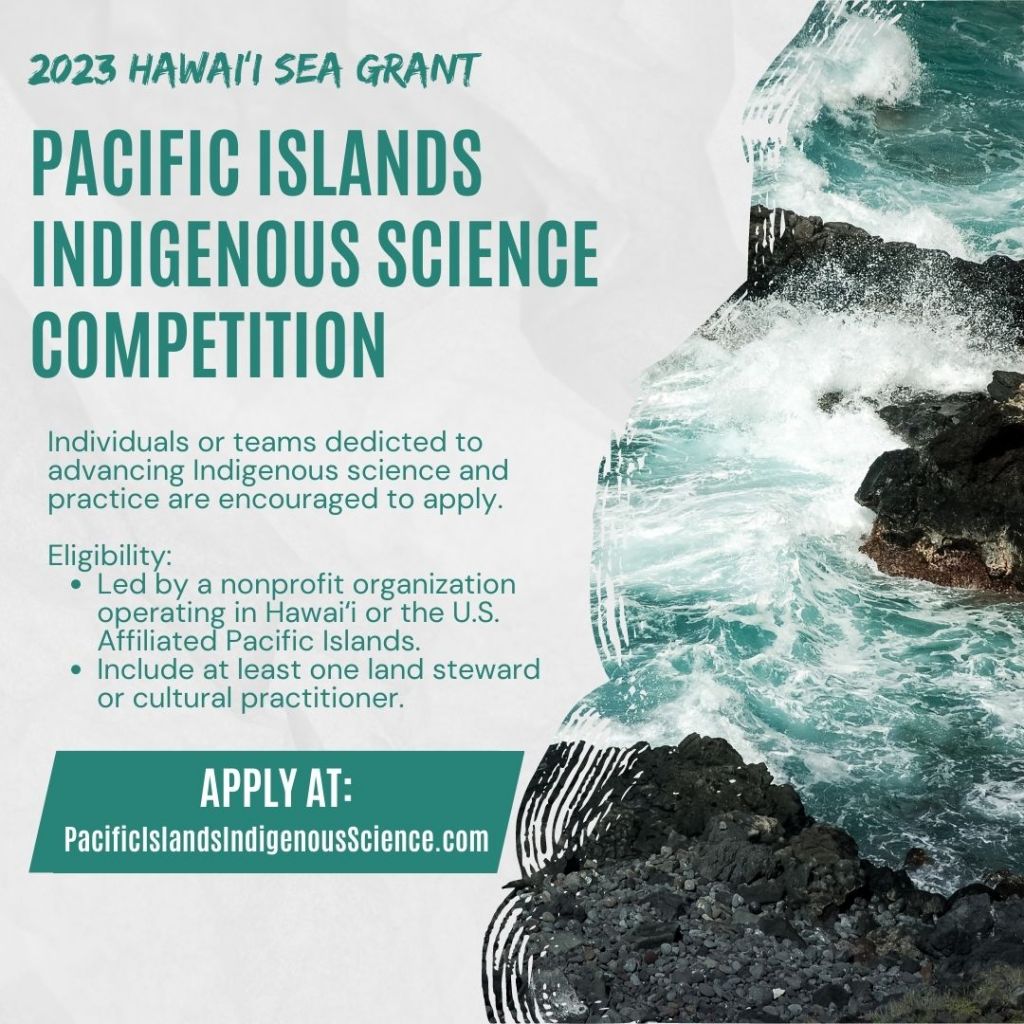
To promote Indigenous science in Hawaiʻi and the Pacific Islands, the University of Hawaiʻi Sea Grant College Program is seeking proposals for the Pacific Islands Indigenous Science Competition. Funding opportunities exist for projects that support resource stewardship, empower community, and strengthen cultural practices. Projects should center on Indigenous methodologies, protocols, and values in research. Project teams must be led by a nonprofit organization in Hawaiʻi or the U.S. Affiliated Pacific Islands and include at least one land steward or cultural practitioner. Funding is available to support between 2 and 4 projects, each in the $10,000 to $25,000 range, for a funding term of one year. Statements of Interest are due September 1, 2023 at 5:00 pm HST and Full Proposals are due October 20, 2023 at 5:00 pm HST. Please visit PacificIslandsIndigenousScience.com for complete details. If you have any questions, please email: uhsg.ulanaike@hawaii.edu
|
|
PacIOOS Tools and Services |
|
New MapCO2 Buoy Deployed off Maui |
|
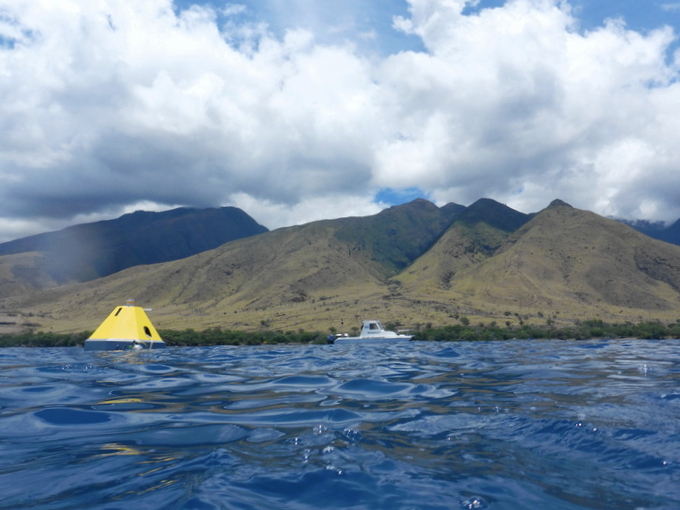
Approximately 30% of the carbon dioxide (CO2) released into the atmosphere is absorbed by our oceans, causing the pH of the waters to become more acidic. Ocean acidification leads to a decrease in the amount of carbonate ions necessary for coral to build their skeletons, and for organisms such as clams, oysters, and sea urchins to build their shells. Monitoring CO2 levels is critical to understanding the effects of acidification on our worldʻs oceans and estuaries. The Moored Autonomous Partial Pressure of Carbon Dioxide (MAPCO2) buoy deployed off Olowalu, Maui in July joins an array of MAPCO2 buoys moored across the Pacific, Atlantic, and Caribbean. The primary goal of the Maui buoy is to monitor ocean acidification in a Central Pacific tropical coral reef ecosystem. Measurements of temperature, salinity, turbidity, chlorophyll, dissolved oxygen, pH, air pressure, and dissolved CO2 are recorded every three hours, and transmitted daily. The buoy is funded as part of a gift from Dr. Priscilla Chan and Mark Zuckerberg to the Hawaiʻi Institute of Marine Biology to improve Hawaiʻi’s ocean health. It is owned and maintained by the University of Hawaiʻi at Mānoa and the NOAA Pacific Marine Environmental Laboratory (PMEL) under the supervision of Chris Sabine. The data are managed by PMEL at the NOAA Western Regional Center in Seattle, Washington and PMEL enables data streaming into the PacIOOS website and PacIOOS Voyager. [Photo: Olowalu Buoy. Credit: UH/Amy Markel]
|
|
Meet PacIOOS' New Physical Oceanographic Modeling Specialist Fatima-Zahra Mihami |
|
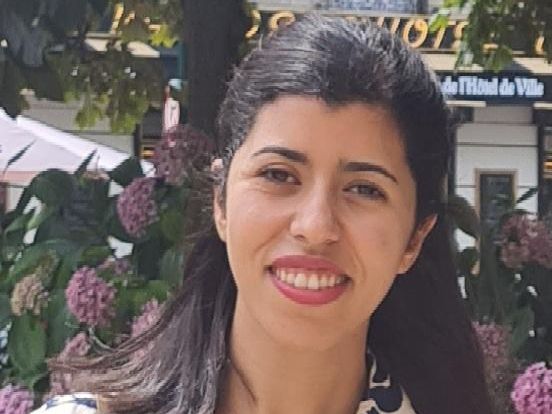
Fatima-Zahra Mihami is a Physical Oceanographic Modelling Specialist developing new and improved coastal wave models, which will be used for inundation mapping and wave run-up forecasts for many beaches in Hawaiʻi. She uses high-performance computational techniques, such as GPU parallelization, to efficiently and reliably run complex and high-resolution nearshore wave computation. Fatima-Zahra holds a Ph.D. in coastal engineering from the University of Pau in France. During her graduate studies, she focused on enhancing numerical methods and programming techniques to boost the speed of wave models so they could be used in an operational framework. Fatima-Zahra was born and raised in Morocco, in a small city in the Atlas Mountains. She enjoys hiking, snorkeling, and reading psychological thriller novels. She is also very passionate about computers and programming and hopes she can use these tools to predict and protect against coastal flooding.
|
|
Cooper Lund Turbidity Research |
|
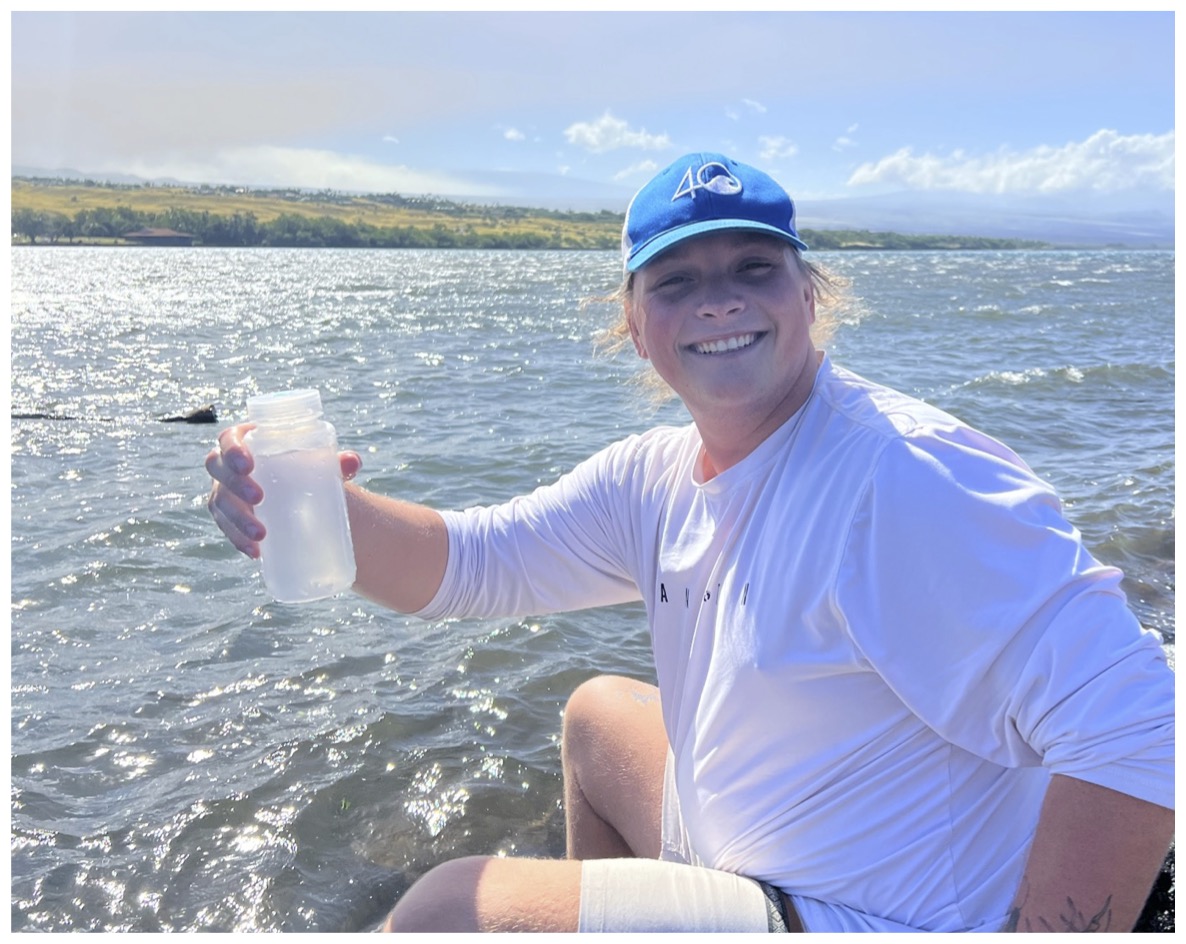
Turbidity is a standard water quality measurement of how clear or murky the water is. The relationship between turbidity and particles in the water is site-specific, because turbidity is a measure of light reflecting off particles, and is dependent on the color and shape of the particles. For his Senior Thesis project, Cooper Lund (UH Hilo, BS ’23, Marine Science) set out to determine the impact of sediment characteristics on turbidity at the PacIOOS water quality buoys located in Hilo Bay and Pelekane Bay, Hawaiʻi Island. While Hilo Bay is dominated by an influx of sediment from the Wailuku River, Pelekane Bay is a mixture of river sediment and calcium carbonate from the adjacent coral reef. Cooper explored the unique relationships between the mass of particles in the water and turbidity, which can be used to better understand sediment and carbon export in these systems. At both sites, the amount of organic matter increased with turbidity, but the source of that organic matter likely differed. At Pelekane Bay, there was a strong relationship between turbidity and chlorophyll a, suggesting the source of the organic matter is algae growing in the water. In contrast, Hilo Bay had no relationship between turbidity and chlorophyll a, suggesting the source of organic matter was from land, and washed in by rivers. [Photo: Cooper at Pelekane Bay, Hawaiʻi Island. Credit: Sydney Lewis] |
|
|
|
|
|
|