Representative James Kaufman
House District 28
|
|
Volume 1, Issue 7, May 2021 |
|
Welcome back to our newsletter! We just finished the 120-day regular session on May 19th, but I’m still down here in Juneau. Governor Dunleavy called the legislature into a thirty-day special session which started on May 20th. These special sessions are limited to only a select few subjects. In this case the topics still on the table are the completion of the operating and capital budgets, as well as the payment of the PFD and the governor’s constitutional amendment relating to the permanent fund.
|
|
The operating and capital budgets are in the last step of the process: conference committee. A conference committee is formed to resolve the differences between the Senate and the House legislation. The conference committee is made up of an equal number of Senators and Representatives and their job is to find an acceptable middle ground that both bodies can agree upon. A resolution to the operating and capital budgets is forthcoming and should happen within the next two weeks.
In this newsletter I want to give a summary of all the bills that I either sponsored or cosponsored this session. This is a big piece of the policy work this session, outside of the budget work and all the other bills which were deliberated upon in committees. I also want to give a brief explanation of two different ways to manage an endowment (such as the permanent fund).
And of course, the usual Quality Corner. If you’re curious about past newsletter
editions, see below for links.
As always, I love hearing from my constituents and other Alaskans, so reach out by phone or email and tell me your thoughts, concerns, or anything else!
|
|
HB 187: State Agency Publications
Committee: House Finance
Summary: We’ve been putting continuous improvement language into bills via amendments, but this is the first of our series of continuous improvement bills designed to reduce waste and expense.
HB 187 creates a pathway for agencies to thoughtfully review their document production and identify where they can delete, combine, or otherwise reduce nonbeneficial documentation and use of resources.
This is a becoming a popular piece of legislation, we have bipartisan support and 19 other legislators signed on as co-sponsors!
Next Steps: This bill has no financial cost, so we're going to try to get this heard on the floor at the beginning of the next regular session
|
|
HB 200: License Plates: Specialty Organizations
Committee: House State Affairs
Summary: We were working on HB 201 at a constituent’s request but in doing so observed how wasteful it is to push a simple commemorative plate through the (expensive and time consuming) legislative process.
While researching, we found a bill that had been previously sponsored by Senator Costello. We liked it immediately, adopted it and introduced it as HB 200.
HB 200 puts the decision-making authority down in the managing agency (where it belongs) and if passed into law will allow the agency to manage specialty plate requests which will save a lot of legislative time and money.
Next Steps: We are hoping that this bill will be heard in The House State Affairs committee and move quickly to the floor in the next legislative session.
|
|
HB 201: License Plates: Fallen Police Officers
Committee: House Labor & Commerce
Summary: This bill authorizes the creation of a commemorative plate for fallen police officers. Created at the request of a constituent, we were surprised that this plate had not already been authorized. The past attempts by the constituent to get it through the DMV and the legislature had failed. This lengthy process is another reason why we put forth HB 200!
Next Steps: This bill is picking up strong support from the law enforcement community. We are hopeful that we will move quickly through the legislative process in the next session.
|
|
HB 204: Workers' Compensation Disability for Firefighters
Committee: House Rules
Summary: We are happy to sponsor HB 204 which is the house version of SB 131. The intent of this bill is to recognize that certain cancers in firefighters are caused by exposure to carcinogenic toxins associated with firefighting.
Next Steps: This bill is ready to go to the House floor.
|
|
Cosponsored Bills and Resolutions |
|
HB 3: Definition of "Disaster": Cybersecurity
Sponsor: Representative Johnson
Committee: Senate Judiciary
Summary: This is a good bill that I am happy to cosponsor. The intent of this bill is to enable a more complete and rapid response in the event of a cyber attack. These types of attacks are happening more often these days, and even recently with the judicial branch of the government so this is also a timely bill.
|
|
HB 34: Naming Vietnam Helicopter Pilots' Memorial Bridge
Sponsor: Representative Shaw
Committee: Passed both bodies and awaiting transmittal to governor
Summary: The $6,300 cost of renaming these bridges is an incredibly small price to pay! This bill has my full support! Much emotion on the house floor when Rep. Shaw presented this bill to rename two neighboring bridges crossing the Matanuska river.
|
|
HB 44: Practice of Accounting; Licensure
Sponsor: Representative Thompson
Committee: Senate Labor and Commerce
Summary: This bill updates statutes regulating the practice of accounting and licensure in the state. These are necessary updates and I cosponsored this bill in hopes that it would move through the legislative process quickly.
|
|
HB 63: Alaska Marine Highway Operations Board
Sponsor: Representative Stutes
Committee: Passed both bodies and awaiting transmittal to governor
Summary: We did a lot of work to help make turn this bill into one that would help improve the operations of the ferry system. We provided amendments that added essential competencies to the board along with alignment of planning and reporting requirements. There is still more work to do to improve the return on dollars invested in the AMHS, but this is a good start.
|
|
HB 87: Electric-assisted Bicycles
Sponsor: Representative Wool
Committee: Senate Transportation
Summary: Currently, the state of Alaska does not have any laws pertaining to electric-assisted bicycles, nor any related definitions. This bill defines electric-assisted bicycles in general and in various classes. This helps to remove confusion and long, expensive lawsuits that result from this confusion.
|
|
HB 158: PFD Contributions to the General Fund
Sponsor: Representative Prax
Committee: House State Affairs
Summary: A good bill enabling recipients of PFD's to direct their dividend towards the general fund. Some say that they prefer that their PFD be used to fund government and this bill makes it easy to do so.
|
|
HB 179: Limitations on Firearms Restrictions
Sponsor: Representative Tilton
Committee: House Community & Regional Affairs
Summary: I am a strong YES and proudly support this second amendment bill.
|
|
HB 191: School District Budgets; Tenured Nonretention
Sponsor: Representative Gillham
Committee: House Education
Summary: This bill was presented as a fix in response to a bill that crossed the floor this session that was for early funding and forward funding education. The justification for this was to avoid pink slips being handed out to teachers, which I agree is an issue. This bill fixes the over-aggressive issuance of pink slips, allowing time to resolve funding issues.
|
|
HJR 12: Endorsing ANWR Leasing; Related Issues
Sponsor: Representative Rauscher
Committee: Passed both bodies and enrolled
Summary: Responsible resource development is a major contributor to the success and growth of the great state of Alaska. Let's turn towards opportunity for this rather than run away from it.
|
|
HJR 16: Hmong Veterans Military Rights
Sponsor: Representative Nelson
Committee: Passed the House
Summary: The Hmong people put themselves on the line to help our military including Navy SEALs such as my good friend, Representative Laddie Shaw. It is only fair that we should recognize their contribution and sacrifice.
|
|
HR 9: Homeport Icebreakers in AK
Sponsor: Representative Kreiss-Tomkins
Committee: Passed the House
Summary: As the name suggests this is a resolution urging the federal government to homeport icebreakers in Alaska rather than Washington. We enjoyed joking about the foolishness of icebreakers stationed in Washington State: "Hey Washington, where's your ice?"
|
|
SB 21: License Mobile Intensive Care Paramedics
Sponsor: Senator Revak
Committee: Passed both bodies
Summary: This bill consolidates the oversight of emergency medical services under a single agency instead of the current duplicative split between the State Medical Board and the Department of Health and Social Services. This is a great example of an improvement of which we should strive to find as many as possible.
|
|
SB 69: Exempt Renewable Energy Electric Plants
Sponsor: Senator Revak
Committee: Passed both bodies
Summary: This bill removes duplicative regulations and enables renewable energy electric plants. Specifically, it targets smaller independent power producers. This is a common sense bill which again is reducing regulations and is a great improvement.
|
|
One of the things on everyone’s mind right now is the budget, how we pay for government, how much should we be paying, how we calculate the dividend, along with the question of whether or not we should be considering some form of tax to pay for the combined cost of government and dividends. To many this is a confusing area of state fiscal policy, and rightly so, as it does get complicated. Here’s our best shot at summarizing where we’ve been and what decisions are currently before us.
To begin, it’s important to keep in mind that the permanent fund was initially invested in lower-risk bonds and government treasury bills which created a relatively predictable income. The keyword being “income” because the dividend was based upon how much income the fund generated, specifically how much income the fund generated over the previous five years. The formula was that 21% of this total number was then split 50% to the general fund to be spent as the legislature saw fit and 50% to be paid out as a dividend. That’s the “classic PFD formula” so to speak.
Over time bond yields decreased further and further to a point that the Permanent Fund needed to change the types of investments that they made. The Permanent Fund investments moved from bonds and treasury bills towards stocks, venture capital funds, real estate, and more. The move to these other types of investments kept the average returns high, but also made the returns much more volatile, or unpredictable. In bear markets not only would dividends be smaller, but government funding (for things such as universities, Medicaid, emergency response, correctional facilities, etc.) was also volatile. Another issue is that funds invested in these types of investments are managed for highest “total return” which means that they seek higher valuation (growth), not just dependable annual yield.
In the past, the legislatures’ response to these fluctuations has been to save some money when income is high so that savings could be used when incomes were lower or more volatile in the future rather than changing the structure of the draws from the fund.
The problem now is that these savings accounts are running dry, so we need to step up and modernize the structure. The modern standard for managing funds such as the Permanent Fund is not from a net income model as previously described, but rather by managing for the highest total return on fund value and then using a formula to decide how to calculate the annual withdrawal.
So what’s a “5% POMV”?
The “POMV” stands for “Percent of Market Value” as in a percent of the total value of the permanent fund. The specific method being proposed by the governor is to calculate how much to withdraw from the permanent fund based upon the average of the total fund value of 5 of the past 6 years.
Then up to 5% of that calculated value is subtracted from the fund and used to fund government spending and to provide for a PFD. The 5-year average is used to level the amount as there will be a mixture of good and bad years. This is currently a system which is defined in statute alongside the “classic PFD Formula” but the conflict between these statutes has led to legislative decisions, lawsuits, and vetoes deciding the dividend.
The beauty of using a POMV system is that the fund can be managed for total return which can help grow it faster, and then the combination of fund growth rates, inflation, and withdrawals is such that the fund continues to grow on into the future.
Like I said earlier, this gets complicated. So, in summary, the big debate right now is how to calculate the withdrawal, how to split that amount between government and dividends, and how to fill the resulting gap if there is one. There are those that want a dividend check even if it takes a broad-based sales or income tax to make it possible and there are those that think that it is foolish to pay a PFD if it requires taxation to make it possible. Please let me know what you think!
|
|
This is a link to a great article that goes more in-depth about these mechanisms |
|
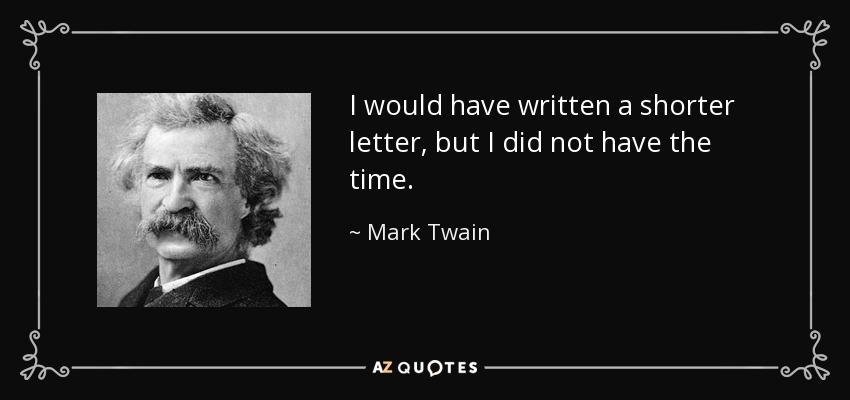
I feel as if the rest of this newsletter has been a little long. Therefore, this newsletter's quality corner is going to be on the topic of brevity, a valuable skill. |
|
Upcoming Community Council and other community meetings
Click below for links to council home pages:
If you don't know which community meeting applies to your area you can go to communitycouncils.org and find out using their map!
- Hillside Community Council: Monday, June 21, 2021, at 7 pm via Zoom
- Girdwood Board of Supervisors: Monday, June 21, 2021, at 7 pm via TBA.
- Huffman/O'Malley Community Council: Thursday, Aug 19, 2021, at 7 pm via Zoom.
- Anchorage Home and Landowners Owners Association: Thursday, June 3, 2021, at 7 pm via Zoom
- Rabbit Creek Community Council: Thursday, June 10, 2021, at 7 pm at Moen Park, 17761 Golden View Drive, and by Zoom
-
Bear Valley Community Council: Wednesday, Sep 8, 2021 (Tentative)
- Turnagain Arm Community Council: Thursday, Sep 9, 2021 (Tentative)
- Alaska Chapter, Association of Mature American Citizens: Tuesday, June 8, 2021, at 7 pm at Wellspring Ministries Campus or via Zoom
-
Glen Alps Community Council: Thursday, Aug 26, 2021 at 6 pm (location TBD)
|
|
Staff to Rep. Kaufman:
Please feel free to call our office, 907-465-4949, or email anytime.
If you are unable to reach our office and need local assistance, please contact the Anchorage LIO at 907-269-0111
|
|
Interim Contact:
Alaska State Legislature
1500 W. Benson Blvd.
Anchorage, AK 99503
907-269-0244
|
|
During Session:
Alaska State Legislature
Alaska State Capitol, Room 405
120 4th Street
Juneau, AK 99801
907-465-4949
|
|
|
|
|
|
|