| |
Dear Colleagues,
Welcome to the 2026-27 academic year. We hope you had a wonderful summer.
We know that for many of you this summer was less than wonderful as you and your school communities faced devastating wildfires throughout Washington and Oregon.
Besides the physical rebuilding, all of us know the mental health of students, families and school employees alike need support and repair. Two SMART Center affiliate faculty members, Dr. Kira Mauseth and Dr. Tona McGuire offer a disaster recovery toolbox created by their Health Support Team to help students, families and school personnel impacted by wildfires.
In addition to the resources provided in this newsletter, we invite you to reach out to the SMART Center if you have any specific needs for your school and students. You are not alone.
As always, you’ll find updates, announcements and training opportunities to support your school mental health program within this newsletter.
Wishing you a great start to the new school year.
In partnership,
The SMART Center Leadership Team
Larissa Gaias, PhD; Eric Bruns, PhD; Aaron Lyon, PhD;
Kelcey Schmitz, EdD
| | | |
Congratulations to SMARTie Award Winners!
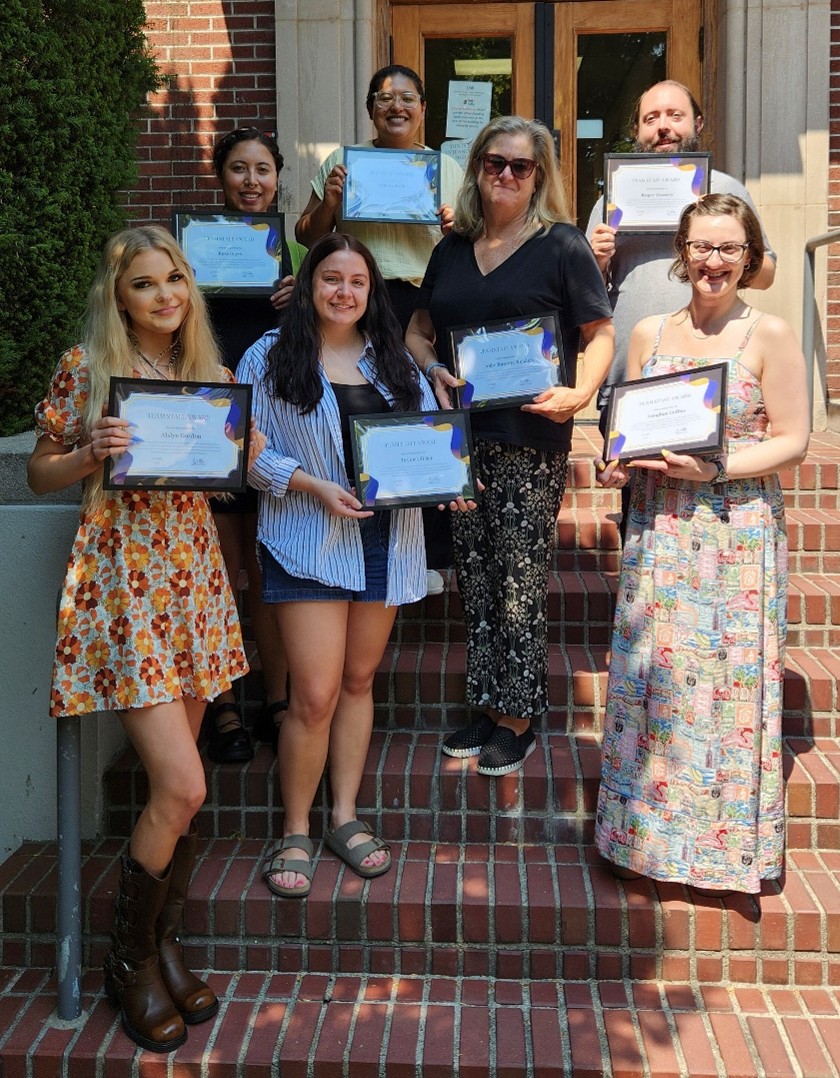
Dr. Aaron Lyon’s team, Designing Real-World, Effective Approaches for Multilevel Implementation (DREAMI), received the Team Excellence Award at this year’s UW Psychiatry & Behavioral Sciences Department Annual Meeting.
Congratulations to Jodie Buntain-Ricklefs, Vaughan Collins, Roger Goosey, Aislyn Gordon, Mahima Joshi, Rose Reyes and Taylor Ullrich.
Congratulations to Jodie Buntain-Ricklefs for also receiving the Mentorship Award at the annual meeting. As the longest tenured SMARTie, Jodie has spent years developing curricula and materials to support her colleagues’ professional growth. With Jodie’s mentorship, multiple SMARTies have advanced in their careers, utilizing their leadership skills to take on new roles.
| | |
DREAMI team: Front L to R – Aislyn Gordon, Taylor Ullrich, Jodie Buntain-Ricklefs, Vaughan Collins; Back L to R– Rose Reyes, Mahima Joshi, Roger Goosey
| | |
Transitions
Following this award-winning year, Jodie Buntain-Ricklefs is stepping down from her role at the SMART Center after 10 years. Not officially retired yet, Jodie will continue part-time with the SMART Center’s Public Health Seattle King County project that provides training and consultation to school-based health center providers throughout the County. The SMART Center is grateful to Jodie for her many years of dedication and innovation from which we have all benefited.
| | | | |
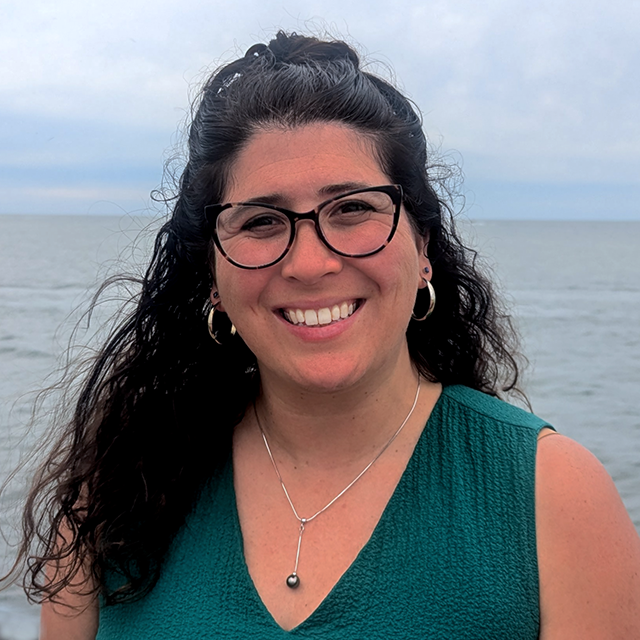
The SMART Center is pleased to announce the promotion of Larissa Gaias, PhD to assistant professor after one year as an acting assistant professor in the UW Department of Psychiatry & Behavioral Sciences. Larissa's research centers on incorporating an equity-explicit lens into the development, implementation, and evaluation of school and community-based social-emotional, behavioral and mental health practices and policies.
| | | |
The SMART Center is pleased to announce the promotion of Keith Hullenaar, PhD to assistant professor by the UW Department of Psychiatry & Behavioral Sciences. Keith spent the last two years as a postdoctoral fellow at the SMART Center. His research focuses on developing community-engaged approaches to school safety and violence prevention.
| | | That Implementation Science Podcast: Eric Bruns, PhD: How policy impacts wraparound implementation
In this episode, Kevin King and former SMARTie Mike Pullmann interview Eric Bruns and discuss policy challenges, highlight a few examples of policy work he has done with Wraparound care, and discuss some reasons why policy may not receive adequate attention in implementation science. Eric also took a quiz on some of his favorite musicians (and contributed this episode’s closing theme music). | |
| |
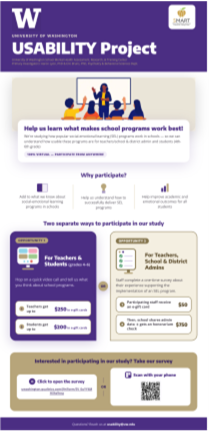
SEL USABILITY Study
We are seeking students and teachers to help us learn what works in Social Emotional Learning! Elementary school teachers and students grades 4-6 are invited to participate in our USABILITY study. Earn up to $250 in e-gift cards for your time! If interested, complete the survey, and please feel free to share this opportunity.
| | | | |
Seeking Middle and High Schools to Receive Free Suicide Prevention Programs
The Building Resilience in Teens through Education (BRITE) study team is seeking middle and high schools to receive school-wide suicide prevention programming (for free) as part of an important research study.
| | |
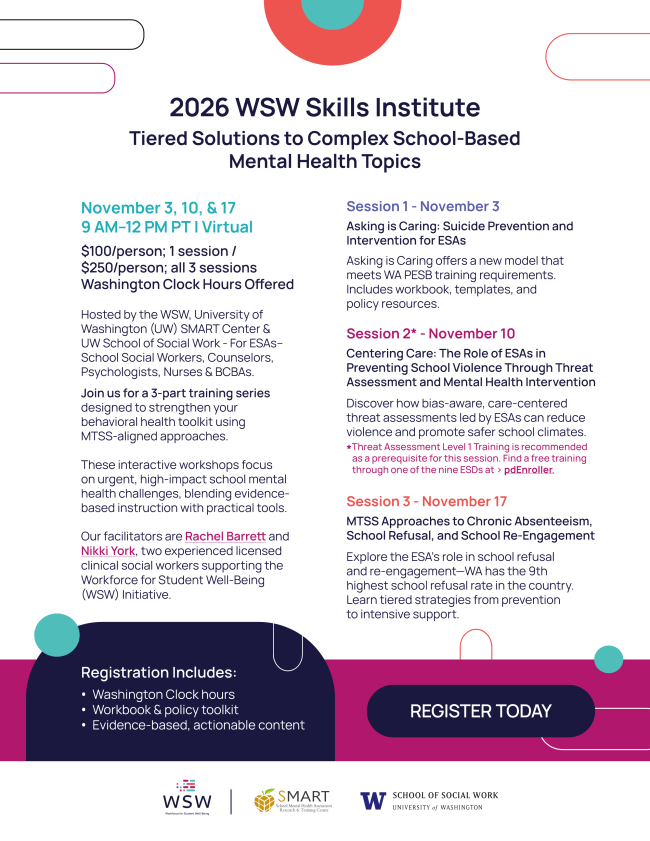
WSW Skills Institute | Tiered Solutions to Complex School-Based Mental Health Topics
November 3, 10, & 17 | 9am – 12pm PDT
Virtual – $100/per session or $250/for all three sessions
Clock Hours Offered
Session 1 – November 3
Asking is Caring: Suicide Prevention and Intervention for ESAs
(PESB-approved)
Session 2* – November 10
Centering Care: The Role of ESAs in Preventing School Violence Through Threat Assessment and Mental Health Intervention
*Threat Assessment Level 1 Training is recommended as a prerequisite
for this session. Find a free training through one of the nine ESDs at
> pdEnroller.
Session 3 – November 17
MTSS Approaches to Chronic Absenteeism, School Refusal, and
School Re-Engagement
| | |
Brief Intervention for School Clinicians (BRISC)
BRISC is a four-session, engagement, assessment, brief intervention, and triage strategy for mental health practitioners working in middle and high schools. BRISC has been shown by research to efficiently and effectively help school mental health practitioners assist students in need.
A low-cost, comprehensive online training is now available to license by districts, communities or individual practitioners.
For more information contact us at brisc@uw.edu.
| | |
The USABILITY project team published a paper in a special issue of Social and Emotional Learning that describes how to use a systematic strategy to evaluate school-based SEL program usability.
Gordon, A., Collins, V. K., Bruzios, K., Corbin, C. M., Bruns, E. J., & Lyon, A. R. (in press). Building better SEL: A systematic approach to usability evaluation in school-based programming. Social and Emotional Learning: Research, Practice, and Policy. https://doi.org/10.1016/j.sel.2026.100219
Our Public Health Seattle King County project team recently published a new paper discussing how school-based mental health (SBMH) services are a critical strategy for addressing the mental health crisis affecting approximately 28% of U.S. youth; however, persistent challenges remain, including funding constraints, workforce shortages, and difficulty sustaining initiatives amid shifting policy priorities and limited institutional support. This paper chronicles a 20-year government–university–community partnership in Seattle and King County, Washington, illustrating how sustained cross-sector collaboration can address these barriers.
Whitaker, K., Liu, F., Buntain-Ricklefs, J., Frye, M., Ludwig, K., Redondo, S., Stone, S., MacDougall, E., Rigel, S., Lyon, A. R. & McCauley, E. (in press). 20 Years in the Making: Government, University, and Community Partnership to Advance School Mental Health. Prevention Science.
| | UPCOMING EVENTS FEATURING SMART | | |
Wildfire Mental Health Recovery Resources
THINK Toolbox: Teaching with Healing Informed Neuroscience for Kids
A behavioral health guide for Teachers, Coaches, Parents and Caregivers of school-age children and teens.
Family Toolbox: Supporting Kids in Crisis and Disaster
A role for everyone
Back-to-School Medicaid Check-In: Making the Most of Available Reimbursement in Washington
As schools welcome students back, it’s a good time to review School Medicaid practices. OSPI School-Based Medicaid webpage includes guidance, training videos, Medicaid 101 resources, and information about consent requirements.
Medicaid reimbursement helps schools sustain and strengthen health supports for students while also supporting school budgets. Districts are encouraged to review consent forms and requirements, understand the Medicaid options available to schools, use OSPI resources and support to help strengthen participation and receive reimbursement for eligible services they provide.
Explore the resources and reach out to OSPI with questions about Medicaid School-Based Services, best practices, or how to strengthen participation.
HIB Training Available for the 26-27 School Year in Washington
OSPI’s Harassment, Intimidation, and Bullying (HIB) training modules have been updated and are now available in time for back-to-school.
Each school district’s designated HIB Compliance Officer must complete at least one OSPI-developed training course. The new asynchronous HIB Canvas course meets this statutory training requirement and is also a valuable resource for school administrators and staff responsible for responding to and supporting HIB investigations. The course covers district requirements under Washington’s HIB law and provides practical guidance on identifying, investigating, and responding to HIB allegations. Participants will also learn how to strengthen communication between building-level administrators and HIB Compliance Officers, distinguish discriminatory harassment from HIB, and identify, report, and respond to potential discriminatory harassment. The course also includes resources to support positive school climates and prevention efforts.
Register for the HIB Canvas course today!
| | |
The UW SMART Center specializes in promoting high-quality, culturally-responsive programs to meet the social, emotional, and behavioral needs of all students. Stay informed and inspired by subscribing to our quarterly newsletter.
| | | | |