January 24, 2023

Top stories

■ Washington Post lays off 20 newsroom employees (Washington Post) / ‘...Per memo from Executive Editor Sally Buzbee: 20 newsroom positions eliminated, 30 open positions will not be filled, WaPo is sunsetting Launcher, its online gaming vertical, and KidsPost, per two sources familiar.’ (Sara Fischer) / Read the memo (via Sara Fischer) / 'A Washington Post journalist told me today's layoffs—and the month that led to it—seemed unnecessary. "I don’t think today’s news inspires any additional confidence in management and how they have handled this." '(Corbin Bolies)


■ Nate Silver and FiveThirtyEight are on ABC’s chopping block (The Daily Beast) 


■ Dozens of journalism groups join coalition to save local news (Axios) / Opinion: How public policy can help save local news (Columbia Journalism Review)  


■ American Journalism Project announces $3.25 million in grants to three local, nonprofit news organizations (American Journalism Project)


■ Exclusive: AP goes after ads with website redesign (Axios) / Saeed Ahmed named VP of news for digital platforms (Associated Press)


■ Newsom blasts Fox News primetime over gun coverage: ‘It’s a disgrace’ (The Hill) / There have been nearly 40 mass shootings so far this year (Washington Post)


■ Behind the Los Angeles Times’ decision to run a controversial photo with its coverage of the mass shooting in Monterey Park (Poynter) / You may feel secondary trauma from mass shooting coverage. Therapists discuss ways to cope (Los Angeles Times) 


■ CBS News reporter jabs White House by asking for ‘any reflections’ on Pence’s quick ‘public disclosures’ on docs (Mediaite)


■ Washington Post publisher: ‘Shameful’ of Pompeo to spread ‘vile falsehoods’ about Khashoggi (The Hill) / WAPO publisher Fred Ryan slams part of Mike Pompeo's new book which, in part misrepresents murdered colleague, Jamal Khashoggi. (Jeffrey Ballou) / Memo: ‘Jamal dedicated himself to the values of free speech and a free press and held himself to the highest professional standards. For this devotion, he paid the ultimate price.’ (via Kirk A. Bado) 


Press Freedom 


■ Dozens of journalists were killed last year amid a ‘precipitous decline in press freedom,’ alarming new report finds (CNN) / Journalist deaths jumped 50% in 2022, led by Ukraine, Mexico (Associated Press via ABC News)


■ Wyoming lawmakers once again consider journalist protections (Casper Star-Tribune)

DEI in newsrooms: It’s time to shift diversity from a metric system to a values system

Newsrooms must “establish diversity as a value system” rather than a quota system in order to truly foster a diverse and equitable workplace.


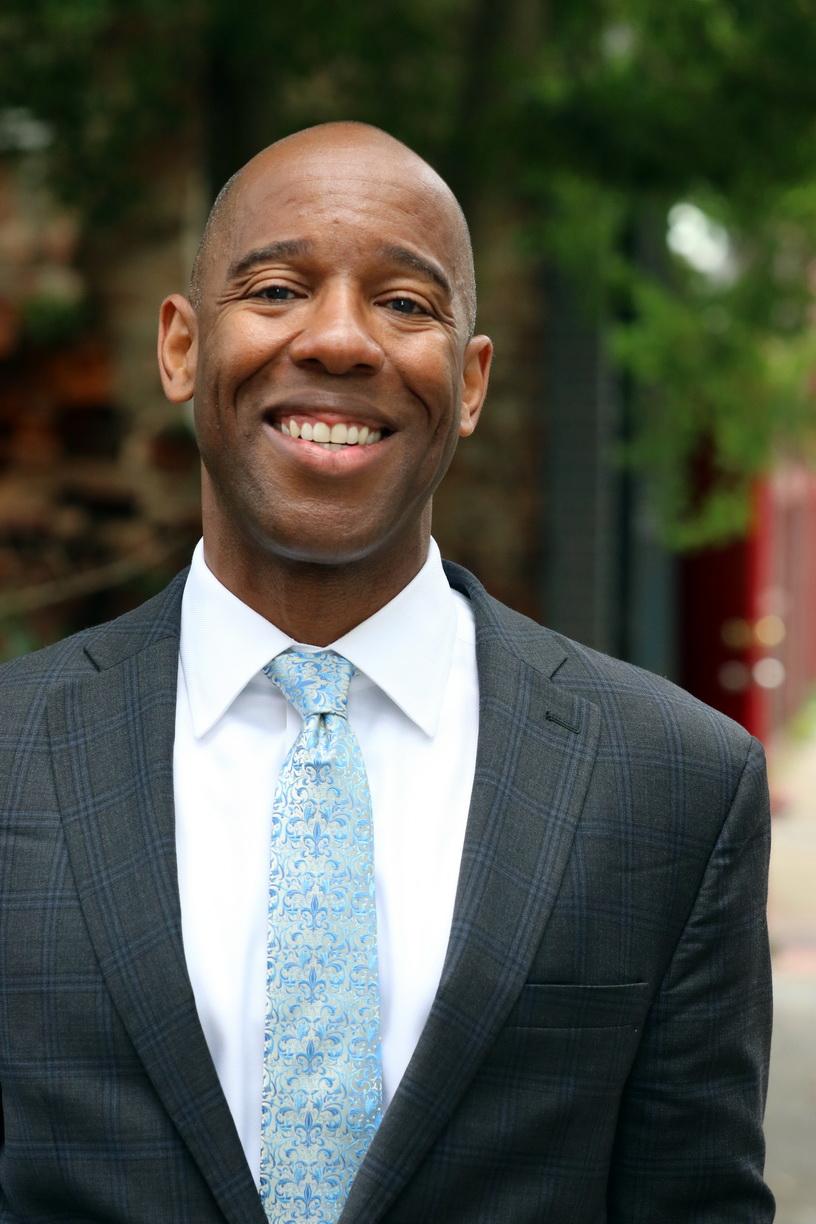
That’s what Larry Graham, founder and executive director of The Diversity Pledge Institute, says will help newsrooms better achieve their diversity, equity, and inclusion goals.


Graham launched The Diversity Pledge Institute in 2021 to improve retention rates associated with DEI by matching vetted, diverse candidates to newsrooms and providing support to journalists through mentorship and resources.


We asked Graham for advice that newsrooms can use right now to create and maintain an inclusive newsroom culture.   


What are your top three tips for building a newsroom culture where journalists of color want to stay?


Graham: Data deep dives. Newsrooms are relying more and more on analytics to reach marginalized communities. We write case studies on converting paying subscribers into active members of our online community to reduce churn. Yet when creating more inclusive newsrooms, we rely on dirty data and hearsay. Sure, those company-wide diversity demographic audits identify who’s in the building (so to speak). 


They don’t address critical issues like what it feels like to be “the only” or “the one” in the newsroom or what diversity, equity, inclusion, and accessibility tactics are falling flat and which ones are succeeding. You can’t make progress if you haven’t identified the internal barriers forcing people to leave in the first place.


Establish diversity as a value system. Most newsrooms track the number of journalists of color being hired, whereas retention remains a mystery, an afterthought, or not mentioned at all. 


However, if your organization truly prioritizes inclusivity, you must care less about who you hire and more about who stays. That shifts diversity from a metric system to a values system. Because it doesn’t matter if you’re hiring 11 journalists of color if you’re losing 21.


Transparency and trust. Martin Reynolds says, “Diversity is trust,” and nobody wants to stay in an environment where they can’t trust their boss. That means sharing what you can and trusting your staff to understand when you say you “can’t share that information right now.” 


It also means sharing the information you can, such as your goals for creating an inclusive workplace, what you’re doing to reach those goals, and acknowledging and repairing the missteps along the way. 


What advice can you give to new managers to create an inclusive environment for all staffers?


Graham: Being a new manager takes a lot of work. You’re often in a position where you receive plenty of negative criticism and very little positive feedback. Most people don’t like their boss, and managers are expected to do more with practically nothing. It’s essential to recognize the challenges they face ahead of any suggestions of fostering more inclusive work environments.


Management is rough enough as is, and leadership is even more challenging. That means getting to know your staff as real people instead of employees. You must have candid conversations instead of just going through the motions and feigning interest.


You can’t create an inclusive environment when you haven’t discussed what inclusion means to the individuals on your team. 


What’s your approach to building partnerships?


Graham: A friend of mine, Douglas K. Smith, stressed the concept of partnership in Table Stakes, and I’m a firm believer in that. He wrote, “organizations can’t afford to do everything alone. Partnership and collaboration opens up doors in technology, revenue, and other areas that would otherwise not be possible.”


The Diversity Pledge Institute is proof of that. Instead of competitors, we’ve made allies. In less than 18 months, we’ve partnered with URL Media, the Ida B. Wells Society, the Walter Cronkite School of Journalism at Arizona State University, News Revenue Hub, the Journalism Education Association, and so many more. 


It’s like Avengers (how I usually pitch it to folks). Sure, your organization is great and my nonprofit is young and growing rapidly. On our own, we’re like an Iron Man and Captain America standalone movie. But when we join forces and create a team of organizations that can have a real impact when it comes to diversifying journalism, then we’re creating something that hasn’t been seen before.


And that’s a movie worth watching.

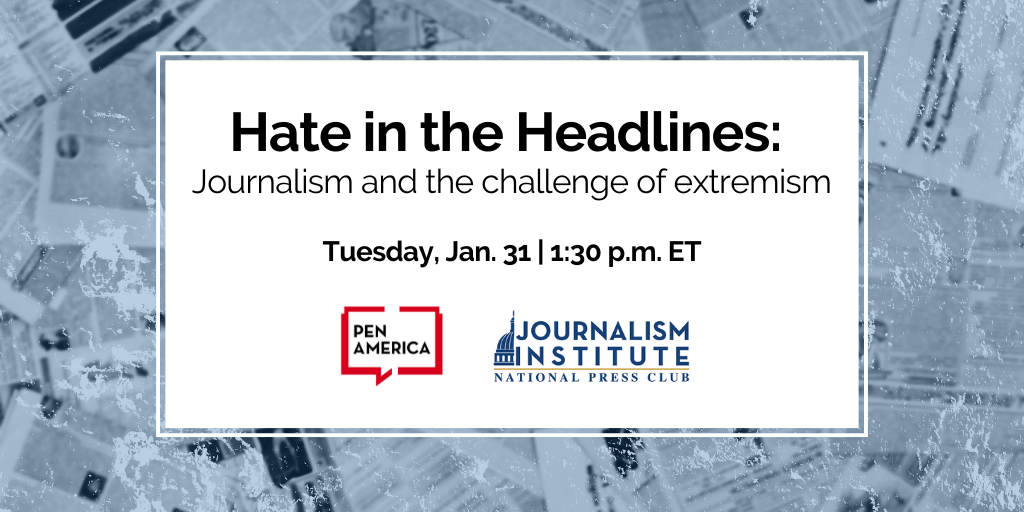
Hate in the Headlines: Journalism and the challenge of extremism

As extremism has increasingly penetrated mainstream politics, journalists, especially political reporters, face new challenges.


Some news organizations have dramatically reframed coverage and created new beats to track the surge in extremism, but fundamental changes are still needed if audiences are to get a full and accurate view of how anti-democratic forces are infusing civic life, from local school board meetings to nationwide elections.


A recent report published by PEN America, Hate in the Headlines, found that without hypervigilance from journalists and editors, propaganda and disinformation can slide into reporters’ stories, especially as extremists deliberately target them to convey their messages to the broader public. But the report also identified lessons learned as journalists have reckoned with this shifting political landscape, and from reporters who have long covered extremism.


Join PEN America and the National Press Club Journalism Institute on Tuesday, Jan. 31 at 1:30 p.m. ET for a virtual discussion of how the mainstreaming of political extremism is affecting journalism, and how journalists and newsrooms are–or could be–shifting their practices in response.

Register now

Speakers include:


“A few years back, when I did more editing work at The Atlantic, I realized that popular articles tended to scope out to see the full landscape of an issue. So, for example, rather than fixate on some lurid statistic about New York City rents, the popular piece would ask a broad question such as ‘Why are rents so expensive in the U.S.?’ or ‘Why can’t America build enough homes?’ We called these queries Big Dumb Questions. Readers seemed to like the Big Dumb Question stories because the articles used the day’s news to investigate a deeper truth about the world. Personally, I liked them because they changed the way I thought about asking questions.”


-- Derek Thompson, staff writer at The Atlantic, Stop trying to ask ‘smart questions’

Subscriber Spotlight: Share your work and tips!


Great journalism happens every day in communities across the U.S. Readers, we want to celebrate and amplify your great work in this newsletter. If you’d like to share a journalistic piece you’re proud of — and tips for how you did it — let us know! We could feature you and your work in this space.

Share your work

Resources

This newsletter is written & edited by the National Press Club Journalism Institute staff: Beth Francesco and Holly Butcher Grant. Send us your questions and suggestions for topics to cover.


Get this from a friend? Subscribe, and view the archives.


If you value this newsletter, consider supporting The Latest with a tax-deductible, recurring gift to the Institute: Even $5 a month will help fund the technology and time it takes to provide this important service.  

Facebook  Twitter  Linkedin  Youtube  

The National Press Club Journalism Institute promotes an engaged global citizenry through an independent and free press, and equips journalists with skills and standards to inform the public in ways that inspire a more representative democracy. As the non-profit affiliate of the National Press Club, the Institute powers journalism in the public interest.