|
Update on Efforts to Stave Off 3.37% Medicare Cut to Physician Reimbursement to Go Into Effect January 1, 2024
ASIPP would like to provide an update to our members on the latest efforts to stave off 3.37% Medicare cut to physician reimbursement that will take effect January 1, 2024.
Congressional Outreach
ASIPP has spent the past several months reaching out to congressional offices encouraging them to sign multiple letters that are being circulated by Reps. Miller-Meeks, Bera, Bucshon, and Schrier asking House and Senate leadership to prevent the 3.37% cuts from taking effect.
Currently, over 90 Members of Congress have signed the letter. In addition to this, letters are being sent directly to state representatives through VoterVoice. You can get involved and send your own letters by clicking on these links: Physician Letter, and Patient Letter.
ASIPP has been in the forefront of requesting them to permanently increase reimbursements by 3.75% and permanently eliminate 3.37% cuts proposed this year.
In addition, ASIPP has been trying to eliminate the 2% sequester cut for physicians and facilities. You can see the letter to Speaker Johnson, Leader Schumer, Minority Leader Jeffries, and Minority Leader McConnell by clicking here.
Legislation
On the legislative front, ASIPP has been working with Congresswoman Miller-Meeks (R-IA) on her legislation that was introduced on Friday, H.R. 6545. In addition to modifying the budget neutrality requirements at CMS – which, in theory, would allow the agency to fix the reimbursement cut without having to be revenue neutral – it also provides a conversion factor fix to lower the cut from 3.37% to 2.15%. This is consistent with the language that passed the Senate Finance Committee in November.
This bill was included in the House Energy and Commerce Full Committee markup. The bill passed the markup last night, Dec. 6, by a vote of 46 to 0.
Good news was announced by the AMA on December 7. Representatives Murphy (R-NC), Davis (D-IL), Wenstrup (R-OH), Panetta (D-CA), Bucshon (R-IN), and Burgess (R-TX) introduced the “Preserving Seniors’ Access to Physicians Act of 2023,” which would completely eliminate the 3.37% Medicare cut for physicians that goes into effect on January 1. This announcement can be found here.
Act Today
We have made great strides, but we have a lot of work ahead of us before the end of the year. We ask that you continue to take an active role by sending your letters and involving your patients in the letter-writing campaign. Please take action by clicking on these links: Physician Letter, and Patient Letter.
We will continue to update our membership on the progress and status of our efforts.
| |
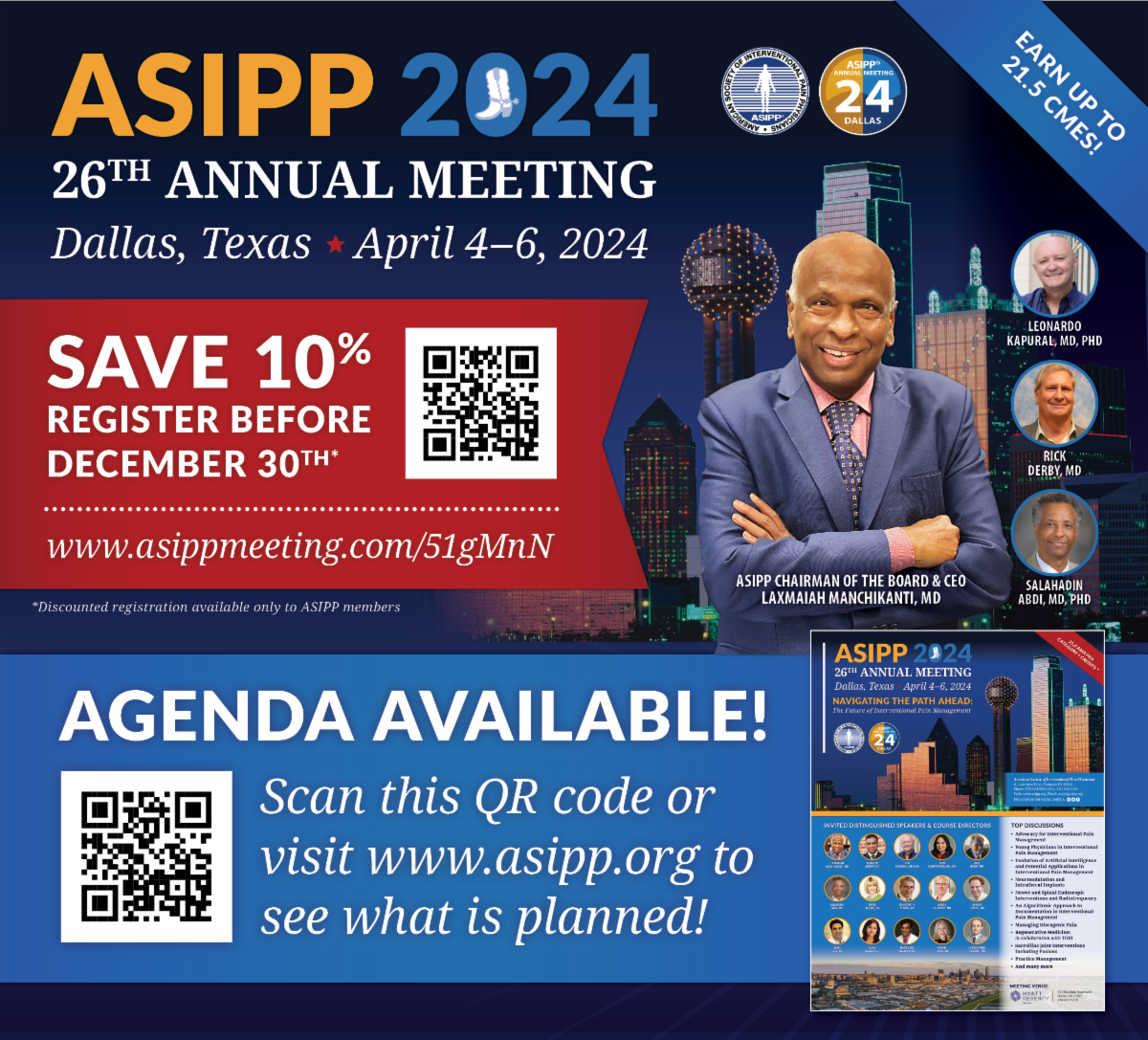
Early Bird Registration is open for ASIPP Members!
Register now for 10% off!
| |
|
Over the last 100 years, healthcare has made monumental progress, ranging from achieving significant discoveries in life-saving treatments and therapeutics, to expanding the understanding of patient and community centered care. However, the modern healthcare system also faces significant challenges, including a growing physician shortage, a dwindling primary care infrastructure, and numerous barriers to meaningfully increase access to timely care.
In fact, during a national address in October, American Medical Association (AMA) President Dr. Jesse M. Ehrenfeld, M.D., MPH, passionately described how the country is facing a dire physician shortage that must be deemed as nothing short of an unprecedented crisis—one that has unfortunately impacted families with high needs and limited means the most. Congruently, a report by the Association of American Medical Colleges in 2020 found that there is an expected physician shortage of between 54,100 and 139,000 physicians by 2033, foreshadowing a grave situation that would entail millions of patients and numerous communities without access to care.
Undoubtedly, there are numerous reasons for this crisis and impending physician shortage— ranging from a lack of quality medical residency seats, to physician burnout and attrition. The latter reasons have become especially prevalent in recent years; physicians have increasingly cited lack of administrative support and generally poor work environments to be among the primary causes of increased attrition.
Read More
| | |
|  |
|
|
Here's what it is, what it isn't, and what separates it from a true diagnosis.
"Narcissism" has become an increasingly popular topic in the lay press in recent years, but experts say the term is misunderstood, as personality patterns may be distinct from a true diagnosis of narcissistic personality disorder.
MedPage Today spoke with Scott Krakower, DO, of Northwell Health in Glen Oaks, New York, for more context on what narcissism is -- and isn't -- and why the term has garnered considerably more attention.
"I don't know that narcissism has changed over time, but I would say a lot of [the increased attention around it] comes from social media and a more entitled generation," Krakower told MedPage Today. "Social media has enabled things to be done on a whim, with the expectation everything will be done quickly. But people may be using the wrong word."
Read More
| | |
| |
|
|
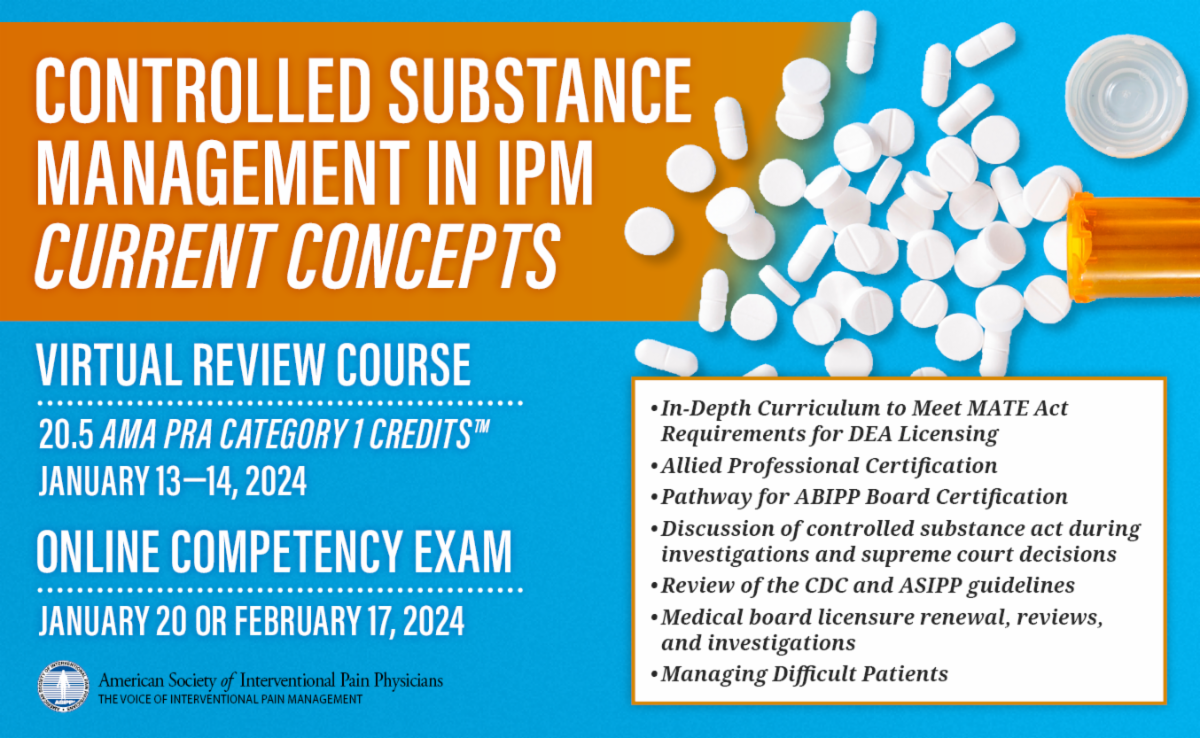
Virtual
December 16, 2023
ABIPP Part I; ABIPP Path - Combined DCCPM/CSM virtual exam;
ABIPP Competency Exam in IPM; ABIPP Competency Exam in Regenerative Medicine
January 20, 2024
ABIPP Part I; ABIPP Path - Combined DCCPM/CSM virtual exam;
ABIPP Competency Exam in IPM; ABIPP Competency Exam in Regenerative Medicine;
Controlled Substance Management (CSM) Competency Exam
February 17, 2024
ABIPP Part I; ABIPP Path - Combined DCCPM/CSM virtual exam;
ABIPP Competency Exam in IPM; ABIPP Competency Exam in Regenerative Medicine;
CSM Competency Exam; DCCPM Competency Exam
| |
|
Reduced autonomy, focus on financial incentives among top negative impacts cited by doctors
Almost 60% of doctors who worked for hospitals or other corporate entities said patient care suffered when physicians didn't own the business, according to a survey of 1,000 employed physicians.
Only 18% of physicians said corporate ownership made patient care better, according to the survey, which was commissioned by the Physicians Advocacy Institute (PAI) and conducted by NORC at the University of Chicago.
"With corporate ownership comes a higher emphasis on financial outcomes and shareholder returns," Kelly Kenney, JD, CEO of PAI, said in a statement. "This focus on the bottom line can interfere with best clinical practices."
Read More
| |
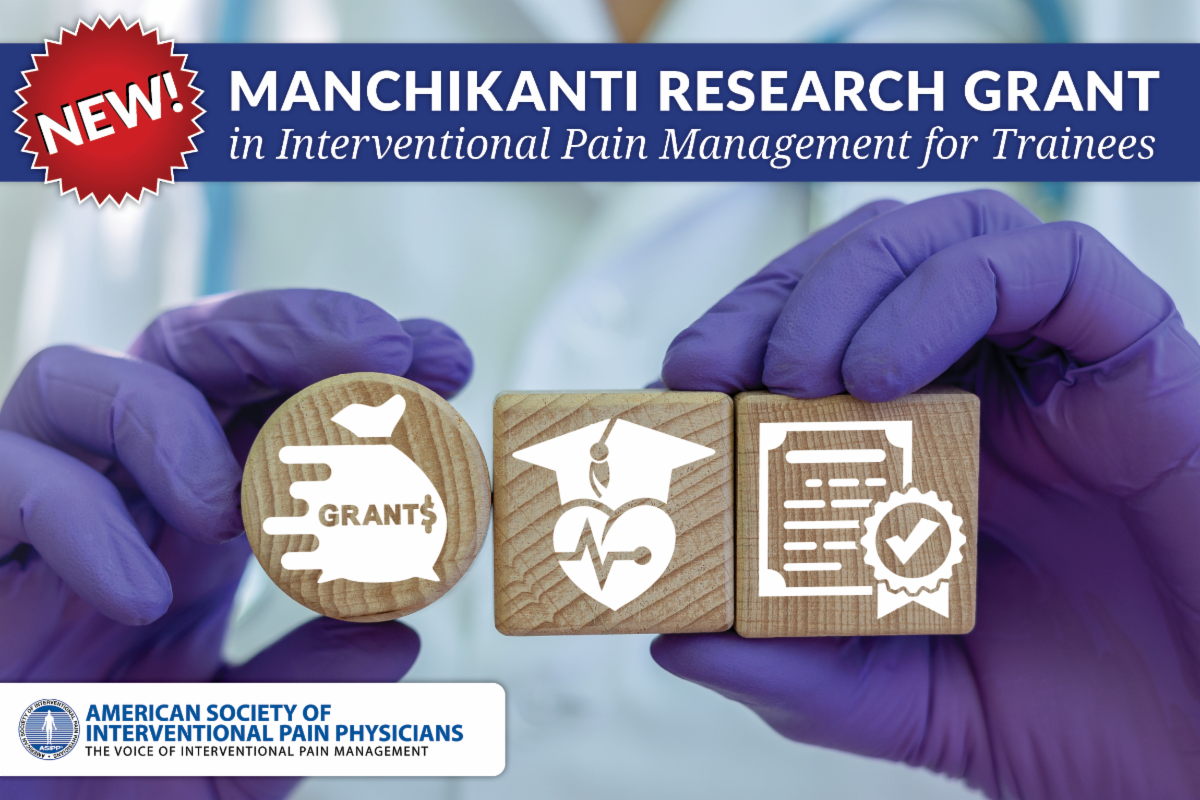 | |
Award Specifics:
- Annual Research Grant awarded to two (2) residents in the amount of $2,500 each; and two (2) fellows in the amount of $5,000 each for one-year project in IPM.
- Projects must be IRB approved, submitted or in pending status
- Mentor supervised by an ASIPP member in good standing.
- Must not overlap with current ongoing studies.
Application Requirements:
-
Applicant and mentor curriculum vitae (CV current, and updated within 4 weeks of the application date)
- Project proposal should include: title, abstract, specific aims, research approach (Background, Methods, Statistical Analysis, Timeline)
- Detailed budget
- Detailed mentorship plan by the mentor
- Specify the role of any collaborators/co-investigators that might be involved in the study.
- Applicant must be ASIPP member (in good standing) and Recipients must maintain ASIPP membership for at least 3 years post-award.
Application Deadline: January 31st, 2024
Recipients will be notified at ASIPP's 2024 Annual Meeting in Dallas, Texas.
Program Administration:
Inquiries about the Manchikanti Grant should be directed to: Melinda Martin
For more information, click here.
| |
|
ChatGPT Flubbed Drug Information Questions
Researchers say the AI tool is not yet accurate enough for consumer or pharmacist questions
ChatGPT provided incorrect or incomplete information when asked about drugs, and in some cases invented references to support its answers, two evaluative studies found.
In the first, 39 questions sent to a drug information service for pharmacists were later posed to ChatGPT, which provided no response, an inaccurate response, or an incomplete response to 74% of them, Tina Zerilli, PharmD, of Long Island University in Brooklyn, New York, and colleagues reported.
For example, in a response to a real query of whether there was a drug interaction between nirmatrelvir/ritonavir (Paxlovid) and verapamil (Verelan), a blood pressure lowering drug, ChatGPT indicated that there were no interactions, though ritonavir can interact with verapamil.
Read More
| |
|
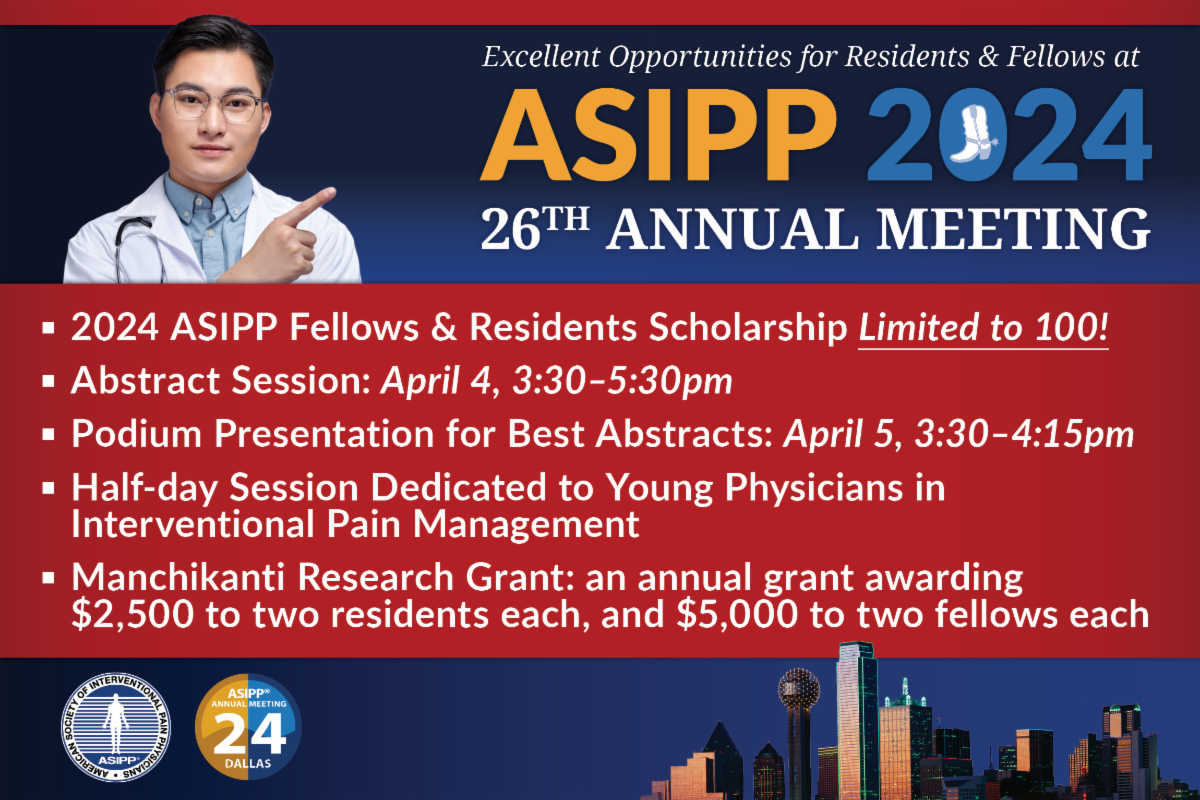
Excellent opportunities for Residents & Fellows
at ASIPP's 2024 Annual Meeting:
-
Resident & Fellow Scholarship — Limited to 100
- Abstract Session (April 4, 3:30–5:30pm) and Podium Presentation for Best Abstracts during General Session (April 5, 3:30–4:15pm)
- Half-Day Session dedicated to Young Physicians in Interventional Pain Management
- Manchikanti Research Grant, awarding $2,500 to two residents each, and $5,000 to two fellows each
| |
|
MedPAC Draft Recommendation Calls for 1.3% Pay Bump for Medicare Clinicians
Concerns raised about doctors' ability to absorb the increased costs of running their practices
Physicians who treat Medicare patients would get about a 1.3% pay increase in 2025 under a draft chairman's recommendation released Thursday by the Medicare Payment Advisory Commission (MedPAC).
That figure represents half of the projected 2.6% increase in the Medicare Economic Index (MEI), a measure of the costs of running a medical practice, Brian O'Donnell, MPP, senior analyst at MedPAC, explained at the commission's December meeting.
"This draft recommendation is motivated by our concerns that clinicians may not be able to absorb projected increases in input costs at current payment levels," said O'Donnell. Under current law, physicians are scheduled for no update in pay in 2025 unless Congress intervenes. This year, physicians were slated for a 4.5% cut until Congress voted to lower the cut to 2% instead.
Read More
| |
Abstract submissions are open for
ASIPP's 2024 Annual Meeting!
The submission deadline is January 22, 2024.
Don't miss your chance to be part of an exceptional event,
sharing insights and discoveries that shape the future of pain management.
| |
|
ADA Issues New Screening, Obesity Management Recommendations
New recommendations to screen for heart failure, peripheral arterial disease (PAD), and type 1 diabetes risk, along with new obesity management guidance, are among many updates to the American Diabetes Association's (ADA's) Standards of Care for 2024.
"The Standards of Care are essentially the global guidelines for the care of individuals with diabetes and those at risk," ADA chief scientific and medical officer Robert Gabbay, MD, PhD, said during a briefing announcing the new Standards.
The document was developed via a scientific literature review by the ADA's Professional Practice Committee. The panel comprises 21 professionals, including physicians from many specialties, nurse practitioners, certified diabetes care and education specialists, dieticians, and pharmacists. The chair is Nuha A. El Sayed, MD, ADA's senior vice president of healthcare improvement.
Read More
| |
|
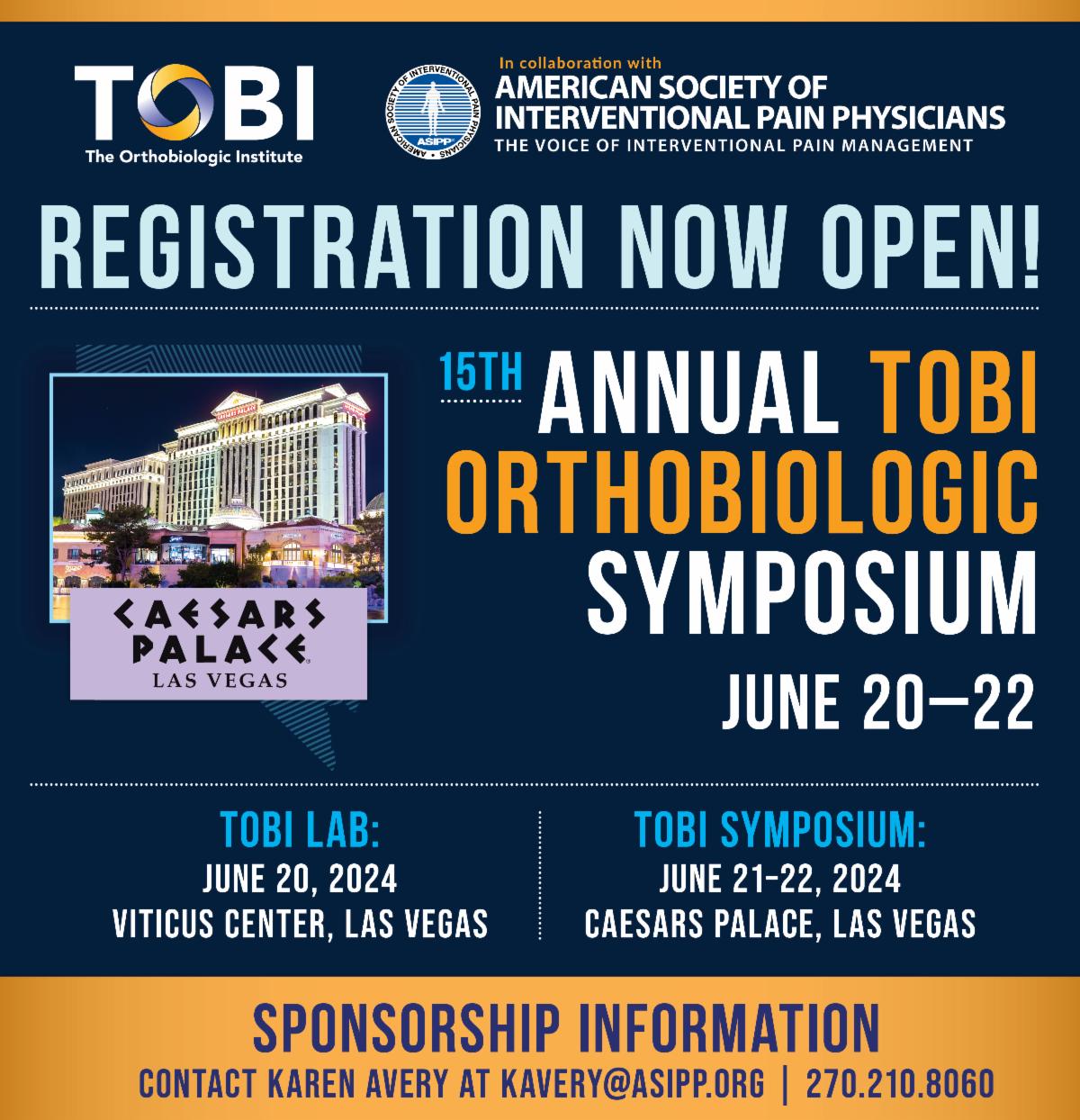
Save $250 on Your TOBI Conference Registration
by Completing Our Quick Survey
| | |
|
|
TOBI is dedicated to providing the best possible experience for our conference attendees—we ask that you complete this 60-second survey for us to better understand your preferences.
Those who complete the survey will receive a $250 discount on their TOBI Conference registration as our thanks!
*Discount unavailable for fellows, residents, and medical students
| |
- ASIPP Members Only Site Information - | |
-
To log in for the first time you will need to click “forgot password” at the bottom of the login window.
- Check your email and then log in as directed.
-
If you have problems logging into your account, click here.
| |
Pain Medicine Case Reports (PMCR) and Editor-in-Chief Alaa Abd-Elsayed, MD, PhD would like to invite you to submit case reports and case series to the PMCR journal. Your article will be published free of charge.
Open access journals are freely available online for immediate worldwide open access to the full text of published articles. There is no subscription fee for open access journals. Open access journals are no different from traditional subscription-based journals: they undergo the same peer-review and quality control as any other scholarly journal.
Interested in becoming a member of the PMCR Editorial Board?
Editorial board members are asked to review 2-6 manuscripts per year. Please submit your most up-to-date CV to sgold@asipp.org for consideration.
For more information or to submit your articles, click here.
| |
|
| CASE REPORT |
Modified Epidural Adhesiolysis Protocol for the Treatment of Refractory Low Back Pain - A Case Series
Brian R. Connolly, MD, Jacqueline Curbelo, DO, Sanketh Kichena, DO, Annmarie Jaghab, DO, and Allan Hays, MD
Abstract
BACKGROUND: Scar tissue can form within the epidural space following surgical trauma, infection, annular tearing, hematoma formation, and disc herniation. When epidural fibrosis (EF) is present, it can render nerve roots more susceptible to entrapment, compression, and tension—each of which can potentially contribute to low back and radicular pain in the lower extremities. In the past, several different epidural adhesiolysis protocols have been described to treat such pain.
CASE REPORT: Three patients with chronic low back and radicular pain, and evidence of EF underwent a modified epidural adhesiolysis protocol over a single visit. All 3 patients reported greater than 50% pain relief for at least 3 months following treatment with the modified epidural adhesiolysis protocol.
CONCLUSION: These case results suggest that the proposed modified epidural adhesiolysis can provide significant relief of axial and radicular pain in a cost effective and accessible manner for this patient population.
KEY WORDS: Back pain, adhesiolysis protocol, vertebrogenic pain, epidural fibrosis, failed back surgery syndrome, post laminectomy syndrome
Read More
| |
|
| RANDOMIZED TRIAL |
Comparison of the Low Back Pain Relief and Spread Level After Upper and Lower Lumbar Erector Spinae Plane Block
JiHee Hong, MD, PhD, JiHoon Park, MD, Seungwon Lee, MD, and Jaeyun Lee, MD
Abstract
BACKGROUND: The erector spinae plane block (ESPB), which was introduced to manage the thoracic pain, is an ultrasound-guided technique that is relatively easy, less invasive, and safer. In spite of its technical ease and safety of ESPB, few studies have explored the analgesic efficacy and the exact spread level of injected local anesthetics.
OBJECTIVES: The purpose of this study is to compare the analgesic efficacy and spread level of the upper and lower lumbar ESPBs .
STUDY DESIGN: Prospective, randomized design.
SETTING: The pain clinic of a tertiary university hospital.
METHODS: This study included 84 patients with low back pain with or without leg pain who received lumbar ESPB at L2 (L2 ESPB group) or L4 (L4 ESPB group) using 10 mL of 0.2% ropivacaine mixed with 10 mL of the contrast medium. After finishing 20 mL of the local anesthetic mixture injection, a fluoroscopic examination was performed to evaluate the spread level. Analgesic efficacy was assessed using an 11-point Numeric Rating Scale (NRS-11) and a Back Pain Functional Scale.
RESULTS: The number of patients who showed excellent-to-moderate low back pain relief was 35 (83.3%) and 36 (78.5%) in the L2 and L4 ESPB groups, respectively. Significant reductions in pain on the NRS-11 and improvements in disability were found in both groups. The total number of vertebral segments to which the anesthetic drugs spread was significantly higher in the L2 ESPB group than in the L4 ESPB group (2.7 ± 0.5 vs 2.0 ± 0.2, P = 0.002).
LIMITATIONS: The analgesic efficacy of lumbar ESPB was evaluated with only short-term outcomes.
CONCLUSIONS: Both the L2 and L4 ESPB groups demonstrated a significant reduction in low back pain and improvement in disability. The L2 ESPB group demonstrated a significantly increased spread level compared to the L4 ESPB group.
KEY WORDS: Erector spinae plane block, spread level, low back pain, analgesic efficacy
Read More
| |
|
| RANDOMIZED CLINICAL TRIAL |
Combined Infraclavicular-Suprascapular Nerve Blocks Compared With Interscalene Block for Arthroscopic Rotator Cuff Repair: A Prospective, Randomized, Double-blind, and Comparative Clinical Trial
Joseph Makram Botros, MD, Fatma ElZahraa Mahmoud, MD, Atef Mohamed Mahmoud, MD, Mohamad Ahmed Shawky, MD, Mohamed Safaa ElDin Mohamed Arafaa, MD, and Safaa Gaber Ragab, MD
Abstract
BACKGROUND: The gold standard postoperative analgesia protocol for arthroscopic rotator cuff repair procedures is the interscalene block (ISB), which prevents the significant consequences of phrenic nerve block associated with hemidiaphragmatic paralysis (HDP). The infraclavicular brachial plexus block (BPB) combined with the suprascapular nerve block (SSNB) had the same analgesic efficacy as the infraclavicular BPB alone, with no effect on respiration.
OBJECTIVES: Therefore, the study aimed to assess the HDP and analgesic efficacy of both approaches in controlling pain following arthroscopic rotator cuff repair surgeries.
STUDY DESIGN: A prospective, randomized, double-blind, and comparative clinical trial.
SETTING: The study comprised 66 patients. They were separated into 2 equal parallel groups 33 patients each: the ISB group and the costoclavicular and suprascapular block (CSB) group.
METHODS: The ISB group obtained the ISB followed by the general anesthesia. The CSB group received infraclavicular blockade using the costoclavicular approach and SSNB followed by general anesthesia.
RESULTS: Considering morphine utilization during the first day following the operation, the groups demonstrated an insignificant difference. The CSB group showed a decreased rate of diaphragmatic paralysis.
LIMITATIONS: There was no control group. And, the blocks might take a long time to be performed up to 30 minutes. Also, there were no validated criteria to define HDP based on M-mode ultrasound measurements.
CONCLUSIONS: The employment of the costoclavicular block in combination with the suprascapular block may provide a comparable analgesic potency to the sole use of the standard ISB with no HDP.
KEY WORDS: Interscalene block, costoclavicular block, suprascapular nerve block, hemidiaphragmatic paralysis
Read More
| |
|
ASIPP is now in collaboration with Curi Medical Liability Program
| |
|
Since this malpractice insurance program officially launched in November 2018, ASIPP has signed up hundreds of providers with an average savings of 30%. This is professional liability insurance tailored to our specialty and will stand up for us and defend our practices.
Curi is a full-service advisory firm that serves physicians and their practices. Their valued advice is grounded in your priorities and elevated in your outcomes. They are driven by a deep understanding of your specific circumstances in medicine, business, and life. To read a few important points to keep in mind about the program, including discounts, administrative defense, cyber coverage, aggressive claims handling, and complimentary risk management CME activities, visit our website.
| | |
|
Group Purchasing Organization Offer Better Pricing and Creates Added Value
ASIPP has formed a partnership with Henry Schein and PedsPal, a national GPO that has a successful history of negotiating better prices on medical supplies and creating value-added services for independent physicians. Working with MedAssets, PedsPal provides excellent pricing on products like contrast media that alleviate some of the financial pressures you experience today.
Learn More
| | |
|
ASIPP, Fedora Billing,
and Revenue Cycle Management Partnership
ASIPP is now offering our members the benefit of a unique revenue cycle management/ billing service.
We have received a tremendous amount of interest in the ASIPP® billing and coding program.
Click here to learn more about the negotiated rate for practices and more!
| |
|
Like and follow ASIPP® on Facebook, X, and LinkedIn for the most
up-to-date news related to you, your practice, and your patients!
| | | | |