The Self-Blamers: When Everything Is My Fault
Last week, we talked about the blamethrowers. Those kids who are convinced that everything that goes wrong is somebody else's fault.
But there's another group of kids who live at the opposite end of that spectrum.
The self-blamers.
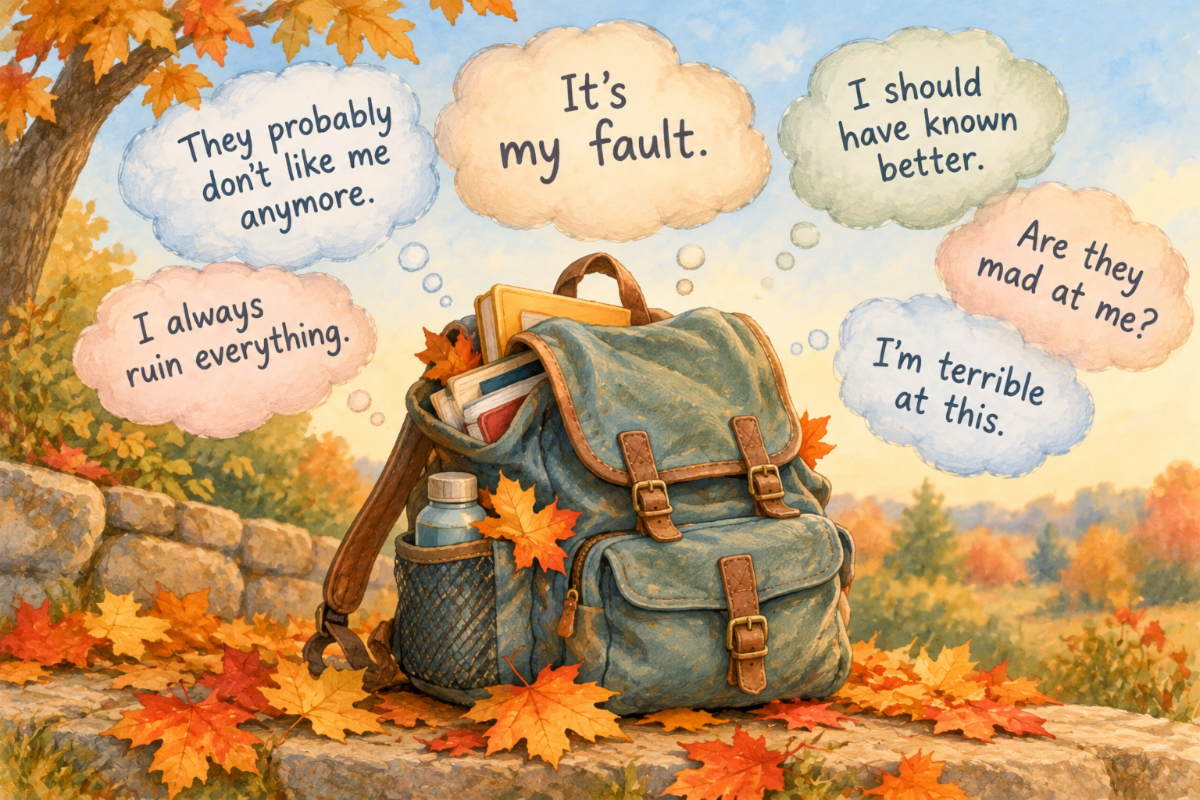
These are the kids who apologize for everything. Who assume they've done something wrong when a friend seems upset. Who turn a small mistake into a much bigger statement about themselves.
A friend doesn't want to play?
"They probably don't like me anymore."
Their team loses a game?
"It's my fault. I'm terrible at this."
An adult sounds frustrated?
"Are you mad at me? Did I do something wrong?"
Just like our blamethrowers, these kids aren't necessarily seeing the situation accurately. They're just looking in the opposite direction.
Some children are especially sensitive to disappointment or disapproval. Others struggle with anxiety, perfectionism, or a fear of losing friendships.
For these kids, blaming themselves can sometimes feel like a way to make sense of an uncomfortable situation. After all, if everything is my fault, maybe I can prevent something bad from happening next time.
But there's a cost to that thinking.
Self-blamers may become afraid to try new things, reluctant to disagree, or overly willing to go along with what other kids want. They may even accept responsibility for someone else's behavior.
And over time, they can begin to confuse making a mistake with being a mistake.
So how do we coach this?
Simply saying, "It's not your fault!" may be reassuring, but it doesn't necessarily help a child understand why.
Instead, we can help them look at what actually happened.
"Did you actually do something wrong, or did something just go wrong?"
Maybe a friend didn't want to play because they were tired. Maybe the team lost because sometimes teams lose. Maybe an adult was frustrated about something that had nothing to do with the child.
And sometimes, yes, the child really did make a mistake.
That's okay, too.
"I shouldn't have yelled at my friend" is a useful observation.
"I'm a terrible friend" is not.
We can also remind kids that caring about someone's feelings doesn't mean they're responsible for causing them.
The goal isn't to turn our self-blamers into kids who never acknowledge mistakes. It's to help them develop a fair understanding of their own part in a situation.
Sometimes we have something to repair. Sometimes we have something to learn. And sometimes, something disappointing happened, and nobody did anything wrong.
Because taking responsibility is a healthy skill.
Taking responsibility for everything is a heavy burden no child needs to carry.
|