|
|
|
|
|
|
According to a new report from Forrester on B2B events, 39 percent of organizations are already using AI for content generation in their events planning. But only 23 percent are using it for event data analysis, and 15 percent use it for attendee personalization, such as session and networking recommendations.
|
|
|
|
|
|
|
|
|
|
|
|
|
|
|
|
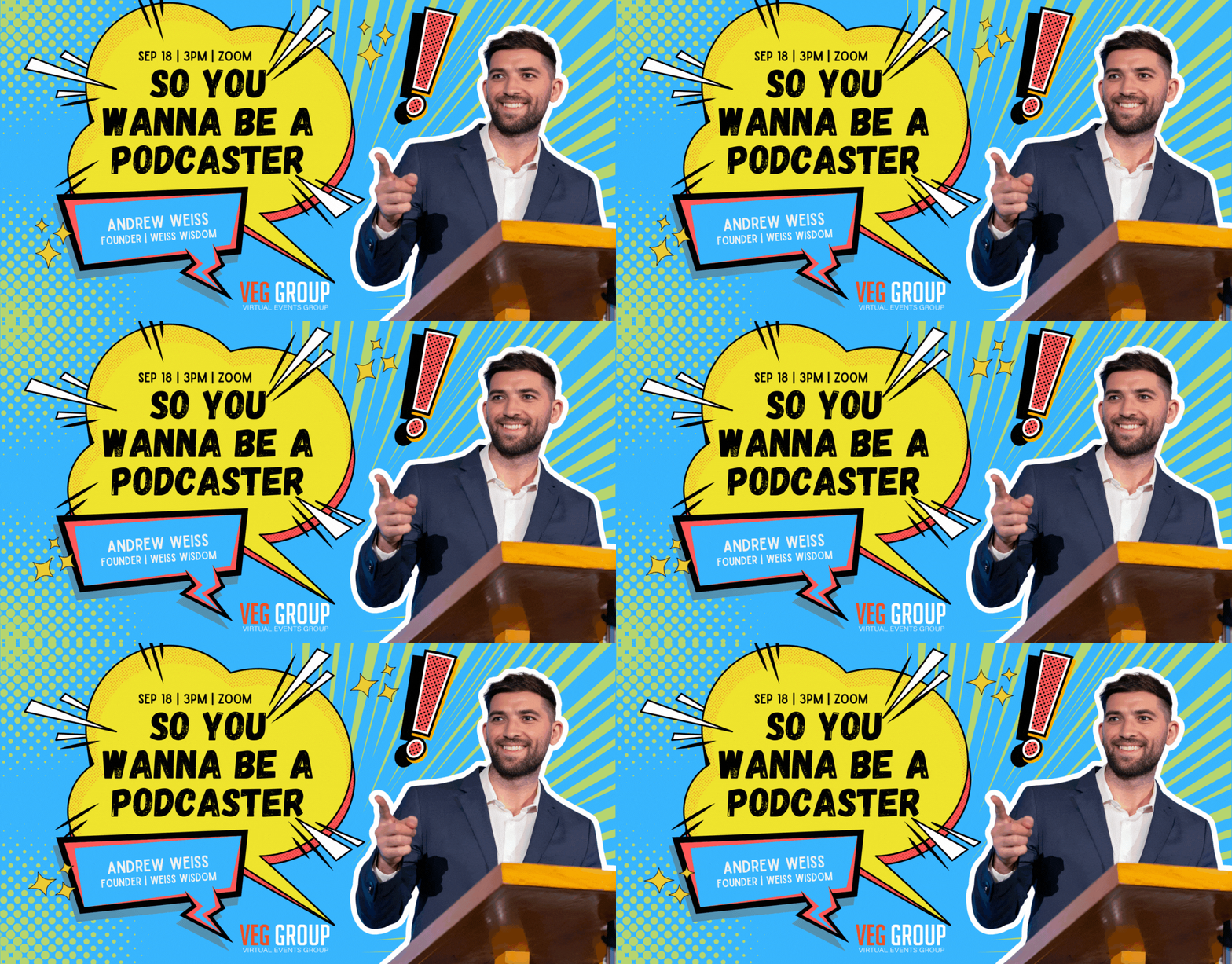
Sign up today to learn everything you need to know about creating a successful podcast. Join us on September 18th at 3 PM EST on Zoom when Andrew Weiss, creator of Podfest
will be our guest.
|
|
|
|
|
|
|
|
|
|
|
AI’s Game of Two Truths and a Dare
|
|
|
|
|
|
|
|
|
|
|
Jon Stewart was prescient when he developed the Daily Show to satirically amplify “fake news”. Now we’re living it. Are we all in agreement that bafflement is the only word that resonantes when trying to parse the day's news?
Real vs. AI generated content has not helped. The images that cross our desks in a given week offer some sobering after effects. First, they make us question the veracity of every image, from a starving Gazan infant, to the White House ballroom redesign. Second, and perhaps more disturbing, they numb us to the impact that visuals have always had to reinforce the
truth. If seeing once was believing, but that is no longer the case.
This past week when the NYT ran that gut-wrenching photo of the Gazan baby dying of malnutrition in his mother’s arms, I asked ChatGPT, Perplexity and Gemini whether the image was real or fake. (If you recall, the NYT provided a caption indicating that the photo failed to provide the context that the baby had brain and muscular developmental issues in addition to
malnutrition.) The amended photo added context, but the image retained it’s impact. Each of the LLMs, I fed the images to correctly reported that the image was real but lacked context.
Research shows that LLMs are getting more accurate about identifying fake images, looking at any number of image attributes including pixel abnormalities and semantic inconsistencies, such as unlikely visual or context errors.
It’s doubtful that you’re going to pass every image you view through a fake-detector, but it’s good to know they’re being improved and that when in doubt you can attempt at truthiness. Many, are even starting to provide an explaination of the “fakeness”, such as a weird body part or background.
|
|
|
|
|
|
|
I just finished reading How We Grow Up by Matt Richtel. Matt is an old colleague of mine and his book takes us on a detailed tour of what happens in adolescence, synapse by synapse, hormone by hormone. Risk taking is one of
adolescents’ most prominent behavioral traits, and it does not mesh well with online technology.
Since the early days of online life, research indicates that a combination of efforts, such as education, regulation and parental advice, work together to try to keep kids safe online. Now, at the dawn of Generation AI kids, the debate intensifies.
Kids are already confessing their intimate thoughts to chatbots that have been trained to respond as their shrinks. They form dating-like relationships with bots, or use them as BFFs. Kids also seem less concerned about the real vs. digital paradox that adults wrestle with (see above story), and they are often willing to accept the hodge-podge of digital and physical
as a fact of life. And adult researchers are already fingering AI as the culprit behind a dampening of kids’ critical thinking skills.
Two old ideas for protecting kids have been resurrected for AI times. One is age verification, which limits kids under a certain age from accessing certain online sites. Another is removing their mobile devices from the classroom.
In the UK, The Online Safety Act requires sites hosting porn and other content deemed “harmful” — including Reddit, Discord, Grindr, X, and Bluesky — to verify that users are over the age of 18. The early results have been chaotic. While many services have complied, some have pulled out of the country rather than face the risk and expense of a fine for
non-compliance.
As technologies improve, it may be easier to enact age verification (whether it is useful or not is another issue) through digital IDs. While digital IDs are a doable solution, tech lobbyists, adults who’d rather remain anonymous, and the lack of a central body of enforcement are the obstacles.
One of the most robust rollouts comes from Roblox. It’s introducing an age estimation feature for users 13 and older, which requires a video selfie to access certain chat features.
Citing minimizing distractions and eliminating the odds of cheating, school wide mobile device lockdowns are also gaining popularity. Florida, Louisiana, and Indiana have laws restricting cell phone use during class time. California, Ohio, South Carolina and now New York have also taken steps to limit cell phone use. We’d love to hear your thoughts as this battle,
which is as old as online itself, continues to test our ability to raise healthy digital kids.
|
|
|
|
|
|
|
Cinematographic AI
If you’re not already, this year you can expect to start experimenting with GenAI video creation. Programs such as Runway, Sora and Veo3 are extraordinary, but experimenting with them will have you confounded unless you learn to think like a cinematographer. Gabe Michaels created the Cinematic AI Prompt Method, a visual guide broken into six lessons that encourage you to use the language of cinematography from shot types, to lighting, and lenses to create clear prompts. Gabe is a filmmaker and currently the VP and Executive Producer of AI at Edelman, a public relations
firm. Part of his job is to explore new creative possibilities for both Edleman’s internal staff and external clients. Here’s a simple prompt he created to get you into the cinematographic frame of mind.
|
|
|
|
|
|
|
|
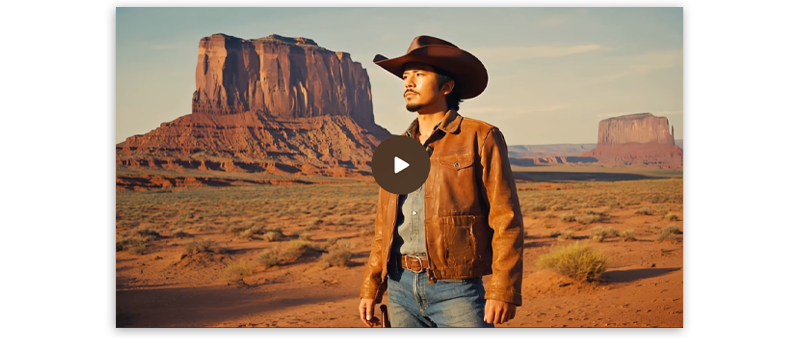
Prompt: A lone cowboy standing in the desert at sunset, shot with a medium wide shot using a slow dolly-in, in dramatic golden-hour lighting. Cinematic. 35mm Film. Muted Colors. Image credit: Gabe Michaels
|
|
|
|
|
|
|
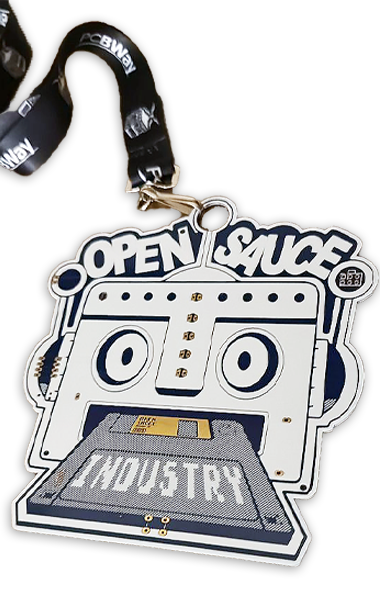
| Not your everyday conference badge. You could trick this one out to make it unique. Image credit: Robin Raskin |
|
|
|
|
Open Sauce
What do you get when you mix engineers, artists, YouTubers, content creators, DIYers, and tinkerers of all kinds at a San Mateo fairground? You get Open Sauce, a science fair meets VidCon kind of happening. Those of you who’ve been watching the
Maker Movement for a long time will remember MakerFaire (both the West Coast and East Coast versions), which inspired a generation to go forth and make stuff. MakerFaire is still alive but its cultural relevance is dwindling.
Open Sauce brings the same vibe, but redone for new times where the people who make the stuff are just as important as the stuff that gets made. In other words, storytelling is as important as the end result.
|
|
|
|
|
|
|
When you arrive at the event’s fairgrounds, your badge is a big hunk of sheet metal with a circuit board that you can mod to make it your own, adding LEDs, chips and assorted decorative elements.
Opening day of the show focused on the Creator Industry, a track for storytellers and creators, deftly emceed by my colleague Jim Louderback, who curated a program focused on creators, their tools and distribution platforms, and how to
survive in an algorithm-driven world. The most touching session featured Kevin Kelly, co-founder of Wired Magazine and long-term thinker about an optimistic future, sitting down with Will Osman,
science YouTuber and co-founder of Open Sauce, in a torch-passing moment for makers.
Surrounding great stage speakers were robots (scads of them), 3D printed airplane engines that really worked, a ten-foot-tall mech suit controlled by sensors, and places to learn to do everything from sodder to laser cut. Clearly, an event designed for the future.
|
|
|
|
|
|
|
The Freeman Report
Each year, The Freeman Company, the logistics and creative company behind many large events, offers a state of the industry report. One of this year’s key stats is not about logistics, numbers of exhibitors, or attendees. It’s about human connection. 51%
of attendees say that successful networking is a reason for them to return to an event.
Despite the clear mandate on the importance of networking, Ken Holsinger, VP of Strategy at Freeman, points out that despite the importance of networking, only 4% of companies have someone in charge of connections.
A fun conversation between Dahlia El Ghazzar of the Dahlia+Agency, an events consultancy, and Holsinger challenged us to think of ways to make networking at events feel less contrived. Think networking parties and receptions where attendees are thrown together in a
space and asked to go forth and network.
What are some ways you can think of to foster naturally occurring networking? Maybe it’s a collaboration to build something on the show floor, or a photo shoot walk though the show, or a food tasting crawl through a city. Networking becomes the by-product not the event itself.
Other key findings of the Freeman study:
- Commerce Prioritized: The most valued parts of events are the direct business opportunities.
- Trust Building: There’s a 95% trust increase post-event vs. a decline in other channels.
- Hands-on Discovery: There’s a 96% confidence boost after physically testing a product at an event.
- Post-Event Engagement: 87% take action (visit websites, discuss, buy).
- Emotional Outcomes: 96% report strong positive feelings post-event.
- Personalization Demand: Attendees want customized, self-directed experiences.
|
|
|
|
|
|
|
|
|
|
|
|
|
Heading to IFA Berlin? We’ll be there with some unique creator programming. Drop us a line if you’ll be there.
|
|
|
|
|
|
|
|
|

|
|
|
|
Sign up to get us in your inbox.
|
|
|
|
|
|
|
|
|
|
|
|
|
|
|
|
|