|
Community Update
July 2026
| |
2026 MSSC Instructors' Conference (virtual) on August 5th
Registration is still open for the 2026 MSSC Instructors' Conference, a virtual event designed to bring together MSSC educators from across the country to share best practices, innovative teaching strategies, and successful program outcomes.
Taking place on August 5, 2026, from 11:30 a.m. to 3:00 p.m. ET, the conference provides an opportunity for instructors to learn new approaches to student engagement and credential attainment, and strengthen the impact of MSSC programs nationwide. Register here.
| |
CCDC Presents Inaugural Leo Reddy Career Readiness Award
Last month, the Coalition for Career Development Center (CCDC) presented its inaugural Leo Reddy Career Readiness Award to Bostonia Global Charter School in El Cajon, California, recognizing the school's leadership in advancing career readiness through CCDC's Five Pillar Solutions Framework. Named in honor of MSSC Co-Founder and President Leo Reddy, the award highlights the importance of helping students explore career pathways, connect education with future opportunities, and make informed career decisions before entering the workforce. The initiative also launches a nationwide effort to promote CCDC's Career Readiness for All vision, encouraging stronger alignment among schools, employers, counselors, and workforce organizations while expanding awareness of high-skill, high-wage career opportunities. Learn more here.
| |
Hechinger Report - As College Graduates Worry About Finding Jobs, Record Worker Shortage Is Projected
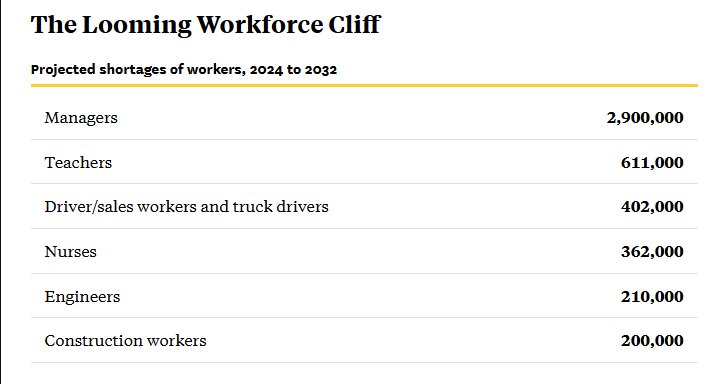
A recent national report highlights a growing challenge that should be top of mind for manufacturers, educators, and workforce leaders alike: despite concerns about AI and layoffs in some sectors, the United States is projected to face the largest workforce shortage in its history. Experts from Georgetown University, Lightcast, and other leading organizations warn that declining birth rates, an aging workforce, and accelerating retirements will leave millions more jobs than qualified workers to fill them over the coming decade. Manufacturing, engineering, construction, healthcare, logistics, and other skilled professions are all expected to be significantly impacted.
The report reinforces the importance of expanding access to industry-recognized training and certifications that prepare learners for high-demand careers. As employers compete for skilled talent, short-term, workforce-focused education pathways will play an increasingly critical role in helping individuals enter and advance within essential industries. Read more here.
| | |
Flexible Scheduling Opens New Doors in Manufacturing
As manufacturers continue to address workforce shortages, some companies are rethinking the traditional 40-hour workweek by offering employees greater scheduling flexibility. At GE Appliances' Roper plant in Georgia, as NPR reports, workers can use an app to choose four-hour shifts and select the type of work they want to perform, creating opportunities for retirees, caregivers, students, and others seeking part-time or flexible employment. The model has helped the company expand its available workforce, retain experienced employees, and support production growth, illustrating how innovative workforce strategies can help manufacturers attract and retain talent in a changing labor market.
| | |
Key Trends Shaping the State of Manufacturing
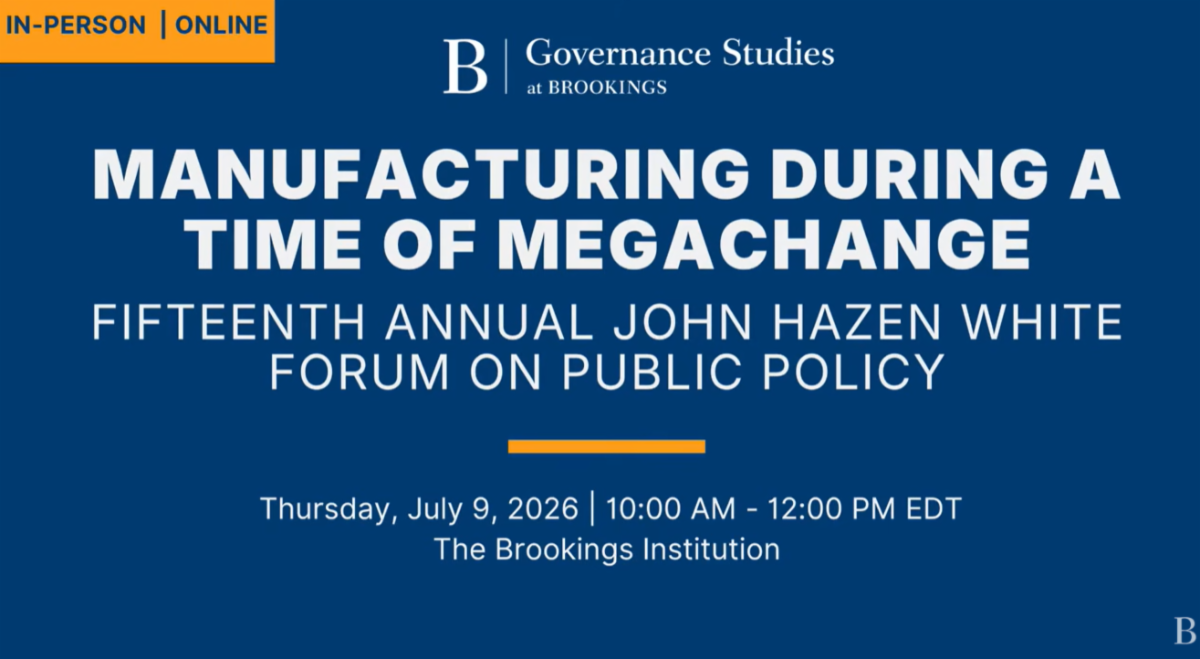
A recent Brookings Institution policy forum examined the major forces shaping U.S. manufacturing, including tariffs, trade policy, artificial intelligence, robotics, workforce development, and global competition with China. Panelists emphasized that stable, predictable policies are essential for manufacturers making long-term investment decisions and highlighted workforce development as a key driver of future competitiveness. As AI and automation continue to transform the industry, experts stressed the importance of expanding workforce training and helping manufacturers—particularly small and mid-sized businesses—adopt new technologies to strengthen productivity and long-term growth. More coverage on the event and event recording can be accessed here.
| | |
Bipartisan Bill Seeks to Protect Manufacturing Extension Partnerships
A bipartisan group of U.S. senators has introduced the Defend American Manufacturing Act, legislation designed to protect the Manufacturing Extension Partnership (MEP) program from funding disruptions and ensure its continued operation. Established in 1988, the MEP program supports small and medium-sized manufacturers by helping them adopt new technologies, strengthen supply chains, improve productivity, and grow their businesses. The bill comes in response to delays in federal funding approvals and the Trump administration's proposal to eliminate the program, which lawmakers say has already forced nearly 90% of MEP centers to implement hiring freezes or staff layoffs.
If enacted, the legislation would require the Department of Commerce to continue operating the MEP program, establish firm deadlines for renewing center contracts and selecting new operators, and protect funding for centers that maintain satisfactory performance. Congress currently appropriates $175 million annually to support MEP centers in 48 states and Puerto Rico. Supporters of the bill argue that maintaining a stable MEP network is critical to strengthening U.S. manufacturing competitiveness, supporting small manufacturers, and preserving one of the nation's longest-running manufacturing assistance programs. Read more here.
| |
Acting DOL Sec. Highlights Workforce Development Priorities During Senate Hearing
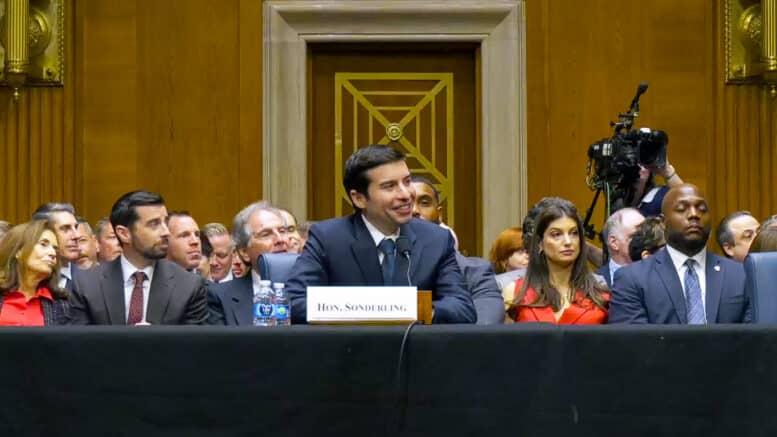
Workforce development took center stage during the Senate confirmation hearing for Acting Labor Secretary Keith Sonderling, with lawmakers discussing a range of issues affecting the nation's talent pipeline, including apprenticeships, Workforce Pell, community colleges, and employer engagement. Senators from both parties emphasized the need to expand access to high-quality training opportunities, reduce barriers to workforce participation, and strengthen pathways into high-demand industries such as manufacturing. The discussion also explored how federal policy can better support employers, educators, and workers as emerging technologies and evolving labor market needs continue to reshape the workforce. Read AACC's analysis here.
| |
Mack Returns to Florida as Education Commissioner
Following Gov. Ron DeSantis' recommendation, Florida State Board of Education unanimously approved Henry Mack as the state's next Commissioner of Education. Mack, who most recently served as U.S. Assistant Secretary of Labor overseeing the Employment and Training Administration, previously led several of Florida's workforce and career education divisions, including Career and Adult Education and Workforce Education and Economic Alignment. Marek Laco is now serving as Acting Assistant Secretary of ETA.
| | | | |