e-Newsletter | October 15, 2021 |
|
The Enemies of Their Own Species Part II: William Lloyd Garrison vs. Newburyport
In last week’s newsletter, we left William Lloyd Garrison in a Baltimore jail, convicted of liable and unable (and unwilling) to pay his $50 fine and court costs. Garrison had published a searing indictment of the domestic slave trade, his rage accentuated by the fact that both the owner (Francis Todd) and the captain of the ship in question (Nicholas Brown) were from Newburyport.
Garrison’s cause had pockets of support across the nation, and at the end of August 1830, Arthur Tappan, a New York merchant and philanthropist with family ties to Newburyport, paid Garrison’s fines and fees. After nearly two months in a Baltimore jail, Garrison was free, and a bit of a celebrity. After failing to secure a space to hold an abolitionist rally in Baltimore, Garrison turned his face towards home, stopping in Philadelphia, New York and Hartford along the way.
|
|
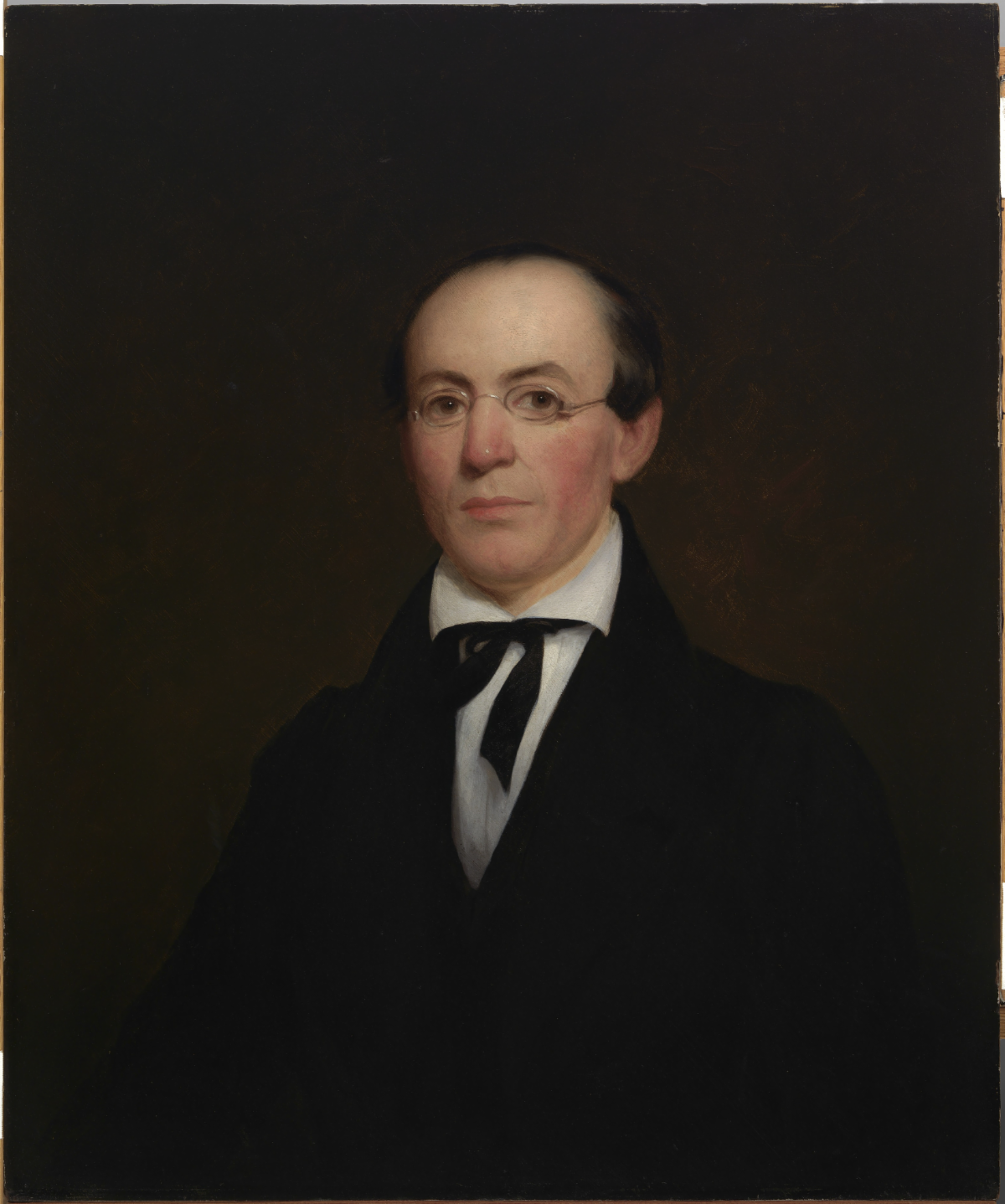
Portrait of Garrison by Nathaniel Jocelyn, 1833, just three years after his imprisonment in Baltimore. |
|
In their 1885 biography of their father, William Lloyd Garrison: The Story of His Life Told by His Children, Wendell Phillips Garrison and Francis Jackson Garrison described their father’s fateful journey to his hometown.
Mr. Garrison now proceeded to Newburyport, resolved that his native town should be the first place in Massachusetts to hear his lectures on slavery (written while he was in the Baltimore jail). Dr. Daniel Dana, pastor of the Presbyterian church on Harris Street, readily agreed to give him the meetinghouse for that purpose, but when the audience gathered for the first lecture, the doors of the sanctuary were closed, and it appeared that the Trustees had held a meeting and overruled their pastor, who could only express his regret and chagrin that they had refused to sustain him.
The Todd influence was still all-powerful, and endeavored to crush the offending editor, who left Newburyport in disgust for Amesbury. As he was driving up the hill beyond the Chain Bridge, he met his friend Dr. Luther F. Dimmick, pastor of the Second Congregational church
|
|
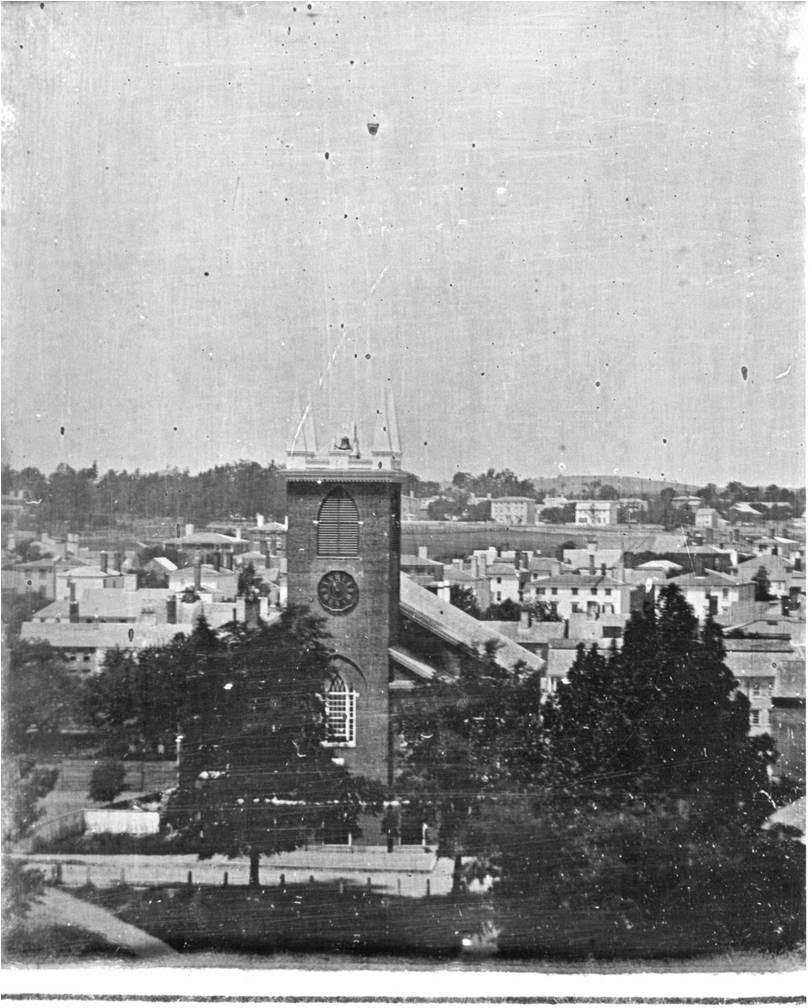
1/4 plate daguerreotype of the Second Congregational Church taken by Henry Coit Perkins, 1839. From the collections of the Museum of Old Newbury. |
|
“William," said the Doctor, “I thought you were going to lecture last night,” and on William's explaining why he had not done so, the Doctor declared that he should have his church for as many lectures as he wanted. It was agreed that he should return to Newburyport as soon as he had delivered his lectures in Amesbury, and these he gave Sept. 24-26, probably on three consecutive evenings, before the 1830 Amesbury and Salisbury Lyceum.”
On September 28, the Newburyport Herald described his third and final lecture as a direct indictment of his fellow New Englanders.
“We were told that the crime, the infamy and the curse of slavery are national, and that we New Englanders are equally culpable with the slave-dealers and slave-owners.”
From the 1885 biography, “Returning without delay to Newburyport, Mr. Garrison delivered his first lecture in Dr. Dimmick's church, on the evening of September 28, to a large audience; but the next evening the doors were closed against him,” and Dr. Dimmick found himself as helpless in the hands of his Trustees as Dr. Dana had been.
Indignant at this insulting treatment, Mr. Garrison addressed the following communication to the editor of the Newburyport Herald, and, shaking the dust of the town from his feet, went back to Boston.
SIR: Twice have the inhabitants of this town been deceived in relation to the delivery of my Addresses on Slavery. Permit me to exonerate myself from blame in this matter. Circumstances beyond my control have prevented the fulfilment of my pledges. Toward those who have exorted [sic] their influence, with a malignity and success which are discreditable to themselves and the place, in order to seal my lips on a subject which involves the temporal and eternal condition of millions of our countrymen, I entertain no ill-will, but kindness and compassion. Let them answer to God and posterity for their conduct; for even this communication shall be read by future generations and shall identify the ashes of these enemies of their species.
If I had visited Newburyport to plead the cause of twenty white men in chains, every hall and every meeting-house [sic] would have been thrown open, and the fervor of my discourses anticipated and exceeded by my fellow-townsmen. The fact that two millions [sic] of colored beings are groaning in bondage, in this land of liberty, excites no interest nor pity!
I leave this morning for Boston. A circumstantial account of my treatment in this my native place will probably be given, in a few days, in one of the city papers.
Your grateful servant, and undaunted friend to the cause of universal liberty,
WM. LLOYD GARRISON. Thursday morning, Sept. 30, 1830.
|
|
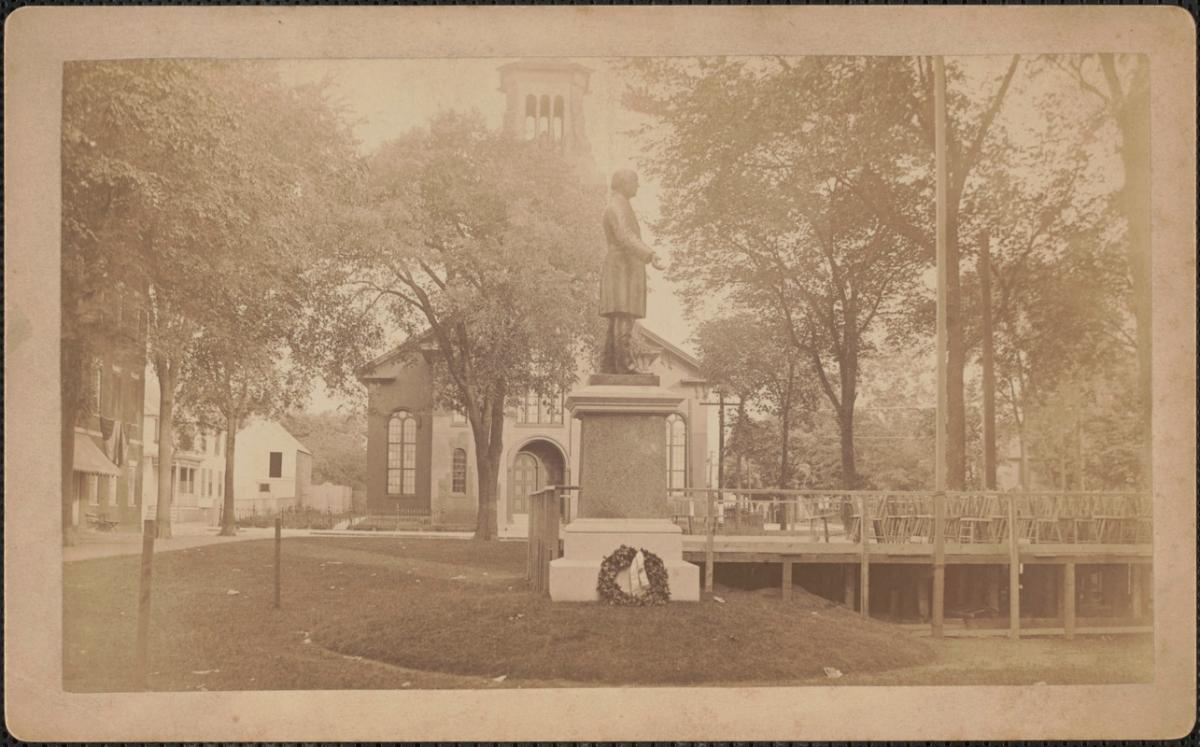
View of the Garrison statue at Brown Square, Newburyport, Mass. From the Snow Photo Collection, Museum of Old Newbury. |
|
It would be over thirty years before Garrison would speak in Newburyport again.
Thirteen years after Garrison’s death, he was memorialized with a bronze statue, placed in Brown Square, his face turned away from the church that had barred the doors to him in 1830. The quote on this statue captures his determination to publicly address the evils of slavery, whatever the cost.
I am in earnest
I will not equivocate
I will not excuse
I will not retract a single inch
and I will be heard.
Editor's note: Inconsistencies in spelling of names, etc., are from the historical record and not a typographical error.
|
|
Newbury Newbie
Genealogists love a good puzzle to solve. They might not be your first choice of companion at a cocktail party, but if you have a family mystery and it involves dead people, ask a genealogist. I was lucky enough to spend last spring in Boston University’s graduate certificate program in Genealogical Research. Not a day goes by that I don’t tap into those skills.
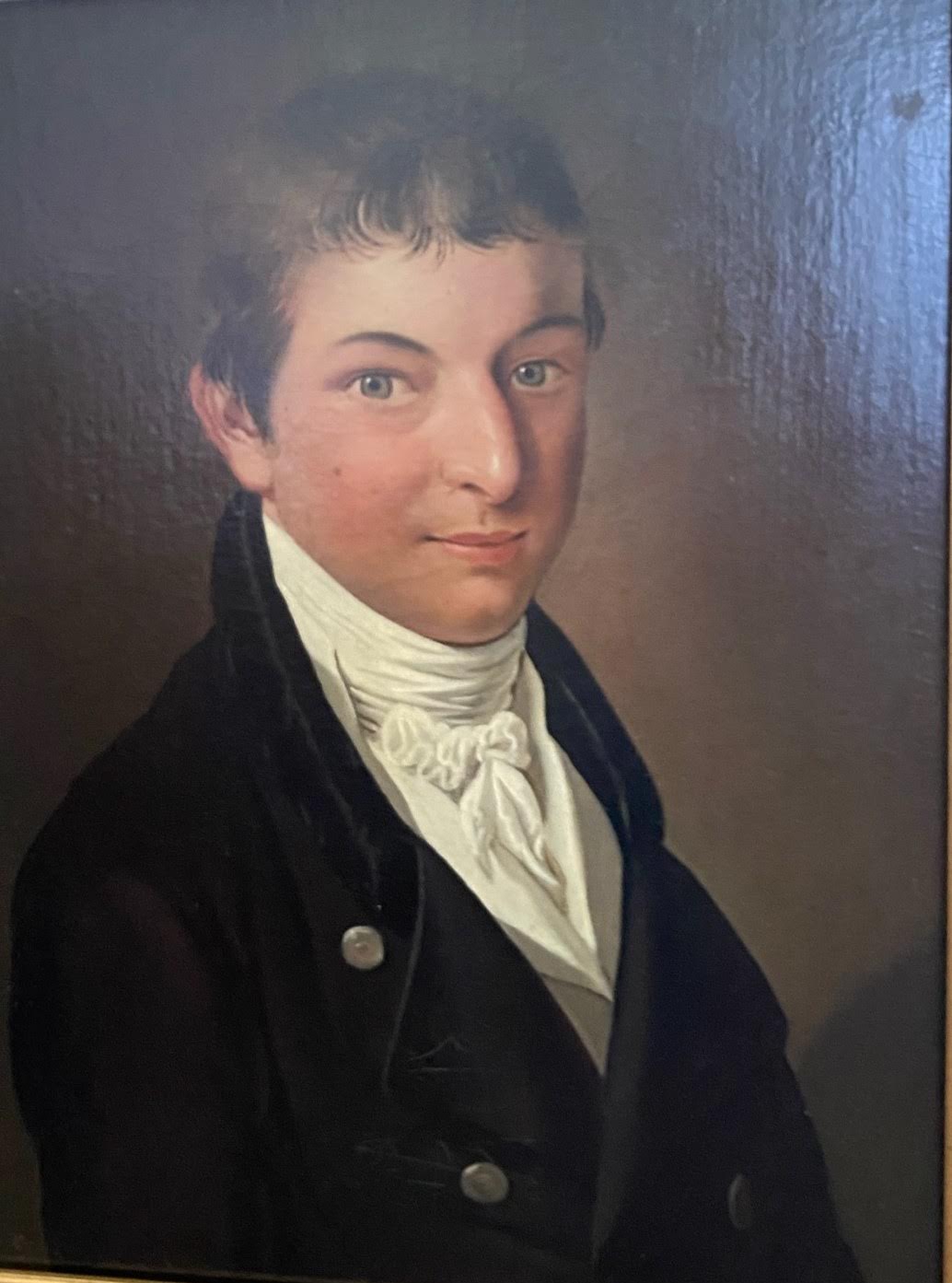
A woman called the museum the other day because she had a painting that belonged to her husband and she didn’t know what to do with it. Did we want it? She thought the painting was by the Dutch painter Charles Delin, (1756- 1818) and she was calling the museum because of a 1987 exhibition catalog that the Historical Society of Old Newbury published, one of the few printed resources on Delin.
If you were an American sea captain in 1800 and wanted a portrait done, it seems like the word on the street (or in the harbor) was “go to Delin’s coffee house in Amsterdam - he’s good, he’s fast and he’s not that expensive.”
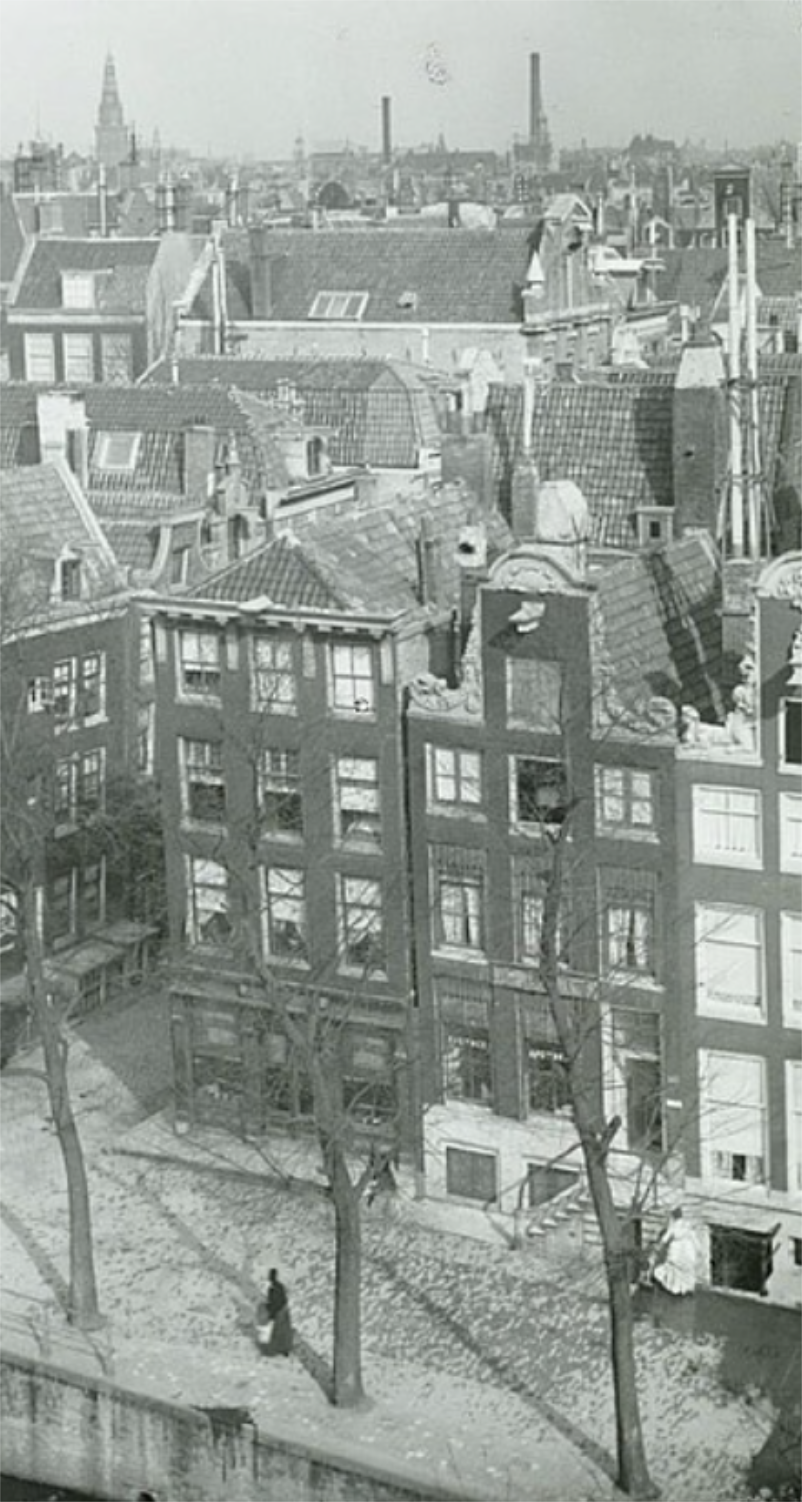
The politics of the time - Amsterdam was controlled by France, and American ships were among the few foreign ships allowed in - meant that most of Delin’s coffee drinkers and portrait sitters were Americans. This is according to Peter Benes, whose essay in the museum catalog locates his coffee house at 307 Keizergracht.
|
|
307 Keizergracht is to the right of the house on the corner. The building was built around 1720 and torn down in 1912. Photo from 1904. Image from http://www.amsterdamsegrachtenhuizen.info/ |
|
“Would the museum be interested in the painting?” I answered with a qualified yes - only if the sitter was from the Newburyport area. She added, “Well, I don’t even know who he is. But I do have a story about him.” And the story went like this:
The son of a sea captain stowed away on his father’s boat. The boy was found mid-way across the Atlantic and was whipped as his punishment. Upon arriving in Amsterdam, feeling bad about what happened, the captain had his son’s portrait painted.
Family stories need to be taken with a grain of salt. I definitely question the sea captain feeling bad - I know from my own family stories that among seafarers, discipline was strict. But this story was all she had for us.
This is exactly the type of puzzle that genealogists love! I asked the caller a few more questions - her husband's name, his parents' names, where they lived in 1940 and what side of his family the portrait came from. My questions were designed to identify the family in the 1940 census (the most recent census available to the public - though we’re counting down to the release of the 1950 census on April 2, 2022). From 1940, I could quickly go back in time.
|
|
Before hanging up, I asked for a photo of the painting so I could ask our resident Delin expert, Monica Reuss, what she thought about the attribution. The photo came in within seconds and Monica agreed it had the Delin “look” - overly large eyes, a forehead with a fringe of hair and curls, a subtle smile and a white shirt and white tie. |
|
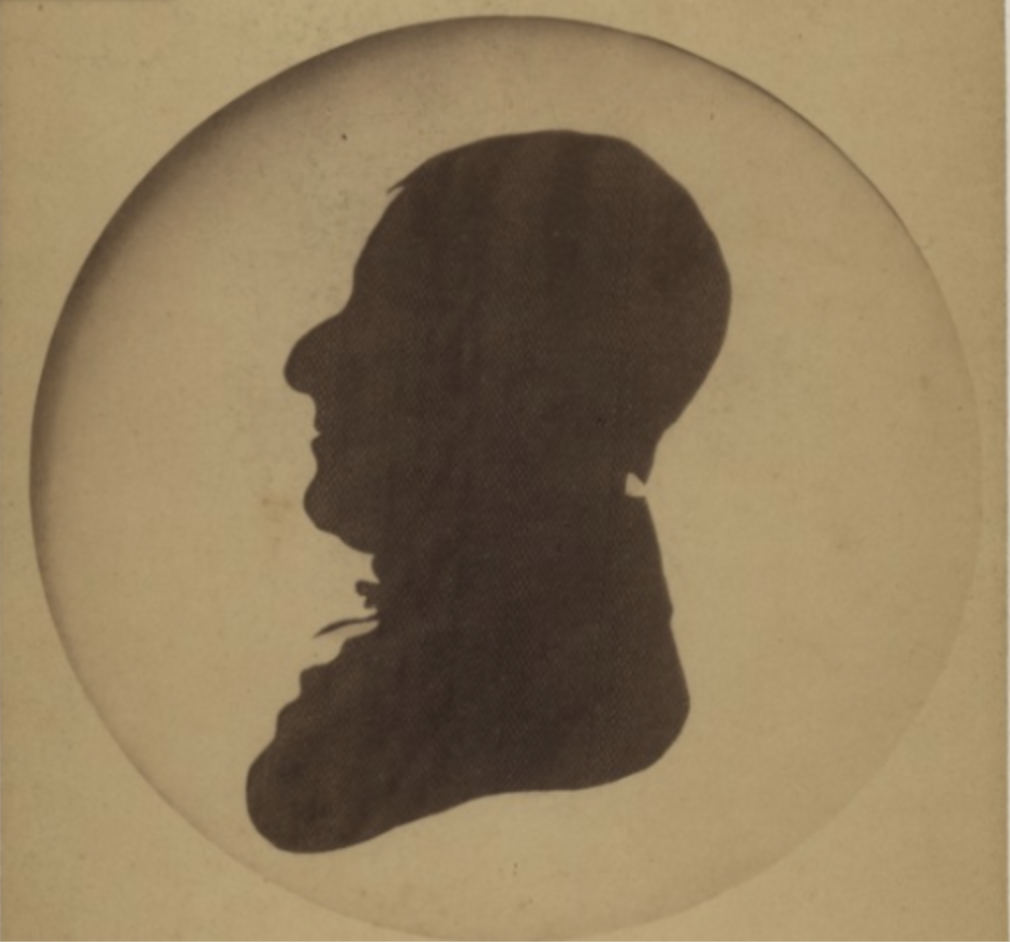
Did his son get his father’s nose? Shown left to right, Taylor Jefferis (1785-1858) and Captain James Jefferis (1758-1822). From library.artstor.org. |
|
Over my lunch break, I went to Ancestry.com and quickly found some family trees linked to the husband. It didn’t take long to find a sea captain who lived at the right time.
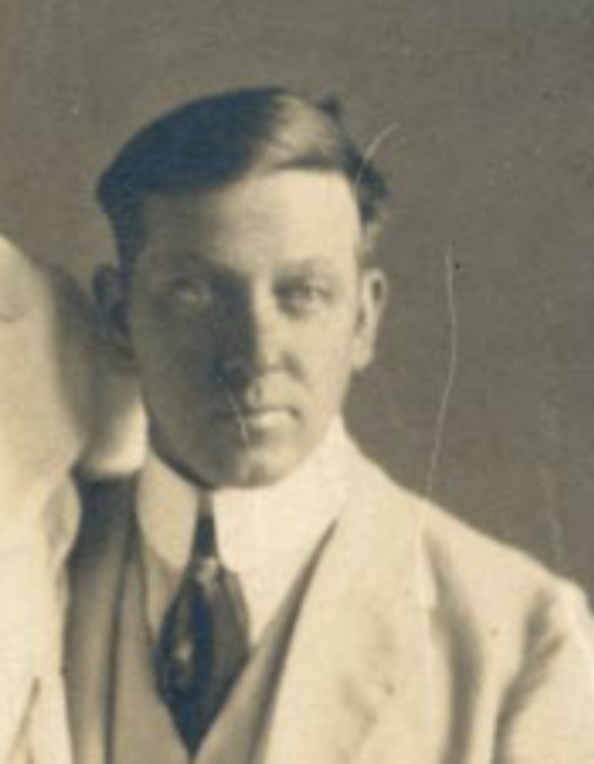
Given that Delin’s American sea captain paintings were made largely in the years just after 1800, I posited that the captain was James Jefferis (1758-1822) and the portrait was his son, Taylor Jefferis (1785-1858). They lived near Philadelphia in Chester County, PA.
Susan Edwards, collections manager with the Museum of Old Newbury, got wind of this exchange (she saw the email and asked, “Who is that handsome fellow?”) and volunteered to help.
On Geni.com (a free and very searchable family tree site), she found this story about the father and son.
|
|
Jefferis [James, the father] got his start as a young man when he was plowing a field near Marcus Hook, Pennsylvania. He had asked his father for some money to start him in life, but was turned down. One day, a schooner anchored on the Delaware River, and a man got off and asked,"Can I get any hands here?" "I’ll go," volunteered James, and he left his plowing on the spot. As he grew, he became captain of his own ship, the Neptune… On May 17, 1781, Jefferis married Deborah Hunt, and fathered four children... The oldest son, Taylor, begged his father to take him to sea when he was sixteen. Jefferis refused. Taylor then stowed away on the Neptune, waiting to reveal himself until the ship was far enough to shore that he couldn’t easily be sent home. Once he revealed himself, he expected to be given special privileges as the captain’s son, but instead, he was sent before the mast and treated as an ordinary sailor. His father, however, couldn’t disguise a certain pride, and when they reached Holland, he had a portrait painted of his oldest son, skin tanned from the ocean weather. |
|
Taylor Jefferis’ great-grandson - do you see family resemblance? (Image from Ancestry.com.) |
|
She found the same story that I was told, but with more detail! And evidence of a family history of running away to sea.
I called the owner back and told her that I’d identified the subject of the painting. When I mentioned the son’s name, she said “Oh, Jefferis, I’ve heard that. And you know, Taylor was my husband’s middle name.”
In less than an hour, we’d answered a question that the caller thought was lost to time. I gave her a phone number for our historical society counterpart in Chester County, PA.
Lessons that we all should take away - write your stories down and label your objects.
And when in doubt, contact your local historical society. We are a helpful bunch.
|
|
Learn about upcoming programs, register, find Zoom links and catch up on previous presentations here. All of our virtual programs are free, however donations are gratefully accepted to help defray speaker fees.
|
|
The Zealy Daguerreotypes: Research, Writing and Collaboration
Virtual Event
Ilisa Barbash, curator of visual anthropology at Harvard’s Peabody Museum of Archaeology and Ethnology, will discuss the research and work behind the production of the book To Make Their Own Way in the World: The Enduring Legacy of the Zealy Daguerreotypes (Aperture/Peabody Museum Press 2020), which features essays by prominent scholars from the disciplines of history, anthropology, art history and American studies.
The book is a profound consideration of some of the most challenging images in the history of photography: 15 daguerreotypes of Alfred, Delia, Drana, Fassena, Jack, Jem and Renty—men and women of African descent who were enslaved in South Carolina. Made in 1850 by photographer Joseph T. Zealy for Harvard professor Louis Agassiz, the daguerreotypes were rediscovered at the Peabody Museum in 1976. This talk will highlight some of its various topics, including the identities of the seven people depicted in the daguerreotypes, the close relationship between photography and race in the 19th century, and the ways contemporary artists have used the daguerreotypes to critique institutional racism in the 20th and 21st centuries.
|
|
Puzzle Me This...
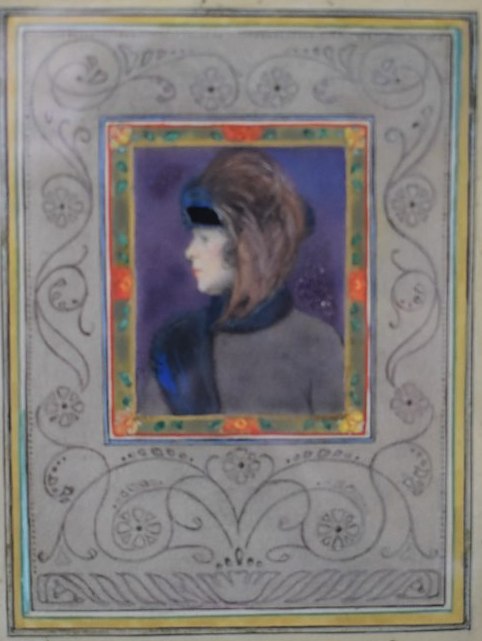
Laura Coombs Hills (1859-1952)
Self portrait of the artist created in the style of Persian miniatures. A label on the reverse reads: Laura Coombs Hills (1859-1952)/ Painted by herself after/ the Persian Manner/ for her friend/ Caroline B. Burnhome/ April 17th Nineteen/ Hundred and fourteen.
The portrait was donated to the museum by Clement B. Burnhome, in honor of his mother.
From the collections of the Museum of Old Newbury.
Click on image to begin.
|
|
Something is Always Cooking at the Museum
Carrots make a terrific side dish. Jane Wild's take is a bright, refreshing option that works well with seafood, poultry or beef.
Lemon Basil Carrots
1 pound baby carrots
2 tablespoons butter
1 tablespoon lemon juice
1/2 teaspoon garlic salt
Dash of pepper
1/2 teaspoon dried basil, crushed
Cook carrots in saucepan of boiling salted water until tender. Drain. In a saucepan, melt butter and stir in lemon juice, garlic salt, basil and pepper. Add the carrots and toss well to coat. Serves 4 to
|
|
During this difficult period of COVID-19, we rely on your support more than ever. We continue to develop new, online programs for you to enjoy and keep us connected and look forward to in-person events as protocols for safety loosen. We hope, if you are able, that you will consider a donation to the museum. Thank you for your continued support.
|
|
Museum e-Newsletter made possible through the
generosity of our sponsors:
|
|
|
Museum of Old Newbury
98 High Street
Newburyport, MA 01950
978-462-2681
|
|
|
|
|
|
|
|