Shabbat Shalom and Chag Sameach!

Please join us in shul for Shabbat and Sukkot


For a guide on how to say Kiddush in the Sukkah, click here.


Three times the Torah goes out of its way to tell us to be joyful during the holiday of Sukkot (Leviticus 23, Deuteronomy 16). In fact, it tells us we must be joyful!


For some of us, capturing a sense of joy during the holiday may not be a problem. You may simply relish the experience of sitting in a sukkah, of shaking the lulav and etrog, of eating festive meals, or going to shul. Joy may come easily when you engage in the rituals associated with the holiday of Sukkot.


For others of us, however, tapping into a feeling of joy on command may feel contrived, fake, or impossible. We might ask ourselves: What does it mean to be commanded to be joyful?


In the Talmud, the rabbis give one answer to this question: The joy of the holiday comes with the consumption of wine and meat. Through this answer, the rabbis concede that we cannot simply make ourselves joyful on command. Instead, we manufacture joy through consuming alcohol, whose effects can sometimes be mistaken for joy, and meat, which may deeply satisfy our hunger, when we sit for festive meals.


While I, personally, enjoy a glass of wine every once in a while and like steak as much as the next person, this answer does not satisfy me. In fact, the effects of wine or the satisfaction of meat may bring a temporary, surface level sense of happiness. Yet, surely when the Torah tells us to be full of joy, it is not telling us to simply satisfy some base desire for the numbness brought by alcohol or the satisfaction of meat. Joy runs much deeper than those feelings.


Oddly enough, I rediscovered a deeper meaning of joy after a close friend of mine suddenly died. I was most certainly not joyful at his passing. I was in deep despair and pain. However, my community—my friends, and family—lifted me up, brought me close, and gave me comfort in this lowest of lows. After spending hours with friends who were grieving alongside me, I experienced a new feeling along with my grief and despair: Joy. 


I experienced this joy through my feeling of a deep appreciation for those in my life who helped me overcome my pain. I felt appreciation for the ability to feel loved and supported, and to give love and support. This love and support were crucial to helping me process, and helped shape how I experience community. There is not a day that goes by when I do not wish I could catch up with my friend; I continue to miss him these years later. Yet, the comfort that I received, the unconditional support that I felt, brought me a deep sense of belonging, love, and validation. Those feelings brought me joy. 


The Talmud teaches us that on Sukkot “we emerge from our permanent residence and reside in a temporary residence.” On Sukkot, when we are meant to feel joy, we emerge from our world of comfort, and sit in a temporary hut, a hut whose roof always seems like it is on the verge of collapse. It is a holiday during which we remind ourselves that we cannot do life alone: The roof might just cave in. We need our community to be there with us, we need to support others, to feel supported by others, to offer love and receive love. 


Joy is not cheap happiness. Joy comes when we invest deeply in our relationships and our communities. It is the feeling that, when our sukkah falls, when our roofs cave in, people are there for us no matter what.


Let us use Sukkot to remember that our community is our greatest source of joy; the people who surround us, who support us, and who love us in good times and bad bring joy.


Read more about this week's parasha here.


I wish you a gut yontif and a chag sameach, a holiday filled with the deepest of joy.


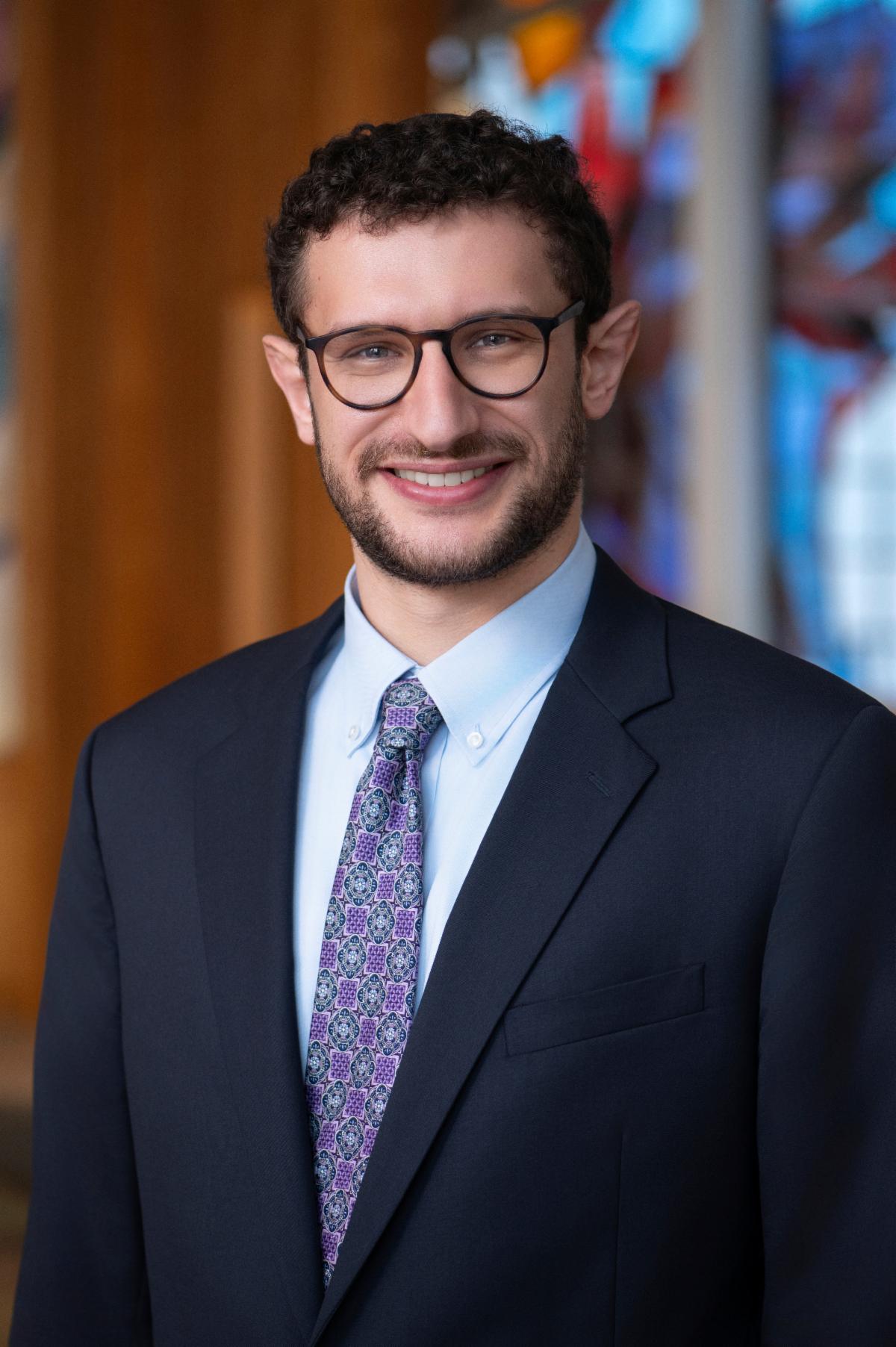
-Rabbi Eitan Bloostein


This week's Shabbat and holiday times in Fair Lawn שבת זמנים


הדלקת נרות/Candle Lighting Friday 6:30pm


Saturday Night Candle Lighting no Earlier than 7:28pm


Havdalah Sunday Evening 7:25pm


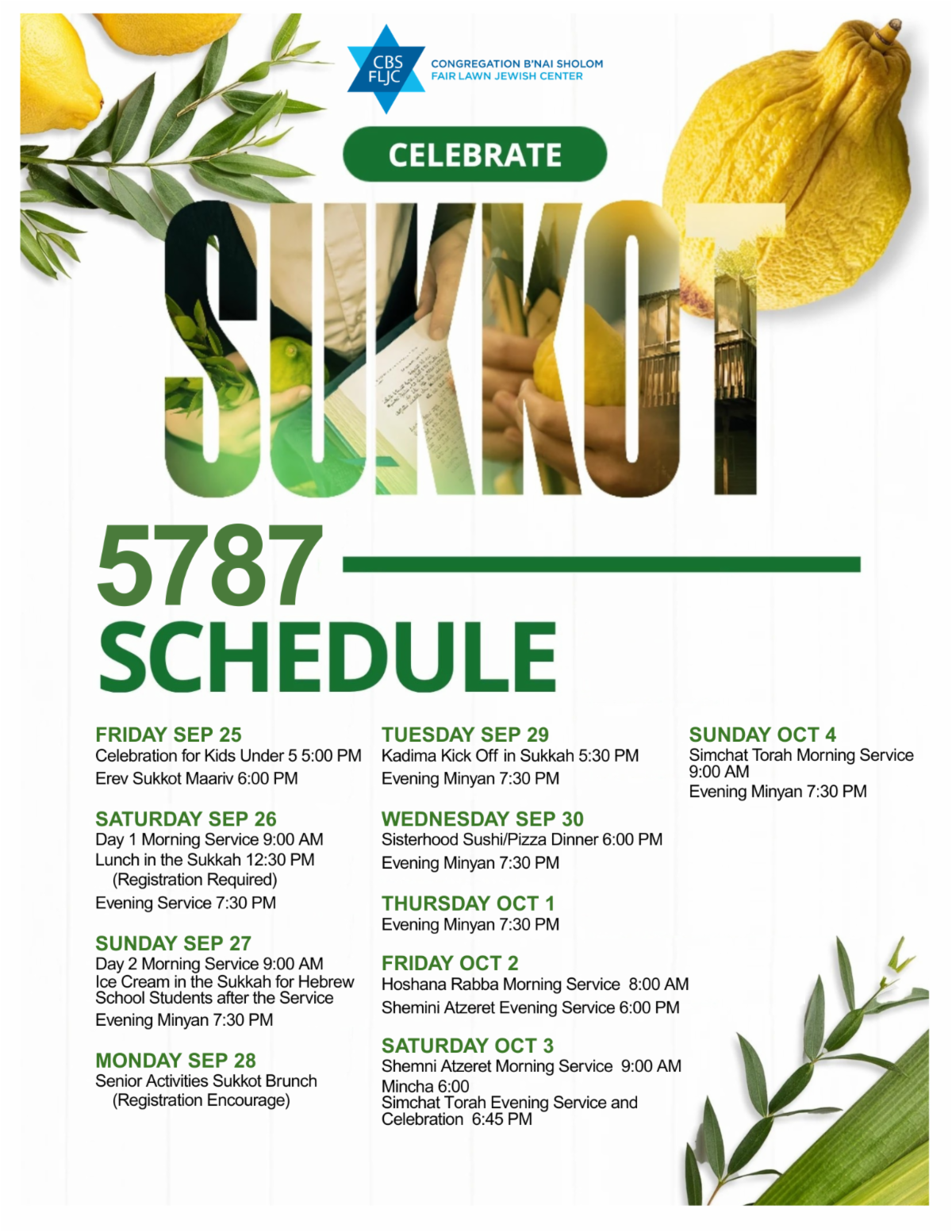
See Below for Holiday Services Schedule


A Note About Candle Lighting...

On the first night, our candles are for both Shabbat and chag, the holiday of Sukkot. We say two blessings. First, a blessing over candles, then the shehechiyanu, a blessing over living to see another holiday.


They are as follows:


בָּרוּךְ אַתָּה ה׳ אֱלֹהֵינוּ מֶלֶךְ הָעוֹלָם, אֲשֶׁר קִדְּשָׁנוּ בְּמִצְוֹתָיו וְצִוָּנוּ לְהַדְלִיק נֵר שֶׁל שַׁבָּת ושֶׁל יוֹם טוֹב.

Baruch ata adonai eloheinu melekh ha’olam, asher kideshanu bemitzvotav vetzivanu lehadlik ner shel shabbat veshel yom tov


Blessed are you Adonai, Sovereign of the universe who has sanctified us with commandments and commanded us to light Shabbat and holiday candles.


Then say:


בָּרוּךְ אַתָּה ה׳ אֱלֹהֵינוּ מֶלֶךְ הָעוֹלָם, שֶׁהֶחֱיָנוּ וְקִיְּמָנוּ וְהִגִּיעָנוּ לַזְּמַן הַזֶּה.

Baruch ata adonai eloheinu melekh ha’olam, shehekhiyanu vekiyemanu vehigiyanu lazman hazeh.


Blessed are you Adonai, Sovereign of the universe who has given us life, sustained us, and enabled us to reach this moment.


In addition to lighting shabbat/holiday candles on the first night, it is traditional to light a candle that lasts at least 25 hours (for example, a yarzheit candle). During chag, during the sacred days of holidays, we do not kindle new flame. Transferring existing flames, however, is ok. Therefore, on the second night we transfer the flame from this extra candle with a match to light our new holiday candles. We say the following blessings over the candles:


בָּרוּךְ אַתָּה ה׳ אֱלֹהֵינוּ מֶלֶךְ הָעוֹלָם, אֲשֶׁר קִדְּשָׁנוּ בְּמִצְוֹתָיו וְצִוָּנוּ לְהַדְלִיק נֵר שֶׁל יוֹם טוֹב.

Baruch ata adonai eloheinu melekh ha’olam, asher kideshanu bemitzvotav vetzivanu lehadlik ner shel yom tov


Blessed are you Adonai, Sovereign of the universe who has sanctified us with commandments and commanded us to light holiday candles.


Then say:


בָּרוּךְ אַתָּה ה׳ אֱלֹהֵינוּ מֶלֶךְ הָעוֹלָם, שֶׁהֶחֱיָנוּ וְקִיְּמָנוּ וְהִגִּיעָנוּ לַזְּמַן הַזֶּה.

Baruch ata adonai eloheinu melekh ha’olam, shehekhiyanu vekiyemanu vehigiyanu lazman hazeh.


Blessed are you Adonai, Sovereign of the universe who has given us life, sustained us, and enabled us to reach this moment.


Please reach out to me if you have questions about these blessings.

Coming up in the Jewish Calendar...

Hoshanah Rabbah


During the holiday of Sukkot, each day we engage in what are known as hakafot. The word hakafot translates literally to "circling" as we circle the sanctuary once each day of Sukkot. As we circle the sanctuary, we say the word "hoshana!" Meaning: God, save us!


Historically, the holiday of Sukkot is the holiday during which Jews would pray for rain. In ancient Israel, rain was the primary source of water and, therefore, the source of life. Today, we should not take our sources of water for granted and should still pray that they are stable. And, we should pray that all of the other life-sustaining resources that we have continue to exist: Our crops, electricity, and sources of fuel like oil and coal. Hoshana!


The final day of Sukkot is called Hoshanah Rabbah, meaning, the day on which way say "hoshana!" a great number of times. On this day, instead of circling the sanctuary once, we circle it seven times, and increase our cry of hosahana! sevenfold.


This year, Hoshanah Rabbah falls on Thursday night, the 1st, through Friday, the 2nd. Please join me for morning services starting at 8:00am.


Shemini Atzeret


The rabbis were careful to note that Shemini Atzeret is a "regel bifnei atzmo," an independent holiday in its own right. It is the holiday that immediately follows Hoshanah Rabbah. It translates to "the eight day of assembly." After we celebrate Sukkot, we come together once more for a final, eighth, day as a community. It is during this holiday when we begin inserting the phrase mashiv haruach umorid hagashem, cause the winds to return and the rain to fall, into the Amida prayer.


This year, Shemini Atzeret falls on Friday night, the 2nd, through Saturday, the 3nd. Please join me for morning services starting at 9:00am.


Simchat Torah


Simchat Torah or, the “celebration of the Torah” is a day on which we celebrate the completion of reading all 54 Torah portions. We complete the final words of the book of Deuteronomy and roll the Torah all the way back to the beginning and read the opening words of Genesis. We have completed a year of study and it is time to celebrate!


Please join me for a Simchat Torah celebration on Saturday evening that will include unrolling the entire Torah, dancing, and refreshments. Bring your friends!


See the Sukkot holiday schedule above.