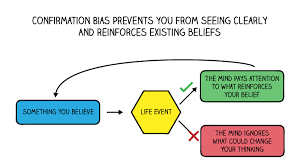
Beliefs create our reality. What's important to remember is that beliefs are not necessarily facts. They are our stories. It's important to note that everyone's story makes perfect sense to them. Our brain subconsciously loves to be right, and when we believe something to be true, we will distort, generalize and delete incoming data to support what we have already decided... even if it's not accurate. As we continue to think the same thoughts, the connections become stronger. This is neuroplasticity- the physical structure of our brain actually changes as a result of the thoughts we think.
Taking Stock
Our beliefs work in some situations and not in others. Sometimes they are in alignment with our intentions and goals and provide the motivation we need to accomplish what we've decided is important. Some we carry with us even though they no longer serve us. Some we've outgrown, but they still hang around. When this happens, holding onto certain beliefs comes at a cost.
Limiting beliefs are assumptions we make about reality that are not true for our particular situation. We all have them. They serve a purpose which is often to protect you from something. Their intention may be good, but it is often misguided. They create false limits, often unconsciously.
For example, if you believe, "I'm not smart enough", you may:
- Pay attention to evidence of roadblocks to support this belief-- the bad grade, the reason you didn't get the interview or promotion, the reason why it's not worth it to try for X
- Ignore or explain away times when things went smoothly because of your intelligence-- the times you did get a good grade ("it was a fluke, the material was easy"), you analyzed, planned and executed with success ("it was a team effort, anyone could have done it")
- Miss a new opportunity
Sometimes limiting beliefs hide from our awareness. They show up when you are confronting obstacles and challenges in pursuit of a goal.
If you notice you:
- are making excuses
- having negative thoughts
- are complaining
- are worrying about making mistakes
- are excessively worrying
- are engaged in unhelpful habits (procrastination, indulging, etc)
- talk to yourself in unhelpful ways
- jump to conclusions
- feel fear or hold back
- are resisting
then there's a good chance what's behind it is a self-limiting belief.
Ask yourself:
What am I thinking, saying or doing that is holding myself back?
What do I expect should happen?
What is specifically getting in my way?
The Takeaway
What's important to remember is that beliefs are not set in stone, no matter how immovable they may seem. When we recognize this, and realize our beliefs may not necessarily be true or helpful, we have the opportunity to shift our perceptions. In other words, we get to
choose our beliefs.
Our uncertain world and societal issues are calling upon us to take stock and acknowledge our beliefs. I invite you to be be open and have the courage to let your beliefs be challenged- by yourself and others- it's how we decide if they are worth keeping, need to be modified or changed altogether.
It is the key to growth.