The American Society of Le Souvenir Français Inc.
Monthly Bulletin - Vol. II. No 7 - July 2022
|
|
Two National Holidays in July:
Celebrating the ideal of Liberty
|
|
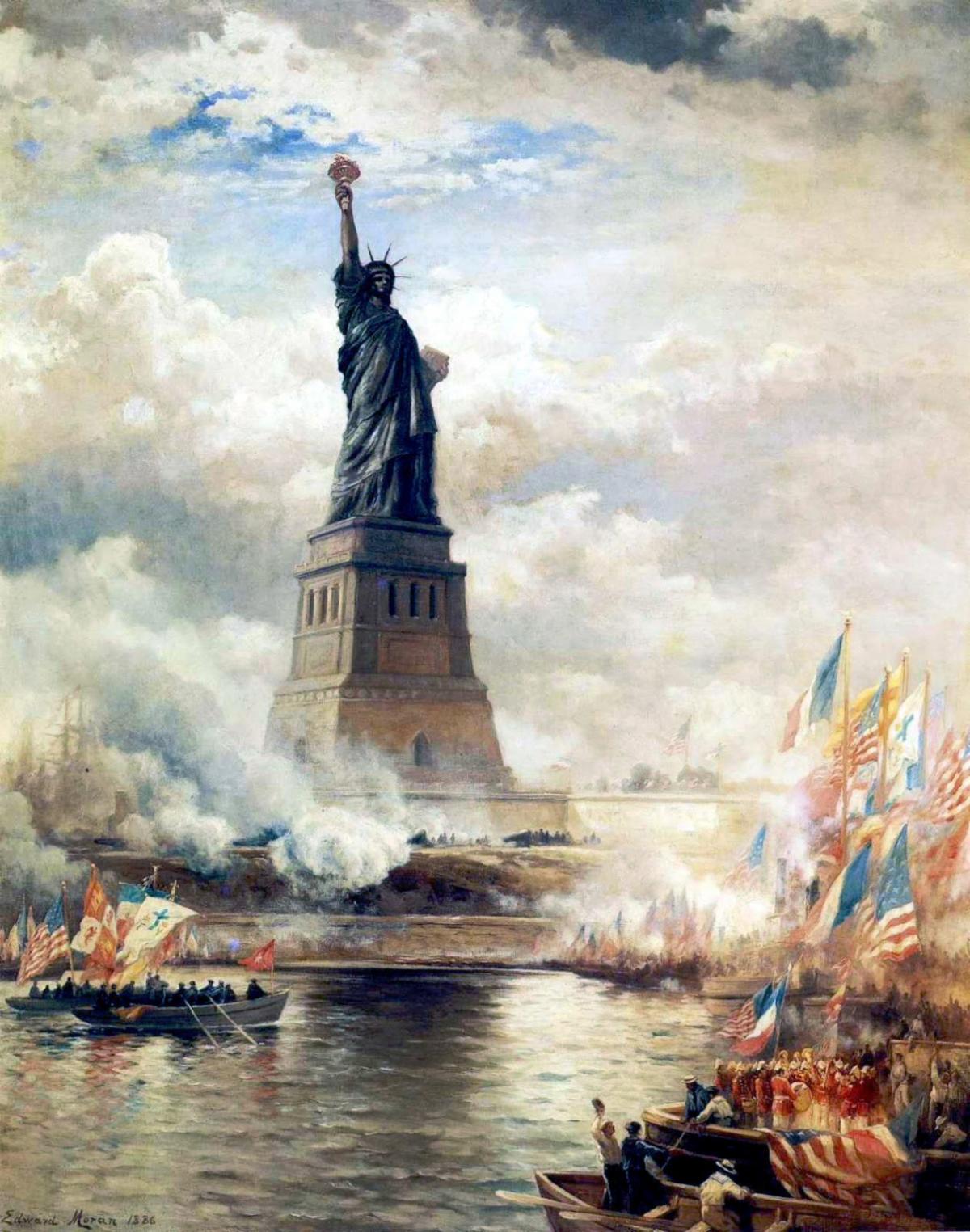
By Edward Moran - Museum of the City of New York, Public Domain, https://commons.wikimedia.org/w/index.php?curid=229787
Dedicated in 1886, the statue holds a torch above her head with her right hand, and in her left hand carries a tabula ansata inscribed JULY IV MDCCLXXVI (July 4, 1776 in Roman numerals), the date of the U.S. Declaration of Independence. A broken shackle and chain lie at her feet as she walks forward, commemorating the recent national abolition of slavery.
|
|
EDITORIAL
Summer has started, and the month of July is synonymous with patriotic festivities in both the United States and France.
...Two National Holidays in July, same shared values...
In the history of the world, there have been few examples, if any, of such a long and deep amity between two nations. Despite different evolutions in the geopolitical sphere over the past 250 years, the basic fundamental bonds of friendship remains strong. It seems important in view of the current world events to remind ourselves of the special meaning of this historical friendship.
We thought it appropriate to ponder on the significance of our national holidays, which in spite of some different historical contexts, 14 years apart, both celebrate the same values of liberty and democracy. Both peoples fought for their freedom, one from a distant king and over-taxing government, the other from an absolute monarch also over-taxing its subjects. Both were inspired by the same philosophers of the age of Enlightenment, Voltaire, Montesquieu, Rousseau, Locke, Thomas Paine, Benjamin Franklin, Diderot, Hume, to cite a few…
...Lady Liberty, and other gifts...
What better shining example of this friendship and symbol of our shared values than our Lady Liberty? As always with our bulletins, we will endeavor to turn the spotlight on a few basic facts and anecdotes, well known or more obscure, and highlights other gifts from the French government, municipalities or French private citizens to the United States and its peoples, in a few places in America where the French presence can still be felt. This selection is taken from the soon-to-be published book "Memories of France: 650 places of French presence in the United States". Save the date on your calendar: on September 22nd, the book will be presented at a reception at the National Arts Club in New York. An invitation will be sent later this summer.
Because it is summer, a month when many of us travel around, or leisurely catch up on their readings, whether under an umbrella on the beach, or by a pool, or on a patio...nothing says we shouldn't try to share deeper reflections..
...George Washington and his views on the French...
We will therefore reflect on the progressive change of opinion that General George Washington harbored towards the French: as a young loyal British subject and officer engaged in the "French & Indian War", the French were his ennemies. As an Insurgent and Commander-in-Chief of the Continental Army, the French became not just his trusted allies, but solid friends by the time of victory and Independence.
As always, you will also find the activities in which your association participated in since last month's bulletin, as well as other upcoming worthy patriotic events uniting French and Americans.
We wish you "Bonne Lecture", or "Happy reading" - - which, we hope, will not be too heavy to digest!
On behalf of the Board of Directors.
Thierry Chaunu, President,
American Society of Le Souvenir Français, Inc.
Poor is the nation that has no heroes, but poorer still is the nation that having heroes, fails to remember and honor them. Marcus Tullius Cicero 106-43 BC
|
|
THE 4TH OF JULY AND THE 14-JUILLET
A shared celebration of Liberty
|
|
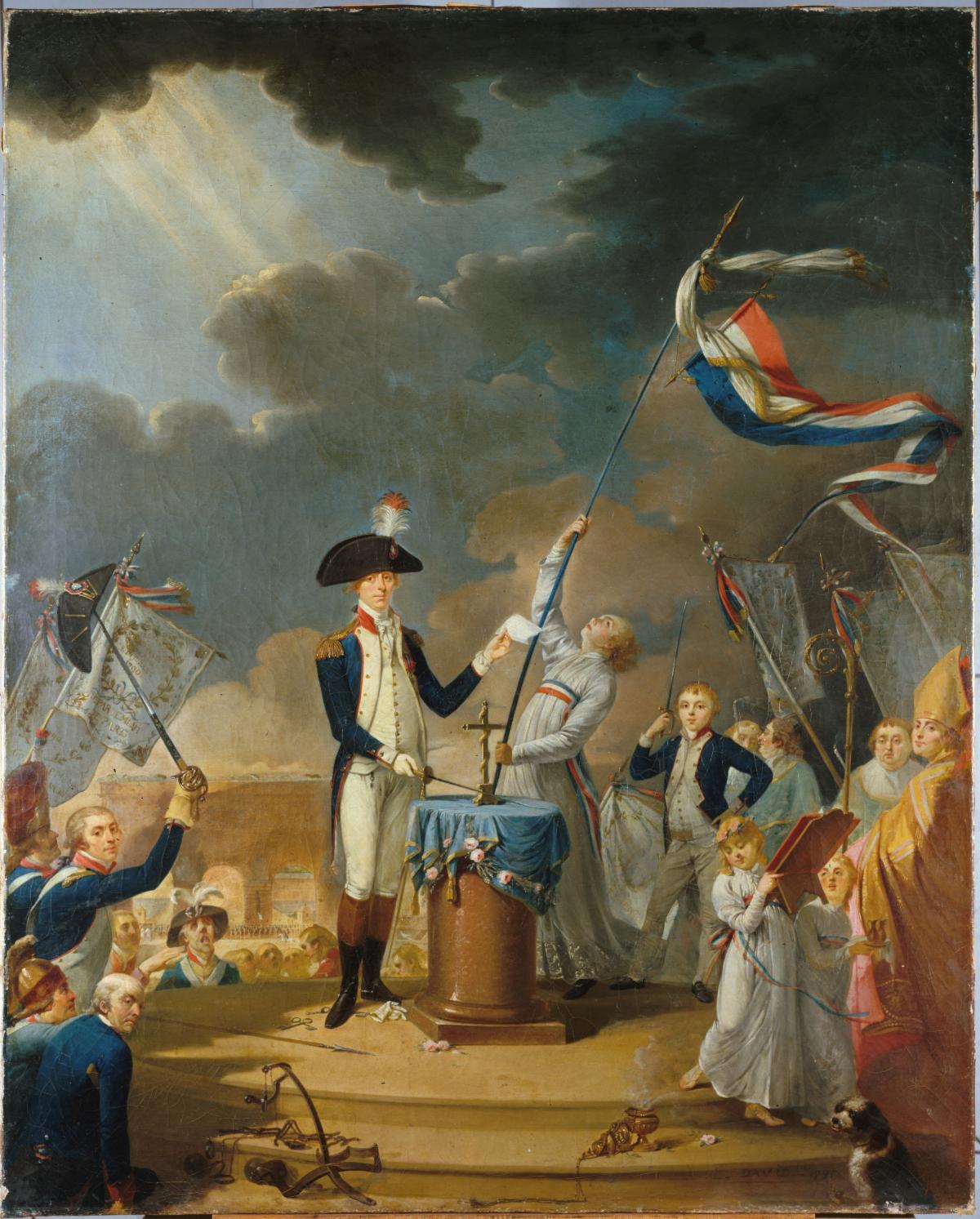
14 Juillet 1790: Le serment de La Fayette à la fête de la Fédération
(The oath of La Fayette at the Festival of the Federation, 14 July 1790)
Musée Carnavalet, Paris, Public Domain
Domaine public, https://commons.wikimedia.org/w/index.php?curid=6404537
Shown here in the famous painting by Jacques-Louis David is Général Marquis de La Fayette, who led the President of the National Assembly and all the deputies in a solemn oath to the coming Constitution. Standing next to him is his son Georges-Washington de La Fayette (aged 11), named after General Washington.
|
|
Two National Holidays, celebrating the shared value of Liberty
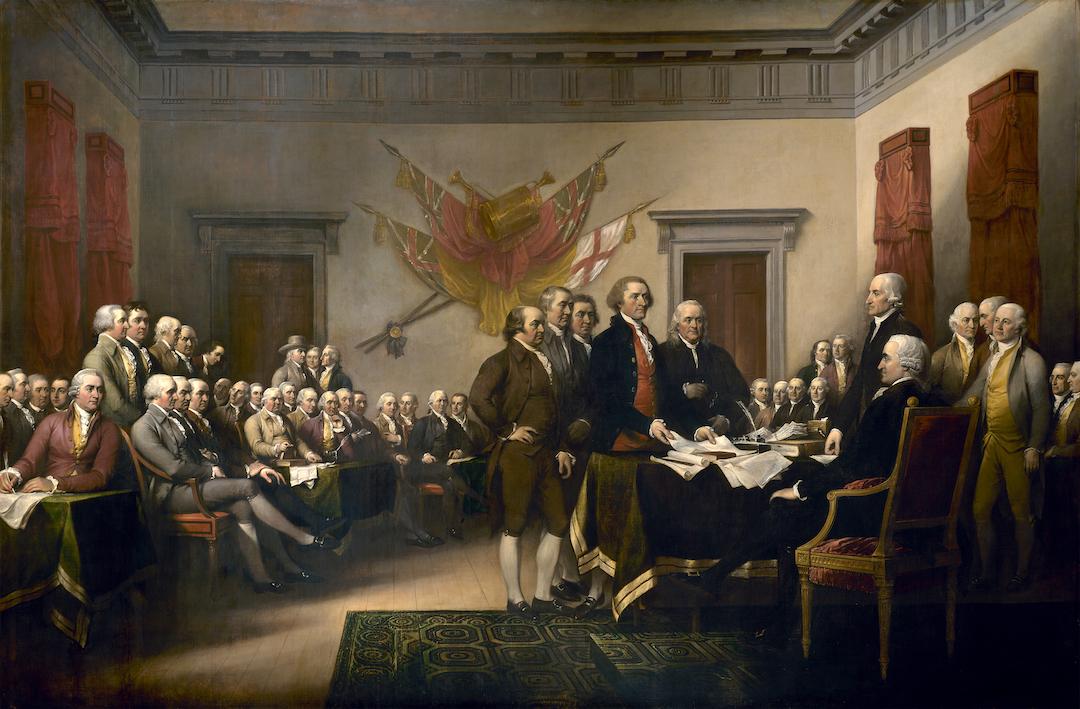
• July 4th celebrates the American Declaration of Independence of July 4th, 1776, by which 13 colonies declared their intent to break free from England and rejected the rule of King George III.
• In America, July 14th is commonly referred to as "Bastille Day". However this term is not used in France.
In France, the "Fête Nationale du Quatorze-Juillet" came about as a law promulgated on July 6, 1880: "La République adopte le 14 juillet comme jour de fête nationale annuelle" ("the Republic adopt 14 July as the day of an annual national festival") without naming which of two events it is celebrating: the storming of the Bastille on July 14, 1789, or the Fête de la Fédération a year later on July 14, 1790.
This ambiguity was totally voluntary, needed to assure enough votes from the National Assembly, consisting during the Third Republic of the French lower house, (the Chambre des Députés) and the upper house (the Senate).
• Under the kings, the "Fête de Saint Louis" was the closest approximation to a national holiday, on August 25th. The events of the first phase of the French Revolution and the establishment of the French Republic led to the "Feast of the Foundation of the Republic" celebrated on the "1st Vendémiaire" (Revolutionary calendar) of each year (22, 23 or 24 September), from 1793 until 1803.
The decree of February 19, 1806 establishes Saint-Napoleon on August 15, while July 14 was considered a subversive holiday, and celebrated in a few clandestine commemorations from 1804 to 1848.
In 1849, a national holiday was celebrated on May 4, the anniversary of the proclamation or ratification of the Second Republic by the National Constituent Assembly.
From 1852, and the referendum reestablishing the French Empire, Napoleon III restored the Saint-Napoleon of August 15th.
In 1878, a national holiday was held on June 30, during the Universal Exhibition of 1878. This event was immortalized by paintings from Claude Monet, often mislabeled as a celebration of July 14th.
• The National Holiday in France was proposed by representative Benjamin Raspail on May 21, 1880, voted by the "Chambre des Députés" on June 8, then by the Senate on June 29, and the law promulgated on July 6, 1880 to commemorate the "Fête de la Fédération", held on the Champ-de-Mars in Paris on July 14, 1790, as well as the storming of the Bastille a year before, a symbol of royal absolutism despised by the Parisian populace.
• Senator Henri Martin, who wrote the National Day law, addressed the chamber on 29 June 1880:
"But, to those of our colleagues whom tragic memories would make hesitate, let us recall that July 14, 1789, this July 14 which saw the taking of the Bastille, was followed by another July 14, that of 1790, which consecrated the first date [...] This second day of July 14, which cost neither a drop of blood nor a tear, this day of the Great Federation, we hope that none of you will refuse to join us in renewing and perpetuating it, as the symbol of the fraternal union of all parts of France and of all French citizens in freedom and equality. July 14, 1790 is the most beautiful day in the history of France, and perhaps in all of history. It was on this day that national unity was finally achieved, prepared by the efforts of so many generations and so many great men, to whom posterity keeps a grateful memory. Federation, on that day, meant voluntary unity. »
• Thus, this double commemoration received the votes of the Republicans as well as the Royalists members of both assemblies in 1880.
• Contrary to explanations found here and there on the internet, aiming at opposing July 4th, a celebration of freedom and July 14th, reduced to a "celebration of a bloody massacre", both national holidays celebrate the pursuit of an independent national unity, the value of Liberty and the rejection of a rule of a monarch.
|
|
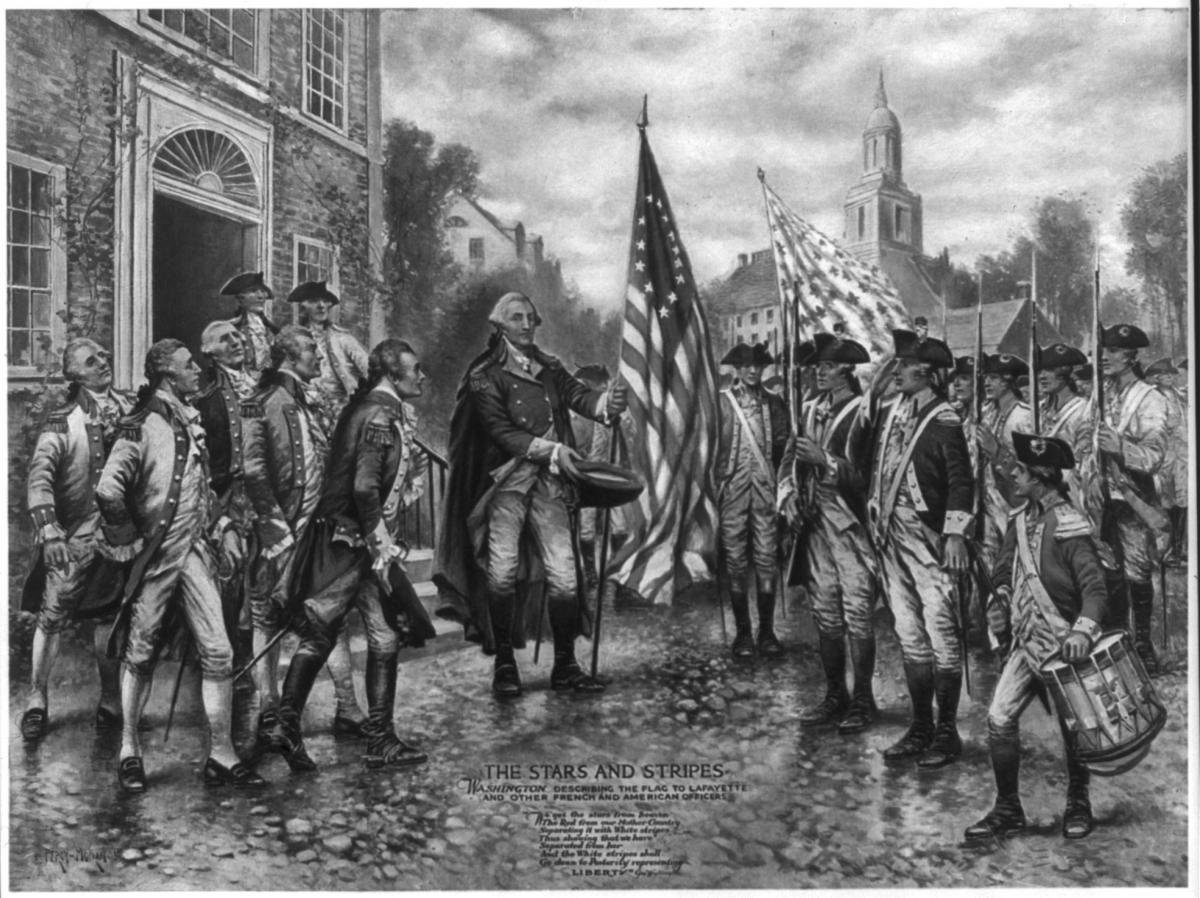
George Washington describes the meaning of the U.S. flag to the Marquis de Lafayette and other French and American officers in a painting produced circa 1918 by E. Percy Moran. Library of Congress photo, Public Domain |
|
In his book "With Americans Past and Present" published in 1916, French Ambassador to the United States Jean-Jules Jusserand writes:
..."A visitor most representative of the views thus prevalent in the French nation, knocked at the gate of Mount Vernon, provided with that infallible open sesame, a letter of introduction from Lafayette. "This gentleman," the letter read, "intends to write a history of America, and you would, therefore, make him very happy if you allowed him to glance at your papers. He seems to deserve this favor, since he loves America very much, writes well,
and will represent things under their true light."
The bearer, a sincere admirer and friend of the new republic, and who had the advantage of speaking English fluently, was Brissot, so famous shortly after for the part he played in the French Revolution, then already penetrated with its principles, and having written, young as he was, on the reform of criminal laws, declared in favor of the emancipation of the Jews, founded a "Society of the Friends of the Blacks" and, what is more to the point, a "Société Gallo-Américaine", first of its kind, for the members thereof to "exchange views on the common interests of France and the United States."
To become a member one had to prove "able and willing to bring to the notice of the others universal ideas on the happiness of man and societies, because, though its special and titular object be the interest of France and the United States, nevertheless, it fully embraces in its considerations the happiness of mankind." In which appears the vastness of humanitarian plans so fondly cherished among us—six years before the Reign of Terror.
The "particular object" of the association was, however, to "help the two countries to better know each other, which can only be realized by bringing nearer together the French individual and the American individual."
Books were to be published by the society, the first one to be dedicated "to the Congress of the United States and the friends of America in the two worlds." Newspapers, books, the texts of laws, the journals of Congress were to be imported from "free America."
The society would "welcome Americans whom their business should call to France, and whose knowledge would enable them to impart useful information there"; nothing more natural, since the aim of the society was "the welfare of the two nations."
Brissot reached Boston in July, 1788, and found that America was exactly what he had expected it to be: "Sanctuary of liberty," he wrote on landing, "I salute thee!... Would to heaven thou wert nearer Europe; fewer friends of liberty would vainly bewail its absence there." The inhabitants, he wrote, "have an air of simplicity and kindness, but they are full of human dignity, conscious of their liberty, and seeing in all men their brothers and equals..."
Equality is what strikes him most, as it does the mass of his compatriots; this was the particularly American trait which, as mentioned before, was imported from the United States into France on the eve of the French Revolution.
On receiving news of the convocation of the French "Estates General", Brissot, who felt that this was the beginning of immense changes, hastened back to France and published an account of his journey. He stated in his preface, written in 1790, why he had undertaken it, and what lessons we might learn from the United States:
"The object of this journey has not been to study antique statues, or to find unknown plants, but to observe men who had just conquered their liberty: to Frenchmen free men can no longer be strangers"...
"We, too, have conquered our liberty. We have not to learn from Americans how to conquer it, but how to preserve it. This secret consists especially in morality.... What is liberty? It is the most perfect state of society, a state in which man depends only upon the laws made by himself; and to make good ones, he must improve his reason; and to apply them he must again have recourse to his reason.... Morals are but reason applied to all the acts of life.... They are among free men what irons, whipping-posts, and gibbets are among peoples in slavery.... This journey will show you the wondrous effects of liberty on morals, on industry, and on the amelioration of men.... My desire has been to depict to my compatriots a people with whom it behooves, from every point of view, that they become intimately united."
"The young French nobility enrolled for the cause of [American] independence," wrote Talleyrand in his memoirs, "attached itself afterward to the principles it had gone to fight for."
(The Chevalier de Pontgibaud, Major in the Continental Army and Aide-de-Camp to Lafayette]...who remained a royalist, who hated the Revolution and became an émigré, observes the same fact, although deploring what occurred: "The officers of Count de Rochambeau had nothing better to do [after Yorktown], I believe, than to visit the country. When one thinks of the false ideas of government and philanthropy with the virus of which these youths were infected in America, and which they were to enthusiastically propagate in France, with such lamentable success—since that mania for imitation has powerfully helped toward the Revolution, without being its unique cause—people will agree that all those red- heeled young philosophers had much better, for their sake and ours, have stayed at court.... Each of them fancied he would be called upon to play the part of Washington." Asked to join Lafayette and "his former brothers-in-arms of beyond the sea," he refused: "It has been justly said that in a revolution the difficulty lies not in doing one's duty, but in knowing where it is. I did mine because I knew where it was," and he joined the princes and emigrated.
Of this American influence Washington was aware, and spoke, as may be surmised, in terms nearer those of Talleyrand than those of Pontgibaud.
"I am glad to hear," he wrote to Jefferson, "that the Assemblée des Notables has been productive of good in France.... Indeed the rights of mankind, the privileges of the people, and the true principles of liberty seem to have been more generally discussed and better understood throughout Europe since the
American Revolution than they were at any former period."
|
|
A FEW PHYSICAL SYMBOLS OF FRENCH-AMERICAN SHARED VALUES
(Extracted from the soon-to-be-published compilation
"Memories of France, 650 sites throughout the United States"
|
|
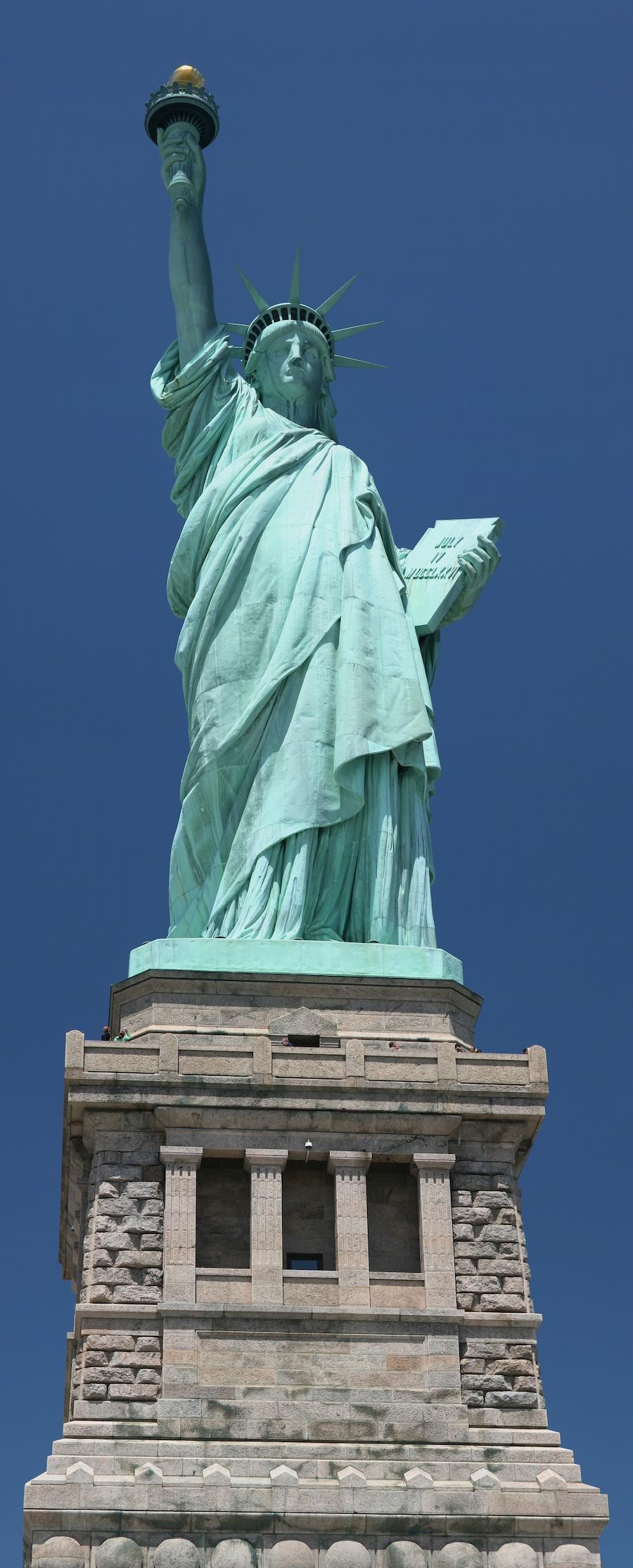
Statue of Liberty National Monument
(US National Park Service)
Liberty Island, New York, NY 10004
By Daniel Schwen - Own work, Public Domain, https://commons.wikimedia.org/w/index.php?curid=4170638
|
|
• The colossal statue, designed by sculptor Frédéric Auguste Bartholdi, and its metal framework built by Gustave Eiffel, was a gift from the people of France to the United States.
• She was named “ Liberté éclairant le monde: Liberty Enlightening the World ” and is recognized as a universal symbol of freedom and democracy.
• The idea of a monument presented by the French people to the United States was first proposed by Edouard René de Laboulaye, president of the French Anti-Slavery Society and a prominent political thinker of his time. An ardent supporter of the Union in the American Civil War, he is supposed to have said: "If a monument should rise in the United States, as a memorial to their independence, I should think it only natural if it were built by united effort—a common work of both our nations.”
• Publisher Joseph Pulitzer of the New York World started a drive for donations to build the pedestal and attracted more than 120,000 contributors, many of them recent immigrants, most of whom gave less than a dollar.
• The Statue of Liberty was dedicated on October 28, 1886. It was designated as a National Monument in 1924.
• The monument features no iconic symbols of American order, no flag or eagle. The tablet in Liberty’s left hand is not the Constitution but the Declaration of Independence, inscribed JULY IV MDCCLXXVI (July 4, 1776 in Roman numerals).
|
|
 |
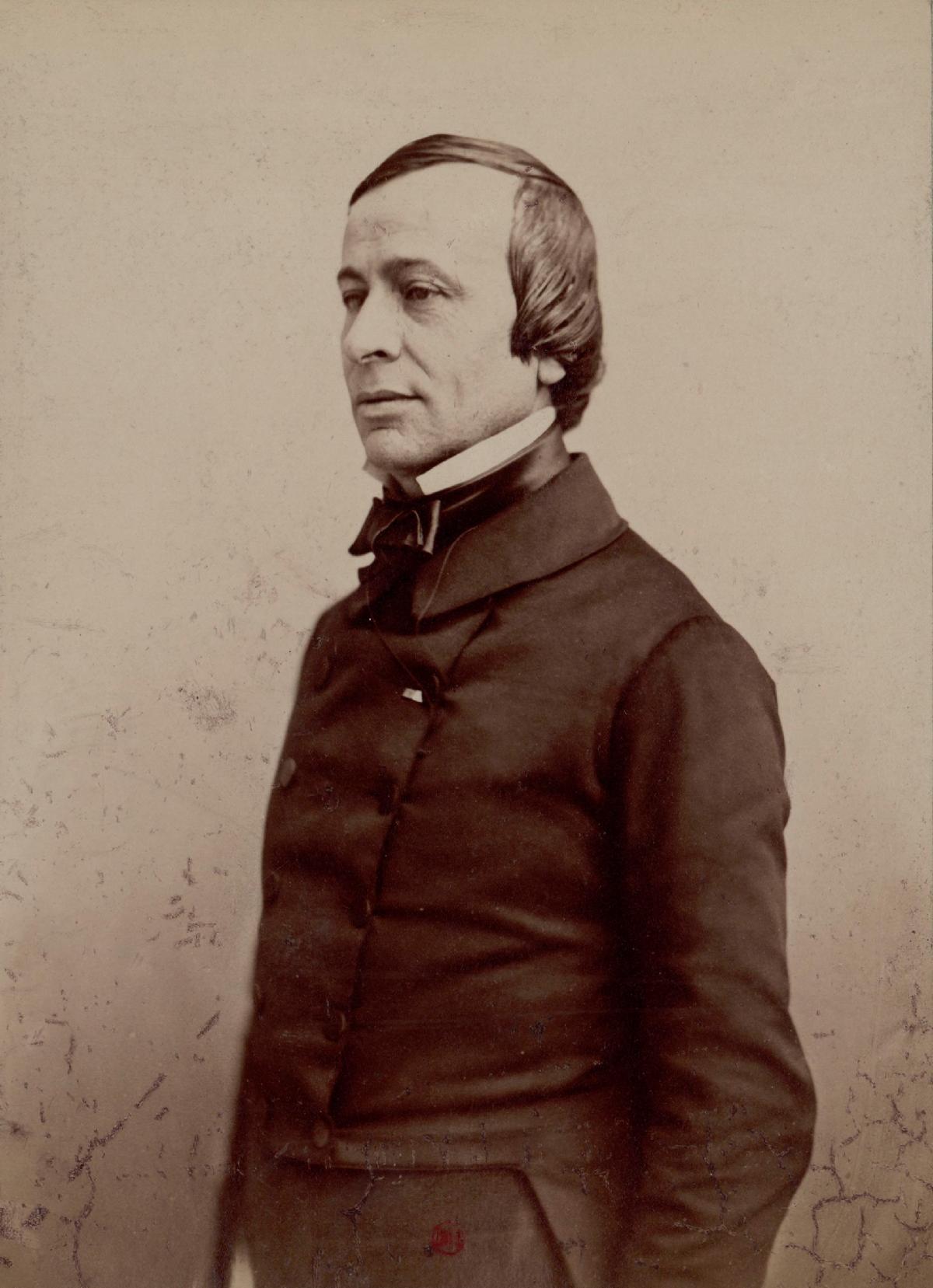
Sculpture & Marker, “Edouard René De Laboulaye
Photo by Nadar, Public Domain
•Edouard Rene De Laboulaye (1811 – 1883) was a French jurist, poet, author and anti-slavery activist. In 1865, he originated the idea of a monument presented by the French people to the United States that resulted in the Statue of Liberty in New York Harbor. He wrote a three-volume work on the political history of the United States, and published it in Paris. During the American Civil War, he was a zealous advocate of the Union cause and the abolition of slavery, publishing histories of the cultural connections of the two nations. At the war's conclusion in 1865, he became president of the French Emancipation Committee that aided newly freed slaves in the U.S.
• Inscription:
“He conceived this monument, showing the love of Liberty shared by France and America. This statue would be a gift from a people to a people. It was intended for the 1876 Centennial, but was delayed until 1886. De Laboulaye never saw his dream realized.
“Dedicated by
Mr. and Mrs. Ronald Cohen
Philip Rathner – Sculptor”
|
|
|
|
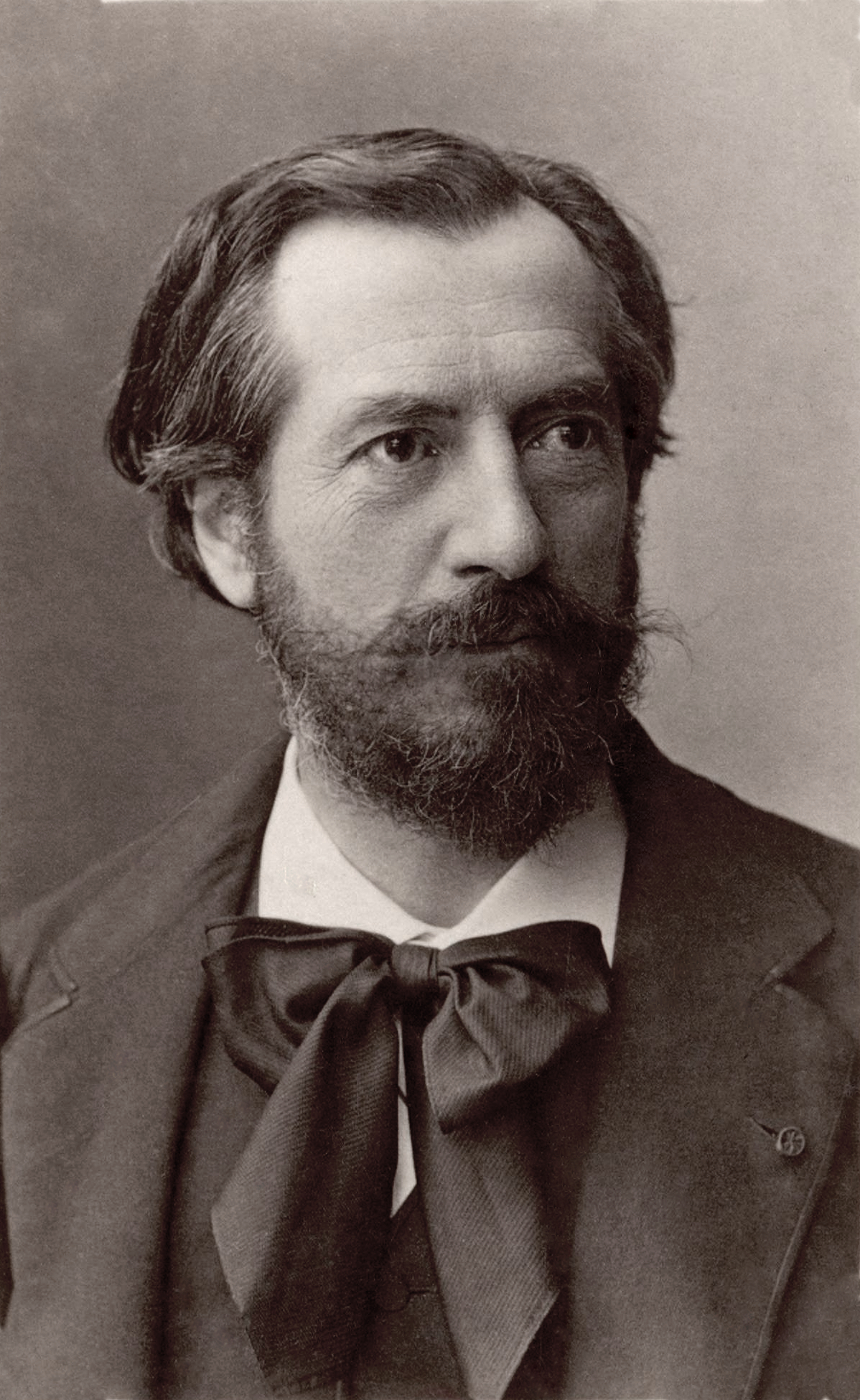
Sculpture & Marker, “Frederic Auguste Bartholdi"
Photo by Nadar, Public Domain
•Frederic Auguste Bartholdi (1834 – 1904) was born in Colmar, France. He was born to a family of Alsatian Protestant heritage, with his family name romanticized from Barthold. He served in the Franco-Prussian War of 1870 as a squadron leader of the National Guard. He constructed several monuments celebrating French heroism in the defense against Prussia. In 1871, he made his first trip to the United States, where he pitched the idea of a massive statue gifted from the French to the Americans in honor of the centennial of American independence. The idea, which had first been broached to him in 1865 by his friend Édouard René de Laboulaye, resulted in the Statue of Liberty.
• Inscription:
“A French sculptor and friend of De Laboulaye, he created the Statue of “Liberty Enlightening the World” and selected its site. Inspired by his first view of New York Harbor, Bartholdi later wrote “The Statue was born for this place which inspired its conception”.
A gift from
Ed and Rhona Libov
to the city we love
Philip Rathner – Sculptor”
|
|
|
|
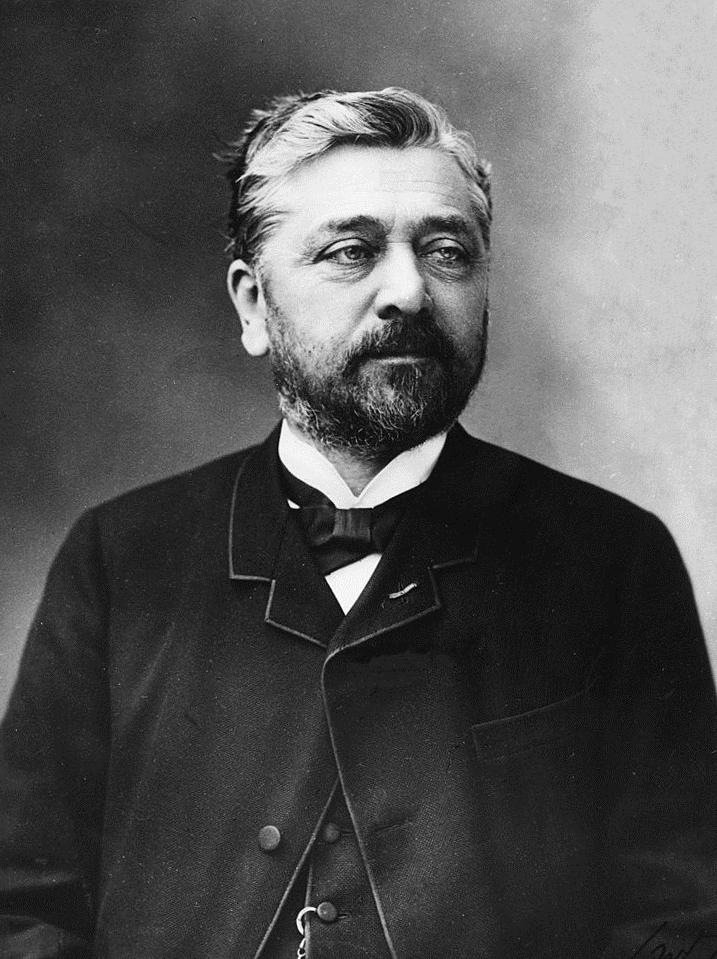
Sculpture and Marker "Gustave Eiffel"
Photo by Nadar, Public domain,
•Alexandre Gustave Eiffel (1832 – 1923 was a French civil engineer. A graduate of École Centrale des Arts et Manufactures, he made his name with various bridges for the French railway network, most famously the Garabit viaduct. He is best known for the world-famous Eiffel Tower, designed by his company and built for the 1889 Universal Exposition in Paris, and his contribution to building the Statue of Liberty in New York. In 1881 Eiffel was contacted by Auguste Bartholdi who was in need of an engineer to help him to realize the Statue of Liberty. Eiffel devised a structure consisting of a four legged pylon to support the copper sheeting which made up the body of the statue.
• Inscription:
“The iron skeleton which supports the Statue was designed by this noted French engineer and bridge builder. He later designed and built the Eiffel Tower for the Paris World’s Fair of 1889.
Dedicated by
Mr. and Mrs. Marvin Kay
Philip Rathner – Sculptor”
|
|
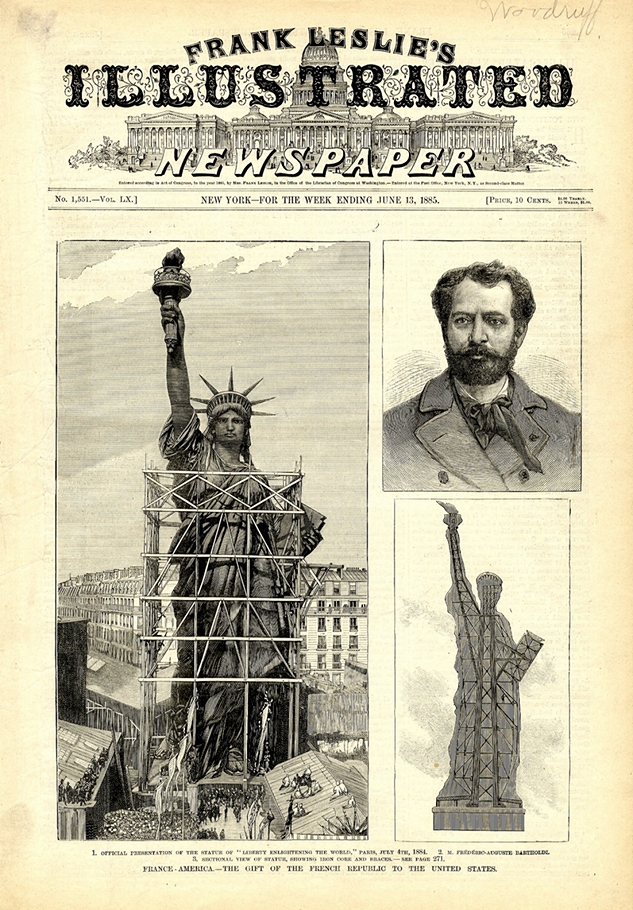
Marker, “Building the Statue of Liberty”
Front page of Frank Leslie's Illustrated Newspaper, week ending June 13, 1885, Public Domain
• Inscription:
“The French sculptor, Frédéric Auguste Bartholdi designed the Statue of Liberty as a giant three-dimensional jigsaw puzzle. Over 300 thin sheets of copper, most of it from a copper mine in Karmoy, Norway, fit together to form the Statue’s outer skin. Each copper sheet is 3/32 of an inch thick, about the thickness of two coins. The sheets were shaped in France using the ancient repoussé method in which the metal is hammered and shaped within large wooden and plaster molds. The finished pieces were then shipped to the United States where they were assembled and supported on an ingenious iron framework of armature bars and girders designed by Alexandre Gustave Eiffel.
Erected by National Park Service.”
|
|
HUNDREDS OF REPLICAS AROUND THE UNITED STATES |
|
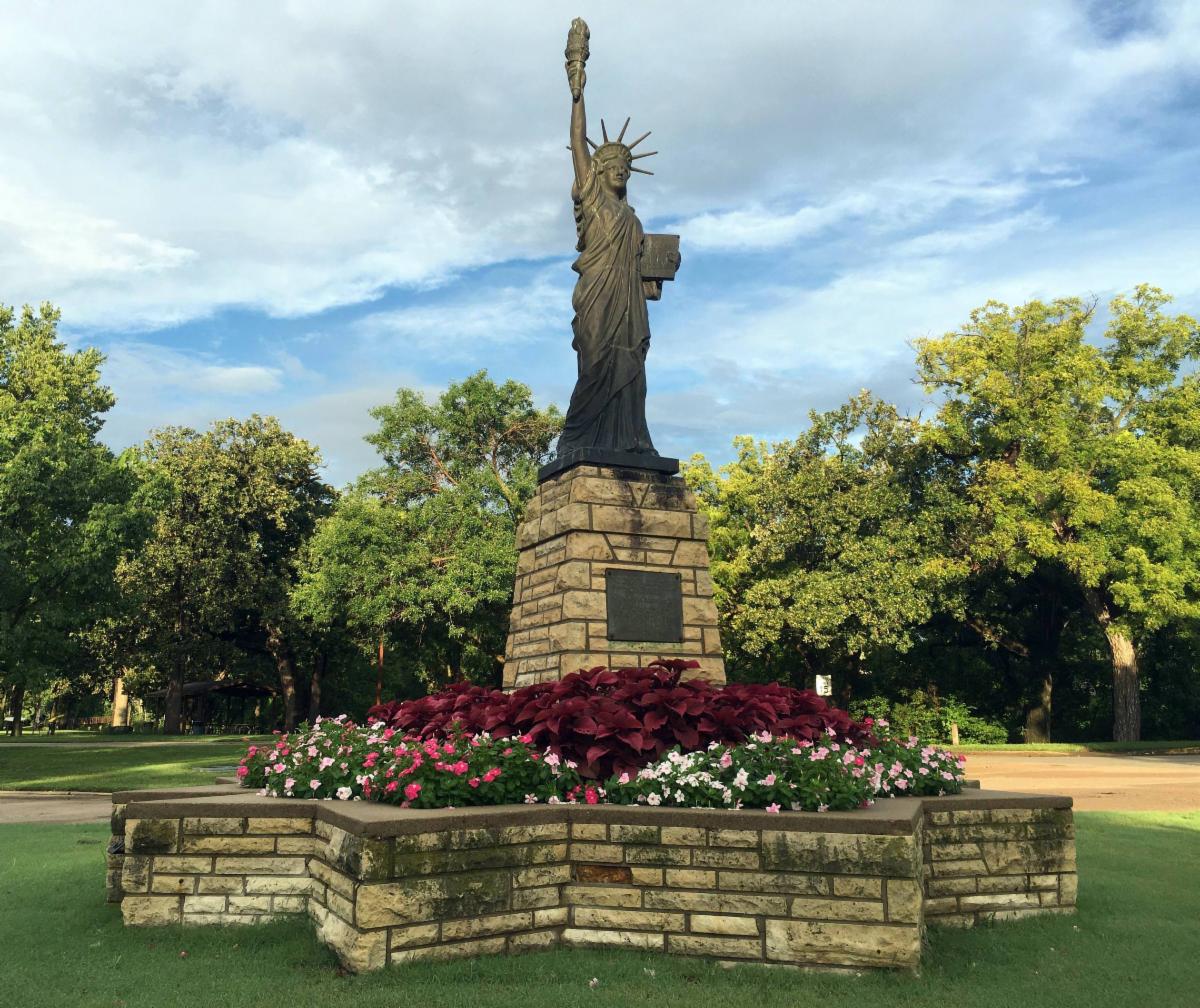
This Statue of Liberty replica, donated by the Boy Scouts of America (BSA), is located at Oakdale Park in Salina, Kansas.
By Smuckola - Own work, CC BY-SA 4.0, https://commons.wikimedia.org/w/index.php?curid=73538903
|
|
What is not so well known is the fact that there are hundreds of replicas of the Statue of Liberty throughout the United States (not to mention the rest of the world).
• We would like to pay tribute to the Boy Scouts of America, who, in 1950, implemented a program called “Strengthen the Arm of Liberty”.
• It was the theme of the Boy Scouts of America's fortieth anniversary celebration in 1950. The campaign was inaugurated with a dramatic ceremony held at the base of the Statue of Liberty. Approximately 200 BSA Statue of Liberty replicas were installed across the United States. Between 1949 and 1952, approximately two hundred 100-inch (2.5 m) replicas of the statue, made of stamped copper, were purchased by Boy Scout troops and donated in 39 states in the U.S. The project was the brainchild of Kansas City businessman, J.P. Whitaker, who was then Scout Commissioner of the Kansas City Area Council.
Many of these statues have been lost or destroyed, but preservationists have been able to account for about 100 of them, and BSA Troop 101 of Cheyenne, Wyoming has collected photographs of more than 100 of them.
• For a list of towns where these wonderful 81/2 feet copper replicas are installed, visit the Smithsonian American Art Museum inventory catalog at: https://tinyurl.com/5mp4ruyx
|
|
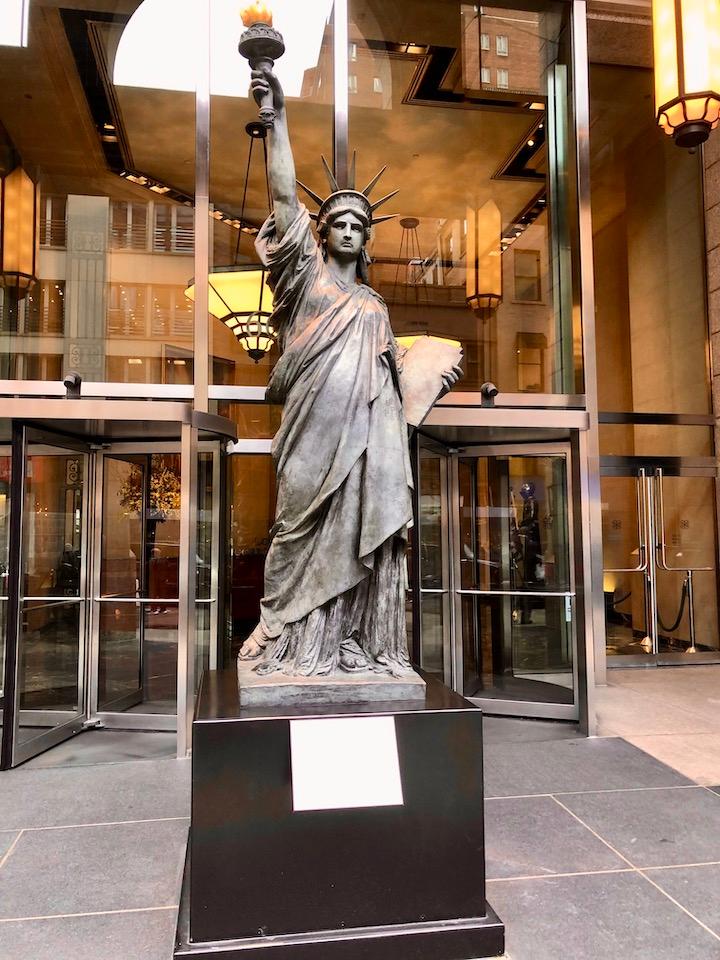
A million dollar replica in the heart of Midtown Manhattan |
|
61st Street Building entrance, 667 Madison Avenue, New York NY 10065
Photo: Thierry Chaunu (2021)
|
|
• This sculpture was purchased in 2011 by real estate developer Leonard Stern from an art dealer in France and is made from the original small plaster model that sculptor Bartholdi blew up 16 times which was long-forgotten in the hands of an art dealer. It was replicated digitally, as French law allows only 12 replicas from an original. It was purchased for “well over one million dollars” according to press reports, yet another proof that Liberty is priceless.
• Inscription:
Bartholdi 1834-1904
“This statue, cast in bronze from the original plaster sculpture, was enlarged 16 times by the artist to create the Statue of Liberty in New York Harbor, perhaps the most recognized symbol of freedom in the world.”
“It was presented as a gift to the American people and paid for by the citizens of France. The statue celebrates the core values of both countries: freedom, democratic government and the equality of man.”
“It also celebrates the bonds of friendship between our two countries and the vital financial and military assistance that France gave our Revolutionary Army commanded by George Washington during our young nation's hour of greatest need.”
|
|
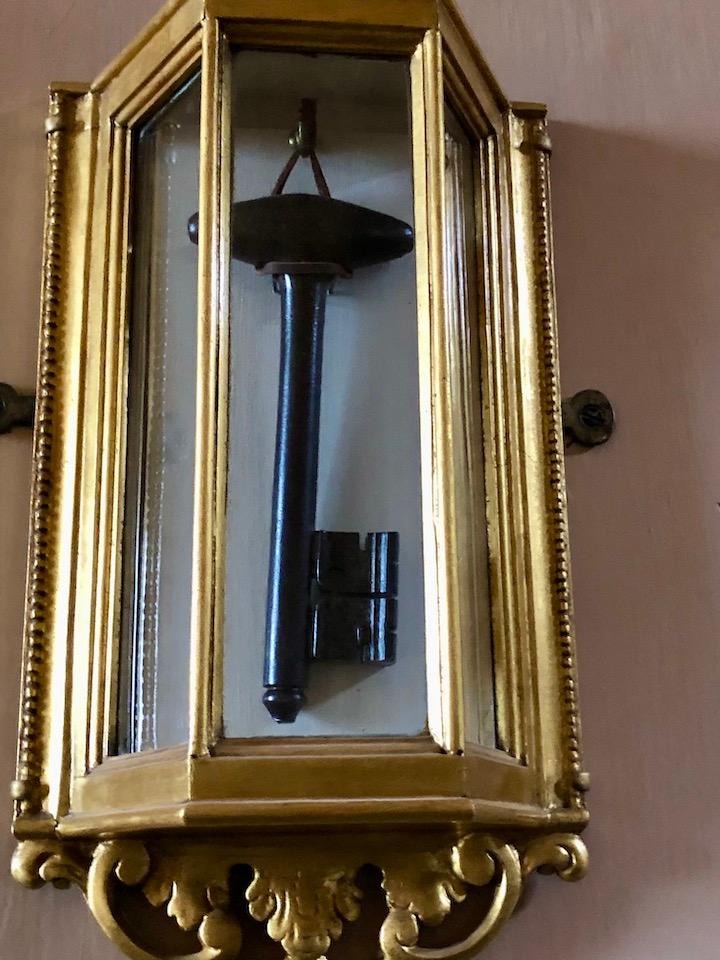
Mount Vernon, 3200 Mount Vernon Memorial Hwy, Mt Vernon, VA 22121
Photo: Thierry Chaunu (2021)
|
|
• The key to the Bastille has been on display in the vestibule of George Washington’s home since 1797. It is 7 inches long, weighs one pound, three ounces, Its teeth are designed in the shape of the royal fleur-de-lis.
• Shortly after the demolition of the Bastille, the key was given to General La Fayette, who was commanding the National Guard in Paris. It was sent along with a letter as a gift to George Washington, originally entrusted to Thomas Paine, but his crossing being postponed, it was delivered by John Rutledge, Jr. a lawyer who sailed home from London.
• Lafayette wrote: “Give me leave, My dear General, to present you with a picture of the Bastille just as it looked a few days after I Had ordered its demolition, with the Main Key of that fortress of despotism—it is a tribute Which I owe as A Son to My Adoptive father, as an aid de Camp to My General, as a Missionary of liberty to its patriarch”. Lafayette included a drawing of the Bastille ruins by the French architect who oversaw its demolition.
• Shown first at a presidential reception in New York in August, the key continued to be showcased in Philadelphia when the seat of government moved there in the fall of 1790. When the Marquis de Lafayette and his son George Washington Lafayette began a year-long tour of the United States they visited Mount Vernon and it was a highly emotional moment.
|
|
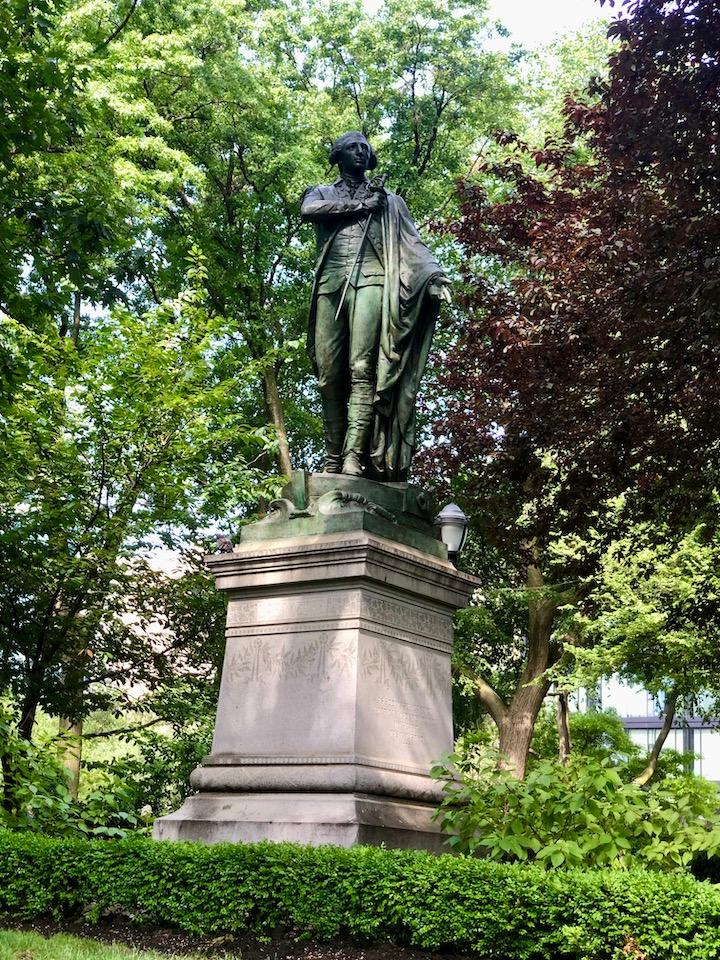
STATUE OF LAFAYETTE, UNION SQUARE, NEW YORK |
|
Union Square, New York, NY 10003
Photo: Thierry Chaunu 2021
|
|
• This bronze sculpture is the oldest one honoring the Marquis de Lafayette.
• Cast in 1873 and dedicated on September 6, 1876, it is a gift from the French government and French residents of New York for the aid New York provided to Paris during the Franco-Prussian War (1870-1) -- thus the inscription “in remembrance of sympathy in times of trial.”
• The larger-than-life-sized figure was sculpted by Frédéric-Auguste Bartholdi (1834–1904), who also designed the Statue of Liberty (1886), another famous gift from the French government. The granite pedestal designed by H.W. DeStuckle was donated by French citizens living in New York.
• The statue rests on a Quincy granite pedestal. In 1991, it was conserved by the Municipal Art Society and the New York City Art Commission's joint Adopt-A-Monument Program.
• Inscriptions:
NORTH SIDE:
"AS SOON AS I HEARD OF / AMERICAN INDEPENDENCE,/
MY HEART WAS ENLISTED" / 1776
SOUTH SIDE:
“TO THE CITY OF NEW YORK, / FRANCE, /
IN REMEMBRANCE OF SYMPATHY / IN TIMES OF TRIAL / 1870-71”
|
|
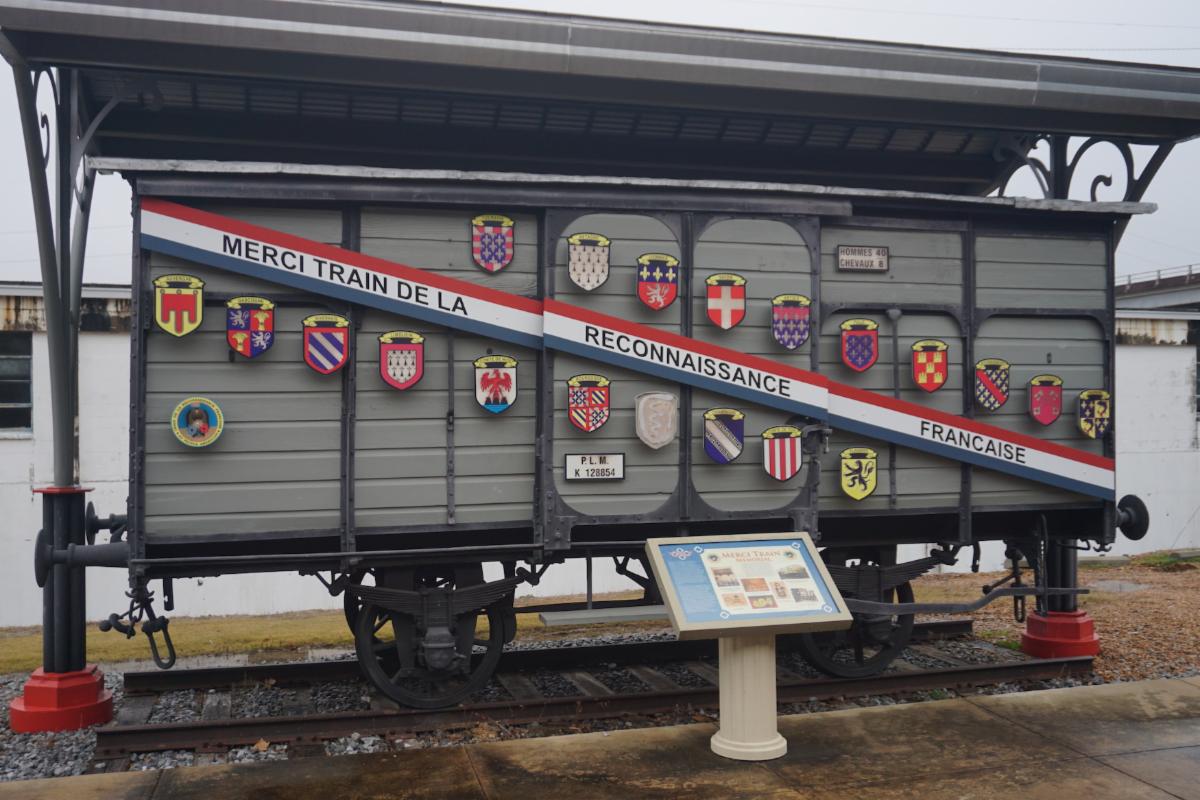
The photo above is just one example of a MERCI TRAIN boxcar, this one preserved at the GM&O Depot, Jackson, Mississipi
618 East Pearl Street, Jackson, MS 39201
By Michael Barera, CC BY-SA 4.0, https://commons.wikimedia.org/w/index.php?curid=75800145
|
|
• The Merci Train, also known as the French Gratitude Train or the Forty and Eight, was the 1949 Europe-US response to the Friendship Train. Composed of 49 cars and filled with "gifts of gratitude", the Merci Train arrived in New York City on February 3, 1949, and was divided amongst the 48 states with the remaining car to be shared by the District of Columbia and Hawaii.
• "Forty-and-eights: were French covered goods wagons used as military transport cars. The term refers to the cars' carrying capacity, said to be 40 men or 8 horses. Built starting in the 1870s as regular freight boxcars, they were originally used in military service by the French army in both World Wars.
• The idea to send a "thank you" gift to the United States for the $40 million in food and other supplies sent to France and Italy in 1947 came from a French railroad worker and World War II Resistance veteran, named André Picard.
• The Train and all 49 cars arrived aboard the Magellan on February 3, 1949, with over 25,000 onlookers in attendance. On the side of the gift-laden French freighter was painted, "MERCI AMERICA". Immediately the trains were distributed amongst the states.
• Many of the trains were opened and turned into exhibits before distributing the gifts inside (dolls, statues, clothes, ornamental objects, furniture, etc..) as each state saw fit. Most states continued to exhibit the boxcars to the public after their gifts were distributed.
• Several of these boxcars have been saved and preserved by association of US Veterans.
A FULL BULLETIN WILL BE DEVOTED IN THE FUTURE TO THESE LITTLE KNOWN PHYSICAL TESTIMONIALS OF GRASS ROOT FRENCH-AMERICAN FRIENDSHIP, LOCATED IN SEVERAL STATES COAST TO COAST.
|
|
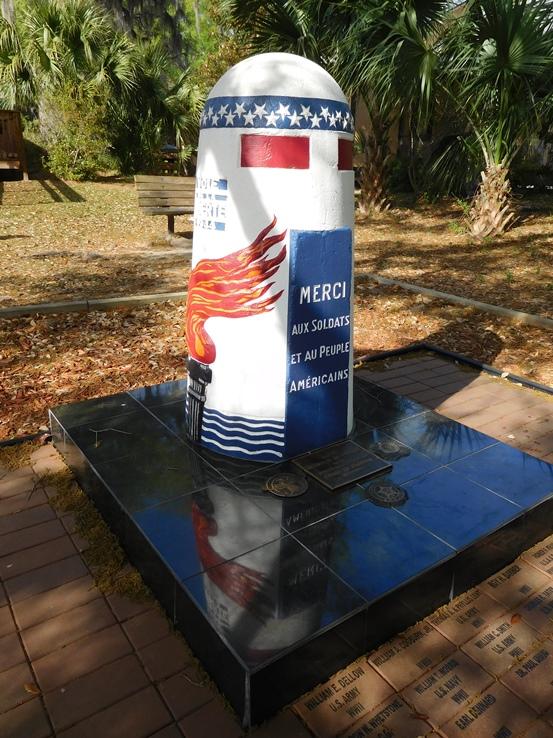
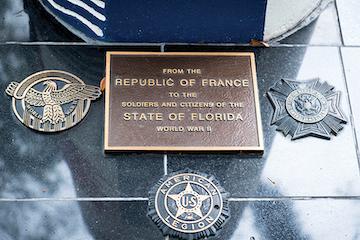
@Post 13 American Legion, 229 Lake Ella Drive, Tallahassee, FL 32303
|
|
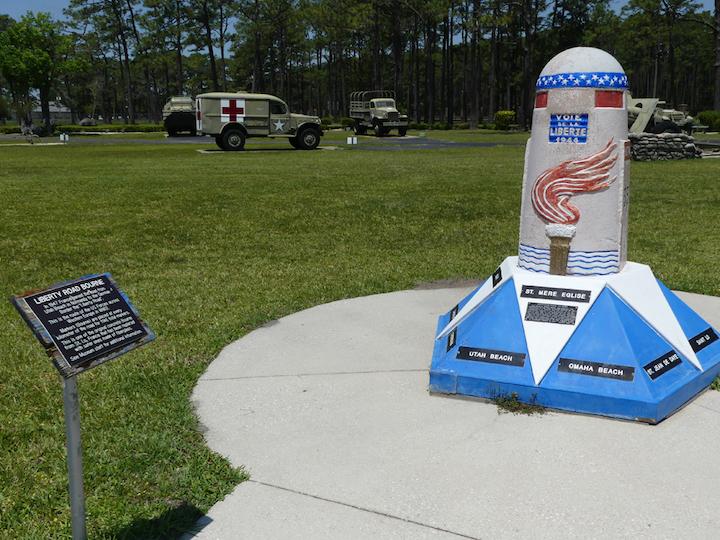
• In 1945, the idea of establishing a monument was suggested to commemorate the liberation of France by the American First and Third Armies - a monument which would be an everlasting symbol of Liberty. It was believed that a single simple monument would not be sufficient to express the sincere gratitude of the French people towards its American liberators. It was then conceived of installing symbolic milestones, or “Bornes”, marking every kilometer along the route taken by General Bradley's First Army, and General Patton's Third Army, after D-Day in Normandy on June 6, 1944, from Utah Beach in Normandy to Bastogne in Belgium.
• One of these ”bornes” was placed inside a “Merci train” car donated to Florida, and was eventually moved to its present location under the guardianship of the American Legion post.
• Inscription:
“Voie de la Liberté 1944”
Brou
Eure et Loir
Libéré le 15 août 1944
“Merci aux soldats et au peuple américain”
Translation:
“Freedom Road of 1944”, Brou [municipality], Eure and Loire [département], Liberated on August 15, 1944.
“Thank you to the soldiers and the American people”
|
|
Marker & Monument, “Borne Monument”
Camp Blanding, Florida National Guard, 5629 Route 16, Starke FL 32091
|
|
• This “Borne” came from St. Jean-de-Daye, the first town liberated by the 30th Infantry Division, along the “Liberty Road” in Normandy, and was presented to the Camp Blanding Museum in a ceremony at St. Lo, Normandy, by the Department of Manche. It was dedicated on VE Day, 8 May 1998.
• Inscription next to the ”Borne”:
“This original Borne above, was donated and presented to the Camp Blanding Museum by the Department of Manche and the City of St Lo, (Normandy, France), it was dedicated on the 9th day of May, 1998, to the memory of the men of the 1st, 29th, 30th, and the 79th Infantry Divisions and the 508th Parachute Infantry Regiment, all a part of the first Army of the United States of America, who sacrificed their lives in paving the way for the establishment of the “Liberty Road” in Normandy, France in June – August 1944.”
Erected by Camp Blanding Museum & Memorial Park.”
• Inscription marker (near the entrance to Camp Blanding):
“In 1947 France named the road from Utah Beach in Normandy to the German Border the "Liberty Road". This is the route of the US Forces across Western Europe in WW2. Markers (Bourne) [sic] are placed at every kilometer of the road for 1146 total markers. This is one of the original concrete Bourne from St. Lo, France that has been replaced with safer ones made of fiberglass. See Museum staff for additional information."
Erected by Camp Blanding Museum & Memorial Park.”
|
|
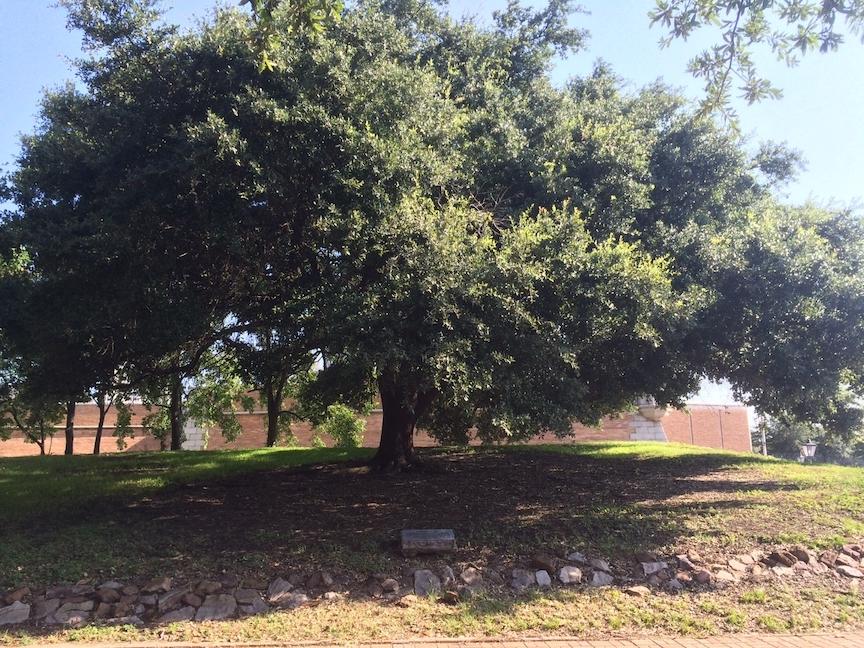
104 Theatre Street, Mobile AL 36602
Photographed By Mark Hilton, July 26, 2015
|
|
• Not all gifts need to come from governments, presidents or ambassadors.
This gesture from the municipality of Pau in the Southwest part of France is a touching example of grass root friendship.
• A live oak tree stands beside the Fort of Colonial Mobile as a gift from Mobile’s sister city, Pau, France, after Hurricane Frederic. Hurricane Frederic made landfall near Mobile on Sept. 12, 1979, in Dauphin Island, Alabama as a Category 4 hurricane, destroying thousands of Mobile’s iconic oak trees and causing $1.7 billion in damage.
• Inscription:
“The Tree of Pau
Presented to the people of Mobile
from their sister city, Pau, France.
Symbolic of the restoration after
Hurricane Frederic 1979.”
Erected 1981
|
|
GEORGE WASHINGTON: HIS VIEWS ON THE FRENCH |
|
STARTING WITH DEEP DEFIANCE AND ENMITY...
|
|
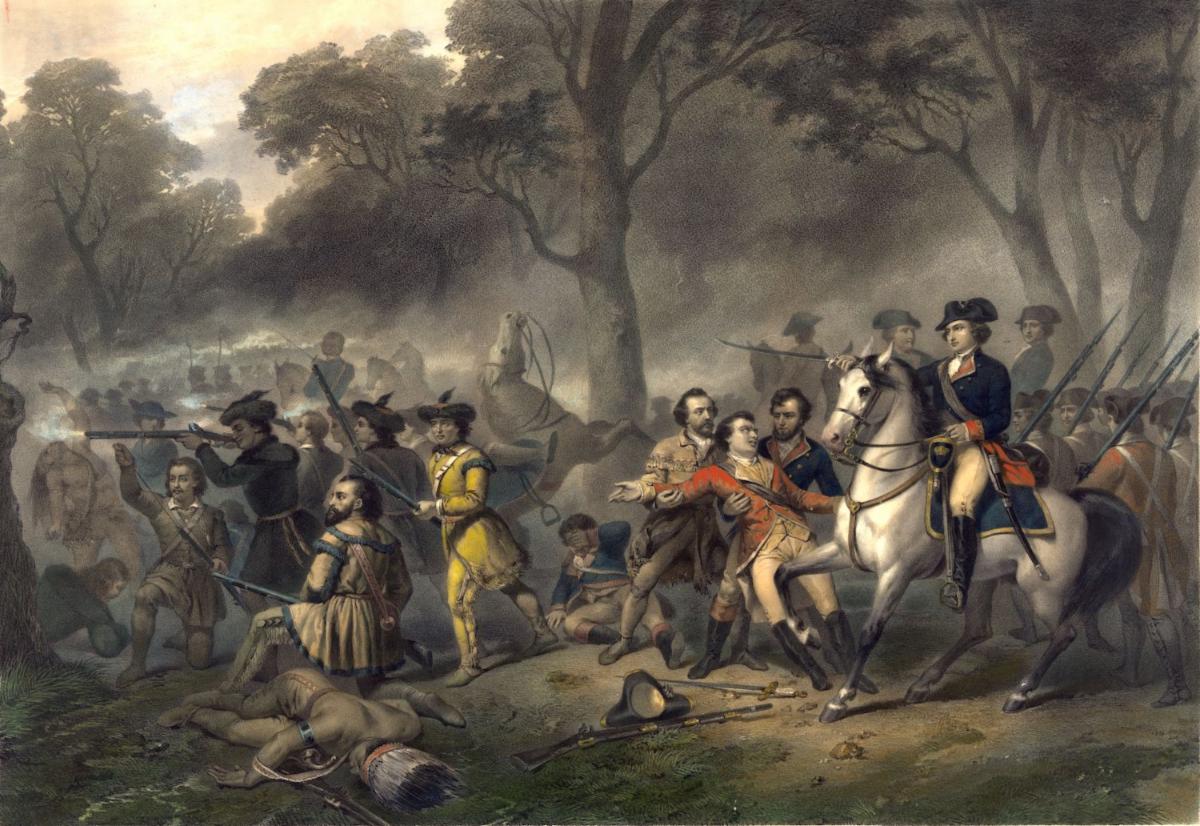
https://commons.wikimedia.org/wiki/File:Washington_the_soldier.jpg#/media/File:Washington_the_soldier.jpg
|
|
First a loyal British subject:
• At his boarding school in Fredericksburg, he had a French Huguenot teacher named Maryes who didn't not teach him French, but we know from his papers that he transcribed a French tutorial manual, the "Rules of Civility and Decent Behavior in Company and Conversation"...
In it one finds this advice of supreme importance, which Washington observed throughout life: "Labor to keep alive in your breast that little spark of celestial fire called conscience."
• Unfortunately most of his readings, and we know this from his hand-written annotated papers, were full of caricatures propagated by the British, during the conflict with the French in Canada: they are a "ludicrous nation"; their women are "fantastical," their men "vain and lively," their fashions "ridiculous" ... As a young colonel at the age of 22 in 1754, he was sent to Ohio Valley to confront the French and his journals and letters show strong animosity towards the French.
• It is during one such mission that George Washington delivered a letter summoning the French to leave a fort they had established. He was received by the commander of the fort, Chevalier de Saint Pierre, who politely received him and sent him back to his lines with a letter stating: "I am here by the orders of my general, and I entreat you, sir, not to doubt but that I shall try to conform myself to them with all the exactness and resolution which must be expected from a good officer."
He has "much the air of a soldier," Washington wrote of him. To this Mr. de Saint Pierre added another letter for the British governor, stating: "I made it my particular care to receive Mr. Washington with a distinction suitable to your dignity as well as to his own personal merit. —From the Fort on the Rivière-aux-Bœufs, December 15, 1753."
• The second encounter Washington had with the French was at Fort Necessity which ended in defeat for the British. The French allowed the British to withdraw with "full military honors, drum-beating, and taking with them one small piece of ordnance." (July 3, 1754.)
• On the third occasion on June 9, 1755 at Fort Duquesne (present day Pittsburgh), the French also prevailed, and almost killed Washington, who wrote to his brother John: "By the all-powerful dispensation of Providence, I have been protected beyond all human probability and expectation; for I had four bullets through my coat, and two horses shot under me, yet escaped unhurt, although death was levelling my companions on every side of me. We have been most scandalously beaten."
A loyal British subject, Washington kept harboring animosity towards the French and defiance in anything they could say or do. Clearly, the French were the ennemies who had to be confronted and booted out of North America. Moreover, the mounting grievances of American colonists towards England were interpreted by Washington as grievances against the ministry and their troops, not against England or her King.
|
|
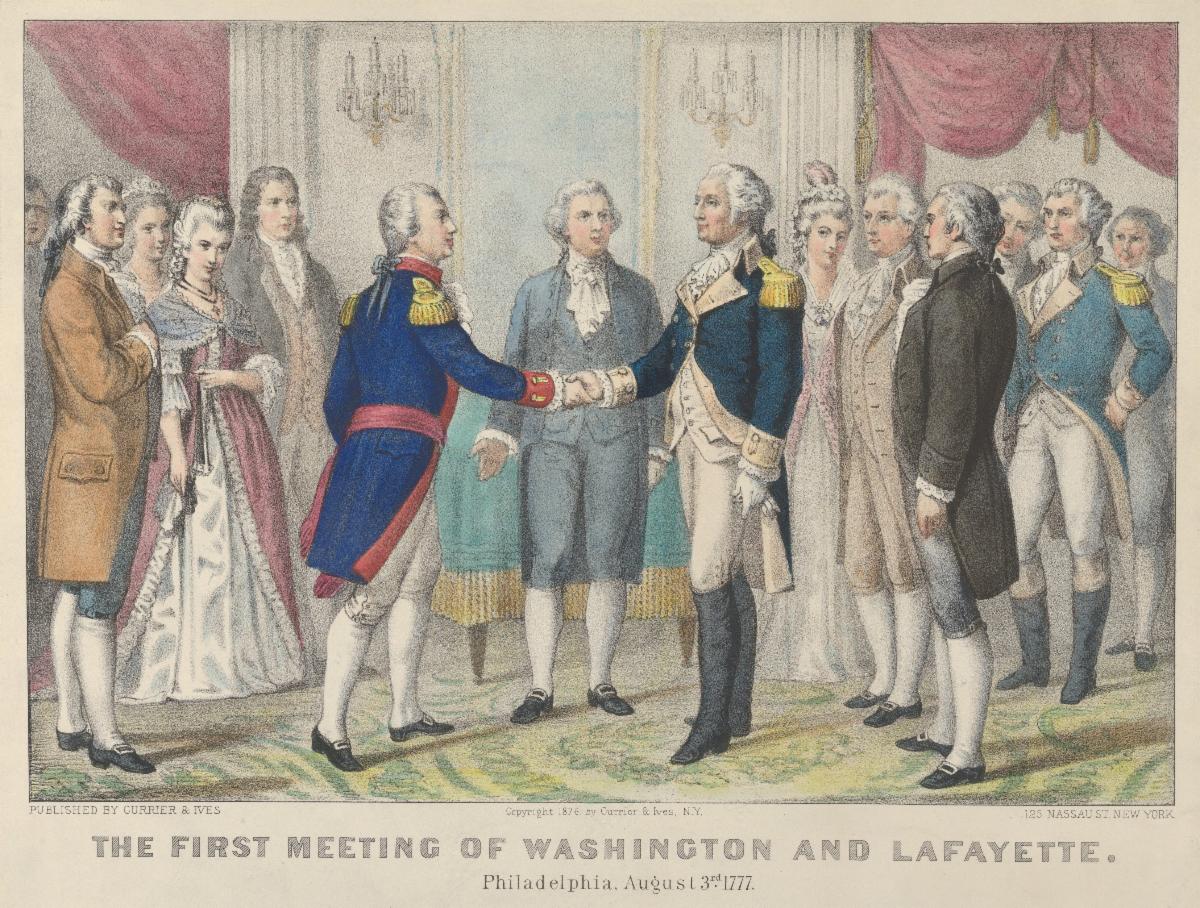
The First meeting of Washington and Lafayette, Philadelphia, Aug. 3rd, 1777
New York : Published by Currier & Ives, c1876.
Public Domain, Library of Congress Prints and Photographs Division Washington, D.C.
|
|
A MORE FAVORABLE VIEW AS THE ALLIANCE TAKES HOLD
• Once appointed Commander-In-Chief of the Continental Army, George Washington was no longer animated with disdain or animosity towards the French.
• Once the French volunteers started coming to America seeking to enroll, many were seen as an encumbrance. Yet George Washington starting sensing that something different was happening. "They seem to be genteel, sensible men," wrote Washington to Congress, in October, 1776, "and I have no doubt of their making good officers as soon as they can learn so much of our language as to make themselves well understood."
• When young Lafayette first came at the aged of 19 on board the ship La Victoire, financing his expedition with his own money, George Washington was unconvinced in August 1777. "What the designs of Congress respecting this gentleman were, and what line of conduct I am to pursue to comply with their design and his expectation, I know no more than the child unborn, and beg to be instructed."
• This quickly changed, as on November 1, George Washington wrote to Congress: "... Besides, he is sensible, discreet in his manner, has made great proficiency in our language, and from the disposition he discovered in the battle of Brandywine possesses a large share of bravery and military ardor."
• It would take more time before George Washington realized that most of these volunteers really were joining the cause of Liberty with enthusiasm, disinterest for material gains, and moved by high idealism.
• Even when France openly sided with the Americans and declared war to England, Washington was suspicious. "Hatred of England," he wrote, "may carry some into an excess of confidence in France...I am heartily disposed to entertain the most favorable sentiments of our new ally, and to cherish them in others to a reasonable degree. But it is a maxim founded on the universal experience of mankind that no nation is to be trusted farther than it is bound by its interest, and no prudent statesman or politician will venture to depart from it."
• On May 4th, 1778, the news of the Treaty of Alliance, Commerce and Friendship signed in Paris on February 6, 1778, reached Continental Congress. When word of its ratification reached Valley Forge, General George Washington issued the following General Order on May 6, 1778:
“…Upon a signal given, the whole army will huzza:
'Long Live the King of France' “
Thousands of American insurgents from the Continental Army thus shouted this celebratory huzza in unison.
“It having pleased the Almighty Ruler of the universe to defend the course of the United States, and finally raise up a powerful friend among the princes of the earth [King Louis XVI], to establish our Liberty and Independence upon a lasting foundation, it becomes us to set apart a day for gratefully acknowledging the Divine goodness, and celebrating the important event which we owe to His Divine interposition."
So far Washington had seen the French as individuals. He could soon see them in action as a collective force.
• The turning point was the campaign of Savanah in Georgia in 1779, which, although a failure, demonstrated a trait of character that impressed Washington: "While," he wrote to General Lincoln, "I regret the misfortune, I feel a very sensible pleasure in contemplating the gallant behavior of the officers and men of the French and American army; and it adds not a little to my consolation to learn that, instead of the mutual reproaches which often follow the failure of enterprises depending upon the co-operation of troops of different nations, their confidence in and esteem of each other is increased."
|
|
CULMINATING IN GRATITUDE AND FRIENDSHIP |
|
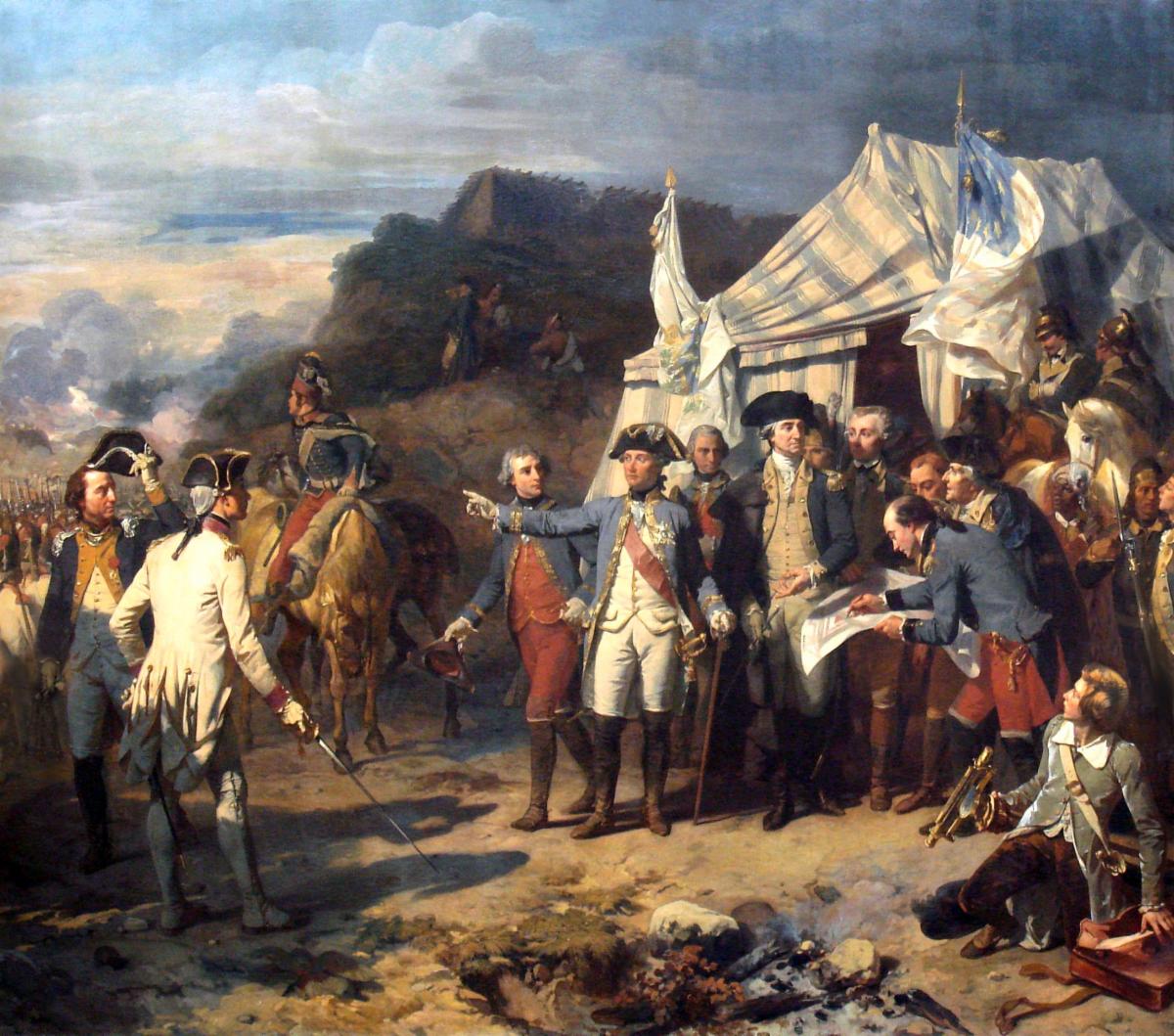
Siège de Yorktown - By Auguste Couder -(1789-1873) Own work (PHGCOM), photographed in the Palais de Versailles 2009 - Public Domain
|
|
A BATTLE-TESTED ADMIRATION AND FRIENDSHIP
• When Rochambeau landed in Newport with more than 5,000 troops, the inhabitants quickly realized that the portrait painted by generations of British propaganda was just that: pure propaganda.
Surely the troops were "papists" but they were not "frog eaters", "rapists", and certainly well disciplined and very gallant. Definitively not occupiers!
• George Washington now could clearly base his judgement upon seeing the troops himself, not separate individuals. And this is when he started turning increasingly effusive.
• Washington noted with regard to Rochambeau in an undated letter he wrote to another French officer, likely in October or November 1780, “Confirmed by what I have seen myself, in the high opinion of his abilities and personal qualities, with which the reputation of the Count De Rochambeau had impressed me, I learn with peculiar pleasure, his obliging partiality for me.”
• On May 1st, 1781, when he wrote in his own Journal "our generous allies", his heart was really won.
• A week before the fall of Yorktown, Washington wrote to Congress: "I cannot but acknowledge the infinite obligations I am under to his Excellency, the Count de Rochambeau, the Marquis de Saint-Simon, commanding the troops from the West Indies, the other general officers, and indeed the officers of every denomination in the French army, for the assistance which they afford me. The experience of many of those gentlemen in the business before us is of the utmost advantage in the present operation.... The greatest harmony prevails between the two armies. They seem actuated by one spirit, that of supporting the honor of the allied armies."
• After the victory in Yorktown, he wrote: "It may, I believe, with much truth be said that a greater harmony between two armies never subsisted than that which has prevailed between the French and Americans since the first junction of them last year."
The orderly book used by Washington is still in existence, and from it we learn that the parole given for the day was "America and France," and the countersigns, "United," "Forever."
• Even when everything was secured and there was no need to cajole the French, Washington was profoundly impressed by the attitude of Louis XVI who refused to acquire territories (although Canada had been ceded to the British only 25 years before). Washington wrote to Luzerne, the former Ambassador of France to the United States: "The part your Excellency has acted in the cause of America and the great and benevolent share you have taken in the establishment of her independence are deeply impressed on my mind, and will not be effaced from my remembrance, or that of the citizens of America.... The articles of the general treaty do not appear so favorable to France, in point of territorial acquisitions, as they do to the other Powers. But the magnanimous and disinterested scale of action which that great nation has exhibited to the world during this war, and at the conclusion of peace, will insure to the King and nation that reputation which will be of more consequence to them than every other consideration."
• His letters to Rochambeau and especially to La Fayette attest to the depth and sincerity of his friendship.
To La Fayette, who came back to America in 1784 and spent a few months, he wrote before he embarked for France: "In the moment of our separation, upon the road as I travelled, and every hour since, I have felt all that love, respect, and attachment for you which length of years, close connection, and your merits have inspired me. I often asked myself, when our carriages separated, whether that was the last sight I should ever have of you. And though I wished to say, no, my fears answered, yes. I called to mind the days of my youth and found they had long since fled, to return no more; that I was now descending the hill I had been fifty-two years climbing, and that, though I was blessed with a good constitution, I was of a short-lived family and might soon expect to be entombed in the mansion of my fathers. These thoughts darkened the shades and gave a gloom to the picture, and consequently to my prospect of seeing you again. But I will not repine; I have had my day."
|
|
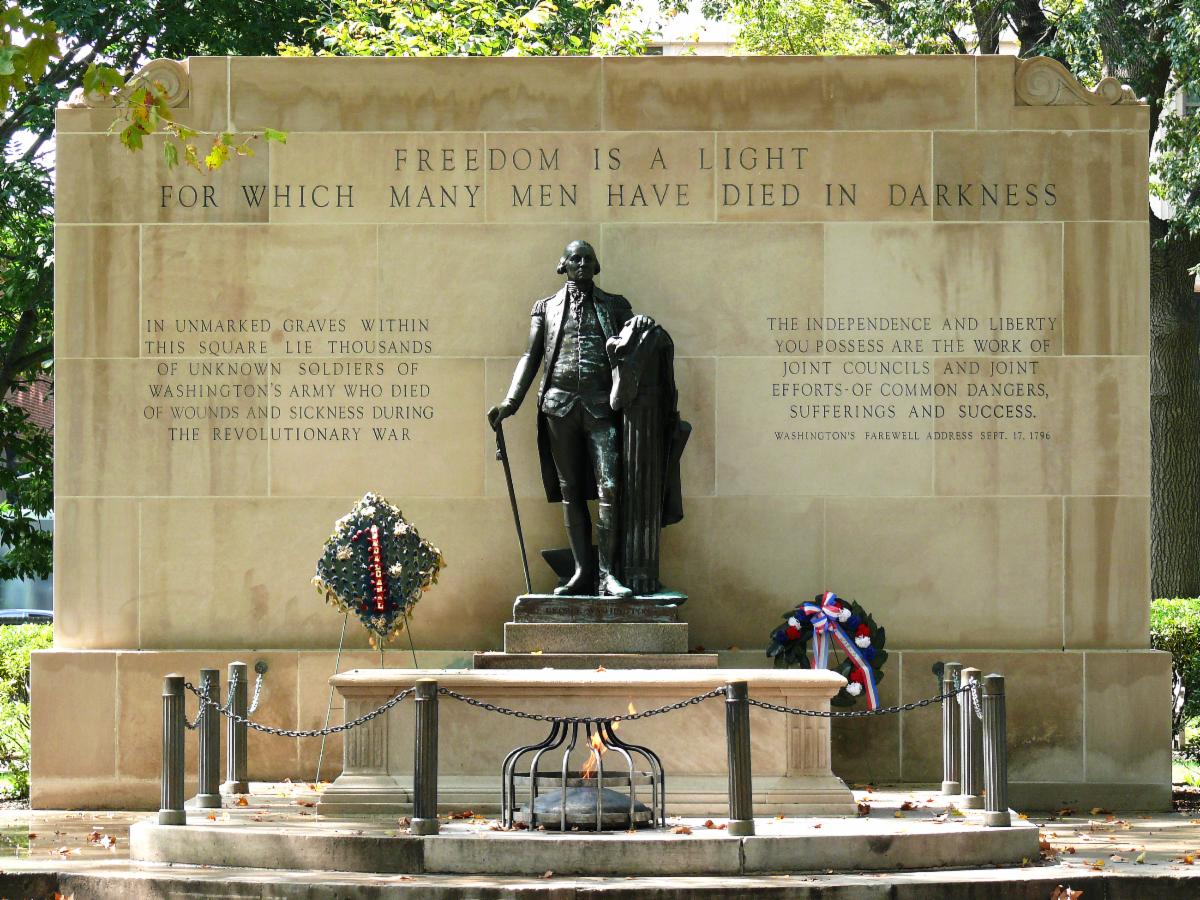
217-231 W Washington Square, Philadelphia, PA 19106
|
|
• The year of the alliance, in 1778, the French dramatist and writer Louis-Sébastien Mercier
(1740-1814), the author of the best-seller L'An 2440, rêve s'il en fut jamais (literally, "The Year 2440: A Dream If Ever There Was One"; translated into English as Memoirs of the Year Two Thousand Five Hundred [sic], in his book De la Littérature
had drawn up a picture of the French people's expectation: "Perhaps it is in America that the human race will transform itself, adopt a new and sublime religion, improve sciences and arts, and become the representative of the nations of antiquity. A haven of liberty, Grecian souls, all strong and generous souls will develop or meet there, and this great example given to the universe will show what men can do when they are of one mind and combine their lights and their courage."
• Charles de Lacretelle, a contemporary journalist and historian (1766-1855), added:
" Since Columbus's discovery, nothing more important has happened among mankind than American independence"; and addressing the new-born United States, he told them of the world's expectation and of their own responsibilities, so much depending on their success or failure: "New-born Republics of America, I salute you as the hope of mankind, to which you open a refuge, and promise great and happy examples. Grow in force and numbers, amid our benedictions"...
..."In adopting a democratic régime, you pledge yourself to steadfast and pure morality.... But you do not give up those comforts in life, that splendor of society brought with them by riches, sciences, and arts.... The vicinity of corruption will not alter your morals; you will allow the vicinity, not the invasion. While permitting wealth to have its free play, you will see that exorbitant fortunes be dispersed, and you will correct the great inequality in enjoyments by the strictest equality in rights"...
..."Lawmaking peoples, never lose sight of the majesty of your function and of the importance of your task. Be nobly proud and holily enthusiastic at the prospect of your destinies' vast influence. By you the universe is held in expectation; fifty years from now it will have learned from you whether modern peoples can preserve republican constitutions, whether morals are compatible with the great progress of civilization, and whether America is meant
to improve or to aggravate the fate of humanity."
• We leave the final word to Edward Ayres, Jamestown-Yorktown Foundation Historian, recipient of the National Humanities Medal:
"Without the direct and indirect assistance of France, it is doubtful that Americans could have won the war for independence. From 1776 to 1783 France supplied the United States with millions of livres in cash and credit. France also committed 63 warships, 22,000 sailors and 12,000 soldiers to the war, and these forces suffered relatively heavy casualties as a result. The French national debt incurred during the war contributed to the fiscal crisis France experienced in the late 1780s, and that was one factor that brought on the French Revolution. In the end the French people paid a high price for helping America gain its independence".
|
|
PAST MONTHLY BULLETINS
OUR GOAL: turn the spotlight on a famous, or less famous, episode or historical figure during the long shared history between France and the United States, with illustrations and anecdotes.
You can have access to all our past Monthly Bulletin
since February 2021 by visiting our website:
You can click on the photos in our bulletins and on the links indicated in blue for more information and direct access to the references.
June 2022: The crucial role of the French Navy in the War of Independence
May 2022: Tribute to the 4 Americans “Compagnons de la Libération"
April 2022: Tribute to Major Pierre Charles L’Enfant
March 2022: Tribute to Antoine de Saint-Exupéry
February 2022: Tribute to Josephine Baker
January 2022: 600 sites of French memories in the USA
December 2021: The Year in Pictures
November 2021: The Two Unknown Soldiers from WW1, side by side across the Atlantic
October 2021: On the footsteps of Rochambeau (Part 5 – Final episode: Victory in Yorktown!)
September 2021: On the footsteps of Rochambeau (Part 4–Philadelphia to Yorktown, Battle of the Capes)
August 2021: On the footsteps of Rochambeau (Part 3– New York/New Jersey to Philadelphia)
July 2021: On the footsteps of Rochambeau (Part 2 – Connecticut & New York)
June 2021: On the footsteps of Rochambeau (Part 1 – Connecticut)
May 2021: honoring the WWII French aviators who died in the USA 1943-1945
April 2021: celebrating the annual commemoration of “French Alliance Day” in Valley Forge, PA
March 2021: honoring two French Navy officers from Rochambeau’s army buried in Newport, RI.
February 2021: honoring Eugene Bullard, America's First-ever Black Fighter Pilot
|
|
Our next Bulletin in August will resume our series narrating the long march of the French Army after the victorious battle at Yorktown, Virginia, all the way to Boston, Massachusetts, to embark and sail back to France. |
|
CHÂTEAU DE ROCHAMBEAU
A special celebration of the Fourth of July
held on Saturday, July 2nd
|
|
Photos (top) courtesy of Philippe de Gouberville, (2nd, center & bottom) courtesy of Patrice Curien |
|
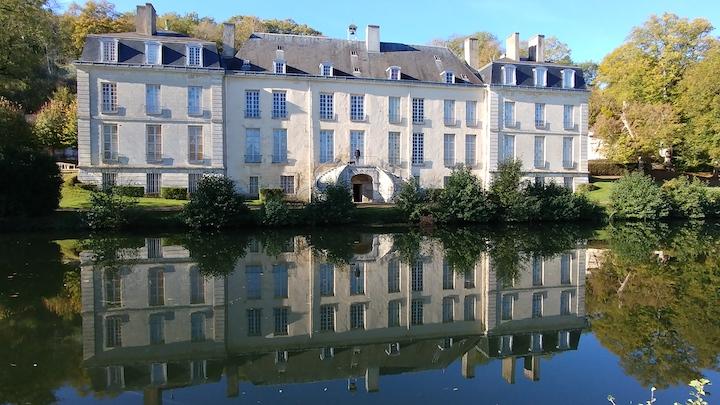
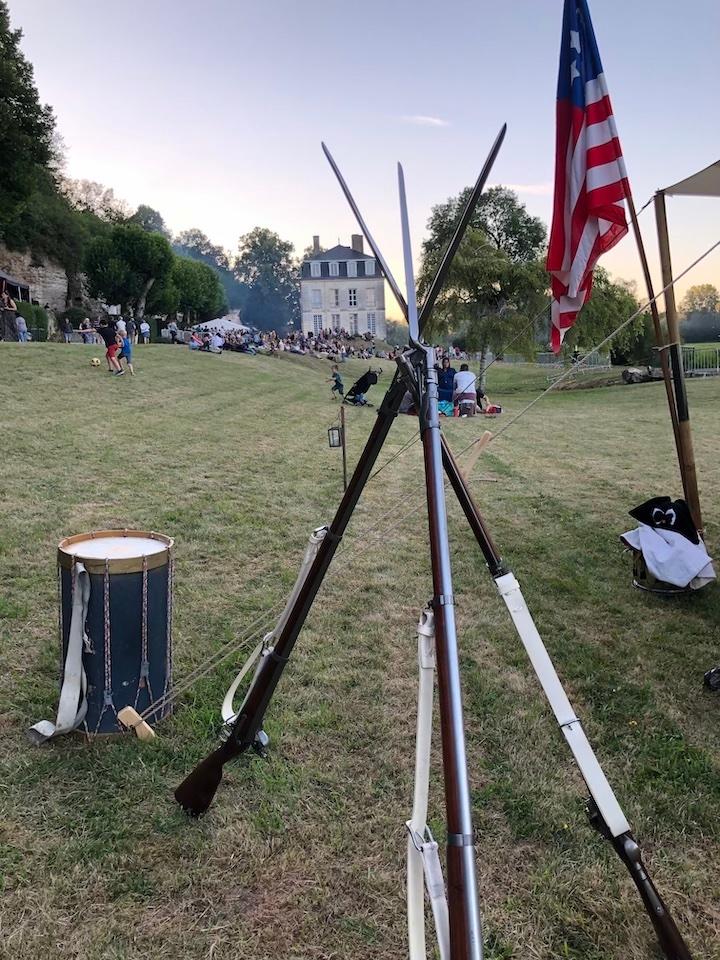
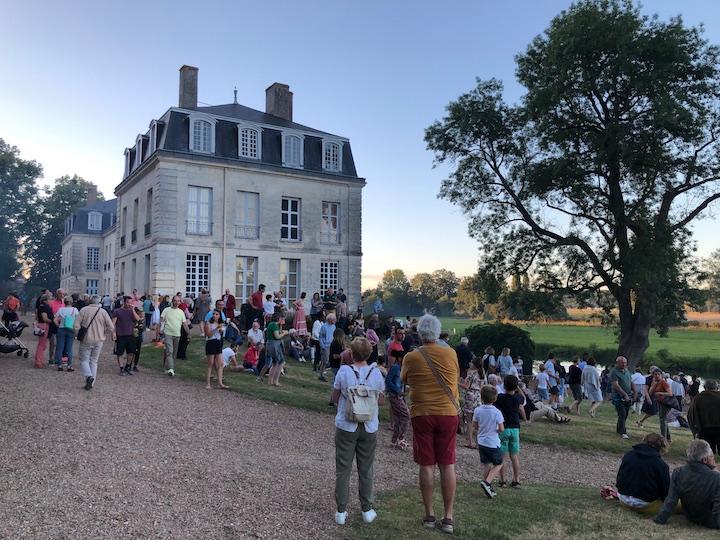
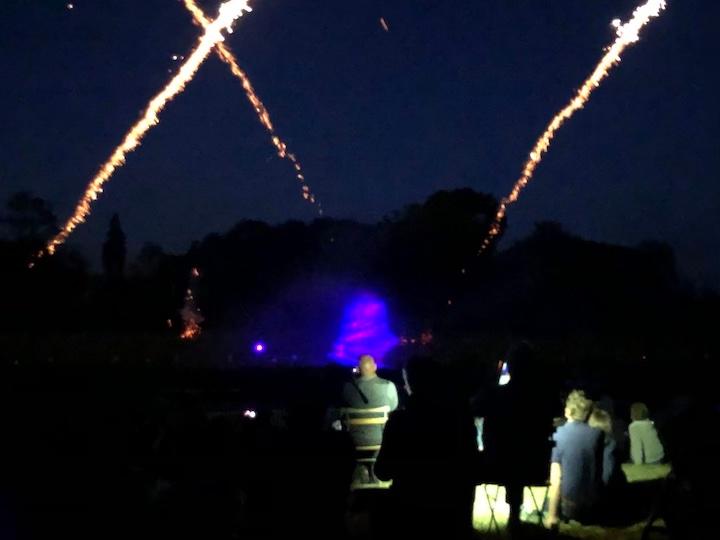
On Saturday, July 2nd, Mr. & Mrs. Philippe & Nathalie de Gouberville hosted a celebration for the 4th of July at the Château de Rochambeau, complete with fireworks.
You are welcome to tell your friends who reside in or who are visiting Western France to join the association Les Amis de Rochambeau: https://lesamisderochambeau.org/
The estate is open for free and free visits to the exteriors and the chapel in July from Monday to Friday from 10 a.m. to 4 p.m.
September: opening on Friday 16, Saturday 17 and Sunday 18 September for the European Heritage Days from 12 p.m. to 6 p.m. and Monday 19, Tuesday 20 and Wednesday 21 from 10 a.m. to 4 p.m. (Dates and times may change according to health standards and requirements)
Group visits from Easter to All Saints' Day by appointment depending on availability, information and reservation: +33 2 54 72 85 34
Château of Rochambeau
1 Hameau de Rochambeau
41100 Thore-La-Rochette
France
As importantly, please support the future museum at the Odell House, Rochambeau's headquarters in 1781, located 20 miles north of New York CIty, at 425 Ridge Road in Hartsdale, NY: https://www.odellrochambeau.org/
|
|
DEVELOPING TIES WITH THE ASSOCIATION
LES AMIS DU CHÂTEAU DE CASTRIES
*****
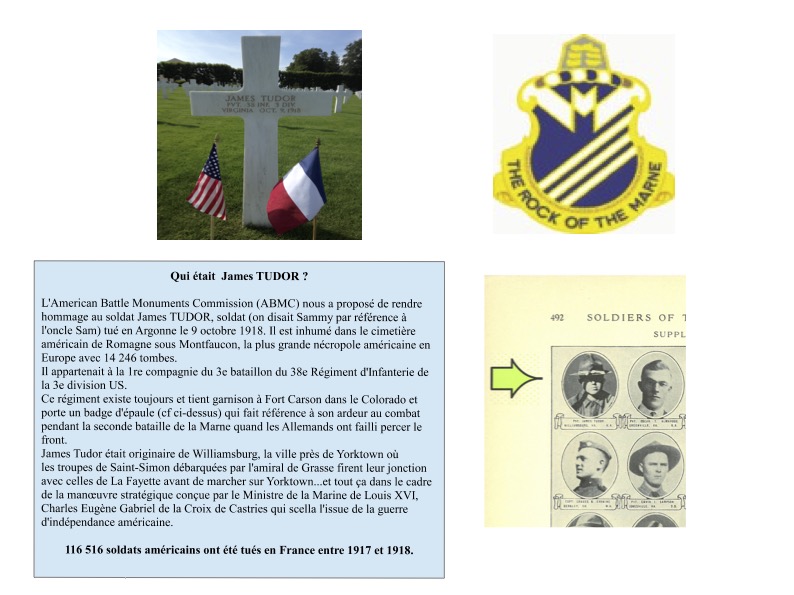
JAMES TUDOR, AN AMERICAN SOLDIER OF WW1
HONORED AT CASTRIES
|
|
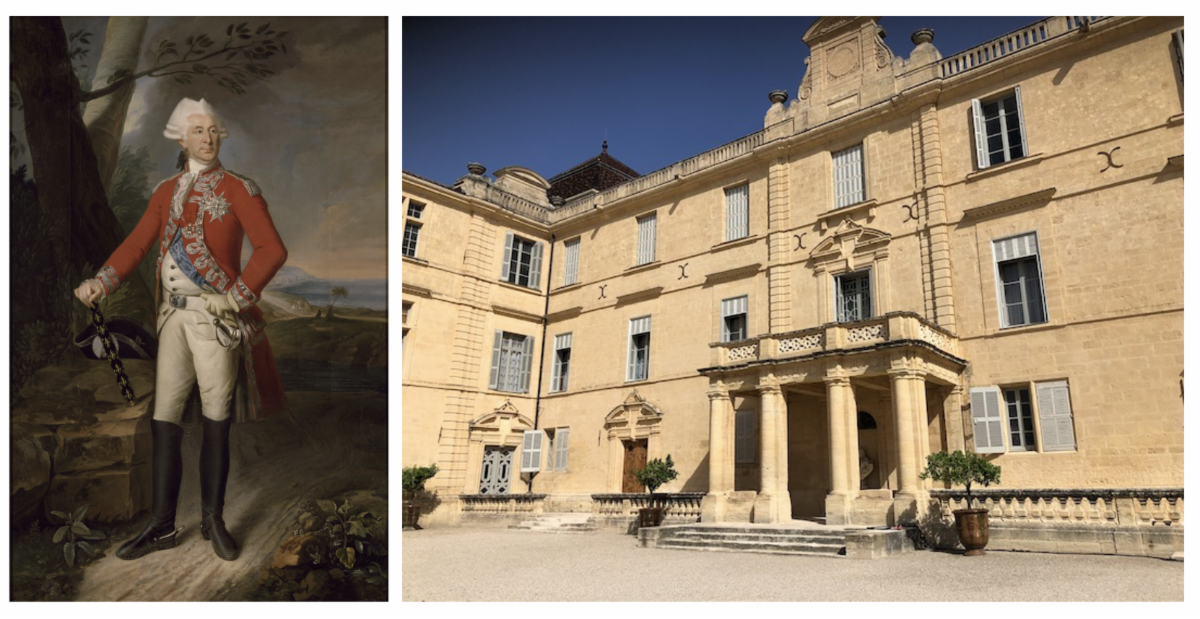
Charles-Eugène-Gabriel de La Croix, Marquis de Castries(1727-1801), Minister of the Navy in 1780 and Maréchal of France in 1783 by Joseph Boze, Public Domain
Château de Castries, main facade
Rue du Château, 34160 Castries, France
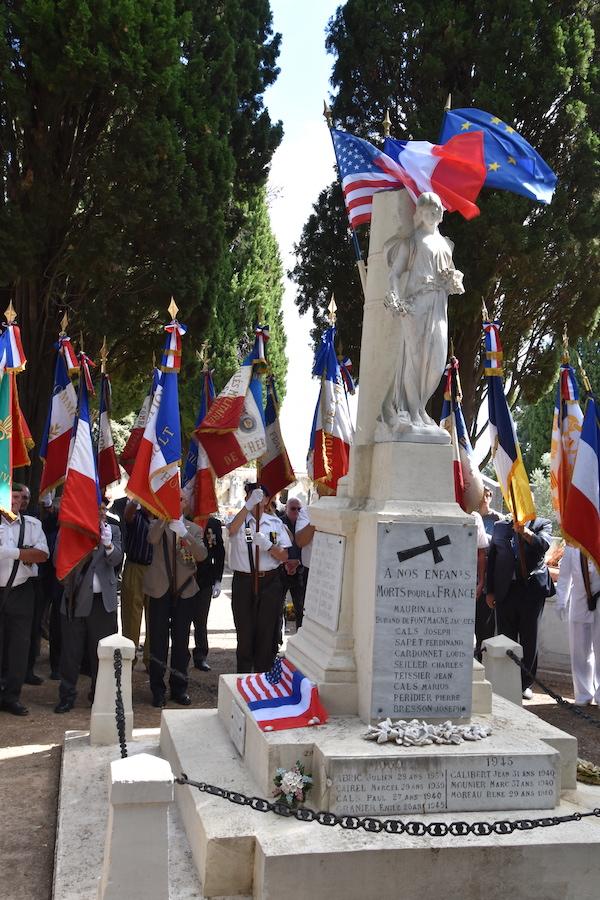
Monument aux Morts, village de Castries, France, population 6,294
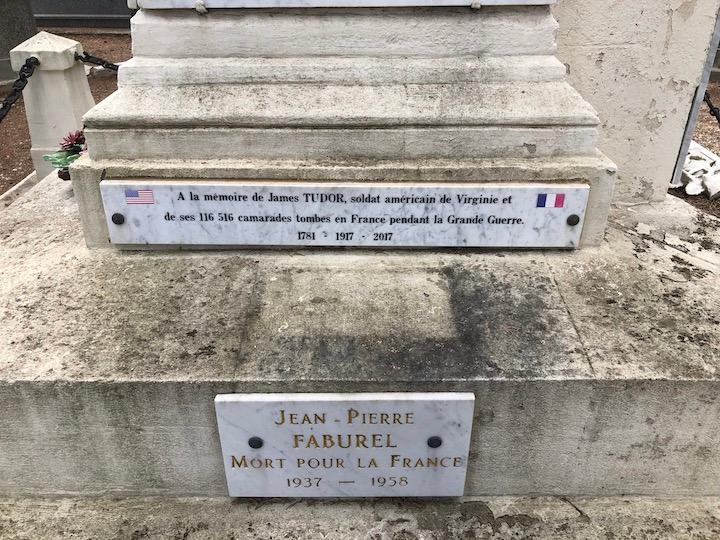
"To the memory of James TUDOR, American Soldier from Virginia, and his 116,516 comrades who died in France during the Great War, 1781- 1917 - 2017"
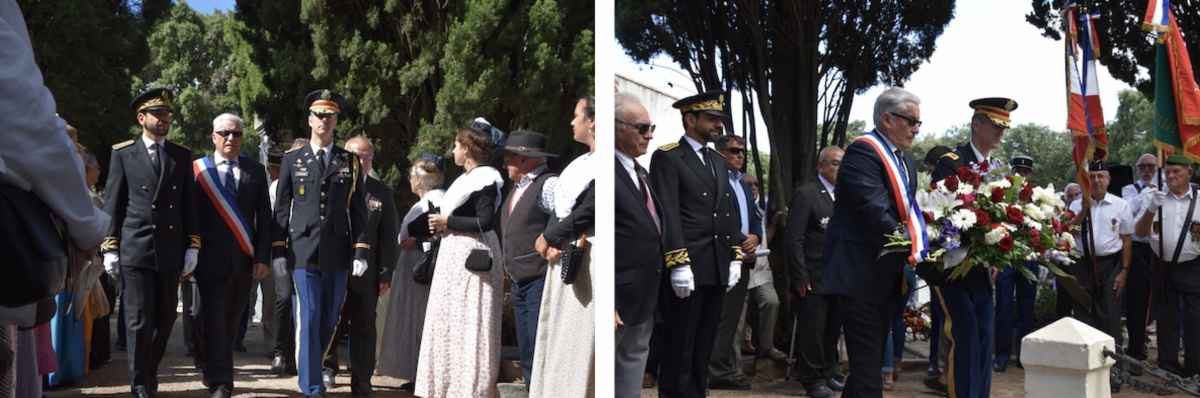
Pictured laying a wreath is COL, US Army, David K. Chapman, then Defense Attaché at the American Embassy in Paris.
Photos of ceremony courtesy of Général d'Armée Elrick Irastorza, French Army (Retired), former Chief of Staff of the French Army.
Other photos: Thierry Chaunu (2022)
|
|
• In the small village of Castries, near Montpellier in Southwest France, the castle of Castries will soon complete its renovation and open its doors as a museum. Before being sold to the municipality, it had been the property of the illustrious de la Croix de Castries family for hundreds of years.
• Charles Eugène Gabriel de La Croix de Castries, marquis de Castries, was a Marshall and Minister of the Navy under King Louis XVI in 1780, who masterminded the overall plan to send the French Navy to America and who entrusted the command of the expedition to brilliant officers such as the Admiral de Ternay, Destouches, Barras, de Grasse....
• One could say that the Independence of the United States owes much to the Marquis de Castries, as well as other members of the family who fought in the War of Independence, like his son Armand-Charles-Augustin de La Croix de Castries (1756-1842) who fought at Yorktown, or the cousin of the latter, Anne-Jean-Jacques-Scipion de La Croix de Vagnas, Vicomte de Castries, (1756 -1829) future rear-admiral, who served on board the Hermione.
The Château de Castries, known as the “little Versailles of Languedoc”, features a 17th century French-style garden designed by Le Nôtre, gardener to King Louis XIV. It was watered by the aqueduct, a unique structure in France that is also listed as a historical monument and was designed by Paul Riquet, who also designed the Canal du Midi.
From the main courtyard you can access the large terraces that have a spectacular view over the star-shaped pathways, ponds and vineyards.
ACCESS
Motorway : A9 sortie 28 Vendargues to 3 km
Airport/airfield : Aéroport de Montpellier Méditerranée to 17 km
OPENING THIS SUMMER:
From 27/03/2022 to 30/10/2022
• A notable gesture of friendship and goodwill, again at grass roots level, is the "adoption" of JAMES TUDOR, an American "Doughboy" soldier who died in France in 1917 for the cause of freedom, who is buried a few hundreds miles north in the plains of Northern France... and whose name has been "adopted" to be honored among other sons of the village, as if he were "one of them".
|
|
The text in French in the above flyer states:
Who was James TUDOR?
"The American Battle Monuments Commission (ABMC) suggested that we pay tribute to Private James TUDOR (at the time they were affectionately called “Sammy” in France, as a reference to Uncle Sam) who was killed in Argonne on October 9, 1918. He is buried in the American Cemetery at Romagne-sous-Montfaucon, the largest American cemetery in Europe numbering 4, 246 graves.
He belonged to the 1st Company, 3rd Battalion, 38th Infantry Regiment of the 3rd Division of the US Army.
This regiment still exists and is stationed at Fort Carson, CO. Its distinctive insignia is pictured above and depicts its fighting spirit when the Germans almost succeeded in their counter-offensive.
James TUDOR was from Williamsburg, near Yorktown, where the troops of Saint-Simon were landed onshore by Admiral de Grasse, and greatly contributed to the successful siege. This overall strategic maneuver which led to the American Independence owes a great deal to Charles Eugène Gabriel de la Croix de Castries, Minister of the Navy under King Louis XVI."
|
|
THE AMERICAN FRIENDS OF LAFAYETTE
ANNUAL TRIBUTE TO THE MARQUIS' GRAVE
AT PICPUS CEMETERY, PARIS
JULY 4TH, 2022
|
|
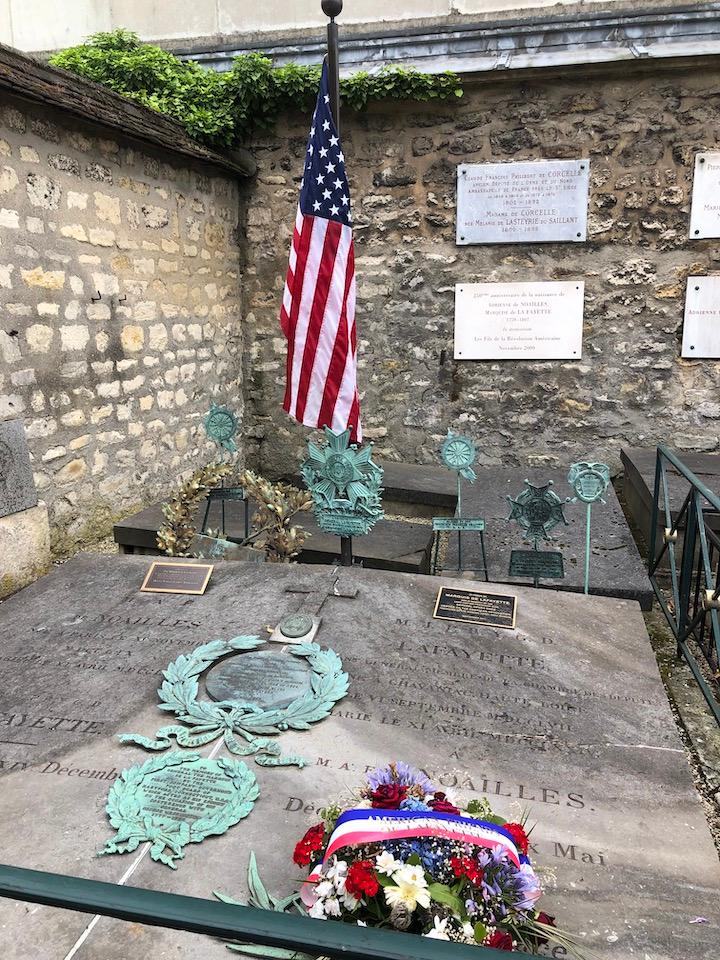
Grave of the marquis de Lafayette and of his wife Adrienne in the cemetery of Picpus, Paris 12th arr., France (photo: Thierry Chaunu) |
|
Members of the American Friends of Lafayette gathered at Picpus Cemetery in Paris to honor General Lafayette and his wife Adrienne. Although the "official" flag changing ceremony took place on July 5th with the US Ambassador and other dignitaries, AFL members respect the July 4th tradition by visiting the Lafayette's final resting place.
AFL member Susan Joy Minker had the privilege of representing the American Friends of Lafayette at the ceremonial wreath layer at Picpus. Many thanks to AFLers Myriam Waze and Benoit Guizard for organizing the AFL's involvement at this annual ritual.
Each year, on July 4, representatives of the Embassy of the United States of America in France and of American patriotic associations go to the Cimetière de Picpus to honor the memory of La Fayette. An American flag flies permanently over his grave. During World War II, it was the only flag of the United States flown in occupied Paris.
|
|
ANNUAL WREATH-LAYING CEREMONY
SATURDAY, JULY 9, 2022
STATUE OF ROCHAMBEAU, NEWPORT, R.I.
AND TRIBUTE TO FRANCE WEEKEND
|
|
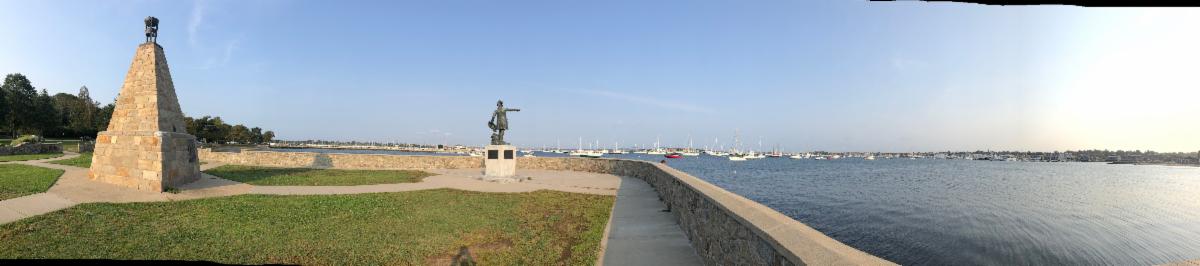
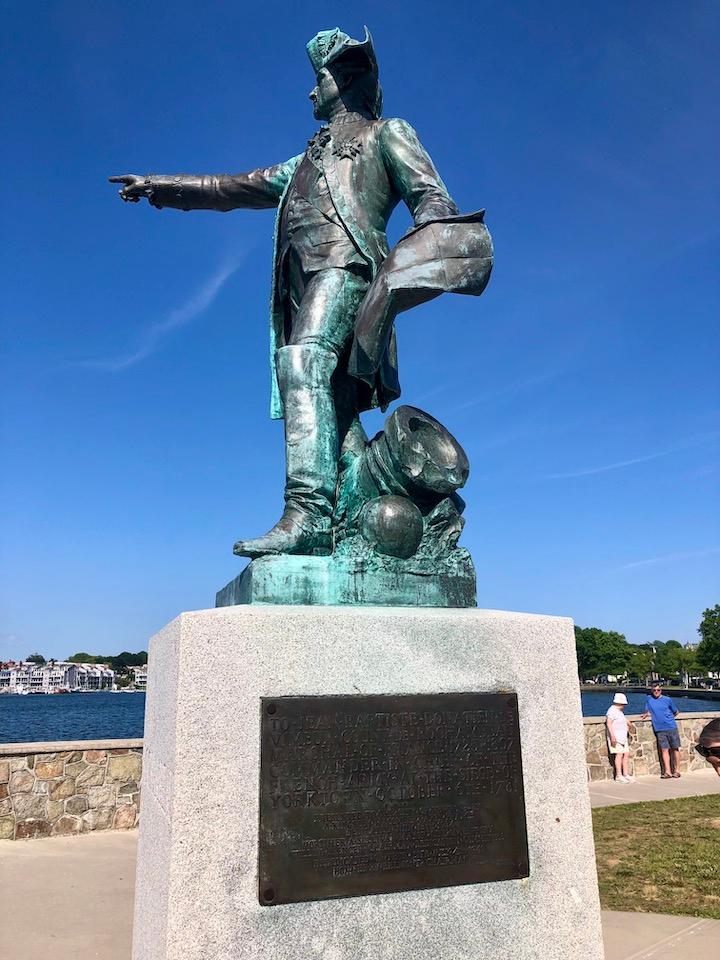
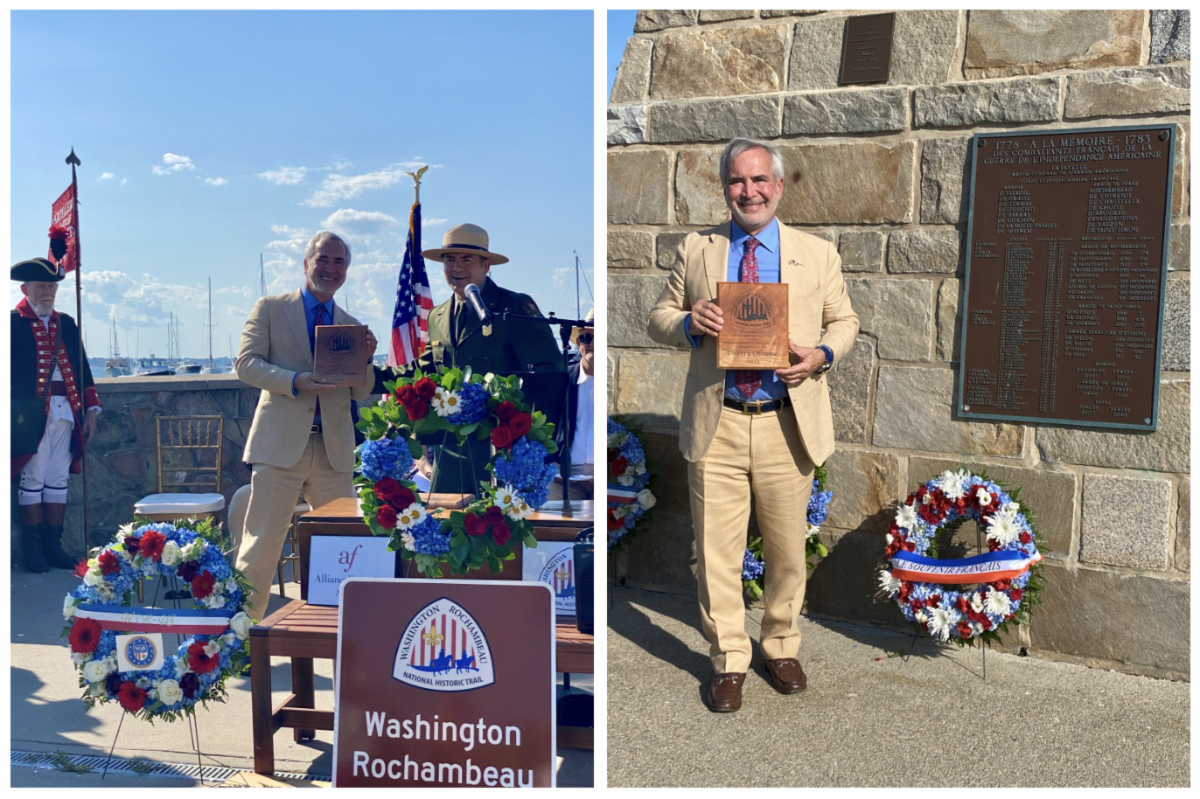
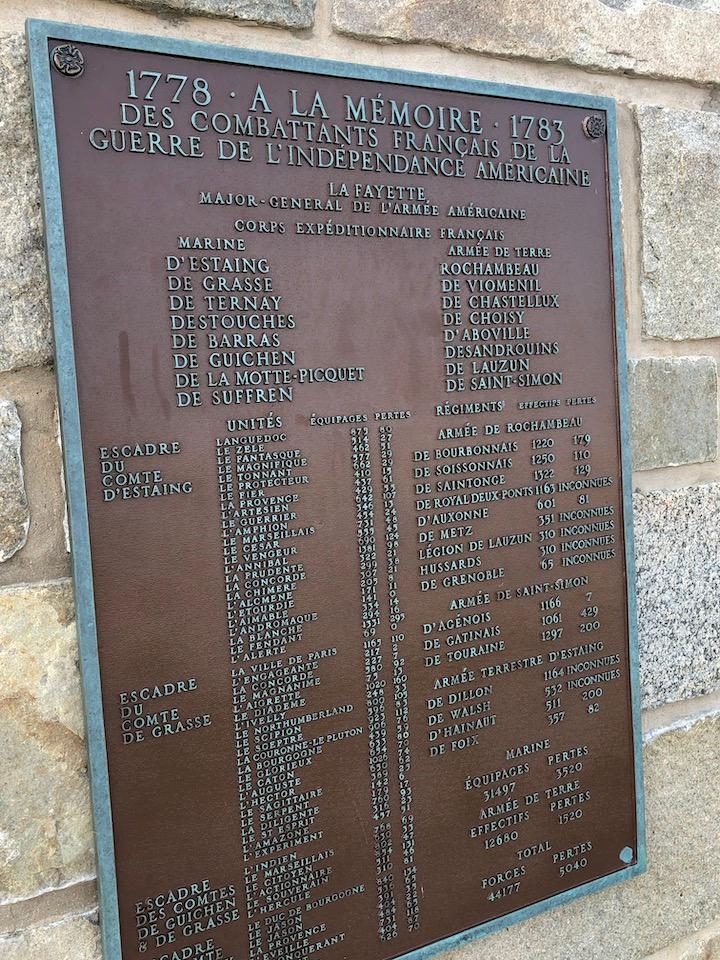
• This past Saturday, July 9th, a beautiful wreath-laying ceremony was held in Newport, R.I. in front of the statue of Rochambeau and the monument to the French fleet, to commemorate the arrival on July 13, 1780 of 6,000 French soldiers and dozens of warships to help the United States win the War of Independence.
• The ceremony was sponsored by the Alliance Française of Newport, who renovated the statue this past decade. The event was organized under the auspices of the National Park Service, the Newport Historical Society, the Washington-Rochambeau Revolutionary Route association, in the presence of the Mayor and many distinguished guests and re enactors from several patriotic associations.
• We were honored to receive an award plaque from Johnny Carawan, Trail Administrator, Washington-Rochambeau Revolutionary Route - National Historic Trail (WARO) at the National Park Service, and to lay a wreath alongside Capt. US Navy (Ret) Nicholas Brown for the Alliance Française of Newport and Mr. Lawrence Abell, Chairman of W3R-US, in what will become an annual celebration, part of a "Tribute to France" weekend.
|
|
VISIT AT PATRIOTS PARK & BUTTS HILL FORT
RHODE ISLAND
|
|
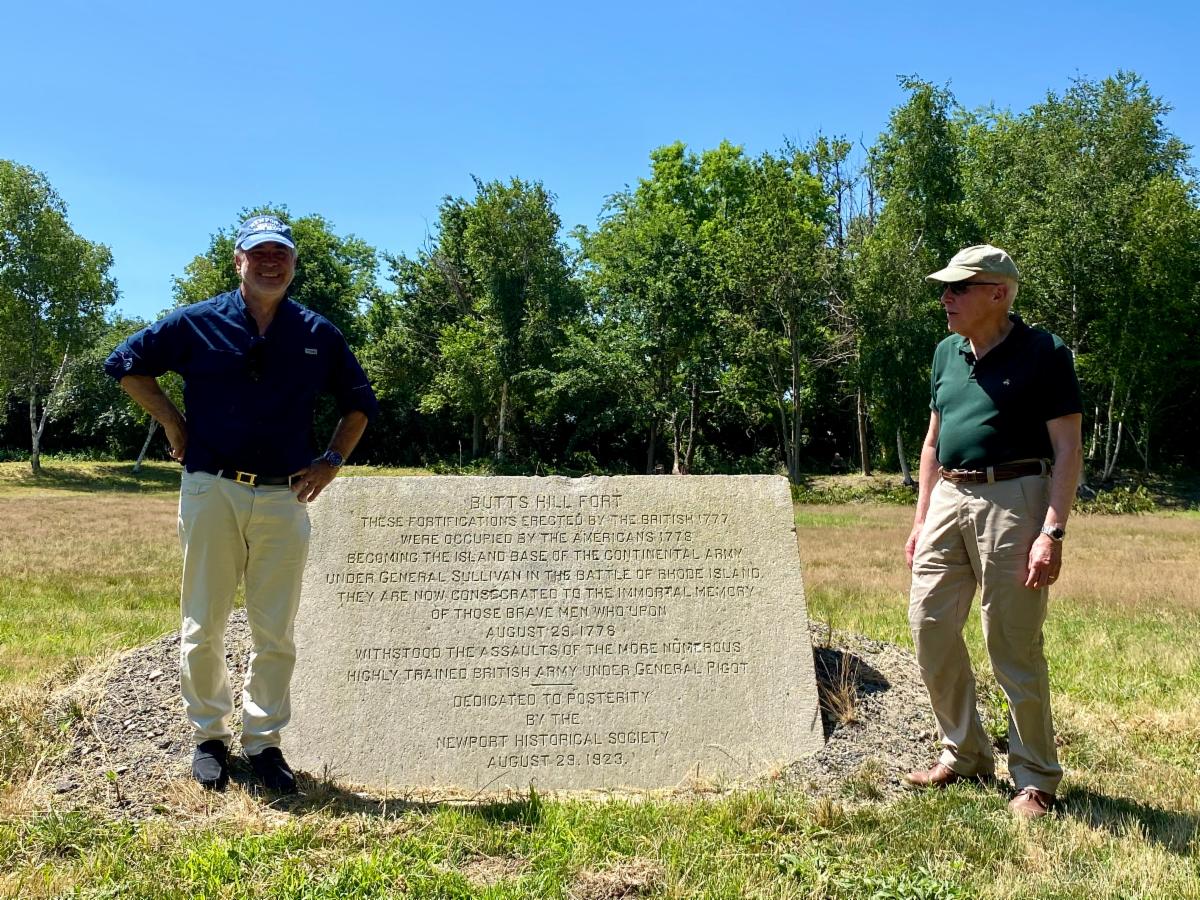
Thierry Chaunu & Burt Quist at Butts Hill Fort |
|
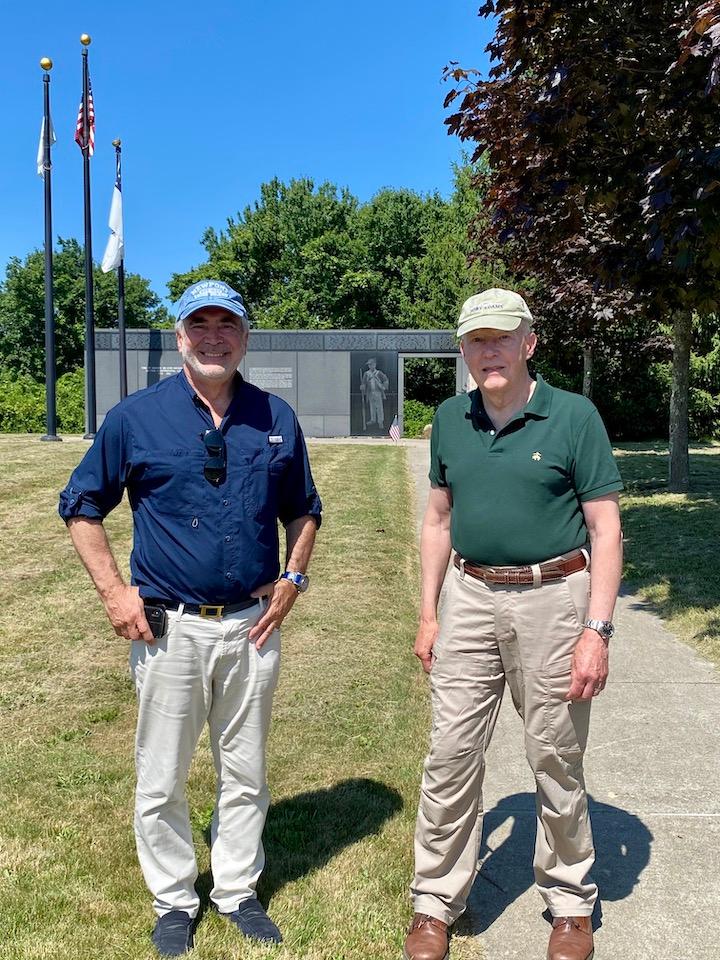
L to R: Thierry Chaunu, Burt Quist at Patriots Park. |
|
On July 11th, 2022, Thierry Chaunu, President, American Society of Le Souvenir Français joined Colonel, U. S. Marine Corps (ret) Burt Quist, Director of The Battle of Rhode Island Association, for a stop at Patriots Park and Butts Hill Fort in Portsmouth RI.
The American Society of Le Souvenir Français is a partner in the Battle Of Rhode Island website, expected to go live in early August. They are dedicated to honoring the memories of all the French soldiers and sailors who gave their lives for the cause of freedom and are buried in the United States since 1777.
M. Chaunu was in Newport for the French in 1780 Newport program put on by Newport Historical Society, The National Park Service, and the Washington- Rochambeau Revolutionary Route Association (W3R). He was very impressed with the monument at Patriot’s Park, commenting on both the beauty of the design and the map and description of the 1778 Battle of Rhode Island.
At Butts Hill Fort M. Chaunu said he was amazed at how much of the Revolutionary War earthworks remained. The French troops in General Rochambeau’s Army made repairs and upgrades to Butts Hill Fort after their arrival in 1780.
The BUTTS HILL FORT RESTORATION COMMITTEE is a committee of the BATTLE OF RHODE ISLAND ASSOCIATION. The mission of the Committee is to restore and maintain the Revolutionary War fort in order to provide a safe and accessible educational and recreational site that raises public interest in this National Historic Landmark and its role in the Battle of Rhode Island. The Association is a registered 501(c)(3) non-profit committed to raising awareness of Rhode Island’s role in the War for Independence.
Donations may be made payable to “BoRIA” at PO Box 626, Portsmouth, RI 02871.
|
|
NEWS FROM THE LAFAYETTETRAIL.ORG |
|
FOLLOW THE FRENCHMEN | EPISODE 16
CLARKSVILLE, TN
Episode 16 of Follow The Frenchmen, the Video Series about the Lafayette Trail, is now available!
Click on the link below to check it out now!
Clarksville, TN enjoys the reputation of being a city friendly to the military due to the proximity of the Army Garrison at Fort Campbell. The city and the military are closely interconnected here. In fact, they have been since the Revolutionary War.
Many veterans who had become recipients of the federal land grants programs settled in the area. Lafayette visited Clarksville on May 6, 1825. As a Major General of the Continental Army, Lafayette was able to ignite Revolutionary War patriotic feelings in a region of the United States which had not yet achieved statehood at the time of the American Revolution.
His visit to Clarksville, TN was indicative of his unique ability to reconcile the American Revolution with the new national geography of the young republic.
Lafayette’s visit to Clarksville in 1825 was an intense moment of pride for the locals, mostly because by honoring Lafayette and the Revolutionary War veterans, Clarksville was celebrating the story of its own founding.
Follow The Frenchmen on YouTube and find out more about the story of Clarksville's founding and how Lafayette's visit in 1825 fits into it.
|
|
MARK YOUR CALENDAR!
MORE DETAILS WILL BE FORTHCOMING IN OUR NEXT BULLETINS
(Dates are subject to change)
THURSDAY, SEPTEMBER 22, 2022
Launch reception at the National Arts Club, Gramercy Park, New York City at 6:30PM to present the book "Memories of France, 650 sites of French presence in the United States" authored by Thierry Chaunu. Proceeds benefit the American Society of Le Souvenir Français, Inc.
WEDNESDAY, OCTOBER 12, 2022
Cocktail reception to launch the Sculpture of Le Petit Prince and Antoine de Saint-Exupéry
TUESDAY, OCTOBER 18, 2022
Inauguration of the Interpretive Marker "The Crucial Role of the French Navy in the War of Independence", Yorktown Riverfront, Yorktown, Virginia.
WEDNESDAY OCTOBER 19, 2022
YORKTOWN ANNUAL VICTORY CELEBRATIONS
Laying of wreaths at the French cemetery
Wreath laying at the French Memorial
Ceremony, Victory Monument
SATURDAY NOVEMBER 5, 2022
Annual ceremony to pay tribute to the memory of 25 soldiers from Rochambeau buried in Providence Cemetery, Rhode Island organized by Prof. Norman Desmarais.
SUNDAY NOVEMBER 6, 2022
Ceremony in tribute to Mr. André Joseph Scheinmann, alias Maurice Peulevey, German-born, French naturalized resistance fighter in Brittany, 1940-1942, Member of the réseau Overcloud, parachuted from London, arrested and deported to the concentration camps of Struthoff and Dachau 1942-1945, who emigrated to the United States after the war and is buried in New Bedford, Massachusetts
FRIDAY NOVEMBER 11, 2022 - VETERANS DAY
5th Avenue Parade alongside the Federation of French War Veterans, the Association of French Reserve Officers in the United States (ACREFEU), and TheFrenchWillNeverForget.org
|
|
OUR MISSIONS:
• To preserve the memory of the French soldiers, sailors and airmen who gave their lives for freedom, and who are buried in the United States.
• To honor French Citizens who did great deeds in the United States, or with a strong connection with the United States,
• To promote the appreciation for French culture and heritage in the United States, and the ideals that unite our two nations, in order to pass the torch of memory to younger generations.
• To strengthen the long-standing traditional bonds of friendship between the American and French peoples, and to this end: erect or maintain memorials and monuments and encourage historical research, public presentations and publications in the media.
We are looking to expand our geographic coverage with Regional Delegates in cities such as Austin, or Houston (SouthWest), New Orleans (Louisiana), Savannah, Jacksonville or Miami (SouthEast), Boston or Newport (New England).
The American Society of Le Souvenir Français, Inc. is an independent American corporation, apolitical, established in 1993 in NY, with 501 (c) 3 non-profit status.
|
|
Did you know that a portion of every purchase you make on Amazon can benefit American Society of Le Souvenir Francais Inc, at no cost to you?
Simply go to: smile.amazon.com, designate American Society of Le Souvenir Francais Inc. as your beneficiary, and shop away
|
|
Help us implement several historic commemorative projects celebrating the 244-year-old Franco-American friendship and alliance! |
|
The American Society of Le Souvenir Français, Inc. is a registered NY State non-profit corporation and has full IRS tax exempt 501(c)3 status. All donations are tax deductible.
Contact: Thierry Chaunu, President
697 Third Avenue #341 New York, NY 10017
|
|
|
|
|
|
|