|
|
The Episcopal Church
of the Resurrection
1433 NW R.D. Mize Road, Blue Springs, MO
|
|
|
|
|
Weekly e-mail
Saturday, March 26, 2022
|
|
Fourth Sunday in Lent
Sunday, March 20, 2022
Holy Eucharist Rite I at 8:00 am
Adult Forum with Bill Stancil at 9:15 am
Holy Eucharist Rite II at 10:30 am
|
|
|
St. Patrick's Day Dinner Tonight |
SATURDAY, MARCH 26 AT 6:00 PM
Enjoy good fellowship and a traditional St. Pat's dinner of corned beef and cabbage, potatoes and carrots, salad, rolls, dessert and beverage tonight, Saturday, March 26 at 6:00 pm.
Hot dogs and chips are also available for the little ones and non-Irish attending.
Adults: $20, Children 5 - 12: $5, Under 5: Free
All proceeds go to church projects
|
|
|
|
Adult Forum tomorrow at 9:15 am |
9:15 AM TOMORROW -
ALSO ON ZOOM
Dr. Bill Stancil concludes a 2-part Adult Forum beginning at 9:15 am tomorrow, March 27. The presentation will also be available on Zoom:
Meeting ID: 892 9943 5541 Passcode: 909580
The topic will be "Transforming our Lives."
|
|
|
|
WEDNESDAYS IN LENT
Join in fellowship with our ecumenical sisters and brothers in-person or on-line on Wednesday evenings beginning at 7:00 pm through April 6.
The theme is “Facing the Future”. The remaining schedule is as follows:
o 3/30 Pastor Virginia Pych (Good Shepherd Christian) at Chapel Hill Presbyterian
o 4/6 Pastor Andrew Florio (Chapel Hill Presbyterian) at Chapel Hill Presbyterian
FRIDAYS IN LENT
12:00 Noon: The church will be open and if Fr. David is not present, a self-guided program for Stations of the Cross will be available in the narthex on the table where bulletins are found. “Stations” is also recorded on Facebook and can be viewed and prayed anytime (https://www.facebook.com/bsresurrection)
HOLY WEEK SCHEDULE
Palm Sunday: 8:00 am and 10:30 am Holy Eucharist
Holy Wednesday: 7:00 pm Tenebrae
Maundy Thursday: 6:00 pm Agape Meal; 7:00 pm Foot Washing and Holy Eucharist; all night prayer vigil at the reserved sacrament until 6:00 am
Holy Friday: 7:00 pm Veneration of the Cross and Holy Eucharist
Holy Saturday: 7:00 pm Great Vigil of Easter
Easter Sunday: One Service Only -10:30 am Holy Eucharist
|
|
|
|
PERSONAL CONFESSION IN THE EPISCOPAL CHURCH
An acknowledgment of sin, as in Ps 51: “Against you only have I sinned and done what is evil in your sight.”
Confessions of sin during the liturgy are general, made by all the people. The church also provides for confessions of sin by individual penitents, and for their absolution, pronounced by a bishop or priest. A declaration of forgiveness may be stated by a deacon or lay person who hears a confession.
The BCP provides two forms of service for the Reconciliation of a Penitent (p. 447, 449). The Reconciliation of a Penitent is one of the sacramental rites of the church (p. 861). The secrecy of the confession is morally absolute for those who hear a private confession.
In the Episcopal Tradition, Lent and Holy Week are common and appropriate times to prepare for and consider making a personal confession to a “confessor”. Unlike the Roman Catholic faith tradition, making confession as an Episcopalian or any other Christian is a private rite between you and someone you trust and know will receive you unconditionally. When you make confession with a member of the clergy it is absolutely confidential and under the auspices or moral integrity of the cleric. Absolution comes only from God and not by any mystical power bestowed upon a clergy or any other person. The Anglican “mantra” regarding personal confession has always been: “All may; none must; some should” and is the answer when someone asks about confession in the Episcopal Tradition.
Know that I am always available to share in confession with you. If you desire this holy rite, please feel free to contact me for an appointment to meet at the church or come to your home to share in the prayers of reconciliation.
Very sincerely, Fr. David+
|
|
|
|
A statement from the House of Bishops
on the Conflict in Ukraine
|
TO THE FAITHFUL IN JESUS CHRIST THROUGHOUT THE EPISCOPAL CHURCH,
We are gathered at a moment of profound jeopardy to the principles of international law and peace. As we meet and pray together as a House of Bishops, Ukraine—an independent, sovereign nation that has posed no threat to others beyond its borders—has been invaded by military forces of Russia, without provocation and without justification.
On December 1, 1991, the people of Ukraine voted in a nationwide referendum on the question of their future. Nearly eighty-five percent of the electorate took part in that referendum. The question set before them was simply this: “Do you support the Act of Declaration of Independence of Ukraine?” More than ninety percent of those casting a vote voted yes. The independence of Ukraine was, and remains, an act of clear, principled self-determination. In the thirty years since then the people of Ukraine have, through challenges and difficulties, forged a strong sense of national purpose and identity.
There is a direct link between our baptismal covenant to respect the dignity of all people in Christ and the demand to respect the will of nations to determine their own destiny—the rule of jus cogens, in international law—when expressed freely through the ballot box. We acknowledge and lament the failure of many of the nations where the Episcopal Church lives and gathers to respect and defend that fundamental principle in their own policies and actions in the years since the founding of the United Nations.
Yet that acknowledgment must not stay us from denouncing the utter depravity of the war now unfolding in Ukraine. It is evident that Russian military forces have directly and indiscriminately attacked civilian residences, medical facilities, even agreed corridors for the humanitarian withdrawal of civilians in areas of combat. These actions are a fundamental violation of the rights and dignity rightly accorded all people, and a flagrant breach of international norms.
As the bishops of the Episcopal Church, we pray:
· That the nations of the world call upon the Russian government to cease immediately this unjustifiable violence, especially against the innocent;
· That our siblings in the churches of Russia and Ukraine remind their leaders of Christ’s commandment that we love our neighbors as we love ourselves—a commandment we believe provides no justification for violent conflict unless in the defense of women, children, the elderly and those otherwise vulnerable;
· That God protect and defend those who, with great courage, have stood and spoken against the choice for war in the counsels of their governments, their churches, and in the public square;
· That God support and encourage our churches in Europe, and our sister churches of the Anglican Communion present there as well, who even now are receiving refugees in the cities they serve, and helping them rebuild shattered lives;
· That all refugees, regardless of the reasons for their flight or the country of their origin, be received with equal dignity, equal hospitality, and equal treatment;
· That the work of diplomats and peacemakers and the voices of all those in authority labor without ceasing to bring a swift and just end to this conflict, and the preservation of Ukraine’s independence and autonomy under conditions of security and tranquility;
And that the Prince of Peace, whom we know also to be the Judge of Nations, will work through us and all followers of Christ to build a more peaceful and just world—where all people can live in safety, where the will of all for their nations can be freely expressed and fully lived out, and where God’s dream of a Beloved Community of all people and nations is realized through the works of mercy and compassion.
We urge all faithful members of the Church to support the relief of the Ukrainian people as it is being carried out by Episcopal Relief and Development and by the Convocation of the Episcopal Churches in Europe.
Camp Allen, Texas
March 19, 2022
|
|
|
|
Help Ukrainian families in need |
DONATIONS ACCEPTED THROUGH EPISCOPAL RELIEF & DEVELOPMENT
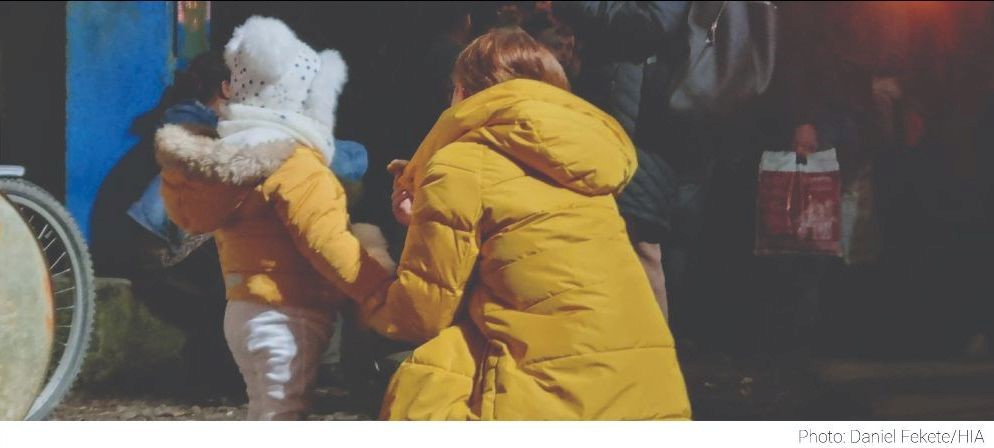
Episcopal Relief & Development is working closely with Anglican agencies and ecumenical partners to meet the urgent humanitarian needs of Ukrainians fleeing violence in Europe.
People quickly packed-up and fled Ukraine to safety and are now in need of basic supplies and will need long-term support. Your contribution to the Episcopal Relief & Development Ukraine Crisis Response Fund will help provide cash, blankets and other items.
Thank you for your compassion and prayers. With your partnership, we are working together for lasting change.
|
|
|
|
PLEASE HELP
Saturday, April 2: Outdoor workday beginning at 9:00 am. Help us clean and beautify the Church building and grounds for spring.
Saturday, April 9: Altar Guild workday from 9:00 am to Noon.
|
|
|
|
FOR EASTER BASKETS
The Daughters of the King will be putting together Easter baskets for the kids to be given on Easter Sunday.
But what's an Easter basket without candy? The DOK asks that parishioners please bring candy donations to the church to put in the baskets. Thank you!!
|
|
|
|
From Fr. Jay Sidebotham + |
DO GOOD
And when you come before God, don’t turn that into a theatrical production either. All these people making a regular show out of their prayers, hoping for fifteen minutes of fame! Do you think God sits in a box seat? Here’s what I want you to do: Find a quiet, secluded place so you won’t be tempted to role-play before God. Just be there as simply and honestly as you can manage. The focus will shift from you to God, and you will begin to sense his grace. -Matthew 6:5-6 (The Message)
The infallible test of spiritual integrity, Jesus says, is your private prayer life. Many people will pray when they are required by cultural or social circumstances. Those with a genuinely lived relationship with God, however, will inwardly want to pray and therefore will pray even though nothing on the outside is pressing them to do so. They pursue it even during times of spiritual dryness, when there is no social or experiential payoff. -Timothy Keller
And whenever you pray, do not be like the hypocrites; for they love to stand and pray in the synagogues and at the street corners, so that they may be seen by others. Truly I tell you, they have received their reward. But whenever you pray, go into your room and shut the door and pray to your Father who is in secret; and your Father who sees in secret will reward you. -Matthew 6:5-6
Those of a certain age may remember a scene from “Sound of Music” when the Von Trapp children have been hazing the new governess, Maria (Julie Andrews) on her first day. They were so mean. When they all sit down for dinner, Maria is invited to say grace, a prayer during which she references the unusual ways she has been welcomed into the household. One by one, the children dissolve into tears of shame. A classic example of what I’ve heard described as horizontal prayers.
Such prayers sound something like this: “Lord, I pray that my sibling will stop being such a jerk.” “Lord, I pray that this particular vestry member will have the humility to see how ill-informed his opinion is.” “Lord, I pray that all of us around this dinner table will come to appreciate the Christian point of view on (name the social issue).” You get the idea. It seems that according to Jesus, people using prayer (or any religious practice) in this way is one mark of hypocrisy, masking our own agenda behind piety, bless their hearts.
These days, I hear all kinds of reasons why folks don’t go to church, why there has been a dramatic increase in the number of nones (no religious affiliation) and dones (those who have bailed). I can see reasons why organized religion loses appeal.
Presiding Bishop Michael Curry, recently commissioned a survey to explore what people think about Jesus. It’s called the “Jesus in America” study. He said of this study: “We are encouraged that the research shows Americans still find Jesus compelling (editorial comment: phew!) but we also see that the behavior of many of his followers is a problem, and it’s not just certain Christians. It’s all Christians.”
The study included questions about what people think about the church. Christian respondents described Christians as giving, compassionate, loving, and respectful. Non-Christians had a different perspective. The characteristics they identified were judgmental, self-righteous, arrogant and, you guessed it, hypocritical. This squares with one of the most common reasons people tell me they have given up on church. They say that they don’t go to church because it’s just filled with hypocrites. To which I respond: “Guilty as charged.”
Jesus spent a lot of time contending with hypocrites. A lot of his most charged exchanges were with really religious people. That should give pause to those of us who are clergy, among others. As a result, the really religious people of Jesus’ day were among those who worked hardest to get rid of him.
As I try to understand and embrace his teaching, I sense his fundamental desire for people to have a deep and authentic relationship with God, a relationship that would be sustaining and joyful. I think he recognized that one of the things that get in the way is worrying about how we come off, how we appear, what other people think of us. I’m not sure it’s possible for us to avoid that.
But perhaps it’s possible if we try his experiment, taking our prayers to some quiet place where we get to realize that prayer is simply a conversation between us and God (an amazing, miraculous privilege when you think about it). It’s similar to the experiment we explored last week, giving alms/doing good in secret, in privacy, so we can be liberated from public opinion, so we can be liberated from the seductive power of our own ego. (After all, we can think of ego as an acronym: edging God out.)
All of it is a way for us to come to a deeper relationship with God, which is key not only to love of God, but also key to love of neighbor, and ultimately key to love of self. Grab some quiet prayer time this week. See what happens.
|
|
|
|
BIBLE STUDY EVERY WEDNESDAY AT 1:00 PM
The focus of current study are the books of the Torah. The five books making up the Torah are Be-reshit, Shemot, Va-yikra, Be-midbar and Devarim, which in the English Bible correspond to Genesis, Exodus, Leviticus, Numbers and Deuteronomy. Please come!
WEAR YOUR NAME TAG
Help us remember who you are and make it easier for folks to identify you! Please wear your name tags, located next to the hallway windows in the narthex.
COVID PRECAUTIONS
We encourage anyone who is not vaccinated to observe appropriate pandemic precautions. You may wish to wear a mask. Resurrection will not mandate mask wearing and want all to be aware of the potential for spread of the covid variants.
PROVIDE US YOUR CONTACT INFO IN CASE OF EMERGENCY
We have a registration sheet in the narthex for you to list a contact phone number and e-mail in case of an emergency.
|
|
|
|
|
|
|
|
|
|