Domestic Violence Awareness Month
|
|
Message from our CEO, Loretta V. Bush... |
Be aware of The Indicators of Domestic Violence
Home should be a place of health and well-being. Often it isn’t. Unresolved conflict can lead to violence.
Domestic violence is often referred to as intimate partner violence committed by one of the people in an intimate relationship against another. It can involve former spouses or partners.
In most cases, domestic violence occurs to women. However, domestic violence may involve children, parents, or older adults in the care of family members. It may also affect young people in dating situation. It can assume multiple forms: physical, verbal, emotional, economic, religious, reproductive, or sexual.
October is dedicated as Domestic Violence Awareness Month.
A February 2022 study published in The Lancet medical journal found that one quarter of women around the world, ages 15–49, are estimated to have experienced physical and/or sexual abuse, or intimate partner violence, in their lifetimes. These reports show that domestic violence is a major mental and physical health concern worldwide.
The United Nations has referred to domestic violence as a “shadow pandemic” in relations to the COVID pandemic. The American Journal of Emergency Medicine reported that domestic violence cases increased 25 to 33 percent globally during the pandemic.
The Centers for Disease Control (CDC) indicates that about 1 in 4 women and 1 in 10 men have experienced sexual violence, physical violence, or stalking through an intimate experience. Over 43 million women and about 38 million men experienced psychological aggression by an intimate partner in their lifetime.
About 11 million women and 5 million men who reported experiencing contact sexual violence, physical violence, or stalking by an intimate partner in their lifetime said that they first experienced teen dating violence.
I was fortunate to explore this topic, and the topic of sexual violence against women, with an expert in our community, Kalimah Johnson, a licensed clinical social worker, as well as founder and executive director of the SASHA Center in Detroit. SASHA stands for Sexual Assault Services for Holistic Healing and Awareness. You can view the interview below.
Be aware of the signs of conflict that could result in domestic violence. The CDC offers strategies for helping prevent intimate partner violence.
In Good Health,
Loretta V. Bush, MSHA
President and CEO, Authority Health
|
|
VIDEO - We're Talking about Domestic Violence |
Kalimah Johnson, the Founder and CEO of SASHA Center sat down with Authority Health's CEO, Loretta V. Bush to discuss what can be considered a tough subject matter, that is domestic violence. The goal was to dispel the thinking that domestic violence is a taboo topic of discussion and to speak candidly about what abusive behavior in relationships can look like so that we're all more aware and better able to protect ourselves from falling victim to violence or to allowing our own patterns of behavior to cause harm to others. Listen in!
|
|
"...The Heart of a Gazelle and the Hide of a Hippopotamus" Albert Schweitzer
Schweitzer Fellows Meet for Their Mid-Year Seminar
|
|
 |
On an early Saturday morning in October Detroit’s 2022 Schweitzer Fellows chapter came together to share about how their respective community health focused projects are coming along now that they are officially midway through to the completion of the program. There seemed to be a real sense of comradery amongst the group as they discussed the various health related problems that their projects are geared to address; finding the best ways in which to navigate and serve communities and cultures that bring their own unique set of challenges continues to be a focus.
However, the overriding theme of this past meeting had less to do with focusing on obstacles and much more to do with the idea of being self-aware of one’s own unique strength while, finding ways to be nimble and adaptable; this idea was further brought to life by a Fellow and University of Michigan School of Public Health student, Rasmi Davu, who prepared a reflection for the group that invoked the characteristics of a hippopotamus.
|
Jannah Bierens on Racial Equity and Equality |
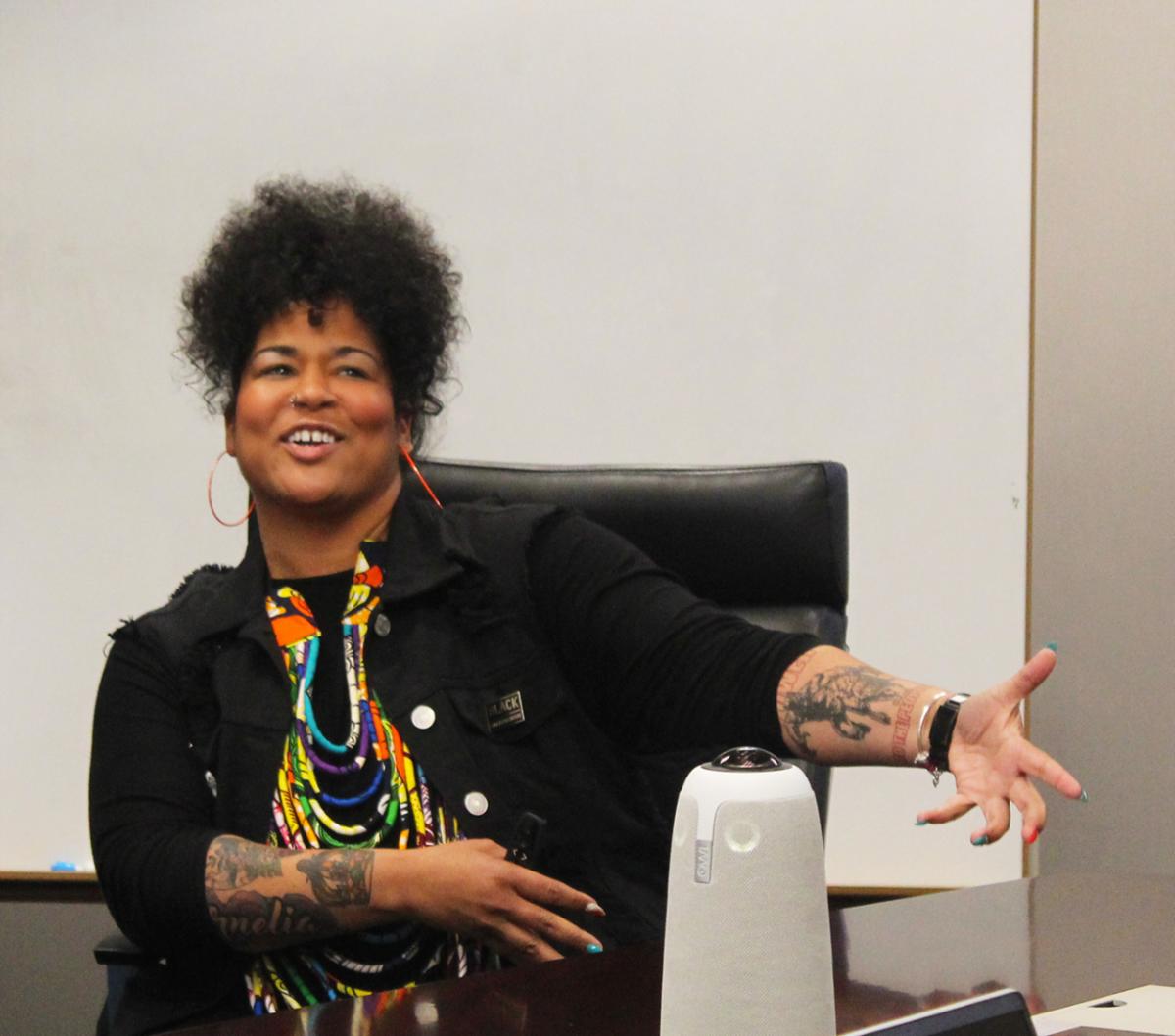
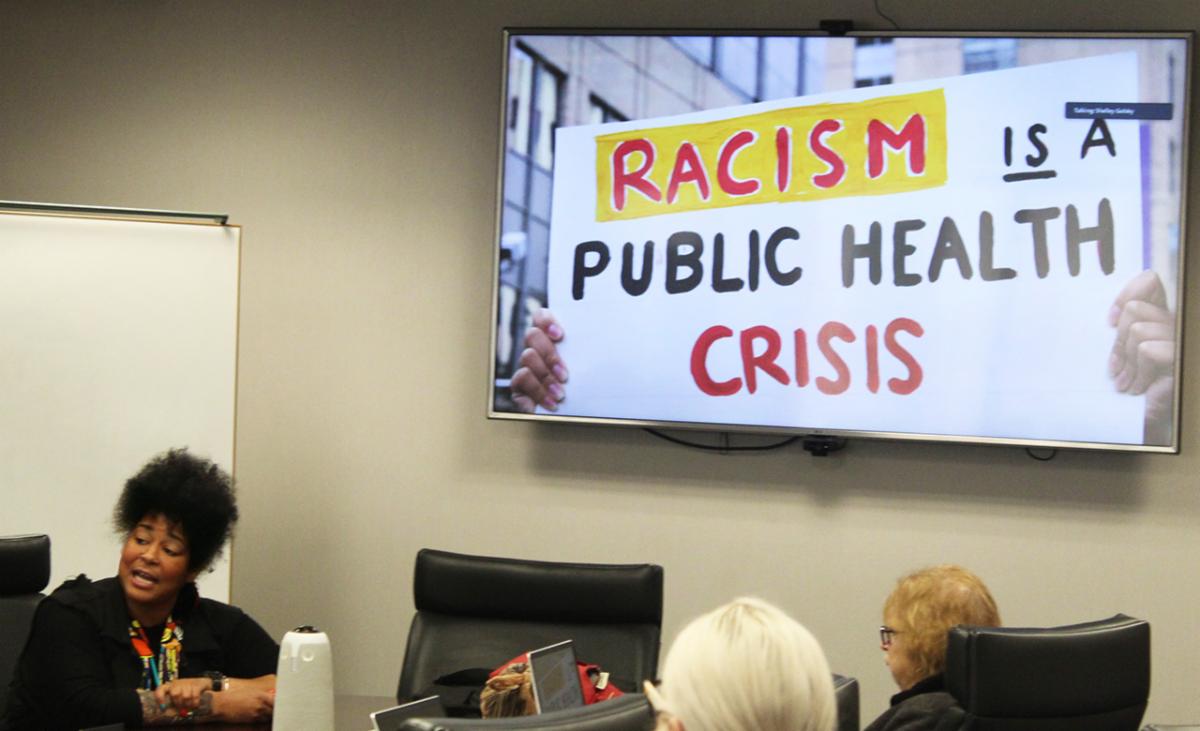
Above: Jannah Bierens pictured here lecturing on the heavy subject of racial injustice, with a smile on her face. Below: Bierens showing imagery from her presentation. |
A cornerstone of the Schweitzer Fellowship program here at Authority Health is to provide the Fellows with opportunities to learn about the historical plight of not just underserved communities and populations, but also unjustly served populations with the goal of making the Fellows more culturally sensitive and compassionate caregivers and future community leaders.
To meet this important objective Authority Health invites various thought leaders and community activists whose focus is community health and human services or social justice to provide insight on such communities/populations.
On the occasion of the Schweitzer Fellows Mid-Year Seminar, Jannah Bierens, the proclaimed “Truthteller” and Founder of PHREEEDOM, a social justice consulting firm that helps foster and facilitate dialogue to confront and help rid society of oppression, was invited to share her wide breadth of knowledge in the area of the African-American experience, from the time that African slaves were first shipped to America in 1619.
|
|
|
|
Determination, Community Support, and Good Whole Food
Hamissi Mamba, Owner of Baobab Fare Shared his Triumphant Story of Sacrifice and the Power of Faith
|
|
Above: Hamissi Mamba speaking at the Schweitzer meeting. Below (right): Nadia and Hamissi Mamba |
|
Another special guest speaker who graced this month’s Schweitzer meeting was Hamissi Mamba who, with his wife Nadia, owns and operates the buzzy new restaurant, Baobab Fare in the booming new area of New Center Detroit.
The Schweitzer Fellows sat quietly and intently as Hamissi recounted his story of becoming the first owner of a restaurant with a storefront in the city of Detroit that specialized in African cuisine. His recount went from harrowing to gratifying and back again as he spoke about the civil unrest of his hometown of Burundi and being separated from his wife and twin baby girls as result of the unrest, to reuniting with his family here in the US and the triumphant success of opening Baobab Fare.
Mamba spoke about the irony of coming from a place where there was a problem of having a lack of food only to find himself here where there was ample food, but oddly a lack of access.
|
|
Anxiety Screening in the Primary Care Setting Advances Integrated Health
|
|
Many have referred to this period as the “age of anxiety” and “future shock.” Coming out of the coronavirus pandemic, amid domestic and international disruption and climate change, there’s plenty of reason to be anxious. In fact, nearly half of American women and a quarter of American men have reported experiencing anxiety.
The U.S. Preventive Services Task Force has recommended anxiety screening in primary care for adults without symptoms. This is another step in integrating physical and mental health and providing more holistic care. The recommendations suggest that a conversation occur between providers and patients, which may lead to some form of emotional or behavioral health intervention that could be life-enhancing, if not lifesaving. The task force actually began work on this before the COVID-19 pandemic, but the impact of the pandemic and other events has exacerbated the situation that some have called a mental health epidemic.
|
|
Growing Housing Insecurity Needs Advocacy at State and National Level |
|
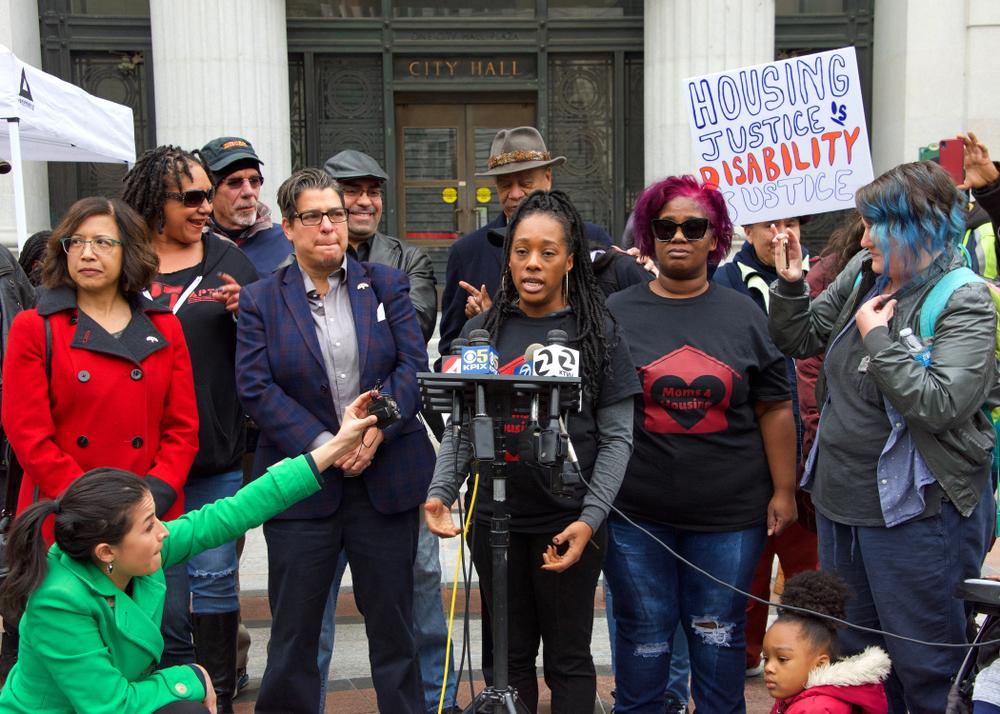
If education and housing security are factors affecting health, the increasing numbers of families facing homelessness are experiencing double jeopardy.
A brief reference in a Detroit Free Press article on dropping attendance rates in Michigan schools should have raised alarm among readers. Attendance in Michigan schools has dropped dramatically since the onset of the coronavirus pandemic. “Economically-disadvantaged students” experienced an 88 percent absenteeism, while “students facing homelessness” experienced a 79.8 percent homelessness rate. That’s a remarkable statement on the impact of poverty in this one, compounded health indicator.
If you don’t have secure housing, it’s exceedingly difficult to attend school, much less study well. If you don’t attend school, particularly during the critical development years, you will face the likelihood of poor health in the future.
|
|
October is also Breast Cancer Awareness Month |
|
Above: Members of Authority Health Executive Leadership and staff on Wear Pink to Work Day. |
|
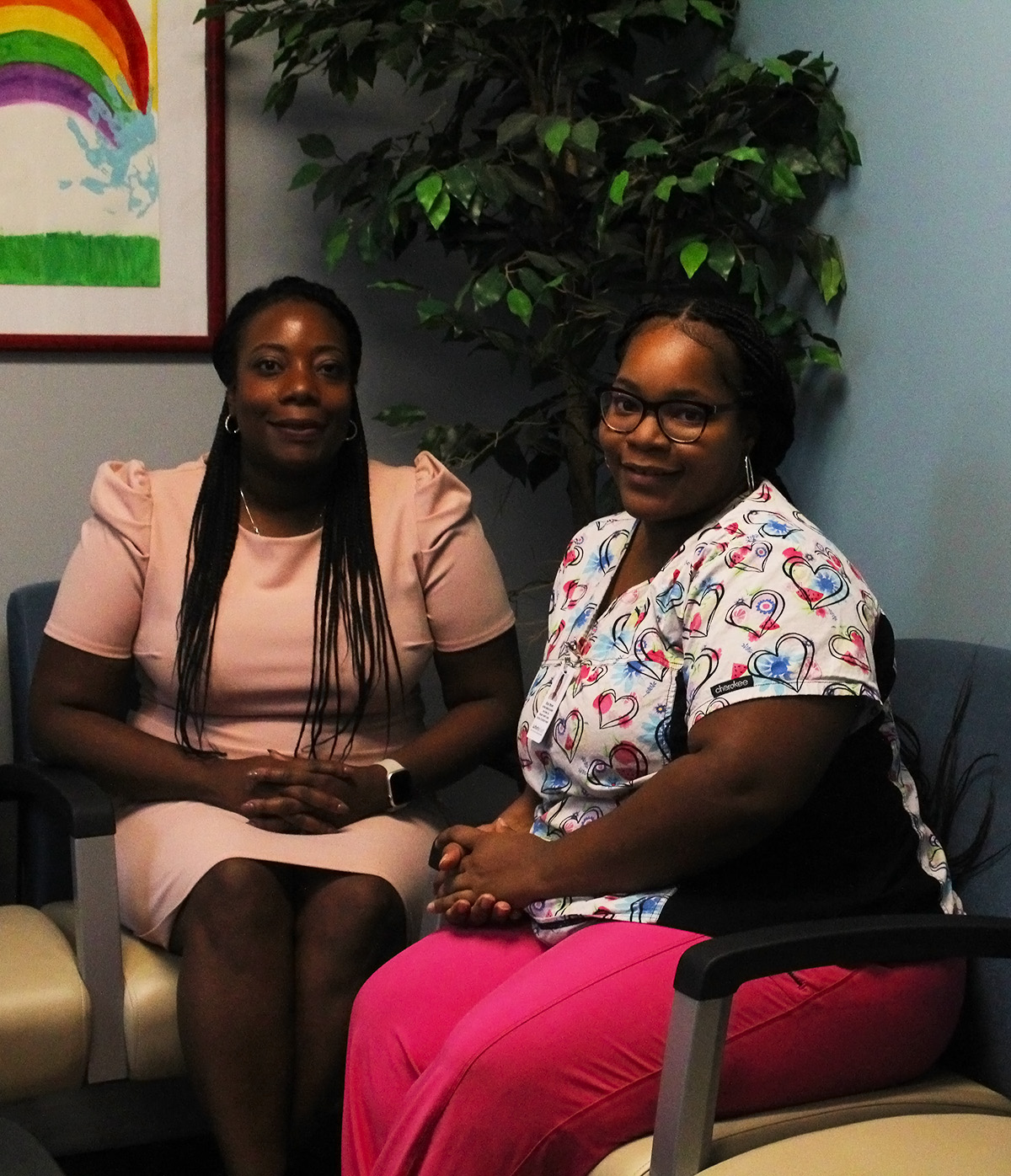
From top left: Members of Authority Health's Anne Mare Ice Family Health Center staff; Members of Authority Health's Popoff Family Health Center staff.
Right: Finally, we're very proud to have received the Guardian Angel Award presented to Mrs. Loretta V. Bush by the Living Brave Through Cancer organization.
|
|
|
In honor of Breast Cancer Awareness Month, we designated October 26, 2022,“Wear Pink to Work Day” for all Authority Health Staff. Wearing pink during this time of year may seem like a simple thing, but in actuality it can and often does remind women, especially, to stay up to date on their mammography screenings, which of course could save a life.
So, in closing…we’d like to remind you to get your mammogram and to remind a friend or loved one to do the same. We also want to send our sincerest thoughts and prayers to those who have themselves or have loved ones that have been affected by this terrible disease.
|
|
In Honor of Breast Cancer Awareness
A Haiku...
a Japanese poem that must consist of the following: 17 syllables total: 3 lines only; 5 syllables in the first line; 7 in the second; 5 in the third. A title is optional and does not effect the syllable rules.
So many women,
Some young, some old, and men too.
Fight! Stay strong. Renew...
Send us a haiku in honor of Breast Cancer Awareness or in honor of Diabetes awareness, which is our focus for November and we'll share it in a future publication.
|
|
Authority Health is a public body corporate serving the needs of the health care safety net. It sponsors the nation’s second-largest graduate medical education teaching health center and community-based wellness centers. In addition, Authority Health provides extensive enrollment and navigation services, as well as professional training opportunities.
Authority Health | 313.871.3751 | media@authorityhealth.org | www.authorityhealth.org
|
|
|
|
|
|
|