Welcome to the University of Oklahoma Carceral Studies Consortium Newsletter. The Carceral Studies Consortium strives to build a community for intellectual exploration that includes faculty, staff, graduate students, community members, practitioners, and organizers.
Carceral Studies is concerned with the independent function and nexus of the political and social systems that organize, shape, sustain, and entrench practices of punishment, surveillance, incarceration, and harm.
|
|
Carceral Studies Conversations Podcast |
|
"Pedagogy and Targeting" with Dr. Subini Annamma (Coming Soon) |
|
|
|
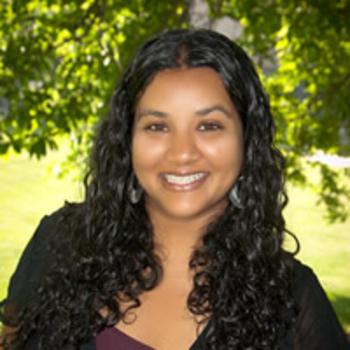
On this episode, Dr. Subini Annamma discusses the way that youth, particularly girls of color, are hyper-surveilled and hyper-punished, in the education system. Annamma explores the way racism, ableism and sexism converge to label and criminalize youth. Youth, however, are able to generate knowledge and contest this labeling and criminalization. Annamma was a special education teacher in both public schools and youth prisons. Currently, she is an Associate Professor in the Graduate School of Education at Stanford University. Her research critically examines the ways students are criminalized and resist that criminalization through the mutually constitutive nature of racism and ableism.
|
|
|
|
Dylan Rodríguez argues that the risk of a “scramble for legibility” could be “reproducing simplistic, compartmentalized narratives and explanations for the alarming increase in gendered racist anti-Asian violence since early 2020.” Instead of reducing the explanation for this anti-Asian violence to “hate,” Rodríguez asks: what if this racist violence is “in fact a persistent, unexceptional presence in the long historical, Civilizational terror-making machine that is the United States?” The calls for the state to validate these experiences to surveil and punish individual perpetrators risks reproducing the same power relations that have created the conditions for this anti-Asian violence. The framing of such violence as either hate or exceptional reduces the complexity and affixes culpability to individual people committing individual acts. “This individualization of anti-Asian violence,” he argues, “distorts its institutional, cultural, and systemic dimensions.”
|
|
|
|
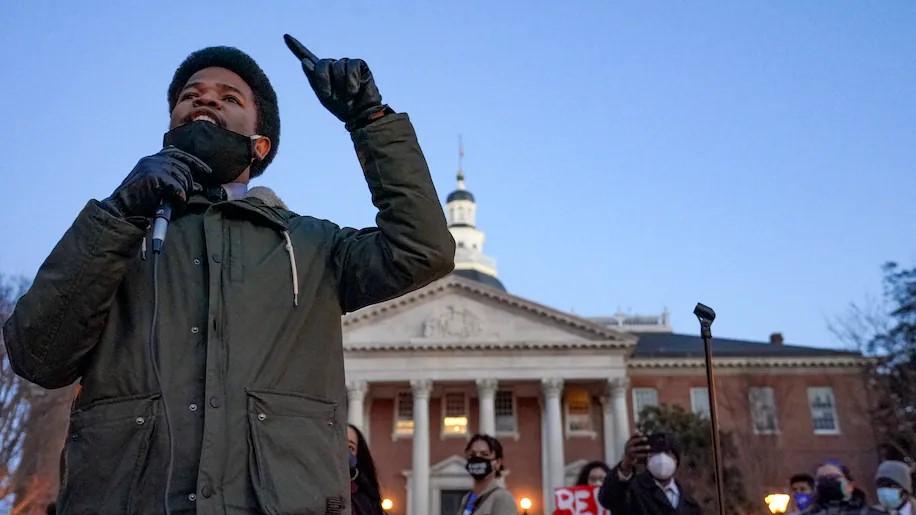
Maryland became the first state to repeal its Law Enforcement Officers’ Bill of Rights. In doing so, Maryland set new rules for police accountability, including use of force and how they are investigated. These bills, according to criminal justice advocates, have “the potential to make policing in the state fairer and more transparent.” These bills faced opposition, including in a veto from Governor Larry Hogan (R) who wrote that these bills would “erode police morale, community relationships and public confidence.” Some advocates argue that these bills don’t go far enough because they don’t give civilians absolute control of the disciplinary process.
|
|
|
|
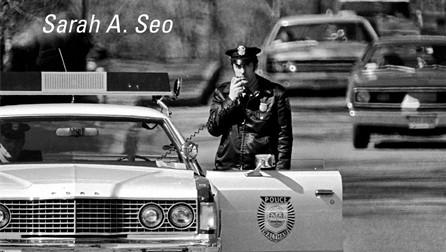
Traffic stops, writes Laura Bliss, “are the most common interaction between police and the public” and “disproportionately affect Black people.” In this interview with Sarah Seo, professor of law and author of Policing the Open Road: How Cars Transformed American Freedom, Seo explores how policing, the roads and traffic enforcement became intertwined and how to rethink that relationship. Seo argues that the idea of removing traffic enforcement from policing required “prioritizing safety rather than crime control” as “investigating crime on the road through the use of traffic enforcement is highly ineffective and not worth the problems we have today with discriminatory policing.” This discussion of traffic stops, warrants and fines centered on driving reveals “how necessary it is to drive... It’s pretty essential to American life.”
|
|
|
|
CREW obtained emails that show that the Drug Enforcement Agency conducted “covert surveillance” on people protesting racial justice after the killing of George Floyd in Philadelphia, Chicago and Albuquerque. These operations involved undercover DEA agents infiltrating protests, social media monitoring, and aerial surveillance. This information, according to Nickel Sus, “provide[s] a glimpse into how the DEA utilized its expanded surveillance authority in three cities.” These operations came at the request of the local police departments.
|
|
|
|
In one clinic in Arkansas, at least four transgender teens have attempted suicide in the two weeks since the state banned gender-affirming healthcare for transgender minors. Arkansas is the first state to pass such an anti-transgender law. Dylan Brandt, a 15-year-old transgender boy says, “The thought of having to go back to how I was before this is just devastating because that would set me back on everything.” Dr. Michelle Hutchinson, who runs a clinic that has helped families in Arkansas access medical care for transgender youth, worries that families will turn to the black market, which will be dangerous.
|
|
|
|
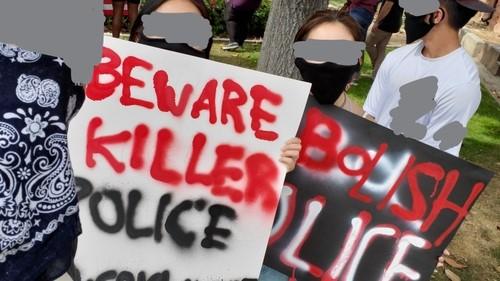
Florida Governor Ron DeSantis has signed into law what he calls the “strongest anti-rioting, pro-law enforcement measure in the country.” Written in response to protests after the killing of George Floyd, the new law enhances penalties for people who take part in protests. The bill denies bail to anyone arrested at a protest, making overnight jail stays very likely. Civil rights and social justice groups argue that the law is unconstitutional and an attack on free speech. The law, moreover, allows officials to appeal to the governor any local decision to reduce funding to law enforcement.
|
|
|
|
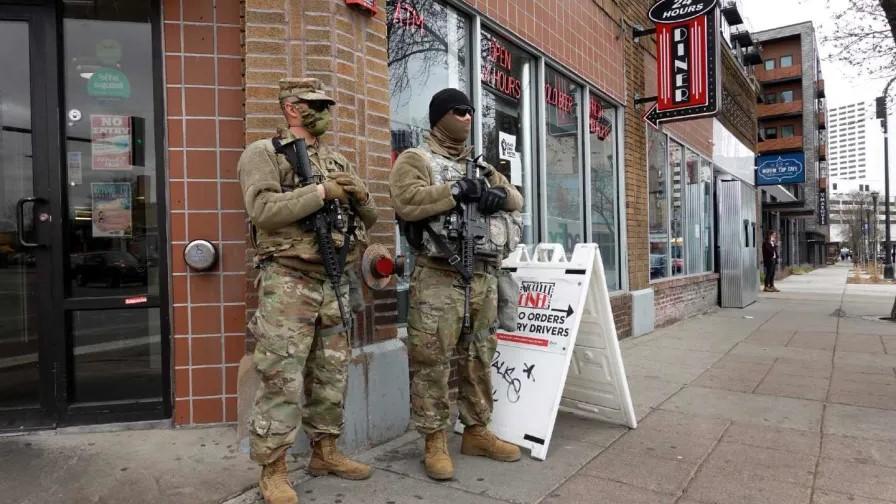
Operation Safety Net, the multiagency task force formed for the Derek Chauvin trail, moved to patrol Brooklyn Center after police killed Daunte Wright. Since the killing of Wright, according to Alyssa Oursler and Anna DalCortivo, “armed agents of the state have waged chemical warfare against, fired upon, and/or arrested protesters.” “Arrests and incarceration,” they continue, “have long been used to demobilize Black movements.”
|
|
|
|
Within Los Angeles, there are over seventy police departments, representing cities, counties, universities, and federal agencies. This guide explains the scope of policing in LA and how the LA policing system functions. The Los Angeles Sheriff's Department runs the jail system, and LA has the largest local jail system in the country, caging about 15,000 inmates. LASD, moreover, has a budget of about $3.5 billion, much of which goes to managing the county’s seven jails. LAPD’s funding comes from the city, and it accounts for about 54% of the city’s general fund. Between Dec. 2012 and May 2020, there were 605 officer or deputy shootings, of which 343 were fatal. Since Jan. 2000, 923 people have been killed by law enforcement in LA County.
|
|
Announcements & Opportunities |
|
Carceral Studies Student Work Prize
Submissions Due May 1st, 2021
The Consortium is pleased to announce a Carceral Studies Student Work Prize. OU students may submit an original essay or creative work produced as part of any course in any discipline during the 2020-2021 academic year that deals with the topic of Carceral Studies, broadly conceived. Submissions are due May 1st, 2021.
|
|
|
Carceral Studies Graduate Student Fellowship
Applications Due May 7, 2021
The Carceral Studies Consortium offers an outstanding graduate student with interest in advancing Carceral Studies a 12-month, .20 FTE position (8 hours per week). This CSC Graduate Student Fellow serves as the student representative on the Carceral Studies Board of Directors, as well as provides critical support for CSC initiatives throughout each academic year (July 1 to June 30).
|
|
|
Recovering History: Poetry on the Carceral State & Internment
Philbrook & Tri-City Collective
April 30, 2021 | 6:30 pm - 8:00 pm CT
In partnership with Tri-City Collective, Philbrook presents an evening of poetry organized by poet and civil rights hisotrian Quraysh Ali Lansana examining the carceral state and internment across Oklahoma and the U.S. The event will take place in the Philrook Gardens.
|
|
|
Against Carceral Feminism OK Community Conversation
April 28, 2021 | 6:00 pm - 7:00 pm CT
The Against Carceral Feminism OK working group is hosting a webinar around the harms of carceral feminism and alternatives to policing and prisons as a response or solution to gendered violence
|
|
|
Full Proposal Development WKSHPseries
May 19, 2021 | 10:00 am - 12:00 pm CT
Qualitative/Interpretive Researchers: Would you like to develop an qualitative or interpretive external research proposal in Summer 2021? Join Kirsten Edwards (VPRP Faculty Fellow) and CFE in this workshop series that walks OU faculty from a 1-page summary of your proposal idea to drafting a full proposal for your next project.
|
|
|
ABOUT
The Consortium Newsletter will offer a roundup of a few selected articles that reflect today’s news, organizing, and thinking related to the carceral state. We understand that freedom work is built on education and engagement. Education requires an understanding of contemporary issues informed by their historical context. We hope that these curated articles will help you analyze the issues that we face and understand the community that we strive to construct.
Join the conversation!
We encourage feedback, suggestions, and article suggestions. Please reach out to carceralstudies@ou.edu with any ideas, thoughts, or recommendations.
If anyone you know is interested in receiving this newsletter and other information from the Carceral Studies Consortium, please forward them this email and they may click this link to subscribe.
|
|
Land Acknowledgment
The University of Oklahoma is on the traditional lands of the Caddo Nation and the Wichita & Affiliated Tribes. This land was also once part of the Muscogee Creek and Seminole nations. It also served as a hunting ground, trade exchange point, and migration route for the Apache, Cheyenne, Comanche, Kiowa, and Osage nations. Today, 39 federally-recognized Tribal nations dwell in what is now the State of Oklahoma as a result of settler colonial policies designed to confine and forcefully assimilate Indigenous peoples.
|
|
The University of Oklahoma is an equal opportunity institution. ou.edu/eoo |
|
|
|
|
|
|