News and information to help journalists serve the public and stay safe.
|
|
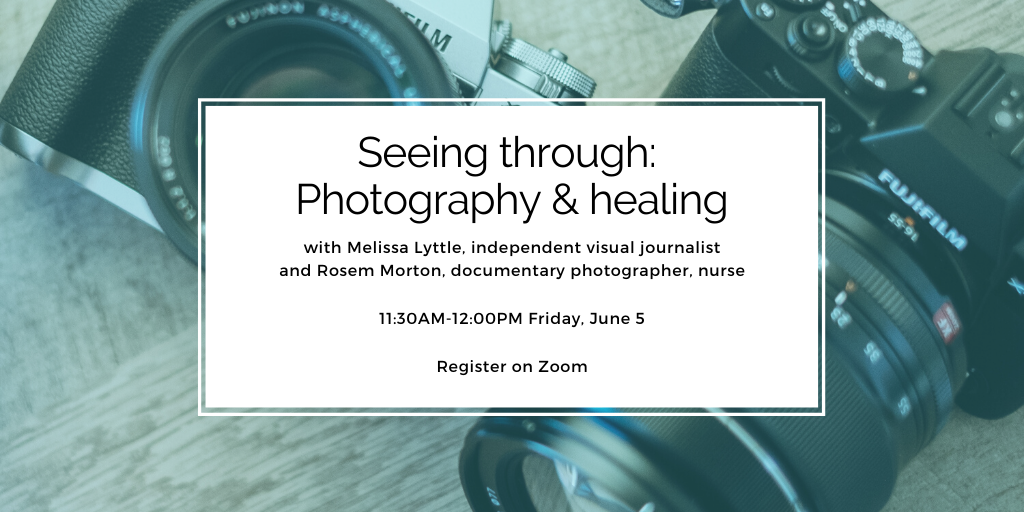
Images take us into hospitals, grocery stores, even empty spaces to show us the impact of coronavirus on the people and places affected by the pandemic. Award-winning independent photojournalist
Melissa Lyttle
and documentary photographer
Rosem Morton
,
who is also a nurse
, will talk about photography, trauma, and healing.
|
|
The pandemic has changed the space where journalists work, their reporting habits, even their attention spans. Three accomplished writers shared their tips on how to adopt a routine, find efficiencies, and use timely breaks to write with focus and speed to meet the deadlines that the stream of COVID-19 news requires.
“I’ve always written in short bursts; I don't have a whole lot of attention spans when I'm writing,” said
Lane DeGregory
, a
Pulitzer-Prize winning
enterprise writer at the Tampa Bay Times. “I write to a Diet Coke. When I finish my can or my bottle of Diet Coke, then I can get up and do the laundry or play with the dog or take a break.”
How many Diet Cokes per story? “A thousand-word story is about three.”
All three confessed to struggling at the keyboard sometimes, temporarily sidelined by distractions, worries and cluttered head space. They rely on routines. They might break away to read short fiction, to light a candle, to take a walk. And they pause when they need to without forcing themselves to power through.
On confronting the challenge of the pandemic.
Broadfoot
: Trying to keep up is really a struggle. And then the emotional part of it, too, definitely weighs on me.
On how to write in bursts.
DeGregory
: I think writing, it definitely is a discipline that I have to make myself sit here and get to a certain point in getting words on the paper. But a lot of the work is actually done in my head when I'm not sitting here.
On switching from breaking news to longer pieces.
Netburn
: That's been a really big challenge for me right now. It's easier for me to be on a deadline. I like knowing that readers are hungry for what it is that I'm going to be writing.
|
|
Bill Plante Chair in Leadership & Media Integrity, Loyola University Chicago
Freedom Forum Fellow in Women’s Leadership
It is May of 2020. We are marking the loss of 100,000 souls, victims of the COVID-19 pandemic in the United States.
Now think ahead five years. It is 2025, and you are being asked about this terrible time. You, the journalist who covered it as you lived it.
What do you remember with pride? With pain? With second thoughts?
Every one of us will have a story to tell. Not everyone keeps a journal, so let me help you take notes now, as you are immersed in covering history. Think about how you will answer these ten questions:
- What did you do well during the pandemic - as a journalist, a family member, a friend?
- Did you encounter actions and decisions that required courage? How did you respond?
- What values guided you throughout the crisis and chaos?
- What stories and whose stories stay with you - and why?
- What sense memories do you hold on to - sights, smells, sounds?
- Were there times you were discouraged, angry, even outraged? How did you handle that?
- Do you have any regrets?
- To whom do you owe a great measure of thanks?
- What did the pandemic teach you about leadership?
- What lessons stay with you to this day?
On this milestone day, reflect on the loss, on the lessons, and on your leadership. The stories we tell today become our country’s history - and our own.
|
|
|
The National Press Club Journalism Institute is spotlighting
the next generation of journalists
, students graduating from college or Master’s programs this spring into
a challenging job market
, in hopes they’ll meet future bosses and colleagues here who will reach out and support them in building journalism’s future together.
School
: The University of Southern California
Location
: Boston, Mass.
Awards
: Outstanding Journalism Scholar 2020; Murrow winner 2019 and 2018
What's the wackiest story you've worked on?
That’s the headline.
Merlin is a duck who was found by rescuers with a leg impairment that made it hard to waddle. But who was there to help him? That's right, you guessed it: Goats of Anarchy, a sanctuary for special needs goats in New Jersey.
Soon after Merlin was brought into Goats of Anarchy, he got the wheelchair from an online retailer called “Walkin’ Pets,” which prompted a line of mine that I'm particularly proud of:
“Walking’ Pets may soon have to add ‘waddlin’” to their name.”
Merlin got the help he needed from the wheelchair, and was soon up-and-moving again with his best friend, a chicken named Opal. Rescuers believed Merlin would never have survived if not for the wheelchair.
Here’s another line for you. It’s my closer: “The extra support from Walkin’ Pets will help Merlin get back to shakin’ his tail feathers like never before.”
|
|
Thinking about the price of turnips? You’re not alone. Video games like Animal Crossing (where turnips represent stock market value) have
given many a way to turn off the pandemic
, at least while they play.
For double the self-care, try
The Guardians: Unite the Realms
— a free MIT Media Lab mobile game that rewards players for performing real-life self-care “adventures.” Activities like walking for 20 minutes, spending time in nature, drawing, and video chatting with a friend earn in-game rewards while forcing focus on positive practices and reflections on tasks. The game is ad free and contains no in-app purchases.
|
|
This newsletter is written & edited by the National Press Club Journalism Institute staff: Beth Francesco, Holly Butcher Grant, Jim Kuhnhenn, and Julie Moos.
Send us your questions and suggestions
for topics to cover.
|
|
|
|
|
|
|