You're Invited: Public Hearing on Substance Use Prevention & Behavioral Health Promotion
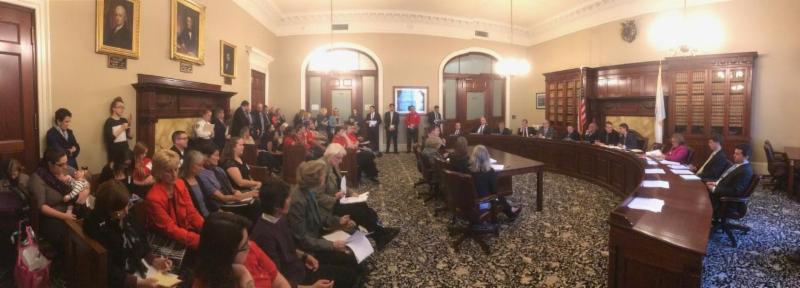
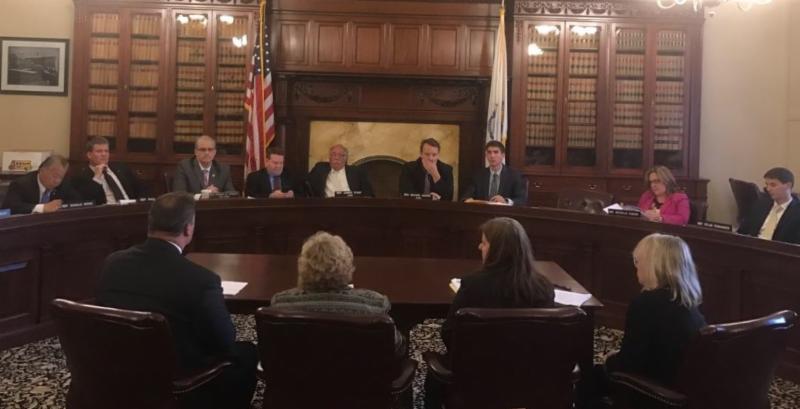
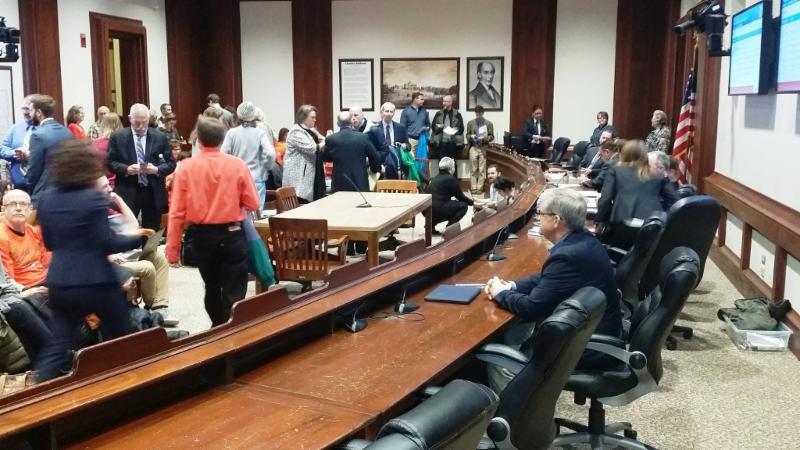
The Special Commission on Behavioral Health Promotion and Upstream Prevention (PromotePrevent Commission) will hold a special public hearing on Friday, December 15th, 10am, at the Education Development Center, 43 Foundry Avenue in Waltham. As you know, behavioral health issues like opiate addiction, mental illness, and violence deeply affect our communities. The Commission is tasked with identifying policies, practices, and programs to strengthen evidence-based prevention and social, emotional and behavioral health in the state. Click
here for complete details on how folks from Waltham can sign up to testify. You can also visit
PromotePrevent.com to learn more and see the 24 state leaders who serve on the Commission.
MA Passes Legislation to Ban Bump Stocks
Rep. Stanley and his colleagues helped the Commonwealth of Massachusetts pass legislation to ban bump stocks, becoming the first state to impose a ban after the deadly Las Vegas music festival shooting. Lt. Gov. Polito then signed an appropriations bill that included a prohibition on the devices into law in early November.
House Passes Legislation to Support and Honor Military Veterans
Rep. Stanley voted in favor of two bills to support Massachusetts' veterans. These bills build upon the Commonwealth's legacy as the first state in the nation for the number of programs and services it offers to military personnel, veterans and their families. Under legislation passed by the House, every municipality in the Commonwealth will now designate one parking space at its town or city hall as "veterans-only parking."
The House also took action to enable municipalities to more easily collect donations for their Veterans Memorial and Patriotic Celebration Funds. This legislation allows cities and towns to include a check-off box on municipal tax or motor vehicle excise tax bills through which residents can pledge donations to be used for the creation and restoration of monuments and other activities that honor the contributions and sacrifices of local veterans.
House Passes Comprehensive Criminal Justice Reform Legislation
Rep. Stanley and his colleagues in the House passed comprehensive criminal justice reform legislation that will lead to a more equitable system by supporting our youngest and most vulnerable residents, reducing recidivism, increasing judicial discretion, and enhancing public safety. For the first time in the history of Massachusetts, this legislation would establish a process for expunging criminal records. Courts will now be able to expunge certain juvenile and young adult (18-21) records, and records in cases of fraud or where an offense is no longer a crime. The legislation also bars third-party data companies from disseminating expunged records.
This legislation reflects a balanced, modern, smart-on-crime approach to sentencing. It eliminates mandatory and statutory minimum sentences for many low-level, non-violent drug offenses. At the same time, it bolsters the House's multi-tiered approach to the opioid epidemic by creating the nation's strongest law for trafficking Carfentanil and by strengthening the Fentanyl trafficking law. The legislation also toughens penalties for repeat offenders convicted of operating under the influence (OUI).
As part of the House's focus on combatting the opioid epidemic and providing healthcare parity, this legislation requires district attorneys to create pre-arraignment diversion programs for military personnel, veterans, and individuals with addiction or mental health issues. It removes the age restriction to participate in a diversion program, as they are currently only available to defendants 22 and under. The bill also establishes restorative justice as a voluntary pre-arraignment program.
The bill raises the minimum age of criminal responsibility from seven to ten and decriminalizes a first offense misdemeanor if the punishment is a fine or imprisonment for not more than six months. The legislation establishes a Juvenile Justice Policy and Data Commission, which will make the state eligible for additional federal funding, and a Childhood Trauma Task Force to study and recommend gender responsive and trauma-informed approaches to treatment of youths in the juvenile justice system. The bill also extends Good Samaritan protections to alcohol incapacitation for individuals under 21.
Legislature Passes Bill to Expand Language Opportunities for Students
Rep. Stanley voted in favor of bipartisan legislation that updates the existing statute relative to English language education in the Commonwealth's public schools. An Act relative to language opportunity for our kids, also known as the LOOK bill, promotes research-based best practices for programs serving English learners (EL). Since the year 2000, the number of EL students in Massachusetts has doubled to more than 90,204 students, or 9.5 percent of the student population. While statewide graduation rates for students have risen over the past ten years, the achievement gap between EL students and their peers persists. Waltham has over 1,000 EL students district-wide.
This bill expands on the current mandate requiring schools to use Sheltered English Immersion (SEI) as the default English learner program model by giving schools the flexibility to establish programs based on the diverse needs of their students. Under this legislation, school districts can maintain current SEI programming or choose to implement an alternative instructional program that meets federal and state standards. This bill supports parental choice and involvement by expanding the role of Parental Advisory Councils and allowing parents the flexibility to choose programs that best meet their child's needs.
To better identify and assist English learners, this legislation requires greater tracking of academic performance and enhanced review of programs. Furthermore, this legislation directs the Department of Elementary and Secondary Education to develop additional guidelines and supports for school districts.
Recognizing bilingualism and biliteracy as valuable strengths for students in a 21st century world, this legislation establishes a state Seal of Biliteracy. The seal will be awarded by participating school districts to students who have attained a high level of proficiency in English, and one or more foreign languages.
This bill will now move to the Governor for his signature.
House Passes Legislation to Protect Women at Risk of Losing Birth Control Coverage
Rep. Stanley helped pass legislation to ensure that Massachusetts women have access to no-copay contraception. This action follows the Trump Administration's decision to weaken critical provisions of the Affordable Care Act related to women's health and preventive care. This compromise bill requires insurers to cover contraceptives and contraceptive services in Massachusetts, including education, counseling and follow-up treatment, without any out-of-pocket cost to the patient. In an effort to contain healthcare costs, the bill only requires insurers to cover one version of a drug or device free of charge, if a therapeutic equivalent (generic drug) is available, unless otherwise directed by a patient's doctor.
The bill allows patients to pick up a twelve-month supply of medicine subsequent to an initial three-month prescription .The legislation also mandates no-copay coverage for emergency contraception with a prescription. Access to preventive healthcare and affordable contraception continues to have a significant impact on the economic stability of women. Contraceptives make up about 30 to 44 percent of out-of-pocket healthcare spending for women. Since 1960, it is estimated that about one-third of the wage gains made by women are the result of access to birth control.
Rep. Stanley Signs Testimony To Protect Consumers of Gas and Electricity from Overpaying
Rep. Stanley and his colleagues sent written testimony to the Joint Committee on Telecommunications, Utilities and Energy in support of legislation he cosponsored which protects consumers of gas and electricity from paying for lost and unaccounted for gas. The legislation, which builds off recent work of the legislature related to gas leaks over the last few sessions, prevents utilities from passing on the cost of gas leaks to consumers. It has the support of 42 municipalities throughout the Commonwealth.
Natural gas leaks are potentially explosive, harm our health, kill trees, and release methane, a destructive greenhouse gas that traps heat in the atmosphere. In recent years, the legislature has taken important steps to address both public safety and climate change concerns raised by the prevalence of aging, leaky gas infrastructure in the Commonwealth.
Website Launched for Substance Use Prevention Initiative Available to All Public Middle Schools
Attorney General Healey opened the registration process for Project Here, a $2 million public-private initiative that will provide educational resources to schools to help protect young people from substance use and address the opioid epidemic. Public middle schools in Massachusetts will be able to register on the new Project Here website.
https://www.here.world/ Project Here will make substance use prevention educational resources available to every public middle school in Massachusetts.
Every public middle school that registers will receive a Project Here Toolkit in November. Teachers will have access to both a hard copy and online toolkit, which will provide materials including teacher guides, lesson plans, educational resources, video content, and outreach materials. The toolkit will also provide students the opportunity to connect with a support network staffed by licensed professionals at The Herren Project. Project Here is dedicated to raising awareness about the risks and consequences of substance use, de-stigmatizing the disease of addiction, and promoting healthy decision-making by making these educational resources available to public middle schools at no cost.
Rep. Stanley Cosigns Letter Protecting Ratepayers from Gas Pipeline Extension Costs
Rep. Stanley cosigned testimony sent to the Joint Committee of Telecommunications, Utilities, and Energy on H.3400, An Act Clarifying Authority and Responsibilities of the Department of Public Utilities (DPU) and H.2698, An Act Protecting Ratepayers from Gas Pipeline Expansion Costs. Rep. Stanley was also a cosponsor of H.2698.
If passed, these bills would enhance the review of pipeline capacity contracts and address other needed reforms identified over the course of previous and ongoing proceedings related to gas infrastructure projects; codify the SJC's ruling prohibiting electric ratepayer financing of gas pipelines; ensure the public's ability to intervene at the DPU; protect ratepayers against self-dealing by energy conglomerates; enhance protections for landowners and conservation areas; hold gas utilities to high standards regarding the capacity they are allowed to contract for, and prohibit companies from charging ratepayers to pay for the construction or expansion of interstate gas infrastructure.
5-Year, $1 Million Partnership for Women Entrepreneurs in Life Sciences Launches
The Baker Administration announced the launch of the Massachusetts Next Generation Initiative (MassNextGen), a new competitive program to support women entrepreneurs in early-stage life sciences companies. The public-private partnership, currently a five-year, $1 million commitment, will focus on empowering women and diversity in the next generation of life sciences entrepreneurs.
The program will identify promising women-owned or controlled life science companies, and provide critical funding and access to a robust panel of executive coaches to ensure that they have important resources to succeed. The MLSC will coordinate and award a year of support to two, women-owned or controlled, early-stage life science companies each year.
The $1,000,000 commitment includes $500,000 in direct awards to participants, with $250,000 in 1-to-1 funding matches from Takeda as the initial partner and the MLSC. An additional $500,000 in in-kind contributions will be provided for networking, professional development and coaching support. MLSC will leverage the region's substantial network of seasoned entrepreneurs, investors and life science experts to serve as executive coaches to the winners of the MassNextGen Initiative.
New Massachusetts Veteran Friendly Employer Certification Program
The Baker Administration announced the December 1st launch of the Massachusetts Veteran Friendly Employer Certification Program, enabling Massachusetts-based small businesses to qualify for the recently enacted $4,000 state tax credit for firms that provide job opportunities and retain the Commonwealth's veterans.
Statute provides companies with fewer than 100 employees to receive up to a $4,000 tax credit, over two years, for hiring a qualified veteran, following certification by the Department of Veterans' Services (DVS) as "veteran friendly." DVS has partnered with New England Tech Vets (NETV), an initiative of the Massachusetts High Technology Council, on the online education and certification program to train local businesses on the recruitment and retention of veteran employees. Certifications can be renewed or extended every two years.
NETV will be providing the online certification program effective December 1st at no cost to the Commonwealth or its employers, and will include recruitment and training content focused on the addressing the invisible wounds of war in the workplace and providing ongoing social supports to retain veteran employees.
Baker Administration Re-Establishes Governor's Task Force on Hate Crimes
Governor Baker signed an Executive Order re-establishing the Governor's Task Force on Hate Crimes and was joined by Secretary of Public Safety and Security Daniel Bennett to swear-in members of the commission. The Task Force will advise the Governor on issues relating to the prevalence, deterrence and prevention of hate crimes in the Commonwealth and the support of victims of hate crimes. This task force will meet at least quarterly and submit a formal written report annually that addresses the mission of the Task Force, targeted objectives, options and recommended actions and metrics to measure the effects of the recommendations on hate crimes in Massachusetts to the Governor.
Members of the Task Force include gubernatorial appointees with expertise in community advocacy, law enforcement, health care, law, government and education and represent a group diverse in gender, race, industry, region, age and education. Secretary of Public Safety and Security Daniel Bennett and CEO and President of the Boys and Girls Clubs of Boston Josh Kraft will serve as co-chairs.
The Task Force will promote full and effective coordination among law enforcement agencies in order to improve prevention, investigation and prosecution of hate crimes. The Task Force will encourage and assist agencies in safe reporting of hate crimes pursuant to the Hate Crime Reporting Act, as well as analyze and publicize hate crime reports pursuant to the Hate Crime Penalties Act. This group will develop best practices related to technical assistance for school districts that may seek to incorporate hate crime education into their curricula.
Healthcare Alert! It's open-enrollment season
If you need to enroll or make changes to your health insurance plan, Massachusetts Health Connector can help you find the right coverage.
Learn more.