|
Where seasonal slip, trip and fall hazards appear
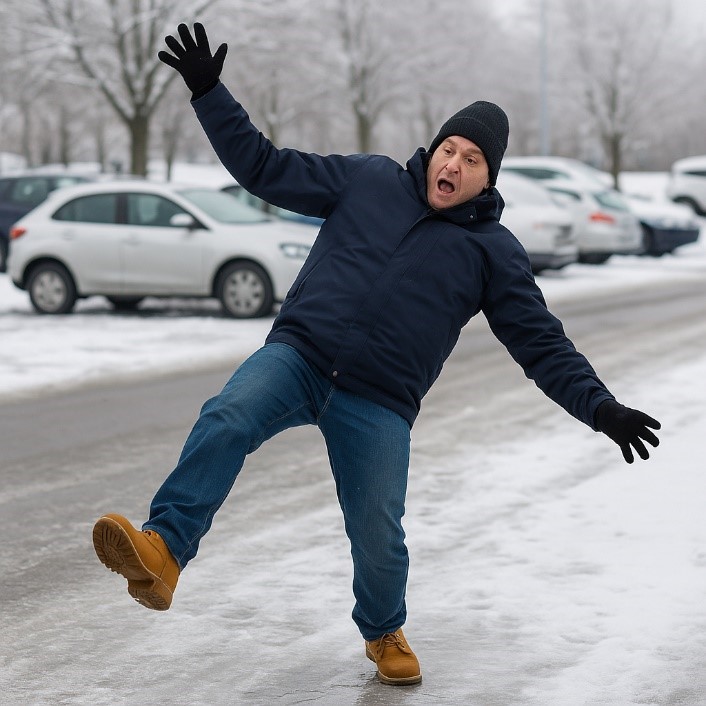
Slip, trip, and fall hazards can occur in virtually any workplace, particularly as colder weather approaches. Outdoor areas such as entrances, parking lots, walkways, and work zones may become hazardous due to ice, frost, snow, standing water, fallen leaves, mud, potholes, and uneven ground. In material-handling areas, lumber scraps, banding, pallets, cords, hoses, loose gravel, and other debris can create hazards along travel paths and around stored materials. Indoor operations are also susceptible to slippery conditions caused by tracked-in rain or snow, wet floors, spills, sawdust, dust accumulation, slick floor coatings, and condensation near doors or equipment.
Additional attention should be given to loading docks, ramps, stairs, ladders, temporary walkways, poorly lit areas, and travel paths shared with forklifts or other vehicles, where changing conditions and pedestrian traffic can increase the risk of injury.
Actions employers and supervisors should take
Employers and supervisors should regularly inspect walking and working surfaces, particularly during changing weather conditions, and promptly correct identified hazards. Establish a snow and ice removal plan, maintain good housekeeping, and keep walkways free of debris, spills, and obstructions. Ensure adequate lighting, drainage, slip-resistant surfaces, and safe access to elevated areas. Require appropriate footwear,
communicate hazards during safety briefings, and encourage employees to report unsafe conditions. Restrict access to hazardous areas until corrective actions are completed.
Remind every employee: the 3-step awareness loop
1 NOTICE - Scan the surface, nearby equipment, people, weather, and changing conditions.
2 UNDERSTAND - Recognize how moisture, clutter, poor traction, or reduced visibility affect the task.
3 ANTICIPATE - Consider what could happen next; choose a safer route, correct the hazard, or stop work.
Distraction, fatigue, rushing and complacency reduce hazard recognition. Encourage employees to slow down, use designated paths, keep their view clear, and speak up when conditions deteriorate.
BOTTOM LINE | Most slips, trips and falls can be prevented through timely inspections, good housekeeping, effective winter maintenance, clear communication, and immediate correction of unsafe conditions.
|