December 2022 | The Council of State Governments | Midwestern Radioactive Materials Transportation Committee

Midwestern Radioactive Materials Transportation Committee Newsletter

Upcoming Events

*All times are Central Time

November 29 - December 1:

21st Annual Intergovernmental Meeting with the U.S. Department of Energy (DOE) on Nuclear Weapons Waste Cleanup - New Orleans, LA

December 1:

U.S. Senate Committee on Energy & Natural Resources Hearing to Consider Nuclear Waste Administration Act of 2022 - 9 AM*

December 5:

National Transportation Stakeholders Forum (NTSF) Section 180(c) Ad Hoc Working Group (AHWG) Quarterly Meeting - 2 PM*

December 6:

NTSF Spent Nuclear Fuel (SNF) Rail/Routing AHWG Quarterly Meeting - 1 PM*

December 7:

NTSF Planning Committee Meeting - 11 AM*

December 7:

NTSF SNF Management - Communications and Outreach AHWG Quarterly Meeting - 2 PM*

December 13 - 14:

Southern States Energy Board (SSEB) 2022 Joint Meeting of the Radioactive Materials Transportation Committee & the Transuranic Waste Transportation Working Group - Dallas, TX

January 18 - 19, 2023:

Tribal Radioactive Materials Transportation Committee (TRMTC) 2023 Midyear Meeting - San Antonio, TX

January 24 - 26, 2023:

Institute of Nuclear Materials Management (INMM) 36th Annual Spent Fuel Management Seminar - Arlington, VA

February 21 - 22, 2023:

Transportation Emergency Preparedness Program (TEPP) Train the Trainer Modular Emergency Response Radiological Transportation Training (MERRTT) - Rapid City, SD

February 23, 2023:

TEPP Technician MERRTT - Rapid City, SD

February 26 - March 2, 2023:

Waste Management (WM) Symposia - Phoenix, AZ

April 3 - 6, 2023:

National Radiological Emergency Preparedness Conference - Indianapolis, IN

May 8 - 11, 2023:

Conference of Radiation Control Program Directors (CRCPD) - Houston, TX

May 22 - 25, 2023:

2023 Annual Meeting of the NTSF - St. Louis, MO

June 11 - 16, 2023:

International Symposium on the Packaging and Transportation of Radioactive Materials (PATRAM) - Antibes, FR

Join Our Mailing List!
Committee Happenings

Happy holidays to the members and friends of the Midwestern Radioactive Materials Transportation Committee (MRMTC)! Here's hoping you had a wonderful Thanksgiving. To start off this month's newsletter, we are introducing a new member to the committee, Indiana Sen. Eric Koch!


Last month, Sen. Koch saw this article in Stateline Midwest about the Naval Nuclear Propulsion Program's (NNPP) accident demonstration exercise in Moberly, MO. Sen. Koch is interested in nuclear power and knows Minnesota Rep. Pat Garofalo, who is an MRMTC member and was featured in the article. Seeing that there were no Indiana legislative members on the committee, Sen. Koch reached out expressing his interest in joining and the committee was able to fast track his appointment.


Sen. Koch is a graduate of Georgetown University and the Indiana University School of Law. He also holds a graduate certificate in Energy Policy Planning from the University of Idaho. He served in the Indiana House of Representatives from 2002-2016 and has served in the Indiana Senate since 2016, where he serves as Chairman of the Senate Utilities Committee. Sen. Koch also serves as a member of the Executive Committee of the National Council on Electricity Policy. Sen. Koch, welcome to the MRMTC!


In other committee news, committee staffer Mitch Arvidson (Council of State Governments (CSG) Midwest) traveled to San Diego, CA, last month for the Fall 2022 Western Interstate Energy Board (WIEB) High-Level Radioactive Waste Committee (HLRWC) and Waste Isolation Pilot Plant Transportation Technical Advisory Group (WIPP TAG) Meeting. At this meeting, attendees learned about the cesium-137 breach incident at the Seattle Harborview Medical Center, nuclear-related Congressional and Nuclear Regulatory Commission (NRC) developments, a de-inventory review of the Trojan nuclear power plant, etc.


These state regional groups (SRG) meetings are also a great opportunity to connect with program managers and stakeholders from all over the radmat transportation sector. For example, a possible shipment of transuranic (TRU) waste from Argonne National Laboratory (ANL) in Illinois to WIPP in New Mexico was announced during the WIEB meeting. Because several stakeholders were in attendance, a preliminary conference call to discuss the possible shipment was able to be set up for the very next day.


In other committee news, the U.S. Department of Energy Office of Environmental Management (DOE-EM) recently shared with the MRMTC its Bi-Annual Prospective Shipment Report (PSR) for October 2022 to October 2023. The PSR is for state and tribal agency officials to use as a planning tool for determining resources needed for inspections, emergency response, accident prevention, and public information/ outreach activities.


Finally, many radioactive materials, such as spent nuclear fuel (SNF) and large reactor components, have been, and will continue to be, shipped by rail. However, many stakeholders are much more familiar with the rules, regulations, and policies that govern trucks and truck shipments. If you are a newcomer to the world of rail shipments, or just want to brush up on the basics, the Federal Railroad Administration (FRA) has recently released a series of "Railroad 101" videos. These videos introduce basic railroad concepts related to train types and performance, track configuration, basic operations, and signaling systems.

National Transportation Stakeholders Forum

Plans for the 2023 Annual Meeting of the National Transportation Stakeholders Forum (NTSF) continued to come together in the month of November. The NTSF Planning Committee held a meeting on Nov. 10 to review recent developments and begin brainstorming session ideas for the late May meeting in St. Louis, MO. An agenda subcommittee will be meeting soon to really dig in to agenda development. Also, some tour opportunities are beginning to pop up so keep an eye out for more news on that front.


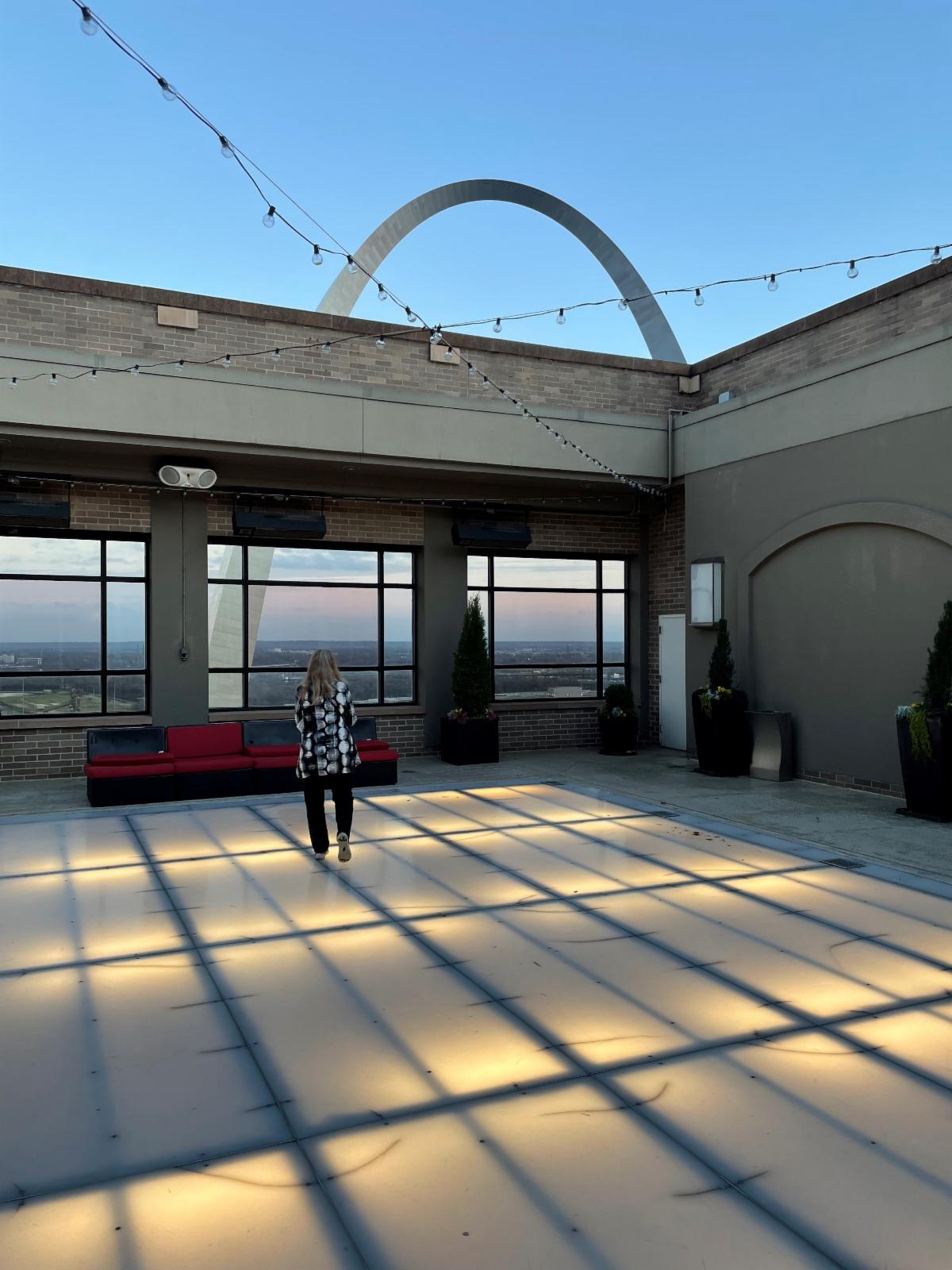
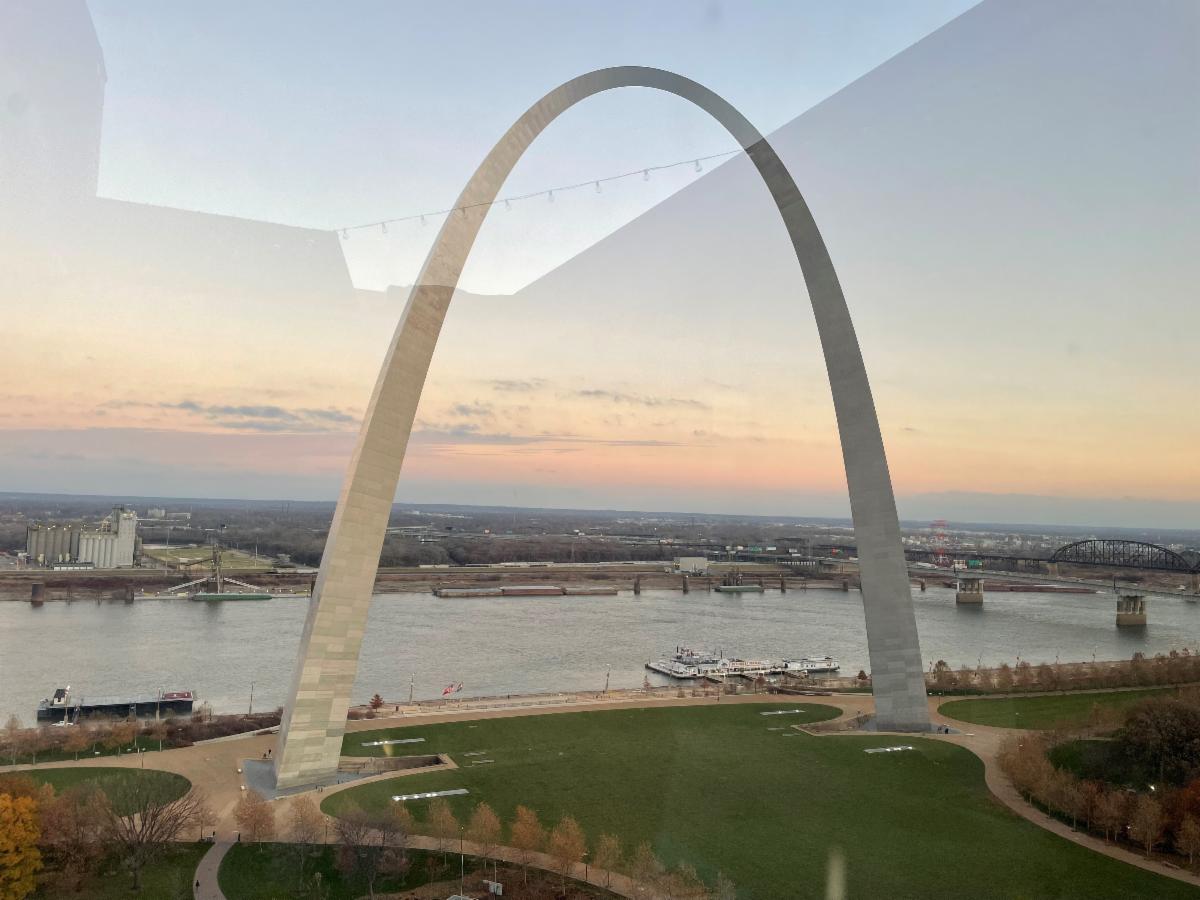
Earlier this week, CSG Midwest staffers took a trip down to St. Louis to visit and tour the meeting's venue, the Hyatt Regency St. Louis at the Arch. Attendees are in for a treat at this wonderful hotel. With three in-house restaurants and a Starbucks, you won't have to go far for any food and beverage needs. All meeting rooms will be conveniently located on the same floor with a large sun-filled atrium connecting the rooms. Best of all, the opening reception on Tuesday night will take place on the 18th floor's Gateway Terrace (see photos below). With an open-air roof and beautiful views of the Gateway Arch literally across the street, this will be a great time to reconnect with colleagues and make new friends.


Looking ahead to next week, NTSF members are in for an incredibly busy week. First, the NTSF Section 180(c) Ad Hoc Working Group (AHWG) will be meeting on Monday, Dec. 5, at 2 PM. Next, the NTSF SNF Rail/ Routing AHWG will be meeting on Tuesday, Dec. 6 at 1 PM. Then, the NTSF Planning Committee will be meeting on Wednesday, Dec. 7 at 11 AM. Finally, the NTSF SNF Management - Communications and Outreach AHWG will be meeting on Wednesday, Dec. 7 at 2 PM. Time to stock up on coffee!


Finally, we would like to highlight some of the good that can come from state and tribal cooperation through organizations like the NTSF and the groups that make up the NTSF. In December 2020, Richard Arnold and Ron Johnson, on behalf of the Tribal Radioactive Materials Transportation Committee (TRMTC), petitioned the NRC to revise its 10 CFR Part 37 regulations to include advance notification to Tribes. The petition request pointed out that the NRC's 10 CFR Parts 71 and 73 already stipulated tribal advance notification.


The NRC received 10 public comments supporting the petition. These comments came from various interested stakeholders, like the Oneida Nation, the Navajo Nation, Pueblo of Sandia, the MRMTC, and the WIEB HLRWC. Several of these comments stated that consistent standards must be applied to both states and Tribes and that Tribes are sovereign and govern themselves. In a "consideration in the rulemaking process" document released early last month, the NRC states that it agrees with TRMTC's petition and most of the public comments and will consider the issue.

Top: The Gateway Terrace at the Hyatt Regency St. Louis at the Arch, where the opening reception for the 2023 Annual Meeting of the NTSF will be held. Bottom: View of the Gateway Arch from the Gateway Terrace

Focus This Month

Federal Funding for Palisades and Diablo Canyon Decided

Ever since shutting down on May 20, all eyes have been on the Palisades Nuclear Power Plant in southwest Michigan. In 2018, Holtec agreed to buy the 805 MWe pressurized water reactor from operator Entergy with the intention of transferring all nuclear fuel from wet storage to dry storage by 2025 and completely decommissioning the plant by 2041. This purchase was completed in June, shortly after Entergy defueled the plant.


However, this is not the end of the story. Hope to keep the plant running sprung anew when DOE announced the $6 billion Civil Nuclear Credit (CNC) Program to try and help protect the existing U.S. nuclear reactor fleet. The CNC Program is being paid for through H.R. 3684, the Infrastructure Investment and Jobs Act.


With backing from Michigan Gov. Gretchen Whitmer and the state legislature, Holtec applied for funding in the program's initial phase. Gov. Whitmer supported the application because the plant would play a vital role as part of Michigan's carbon-free energy future. The only other company to apply for initial funding was Pacific Gas & Electric Co. (PG&E), to keep Diablo Canyon, California's last operating nuclear plant, running until at least 2030.


Well, DOE has made its final decisions. Holtec was denied its application for federal funding to reopen Palisades. PG&E, on the other hand, will receive a $1.1 billion grant to keep Diablo Canyon running and cover the anticipated losses from competing with cheaper sources of energy.


Holtec's application always faced an uphill battle. Never before has a completely shut down nuclear power plant been restarted. In order to reopen, Holtec would have had to refuel the plant, contract with a third party operator, make numerous repairs, and find a new buyer for the energy. Now, Holtec will move forward with its decommissioning plans but has also stated that it will consider installing one of the company's small modular reactors (SMRs) on the site.


PG&E is now seeking approval from the NRC to relicense Diablo Canyon until 2030. The San Luis Obispo County plant produces around 16 GWh of electricity annually, accounting for 8.6% of California's total electricity and 17% of its carbon-free electricity.


For more information on Palisades, Diablo Canyon, and the CNC Program, check out Reuters, CNBC, World Nuclear News, and 89.1 WEMU.

Nuclear News

Nuclear Waste Reprocessing in the Near Future?

It is estimated that U.S. nuclear reactors only use 5% of the potential energy in their fuel before it is considered "SNF" and put in storage. In counties like France, SNF is reprocessed by breaking it down into uranium and plutonium and reusing the reprocessed fuel in its reactors. Nuclear fuel reprocessing never took off in the U.S. after President Jimmy Carter put a moratorium on the process in 1977 because of proliferation concerns. This moratorium was lifted in 1981 but reprocessing still didn't start because of the high costs.


Well, the Biden administration is exploring ways to jumpstart SNF reprocessing in the U.S. DOE's Advanced Research Projects Agency-Energy (ARPA-E) is developing dozens of projects through the Converting Used Nuclear Fuel (UNF) Radioisotopes Into Energy (CURIE) program. The $38 million program is funding projects led by universities, private companies, and national laboratories, including ANL. ANL will receive $4.9 million to develop a process that converts 97% of SNF to metal using anode materials. ANL will also receive $1.5 million to develop compact rotating packed bed contractors for SNF reprocessing.


More details on the CURIE program can be found on Reuters, World Nuclear News, and Yahoo Finance.


Cross-Border SMR Collaboration

Due to proximity and comradeship, the MRMTC likes to keep an eye on the nuclear power and radioactive waste developments taking place across our northern border in Canada. Recently, there has been a lot of movement for American and Canadian organizations to work together on the development of new reactor technology and designs like SMRs.


Earlier this year, the Tennessee Valley Authority (TVA) and Ontario Power Generation (OPG) agreed to work together as they develop and deploy GE-Hitachi's (GEH) BWRX-300 SMR at sites in both countries. The companies will coordinate on design, licensing, construction, and operation of the SMRs. However, the different regulations and review practices in the U.S. and Canada pose a barrier to the most effective collaboration. To address this, the NRC and the Canadian Nuclear Safety Commission (CNSC) have agreed to work towards performing technical reviews with the same, established schedules and aligning on common regulatory positions.


World Nuclear News has more coverage of the cross-border collaboration.


What's New in Washington?

Finally, we want to highlight a couple of items coming out of Washington, D.C. First, the U.S. Nuclear Waste Technical Review Board (NWTRB) recently released its "Report to the U.S. Congress and the Secretary of Energy - Board Activities for the Period January 1, 2019 - December 31, 2021." This report takes a look at the Board's findings, recommendations, and activities over the three year period in which they focused on DOE research and development related to packaging, storage, transportation, and disposal of SNF and high-level radioactive waste.


Speaking of Congress, if you are reading this early enough, you may be able to catch a congressional hearing that will be of interest to most readers. Starting at 9 AM, the U.S. Senate Committee on Energy & Natural Resources will be holding a hearing to consider pending legislation. On the docket, the Nuclear Waste Administration Act of 2022, which would establish a new organization to manage nuclear waste, provide a consensual process for siting nuclear waste facilities, and ensure adequate funding for management nuclear water.

Thank you for reading. Watch for the next edition to come out on

January 5, 2023.

Missed a newsletter? Past issues are archived on the committee's webpage.

Please do not reproduce or create new content from this material without the prior express written permission of CSG Midwest.


This material is based upon work supported by the Department of Energy under Award Numbers DE-NE0009117,

DE-EM0004869, and DE-EM0005168.


This report was prepared as an account of work sponsored by an agency of the United States Government. Neither the United States Government nor any agency thereof, nor any of their employees, makes any warranty, express or implied, or assumes any legal liability or responsibility for the accuracy, completeness, or usefulness of any information, apparatus, product, or process disclosed, or represents that its use would not infringe privately owned rights. Reference herein to any specific commercial product, process, or service by trade name, trademark, manufacturer, or otherwise does not necessarily constitute or imply its endorsement, recommendation, or favoring by the United States Government or any agency thereof. The views and opinions of authors expressed herein do not necessarily state or reflect those of the United States Government or any agency thereof.