August is the bridge between Summer and Autumn - between how the year has been and how the year will end. - Dani DiPirro | | Leading Off: A Little on the Trashy Side | | |
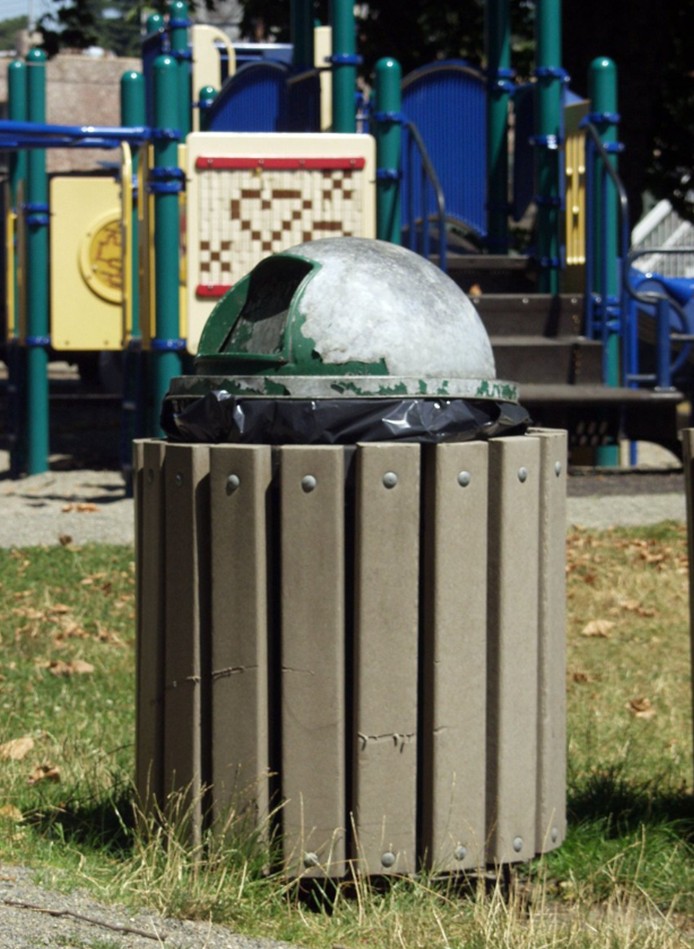
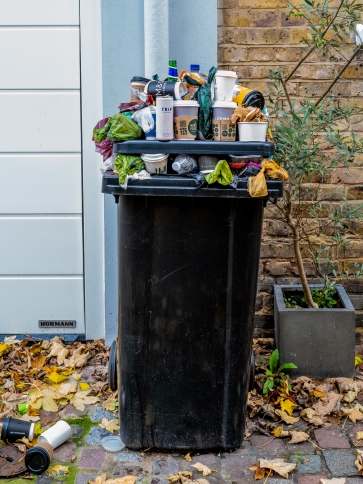
My very first Weblog, published in 2020, was about a trash barrel. If you don’t remember it—or didn’t read it—here is an updated and expanded version.
Six years later I find it interesting that the first story I chose to write about was something as ordinary as a trash barrel.
Since then, I’ve written about leadership, business, sports, family, careers, mistakes, successes and lessons learned from all kinds of experiences.
But in many ways, that first Weblog captured something I still believe strongly today: some of the most valuable lessons in life and leadership are sitting right in front of us. The challenge is stopping long enough to notice them.
Which brings me back to trash barrels.
I’m not sure you’ve ever studied the trash barrels outside drugstores, fast-food restaurants, gas stations or convenience stores. I have. In fact, studying them helped a company I was leading save tens of thousands of dollars in labor and operating costs.
It began with something that had happened decades earlier.
| What's Your Trash Barrel? |
When Littering Was Normal
Many years ago, littering was a a much bigger problem in America. People threw trash wherever they wanted, apparently assuming that eventually someone else would pick it up.
As a teenager, I worked in a fast-food restaurant that didn’t have a dining room.
Customers ordered their food, took it to their cars or trucks and ate in the parking lot. When they finished, many of them didn’t get out of the car and walk the ten steps to the trash barrel sitting nearby. They simply rolled down the window, tossed their paper trash outside and drove away.
That meant that every hour—or every half-hour when we were particularly busy—a 17-year-old kid like me got handed a trash bag and sent outside to clean up after them.
It was part of the job.
Wrappers, bags, cups, napkins and whatever else had accumulated in the parking lot had to be collected. Nobody gave much thought to why we were doing it. Customers littered, employees picked it up, and the cycle repeated itself.
And it wasn’t just happening at the restaurant where I worked. Littering was a problem everywhere. You may say that it still is a problem, and you'd be right, but it is not quite what it was back in the day, as they say.
Eventually, America decided to do something about it. Public-service campaigns flooded television with anti-littering messages. Remember, this was when we had three major television networks, not hundreds of cable channels and an unlimited collection of streaming services, so when a message appeared repeatedly on television, a significant portion of the country saw it.
Something changed.
Littering gradually became socially unacceptable. What people had once done almost without thinking became something they were increasingly embarrassed to be seen doing.
Businesses joined the effort. Trash barrels began appearing everywhere—outside restaurants, stores, gas stations, shopping centers and other public places. The logic was pretty simple: if you made it convenient for people to dispose of their trash properly, they were less likely to throw it on the ground.
And it worked.
Parking lots became cleaner. Streets became cleaner. Public spaces became cleaner. Businesses no longer had to send someone outside as frequently to pick up everything customers had thrown on the ground.
The trash barrel was a good solution to a real problem.
That point is important.
There was nothing wrong with the original decision.
In fact, it was exactly the right thing to do.
|
When the Solution Became Permanent
Over time, trash barrels became fixtures outside almost every retail business. Eventually, they even became decorative.
Companies put logos on them. Some were surrounded by wood or stone facades. Others had swinging doors or flaps on top so customers wouldn’t have to look at the trash—or smell it.
They became part of the landscape.
And when something becomes part of the landscape, we tend to stop seeing it.
Nobody walks into work in the morning and says, “I wonder why we have that trash barrel there.”
It’s there because it’s always been there.
Years later, I was president of a restaurant company in Cincinnati with 22 locations. For reasons that probably say more about me than I should admit, I started paying attention to the trash barrels outside our restaurants.
More specifically, I started paying attention to what was inside them.
And I noticed something.
Almost none of the trash was ours.
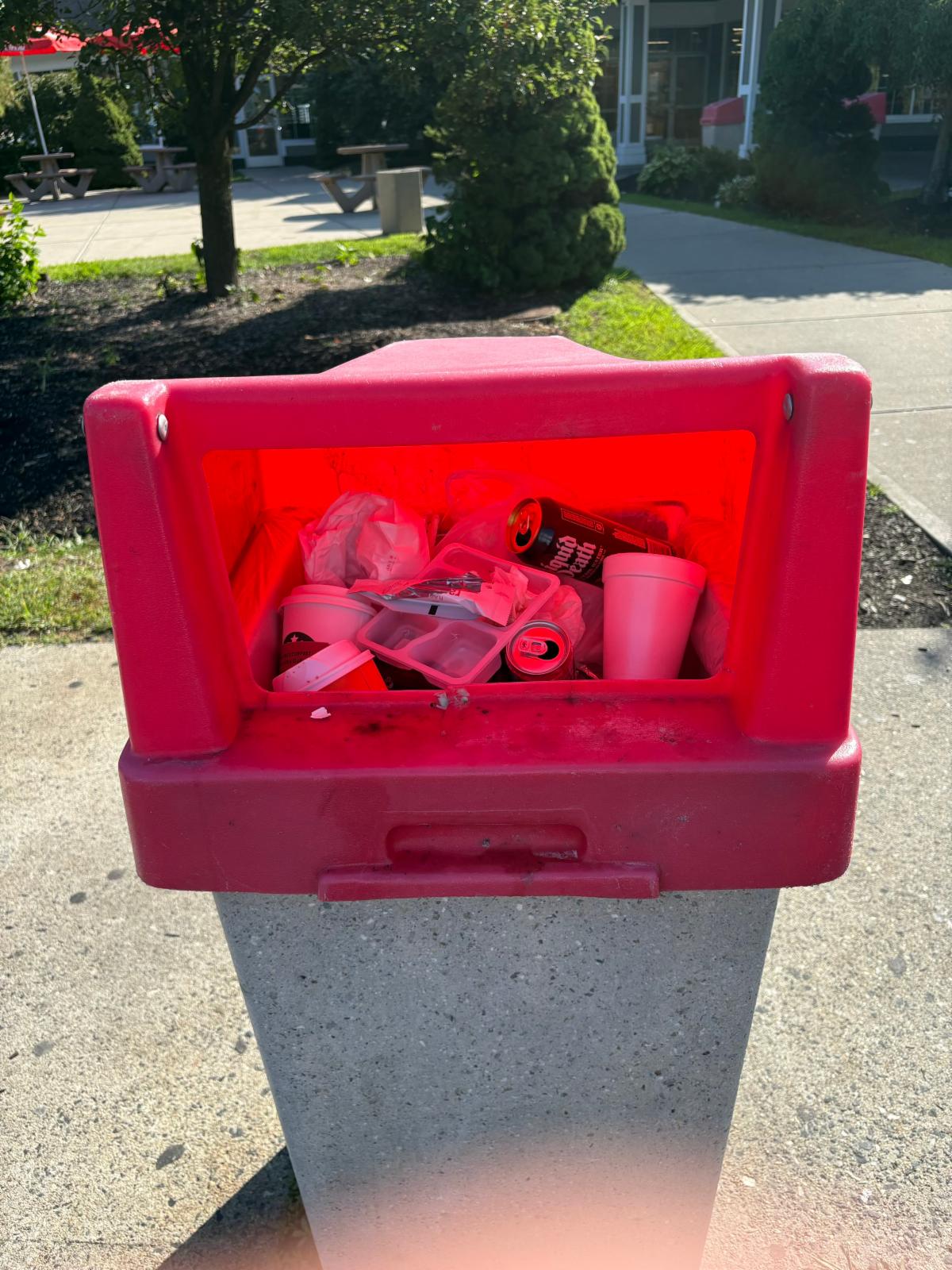
There were McDonald’s bags. Dunkin’ cups. Walgreens bags. Target receipts. Coffee cups from other businesses. Gum wrappers. Dirty napkins and paper towels from somewhere else.
Our customers—or at least the people using our trash barrels—were apparently cleaning out their cars when they arrived at our restaurants.
We had become a convenient disposal service for everybody else’s trash.
Now, you might reasonably ask: What’s the big deal?
It was just a trash barrel.
But what interested me wasn’t the barrel. It was everything that happened because the barrel existed.
|
Follow the Trash
Someone had to empty it.
Actually, someone had to empty it several times.
At each restaurant, employees were emptying those outside barrels two or three times a day. A full bag had to be removed. A new plastic liner had to be installed. The employee had to carry the trash to the dumpster and dispose of it.
Any one trip probably didn’t seem particularly important.
That’s one of the reasons these costs become invisible.
A few minutes here. A plastic bag there. A little more trash in the dumpster.
But multiply it.
Two or three times a day.
At 22 restaurants.
Seven days a week.
Fifty-two weeks a year.
Then add the cost of the liners. Add the additional volume going into the dumpsters. Add the cost of dumpster pickups. And remember that the majority of what we were paying employees to collect and dispose of hadn’t even been generated by our business.
Suddenly, the trash barrel didn’t look quite so insignificant.
We were spending tens of thousands of dollars every year collecting someone else’s trash.
If you owned a business, how would you feel about spending tens of thousands of dollars solving a problem that wasn’t yours?
Exactly.
|
What If We Just Took Them Away?
After discussing what we had observed with our Regional Managers, we came up with a remarkably complicated strategic response. We decided to remove the trash barrels. That was it. Not surprisingly, the idea generated opposition.
We communicated the plan well in advance, which gave managers and employees plenty of time to explain everything that was going to go wrong.
Their concern was logical.
“If you take away the trash barrels, people are going to throw their trash on the ground.”
I understood the argument because I had lived it. I had been that 17-year-old kid walking around a parking lot picking up what customers had thrown out of their cars.
Why wouldn’t it happen again? But there was one important difference. The world had changed.
The behavior that had originally created the need for those barrels wasn’t nearly as common anymore. We had continued operating as though the old problem still existed because nobody had stopped to determine whether it actually did.
There was another reason we were willing to try it. The decision was reversible.
We weren’t destroying the trash barrels. We were putting them in a warehouse.
If the experiment was a disaster, we could bring them back.
That is another lesson worth remembering. Not every leadership decision has to be an irreversible leap into the unknown. Sometimes you can test an assumption, watch what happens and change course if you’re wrong.
So, on the designated day, our maintenance department removed the outside trash barrels from the restaurants and took them to the warehouse. Then we waited.
- We waited for the complaints.
- We waited for managers to report that trash was covering the sidewalks.
- We waited for employees to tell us, “We told you so.”
- We waited for customers to demand that the barrels come back.
That was about 30 years ago.As far as I know, we’re still waiting.
|
Nothing Happened
The disaster never came. People stopped bringing their trash to us.
I have no idea what they did with it. Maybe they took it home. Maybe they kept it in their cars. Maybe they found one of the dozen trash barrels at McDonald’s. But they stopped putting it in ours.
More importantly, they didn’t throw it all over our property. The prediction everyone had made—the perfectly reasonable prediction based on what had happened years earlier—didn’t come true. The environment had changed. Our practices simply hadn’t changed with it.
The financial impact was significant.
- We eliminated the labor associated with emptying those barrels every day.
- We reduced the number of plastic trash bags we purchased.
- Our trash volume declined enough that we could reduce either the size of some dumpsters or the frequency with which they were emptied.
The company saved tens of thousands of dollars a year. And we were able to redirect some of those savings into benefits for employees. All because someone stopped long enough to look inside a trash barrel.
|
Yesterday’s Solution
I think there is a much bigger leadership lesson in that story than saving money on trash collection.
Organizations are full of solutions to problems that once existed. At some point, somebody had a reason for starting almost everything we do.
- A meeting was created because communication was poor.
- A report was developed because management needed information it couldn’t get elsewhere.
- An approval was added because somebody once made an expensive mistake.
- A policy was introduced because there was a legitimate problem that needed to be corrected.
The original decision may have been excellent. But then something changes.
- Technology changes.
- Customers change.
- Employees change.
- Laws change.
- Competition changes.
- The organization changes.
Sometimes the original problem disappears completely. Yet the solution remains.
The weekly meeting continues even though nobody needs it. The report is still produced even though nobody reads it. Three signatures are still required even though the risk that created the approval process disappeared years ago. Someone spends two hours every Friday completing a task because somebody, somewhere, once decided it was necessary. Eventually, nobody knows why. When someone asks, the answer becomes one of the most expensive sentences in business:
“That’s the way we’ve always done it.”
|
What’s Your Trash Barrel?
That brings me to the question I think leaders should ask occasionally:
What is the trash barrel in your world?
- What are you spending money on because nobody has questioned it recently?
- What work are people performing because it made sense 10 or 20 years ago?
- What report is being created that nobody reads?
- What meeting exists because nobody has been willing to cancel it?
- What policy is solving a problem that disappeared years ago?
- And perhaps most importantly: What would happen if you stopped?
Not everything old is unnecessary. Not every established practice should be eliminated. Some of those trash barrels are still solving real problems.
But you won’t know which ones are necessary unless you occasionally stop and look.
That, to me, is one of the simplest forms of leadership.
Observe what is happening around you. Question what you see. Act when the evidence tells you something should change. Then stay with the decision long enough to learn whether you were right.
Leadership doesn’t always begin in the boardroom. It doesn’t always require a strategic plan, a consultant’s report or a multimillion-dollar initiative.
Sometimes leadership begins when you notice something everyone else walks past every day.
In my case, it was a trash barrel. What is it in yours?
| | Surprise Photo at the End: | | If you are reading this on a social media platform, click below and you'll automatically receive a 'different' story every week on Wednesday. | | |
The Roll Call of states and countries where readers reside: Arizona, California, Colorado, Connecticut, Delaware, Florida, Georgia, Hawaii, Illinois, Indiana, Iowa, Kansas, Kentucky, Louisiana, Maine, Massachusetts, Michigan, Mississippi, Missouri, Montana, New Hampshire, New Jersey, New Mexico, New York, North Carolina, North Dakota, Ohio, Pennsylvania, Puerto Rico, Rhode Island, South Carolina, South Dakota, Tennessee, Texas, Vermont, Virginia, Washington and Washington DC, Wisconsin plus Canada, Conch Republic, Australia and the United Kingdom.
| | |
Ed Doherty
774-479-8831
www.ambroselanden.com
ed-doherty@outlook.com
Forgive any typos please.
| | | | | |