|
The biennial long legislative session wrapped up on June 27 after 158 days. As we started work on bills and direction for state agencies, the new federal administration initiated spending cuts and new policies that brought uncertainty for Oregon’s businesses and nonprofit organizations as well as the state budget.
Nevertheless, we pressed ahead on important work like housing affordability, access to behavioral health treatment and health care, preparing for wildfire and other natural disasters, improving community safety, and consumer protection. We passed energy efficiency and climate change policies, strengthened Oregon’s corporate practice of medicine laws to ensure that doctors make decisions for patients-not business, and made strategic investments in economic development programs that support good jobs in Oregon businesses.
My individual legislative work centered on improving access to health care and stopping noncompete language in contracts keeping doctors from working locally, cutting red tape for human service providers so they can to get to work sooner and reducing time people wait for help, protecting community pharmacies; more on that below.
Later this summer I’ll be talking with city and county organizations about Oregon’s property tax system and how the 1990’s cut-and-cap constitutional amendments have affected local and state budgets and brought unanticipated inequities (homeowners with similar properties in the same neighborhood paying different amounts).
| | |
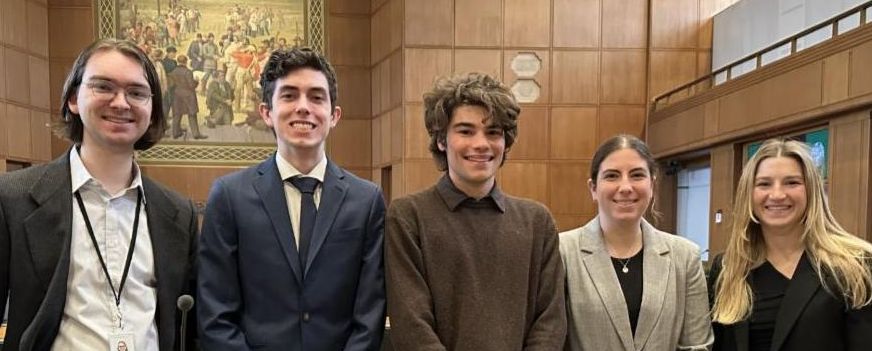
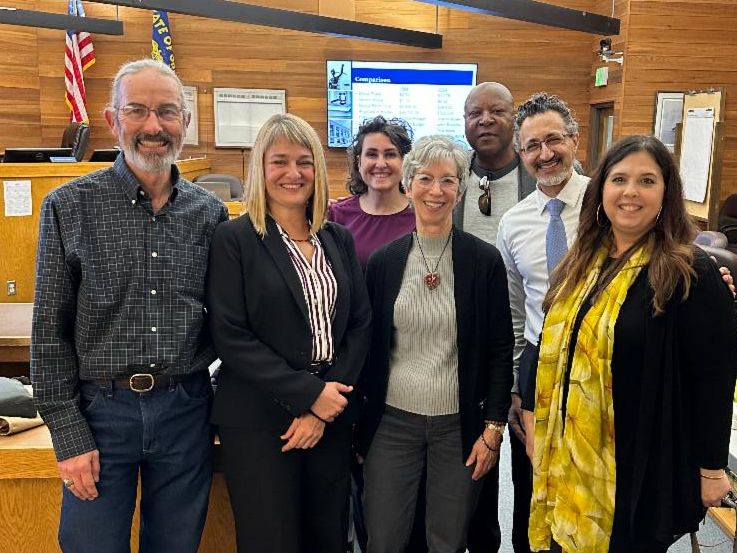
photo: Here’s Team D13 that worked together through the legislative session juggling the demands of committee work, hearings, and floor sessions; advocate, lobby, and constituent meetings; District 13 inquiries and hundreds of communications each week. The interns (introduced in the January issue) have “flown the coop” for new experiences, and Spencer will be aiming for new horizons as well. We’re working from home now and will be back in Salem periodically until the next session, February 2026.
If you missed my latest e-news, here's the link to May-June.
| | |
In the sections below you'll find
- Legislative Session Overview: Health Care; Consumer Protection; Crime, Safety, Preparedness and Wildfire; Residents in Care Facilities; Child Care; Housing; Money Matters; Environment and Energy; Gun Violence; Transportation
- My committees: Revenue and IT | My Own Bills | Wins for the Local Area
- TOWN HALL announcement and Snapshots
| | The House and Senate heard a total of 1,266 measures during the 2025 session. About 55% were enacted. Most of those were in the areas of health care, business and consumer protection, natural resources, and education. | | A selection of significant and interesting legislation | | |
Health Care
I continue to hear from people sharing stories about lacking doctors and months-delayed appointments. And I hear plenty from doctors, too (in this photo, pediatricians). Meanwhile, the health insurance industry reported U.S. net earnings of nearly $25 billion in 2023. We passed legislation to put patients over profits, tackling some of the exploitative business practices exacerbating the shortage of doctors. I fought to pass a bill to prohibit noncompete contract clauses which have prevented doctors from continuing to provide care locally. And I passed a bill unanimously requiring Pharmacy Benefit Managers to treat community pharmacies fairly.
|
Three losses and a big win!
Three of my personal bills would have made focused changes in state law, and did not pass. They were written to define "physician in charge" as an Oregon physician living and practicing in Oregon; prohibit noncompete contracts; and give the Attorney General the authority to sue health care businesses. We made a good fight. Testimony on our side was strong. Opposition was just stronger. Nevertheless, this one did succeed:
CPOM -- Corporate Practice of Medicine
The big CPOM bill made it over the finish line. SB 951, over a year in the making with lots of compromises and "blood sweat and tears" led by Representative Ben Bowman, did pass. I co-chief sponsored this and also teamed up with Sen. Anthony Broadman to ensure that a prohibition on noncompete contract language would be included. It’s a strong statement that in Oregon we’ll put patients over profits. It ensures that practices are owned and controlled by licensed medical professionals and includes the prohibition on “noncompete clauses” for certain physicians. Check out our press release.
| |
Consumer Protection
Where the federal government fails to protect consumers, Oregon is taking action. We passed new protections related to insurance, data privacy, utilities, and online purchasing, including legislation to require insurance companies to give written explanation of why they increased your auto or home insurance cost, outlaw hidden “junk fees” and dishonest pricing in online marketplaces, prohibit deceptive marketing tactics used for event tickets (more detail below), limit unwanted telemarketing sales calls and text messages, prevent predatory practices at car dealerships, and expand data privacy laws to include information collected by personal vehicles.
Fan Fairness Act: Oregonians who buy tickets to attend entertainment and sports events deserve transparency in the marketplace. HB 3167 will protect consumers from scams and unscrupulous operators and allow venues to better serve their communities. We passed the most stringent law in the nation to prohibit deceptive websites and branding tactics and strengthened anti-bot protections.
| |
Crime, Safety, Preparedness
We cracked down on criminal use of Wi-Fi signal jammers which thieves use to disrupt home and business alarm systems. Removed the civil statute of limitations for sexual abuse claims. Banned rapid fire activators (like bump stocks) that turn firearms into machine guns. Strengthened laws to regulate the use of AI and prohibit deepfake manipulated images used for harassment and to spread misinformation.
Wildfire
The cost of fighting wildfire is enormous, and personal loss is tragic. We created a permanent funding source for mitigating risks, such as home hardening and hazardous fuel reduction projects. Revenue for the fund will come from 20% of the interest generated by the Rainy Day Fund, and from a new tax on oral nicotine products (such as "Zyn" pouches, not currently taxed like cigarettes or vape). See story in the Oregon Capital Chronicle.
| |
Residents in care facilities
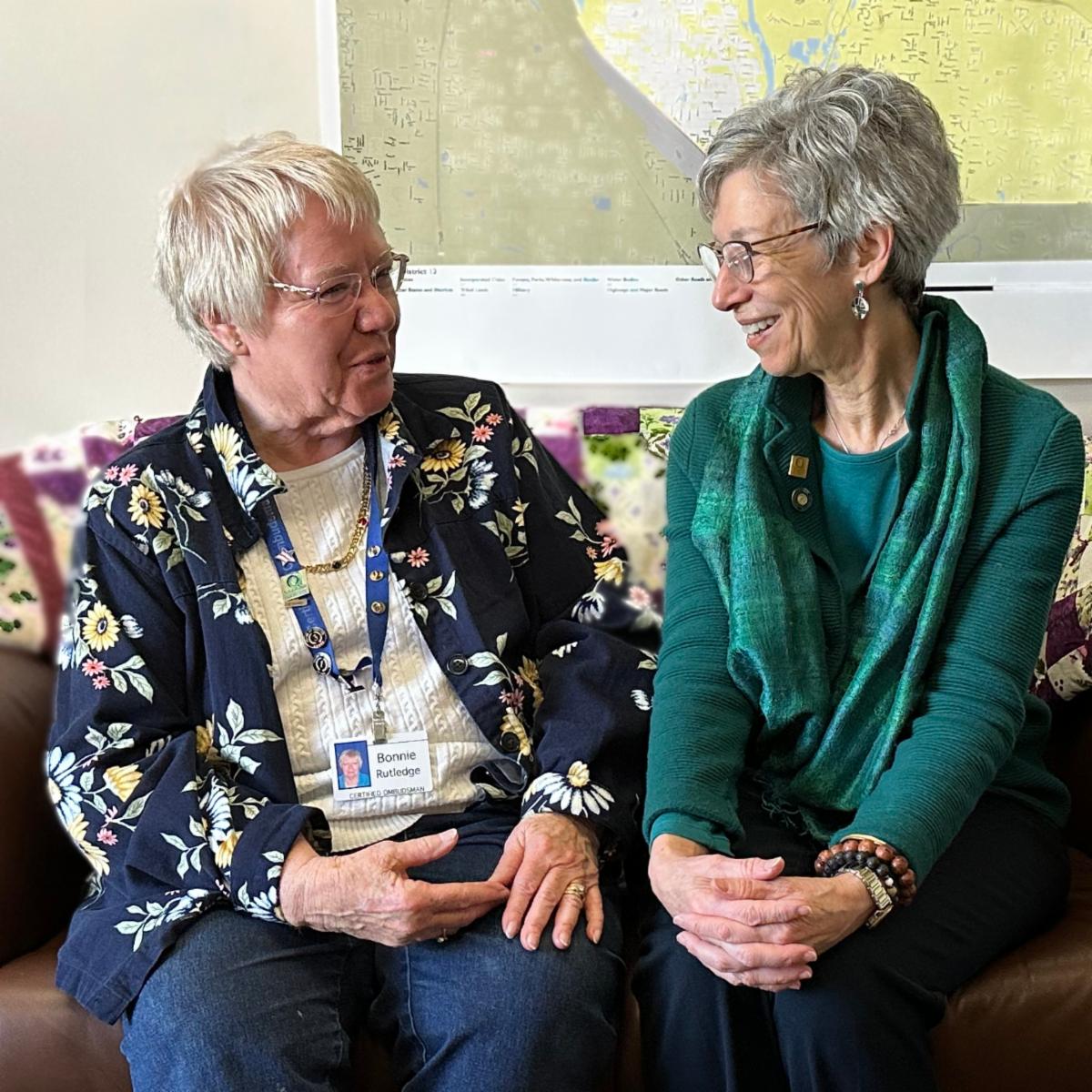
Independent Family Councils. People with a family member in a memory care facility will have the right to establish independent "Family Councils" to advocate on behalf of their loved ones. SB 228 was developed by Eugene residents who had loved ones in a local facility; they did the heavy lifting to advocate and pass it. Congratulations to Jewel and Judith! (photo: talking with Bonnie, a volunteer with Oregon's Long Term Care Ombudsman Program that serves residents in nursing, residential care, and assisted living facilities and adult foster care homes with complaint investigation and resolution and advocacy for improvement in resident care.)
Child care
Child care is often unavailable or too expensive, and one of the contributing factors is constraints on where a child care facility can be located. HB 3560 expands locations where child care centers are permitted, making it easier to open and operate facilities in neighborhoods, near schools, parks, and places of worship. It changes zoning requirements to allow for child care centers on land zoned for multiunit residential use, for use as a school or place of worship, or for commercial use.
| |
Housing
Affordable housing: Residents in manufactured home parks own their own homes, paying rent for their spaces to the park landlord, but those homes are installed with permanent connections and are difficult or impossible to move out. HB 3054 limits rent increases in parks with more than 30 spaces to 6% per year, with an exception for resident-approved infrastructure upgrades.
Seniors: People aged 50+ are the fastest-growing group of people experiencing homelessness in America, and less than 10% of housing is aging-ready. HB 3589 is aimed at developing housing for Older Adults and Persons with Disabilities supporting housing location, design, development, and the home and community-based services for older adults. HB 3506 provides money for home upgrades like ramps or installation of grab bars to help vulnerable seniors or individuals with disabilities remain in their homes.
Innovation: The use of factory-based components can get homes on the ground more quickly and, perhaps more inexpensively. HB 3145 supports construction or acquisition of factory-produced housing projects for low-income households, prioritizing projects using Oregon-based developers and environmentally friendly materials.
Streamlining: Housing construction is often delayed by long, unpredictable permitting processes and the requirement for local review every time a set of plans is submitted for use. Pre-approved housing options can speed up middle housing development and homeownership opportunities. HB 2258 allows pre-approved building plans and standardized land use approvals, creating an off-the-shelf development package for accessory dwelling units, prefabricated, and modular housing.
| |
Money matters
We passed bills to keep costs down like requiring manufacturers to provide parts and repair manuals for electric wheelchairs and expanding insurance coverage to include prosthetic and orthotic devices such as braces, splints, and prosthetic limbs.
Medical debt will be excluded from credit reports so that someone’s financial future isn’t ruined because of an unexpected illness or injury.
Tenants will be allowed to leave early after receiving notice from a landlord ending their fixed term agreement. Owners can reclaim premises from squatters with 24-hour notice.
Large energy users like data centers will pay more for their energy use instead of shifting costs to residential and business customers. The POWER Act (HB 3546) ensures that electricity rate payers, overloaded with growing costs due to wildfire mitigation, erratic weather events, and inflation, are not saddled with costs attributed to new large users that are putting enormous strain on the system. The legislation sets up a separate rate class for data centers and crypto mining operators to shield families and small businesses from the extra costs attributed to those very large users. Read the OPB story.
Wage Theft, where unscrupulous contractors deprive workers of rightful wages, overtime pay, and benefits: SB 426 gives workers expanded avenues to recover unpaid wages from construction projects. The Department of Labor has recovered nearly $1 million from Oregon contractors on federally funded projects, and the Bureau of Labor and Industries recently settled a $193,000 wage theft case affecting 26 workers.
| |
Environment and Energy
Microgrids: We're laying the groundwork for local microgrids (HB 3336, HB 2066), power networks that are separate from the main power grid and rely more on green energy sources like wind and solar. This will give local communities easier access to alternative energy systems and be resilient in case of major failures of the main “grid.”
Plastics: Phasing out reliance on plastics, building on the 2019 single-use plastic bag ban by prohibiting all plastic-based reusable checkout bags starting in 2027 (SB 551).
| | |
Gun violence
Automated weapons. Bump stocks are now prohibited in Oregon. SB 243 creates the crime of unlawful transport, manufacture or transfer of a rapid fire activator, sometimes referred to as a "bump stock" which effectively turns semi-automatic firearms into fully automatic weapons. These accessories bypass the protections against fully automated weapons like machine guns, which have been illegal since 1934 in Oregon and across many other states for decades.
Stopping guns going to criminals: Stores that sell guns must be licensed as a federally licensed firearms dealer (FFL). The federal Bureau of Alcohol, Tobacco, and Firearms (ATF) failed to complete 56% of follow-up inspections for serious violations between 2018 and 2022. More recent data revealed that the ATF inspected just 5% of FFLs (6,979 inspections out of 136,563 active FFLs). Violations were discovered in half of the inspections yet only 1% of FFLs were revoked. State dealer regulations can complement federal law and enhance oversight, and reduce illegal interstate trafficking. Oregon does not require a license or permit for firearms dealers but they are subject to state laws governing gun sales generally (see Giffords Law Center) and persons "engaged in the business of importing, manufacturing, or dealing in firearms, or importing or manufacturing ammunition" are subject to federal licensing requirements.
Research by Johns Hopkins University found that cities in states with comprehensive gun dealer regulations and oversight experienced an estimated 64% reduction in intrastate gun trafficking. Undercover stings were conducted on 55 gun dealers across seven states; 27 dealers were caught facilitating illegal sales and subsequently sued. A single dealer linked to most of Milwaukee’s (WI) gun crimes voluntarily changed its sales practice, resulting in a 76% reduction in the flow of new guns to criminals and a 44% decrease in new gun crimes citywide. When Illinois adopted a state dealer licensing program and Illinois State Police started conducting inspections of FFL dealers the number of firearms stolen from FFLs decreased from 291 in 2020 to 8 in 2024.
| | |
Transportation
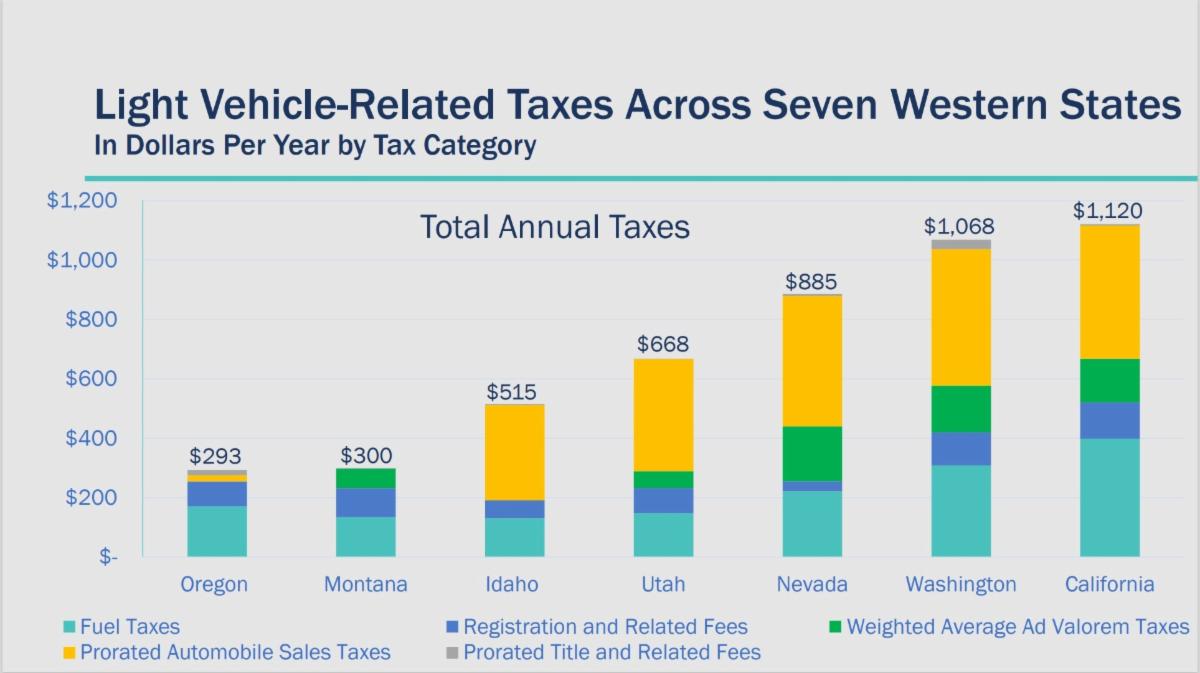
A large policy package to fund a statewide transportation system through realigning costs and revenue did not make it across the finish line. Oregon’s level of taxes and fees has not been sufficient to keep up with inflation, and is well below neighbor states and is not sufficient to continue funding operations and maintenance of state and local roads and bridges and public transit. In the graph below Oregon is at the left, California on the right. After extensive feedback and revisions, a much smaller, targeted “stopgap” proposal to preserve essential road services (like clearing snow, fallen trees and landslides, maintain edge striping or “fog lines” and operating freight weigh stations) was written but was blocked by a procedural maneuver in the final hours of session.
The Governor has called a special session for the end of August. We expect the proposal to be similar to the legislature’s “stop-gap” proposal develop in the final hours at the close of the regular session. The objective will be enough revenue to continue essential ODOT programs, and because Oregon shares revenue with local governments 50/50, the target is $650 million to raise $325 million for ODOT. Revenue would be raised through a 6 cent increase in gas tax, increases in car registration and title fees, a payroll tax increase for public transit, and a new fee for EVs to pay their fair share of using the road. I also expect the proposal to include accountability measures, and a study of methodology used to ensure fairness for heavy and light vehicle users.
| |
HREV (House Committee on Revenue)
I chaired the House Committee on Revenue (HREV) once again this year. Of 137 bills assigned to our committee, I held hearings on 81, with nearly even numbers sponsored by Republicans and Democrats. A few of the significant bills that moved out of HREV:
Helping seniors stay in their homes
We passed a package of three bills to expand and improve the Senior Property Tax Deferral Program which the legislature created in 2011 to assist low-income senior homeowners 62 years and older or disabled persons pay their property taxes. The program calls for the state DOR to pay the property taxes to the county, placing a lien on the property so that the taxes plus interest will be paid when when the property is sold, when the homeowner dies, or the homeowner moves. This year, we updated the program so that more seniors can take advantage of it, including increasing the household income limit to use the deferral program from $60,000 to $70,000. We also allowed surplus funds sitting in the program account to go to work helping even more seniors, to support the development of deeply affordable studio and one-bedroom homes for seniors and people with disabilities, help with accessibility upgrades to their homes, and expand outreach and awareness of the program so more eligible Oregonians can use it.
| |
Tax breaks: tax expenditures with a purpose
Tax expenditures are choices to forego tax revenue by allowing a credit, exemption, deduction, or other special treatment; in other words instead of collecting the tax revenue, the tax break "spends" money by giving it back, or letting the taxpayer keep it. The purpose may be to encourage certain actions, including economic development or certain kinds of investment such as e-vehicles, or to acknowledge special circumstances. This year the committee passed a bill that combined ideas from several different bills into a single "omnibus" bill, HB 2087. Most of the items are extensions of tax breaks already on the books, following a standard six-year review. The bill included continuing the Earned Income Tax Credit, pension income credit, manufactured dwelling park closure credit, a subtraction for manufactured dwelling park capital gains, exemption for vehicle used for testing emissions, and a subtraction for a first time homebuyer savings account. The bill also included expanded or increased tax credits for crop donation for farmers donating agricultural crops to a food bank, gleaning cooperative, or other charitable organization engaged in food distribution; for rural volunteer EMS emergency medical services providers; for affordable housing lenders; and slight expansion for donations to Oregon Production Investment Fund (OPIF) and Individual Development Accounts (IDA) tax credits.
| |
Other HREV work
Property Tax. The effects of ballot Measures 5 (1990) and 50 (1997) on Oregon’s property tax system are a topic of conversation every session. This year Rep. Paul Evans introduced several bills creating task forces to study the impacts of Measures 5 and 50 on local governments, low-income or disadvantaged communities, schools and ESDs, and county budgeting and tax assessment. In a public hearing cities and counties discussed budgetary shortfalls and how cost increases outpace the amount of property tax dollars they can collect. (OPB story: Nearly 60% of Oregon counties face program cuts as budget crisis grows). After considering how to begin a comprehensive review of the property tax system, HB 2321 was amended to broaden the scope and provide a mechanism for initiating conversations and reporting on issues and options to modernize the system.
| | |
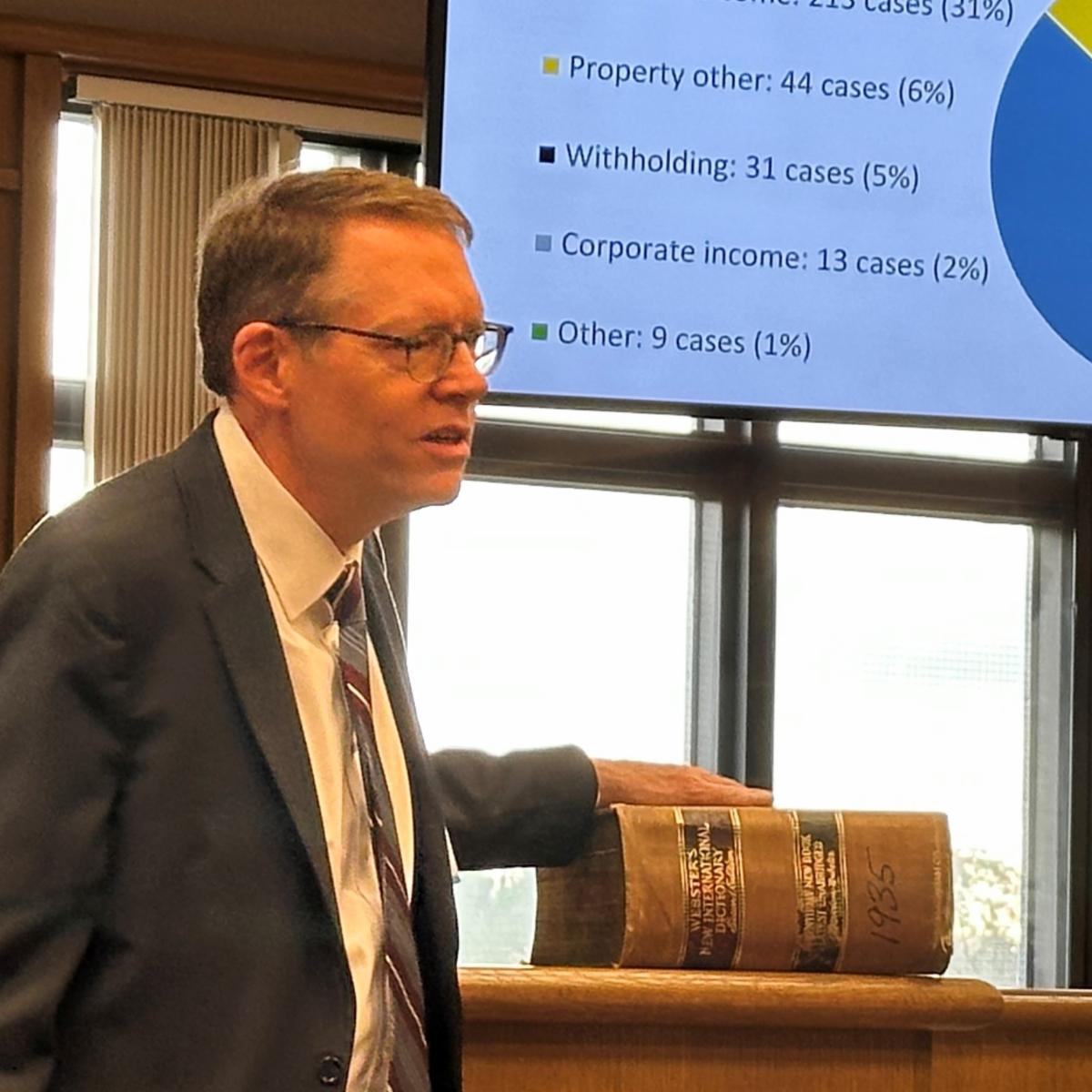
Tax Court. Taking a break from sitting in Hearing Room A, committee members visited Justice Robert Manicke (left) at Oregon Tax Court, the first of its kind in the US, founded in 1962.
The Oregon Tax Court is a specialized trial-level court with exclusive statewide jurisdiction to hear appeals under state tax laws and local tax laws measured by net income. The court commonly hears cases concerning personal income tax, property tax, and corporate tax. Appeals come to the court from actions taken by the Oregon Department of Revenue, a county assessor, a county Property Value Appeals Board (PVAB), or the Portland Revenue Division. In 2024, most of the cases (55%) filed in the Magistrate Division concerned property valuation and the second most frequent appeal (31%) was personal income.
| |
JLCIMT (Joint Legislative Committee on Information Management and Technology)
The JLCIMT heard and passed bills banning the use of Artificial Intelligence (AI) on state devices that are owned or developed by certain high-risk companies, assisting with cybersecurity insurance for local governments, and overseeing state IT projects. As I explained when I carried one bill in the House, “Senate Bill 1090 will start to bring some order and comprehensive review to what is a foundational piece of the business of government: our technology. As we continue to review requests to replace old systems, this is the ideal time to consider doing things better.”
Some of the most interesting meetings featured presentations from state and federal agencies including the FBI and the Cybersecurity and Infrastructure Security Agency (CISA), describing malicious actions, actors operating as cyber criminals, and threats to critical infrastructure. These briefings have helped shape my work to steer attention, effort, and funding to fighting cyber crime. For example, the FBI Internet Crime Complaint Center reported for Oregon in 2023 scams of non-payment and non delivery, identity theft, crimes against children, and more, but also 10 reports of "botnets" where two or more computers are controlled remotely for illegal purpose, and 875 crimes involving cryptocurrency and cryptocurrency wallet.
| | My own bills: passed, and left on the table unfunded | | |
Signed into law
Protecting pharmacies against onerous Pharmacy Benefit Manager (PBM) business practices: HB 3226 requires PBMs to follow the law governing fair practices with pharmacies when the pharmacy contracts directly with a PBM or through a Pharmacy Services Administrative Organization (PSAO). The legislation builds off a bipartisan bill I passed in 2024 to rein in middle-man Pharmacy Benefit Managers.
Reducing red tape for people who work or volunteer with children, seniors, and vulnerable populations: Criminal background check streamlining for human service and behavioral health providers. HB 3224 paves the way to consolidate and reduce the number of different background checks for similar programs. The bill confronts a problem that has caused hiring complications for employers, headaches for workers, and delays for the people they serve. Redundant background checks for people who had one recently could be avoided if the scope and frequency of checks were merged for similar programs, such as for public schools and child care programs. Here's my testimony explaining the bill.
Trains: Better rail service for passengers and freight with HB 3233. It directs the Oregon Department of Transportation to take a more active role in joint planning, public outreach, funding strategies, and operations — giving the state the tools to enter into agreements with other governments and agencies to deliver improved freight and passenger rail service. I chair a rail caucus that meets occasionally with colleagues in Washington and Canadian provinces; we're eager to work together on regional approaches to planning and applying for federal grants.
Eugene's East Blair Housing Co-op needed a legislative fix so they can qualify for property tax exemption that supports affordable housing like other co-ops. We got it done (HB 3232).
| | |
Left behind in the budget committee
Four important bills with strong support from the local area and broader interest from around the state (and in some cases strong opposition from "industry") were left unfunded in Joint Ways and Means.
- First-ever Oregon legislation to bring some baseline standards for Urgent Care Centers; they are left unregulated and without a standard for easily available public information (HB 3221).
- Reducing regulatory burdens for behavioral health providers (HB 3229).
- Funding to implement the federal "Rap Back" program to streamline background checks and reduce cost and delays for providers and help clients waiting for help from counselors, therapists, and home care workers (HB 3239).
- Reliable funding for Oregon Hazards Lab (OHAZ) to support statewide systems for earthquake early warning and wildfire smoke and fire detection (HB 3219).
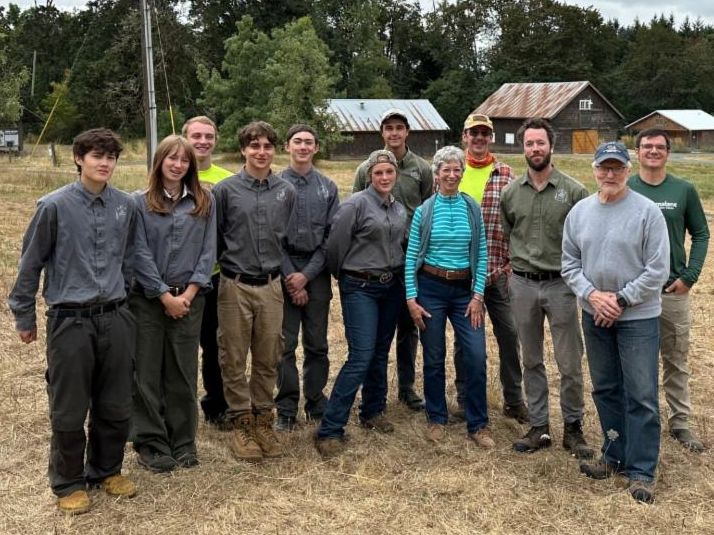
| | Senators Prozanski and Manning and I visiting with some of the judges at Lane County Circuit Court. | |  | Rep. Lively and I visiting with a Northwest Youth Corps work crew on site. | | | |
Members of the local delegation often work together to advocate for community priorities. Senators Prozanski and Manning, Representatives Fragala, Fahey and I secured four key funding requests for the Eugene area:
- The Lane County Stabilization Center, a behavioral health urgent care facility for people who are experiencing a mental health crisis, require stabilization, or need youth support programs ($14.65 million).
- An upgrade for the Northwest Youth Corps campus which serves programs including Urban Community Forestry, Career and Technical Education, and Community Wildfire Protection. In their work outside the classroom, NYC crews clear dry brush and create defensible spaces to reduce fire hazard, pull invasive species, and learn forestry management and conservation skills.
- Two new circuit court judges for Lane County to keep up with the demand on the court system, increasing from 15 to 17 judges. As Judge McAlpin explained, "In the past forty years, Lane County’s population has increased by over 40%, but the number of judges here has remained the same. During that time not only has the Lane County Circuit Court served far more people, but it has developed programs to help with the behavioral health crisis, with drug treatment, and with veterans, all without additional judges."
- And a $6 M investment in local jobs and economy with the Clear Lake Road Economic Development Infrastructure Project.
| | |
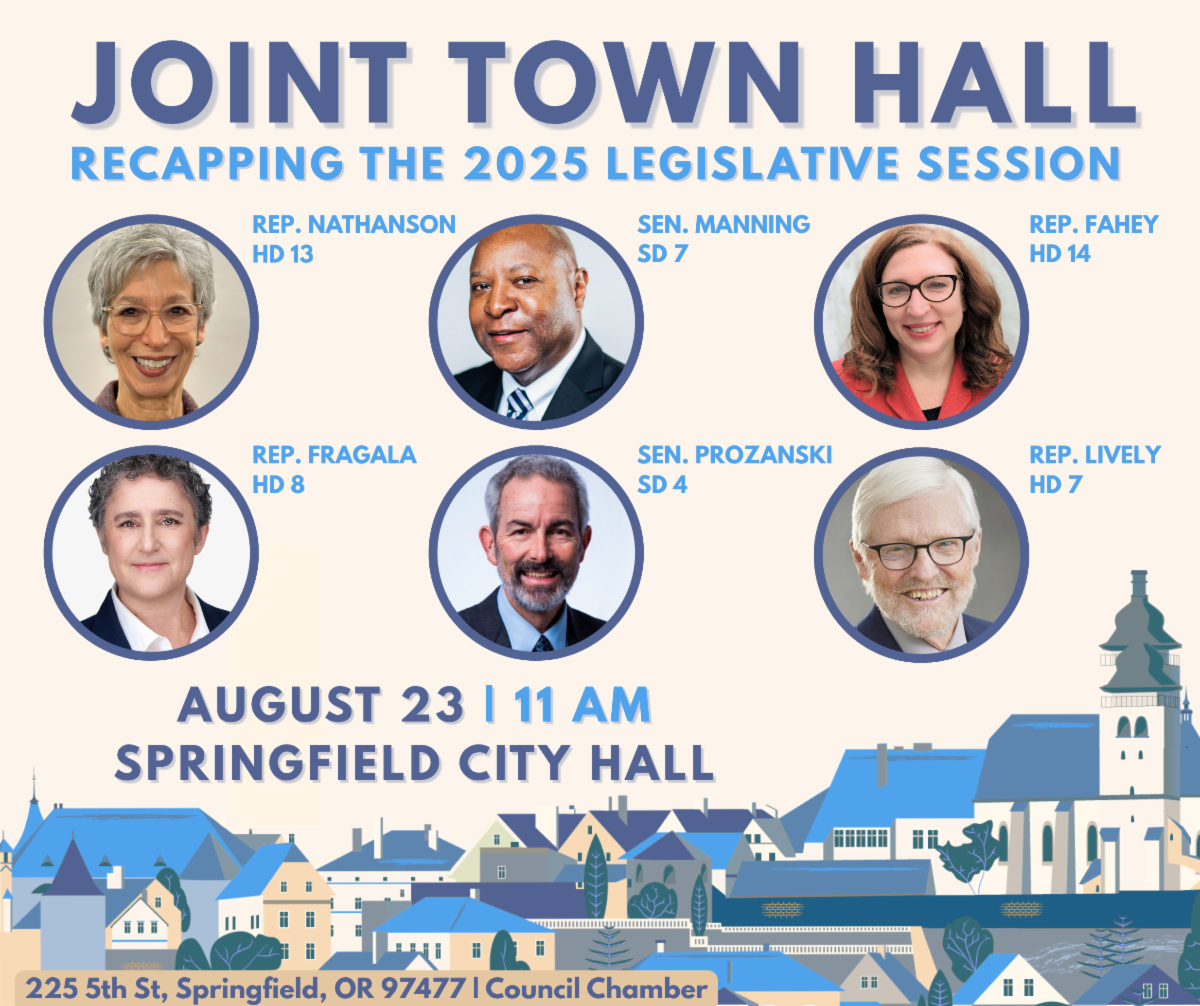
Join Sens. Manning and Prozanski, Speaker Fahey, Reps. Fragala and Lively and me for a recap of the legislative session, to discuss local and state issues and federal actions impacting Oregon, and answer your questions.
Saturday August 23 at 11:00 AM
Springfield City Hall
225 5th St, Springfield, OR 97477
Here’s a link to submit a question
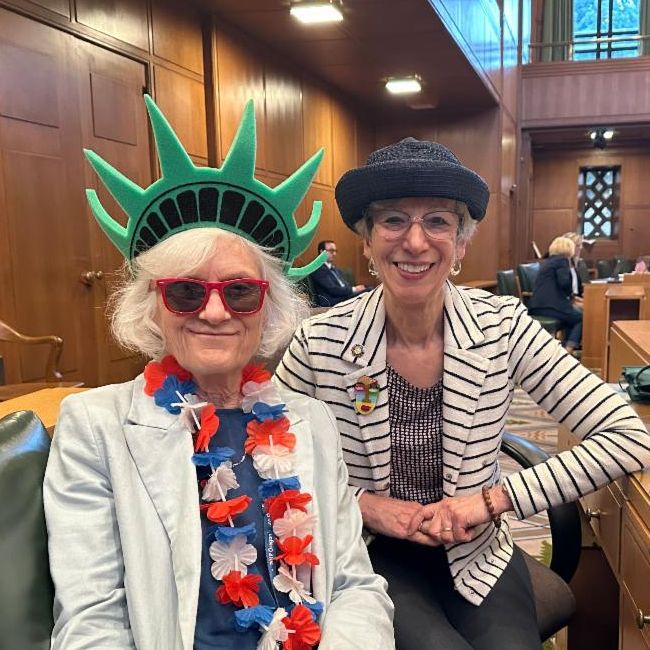
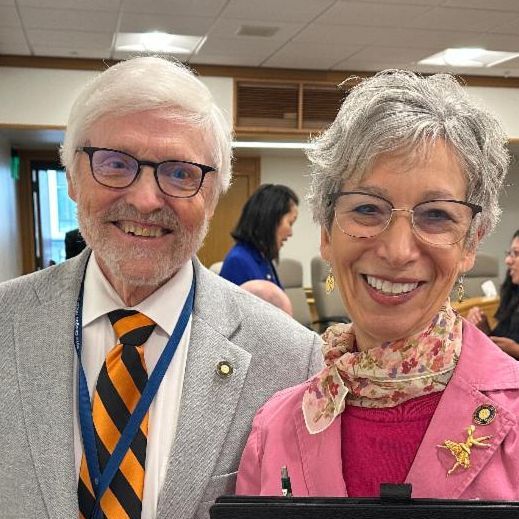
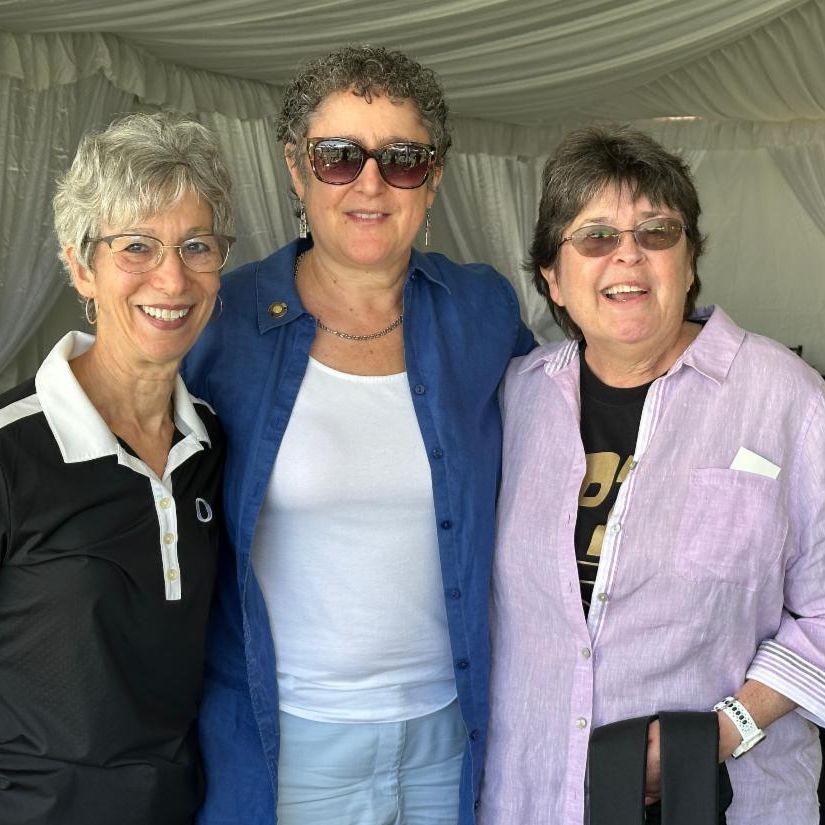
| | Rep. Pam Marsh celebrates Sine Die, the last day of session. | | Rep. Lively and I are amused at a rare opportunity for a photo; we don't serve together on any committees. | | Linda Prefontaine visiting with Rep. Fragala and me at Hayward Field for the Pre Classic 50th Anniversary. | | | | |