June 2025


World Elder Abuse Awareness Day

We wear purple on June 15th!


The purpose of WEAAD is to provide an opportunity for communities around the world to promote a better understanding of abuse and neglect of older persons by raising awareness of the cultural, social, economic, and demographic processes affecting elder abuse and neglect.


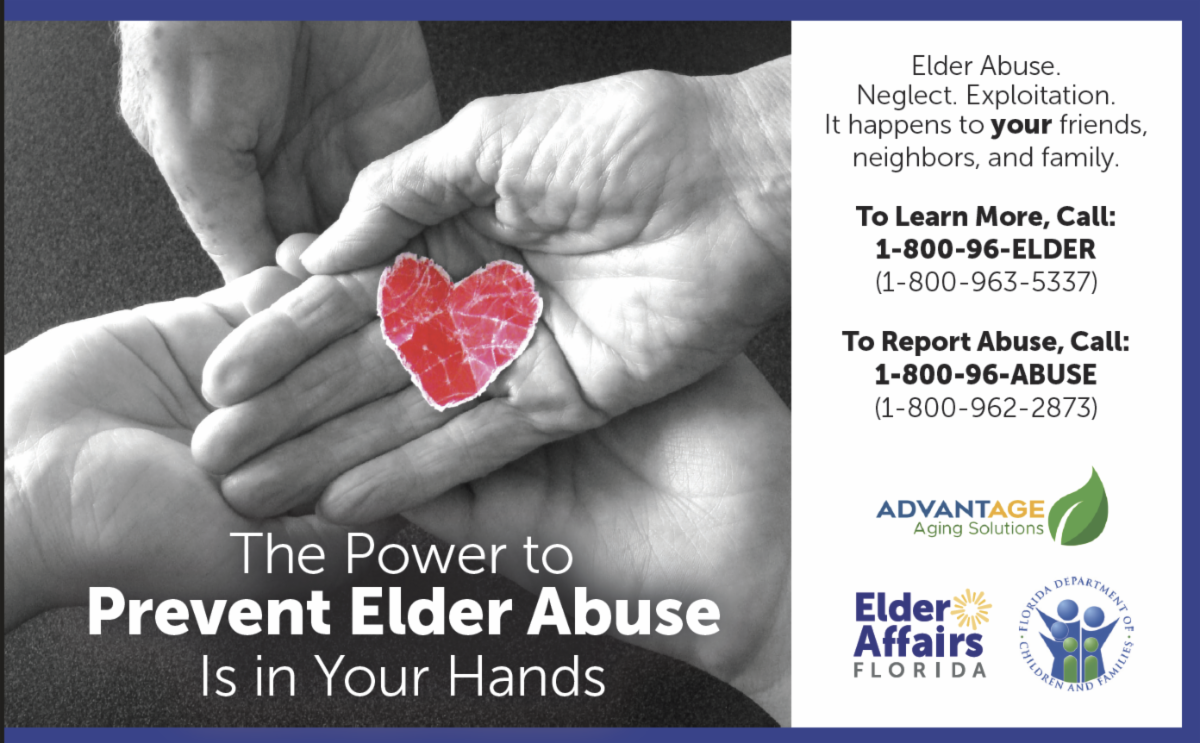
Every year on June 15th, World Elder Abuse Awareness Day (WEAAD) is commemorated in America and worldwide. Through WEAAD, we raise awareness about the millions of older adults who experience elder abuse, neglect, and financial exploitation. As many as 1 in 10 older Americans are abused or neglected each year, only 1 in 14 cases of elder abuse ever come to authorities’ attention. Older Americans are vital, contributing members of our society, and their abuse or neglect diminishes all of us. WEAAD reminds us that, as in a just society, we all have a critical role to play to focus attention on elder justice.


Elder abuse can be defined as “a single, or repeated act, or lack of appropriate action, occurring within any relationship where there is an expectation of trust which causes harm or distress to an older person.


It is a global social issue that affects the Health and Human Rights of millions of older people worldwide and an issue that deserves the international community’s attention. In many parts of the world, elder abuse occurs with little recognition or response. Until recently, this serious social problem was hidden from the public view and considered mostly a private matter. Even today, elder abuse continues to be a taboo, mostly underestimated and ignored by societies across the world. However, the evidence is accumulating to indicate that elder abuse is an essential public health and societal problem.


Elder abuse is a problem that exists in both developing and developed countries yet is typically under reported globally. Prevalence rates or estimates exist only in selected developed countries — ranging from 1% to 10%. Although the extent of elder mistreatment is unknown, its social and moral significance is obvious. As such, it demands a multifaceted global response, one which focuses on protecting the rights of older persons.


From a health and social perspective, unless both primary health care and social service sectors are well equipped to identify and deal with the problem, elder abuse will continue to be under diagnosed and overlooked.


Click to learn more: Elder Abuse Awareness Community Guide Toolkit


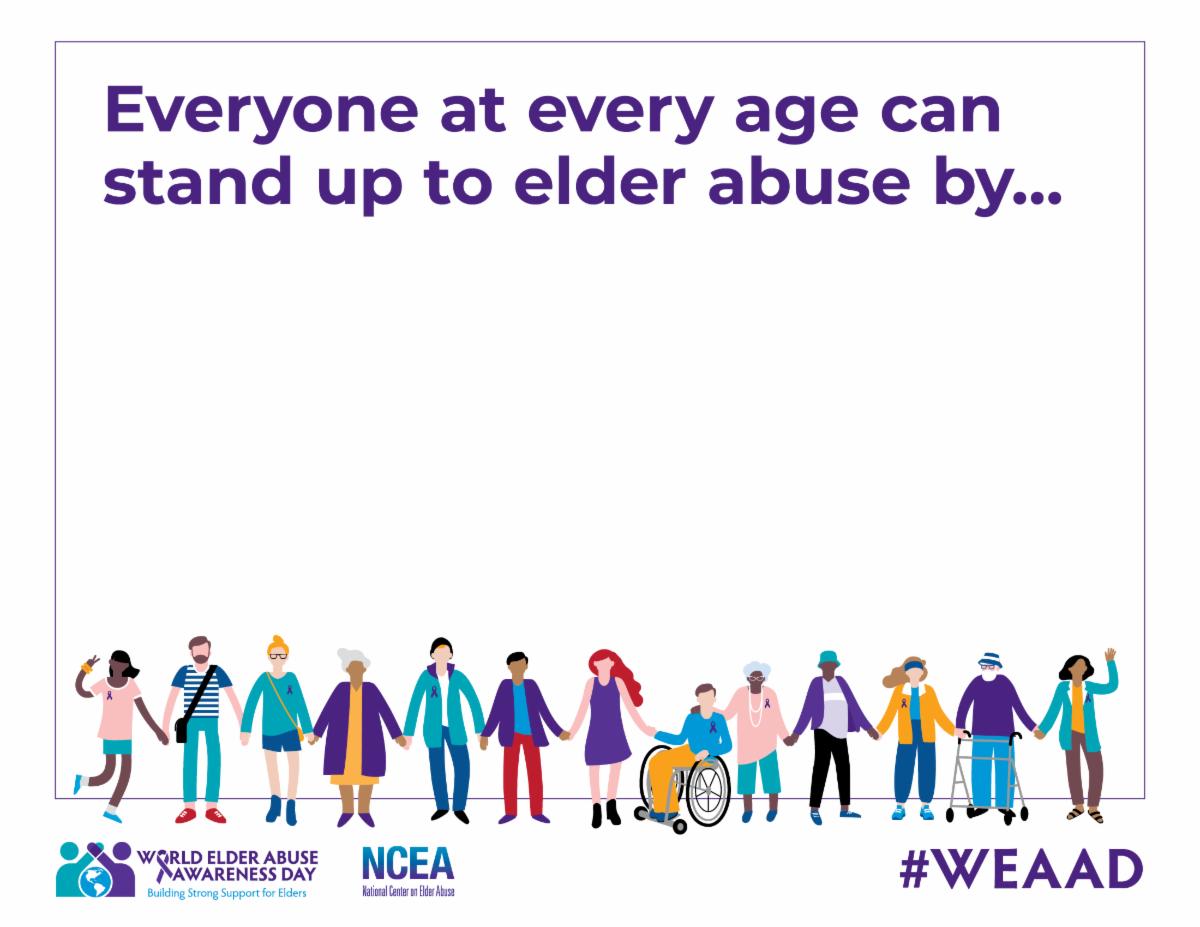
Join the NCEA to spread awareness of World Elder Abuse Awareness Day (WEAAD), June 15th and help spread the word about this important cause and spark meaningful conversations about elder justice! Use #WEAAD and the page below to raise awareness on your social media platforms. 

FINISH THE SENTENCE FOR #WEAAD

Everyone at every age can stand up to elder abuse by…


Resources: https://eldermistreatment.usc.edu/weaad-home/

https://acl.gov/news-and-events/events-and-observances/world-elder-abuse-awareness-day


It is up to all of us to prevent and address elder abuse!  


Promote Brain Health and Join the Fight

June is Alzheimer's & Brain Awareness Month


Worldwide, more than 55 million people are living with Alzheimer's or another dementia. Positive, everyday actions can make a difference in brain health, even lowering the risk of cognitive decline and possibly Alzheimer's and dementia.


Terms for understanding brain health

Cognitive decline refers to changes in the ability to think that happen as people age. Some changes are a normal part of getting older, but you can take steps to slow that decline. More significant decline or severe changes are not normal and may be a sign of Alzheimer's disease or other dementia.


Dementia is a general term used to describe problems with thinking and memory that are severe enough to interfere with a person's daily life. Alzheimer's is the most common cause of dementia but there are several kinds of dementia. Dementia is not a normal part of aging.


Incorporate these habits into your life to help maintain a healthy brain. Take charge of your brain health today — it's never too early or too late to start.


Whatever your age, now is the right time to take actions that help promote a healthy brain. Get familiar with brain health and learn what steps you can take if you or someone you love has memory concerns.


1.     Challenge your mind

Be curious! Put your brain to work and do something that is new for you. Learn a new skill. Try something artistic. Challenging your mind may have short- and long-term benefits for your brain.


2.     Stay in school

Education reduces the risk of cognitive decline and dementia. Encourage youth to stay in school and pursue the highest level of training possible. Continue your own education by taking a class at a local library or college, or online.


3.     Get moving

Engage in regular exercise. This includes activities that raise your heart rate and increase blood flow to the brain and body. Find ways to build more movement into your day — walking, dancing, gardening — whatever works for you!


4.     Protect your head

Help prevent an injury to your head. Wear a helmet for activities like biking, and wear a seatbelt. Protect yourself while playing sports. Do what you can to prevent falls, especially for older adults.


5.     Be smoke-free

Quitting smoking can lower the risk of cognitive decline back to levels similar to those who have not smoked. It's never too late to stop.


6.     Control your blood pressure

Medications can help lower high blood pressure. And healthy habits like eating right and physical activity can help, too. Work with a health care provider to control your blood pressure.


7.     Manage diabetes

Type 2 diabetes can be prevented or controlled by eating healthier, increasing physical activity and taking medication, if necessary.


8.     Eat right

Eating healthier foods can help reduce your risk of cognitive decline. This includes more vegetables and leaner meats/proteins, along with foods that are less processed and lower in fat. Choose healthier meals and snacks that you enjoy and are available to you.


9.     Maintain a healthy weight

Talk to your health care provider about the weight that is healthy for you. Other healthy habits on this list — eating right, exercising and sleeping well — can help with maintaining a healthy weight.


10. Sleep well

Good quality sleep is important for brain health. Stay off screens before bed and make your sleep space as comfortable as possible. Do all you can to minimize disruptions. If you have any sleep-related problems, such as sleep apnea, talk to a health care provider.


Resources: https://www.alz.org/abam/overview.asp#takeAction

June: Rebuild your Life Month

Start now for a better you and a better life


You’re probably thinking, “huh, there’s a month for that?!” In a world where we can do anything in an instant, it’s nice to know that there’s a month dedicated to taking the time to work on the big things slowly, steadily and with a plan so that actions can become commitment.


Rebuild Your Life Month is observed each year in June and it allows people to take a moment to reflect on the way they’re living their lives. It is never too late to start living the life you have always wanted to. This could mean changing careers, taking a sabbatical, changing your education path, etc. As long as you believe in your dreams and follow what makes you happy, you can rebuild your life. Rebuild Your Life Month is the perfect way to start doing just that if you’ve been putting your life plans on the back-burner.


A Brief History

Most people feel the need to rebuild their lives when they go through a life-changing event such as the loss of a loved one or the loss of a job. However, rebuilding your life can take place whenever you feel like you need a change to live a more fulfilled life.


Rebuilding your life takes commitment and focus as you have to give up several old ways and incorporate new habits and routines into your daily schedules. Nevertheless, the end result is worth it as it will allow you to be truly happy and you’ll have something to look forward to every single day. Reading inspiring quotes can further motivate you to stay on your journey and maintain unwavering focus.


Donald Etkes, Ph.D., originally created Rebuild Your Life Month as an opportunity for adults who were neglected and/or abused as children to celebrate their self-worth and discover their inner power. Additionally, it was meant to encourage them to learn to heal their lives and pain by lending a helping hand to others going through the same thing.


Rebuilding your life can be an extremely enlightening process that allows you to dive deeper into your own mind and soul and catalyze emotional and spiritual growth. The confidence that you obtain from this can be used to not only rebuild your own life but aid others who are embarking on a similar journey.


Rebuild Your Life Month should be widely celebrated by individuals from all walks of life who are or will be stepping into a new world and changing the course of their life path.

Rebuilding your life means developing a life for yourself in which you feel happy or content. This could mean making changes in your personal or professional life.


How To Celebrate

Make a list: Write up a list of things that are currently not working out for you or stopping you from truly being happy. In that list, write down things that would make you happy and then you can slowly start to replace the negative things with the positive things and set your life back on the right track.


Go to a support group or try therapy: It’s completely okay to feel lost and directionless at any point in life. Just by acknowledging that you need to rebuild your life you’ve already won half the battle. Join a support group or find a therapist that will help you understand why you’re feeling stuck and help you navigate through challenges while you figure yourself out. Support groups can also provide moral and emotional support from people who are going through the same thing.


Read a self-help book: There are many great authors out there who have written motivating and encouraging books on rebuilding your life or finding your purpose. Pick up a book that resonates with you the most and you might be able to take a leaf out of their book and understand how to deal with your current plans.


Resources: https://nationaltoday.com/rebuild-your-life-month/

X Share This Email
LinkedIn Share This Email