|
Cancer News Digest, March 2025
Visit our website
CFC #11967
| |
Remembering Dr. Susan Wood
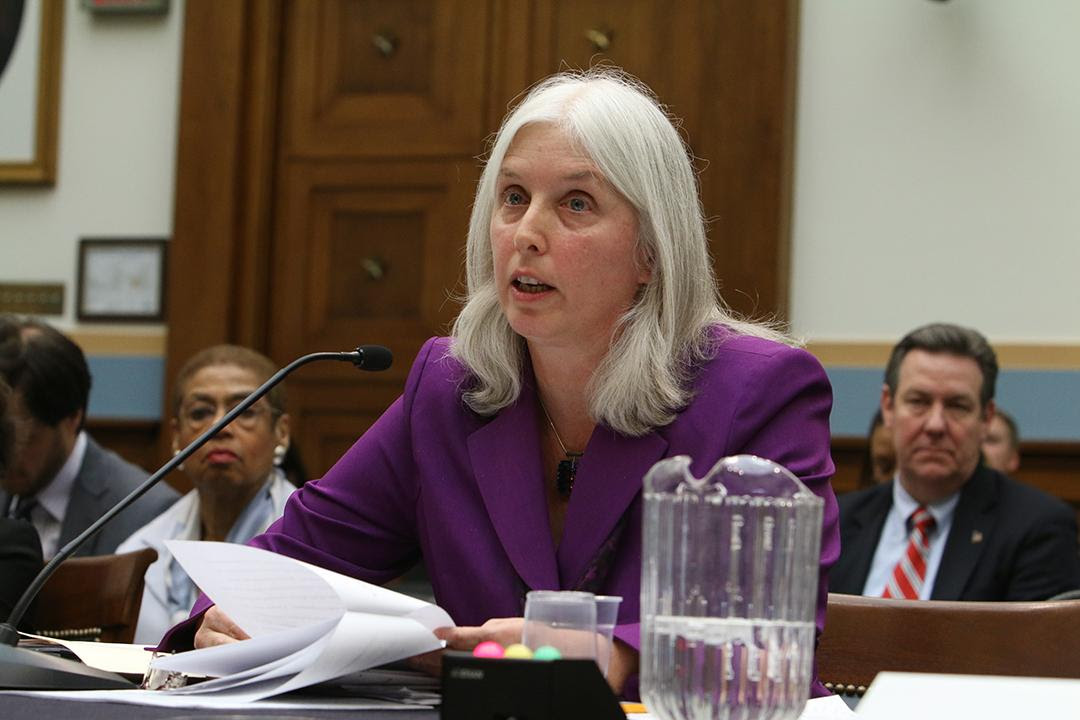
We join the public health and women’s health communities in mourning the loss of Dr. Susan Wood, who died of brain cancer in January. Susan’s career was dedicated to improving healthcare for everyone: working in the U.S. House of Representatives, as Policy Director for the Office of Women's Health at the U.S. Department of Health and Human Services, and as FDA's Assistant Commissioner for Women’s Health from 2000-2005. She resigned from the FDA on principle when the agency ignored the scientific evidence and failed to approve the over-the-counter use of Plan B emergency contraception. Susan continued her important work on behalf of safe and effective medical products and access to health care as a professor at the George Washington University Milken School of Public Health. We always admired how she took her own experience with an unsafe medical product (taken by her mother) and dedicated her life's work to preventing harm to all patients. We will continue her inspiring legacy through our Susan Wood Internship on Women's Health, which we first started in her honor last summer.
Read more about Susan's legacy in The New York Times here, The Washington Post here, and from GWU here. To make a tax-deductible donation to our Susan Wood Internship, please click here.
| |
Friday surgeries have more complications
Are some days of the week better or worse to undergo surgery? A very important new study published in JAMA investigated whether patients had better outcomes before or after the weekend. For the more than 400,000 patients in the study, patients who underwent surgery before the weekend (usually Friday) had more complications and were more likely to die in the months after surgery than those whose surgery occurred the day after the weekend (usually Monday). There are several possible reasons, so research is needed to find out how to fix this problem. Are the surgeons and other health professionals more burnt out? Are medical staff less available over the weekend? Are there other reasons?
Read the study in JAMA here.
|
Even light exercise helps prevent cancer!
There is good news about preventing cancer, thanks to a new study conducted by the National Institute of Health (NIH)! We all know that exercise and other health habits help prevent cancer, but this new study shows that even daily physical activity, such as walking and doing household chores, can decrease the chances of developing cancer. Previous studies have found that exercise helps prevent cancer, but this is the first major study to show that typical daily activities make a difference and that your step count is more important than how quickly or intensely you are moving. This is good news for those of us who are not serious athletes or exercise fans -- we just need to move our bodies! Read more about the study here.
| |
Continuing Agent Orange Clean-up is key!
Everyone knows that Agent Orange, a chemical herbicide used in the Vietnam War, causes cancer and other deadly health problems. Given the known impact of Agent Orange exposure on the health of U.S. soldiers and nurses, imagine the much worse impact on people who live in Vietnam. So why did the U.S. halt massive cleanup efforts for a disaster it caused? After terminating contracts with the companies that had been contracted to clean up a massive chemical spill at the Bien Hoa air base, Secretary of State Marco Rubio and Musk reversed several of their decisions in Vietnam, including this one. But as of last week, the funding was still frozen, jeopardizing the project's progress since the rainy season could cause enormous harm and continue to expose people to these cancer-causing chemicals. Even temporarily stopping Agent Orange remediation work in Vietnam poses a major threat to human lives and the environment. What will the impact of this on-again/off-again decision be on our international reputation and national security?
Read more in ProPublica here.
Photo from Agent Orange Data Warehouse
| |
Will the FDA close this food safety loophole?
It’s about time! The FDA has finally been told to tighten a loophole that has allowed chemicals with unknown risks in U.S. food supply! RFK Jr. has directed the FDA to tighten the loophole that allows companies to assume chemicals are safe unless proven otherwise (which is called "Generally Recognized as Safe" or GRAS). GRAS allows companies to self-certify the safety of the food dye and other chemicals they add to our food, which has resulted in hundreds of ingredients in our food with unknown impact on consumers. Of course, some of these chemicals are safe, but some are not, so this exposes Americans to additives that may cause foods to be addictive, unhealthy, or unsafe. Better scrutiny is long overdue, but how long will it take to change these policies, and aren't more staff needed to examine the safety of these chemicals?
Read more here.
| |
We tell FDA: Make sure urgently needed meds actually work!
To get urgently needed medications for cancer and other serious diseases on the market more quickly, the FDA often grants “accelerated approval” to drugs that have not proven to be effective. Companies must later provide “confirmatory clinical trials” that provide better evidence. Unfortunately, “later” often means many years later, and meanwhile, patients are paying for drugs that may not benefit them at all.
In response to criticisms from us and other experts, the FDA now tells companies that the confirmatory study must be underway at the time of accelerated approval. But what does “underway” mean? You can imagine how big that loophole can be – for example, is it underway if one patient has been selected for the study but not yet started treatment? The FDA asked the public for advice on how FDA should define “underway,” and we were glad to respond!
We let them know that the confirmatory study should have already been treating approximately 25% of the patients planned for the research, and discouraged the FDA from making exceptions for rare disease treatments, since those are the studies that are often not completed at all. We let the agency know that patients can’t make informed decisions about these often expensive treatments (some cost more than $1 million per patient!) without timely and well conducted confirmatory clinical trials.
To read our comment, click here.
| |
Artificial turf, playgrounds, and kids' health
CPTF President Dr. Diana Zuckerman recently presented a webinar about the environmental and health impacts of artificial turf and rubber playground surfaces to a group of health professionals with the Mid-Atlantic Center for Children’s Health and the Environment.
Despite their health risks, artificial turf and playground surfaces are replacing natural grass in many communities across the country. Regardless of how attractive they can be, they are made with chemicals that can be harmful to people of all ages and can eventually cause cancer. Playground surfaces and artificial turf have been found to contain lead, PFAS, heavy metals, and other hormone-disrupting chemicals. Exposure to these chemicals is especially risky for children, many of whom are playing on these fields day after day. Plastic grass can cause health and environmental problems, but in addition, recycled tire crumb used on fields and playground surfaces contain known carcinogens, as well as, lead, volatile organic compounds (VOCs), and other toxins. And, while exposing you and your children to toxic chemicals, artificial turf fields and rubber playground surfaces also get much hotter and much harder than natural grass fields.
Read our recently updated article on the topic here.
| |
Vaping is not for quitting!
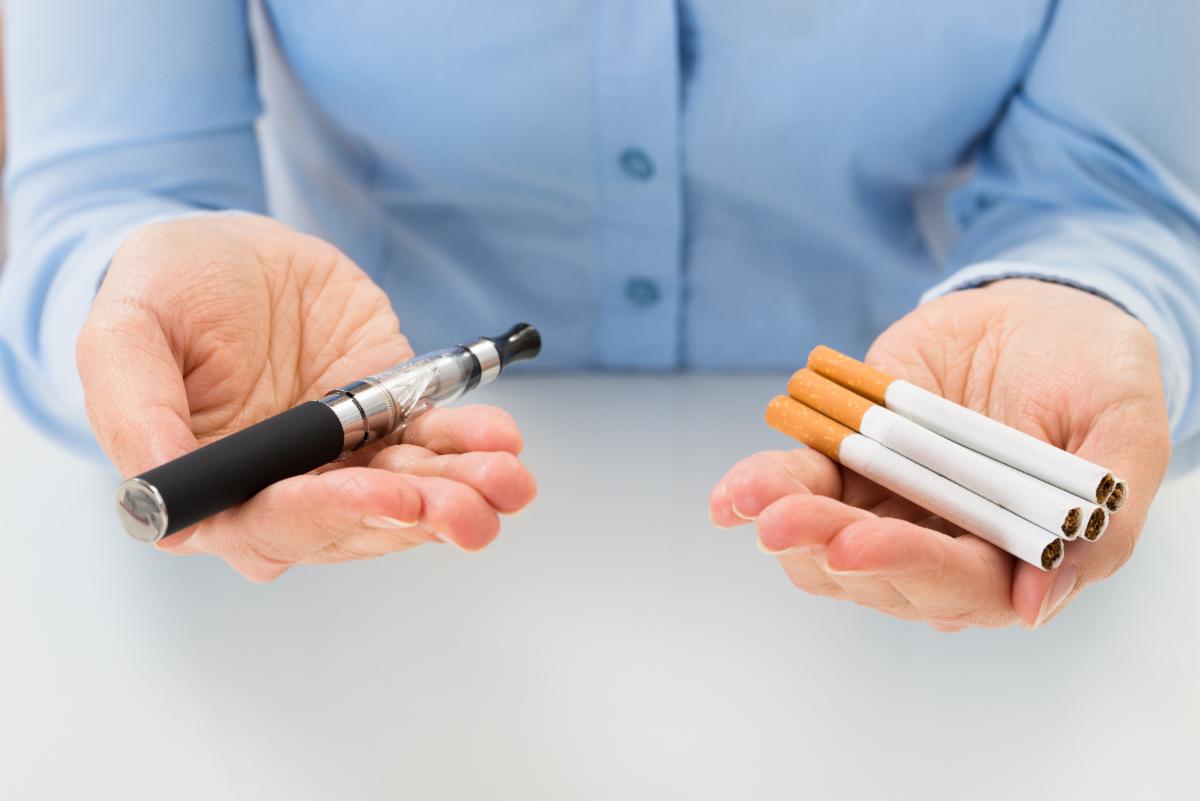
Many people assume that vaping is safer than smoking and can help smokers quit, but vaping has serious risks (such as heart disease) and at best it usually replaces one addiction (to nicotine cigarettes) with a similar addiction (to nicotine vaping). Recent research shows that most people who start vaping after previously smoking continue to do both.
So why do so many people think that vaping is a good way to quit smoking? Part of the reason is hype from the companies who make e-cigarettes, and part of the reason is the way the early studies were conducted. Early studies were often very short-term (6 months or less), even though it is well known that many people who quit smoking will start smoking again a few weeks or months later. Many of the studies relied on the smoker's self-reports of whether they quit or reduced their smoking or not. Most of the studies did not compare people who vaped nicotine products with those who vaped products that did not contain nicotine, and most did not randomly assign smokers to different methods (including vaping) to quit smoking, to find out which were most effective. Perhaps most important, since vaping has clear risks of heart disease and lacks long-term research on cancer, we don't yet know whether replacing a smoking habit with a vaping habit is merely substituting one unhealthy habit with another one, both of which involve nicotine addiction.
To learn more about the safety of smoking vs. vaping and the research on vaping as a way to quit smoking, read our updated article here.
| |
Check us out!
Did you know that artificial turf and rubber playground surfaces contain carcinogens? Are your children or grandchildren getting exposed when they play? Follow us @safe.to.play
| |
| |
Cancer Prevention and Treatment Fund
Facebook: @CancerPreventionAndTreatmentFund
LinkedIn: www.linkedin.com/showcase/cancer-prevention-&-treatment-fund/
| | | |
Your Contribution Can Make a Difference
We do not accept any funding from drug companies, device companies, chemical companies, or other sources that could influence our work and compromise our integrity. That's why so many people turn to us when they need help. Donations of any size are greatly appreciated (and tax deductible.)
Please consider giving to the Cancer Prevention and Treatment Fund online or by mail to the address below.
| |
To sign up for these monthly updates, click here.
| |
Cancer Prevention and Treatment Fund | 1001 Connecticut Ave NW, Suite 1100
CFC# 11967
| | | | |